
Yellow Leaves
Causes and how to fix it
Reviewed by Mark Tremblay, BSc Environmental Biology, McGill; ISA Certified Arborist · Updated Nov 15, 2026
What you see
One or more leaves turn yellow. Soft yellow leaves with wet soil usually mean too much water. Crispy yellow leaves with dry soil usually mean too little water. Slow yellowing of the oldest bottom leaves is often normal ageing.
Leaves fade from green to yellow, often starting at the bottom.
Seasonal timing (Canada)
In Canadian winters, growth slows. Water less. Yellow lower leaves after a dark stretch of days are common.
Likely causes
- Too much water and airless roots (most common)
- Normal ageing of the oldest leaves
- Not enough light
- Nitrogen or iron shortage
How to confirm
Push a finger 5 cm into the soil. Wet, limp yellow leaves point to overwatering. Bone-dry, crispy yellow leaves point to underwatering. If only the lowest older leaves yellow slowly and the rest look fine, it is usually ageing.
Step-by-step fix
- Check the soil 5 cm down before you water again.
- If it is wet, wait. Empty the saucer. Make sure the pot has a drainage hole.
- Move the plant to brighter, indirect light if the whole plant looks pale.
- Cut off fully yellow leaves with clean scissors.
- Do not give more water when the soil is already wet.
What NOT to do
Do not water on a calendar. Do not fertilise a plant sitting in wet soil.
When to give up or take a cutting
If most roots are gone, or the stem is soft all the way through, take a few healthy stem cuttings and root them instead of waiting on a plant that cannot drink.
Looks like
- Overwatering — Soil stays wet, leaves yellow or droop, and the pot feels heavy.
- Underwatering — Soil is bone dry and leaves are crispy, curled or dull.
- Root Rot — Roots turn brown and mushy in soil that stays wet.
- Nutrient Deficiency — Overall pale growth, or yellowing between veins, on a plant that is otherwise watered well.
Plants commonly affected
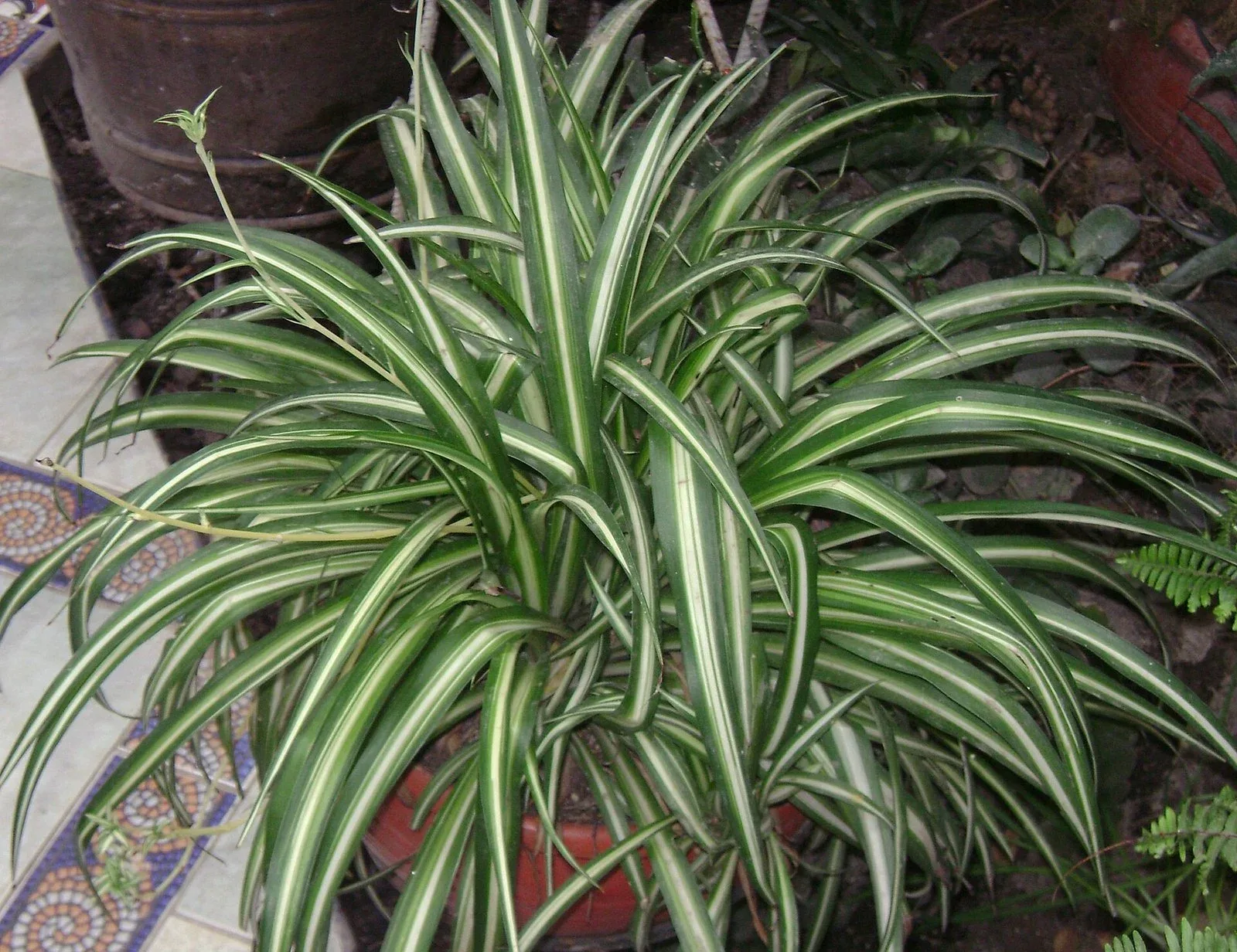
Chlorophytum comosum
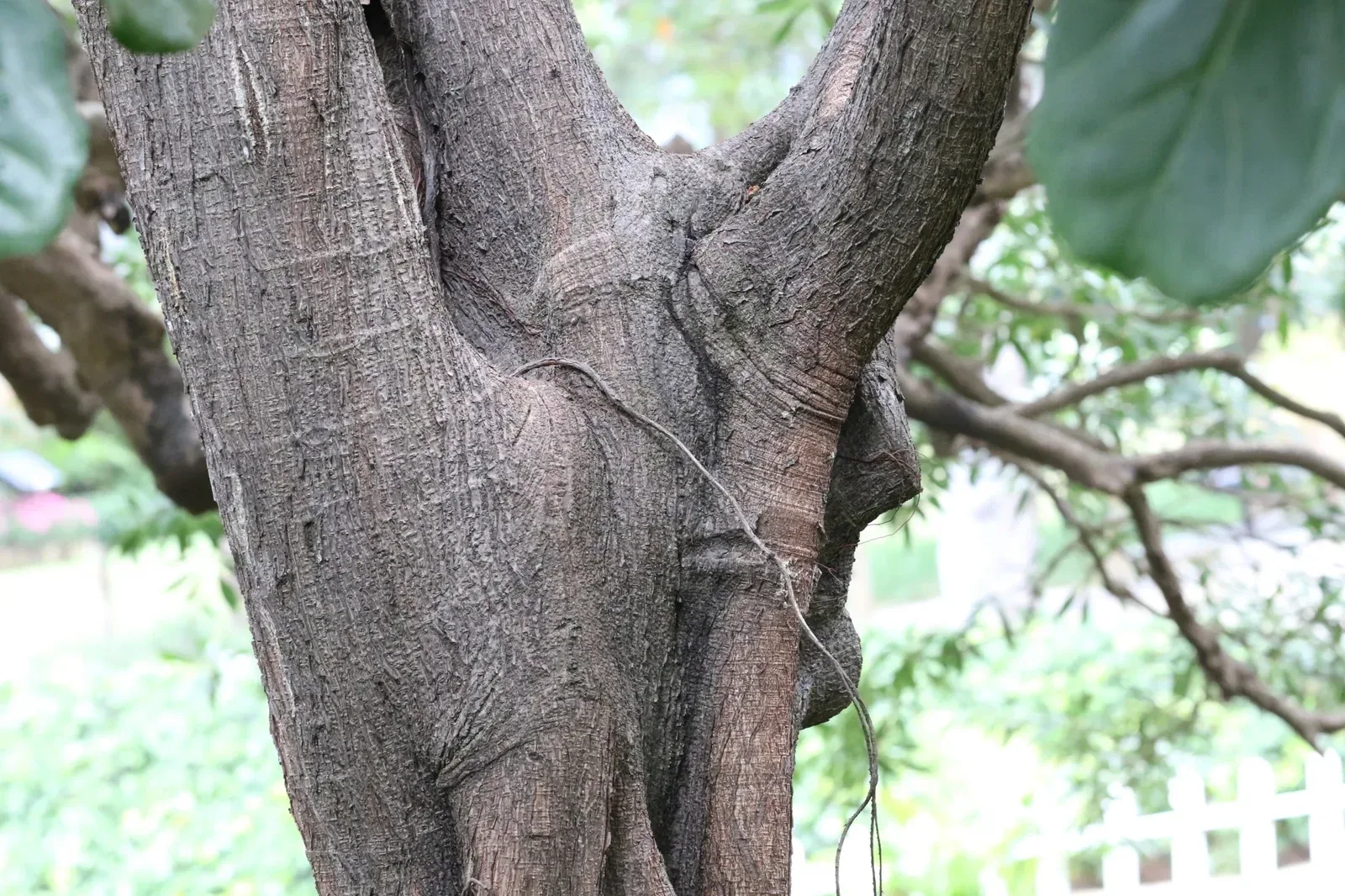
Ficus lyrata
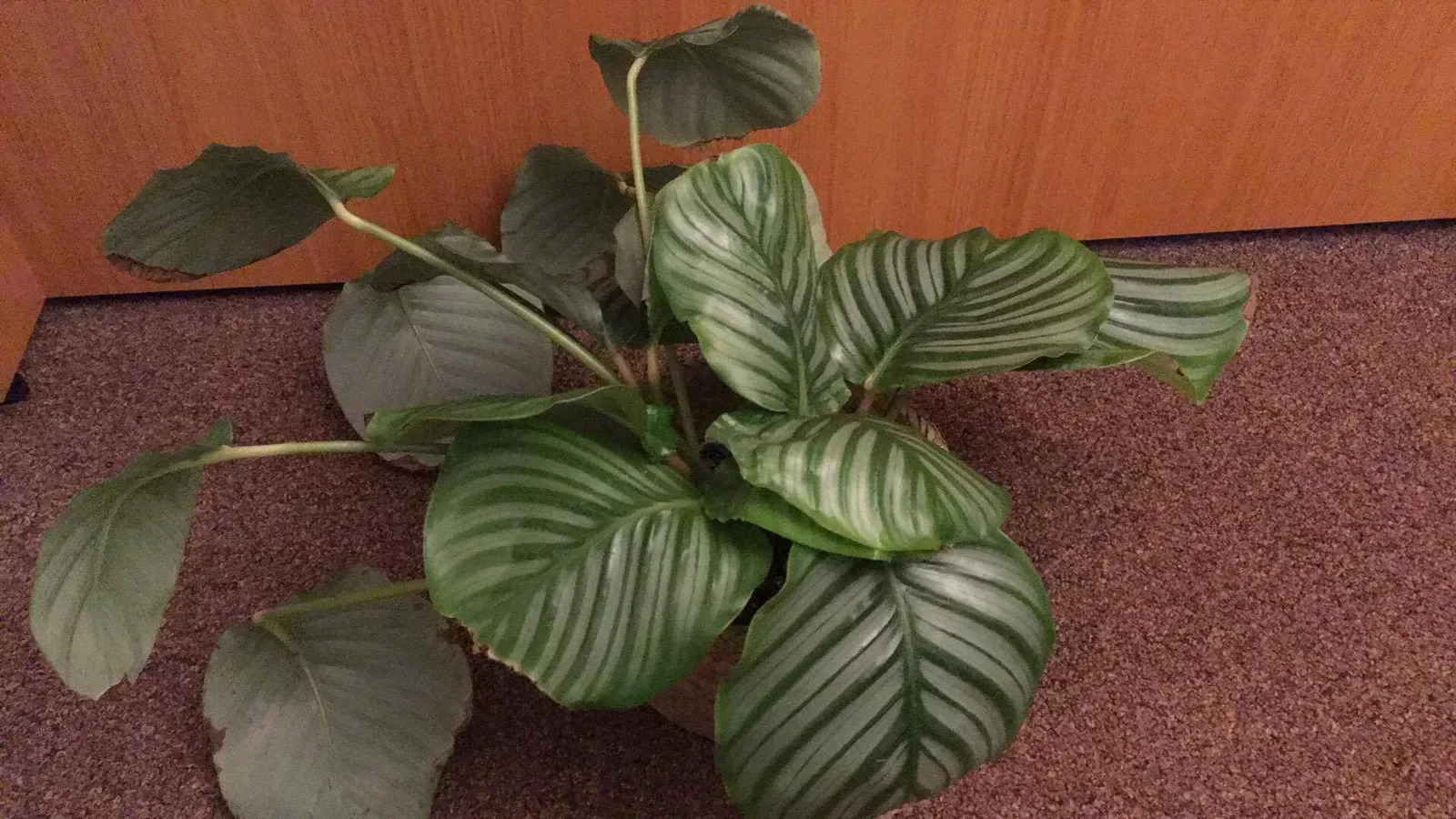
Goeppertia / Calathea spp.
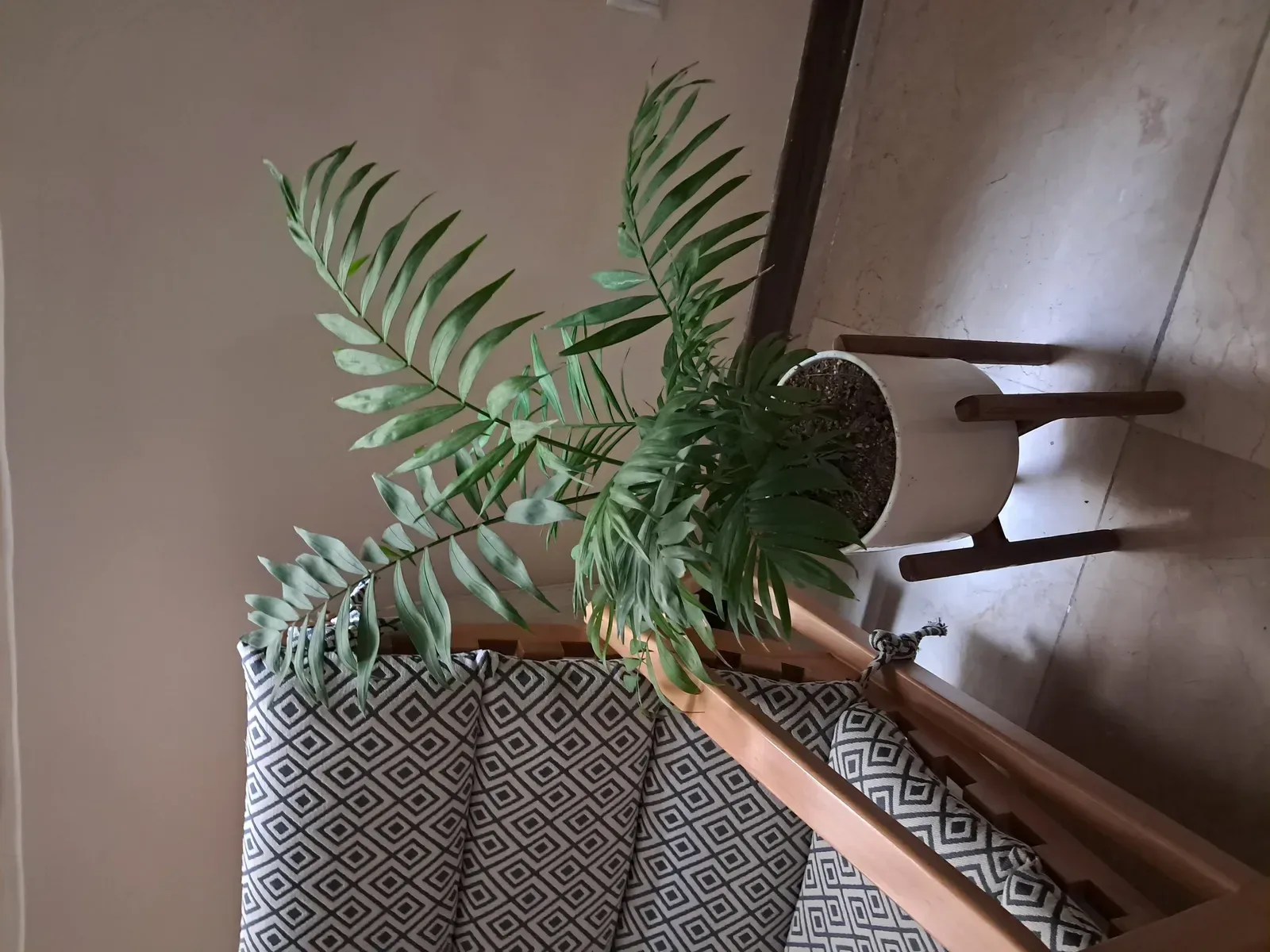
Chamaedorea elegans
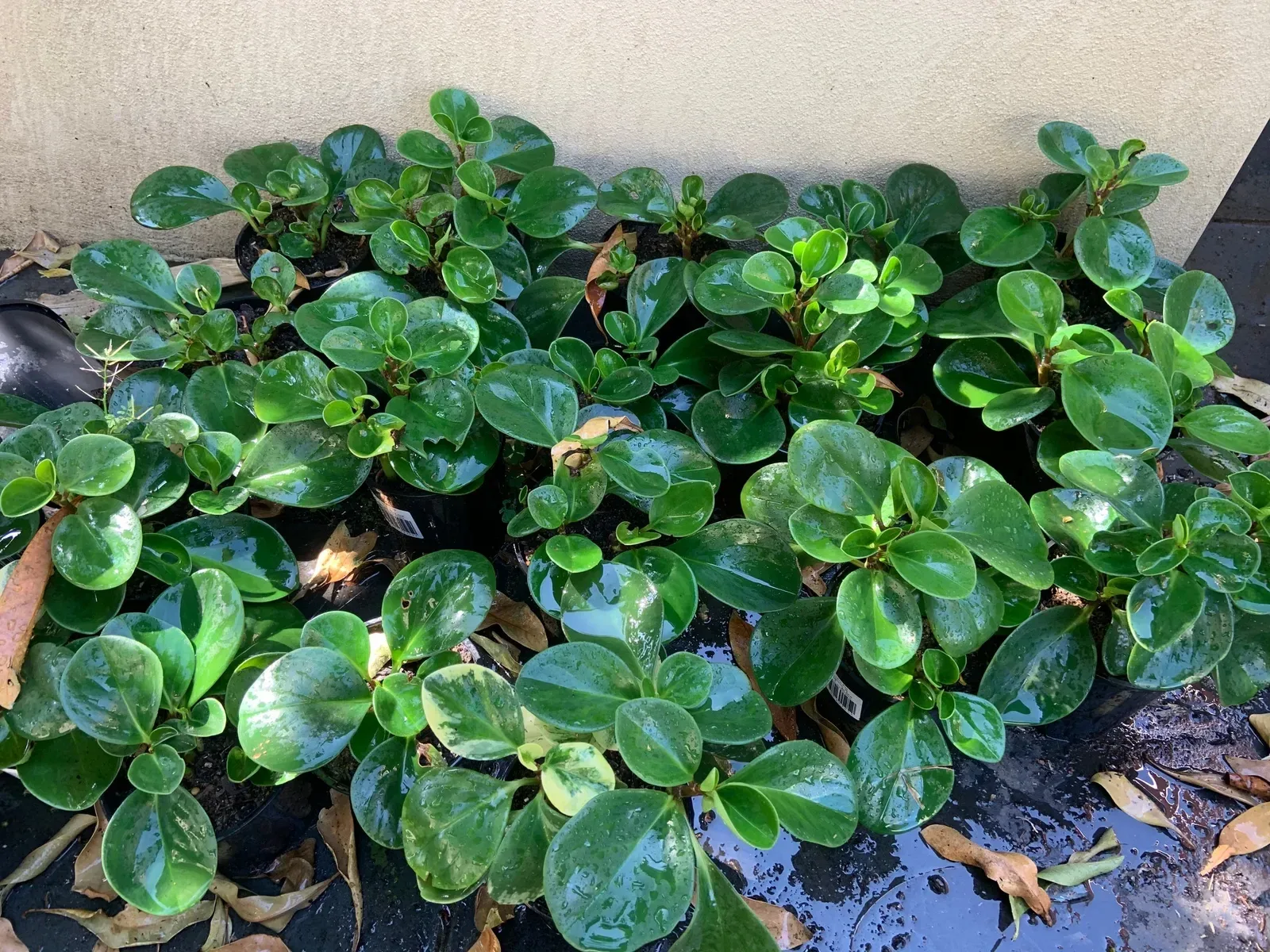
Peperomia obtusifolia
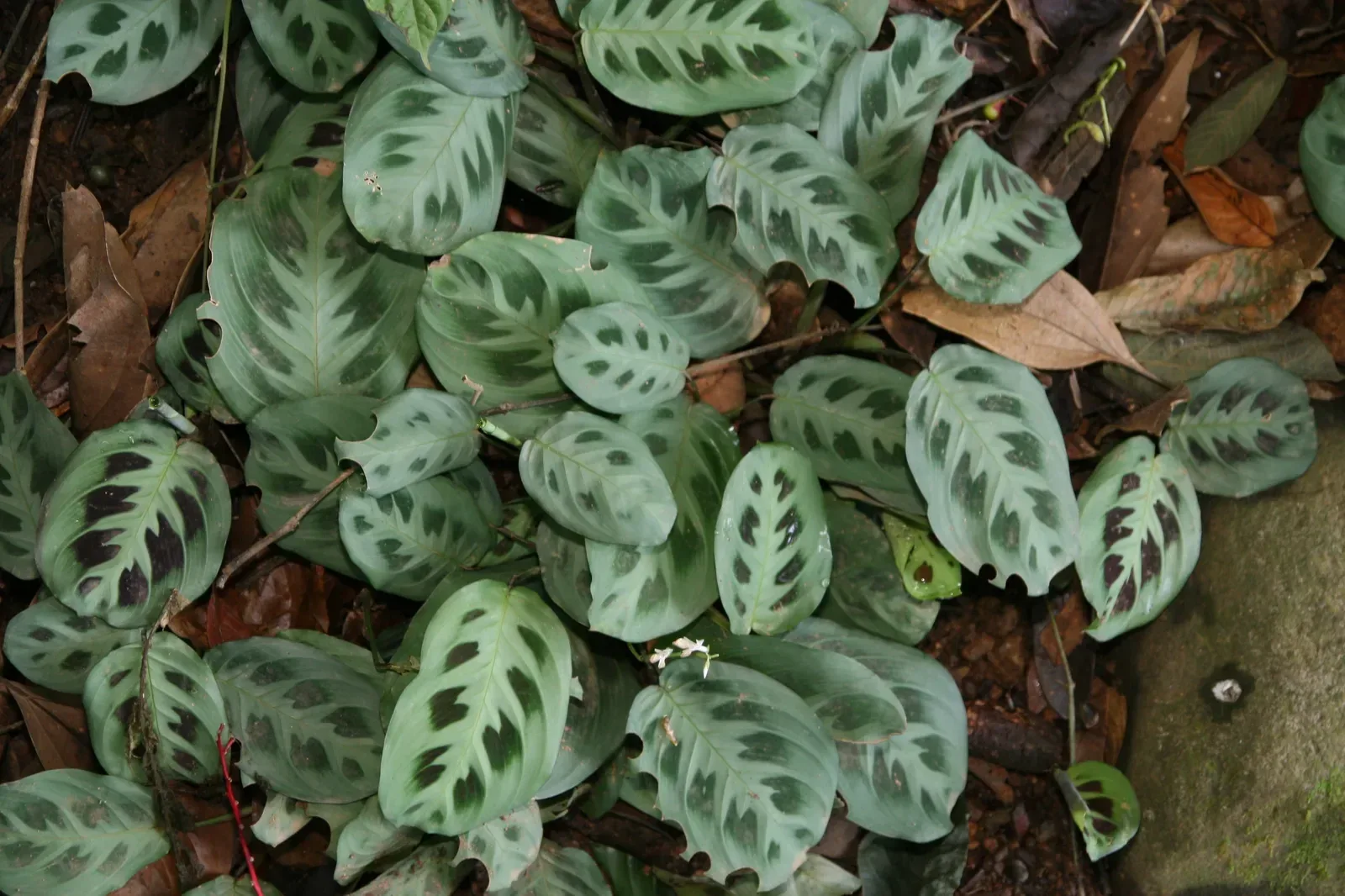
Maranta leuconeura
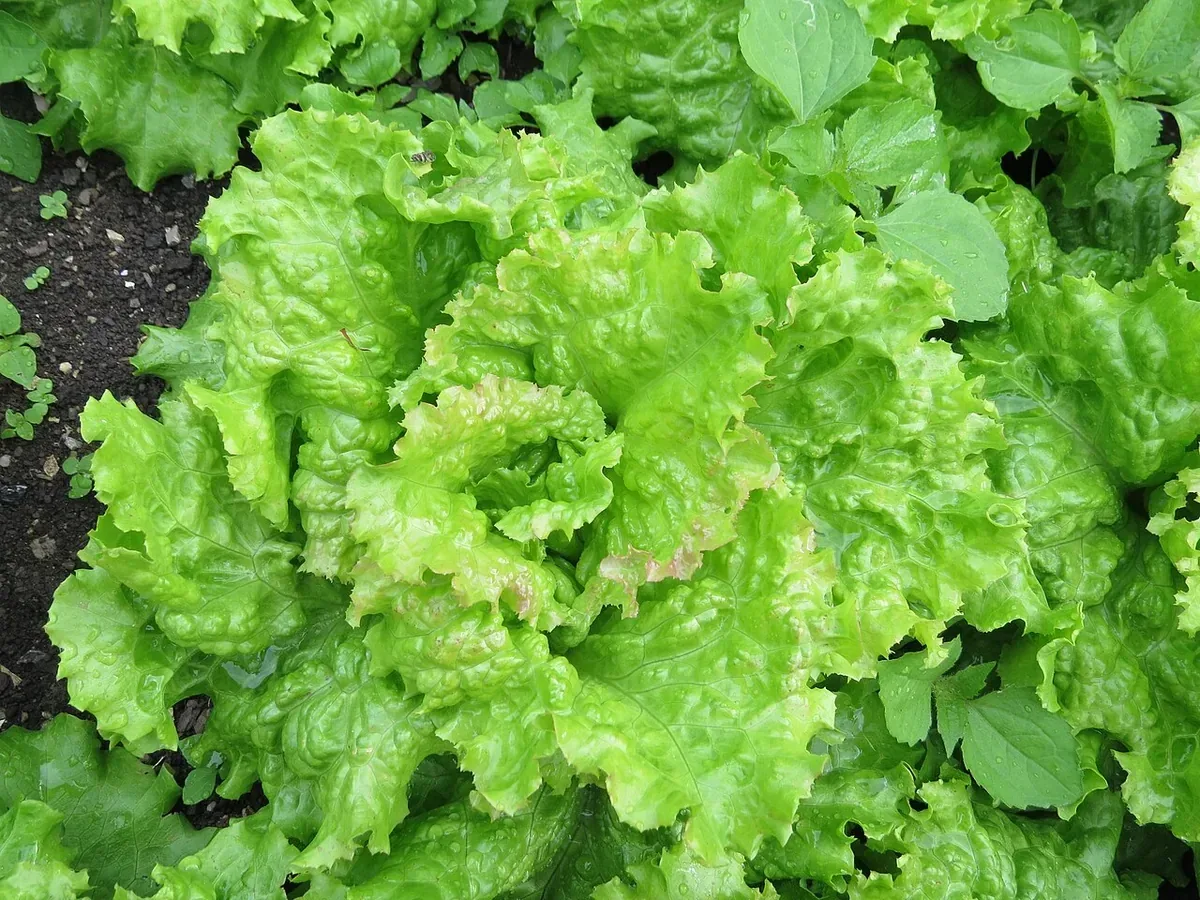
Lactuca sativa
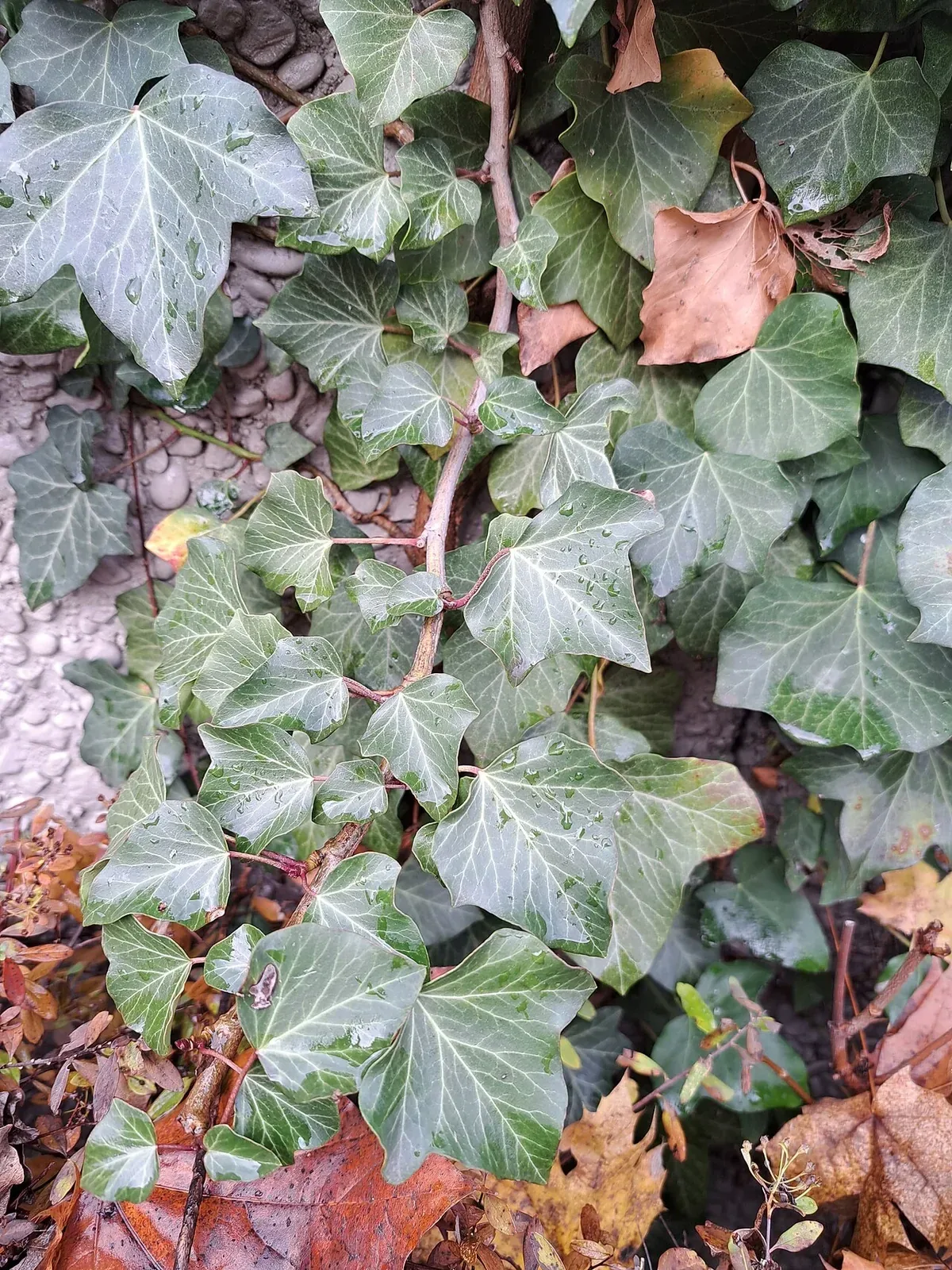
Hedera helix
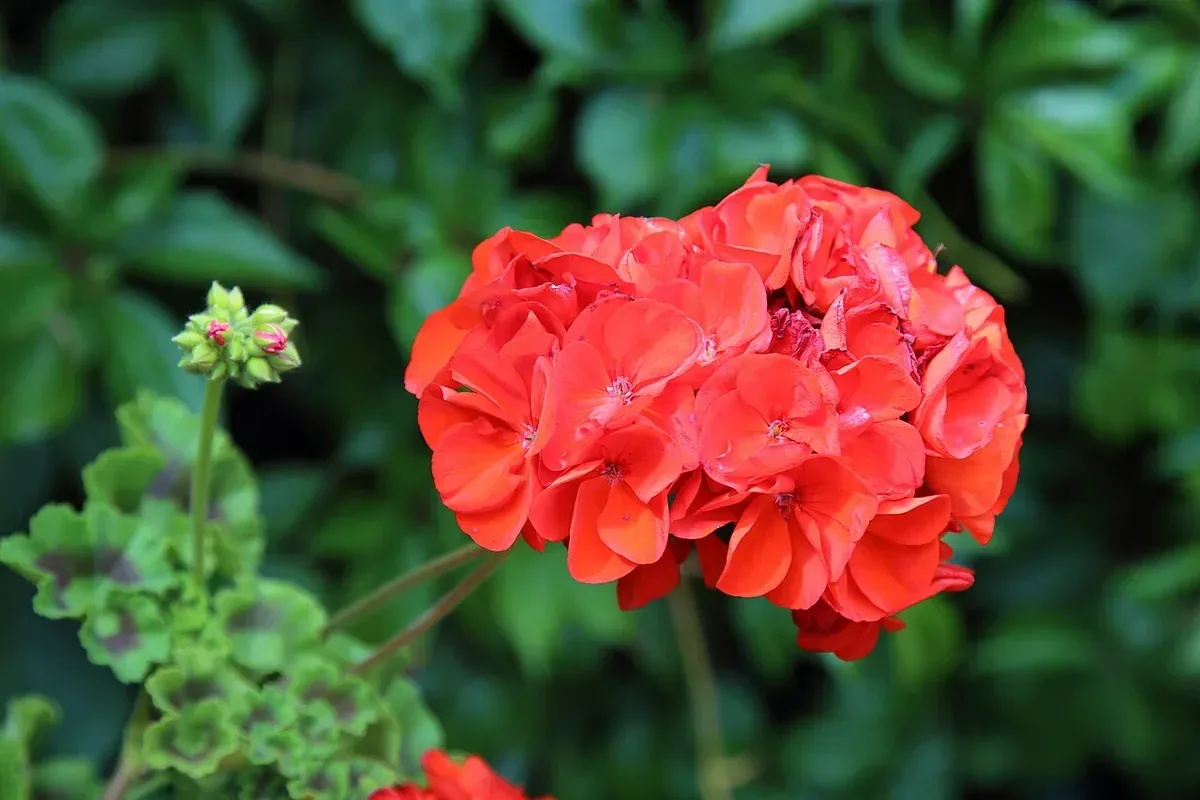
Pelargonium × hortorum (syn. Pelargonium × hybridum)
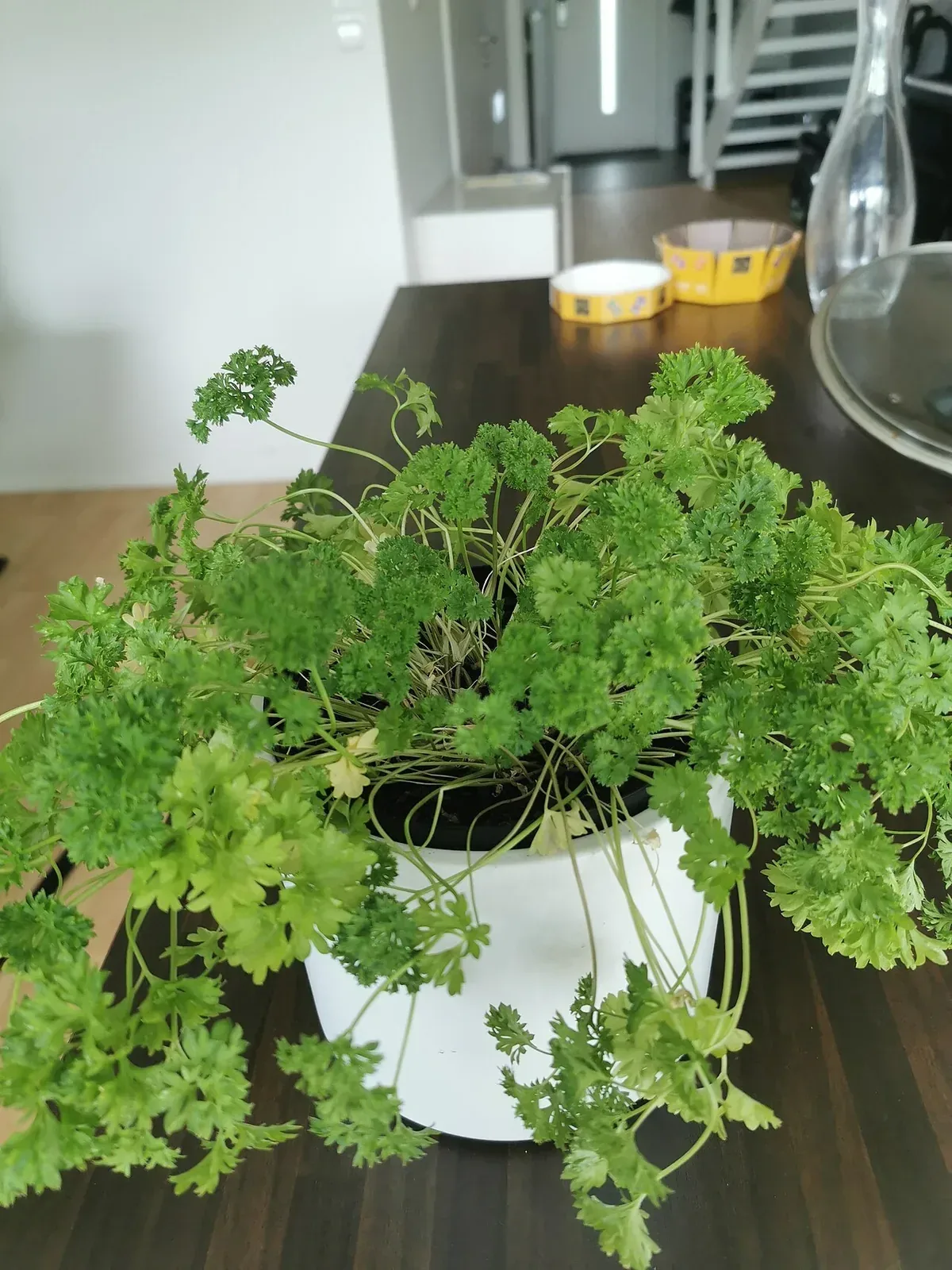
Petroselinum crispum
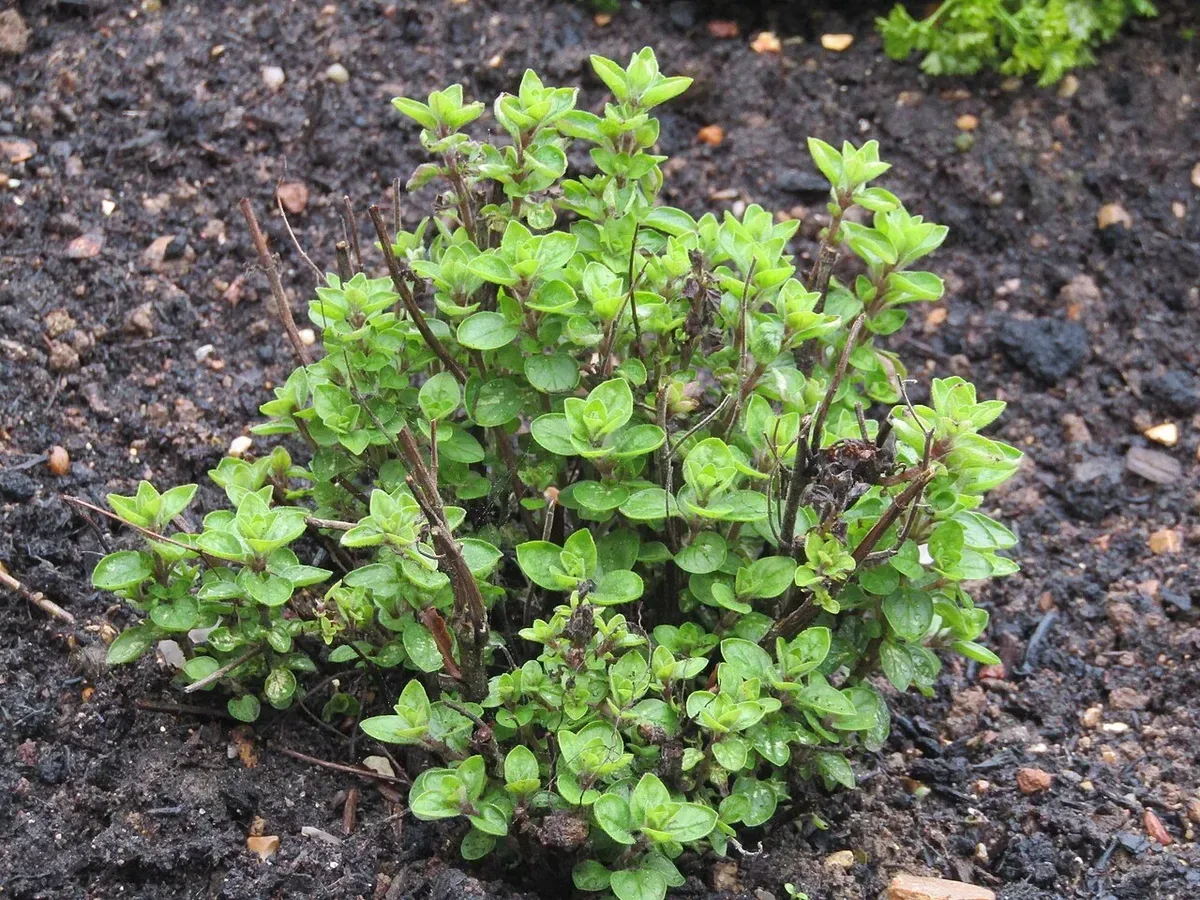
Origanum vulgare
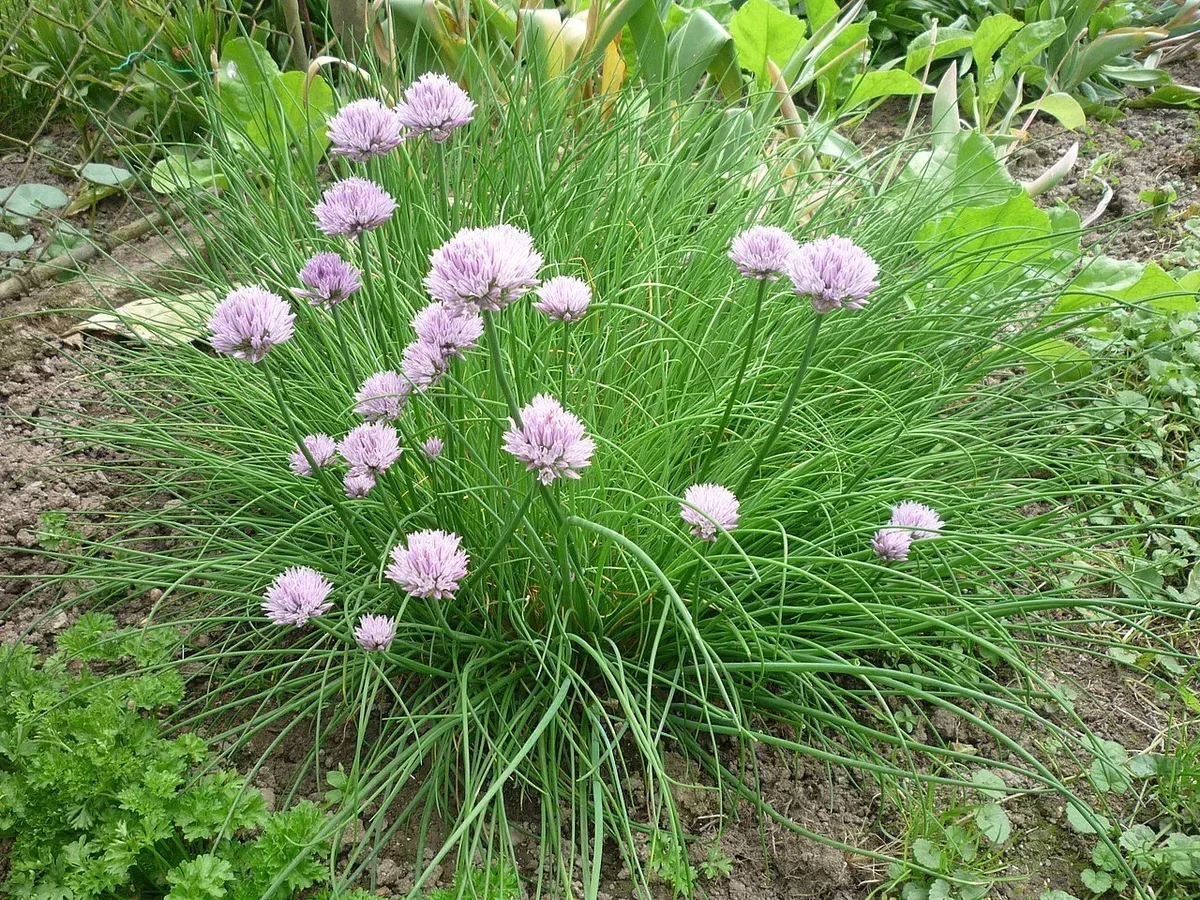
Allium schoenoprasum
Related guides
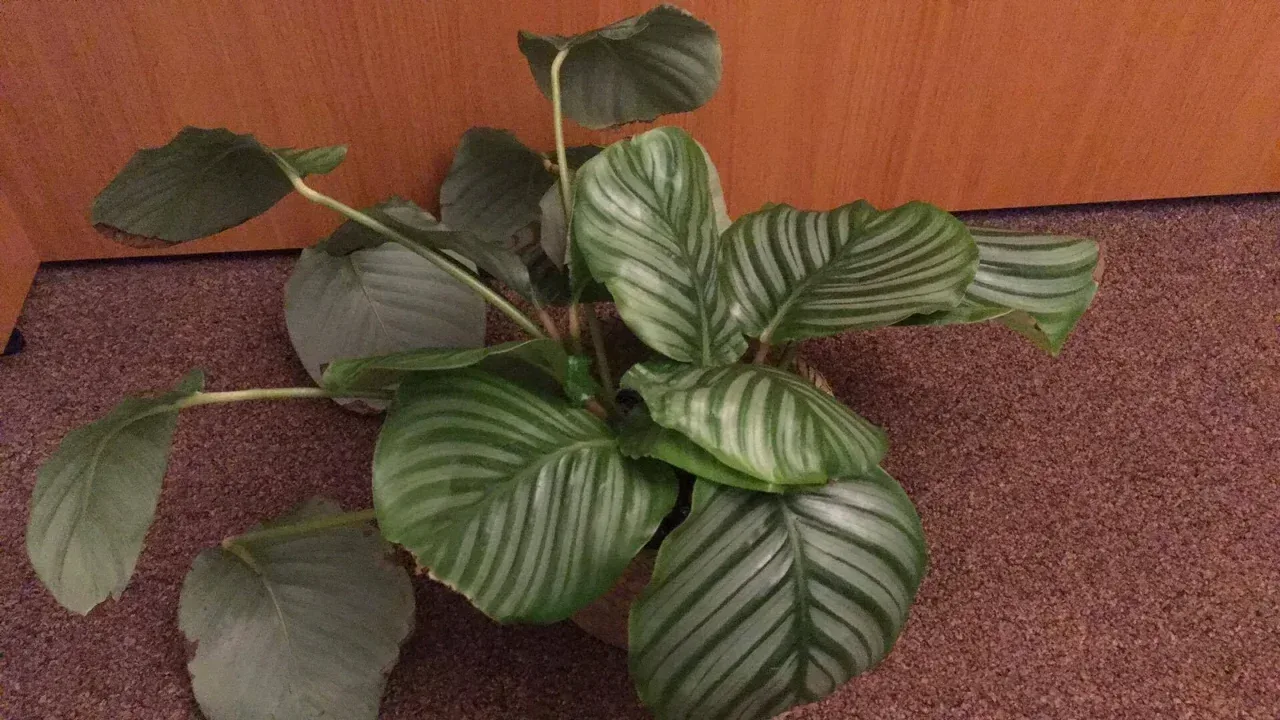
Calathea Care Guide for Canada
A practical Canadian guide to calathea, with seasonal care, common problems, propagation and buying checks.
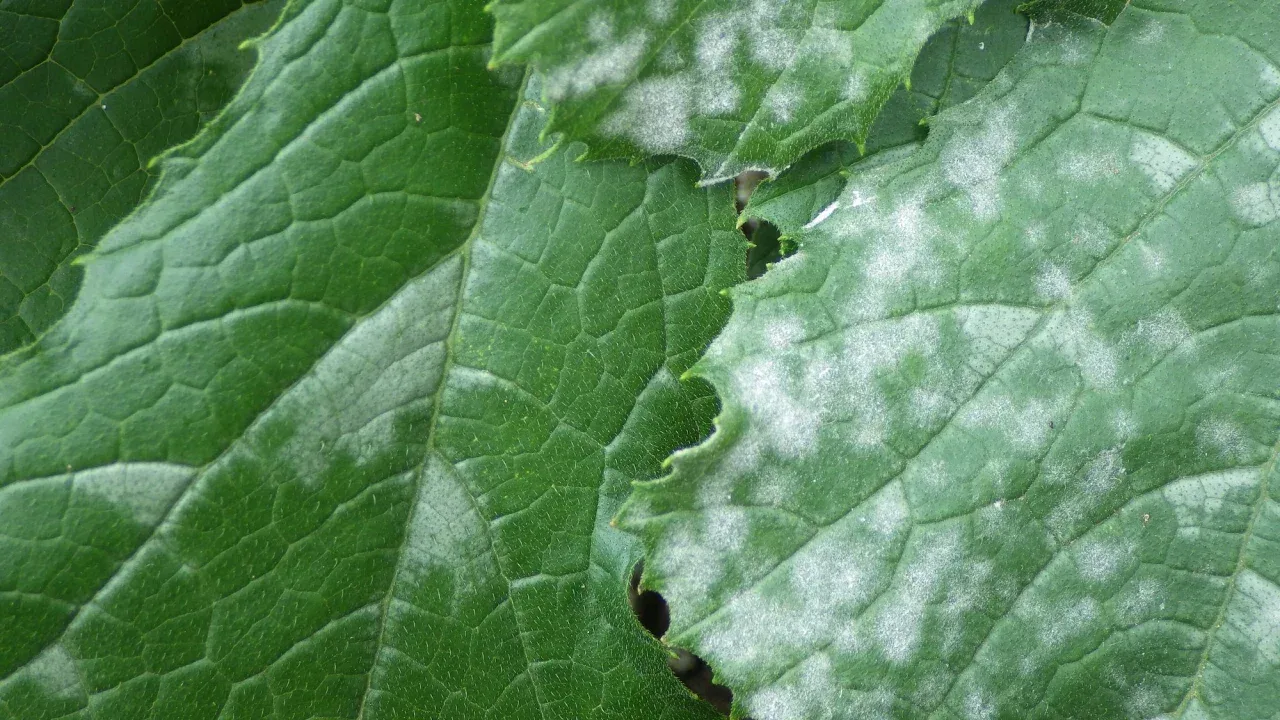
Powdery Mildew: How to Identify, Prevent and Treat It in Canada
Powdery mildew coats lilac, phlox, roses, squash and peas across Canada every summer. Learn how to identify it, why it thrives even in dry weather, how to prevent it, and which treatments are effective and allowed under Canadian and Ontario rules.
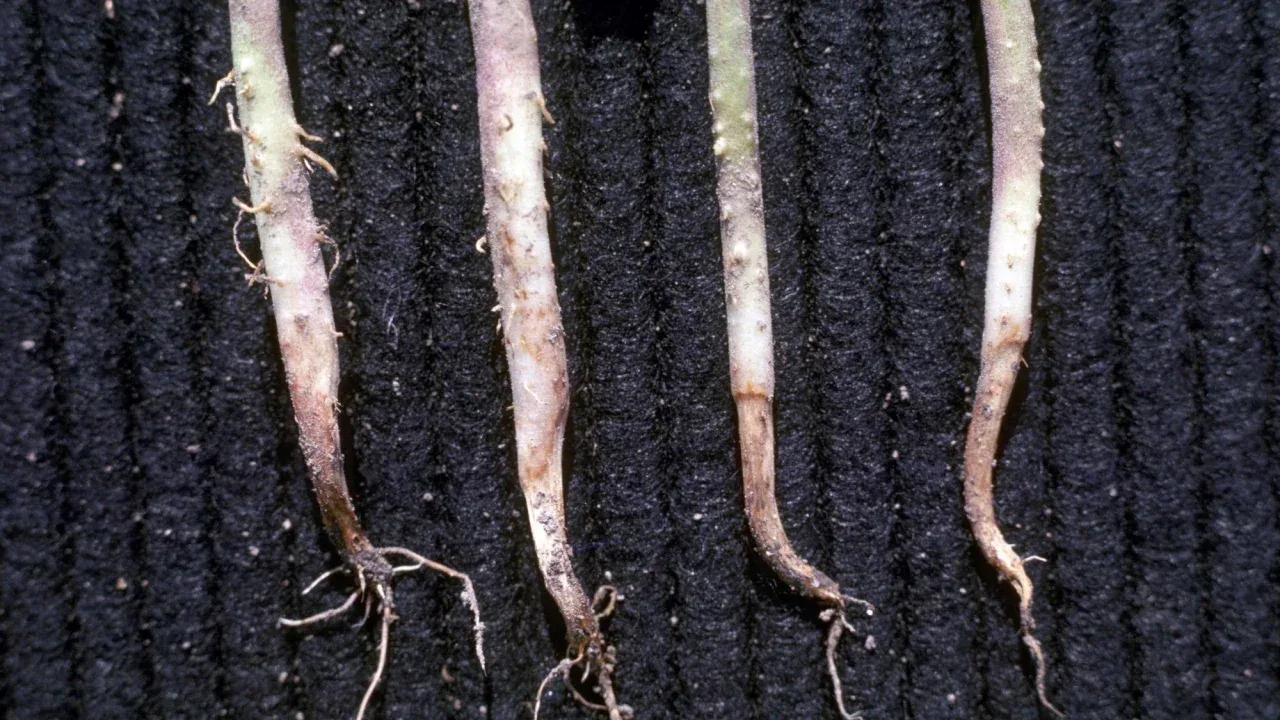
Root Rot in Houseplants and Garden Plants: Causes, Signs and How to Rescue Them
A plant that wilts in wet soil often has root rot. Learn what causes it, how to tell rotted roots from healthy ones, a step-by-step rescue for houseplants, and how to prevent root rot in pots and Canadian garden beds.
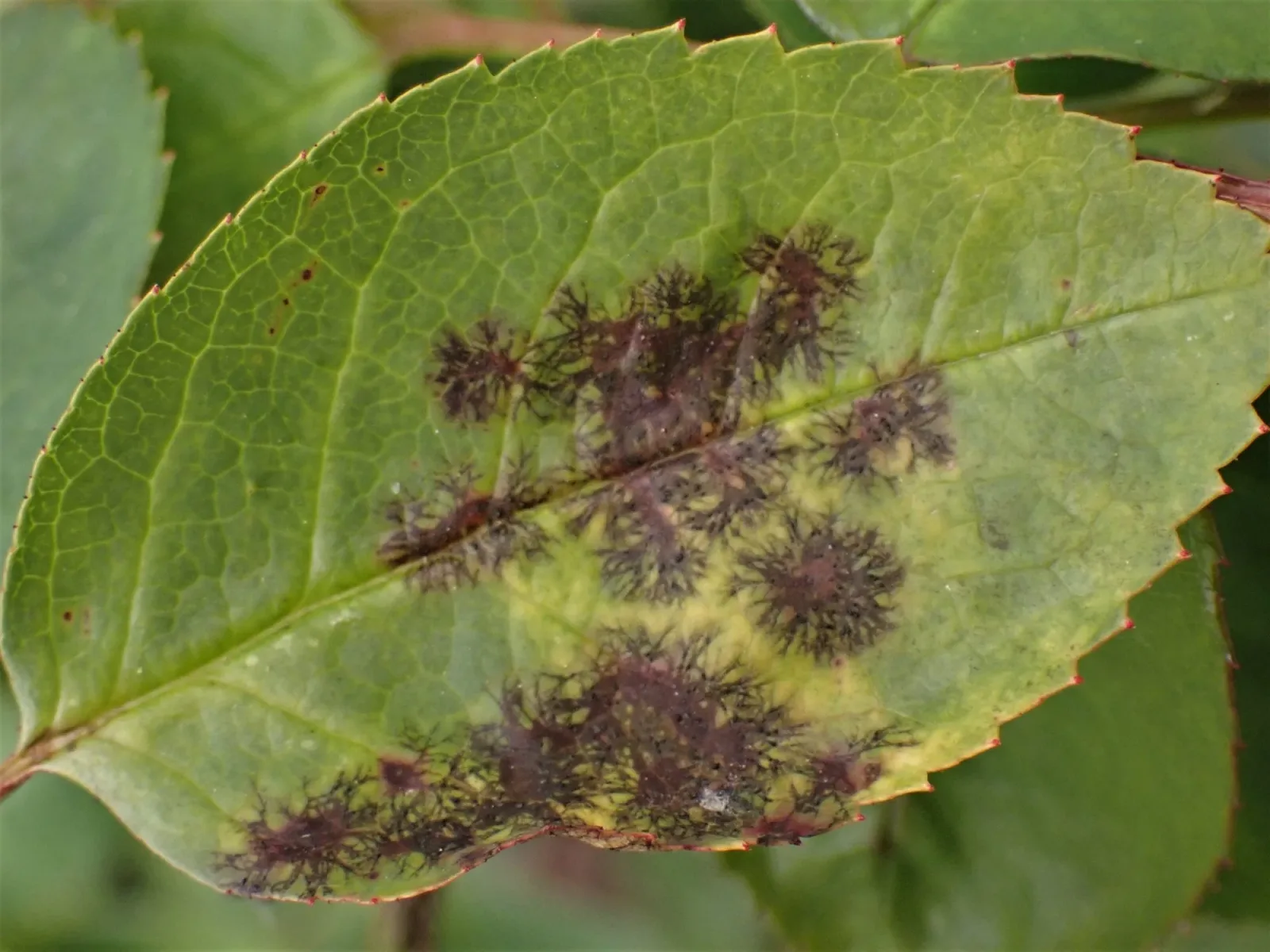
Black Spot on Roses in Canada: How to Identify, Prevent and Control It
Black spot is the most common rose disease in wet Canadian summers. Learn how to recognize it, which hardy Explorer, rugosa and Canadian Artists roses resist it best, and how to prevent and control it with sanitation first and registered sprays only if needed.
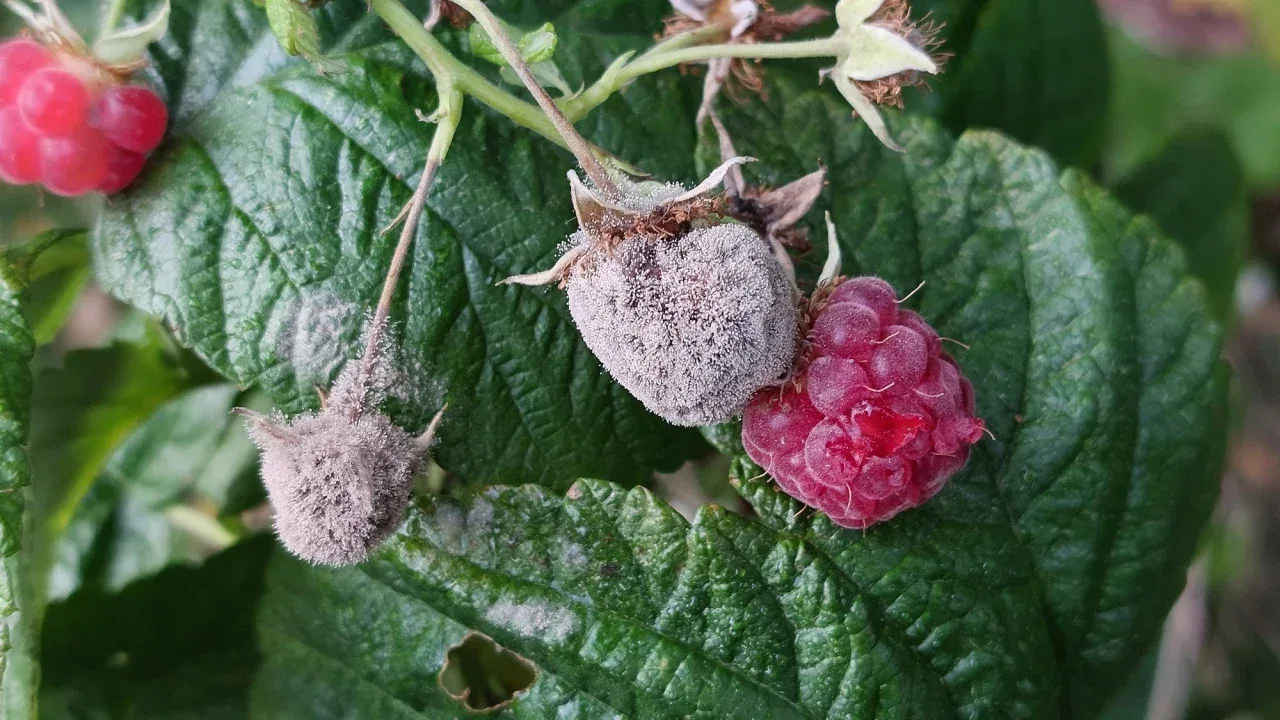
Leaf Spot, Rust and Botrytis (Grey Mould): A Canadian Gardener's Guide
Spots, orange pustules or fuzzy grey rot? Learn how to tell leaf spot, rust and botrytis (grey mould) apart, which Canadian plants they hit, from strawberries and peonies to saskatoons and hollyhocks, and the simple habits that prevent all three.
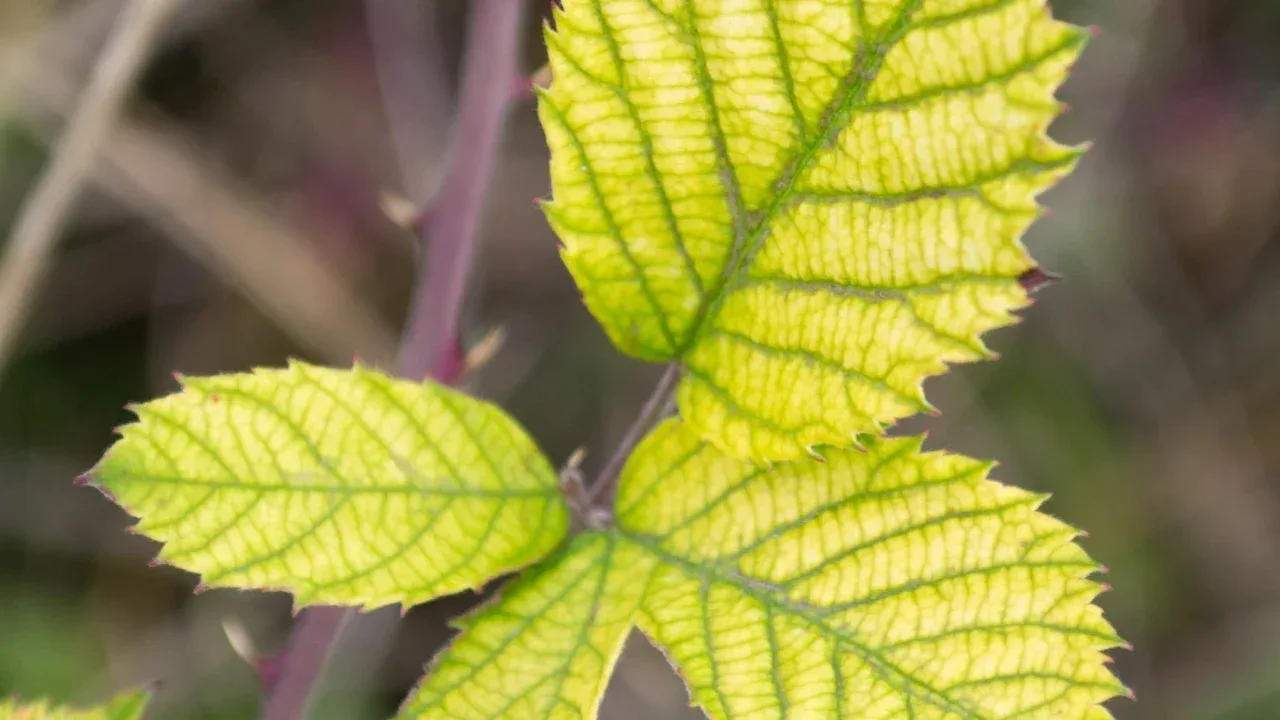
Yellow Leaves on Plants: What's Causing It and How to Fix It
Yellow leaves are a symptom, not a diagnosis. Learn to read the pattern, from lower leaves yellowing after overwatering to new growth yellowing between green veins on the Prairies, and how to fix the most common causes indoors and in Canadian gardens.
FAQ
Why are only the bottom leaves yellow?
The oldest leaves often yellow and drop as the plant grows. If new leaves are green and the soil is not soggy, this is normal.
Should I fertilise yellow leaves?
Not while the soil is wet. Fix watering and light first. Feed only in active growth.
Sources: www.rhs.org.uk (accessed 2026-11-10) · www.rhs.org.uk (accessed 2026-11-10)