
Calatheas often look perfect at the nursery and develop brown edges after their first furnace-heated winter. The answer is usually a steadier root zone, better water quality or a more suitable spot, not another bottle of plant food.
Quick answer
Calatheas need filtered light, a lightly moist airy root zone and protection from furnace-dry airflow. Check water quality when fresh leaf margins repeatedly brown. Through a Canadian heating season, monitor the conditions beside the pot, not only the room thermostat. Existing damaged edges stay brown even after care improves.
How do you identify calathea?
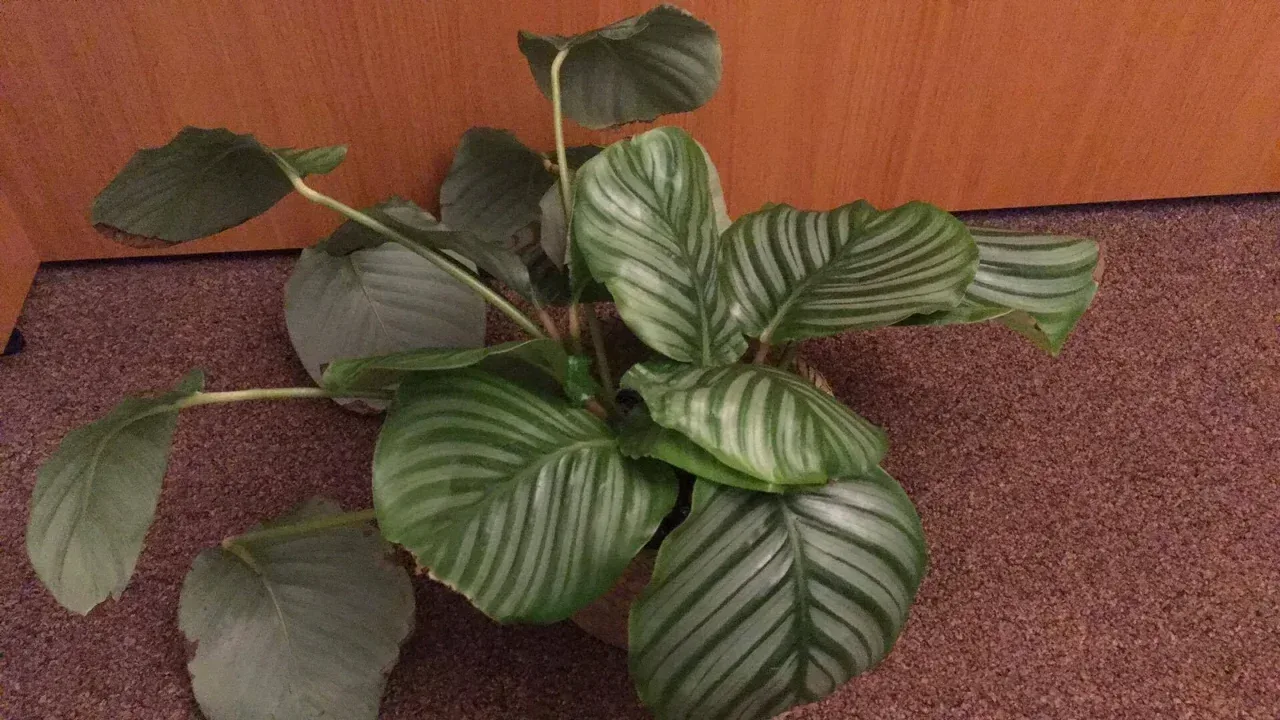
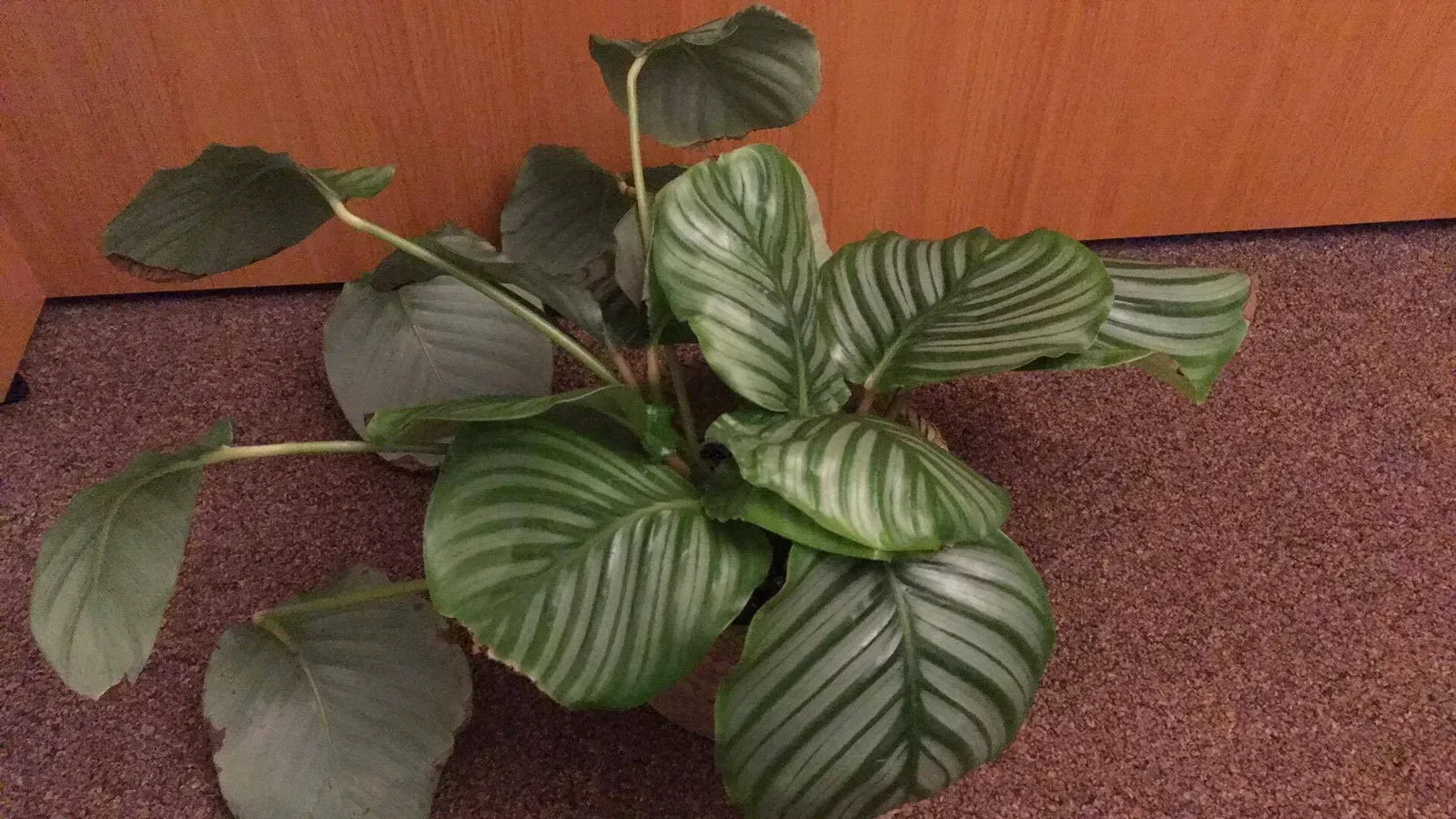
Calathea: Most plants sold as calatheas now belong to Goeppertia. Orbifolia has broad striped leaves; makoyana has feather-like patterns and lancifolia has narrow, wavy leaves. Maranta is a related but different genus.
How do you stop calathea edges turning brown in winter?
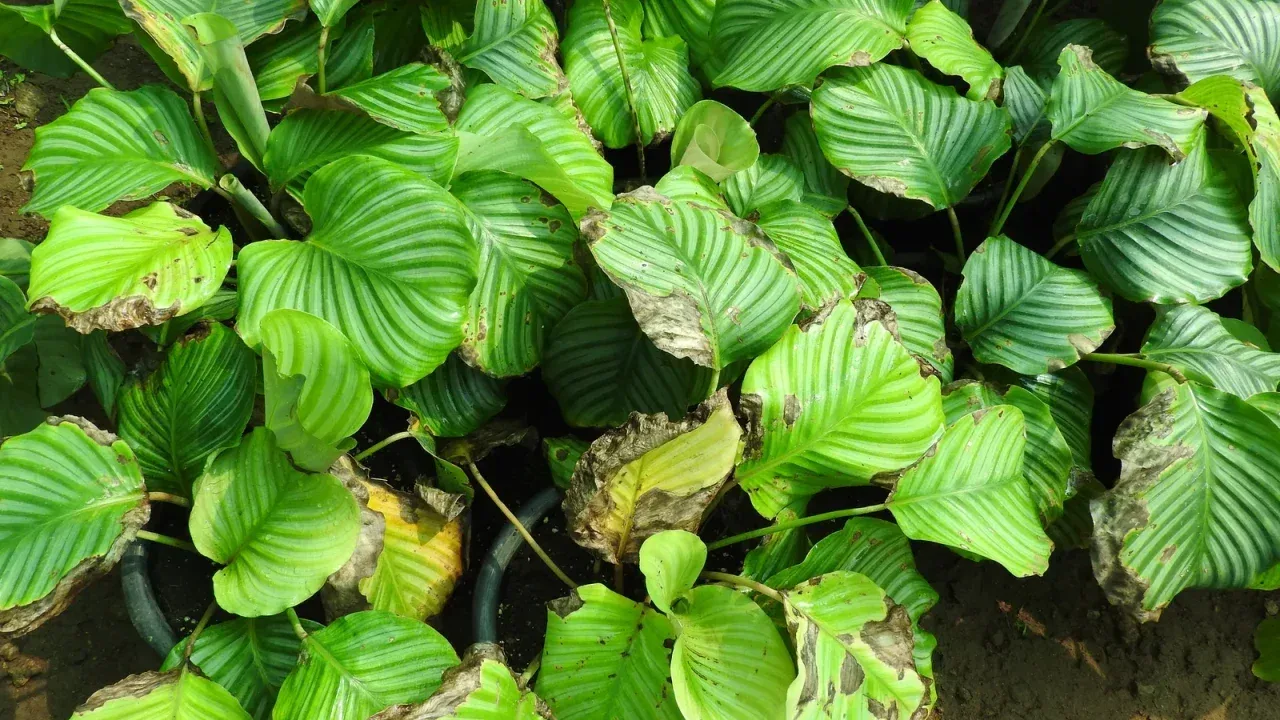
Check for mites, then measure humidity. Dry furnace air, water salts and irregular watering can all leave similar edges. A clean humidifier is more useful than repeated misting. Try low-mineral water if tap water leaves a crust on pots; standing hard water overnight does not remove minerals. Keep leaves away from cold glass. A warm room does not guarantee a warm sill. Cut only dead margins and judge improvements from fresh leaves, not old damage. For a full diagnosis, see Calathea leaves turning brown in a Canadian winter.
What light does it need in a Canadian winter?
East window or filtered south light.
Choose the window by watching the leaves through an ordinary day. Orbifolia's broad blades catch strong sun readily, so an unfiltered west pane may leave pale, papery patches. A position receiving gentle morning light is easier to manage. In a northern Canadian apartment, the same plant may need a lamp through winter even if that window was adequate in July. Set the light to cover the spread of foliage rather than one central leaf. Night-time leaf movement is expected in this family; it is not a reason to turn the lamp on again after dark.
How should you water through the seasons?
Calathea roots dislike both a prolonged soak and a complete dry-out. Check the upper mix and the weight of the container together. If the plant has wilted after drying, rewet the root ball slowly and let runoff escape instead of leaving it in a deep bowl for the weekend. A plant that curls above wet compost needs inspection rather than another drink. Thin leaf margins respond quickly to interrupted water supply. Smaller nursery pots may require attention sooner than a neighbouring palm, despite both standing on the same tray. Use the plant's own pot as the reference, not the whole shelf's watering day.
Water quality deserves a practical trial rather than an expensive collection of additives. Where the supply leaves mineral deposits, compare fresh growth after using collected clean rainwater or another low-mineral source. Water-softener output containing added sodium is not the same as low-mineral water. Avoid promising that a filter designed mainly for taste will remove every dissolved salt. Keep the source reasonably consistent while assessing a change. Existing brown margins remain brown, so photograph an emerging leaf and follow its development. Making several changes in one week prevents you from learning which adjustment actually helped.
What soil or potting mix is best?
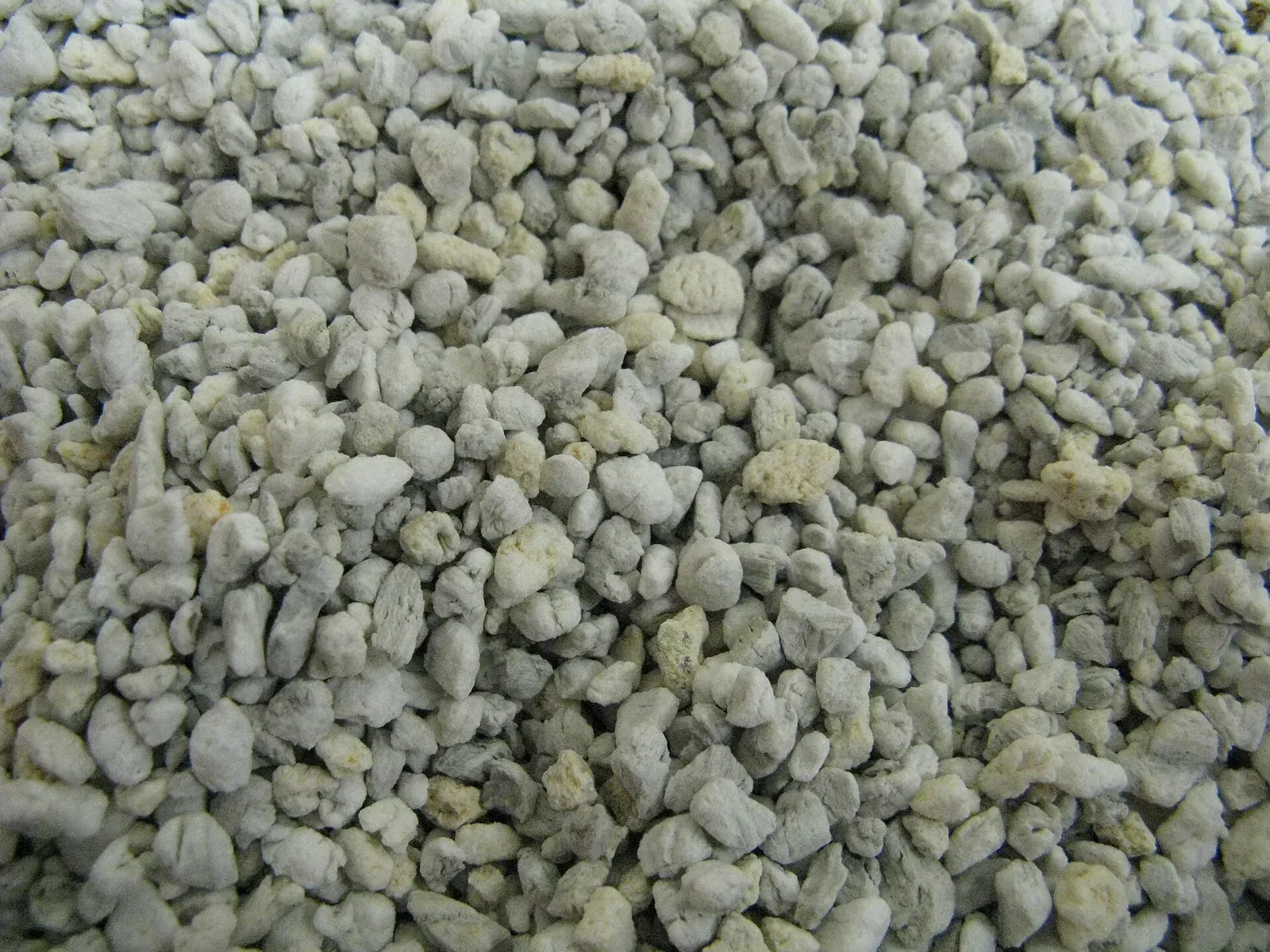
Prepare a moisture-retentive but open mix for the fine roots. A fibrous indoor base combined with perlite or similarly porous material is more forgiving than dense garden soil. Too much coarse bark can dry a small calathea faster than its owner expects; this is not a miniature orchid. During spring repotting, loosen only what separates easily. Tearing away all the old material can leave a dramatic foliage collapse. Set the crown at its former level and water the fresh mix evenly. Keep divisions large enough to retain useful roots and several healthy leaves rather than trying to make many tiny sale-sized plants.
When should you fertilize?
Quarter- to half-strength liquid feed monthly April to August.
Growth usually slows during dim periods, and feeding should slow with it. Resume a weak measured feed when the plant is actually producing leaves. Browning tips after a fertilizer increase suggest reviewing concentration and drainage before adding a different product. To tidy a damaged blade, trim the dead margin with sharp scissors while retaining a narrow brown border. Cutting deeply into green tissue creates a new injury line. Remove a fully yellow leaf by its stalk without tearing neighbouring shoots. The objective is to preserve working foliage, not to make every imperfect leaf disappear at once.
Does dry air or humidity matter?
Heating season is the difficult stretch for many patterned-leaf plants. Put a hygrometer beside this pot instead of relying on the reading in another room. A humidifier should improve the surrounding air without coating the leaves in droplets all day. Clean its reservoir as directed so it does not disperse dirty water. In a tightly sealed condo, persistent condensation is a warning to adjust the room setup. Do not trade one set of brown leaf edges for mould around the window. Avoid a hot air register even when humidity readings seem acceptable; its local airflow can dry leaf margins unevenly.
What temperatures and winter protection does it need?
Avoid cold drafts and heating vents.
How should you prune it?
Trim brown tips with clean scissors. Remove spent leaves at the base.
What is the best propagation method?
Divide rooted clumps with growing points in spring. Keep each division warm and lightly moist. A detached leaf in water will not grow into a new calathea. Avoid dividing a weak winter plant.
Which pests and diseases should you watch for?
Spider mites and thrips in dry air. Check leaf undersides weekly in winter.
Spider mites can be difficult to see on a patterned surface. Examine the underside under bright light and look for fine stippling that differs from the normal markings. Thrips can leave distorted unfolding leaves and dark specks. Separate a suspect plant before washing or treating it, and protect the mix from remaining saturated after a rinse. Any control product must be suitable for indoor ornamental use and tested on a small area first. Buy a calathea with a firm crown and developing shoots, not simply one whose older leaves have been trimmed to hide damage. A healthy growth point matters more than a perfect outline.
How do you work out the cause?
Crispy edges (dry air/tap water); faded colour (too much sun); curling (thirst or low humidity).
Is it safe around pets and children?
ASPCA includes Calathea species in its non-toxic plant guidance for household cats and dogs. Chewing any foliage can still upset the stomach. Keep fertilizers, treated leaves and potting mix away from pets and children.
A seasonal care calendar for Canada
| Season | What to do |
|---|---|
| Spring | New leaves; divide and repot if root-bound. Resume light feeding. |
| Summer | Keep Orbifolia out of air-conditioning drafts and compare the condition of new leaf margins with older damaged ones. |
| Autumn | Slow growth; keep humidity up as heating starts. |
| Winter | Hardest season. Soft water, humidifier, no cold windowsills. |
What should you check before buying?
The patterned leaves of prayer plant offer another moving-leaf display. Check the water-storage differences in alocasia polly, and consider anthurium if flowers matter more than a silver or striped blade.
What should you compare after changing water?
Follow one newly unfolding calathea leaf through maturity. Old brown margins cannot show whether a new water source helped; a clean fresh blade is the more useful comparison.
Watch: a related growing task
Comments
No comments yet — share what worked in your climate.