
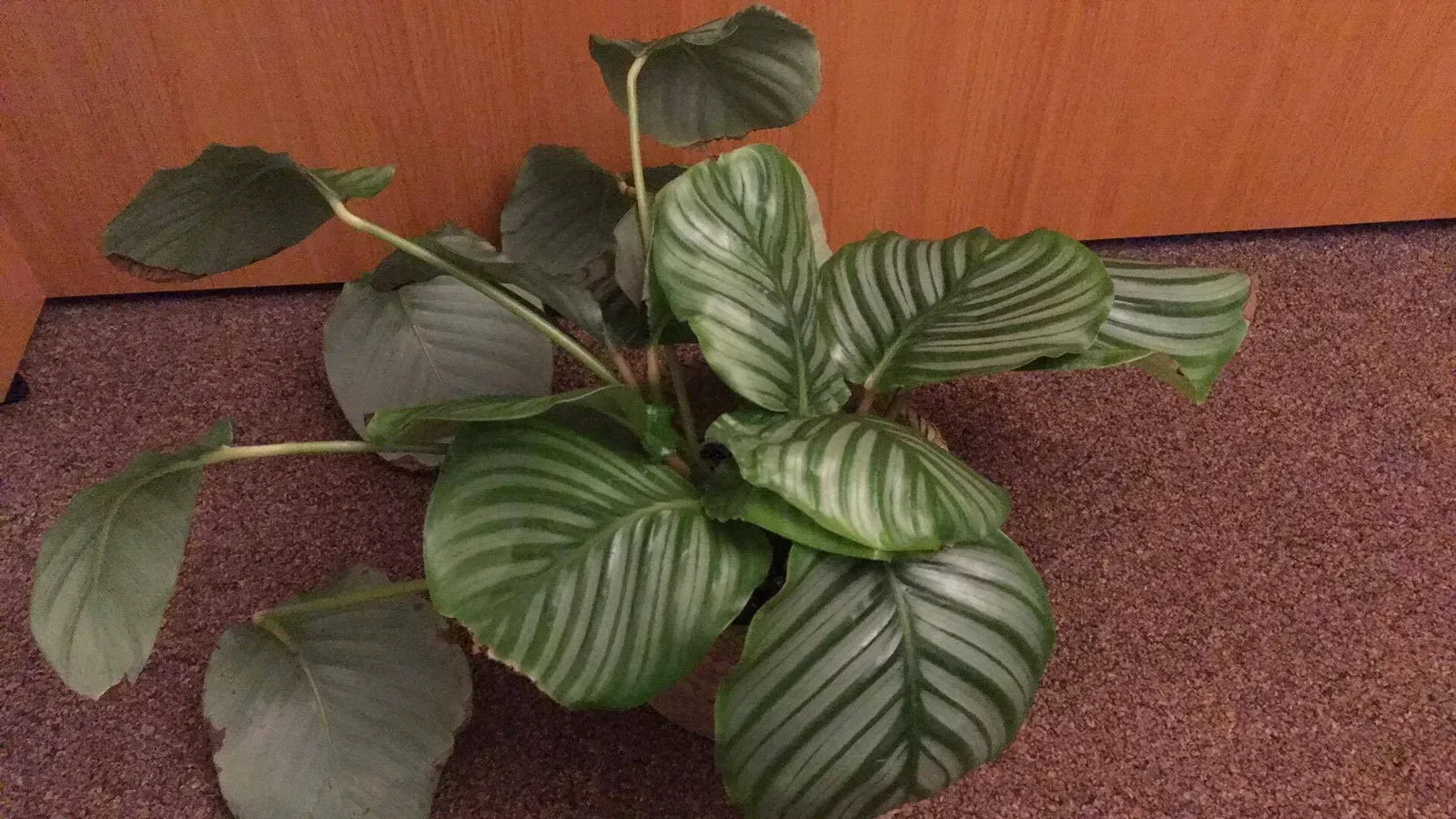
If your calathea leaves are turning brown this winter in Canada, the cause is usually one of four things: dry air from the furnace, the water you use, a cold spot near glass or a door, or roots that are staying too wet. The pattern of the brown tells you which one to check first. Crispy edges and tips on many leaves usually point to dry air or water quality. Soft, dark patches point to cold. Yellowing with brown, plus a damp pot, points to roots.
Brown tissue will not turn green again, so the goal is to stop new leaves from going the same way. Work through the checks below in order. Change one thing at a time so you can tell what made the difference.
Quick answer: what the brown pattern usually means
| What you see | Most likely cause | Check first |
|---|---|---|
| Thin, crispy brown edges or tips on several leaves | Low humidity, or salts and fluoride from tap water | Room humidity, water source |
| Brown edges plus curling leaves | Dry air combined with soil drying out too far | Soil moisture 2 to 3 cm down |
| Dark, soft or see-through patches, often on the side facing a window | Cold glass or a draft | Distance from window and outside door |
| Lower leaves yellow, then brown, pot heavy and damp | Overwatering or root rot | Roots and drainage |
| Pale speckling, dull or silvery leaves, fine webbing | Spider mites | Undersides of leaves with a hand lens |
| Bleached or brown patches in the middle of the leaf | Hot sun through glass, or a heater blowing on it | Sun hours and heat registers |
Why calatheas brown more in a Canadian winter
Most plants sold as calathea are now classed in the genus Goeppertia (for example Goeppertia orbifolia and G. makoyana), though the old name is still on most plant tags. They come from humid tropical forest floors. NC State Extension describes the group as liking warmth, high humidity, medium indirect light and soil that stays moist but not soggy.
A heated Canadian home in January gives them almost the opposite. Forced-air furnaces, baseboard heaters and wood stoves warm the air, and warm air that started out cold outside holds very little moisture. The plant keeps losing water through its broad, thin leaves faster than the roots can replace it, and the leaf margins, which are furthest from the veins, dry out first. That is why the RHS says brown leaf tips and edges on calatheas are usually a result of low humidity.
Winter also adds cold spots. Window glass and outside walls can be much colder than the middle of the room, especially at night. And with less light, the plant uses less water, so a watering routine that worked in July can leave the pot wet for too long in January.
Step 1: Look at where the brown starts
Before you change anything, take a slow look at the plant in good light.
- Is the brown on the edges and tips, or in patches across the leaf?
- Is it dry and papery, or soft and dark?
- Is it on new leaves, old leaves, or both?
- Is one side of the plant worse than the other?
Dry, papery edges spread over many leaves are the classic dry-air pattern. Damage on one side only, especially the side near a window, suggests cold or sun. Soft brown that starts at the base of the stems is a root or rot problem and needs a different fix entirely.
Step 2: Measure the humidity, don't guess
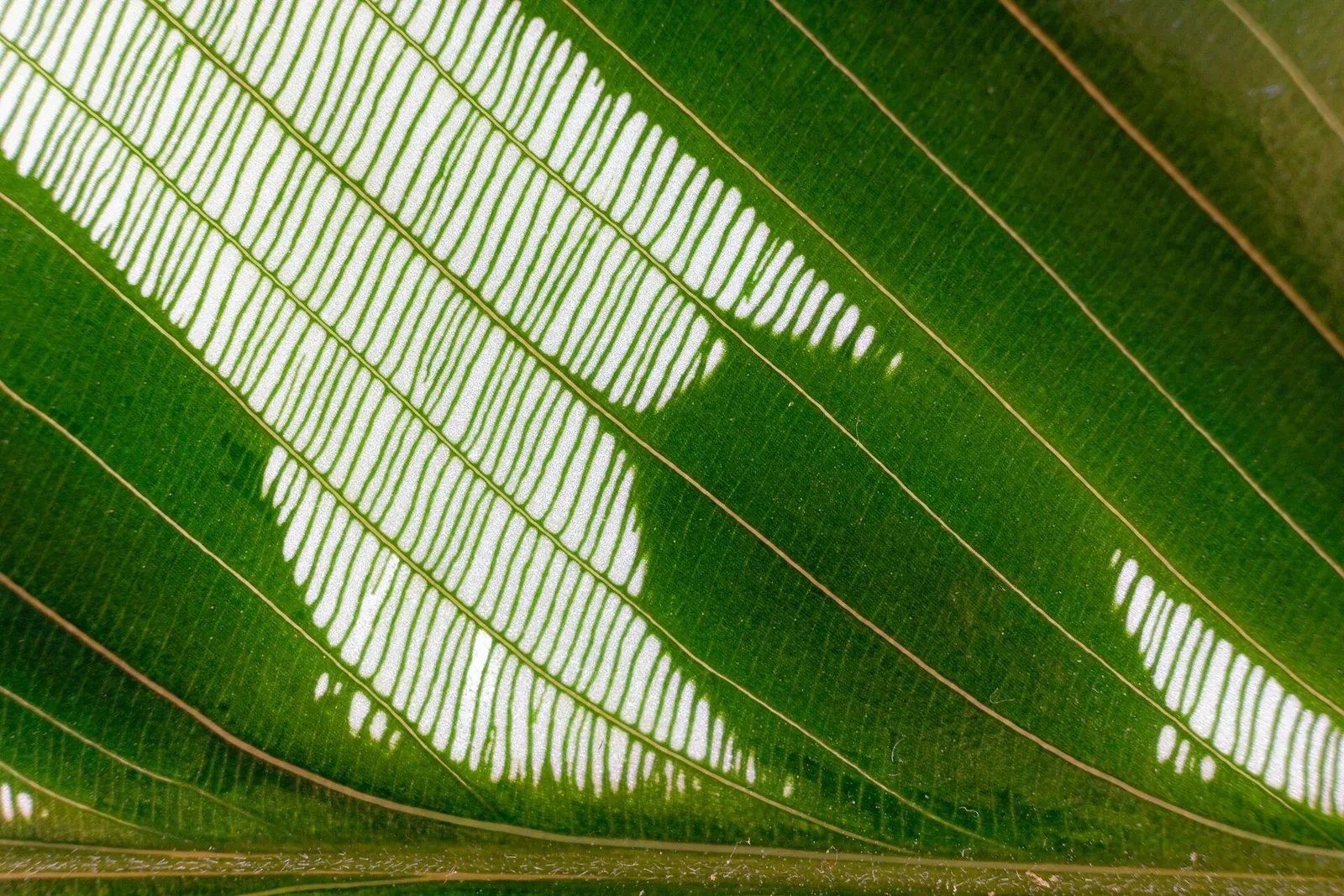
A basic digital hygrometer costs about as much as a small plant and settles the question quickly. Put it near the calathea for a day or two. NC State lists a humidity of at least 60% as what Goeppertia orbifolia needs to thrive, which most heated homes will not reach in winter without help. You do not have to hit that number exactly. Calatheas can grow well at lower readings, but the lower and drier it gets, the more brown edges you should expect.
Ways to raise humidity around a calathea
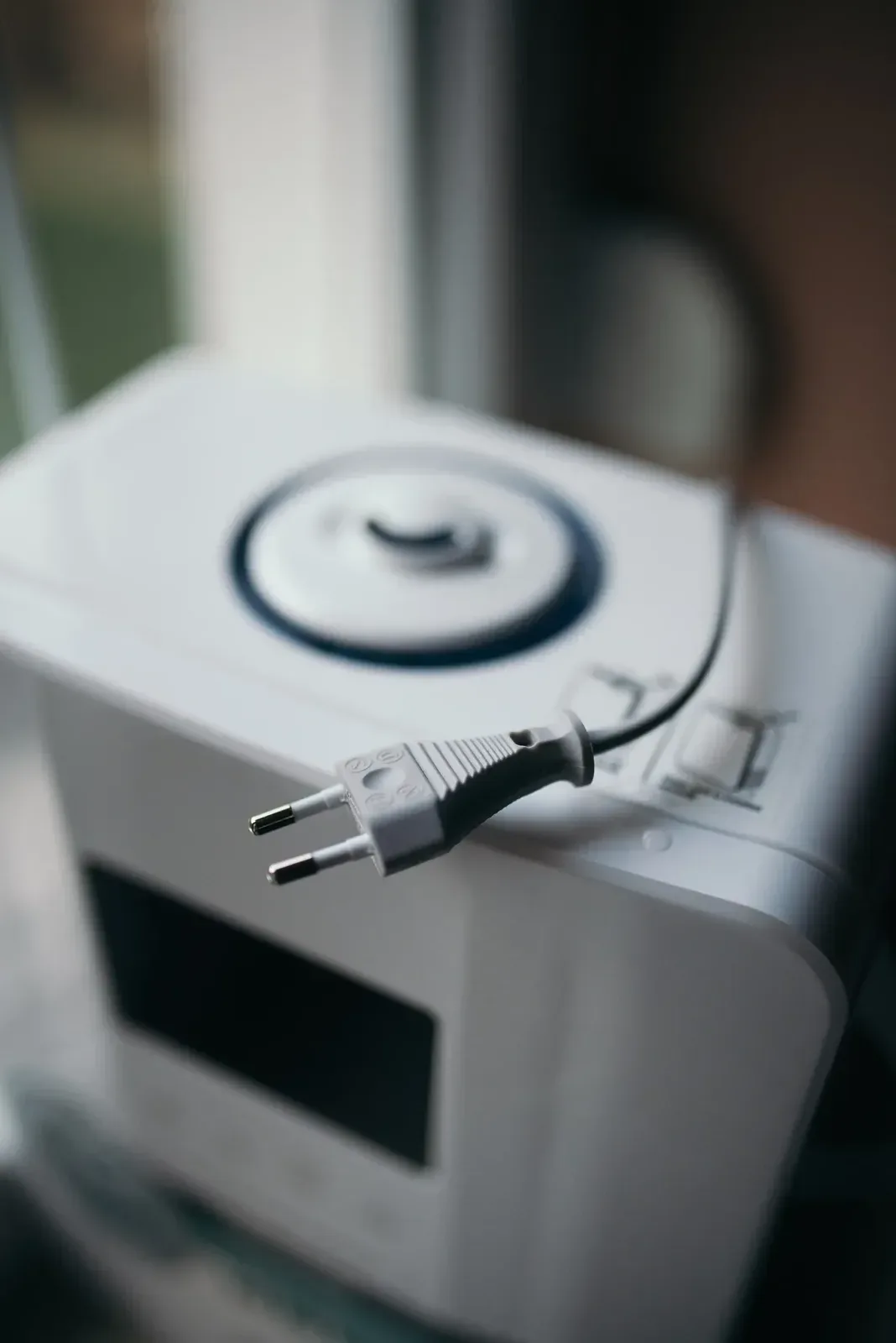
- Run a humidifier in the room. This is the only option that changes the air noticeably in a dry Canadian house.
- Group plants together so they share the moisture they give off.
- Use a wide tray of gravel or clay pebbles with water just below the surface, as the RHS suggests. The pot should sit on the stones, not in the water.
- Move the plant to a bright bathroom or kitchen if there is enough light there.
- Keep it away from heat registers, radiators and the air coming off a wood stove.
Misting the leaves gives a short boost, but in very dry rooms the effect fades within minutes. If you mist, do it as an extra, not as your main fix.
Step 3: Check your water
If humidity is reasonable and the edges are still browning, look at the water. NC State notes that fluoride in tap water can brown the leaf tips of G. orbifolia, and recommends distilled water or rainwater. The RHS says calatheas will tolerate tap water if it has stood for at least 24 hours so the chlorine can escape. Standing does not remove fluoride or dissolved minerals, though, so it only solves part of the problem.
- Avoid water from a water softener. University of Illinois Extension advises against softened water for houseplants, because softeners add sodium.
- Try distilled water, filtered water, or rainwater for a month and see whether the new leaves stay cleaner.
- Melted snow can work in winter, but let it reach room temperature, and skip snow from beside roads or driveways where salt is used.
- Use water at room temperature. Very cold water straight from the tap in January is a shock to tropical roots.
If you see a white crust on the soil surface or the pot rim, salts have built up. Take the plant to the sink and let water run slowly through the pot for a minute or two, then let it drain fully. Do this in the morning so the pot is not sitting cold and wet overnight.
Step 4: Feel the soil, and check the roots if needed
Calatheas like even moisture. The RHS says to keep the potting mix evenly moist in spring and summer and to take care not to overwater in winter. Both extremes cause brown leaves:
- If the mix is dry 2 to 3 cm down and the leaves are curling as well as browning, the plant is drying out between waterings. Water thoroughly until some drains out, empty the saucer, and check again sooner.
- If the mix is still wet several days after watering, the pot feels heavy, and lower leaves are yellowing before they brown, slow down. Ease the plant out of its pot. Healthy roots are pale and firm. Brown, soft roots that pull apart easily mean rot. Trim them off and repot into fresh mix in a pot with a drainage hole that is only a little bigger than the root ball.
There is no safe fixed schedule. A calathea in a plastic pot in a cool room might go two weeks between waterings in January, while the same plant in a terracotta pot near a heat source could need water twice as often. Check by feel every few days instead. Our watering calculator can help you set a starting point, and our guide to watering houseplants in a Canadian winter goes into more detail.
Step 5: Look for cold, sun and pests
Cold glass and drafts
NC State suggests keeping orbifolia at a steady 18 to 24 °C and away from cold drafts. A leaf pressed against a window on a −25 °C night can be damaged even when the room feels warm. Cold injury usually looks dark and water-soaked at first, then turns brown. Move the plant at least an arm's length from single-pane or older windows at night, and keep it away from outside doors. Our guide on cold windows and drafts explains how to find the cold spots in your home.
Low winter sun
Low sun in February can come straight through a south window for hours. Calatheas need bright but indirect light, and direct sun can scorch the leaves, according to NC State. A sheer curtain usually solves it.
Spider mites
Warm, dry rooms suit spider mites. The RHS lists speckled, yellowing or silvery leaves with fine webbing as signs. Turn a few leaves over and look with a hand lens. If you find them, rinse the plant in the shower, raise the humidity, and see our spider mite page. If you use a product, choose one registered for indoor plants in Canada and follow the label.
What to do with leaves that are already brown
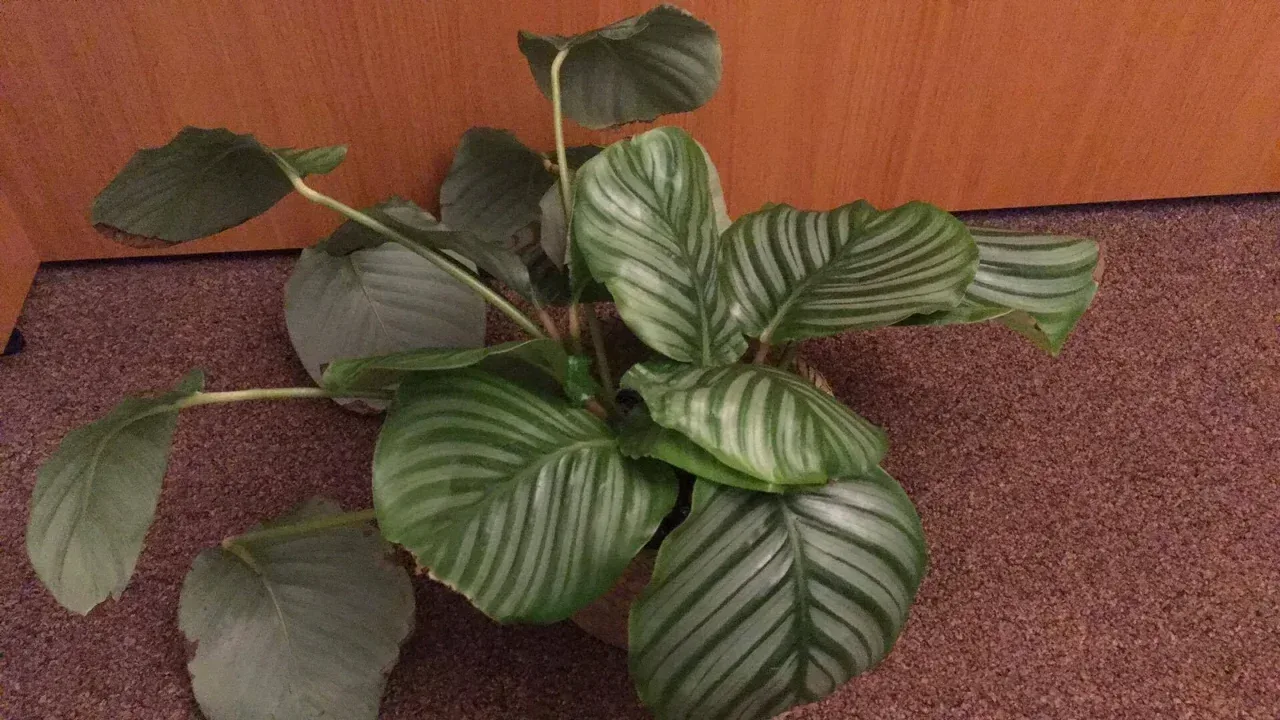
Trim brown edges with clean, sharp scissors, following the natural shape of the leaf and leaving a thin line of brown so you do not cut into healthy tissue. If more than about half a leaf is brown, cut the whole leaf off at the base. The RHS notes that calatheas do not need pruning beyond removing faded brown leaves. Judge your changes by the next two or three new leaves, not the old ones.
A simple winter routine for calatheas in Canada
- November: move the plant away from cold glass and heat registers, set up a humidifier or pebble tray, and stop feeding.
- Every few days: feel the mix. Water when the top 2 cm feels just dry, using room-temperature water low in minerals.
- Every two weeks: check leaf undersides for mites and wipe dust off the leaves.
- February and March: watch for strong sun through south windows and filter it if needed.
- April: when new growth starts, resume light feeding and repot if the roots fill the pot.
For the full year-round routine, see our calathea care guide for Canada and the calathea plant profile. The closely related prayer plant browns for the same reasons and responds to the same fixes.
Is calathea safe for cats and dogs?
The ASPCA lists Calathea species as non-toxic to dogs, cats and horses. That does not cover products you put on the plant, so keep pets away from leaves after treating for pests. If a pet chews a plant and seems unwell, call your veterinarian.
Watch: a video walk-through
Tanner The Planter walks through calathea care with a focus on avoiding brown edges. Watch it for the watering and humidity basics, then use the steps above to match the fix to your own home.
Still not sure? Our brown leaf tips page covers the same symptom on other houseplants, and the plant problems hub can help you match other symptoms.
Sources
Sources last checked 10 November 2026. Advice varies with your home, region and plant; use these as a starting point.
- NC State Extension Plant Toolbox: Goeppertia
- NC State Extension Plant Toolbox: Goeppertia orbifolia
- RHS: How to grow calatheas
- University of Illinois Extension: Watering houseplants
- Iowa State University Extension: Why does my houseplant have brown leaf tips and edges?
- ASPCA Animal Poison Control: Calathea
- University of Vermont Extension: Houseplant care during the winter months
Comments
No comments yet — share what worked in your climate.