
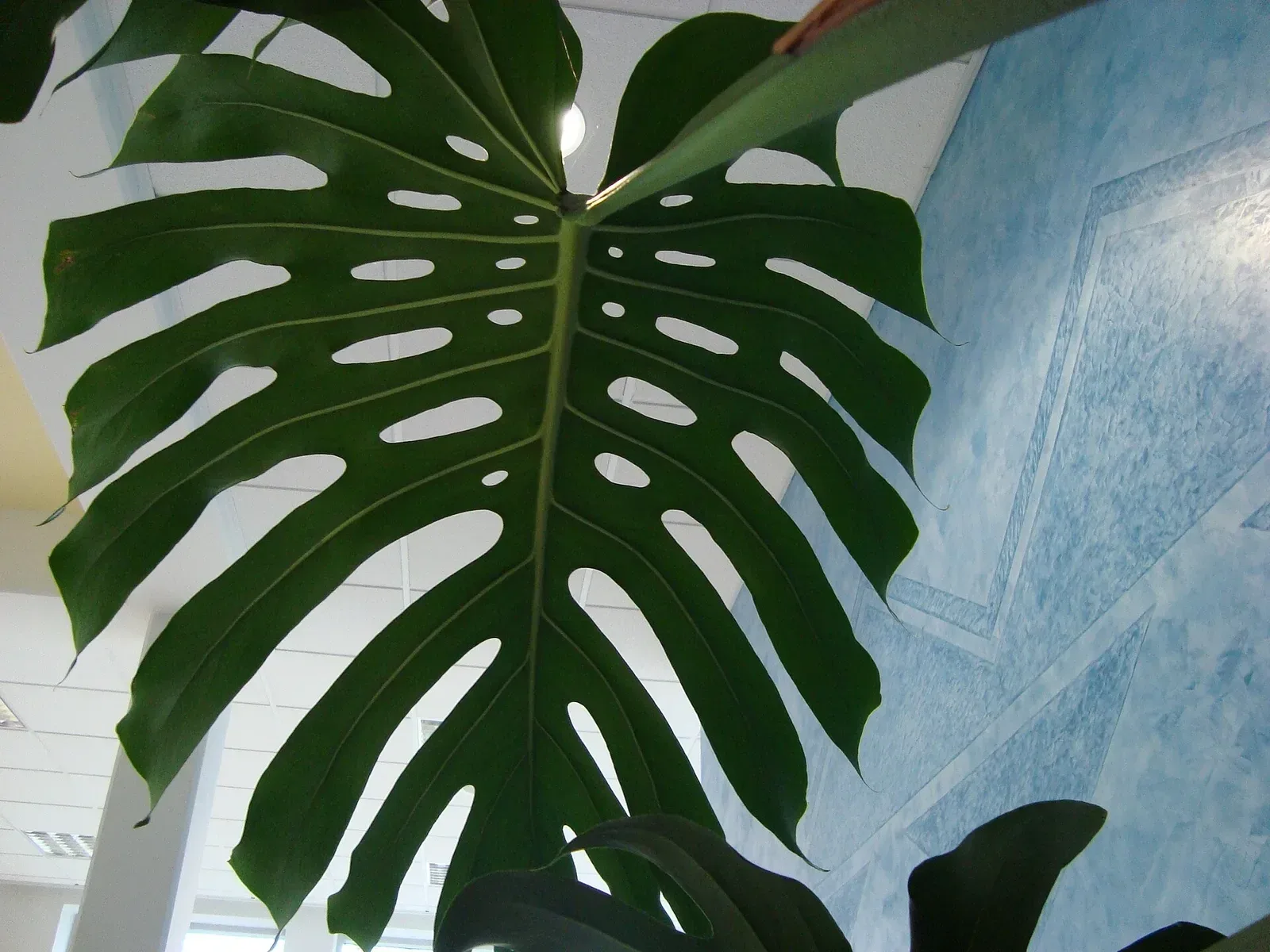
When monstera leaves turn yellow in winter, the usual reason is a large pot of potting mix that stays wet while the plant is barely growing. Short days, a cool room and a big container are a bad mix for roots. Less often, the cause is a cold window, dry heat, pests, or simply an old lower leaf reaching the end of its life.
Monstera deliciosa is a sturdy plant. A few yellow leaves in January rarely mean it is dying, but they do mean something in its routine needs to change. The checks below go from most to least likely.
Quick answer
- One old, low leaf yellowing evenly while new leaves look fine: normal. Remove it when it is fully yellow.
- Several leaves yellow, mix damp, brown or black spots or edges: overwatering. Let the mix dry further and check roots.
- Yellow leaves that are also crisp and curling, mix dry all the way down: underwatering, often near a heat register.
- Pale, smaller new leaves with fewer splits, leaning hard towards the window: low light.
- Yellow or dark patches on leaves touching or facing the glass: cold injury.
- Fine pale speckles or silvery streaks, sometimes webbing: spider mites or thrips.
What monstera needs, and what winter takes away
NC State Extension describes Monstera deliciosa as liking temperatures of about 16 to 29 °C, moderate brightness without direct sun, and high humidity. It suggests watering thoroughly, then letting the top quarter to one-third of the potting mix dry before watering again.
That guidance matters more in winter than in summer. With low light, a monstera uses water slowly, so the time it takes for the top third of a large pot to dry can stretch out a lot. Watering on the same day each week, as many people do in summer, is how most winter yellowing starts.
Check 1: How wet is the pot, really?
A big monstera pot can be dry on top and wet at the bottom. A finger only tells you about the top few centimetres. Better options:
- Push a wooden chopstick or skewer to the bottom of the pot, leave it for a minute, then pull it out. Dark, damp wood or soil clinging to it means the lower mix is still wet.
- Use an inexpensive moisture meter, pushing the probe to different depths.
- Tip smaller pots on their side and look at the drainage hole. Is the mix there dark and wet?
If the lower mix is still wet, wait. If the whole pot is dry, water slowly and thoroughly until water runs out of the drainage holes, then empty the saucer. Check our guide to watering houseplants in a Canadian winter for more on reading a pot.
Watch out for cachepots
Many monsteras are sold in a plastic grow pot inside a heavier decorative pot with no hole. Water drains out of the inner pot and pools out of sight. Lift the inner pot out 15 to 20 minutes after watering and tip out any water. If the plant is too heavy, use a turkey baster or a cup to remove water from the gap, or prop the inner pot up on a few stones.
Check 2: Look at the roots if leaves keep yellowing
If yellowing keeps spreading and the mix has been wet for a long time, check for root rot. Ease the plant out on a tarp or in the bathtub. Firm, pale roots are healthy. Dark, mushy roots that smell sour are rotting.
- Cut away soft roots with clean pruners.
- Shake off the old, wet mix.
- Repot into fresh, chunky, free-draining indoor mix. A pot only a little larger than the remaining root ball holds less extra water.
- Water once lightly to settle the mix, then wait until the top third is dry before watering again.
Winter is not the ideal time to repot, so only do this if the roots are clearly in trouble. NC State recommends repotting in spring when it is not urgent. Wear gloves: the sap can irritate skin.
Check 3: Light
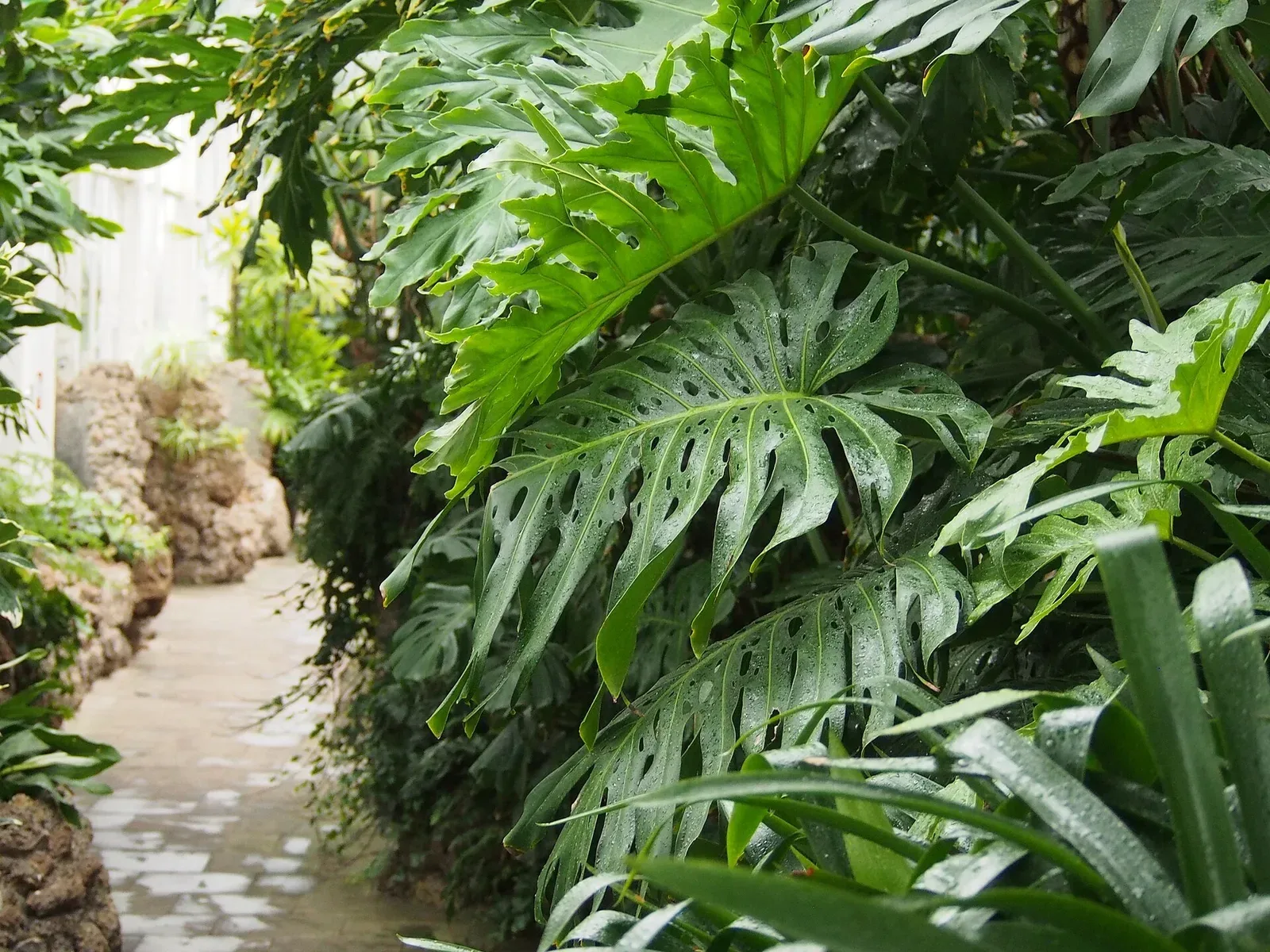
Monstera can live in moderate light, but a spot a few metres from a window in December may not be enough. Low-light signs include long gaps between leaves, new leaves with few or no splits, and the whole plant leaning towards the glass. Low light leads to slow growth, which leads to wet roots, which leads to yellow leaves.
- Move the plant closer to a bright window for winter. Low winter sun is much less likely to scorch than summer sun, but keep leaves from pressing against the glass.
- Rotate the pot a quarter turn every week or two.
- If you cannot get it closer to a window, a grow light above the plant on a timer makes a real difference.
- Wipe dust from the big leaves with a damp cloth.
Check 4: Cold glass, doors and heat registers
NC State's lower comfort limit of about 16 °C is a useful rule. In a Canadian winter, leaves resting on window glass, or a plant near a patio door that is opened often, can be much colder than that even when the thermostat reads 21 °C. Cold-damaged areas usually look dark and water-soaked at first, then turn yellow or brown.
Heat is the other extreme. A monstera right above a heat register or beside a baseboard heater gets blasted with dry air, which dries the mix unevenly and can brown leaf edges. Move it so warm air does not blow straight onto the leaves. Our guide to cold windows and drafts covers placement in more detail.
Check 5: Pests
Warm, dry indoor air in winter suits spider mites. Look on the undersides of leaves for tiny moving dots, fine webbing and pale speckles on the top side. Thrips leave silvery streaks and small black specks. Rinse leaves in the shower, wipe both sides, and repeat weekly for a few weeks. If you need a product, choose one registered for indoor plants in Canada and follow the label. See our spider mites and thrips pages.
What about fertilizer and humidity?
Feeding a yellowing monstera in winter rarely helps. The plant is barely growing, and unused fertilizer salts collect in the mix. Wait for new growth in spring.
Low humidity is more likely to cause brown edges than yellow leaves. NC State suggests a humidifier or a pebble tray if your rooms are dry. In most Canadian homes a humidifier makes the bigger difference.
When yellow is normal
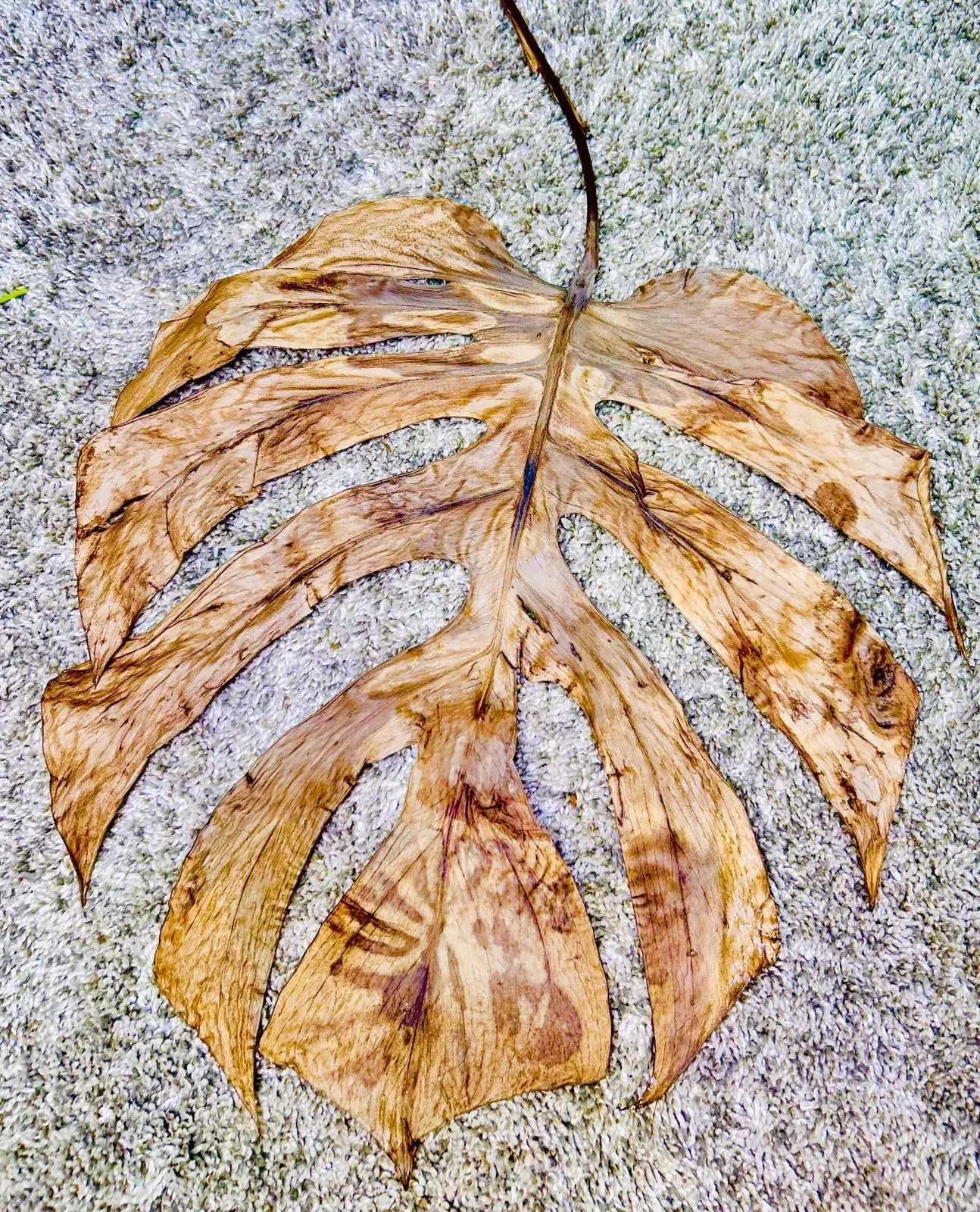
Monsteras shed their oldest, lowest leaves from time to time, especially when a big new leaf is unfurling. If it is one leaf at a time, it yellows evenly, and the rest of the plant is firm and green, leave it until it is fully yellow and then cut the stalk near the stem. The plant often pulls nutrients back from the leaf while it fades.
Safety for pets and children
The ASPCA lists Monstera deliciosa as toxic to dogs and cats because of insoluble calcium oxalates. Chewing causes mouth pain, drooling and vomiting. Keep cut leaves and trimmings away from pets, and contact a veterinarian if a pet chews the plant.
Related reading: yellow leaves, root rot, the Monstera adansonii care guide, and the mini monstera profile.
Watch: a video walk-through
Homemakr covers five common Monstera deliciosa problems and fixes. For winter yellowing, pay most attention to the watering and light sections.
Sources
Sources last checked 10 November 2026. Advice varies with your home, region and plant; use these as a starting point.
- NC State Extension Plant Toolbox: Monstera deliciosa
- ASPCA Animal Poison Control: Swiss cheese plant (Monstera deliciosa)
- Iowa State University Extension: How often should houseplants be watered during the winter months?
- University of Vermont Extension: Houseplant care during the winter months
- University of Illinois Extension: Watering houseplants
Comments
No comments yet — share what worked in your climate.