
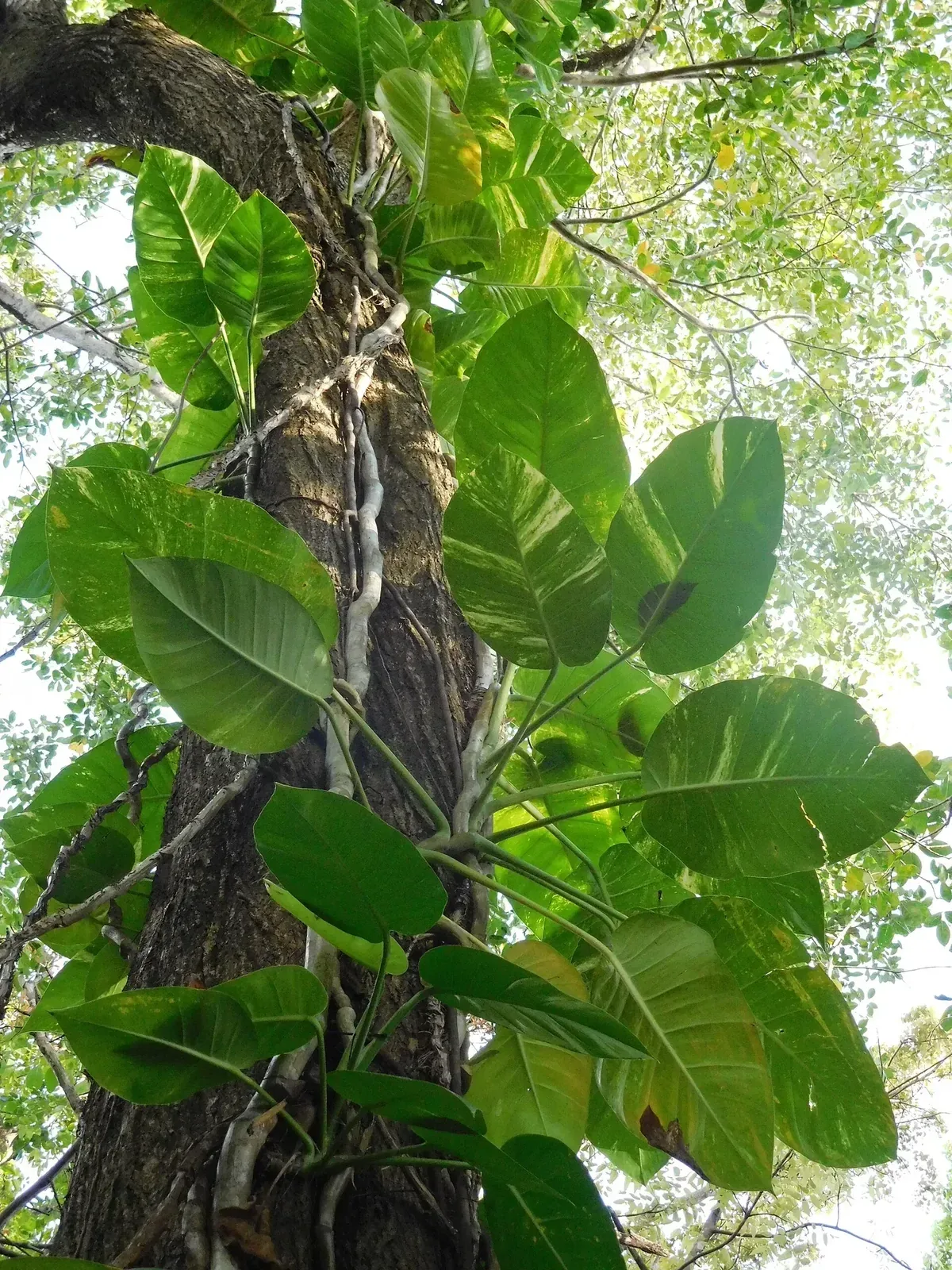
Pothos leaves turning yellow in winter is most often a watering problem. As the days shorten, the plant uses far less water, but many of us keep watering on the summer routine. The mix stays wet, roots start to suffer, and leaves yellow. Low light and cold window glass are the next most common causes. One old leaf yellowing now and then is normal.
The good news is that pothos (Epipremnum aureum) is a forgiving plant. Once you find the cause and fix it, new growth usually comes in healthy in spring. The yellow leaves themselves will not turn green again.
Quick answer: match the yellow to the cause
| What you see | Likely cause |
|---|---|
| One or two of the oldest leaves near the pot turn evenly yellow and drop, rest of plant fine | Normal ageing |
| Several leaves yellow at once, soft or limp, mix still damp days after watering, dark edges | Overwatering, possibly root rot |
| Yellow with crispy brown patches, vines limp, mix bone dry and pulling away from the pot | Underwatering or drying too fast near a heat source |
| New leaves small and pale, long bare stem between leaves, older leaves yellowing slowly | Not enough light |
| Yellow or dark patches on the side touching or facing the glass | Cold window or draft |
| Fine yellow speckles, sticky residue or cottony spots | Pests such as spider mites or mealybugs |
Why pothos yellows more in winter
Pothos is a tropical climber. The RHS describes it as liking bright, indirect light, warmth and regular light watering, and warns that keeping the mix too wet, or leaving the plant standing in water, can rot the roots. In a Canadian winter, light can drop to a fraction of summer levels, and growth slows right down. A pot that dried out in four or five days in July may now stay damp for two weeks.
NC State Extension lists root rot and blackening of the leaf margins as signs of overwatering, and loss of variegation as a sign of low light. Both show up most often between November and March.
Check 1: Is it just an old leaf?
Look at where the yellow leaves are. If it is one leaf at the base of a vine, it turned yellow slowly and evenly, and everything else looks firm and green, the plant is simply shedding an old leaf. Pull it off once it comes away easily. No other change is needed.
If several leaves are yellowing at once, or the yellow leaves are halfway along the vines or near the tips, keep going.
Check 2: Feel the mix and lift the pot
Push a finger into the mix up to the second knuckle, about 5 cm. Then lift the pot. With practice, the weight tells you as much as your finger.
- Damp at 5 cm and heavy: hold off. The RHS advice is to water only once the mix is approaching dryness.
- Dry at 5 cm and light: water thoroughly until water runs out of the bottom, then empty the saucer or cachepot after 15 minutes.
- Dry on top but wet and sour-smelling lower down: the bottom of the pot is waterlogged. Check drainage and roots.
Decorative pots without holes are a common winter trap. Water collects at the bottom where you cannot see it. If your pothos sits in a cachepot, lift the inner pot out after watering and tip out any water.
If you suspect root rot
Slide the plant out of its pot. Healthy roots are firm and pale. Rotten roots are brown or black, mushy, and the outer layer slips off when you pinch. Trim the rotten roots back to firm tissue with clean scissors, shake off the old wet mix, and repot in fresh, free-draining indoor mix in a pot with a drainage hole. Do not move it into a much bigger pot; extra mix holds extra water. If almost all the roots are gone, take cuttings from healthy vines instead. The RHS notes that pothos roots readily from stem cuttings placed in water.
Check 3: Is there enough light?
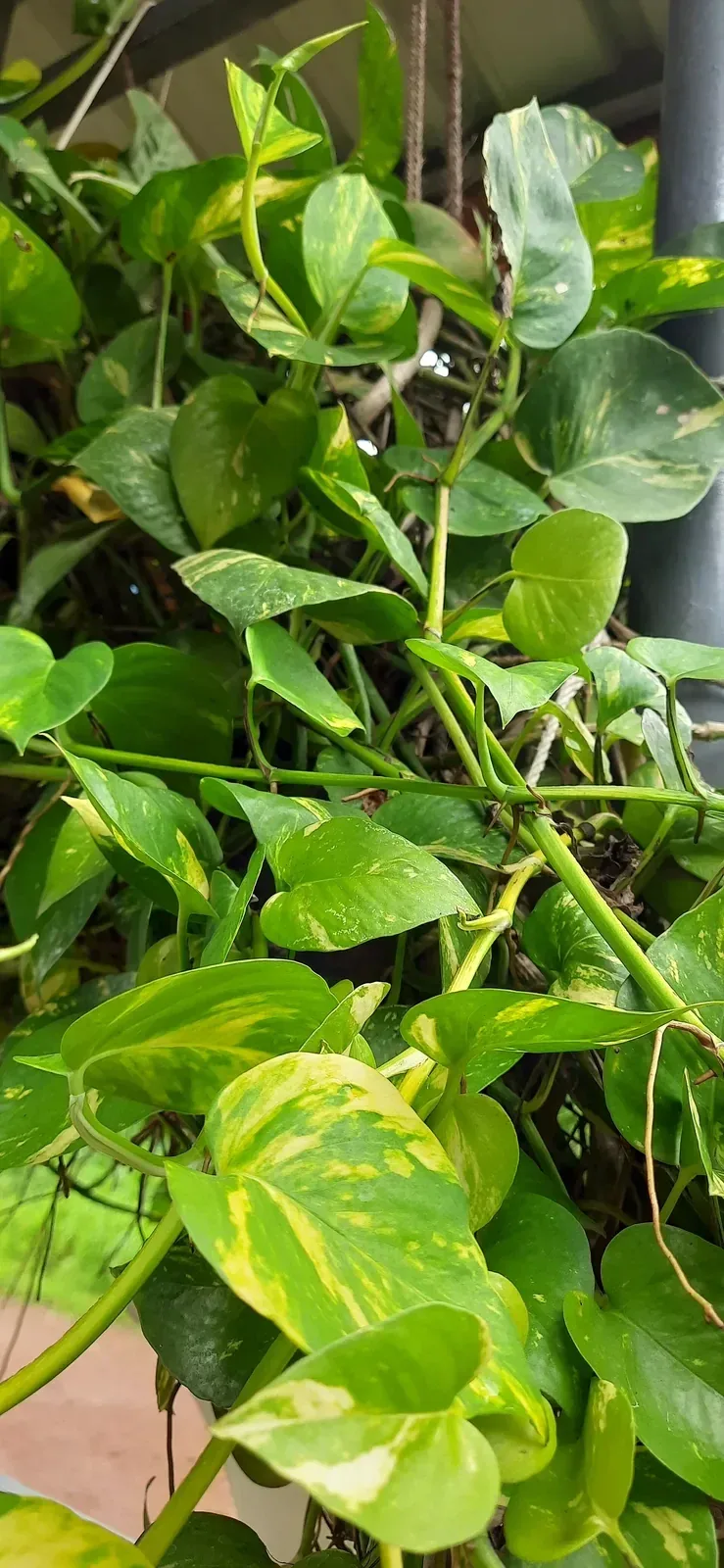
Pothos tolerates some shade, but in winter a spot that seemed bright enough in summer can be quite dim. Signs of low light include smaller new leaves, long gaps of bare stem between leaves, variegated types turning plain green, and a slow trickle of yellowing older leaves.
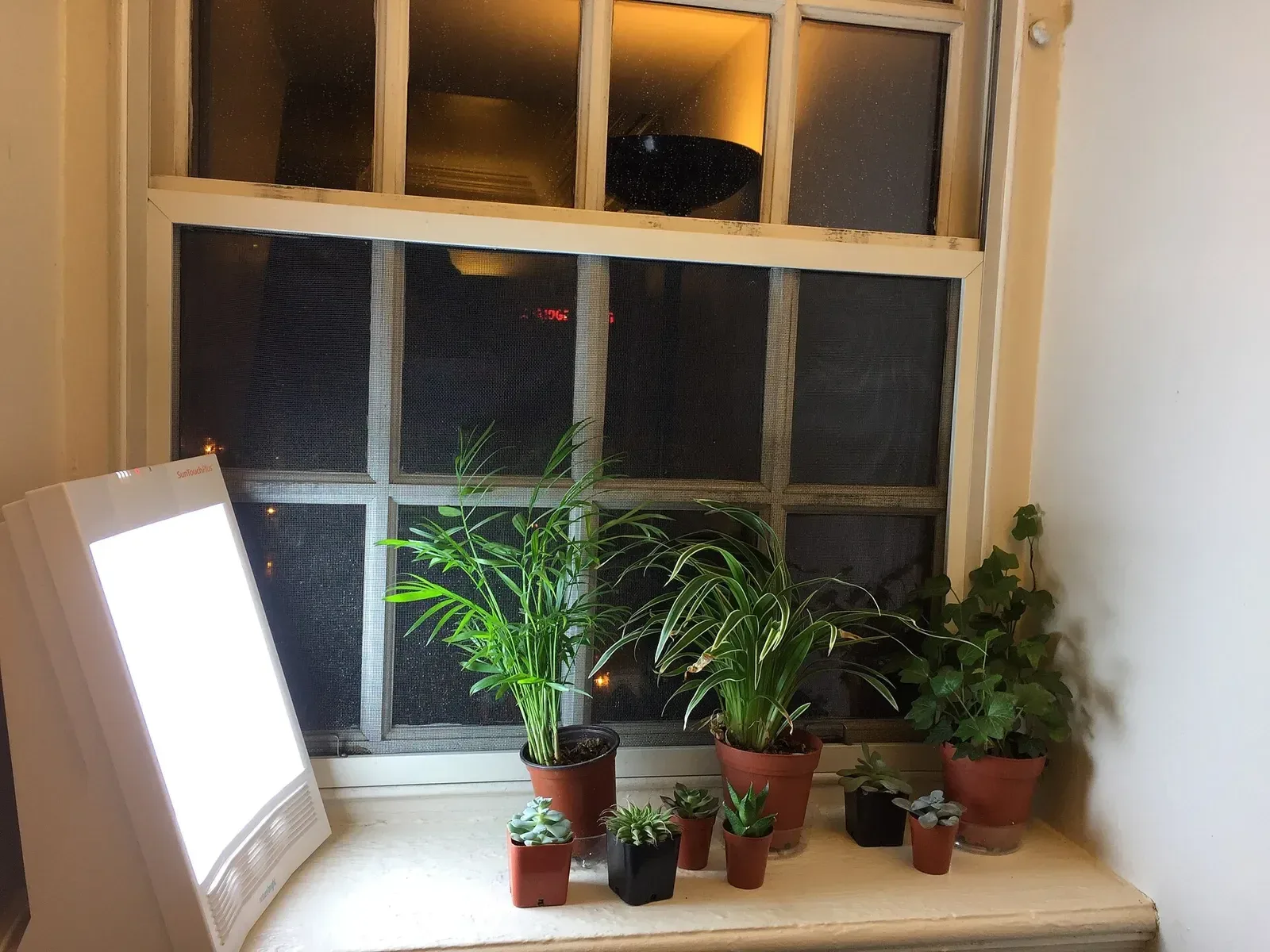
- Move the plant closer to an east, west or south window for winter. Low winter sun is gentle enough that most pothos can sit near a south window without scorching, as long as leaves do not touch the glass.
- If your windows face north or are shaded by buildings, add an LED grow light on a timer.
- Wipe dust off the leaves. The RHS suggests an occasional wipe with a damp cloth so leaves can use the light they get.
Low light also makes overwatering worse, because a plant that is barely growing uses very little water. Fixing light often fixes the watering problem too.
Check 4: Is a cold window or draft involved?
The RHS recommends keeping pothos away from cold draughts and direct heat sources. In a Canadian home, the danger spots are leaves resting on the glass, plants on a sill above a leaky window frame, and anything near an outside door. Cold damage usually appears as yellow or dark, slightly translucent patches on the leaves nearest the cold source, sometimes within a day or two of a very cold night.
Keep vines off the glass, pull plants back from older single-pane windows at night, and be careful with curtains: a closed curtain can trap a plant in the cold pocket of air beside the window. Our guide to cold windows and drafts explains how to find and avoid the cold spots.
Check 5: Heat, dry air and pests
Pothos does not need high humidity, according to the RHS, but a pot right beside a heat register can dry out much faster than you expect, so a plant can swing between soggy and bone dry. Move it a little further from the heat.
Warm, dry rooms also suit spider mites. Look under the leaves for fine speckling and webbing. NC State also suggests watching for mealybugs and scale. See our pages on spider mites and mealybugs, and use only products registered for indoor plants in Canada, following the label.
Should you fertilize a yellowing pothos?
Not in winter. NC State recommends feeding every other month except when the plant is resting in winter. Fertilizer will not fix yellowing caused by water, light or cold, and unused fertilizer salts build up in the mix. Wait until new growth starts in spring.
A winter routine that prevents yellow leaves
- Move pothos into the brightest spot you have in November, keeping leaves off the glass.
- Check the mix by touch every few days rather than watering on a set day. Use room-temperature water; the RHS prefers rainwater or filtered water to hard tap water.
- Empty saucers and cachepots after every watering.
- Check leaf undersides for pests every couple of weeks.
- Trim long, bare vines in spring and root the cuttings to make the plant fuller.
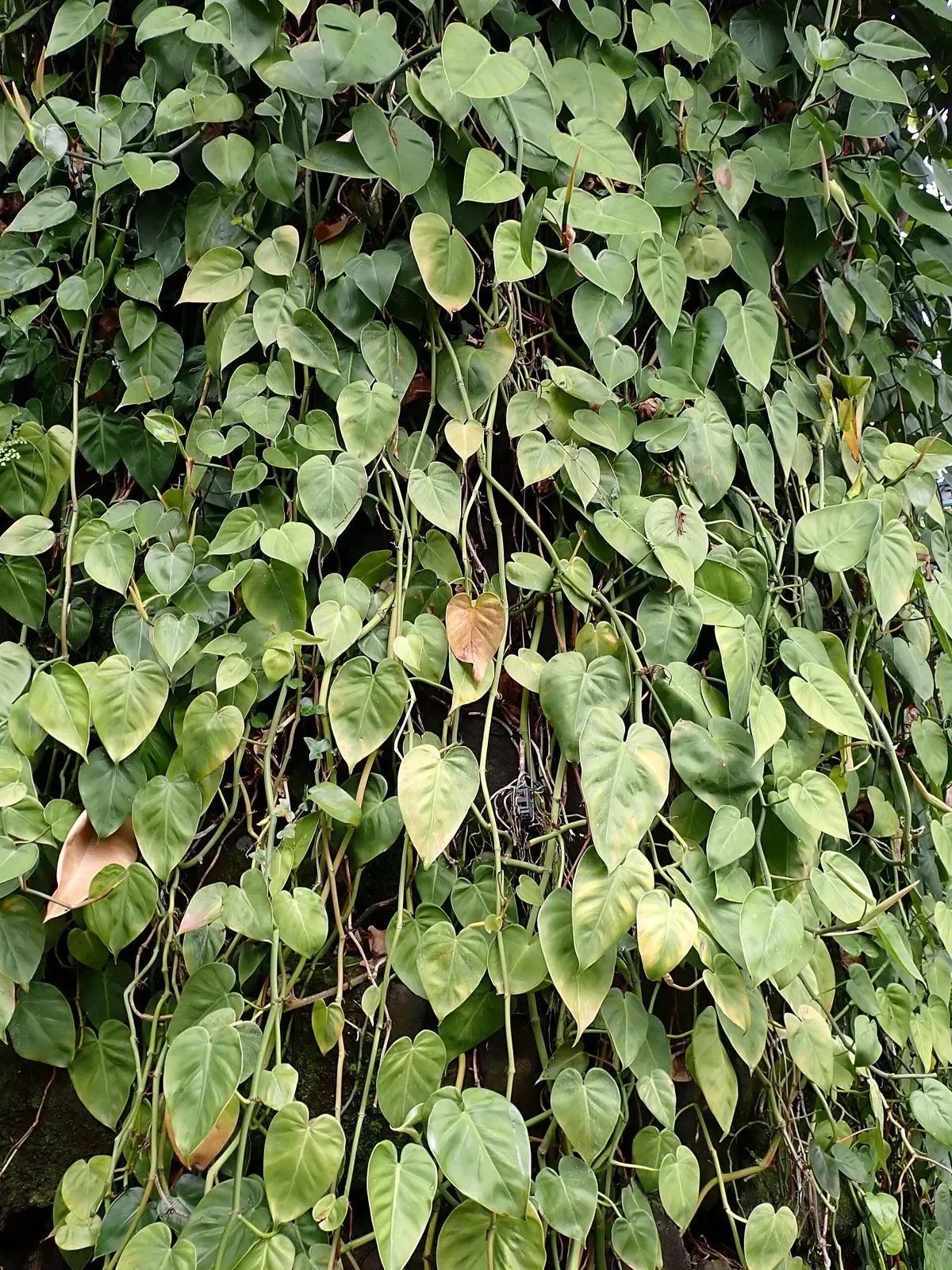
More help: our guide to watering houseplants in a Canadian winter, the yellow leaves and overwatering symptom pages, and the satin pothos profile for a close relative. Pothos and heartleaf philodendron are often confused, and they yellow for the same winter reasons.
Is pothos safe for pets?
No. The ASPCA lists golden pothos as toxic to dogs and cats because it contains insoluble calcium oxalates, which cause mouth irritation, drooling and vomiting. Hang trailing vines out of reach, and pick up fallen leaves. Call your veterinarian if a pet chews the plant.
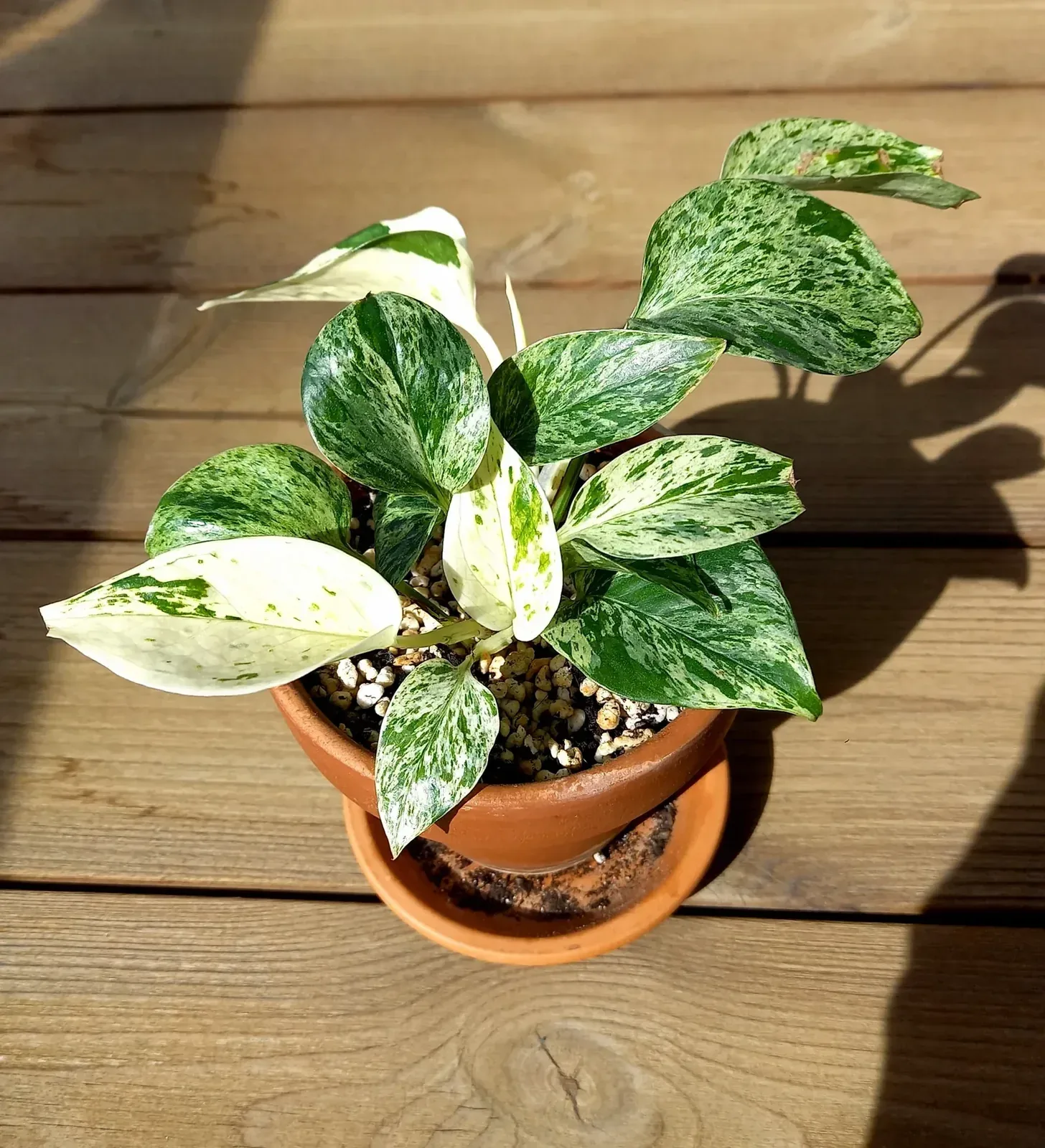
Watch: a video walk-through
This video from Housewarmin runs through common reasons pothos leaves turn yellow and how to respond. In winter, put the watering and light checks first.
Sources
Sources last checked 10 November 2026. Advice varies with your home, region and plant; use these as a starting point.
- RHS: How to grow epipremnums
- NC State Extension Plant Toolbox: Epipremnum aureum
- ASPCA Animal Poison Control: Golden pothos
- Iowa State University Extension: How often should houseplants be watered during the winter months?
- University of Illinois Extension: Watering houseplants
- University of Vermont Extension: Houseplant care during the winter months
Comments
No comments yet — share what worked in your climate.