
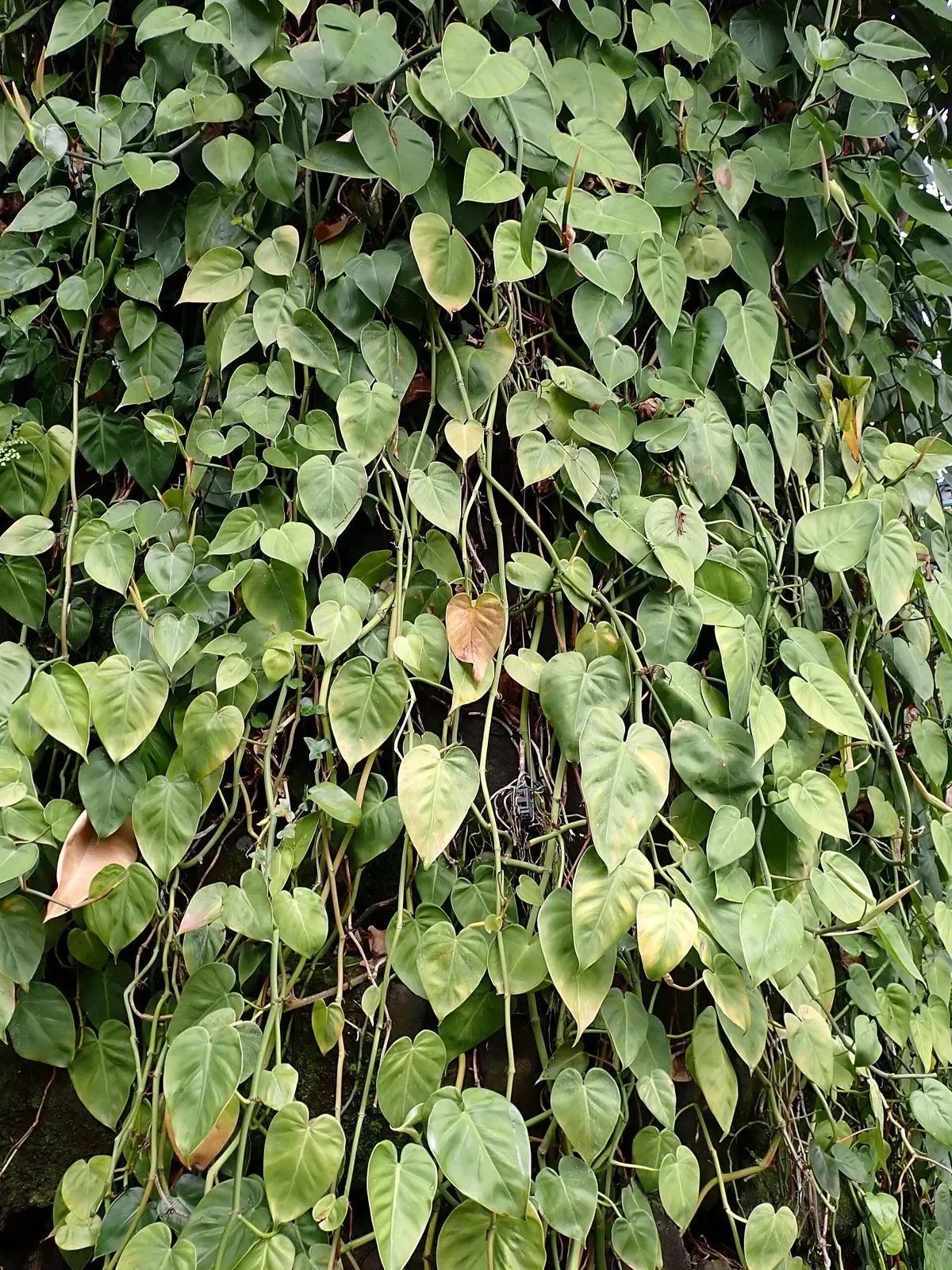
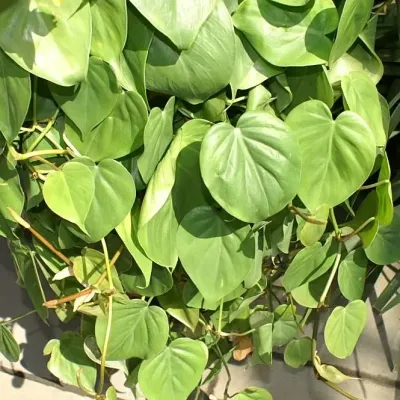
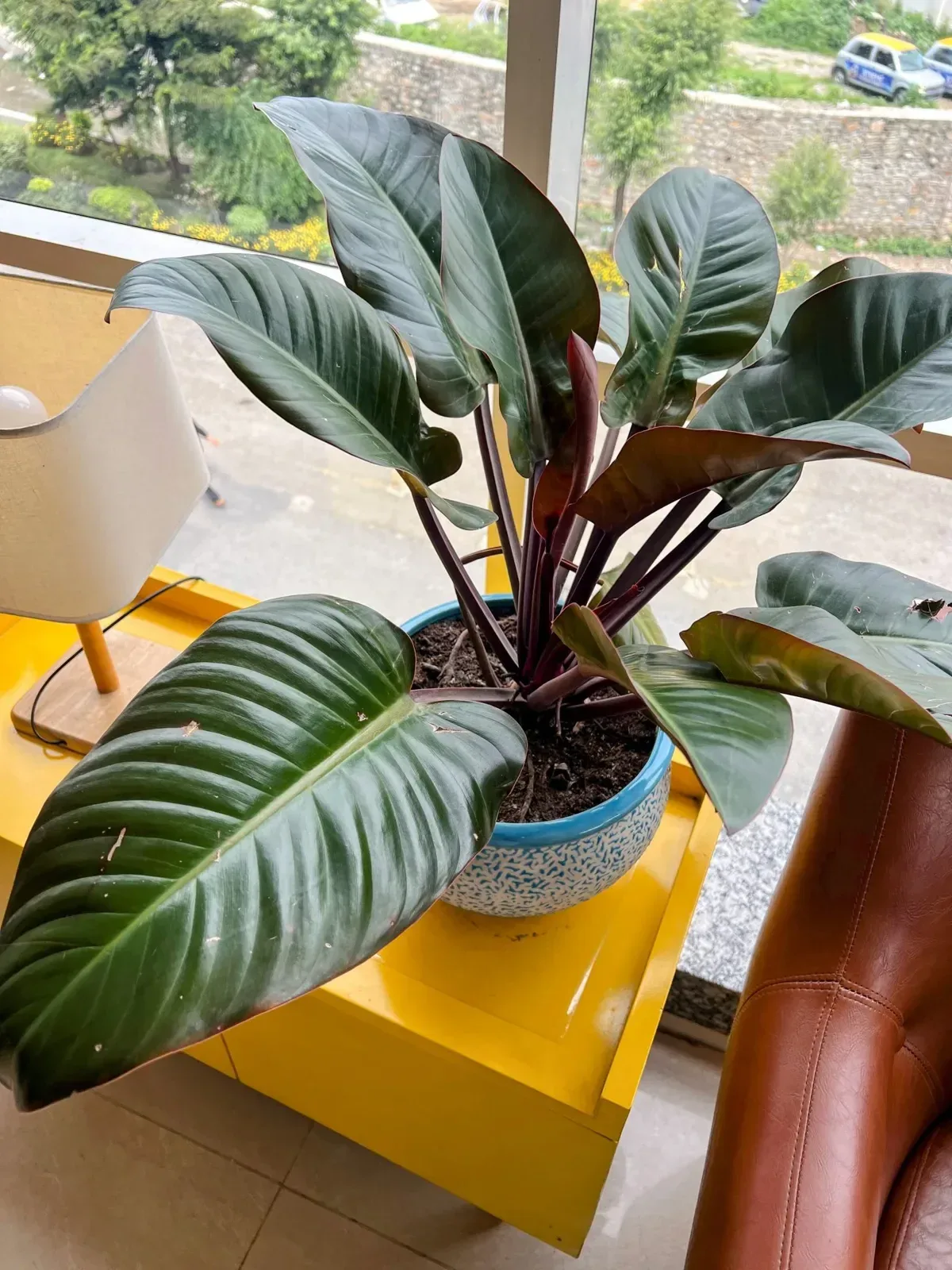
Philodendron vs pothos: if you own a trailing vine with heart-shaped leaves, there is a good chance you have wondered which one it is. Heartleaf philodendron and pothos are sold side by side, often with the same generic "tropical foliage" tag, and they look alike from across a room. They are different plants from different genera, though. Heartleaf philodendron is Philodendron hederaceum, and pothos is Epipremnum aureum. This guide gives you five checks that settle it in a minute, shows the look-alike pairs that confuse people most, and explains where care is the same and where it differs in a Canadian home. For other philodendrons, see our philodendron types and care guide.
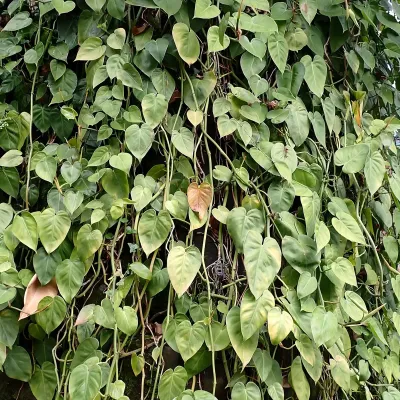
Quick ID table
| Check | Heartleaf philodendron | Pothos |
|---|---|---|
| Botanical name | Philodendron hederaceum | Epipremnum aureum |
| Leaf stalk (petiole) | Round, not grooved (NC State) | Grooved along the top (NC State) |
| New growth | Free stipules: thin sheaths around new leaves that dry to brown, papery strips (NC State) | No free stipules on new growth (NC State) |
| New leaf colour | Emerges bronze, quickly turns green (NC State) | No bronze flush described by NC State |
| Leaf shape | Heart-shaped with a long, pointed tip | Heart-shaped to oval (NC State) |
| Stems | Slender, green, round (NC State) | Green, often striped with white or yellow on variegated forms (NC State) |
| Family | Arum family (Araceae) | Arum family (Araceae) |
| Pets | Toxic (ASPCA) | Toxic (ASPCA) |
Check 1: the leaf stalk
This is the most reliable test. Run your fingernail along the top of a leaf stalk, the thin stem that joins the leaf to the vine.
- Pothos: there is a groove, or channel, along the top. NC State Extension describes pothos petioles as grooved.
- Heartleaf philodendron: the stalk is round all the way around. NC State lists "petioles are entire, not grooved" as a quick ID hint.
Check 2: how new leaves come out
Look at the tip of a growing stem.
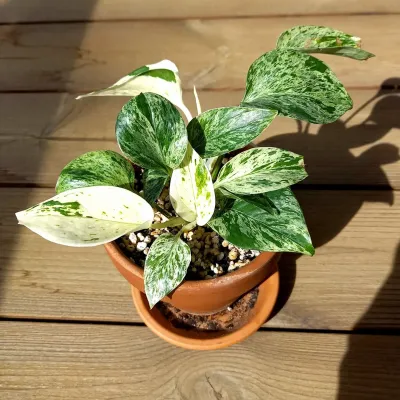
- Heartleaf philodendron: each new leaf grows inside a thin sheath (a stipule, sometimes called a cataphyll). NC State Extension notes that the stipules are free on new growth, and that older growth has messy, falling stipules. You often see brown, papery strips hanging on the stem where leaves have opened.
- Pothos: NC State says there are no free stipules on new growth, so you will not see loose brown, papery strips hanging along the stem.
Heartleaf philodendron leaves also often open with a bronze tint and turn green within days, as NC State describes.
Check 3: leaf shape and feel
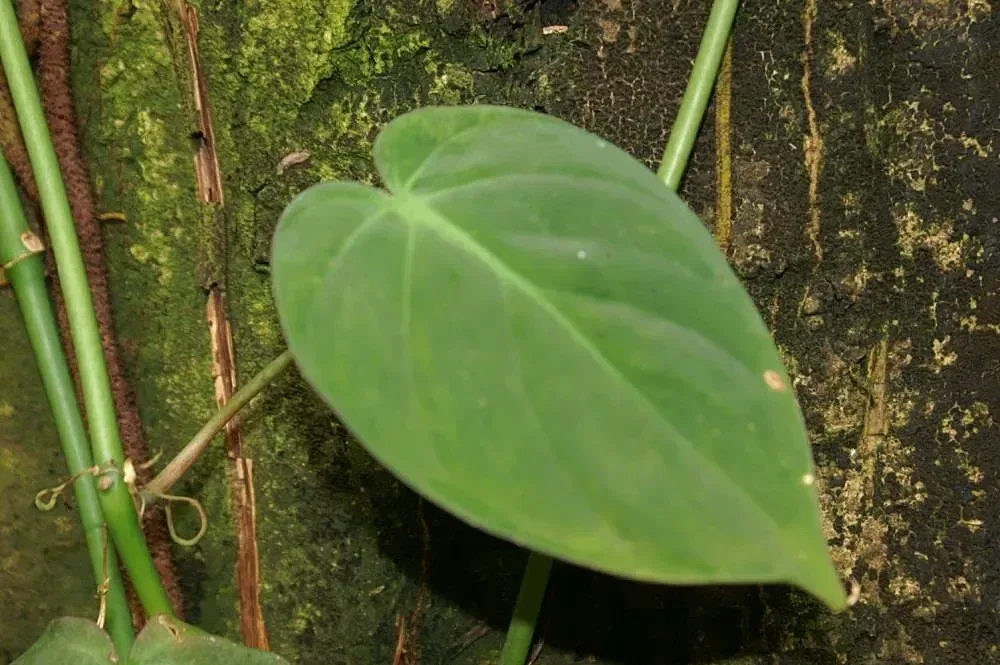
Both have heart-shaped leaves, so shape alone is not a sure test. Heartleaf philodendron leaves have a deep heart-shaped base and a long, drawn-out tip. Pothos leaves range from heart-shaped to oval. NC State describes both as leathery and glossy, so feel is not a reliable test. Use the stalk and new-growth checks to be sure.
Check 4: aerial roots
Both plants make aerial roots at the nodes, where leaves meet the stem, and both use them to climb. NC State notes that pothos climbs by brown aerial roots. Aerial roots alone will not tell you which plant you have, but they show you where to cut when you take cuttings.
Check 5: stem and colour pattern
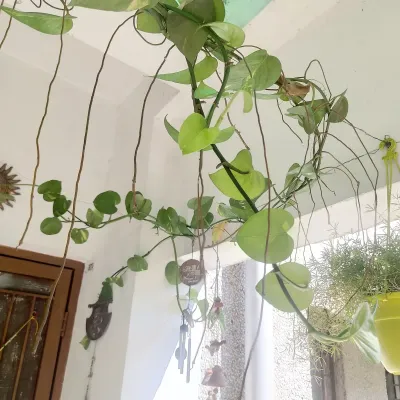
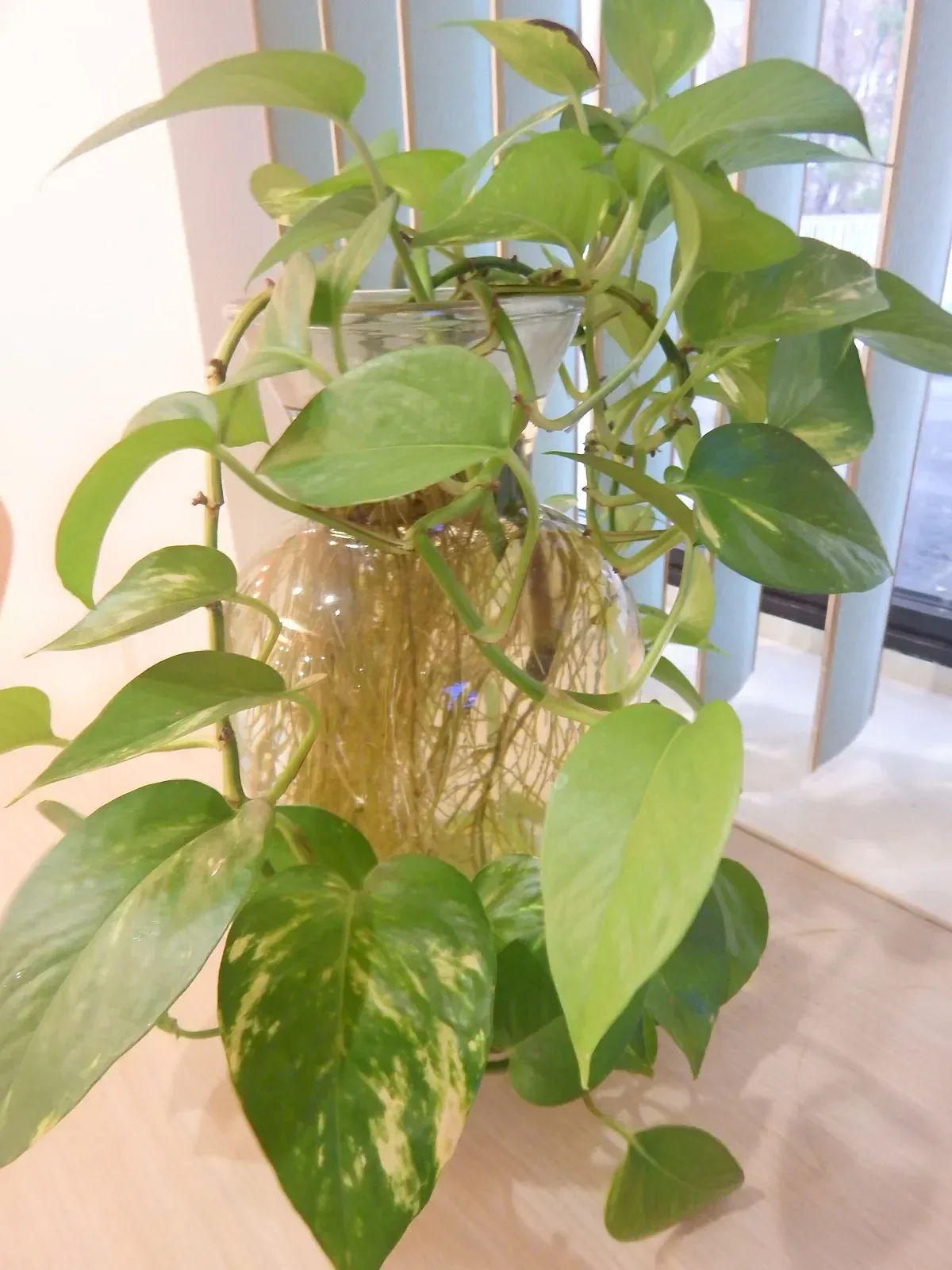
Stems help with variegated plants. NC State describes pothos stems as green and striped with white or yellow, and 'Marble Queen' as having green leaves and stems marbled with white. Heartleaf philodendron stems are slender and green. Variegated philodendrons like 'Brasil' have a stripe through the leaf centre, not marbling across the whole leaf.
The look-alike pairs
| Philodendron | Pothos look-alike | How to tell |
|---|---|---|
| Heartleaf philodendron (plain green) | 'Jade' pothos (solid dark green, NC State) | Round vs grooved stalk; papery stipules on the philodendron. |
| Philodendron Brasil (lime to yellow centre stripe, dark green edges) | Golden pothos (yellow-green variegation, NC State) | Brasil's colour sits in a band through the middle with dark green edges. Golden pothos variegation is not limited to a central band. Then check the stalk. |
| 'Lemon Lime' philodendron (bright yellow to chartreuse, NC State) | 'Neon' pothos (yellow leaves, NC State) | Colour is very similar. Use the stalk groove and stipule checks. |
| Philodendron micans (velvet) | Other velvety or silvery vines sold as "pothos" | Micans is velvety and heart-shaped with a long tip; check the label, the stalk and the new growth. |
| Brasil or 'Rio' philodendron | 'Marble Queen' pothos (green and white marbling, NC State) | Marble Queen's white is spread across the leaf and stem; Brasil and Rio have a central band. |
For telling the three heartleaf forms apart from each other, see heartleaf vs Brasil vs micans.
Does care differ?
Only a little. Both are easy, forgiving vines. NC State Extension describes pothos as very easy to grow, preferring bright, indirect light and surviving long periods in low light. It describes heartleaf philodendron as preferring medium light but tolerating low light, tolerating dry air, and needing less water in winter.
| Care point | Heartleaf philodendron | Pothos |
|---|---|---|
| Light | Medium to bright indirect; tolerates low (NC State) | Bright indirect; survives low (NC State) |
| Water | Keep slightly moist; slow down in winter (NC State) | Let the mix dry out between waterings (NC State) |
| Humidity | Tolerates dry air, prefers medium (NC State) | Benefits from a humidifier or pebble tray (NC State) |
| Warmth | Keep above 15°C (RHS) | Normal room temperatures; keep off cold glass |
| Feeding | Monthly in the growing season (RHS, for philodendrons) | Every other month, not in winter (NC State) |
| Low light result | Leggy, small leaves | Loss of variegation (NC State) |
| Overwatering result | Root rot (NC State) | Root rot and blackened leaf edges (NC State) |
The practical difference: pothos is happier drying out a little more between waterings, while heartleaf philodendron likes its mix a touch more evenly moist in summer. In a Canadian winter, both need much less water, and both benefit from the brightest window you have. University of Minnesota Extension suggests 12 to 14 hours of light a day for foliage plants if you add a grow light.
Both are toxic to pets
This is one thing that does not change with the ID. ASPCA lists heartleaf philodendron (Philodendron hederaceum) as toxic to dogs, cats and horses, and golden pothos (Epipremnum aureum) as toxic to dogs and cats. Both contain insoluble calcium oxalates, which cause mouth irritation, drooling, vomiting and trouble swallowing. NC State Extension also lists both as problems for cats and dogs. Keep trailing stems out of reach of pets, and see our pet-safe plants list for alternatives. If a pet chews either one, call your vet. The ASPCA Animal Poison Control line is (888) 426-4435 (a fee may apply).
Why the right name still matters
- Pest and disease advice: product labels and extension sheets are organised by plant name.
- Buying more: if you want a matching plant, you need the right genus to search for.
- Selling or trading cuttings: the right name makes a cutting easier to sell.
- Troubleshooting: a pothos losing variegation and a philodendron getting leggy are both light problems, but the details differ.
Other names you will see
Pothos is also sold as devil's ivy, golden pothos, taro vine and ivy arum (ASPCA). Older labels may call it Epipremnum pinnatum 'Aureum'; NC State notes botanists now treat Epipremnum aureum as a separate species. Heartleaf philodendron is also sold as sweetheart plant, cordatum, Philodendron scandens or Philodendron oxycardium.
Watch: pothos vs philodendron, side by side
A short video that shows the new-growth, aerial root, stem and cataphyll checks on real plants.
Related plants and guides
- Heartleaf philodendron: full care guide
- Philodendron Brasil
- Philodendron micans
- Heartleaf vs Brasil vs micans
- How to propagate philodendron
- Tradescantia zebrina, another easy trailing plant
Sources
- NC State Extension Plant Toolbox: Philodendron hederaceum (stipules, petioles, care, cultivars). Accessed 10 Nov 2026.
- NC State Extension Plant Toolbox: Epipremnum aureum (grooved petioles, no free stipules, care, cultivars). Accessed 10 Nov 2026.
- Kew World Checklist of Vascular Plants (via GBIF). Accessed 10 Nov 2026.
- ASPCA: Heartleaf Philodendron. Accessed 10 Nov 2026.
- ASPCA: Golden Pothos. Accessed 10 Nov 2026.
- RHS: How to grow philodendrons. Accessed 10 Nov 2026.
- University of Minnesota Extension: Lighting for indoor plants. Accessed 10 Nov 2026.


Comments
No comments yet — share what worked in your climate.