
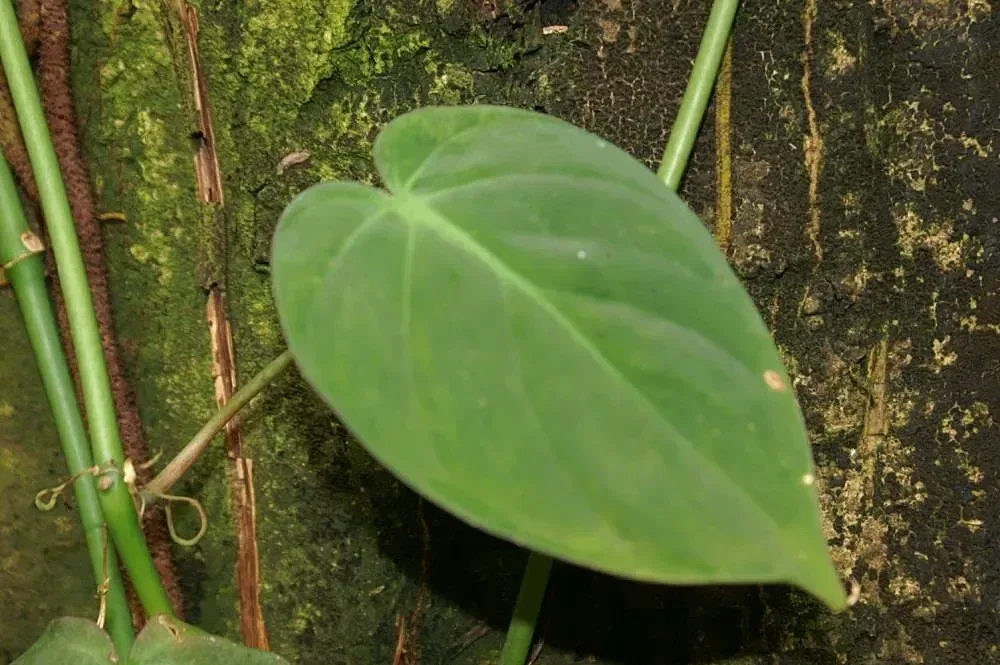
Heartleaf vs Brasil vs micans is one of the most common houseplant ID questions, and for good reason. All three are trailing vines with heart-shaped leaves, all three are sold in the same hanging baskets, and the labels are often wrong or missing. The surprise is that, botanically, all three belong to one species, Philodendron hederaceum. This guide shows you how to tell them apart in about ten seconds, explains why the labels say scandens, oxycardium or micans, and covers the few small ways their care differs in a Canadian home. For the full family picture, start with our philodendron types and care guide.
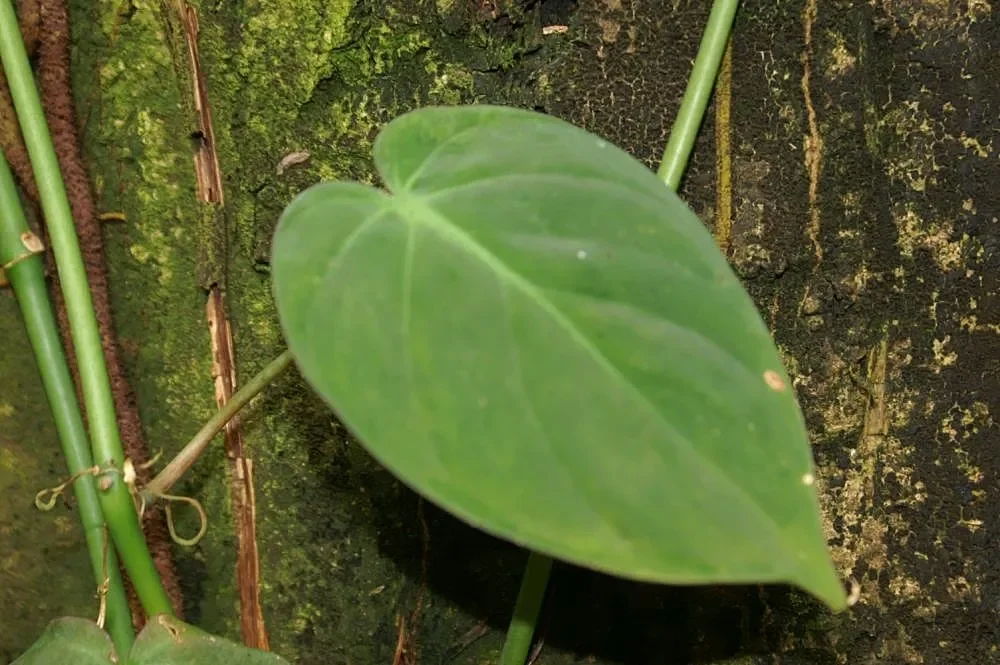
Quick ID table
| Feature | Heartleaf | Brasil | Micans |
|---|---|---|---|
| Leaf surface | Smooth, slightly glossy | Smooth, waxy, somewhat glossy | Velvety, matte, feels like suede |
| Colour | Plain green | Green edges with a lime to yellow band through the centre | Dark green to bronze, with a purple or reddish sheen in some light |
| New leaves | Emerge bronze, quickly turn green (NC State) | Striped from the start on a variegated stem | Often reddish or coppery |
| What it is | The species, Philodendron hederaceum | A named cultivar (a sport) of the species | A velvet-leaf form of the species; "micans" is an old species name |
| Care | Easiest; copes with lower light | Same, plus enough light for the stripe | Same, plus a little more warmth and gentler cleaning |
If you only remember one thing: touch the leaf. Velvet means micans. Then look at the colour. A yellow-green stripe through the middle means Brasil. Plain green and smooth means heartleaf.
Step 1: feel the leaf surface
This is the fastest test,, and it works even under dim store lighting.
- Smooth and a little shiny: heartleaf or Brasil. The Brasil patent describes its leaves as smooth, waxy and somewhat glossy.
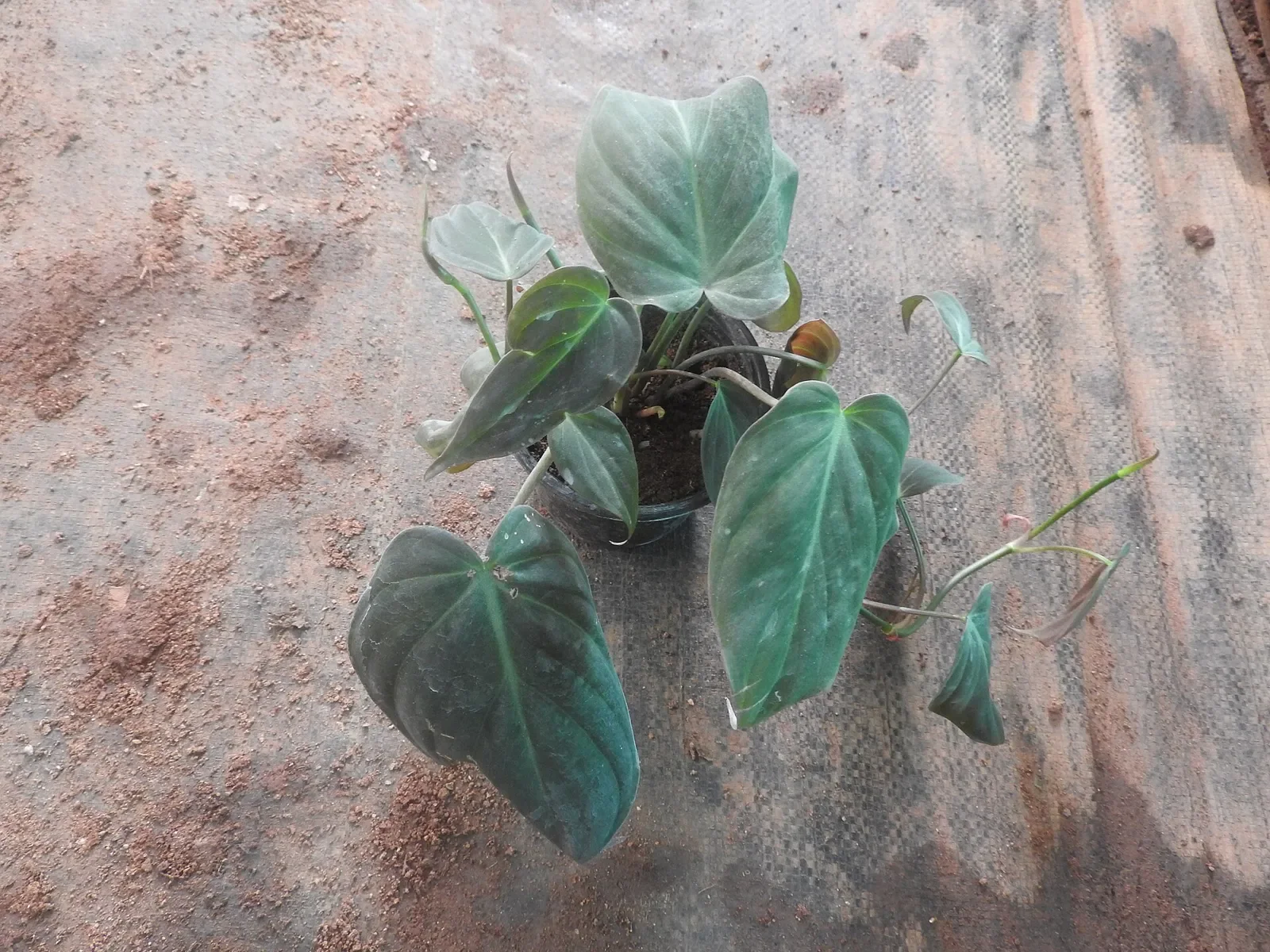
- Soft and velvety, almost like suede, with little shine: micans.
The velvet surface also changes how micans looks. It scatters light, so the same plant can look dark green in one room and bronze or purplish in another. That colour shift is normal and is part of how you recognise it.
Step 2: look at the colour pattern
Plain green: heartleaf
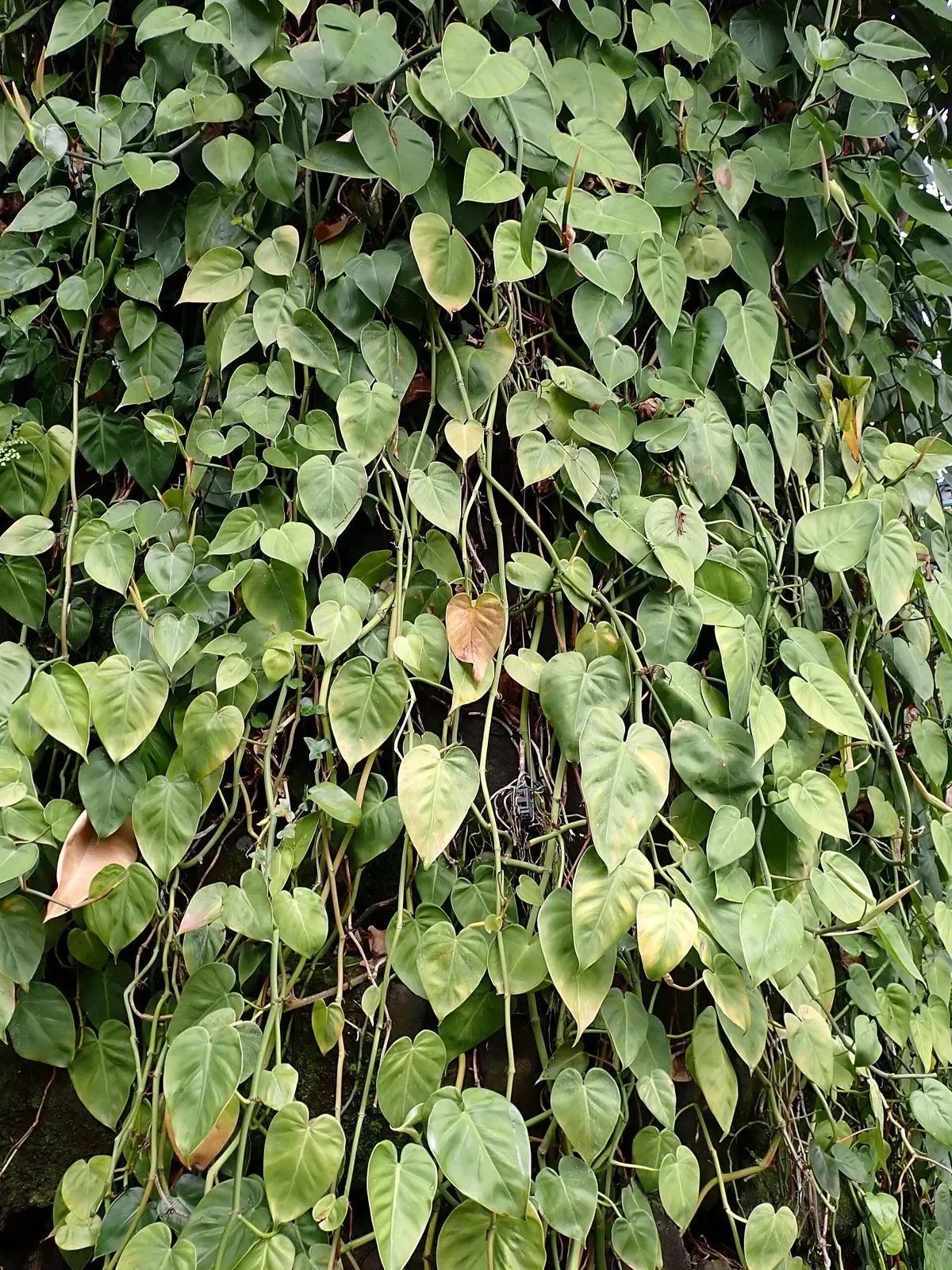
Heartleaf philodendron has plain green leaves with a heart-shaped base and a long, pointed tip. NC State Extension notes that new leaves emerge bronze and quickly turn green.
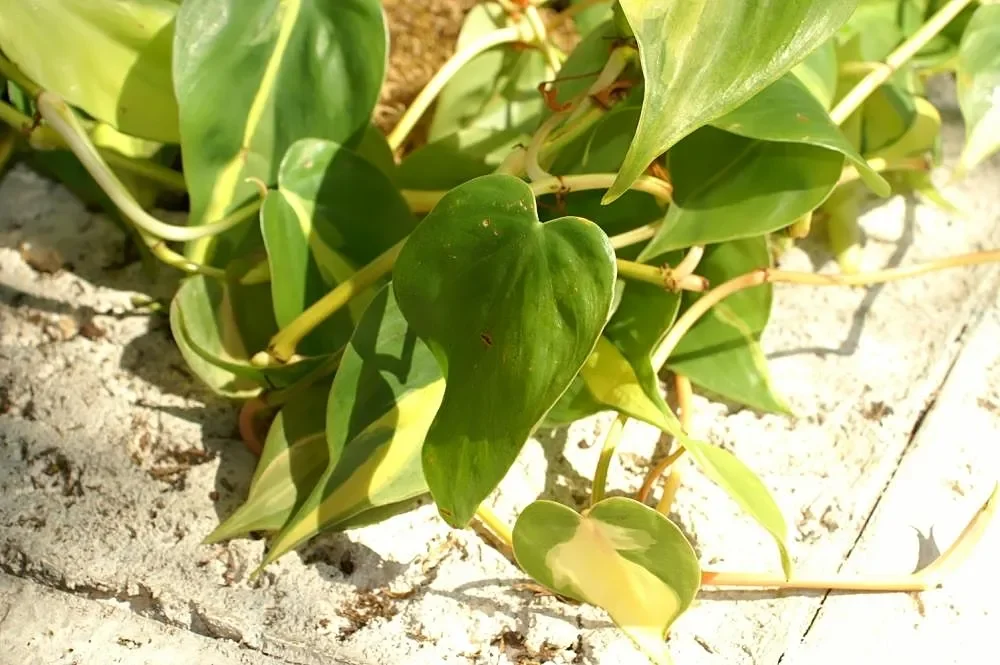
Centre stripe: Brasil
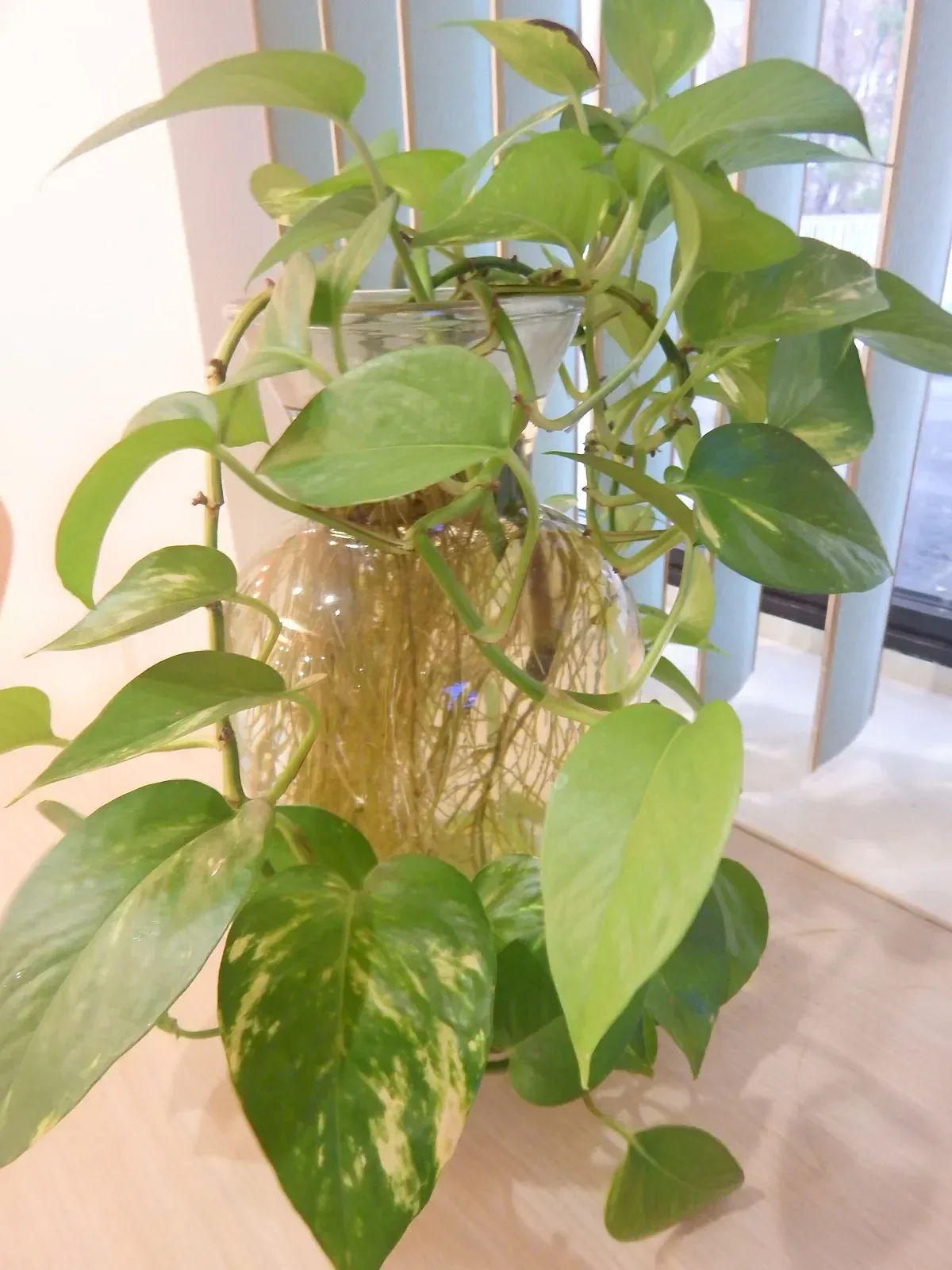
NC State Extension describes 'Brasil' as having a variegated centre stripe of yellow to light green, with dark green borders. The stripe is irregular. One leaf might show a thin line, the next a wide band. The green edge is what separates Brasil from 'Lemon Lime', which is bright yellow to chartreuse all over.
Bronze to purple sheen: micans
Micans leaves look dark green to bronze, and can show a purple or reddish shimmer, especially on new growth. RHS describes the species variety these plants belong to, Philodendron hederaceum var. hederaceum, as having bronze-green leaves tinted red beneath.
Names on labels: scandens, oxycardium, micans
Labels for these plants use at least five different botanical names. Here is how they fit together, based on Kew's checklist:
| Name on the label | What it means today |
|---|---|
| Philodendron hederaceum | The accepted species name for all three plants |
| Philodendron scandens | An older name; a synonym of P. hederaceum var. hederaceum |
| Philodendron micans | An older name; also a synonym of P. hederaceum var. hederaceum |
| Philodendron oxycardium, P. scandens subsp. oxycardium | Synonyms of P. hederaceum var. oxycardium, the other variety |
| Philodendron 'Brasil' or P. hederaceum 'Brasil' | A named cultivar of the species |
A few details are worth knowing:
- Brasil was found in 1991 in Holambra, Brazil, as a whole-plant mutation (a sport) of what its US plant patent calls Philodendron scandens oxycardium. The International Aroid Society registry lists 'Brasil' as accepted and established.
- RHS lists the cultivar as Philodendron hederaceum 'Brasil', with its name status unresolved, which reflects the tangled species naming rather than any doubt about the plant.
- "Micans" is a trade label for the velvet form. We found no 'Micans' cultivar record in the International Aroid Society registry. RHS does list a 'Micans Lime' form.
- Many care sources say the common green heartleaf in shops is var. oxycardium. We have not found Kew or RHS confirming that, so treat it as likely, not settled.
In everyday terms: one species, several names, and the labels are rarely precise. The ID tests above are more reliable than the tag.
Is care different?
Barely. All three are the same species, so the basics are shared: bright, indirect light; water when the top few centimetres of mix are dry; keep above 15°C, as RHS advises for P. hederaceum; feed from April to September; no feeding in winter. The differences are small but useful.
| Care point | Heartleaf | Brasil | Micans |
|---|---|---|---|
| Light | Survives low light better than most houseplants (NC State), but gets leggy | Bright, filtered light; shade from hot sun (RHS) | Bright, filtered or indirect light (RHS) |
| Main winter risk | Leggy stems in a dim room | Stems reverting to plain green | Small leaves and dull colour near cold glass |
| Cleaning leaves | Wipe with a damp cloth | Wipe with a damp cloth | Soft brush or gentle lukewarm rinse; velvet marks easily |
| Pruning | Trim leggy stems; root the tips | Also cut green stems back to a striped leaf | Trim leggy stems; root the tips |
One more practical point: Brasil can revert. RHS explains that variegated sports are not always stable, and that green shoots grow more strongly and can take over. If you see plain green stems on a Brasil, cut them back to the last striped leaf. Heartleaf and micans have nothing to revert to.
Which one should you buy?
- For a dim apartment or a first houseplant: heartleaf. It is the most forgiving in low winter light.
- For colour on a grey Canadian winter day: Brasil, in a bright east or south window.
- For texture and something a bit special: micans, in a warm room away from cold glass.
Because care is so similar, all three can share one hanging display or shelf without trouble.
What about Lemon Lime, Rio and pothos?
Several other vines get mixed up with these three:
- 'Lemon Lime' philodendron: bright yellow to chartreuse all over (NC State). No dark green edge, so it is not a Brasil.
- 'Rio' philodendron: silver and cream centre with dark green edges (NC State). Cooler, whiter tones than Brasil's yellow.
- Pothos (Epipremnum aureum): a different genus. NC State Extension notes pothos has grooved leaf stalks and no free stipules on new growth. Heartleaf philodendron has round stalks and obvious stipules, thin sheaths that dry into brown, papery strips.
Our full guide on philodendron vs pothos walks through every check.
Common ID mistakes
- Judging by one leaf. A Brasil can put out a nearly plain leaf, and a micans can look green in shade. Look at the newest few leaves on several stems.
- Calling a reverted Brasil a heartleaf. If some stems are striped and some are plain, it is a Brasil that has started to revert.
- Calling a micans "sick" because it looks purple. The sheen comes from the velvet surface and the light, not from disease.
- Trusting the tag. Shops often use one generic tag for every heart-leaf vine, and some still say pothos.
- Confusing low-light paleness with variegation. A heartleaf grown in a dark corner can look washed out, but it has no defined stripe.
Growing them through a Canadian winter
All three slow down from November to March, when days are short and the sun sits low. A few winter checks keep them looking their best:
- Move them to your brightest window, or add a grow light. University of Minnesota Extension suggests 12 to 14 hours of light a day for foliage plants.
- Keep stems off cold window glass. Micans especially dislikes cold spots.
- Water less often, and only when the top few centimetres are dry.
- Do not feed until April.
Our philodendron winter care guide covers this in detail.
Are all three toxic to pets?
Yes. ASPCA lists Philodendron hederaceum (heartleaf philodendron) as toxic to dogs, cats and horses, because of insoluble calcium oxalates. That covers all three plants here, since they are the same species. RHS lists both P. hederaceum var. hederaceum and 'Brasil' as harmful if eaten and as skin and eye irritants. Keep them out of reach, and wear gloves when you prune.
Watch: heartleaf, micans and Brasil compared
A grower compares the Philodendron hederaceum forms side by side and talks through the naming mix-ups. Labels in the video may use older names; the table above shows how they line up today.
Plant profiles
- Heartleaf philodendron: full care for the plain green vine
- Philodendron Brasil: keeping the yellow stripe
- Philodendron micans: caring for velvet leaves
- All philodendron types
- Philodendron vs pothos
- How to propagate philodendron
Sources
- Kew Plants of the World Online: Philodendron hederaceum var. hederaceum (synonyms P. micans, P. scandens). Accessed 10 Nov 2026.
- Kew Plants of the World Online: P. hederaceum var. oxycardium. Accessed 10 Nov 2026.
- Kew World Checklist of Vascular Plants (via GBIF). Accessed 10 Nov 2026.
- NC State Extension Plant Toolbox: Philodendron hederaceum (cultivars, ID, stipules). Accessed 10 Nov 2026.
- RHS: Philodendron hederaceum var. hederaceum. Accessed 10 Nov 2026.
- RHS: Philodendron hederaceum 'Brasil' (v). Accessed 10 Nov 2026.
- International Aroid Society cultivar registry: Philodendron 'Brasil'. Accessed 10 Nov 2026.
- US Plant Patent PP12,956: Philodendron plant named 'Brasil'. Accessed 10 Nov 2026.
- RHS: Reversion. Accessed 10 Nov 2026.
- NC State Extension Plant Toolbox: Epipremnum aureum. Accessed 10 Nov 2026.
- ASPCA: Heartleaf Philodendron. Accessed 10 Nov 2026.
- University of Minnesota Extension: Lighting for indoor plants. Accessed 10 Nov 2026.


Comments
No comments yet — share what worked in your climate.