
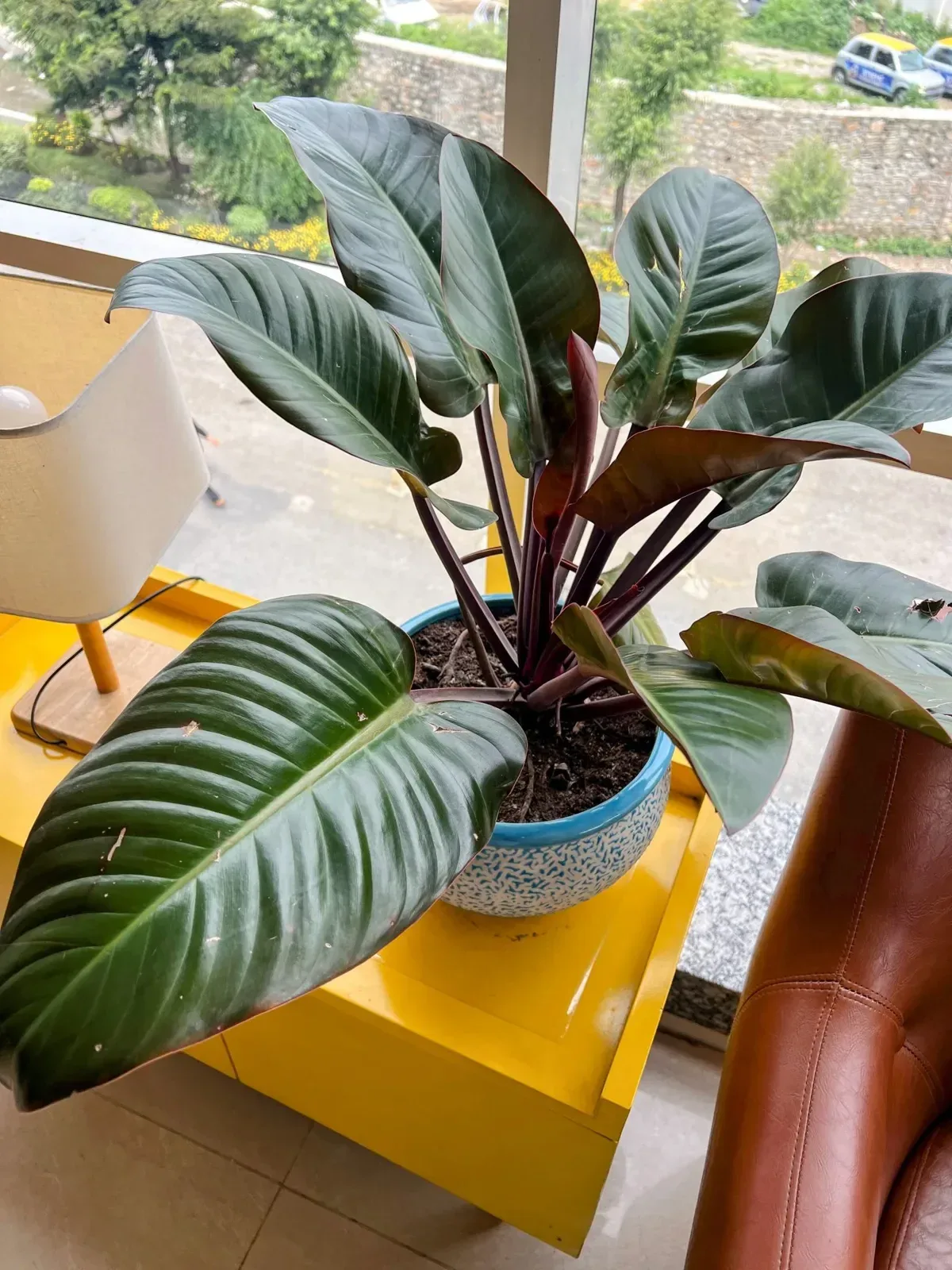
"Philodendron" covers a lot of plants. Some are small trailing vines you can grow on a bookshelf. Some have pink or white patches and cost a week's groceries. Others grow into big, self-standing clumps that need a corner of their own. This guide helps you pick the right philodendron for your home in Canada, based on your windows, your space, your winter and your pets. It gives a short care summary for each type and links to our full plant profiles.
What is a philodendron?
Philodendron is a large group of tropical plants in the arum family (Araceae), the same family as anthurium, monstera and peace lily. The name comes from Greek words meaning "tree lover", because many of them climb trees in the wild. RHS describes the genus as shrubs, trees or climbers with glossy, leathery, evergreen leaves that range from simple hearts to deeply cut shapes, and small flowers held inside an arum-like spathe.
There are hundreds of species, plus many named cultivars and hybrids. For a Canadian grower, they fall into two simple groups:
- Climbing or vining philodendrons grow long stems with aerial roots. They trail from a shelf or climb a pole. Heartleaf, Brasil, micans and Pink Princess are in this group.
- Self-heading philodendrons grow from a central point and form an upright clump, without long vines. Xanadu and the tree philodendron are the best known.
A note on Thaumatophyllum
In 2018, botanists published a study that moved the self-heading group, including xanadu and the tree philodendron, into a separate genus, reviving the older name Thaumatophyllum. You will see that name on some labels and in some books. Kew's Plants of the World Online currently treats Thaumatophyllum as a synonym of Philodendron, so we use the Philodendron names on this site and mention the other name where it helps.
Philodendron varieties at a glance
This table covers the philodendrons Canadian shoppers ask about most. Light and difficulty ratings are our editorial guide for a typical Canadian home.
| Philodendron | Habit | Leaf look | Light need | Difficulty | Profile |
|---|---|---|---|---|---|
| Heartleaf (P. hederaceum) | Vine | Green, heart-shaped, smooth | Low to bright indirect | Beginner | Heartleaf philodendron |
| Brasil (P. hederaceum 'Brasil') | Vine | Green with a lime-yellow centre stripe | Medium to bright indirect | Beginner | Philodendron Brasil |
| Micans (P. hederaceum var. hederaceum) | Vine | Velvet, bronze to green | Medium to bright indirect | Beginner to intermediate | Philodendron micans |
| Pink Princess | Climber | Near-black green with pink patches | Bright indirect | Intermediate | Pink Princess philodendron |
| White Princess | Climber | Green with white patches | Bright indirect | Intermediate | White Princess philodendron |
| Birkin | Compact, upright | Dark green with fine cream pinstripes | Bright indirect | Beginner to intermediate | Philodendron Birkin |
| Xanadu (P. xanadu) | Self-heading clump | Deeply lobed, glossy green | Bright | Beginner to intermediate | Philodendron xanadu |
| Tree philodendron (P. bipinnatifidum) | Large self-heading, builds a short trunk | Huge, deeply cut leaves | Bright, lots of space | Intermediate | Tree philodendron |
| Splendid | Climber (hybrid) | Velvet, long, with pale veins | Bright indirect, humid | Advanced | Philodendron Splendid |
| Paraiso Verde | Climber | Arrow-shaped, wavy, mottled pale and dark green | Bright indirect | Intermediate | Philodendron Paraiso Verde |
| Strawberry Shake | Climber (trade name) | Red stems, cream to pink marks | Bright indirect | Intermediate to advanced | Philodendron Strawberry Shake |
Vining philodendrons: heartleaf, Brasil and micans
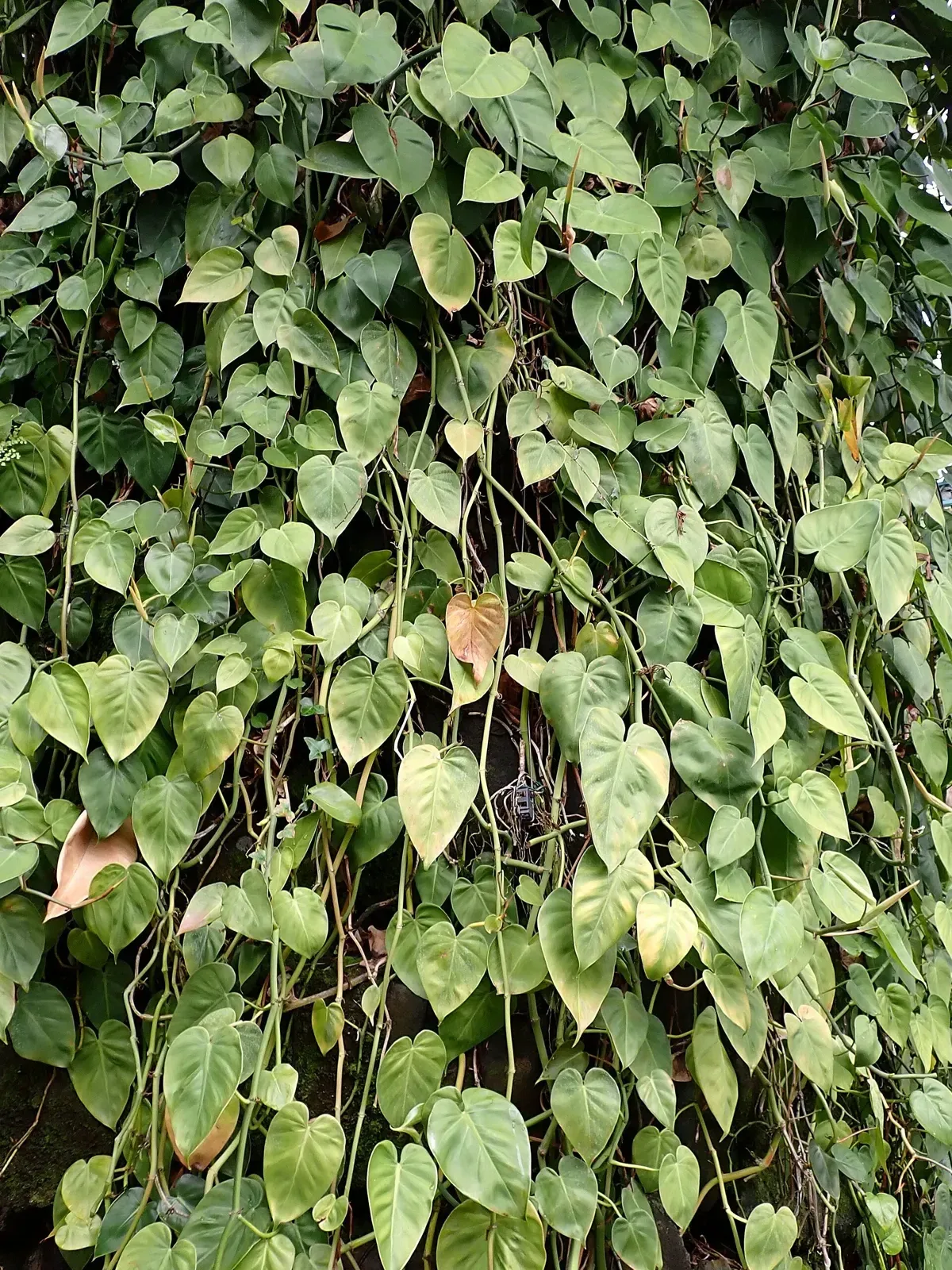
These three are all the same species, Philodendron hederaceum. They differ in leaf look, not in basic care, which makes them the best starting point for most Canadian homes.
Heartleaf philodendron
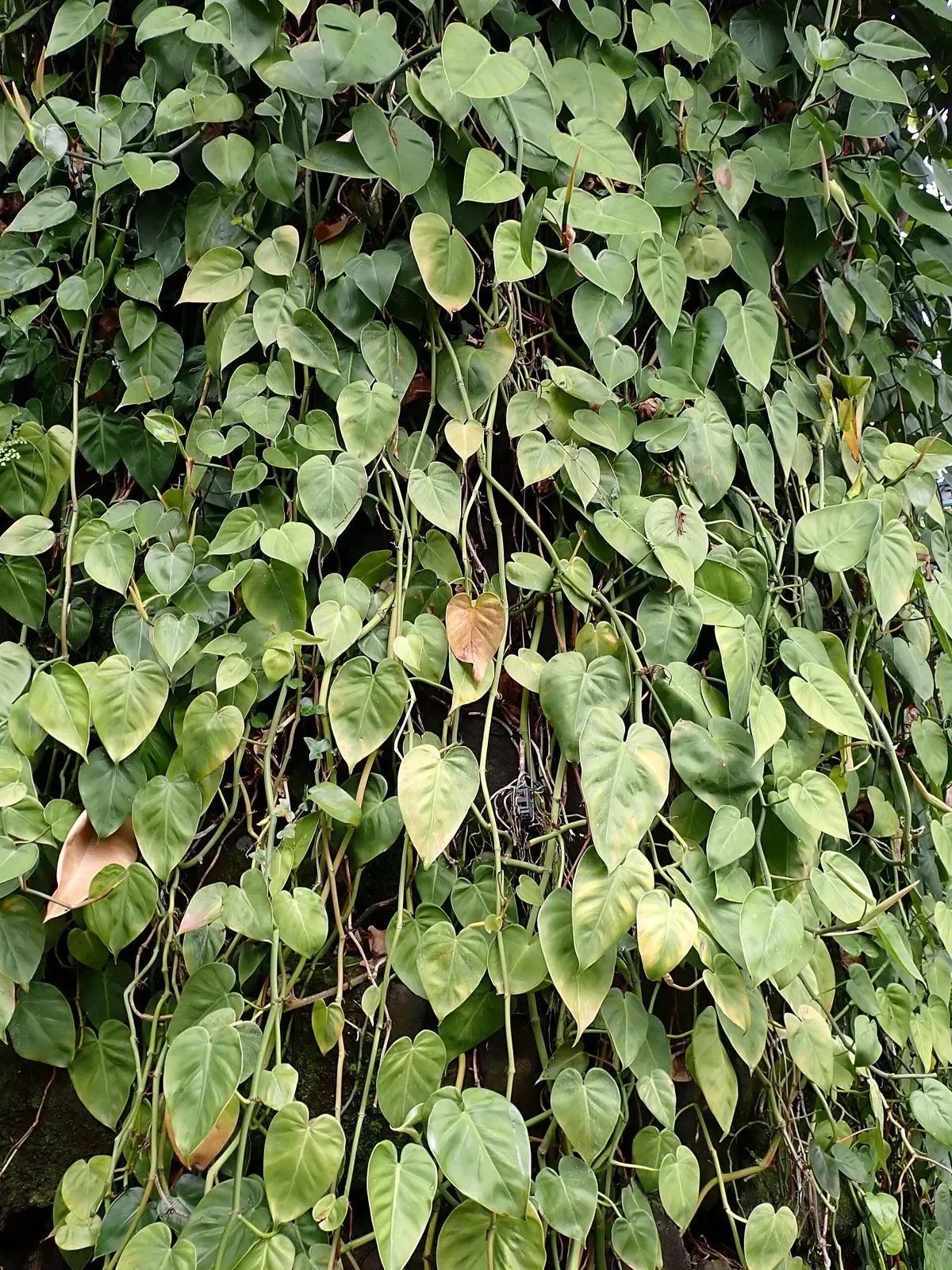
The classic green vine. NC State Extension says it can survive long periods in very low light, though it prefers medium light. It handles dry indoor air better than most tropicals. Good for: beginners, offices, shelves away from the window. Older labels may say Philodendron scandens or P. oxycardium. Read the heartleaf philodendron profile.
Philodendron Brasil
A natural sport of heartleaf found in Brazil in 1991, with a lime-yellow stripe through each leaf. Same easy care, plus one job: cut out any stem that turns plain green. Good for: hanging baskets, adding colour to a grey winter room. Read the Philodendron Brasil profile.
Philodendron micans
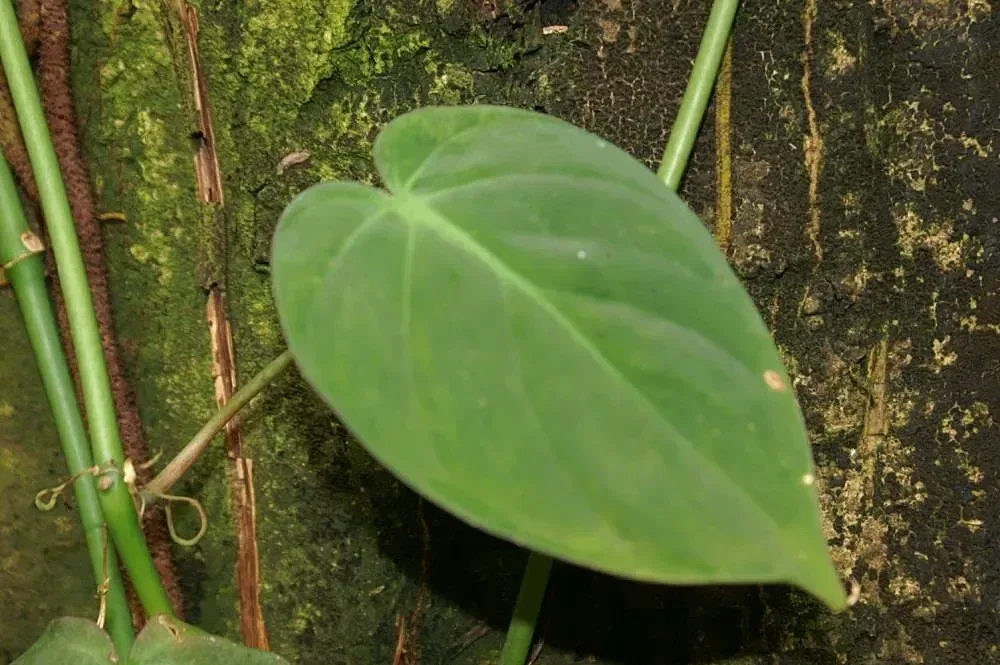
The velvet-leaf form, now listed by Kew and RHS under Philodendron hederaceum var. hederaceum. The soft leaves shift from bronze to green with the light. It dislikes cold windowsills and water spots on its velvet. Good for: a bright shelf, someone who wants texture. Read the Philodendron micans profile.
Variegated philodendrons
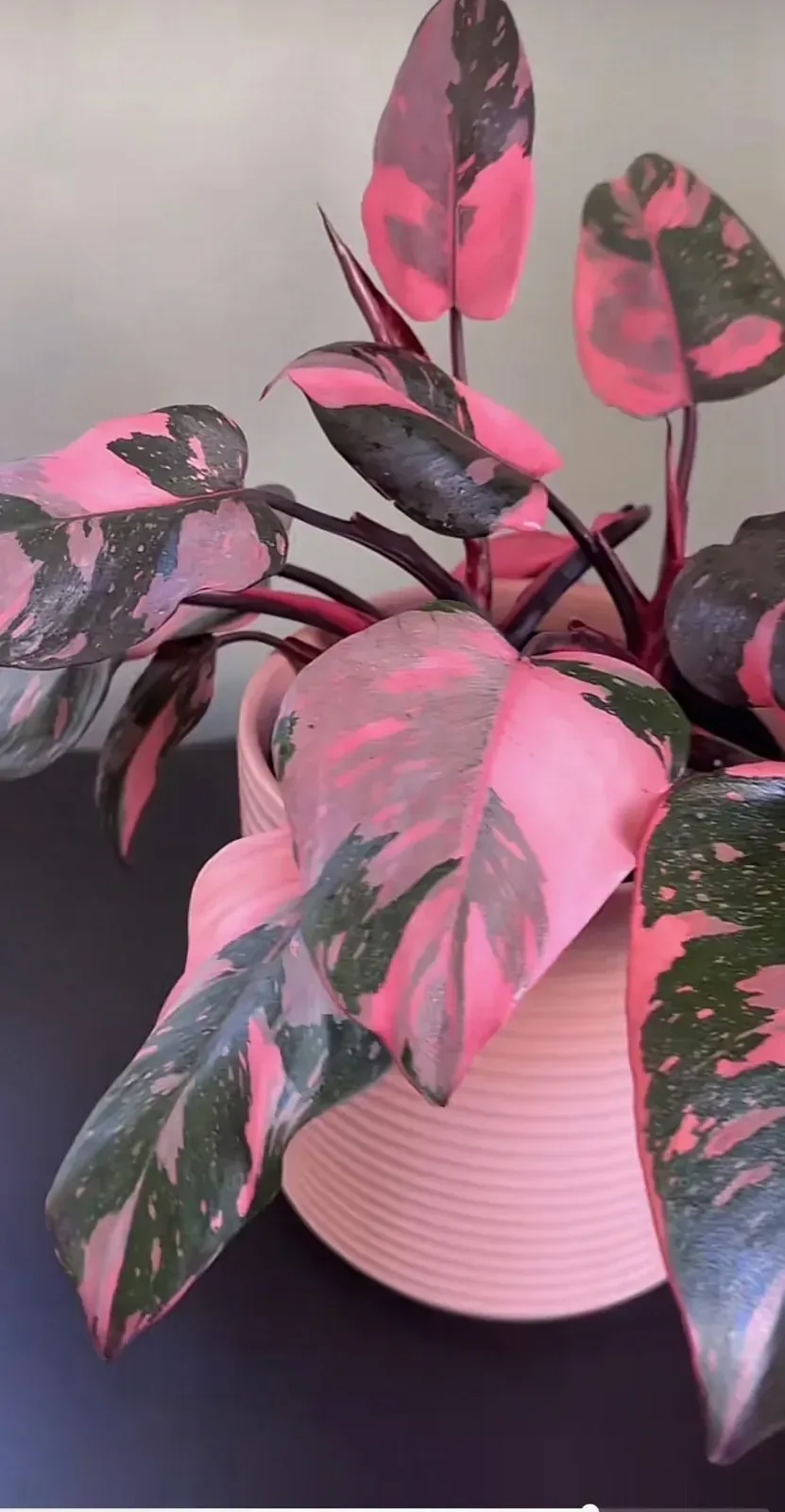
Variegated means the leaves have patches with little or no green colour: pink, white, cream or yellow. Those patches cannot feed the plant, so variegated philodendrons need more light than green ones. In poor light they may push out greener leaves. University of Minnesota Extension notes that variegated plants may revert to solid green when light is too low.
- Pink Princess: dark leaves with pink patches; RHS lists the name as accepted. See the Pink Princess philodendron profile.
- White Princess: white patches on green. RHS lists the name as unresolved, so buy from a seller you trust. Profile planned.
- Birkin: dark green leaves with fine cream pinstripes. See the Philodendron Birkin profile and the Birkin care guide for Canada.
- Paraiso Verde: RHS describes it as a variegated climbing cultivar of a species not yet identified, from French Guiana. Profile planned.
- Strawberry Shake: a trade name with no record in the RHS or International Aroid Society lists that we could find. Sellers often link it to 'Red Emerald', but its origin is not documented. Profile planned.
With any variegated philodendron, a stem that keeps making plain green leaves should be cut back to the last coloured leaf. RHS advises pruning out reverted shoots completely or back to variegated growth.
Pink philodendrons
If you searched for a "pink philodendron", you most likely want a Pink Princess. It is the best documented pink philodendron, and the pink is natural. Two warnings before you buy:
- 'Pink Congo': the International Aroid Society says plants that rely on regular chemical treatments to keep their look, such as Philodendron 'Pink Congo', are not recognised as cultivars. Once the effect wears off, new leaves grow in green.
- Seeds: RHS notes very few variegated plants can be raised from seed. "Pink philodendron seeds" sold online will not reliably give you a pink plant.
Strawberry Shake also carries some pink, but as noted above, its records are thin.
Self-heading philodendrons: xanadu and tree philodendron
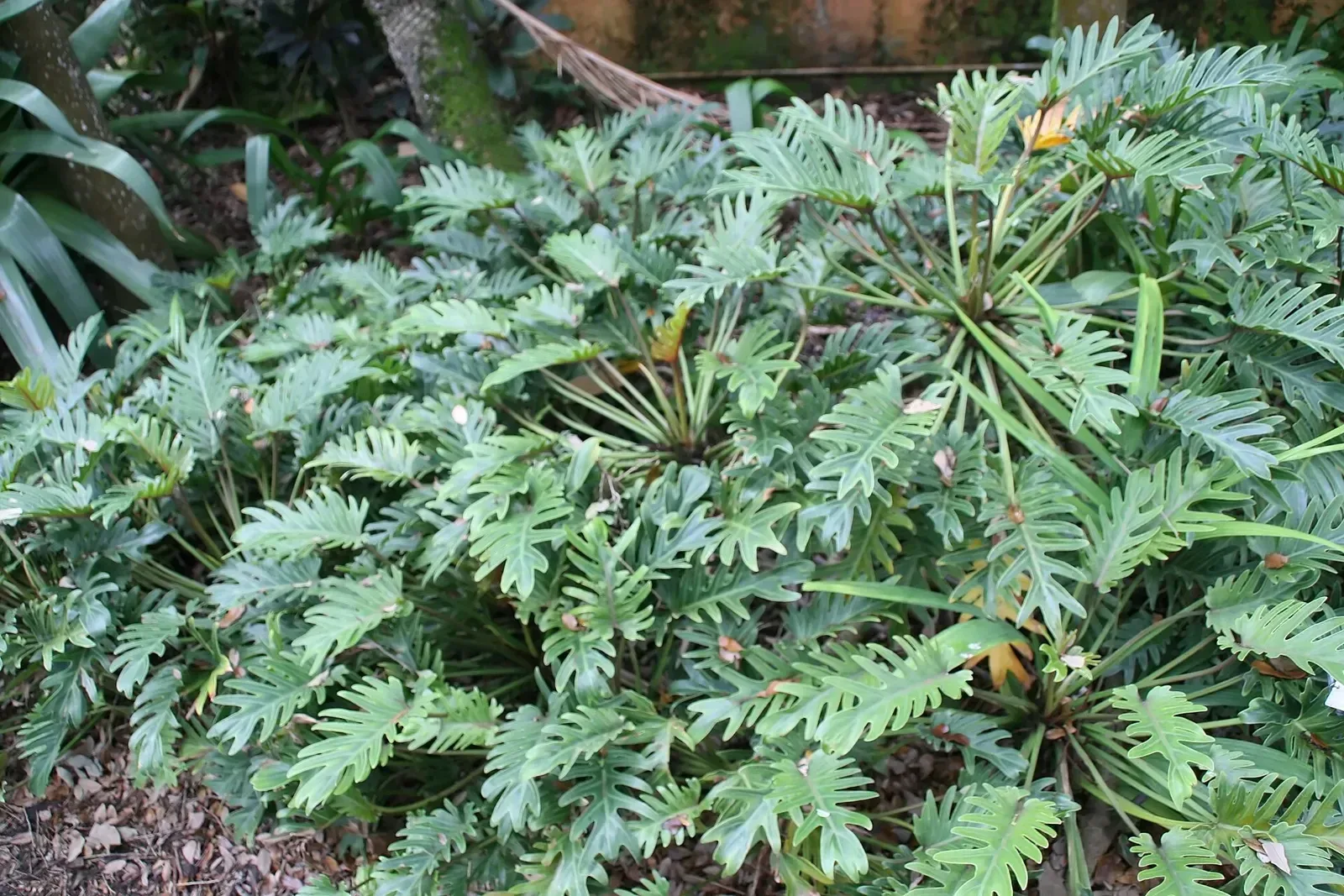
Self-heading philodendrons stay in one clump instead of trailing. They need floor space and strong light, which in Canada usually means a spot close to a big south or west window.
Philodendron xanadu
Kew accepts the name Philodendron xanadu, with Thaumatophyllum xanadu as a synonym. It is also sold as 'Winterbourn'. It forms a dense mound of deeply lobed, glossy leaves. NC State Extension rates it hardy only in USDA zones 9b to 11, so in Canada it is an indoor plant. Profile planned.
Tree philodendron
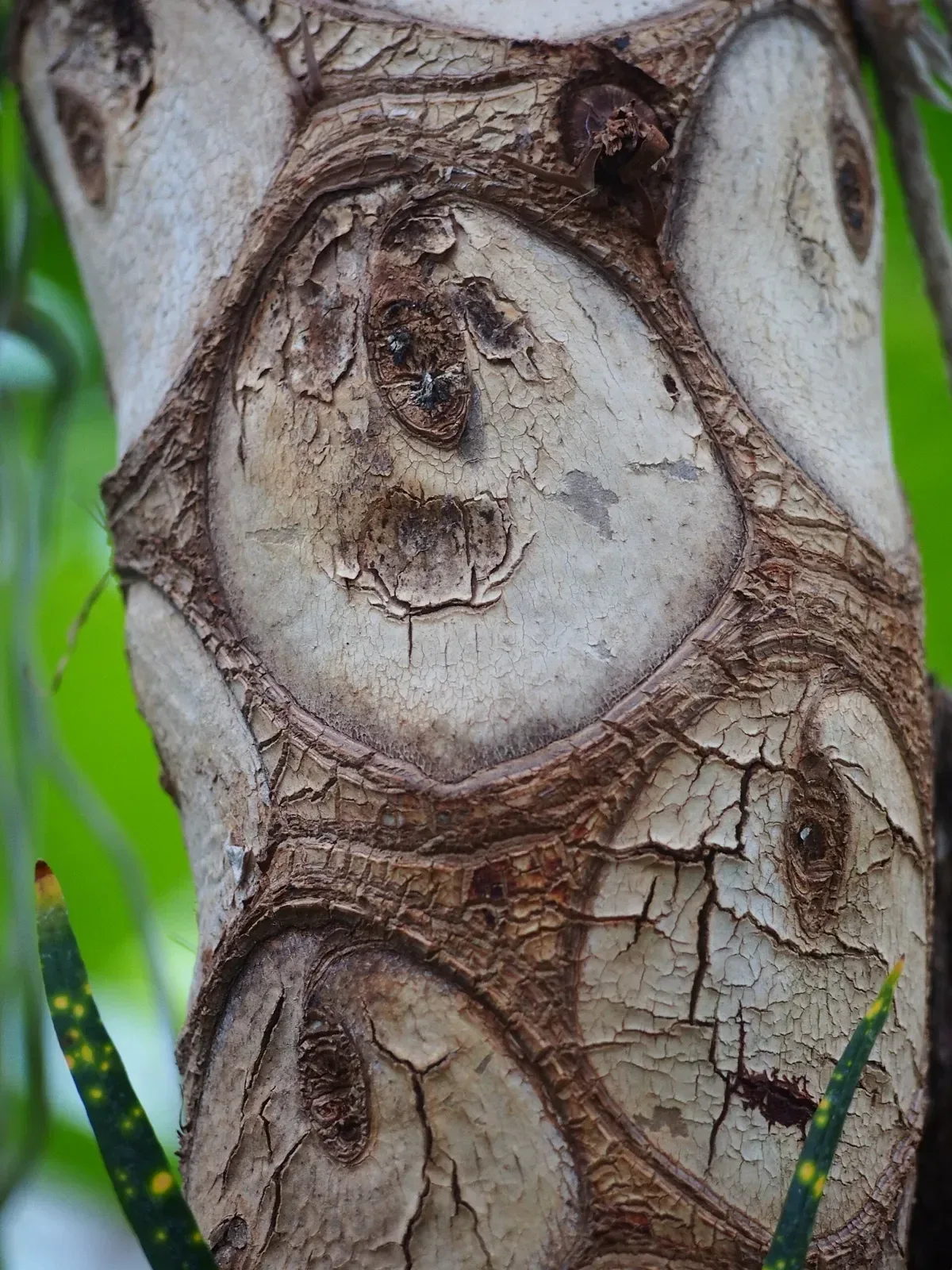
Philodendron bipinnatifidum, also sold as selloum, split-leaf or lacy tree philodendron. NC State Extension gives 1.2 to 3 m tall and 1.8 to 3 m wide in the ground. Indoors it stays smaller, but it still needs a lot of room. It is often confused with monstera; they are different plants. For a smaller relative of monstera, see our Monstera adansonii profile. Tree philodendron profile planned.
Collector hybrids: Splendid and Birkin
Philodendron 'Splendid' is listed by the International Aroid Society as a hybrid of P. verrucosum and P. melanochrysum, made by Keith Henderson. Its status in the registry is accepted, pending publication. It has velvety, long leaves with pale veins. In a dry Canadian house, it is best kept with a humidifier or in a clear plant cabinet. Profile planned.
Birkin is a compact, variegated philodendron that suits a bright windowsill. See the Birkin profile.
Is a philodendron plant right for your home?
Answer these four questions to narrow it down.
1. How much light do you have in winter?
- Dim room or north window: heartleaf philodendron, ideally with a grow light from November to February.
- East or west window: heartleaf, Brasil, micans, Birkin.
- Bright south window or a grow light setup: Pink Princess, White Princess, xanadu, tree philodendron.
2. How much space do you have?
- A shelf or hanging hook: heartleaf, Brasil, micans.
- A tabletop: Birkin, a young Pink Princess on a short pole.
- A floor corner: xanadu.
- A big bright room: tree philodendron.
3. How dry does your home get in winter?
Prairie and northern homes can get very dry when the furnace runs. Heartleaf, Brasil and xanadu cope best. Pink Princess, micans and especially velvet hybrids like Splendid do better with a humidifier.
4. Do you have pets or small children?
No philodendron is pet safe. See the safety section below. If a cat chews everything in reach, consider a plant from our pet-safe plants list instead.
Core philodendron care in a Canadian home
Each profile has full details. These basics apply to almost all of them.
| Care need | Summer (May to September) | Winter (November to March) |
|---|---|---|
| Light | Bright indirect; pull back from hot south and west glass | Brightest window you have; grow light 12 to 14 hours a day, 30 to 60 cm above leaves (UMN Extension) |
| Water | When the top few centimetres of mix are dry; may be every few days | Same test, but much less often; never on a fixed schedule |
| Mix | Airy, draining indoor mix, with perlite and bark | Same; do not repot in deep winter unless roots are rotting |
| Warmth | Normal room temperature | Keep above about 15°C (RHS); off cold glass, away from doors |
| Humidity | Usually fine | Furnace air is dry; humidifier, grouping, away from heat registers |
| Fertilizer | Balanced liquid, half strength, monthly, April to September | Stop, unless growing actively under lights |
| Pests | Check leaf undersides monthly | Spider mites like dry heated rooms; rinse plants and check weekly |
Light
Light is the biggest limit for philodendrons in Canada. Between November and February, the sun is low and days are short. Move plants closer to a window for those months and keep leaves off the glass. A simple LED grow light on a timer solves most winter problems.
Water
Push a finger into the mix. If it is dry about 3 to 5 cm down, water slowly until it drains, then empty the saucer. In winter, this takes much longer to happen. Overwatering in a cold, dim room is the most common way Canadians lose philodendrons.
Mix and pots
A good starting mix is 2 parts indoor potting mix, 1 part perlite and 1 part small orchid bark. Use pots with drainage holes, and go up only one size at a time, in spring. You can also use our potting mix calculator to work out amounts.
Warmth and dry air
RHS gives a 15°C winter minimum for heartleaf philodendron, and rates Pink Princess and Brasil as needing more than 15°C year-round. Window ledges and entryways can drop below that on cold nights. Heat registers blow hot, dry air straight onto leaves. Keep plants out of both.
Can philodendrons go outside in a Canadian summer?
Yes, for a summer holiday, if you are careful. Wait until nights stay above about 15°C, usually June in much of Canada. Use full shade; direct sun burns leaves that grew indoors. Bring them in early in September, before nights cool, and check for pests before they rejoin your other plants. Self-heading types are heavy, so plan how you will move them.
A full winter-care guide is planned: Philodendron care in Canadian winters.
Safety for pets and skin
Philodendrons are not pet safe. ASPCA lists heartleaf philodendron (Philodendron hederaceum) as toxic to dogs, cats and horses, and lists other philodendrons, including split-leaf and horsehead types and 'Red Emerald', as toxic to dogs and cats. The cause is insoluble calcium oxalate crystals. Chewing causes mouth pain and swelling, drooling, vomiting and trouble swallowing. NC State Extension notes philodendron sap can cause contact dermatitis, and RHS lists the plants it covers as skin and eye irritants.
- Keep plants out of reach of pets and small children. Trailing stems tempt cats.
- Wear gloves when pruning, repotting or taking cuttings. Wash hands after.
- If a pet chews a philodendron, call your vet. The ASPCA Animal Poison Control line is (888) 426-4435 (a fee may apply). For a child, call your provincial poison centre.
Our philodendron guides
These guides answer one question each, so the plant profiles do not repeat them.
- Heartleaf vs Brasil vs micans: how to tell them apart
- Philodendron vs pothos: how to tell them apart
- Pink Princess vs White Princess philodendron: key differences
- Why is my variegated philodendron losing colour?
- Philodendron care in Canadian winters: light, heating and watering
- How to propagate philodendron from cuttings
- Philodendron Birkin care guide for Canada (live)
All philodendron profiles
- Heartleaf philodendron
- Philodendron Brasil
- Philodendron micans (velvet-leaf philodendron)
- Pink Princess philodendron
- Philodendron Birkin
- White Princess philodendron
- Philodendron xanadu
- Tree philodendron
- Philodendron Splendid
- Philodendron Paraiso Verde
- Philodendron Strawberry Shake
Watch: philodendron varieties
A visual tour of 20 philodendron varieties, useful for spotting the difference between vining and self-heading types. Names in videos are not always the accepted botanical names; check our profiles for those.
Other plants for Canadian homes
- Monstera adansonii and its care guide
- Anthurium, another aroid
- Hoya carnosa, an easy trailing plant
- Tradescantia zebrina care guide, for a colourful trailing plant
- Plant problems: symptoms and fixes
Sources
- Kew Plants of the World Online: Thaumatophyllum (treated as a synonym of Philodendron). Accessed 10 Nov 2026.
- Sakuragui et al. 2018, PhytoKeys 98 (Thaumatophyllum). Accessed 10 Nov 2026.
- Kew POWO: Philodendron xanadu. Accessed 10 Nov 2026.
- NC State Extension: Philodendron hederaceum, P. xanadu, P. bipinnatifidum and P. erubescens. Accessed 10 Nov 2026.
- RHS: P. hederaceum var. hederaceum, 'Pink Princess', 'White Princess', 'Paraiso Verde'. Accessed 10 Nov 2026.
- International Aroid Society cultivar registry guidelines and 'Splendid' record. Accessed 10 Nov 2026.
- ASPCA: Heartleaf Philodendron and Split Leaf Philodendron. Accessed 10 Nov 2026.
- RHS: Reversion. Accessed 10 Nov 2026.
- University of Minnesota Extension: Lighting for indoor plants. Accessed 10 Nov 2026.


Comments
No comments yet — share what worked in your climate.