
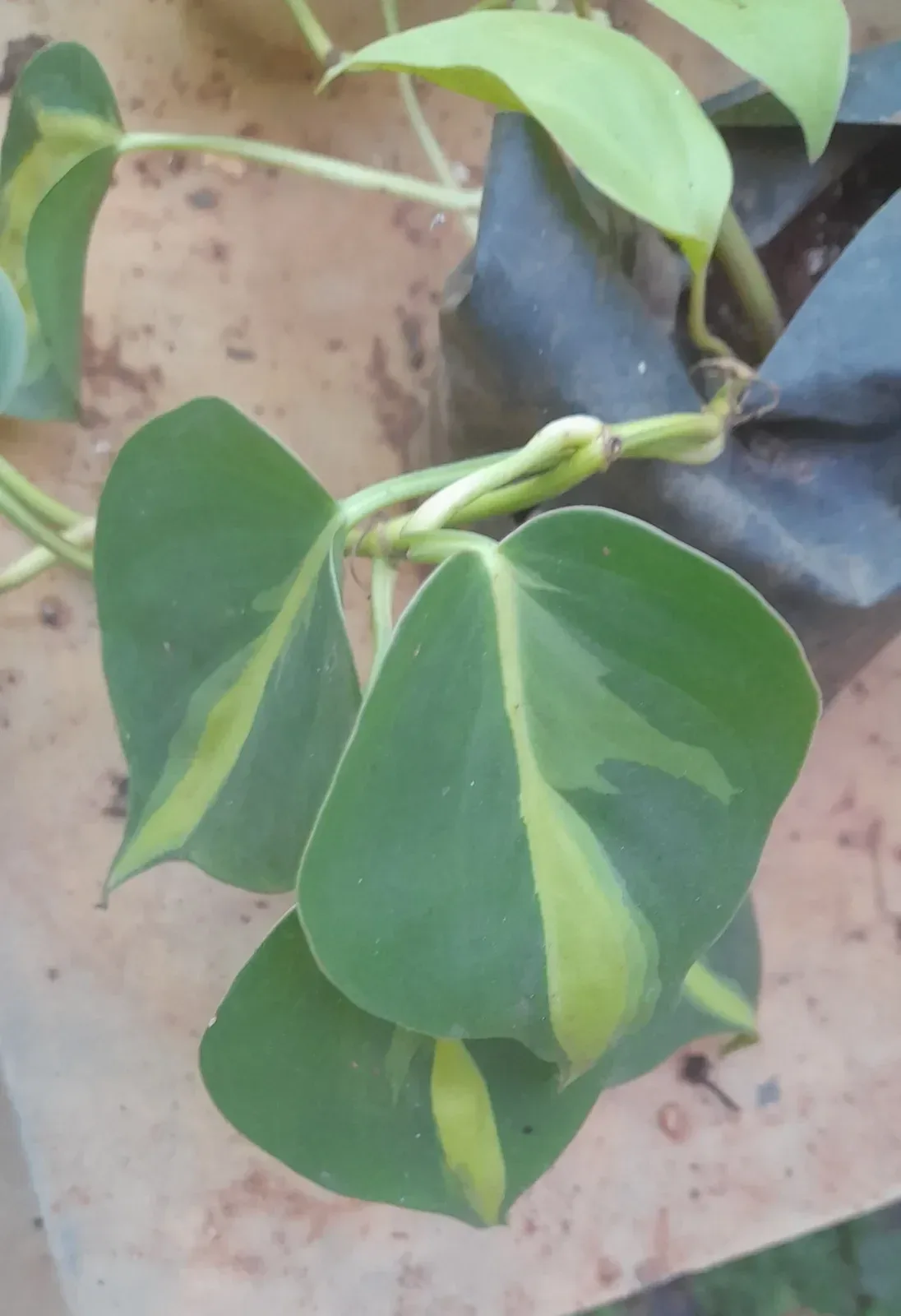
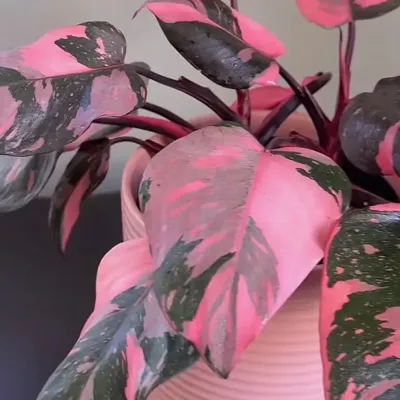
Is your variegated philodendron losing colour? New leaves on a Pink Princess come out dark, a Brasil stops showing its yellow stripe, or a White Princess pushes out one green leaf after another. In Canada this usually starts in late autumn, when days get short and the sun drops low. The fix depends on the cause: low light, reversion on one stem, or simply normal variation. This guide helps you work out which one you are dealing with, shows how and where to prune, and explains what will and will not bring the colour back. It covers every variegated type in our philodendron types and care guide.
Why variegated leaves need more light
The green in a leaf is chlorophyll, the pigment that captures light and turns it into food. Pink, white, cream and yellow areas have little or none of it. So a variegated plant has fewer "solar panels" than a plain green one of the same size, and it needs more light to grow at the same pace.
University of Minnesota Extension notes that variegated houseplants may revert to solid green in poor light. NC State Extension says the same about pothos: low light can cause loss of variegation. When light drops, the plant is better off with more green, and new leaves often show it.
In most of Canada, the darkest months are November to February. A window that was perfect in June can be too dim in December, and a variegated philodendron is usually the first plant in the house to show it.
Reversion, low light or normal variation?
Three different things can make a variegated philodendron look greener. Here is how to tell them apart.
| What you see | Most likely cause | What to do |
|---|---|---|
| Whole plant's new leaves are greener, smaller, with long gaps between them | Low light | Add light first, then judge the next three or four leaves. |
| One stem keeps making all-green leaves while others stay variegated | Reversion on that stem | Cut that stem back to the last well-variegated leaf. |
| A single green leaf among variegated ones | Normal variation | Nothing. Watch the next leaves. |
| Older leaves slowly darkening, new ones fine | Normal ageing | Nothing. |
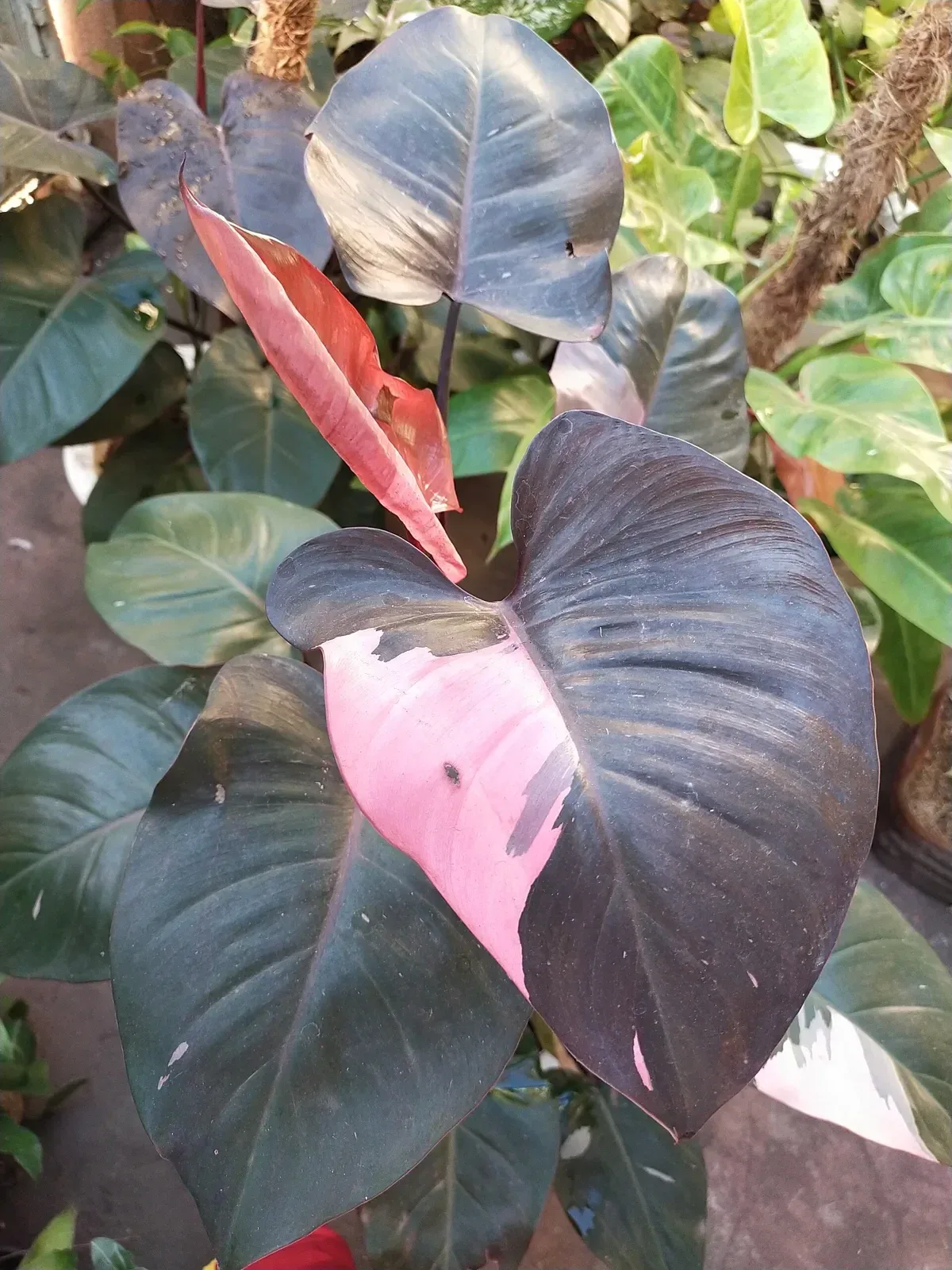
| All-pink Philodendron turning green | Chemical colour wearing off (for example 'Pink Congo') | Nothing will bring it back. See below. |
What reversion is
RHS explains that variegated plants are usually selected from a sport, a mutation of a plain green plant, and kept going by cuttings. Sometimes a shoot "reverts" to the green form of its parent. Because these green shoots have more chlorophyll, they grow more strongly and can eventually take over the plant. RHS notes that pale or white shoots can also appear, but these are weak and do not take over the way green ones do.
Reversion usually shows as a whole stem, or one side of the plant, going green. That is different from low light, which affects the whole plant at once.
How to prune a reverted stem
RHS advice for reverted shoots is to prune them out completely, or cut back to a part with variegated leaves. For a philodendron:
- Follow the green stem back from the tip toward the base.
- Find the last leaf on that stem with good variegation, ideally with colour on both halves of the leaf.
- Cut just above that leaf's node with clean scissors.
- Wear gloves. RHS and NC State note that philodendron sap can irritate skin.
- Watch the new shoot from that node. If it is also green, cut back one more node.
Best timing is spring or early summer, when the plant can grow back quickly. In mid-winter, mark the stem with a twist tie and prune in April.
The green piece you cut off will root easily, but it will grow into a plain green plant. Pot it up as a gift, or compost it.
All-pink or all-white leaves: why they brown
A leaf that is fully pink or white looks wonderful, but it has almost no chlorophyll to feed itself. It depends on the rest of the plant. These leaves often brown at the edges or collapse within weeks or months. RHS describes all-white shoots as weak.
- Leave the leaf while it is firm. It does no harm.
- Remove it at the stalk once it starts to brown badly.
- If a whole stem keeps making all-pink or all-white leaves, cut back to a leaf with more green. A balanced leaf grows a stronger shoot.
Pale sectors also brown faster in dry furnace air, in hot sun through glass, and when fertilizer salts build up. Those are separate problems, covered in the plant profiles.
Winter fix: window choice and grow lights
Light is the one thing you can always improve.
Choose the right window
- South window: the best from October to March in most of Canada. Set the plant close, but keep leaves off cold glass.
- East window: good all year, with gentle morning sun.
- West window: good in winter; use a sheer curtain in summer.
- North window: usually too dim for variegated philodendrons from November to February.
Add a grow light
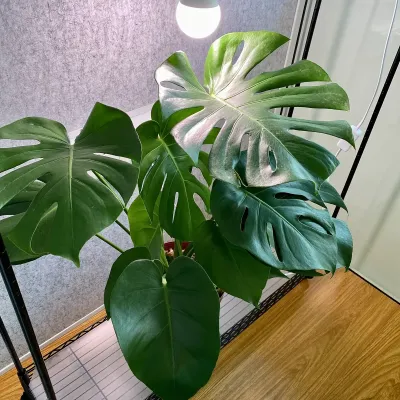
University of Minnesota Extension suggests 12 to 14 hours of light a day for foliage plants, with lights about 30 to 60 cm above the leaves. Its winter tips add that special grow lights are not essential: a full-spectrum or LED light works too. Use a plug-in timer so you do not forget.
Do not overdo direct sun
More light helps, but hot direct sun through summer glass burns pale tissue first. RHS advises bright, filtered or indirect light for Pink Princess and Brasil. The aim is bright and steady, not scorching.
A note on Brasil
The US plant patent for Philodendron 'Brasil' says that low light enhanced variegation in the breeder's trials. That sounds like the opposite of everything above. In practice, it does not mean a dark corner is good for Brasil: very low light still makes any vine leggy with small leaves. If a Brasil in a reasonable spot grows a green stem, treat it as reversion and prune it.
What will not help
- Fertilizer. We found no source showing that feeding brings back variegation. Winter feeding builds salts that brown leaf edges, which shows badly on pale sectors.
- Waiting on a reverted stem. Green shoots grow faster than variegated ones, so the problem gets bigger, not smaller.
- Moving the plant into hot summer sun. Pale areas burn.
- Products sold to "boost pink". Chemically coloured plants like 'Pink Congo' go back to green once treatment stops, and the IAS does not recognise such plants as cultivars.
- Cutting off every green leaf. Green leaves feed the plant. Only remove whole reverted stems.
Plant-by-plant notes
| Plant | What fading looks like | Key tip |
|---|---|---|
| Pink Princess | New leaves dark with little or no pink | Brightest light; cut green stems back to a pink leaf. |
| White Princess | Several green leaves in a row | Same as Pink Princess; protect white from dry air. |
| Philodendron Brasil | Plain green stems among striped ones | Cut green stems back to the last striped leaf. |
| Paraiso Verde | Plain dark green leaves on one stem | Variegation stability not documented; prune plain stems. |
| Strawberry Shake | Greener new leaves | More light; prune reverted stems. |
| Philodendron Birkin | Fewer white pinstripes | See its profile for Birkin-specific advice. |
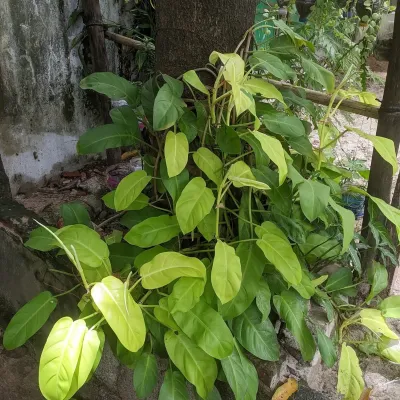
'Lemon Lime' philodendron is different. NC State Extension describes it as bright yellow to chartreuse all over. That is a colour form, not variegation, so there is no stripe to lose.
A simple plan for a greening plant
- Look at the whole plant. Is every stem greener, or just one?
- If it is every stem: move to a brighter window or add a grow light. Wait for three or four new leaves before judging.
- If it is one stem: mark it and cut it back to the last good leaf in spring.
- If it is one leaf: do nothing.
- Keep watering and feeding normal for the season. Do not feed in winter.
Watch: how to fix reverted variegated plants
A grower shows how to spot and prune reverted growth on variegated houseplants. The same steps apply to variegated philodendrons.
Related plants and guides
- Philodendron care in Canadian winters
- Pink Princess vs White Princess
- How to propagate philodendron
- Philodendron Birkin care guide
- All philodendron types
Sources
- RHS: Reversion. Accessed 10 Nov 2026.
- University of Minnesota Extension: Lighting for indoor plants. Accessed 10 Nov 2026.
- University of Minnesota Extension: Winter houseplant tips. Accessed 10 Nov 2026.
- NC State Extension Plant Toolbox: Epipremnum aureum (low light and variegation). Accessed 10 Nov 2026.
- NC State Extension Plant Toolbox: Philodendron hederaceum ('Lemon Lime', 'Brasil'). Accessed 10 Nov 2026.
- RHS: Philodendron 'Pink Princess' (v). Accessed 10 Nov 2026.
- RHS: Philodendron hederaceum 'Brasil' (v). Accessed 10 Nov 2026.
- US Plant Patent PP12,956: Philodendron plant named 'Brasil'. Accessed 10 Nov 2026.
- International Aroid Society: cultivar registry (Pink Congo). Accessed 10 Nov 2026.


Comments
No comments yet — share what worked in your climate.