
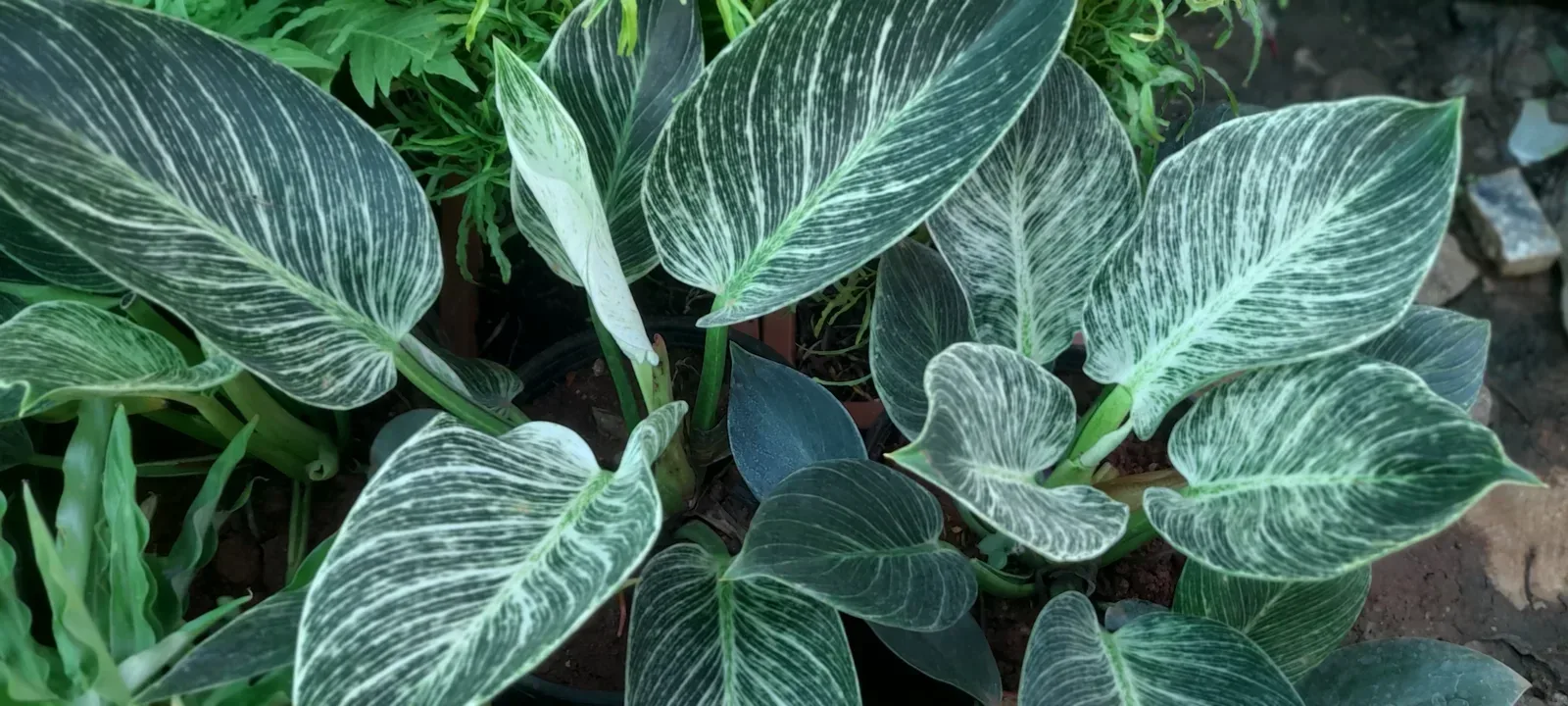
Birkin's striped leaves are the reason many people buy it, yet those markings are not perfectly predictable. Healthy growth comes first; strong sun and extra fertilizer cannot guarantee a particular pattern.
Quick answer
Birkin needs bright indirect light, aerated roots and moderate watering. Its fine pale stripes vary, so do not remove every less-patterned leaf. Keep petiole bases above buried wet material and avoid forcing new leaves open. Canadian heating season calls for protection from direct vents, while any propagation cutting must include viable stem tissue.
How do you identify philodendron birkin?
Philodendron birkin: 'Birkin' is a compact self-heading philodendron with pale pinstripes, not a long trailing vine. Leaves develop markings as they mature. 'White Wave' may refer to the same selection, but check the nursery label.
Can better light reverse a green Birkin?
Good light supports growth, but Birkin's unstable variegation can change genetically. Do not promise sunlight will restore every stripe. Fully white leaves also have little green tissue to feed the plant. Remove an unwanted reverted shoot only if the parent retains sound growing points. Pale areas scorch easily in strong sun. Changed markings alone do not diagnose fertilizer deficiency. Keep a record of fresh leaves before making several changes at once.
Birkin is valued for fine pale striping on upright leaves, but the pattern is not identical on every blade. New leaves can change as they mature, and shoots may sometimes produce less typical growth. Keep photographs to distinguish gradual variation from a sudden problem. Bright indirect light is a sensible starting point. Strong sun can damage pale areas, while a dim Canadian winter position may produce weak growth. A supplemental lamp can provide a steadier environment away from cold glass. Do not assume a completely white new leaf is automatically an improvement; it has little green area to support itself.
What light does it need in a Canadian winter?
Bright indirect; low light reduces stripes.
How should you water through the seasons?
Check the upper root zone before watering, then wet the mix thoroughly and drain it. Birkin's relatively compact shape can conceal a wet pot beneath a dense group of leaves. If the nursery medium contains a tight central plug, monitor that area as well as any looser surrounding mix. Leaf yellowing alone cannot tell you whether to add water. Check roots, recent feeding and light. A heavy pot with soft roots needs better root conditions, whereas an evenly dried root ball may simply need careful rewetting. Never leave water standing inside a decorative cover after the nursery pot has drained.
What soil or potting mix is best?
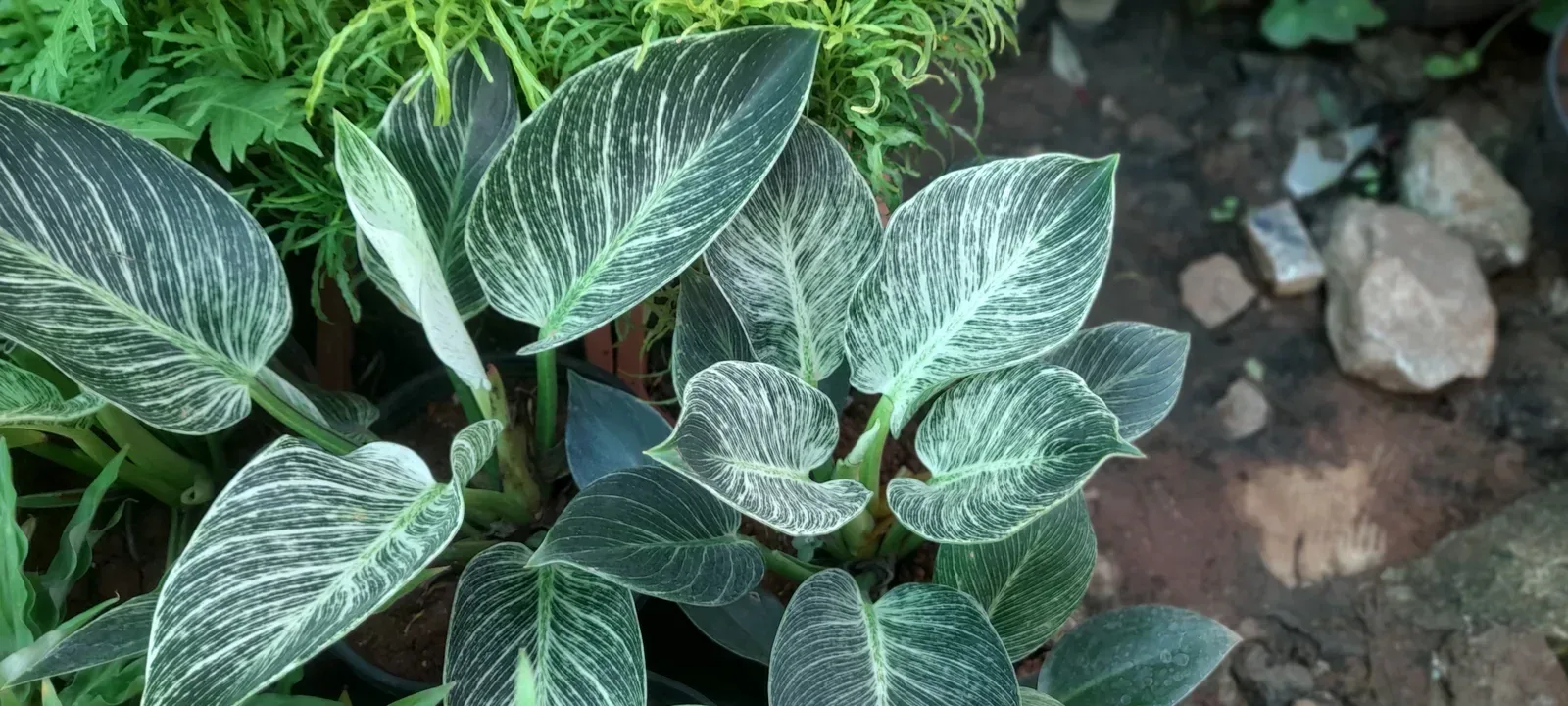
Use an aerated indoor blend with coarse bark or a similar stable component, balanced so it retains some moisture. A large container of very coarse material can be difficult to keep evenly moist around a small root system. Increase pot size modestly when roots justify it. Keep the crown near its original level and avoid burying petiole bases. Remove dead sheaths gently if they are already loose, but do not peel at living tissue to make the stem look cleaner. Damaging a protected new leaf before it opens can leave marks that resemble pest injury later.
Does dry air or humidity matter?
Maintain comfortable household warmth without directing furnace air across the leaves. A humidifier may help in a dry room, yet persistent wet foliage and poor air movement can create new trouble. Do not force an emerging leaf open with fingers or spray it repeatedly to hurry the process. First check overall hydration and room conditions. Dust can be removed with a soft damp cloth, supporting each blade. Pale striped sections can show mechanical damage clearly. Feed during reliable growth, using a measured dilution. Extra fertilizer will not restore missing variegation or convert an old plain leaf into a striped one.
How should you prune it?
Remove old lower leaves.
What temperatures and winter protection does it need?
Birkin cannot spend a Canadian winter on an open balcony. Keep its compact crown in a warm stable room and avoid cold air pooling beside a patio door. Carry a winter purchase in insulated wrapping so tender unfolding leaves are not exposed during the trip from shop to vehicle.
What is the best propagation method?
Separate a rooted offset or use stem tissue with a viable node and growing point. A detached striped leaf is not enough. Work carefully because the compact stem is hard to see. Do not cut a weak plant into many sections.
Pruning decisions should account for the plant's actual stem and growth points. If an off-type shoot dominates, inspect where it begins before removing it. Do not cut every less-striped leaf on the assumption that the pattern will improve. The green tissue still supplies energy. A compact plant may need only removal of fully declined leaves. For propagation, choose a stem section with a viable node or a rooted offset where present. A leaf and petiole without suitable stem tissue are not enough. Clean tools and keep cut pieces protected from pets, since the sap contains irritating calcium oxalate crystals.
Which pests and diseases should you watch for?
Mealybugs, thrips.
Inspect new foliage for thrips damage, especially silvery patches accompanied by dark specks. Mealybugs may hide at petiole bases, and scale can be mistaken for small stem marks. Isolate a suspect plant before it reaches a collection. A torn leaf emerging from a dry sheath is not necessarily evidence of insects, so look for the pest itself or consistent signs. Use treatments intended for indoor ornamentals and test sensitive foliage first. Repeated applications of unsuitable homemade mixtures can create more visible damage than the original pest. Monitor fresh leaves to assess whether control has worked.
How do you work out the cause?
Loss of striping can be genetic, not simply low light. Yellow leaves call for a moisture and root check; brown edges can involve salts, dry air or physical injury.
Is it safe around pets and children?
ASPCA treats philodendrons as toxic; chewing Birkin can expose the mouth to irritating calcium oxalate crystals. Keep Birkin away from chewing children; wear gloves for cutting and dispose of sap-bearing waste safely.
A seasonal care calendar for Canada
| Season | What to do |
|---|---|
| Spring | New striped leaves; feed. |
| Summer | Steady care. |
| Autumn | Ease Birkin nutrition when fewer striped leaves are opening. |
| Winter | Water less. |
What should you check before buying?
A foliage shelf might combine Birkin with monstera adansonii, provided each root ball is assessed separately. Compare peperomia and prayer plant for other leaf patterns before buying several plants simply because their pale markings look compatible.
Buy a plant with a firm centre, sound roots and several healthy leaves rather than choosing the most extreme white pattern. Ask for its correct cultivar name; mixed retailer labels can blur differences among upright philodendrons. Protect it during a Canadian winter journey and keep it away from cold car windows. At home, find a position that is both light enough and inaccessible to chewing animals or young children. A small tidy Birkin can eventually need more horizontal room than its nursery pot suggests. Leave space for new leaves so pale edges are not repeatedly rubbed against a wall or shelf.
Should every pale leaf be kept?
A heavily pale leaf is attractive but has less green tissue available for photosynthesis. Keep the rest of the plant healthy rather than trying to produce an entirely white canopy. If an unusual shoot appears, watch several successive leaves and identify the stem that produced them before making a pruning decision. Photograph the sequence so you can distinguish a stable change from one immature blade. Avoid paying a premium for a tiny cutting solely because its only leaf is nearly white. Viable nodes, sound roots and enough useful green growth are more important to its future than a striking sales photograph.
Comments
No comments yet — share what worked in your climate.