
Pink Princess vs White Princess is a common choice for anyone buying their first variegated philodendron. On the shelf they look like two colour versions of the same plant: dark leaves with pink patches, or green leaves with white ones. They are often sold under the same species and need much the same care. The real differences are in the colour, in how official each name is, and in the look-alikes sold beside them. This guide compares the two side by side, shows which names are on record, warns about plants that are sold under the wrong name, and helps you decide which one suits your Canadian home. For every other type, see our philodendron types and care guide.
Side-by-side comparison
| Feature | Pink Princess | White Princess |
|---|---|---|
| Leaf colour | Dark purplish-green leaves with pink variegation (NC State) | Green leaves splashed with white variegation (NC State) |
| Usually sold under | Philodendron erubescens | Philodendron erubescens |
| RHS name status | Accepted, listed as Philodendron 'Pink Princess' (v) | Unresolved, listed as Philodendron 'White Princess' (v) |
| IAS registry record | None found | None found |
| Habit | Upright, vining climber (NC State) | Climber |
| Light | Bright, filtered or indirect light (RHS) | Bright, indirect light; out of direct sun |
| Weak spot | Pink areas brown in dry air or strong sun | White areas brown in dry air or strong sun |
| Pets | Not pet safe | Not pet safe |
Colour and leaf pattern
The quickest difference is colour, but there is more to it than pink vs white.
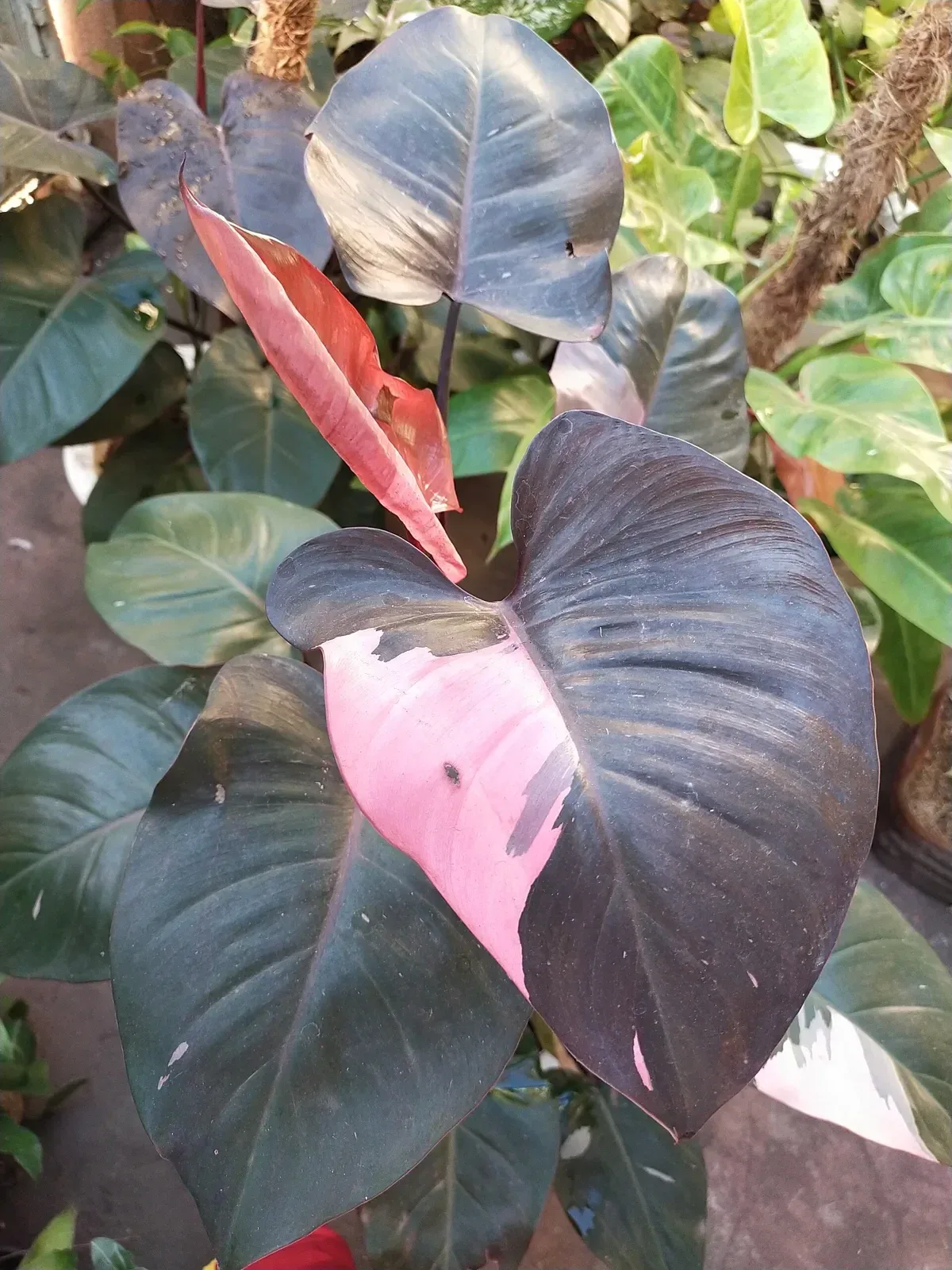
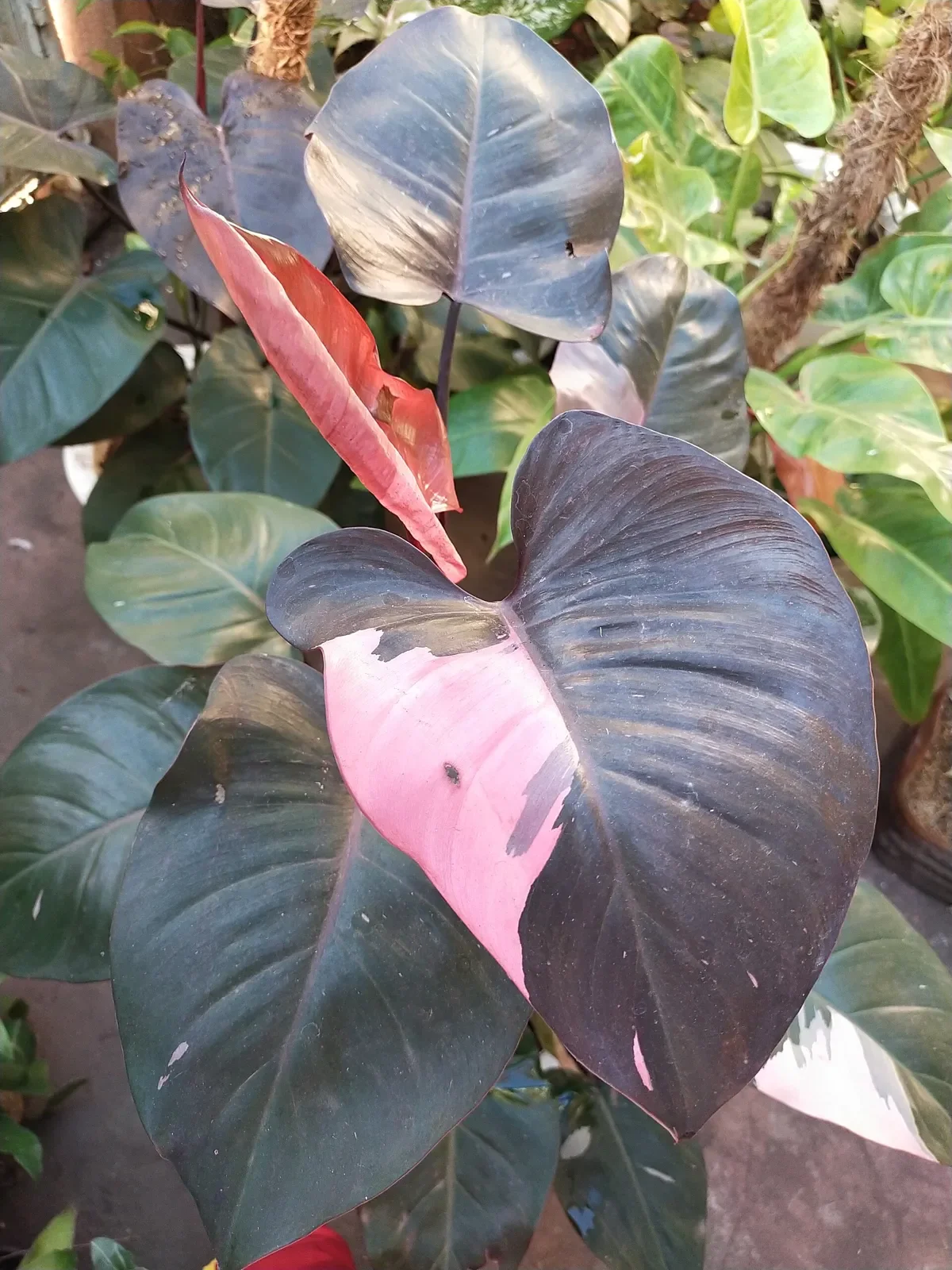
Pink Princess
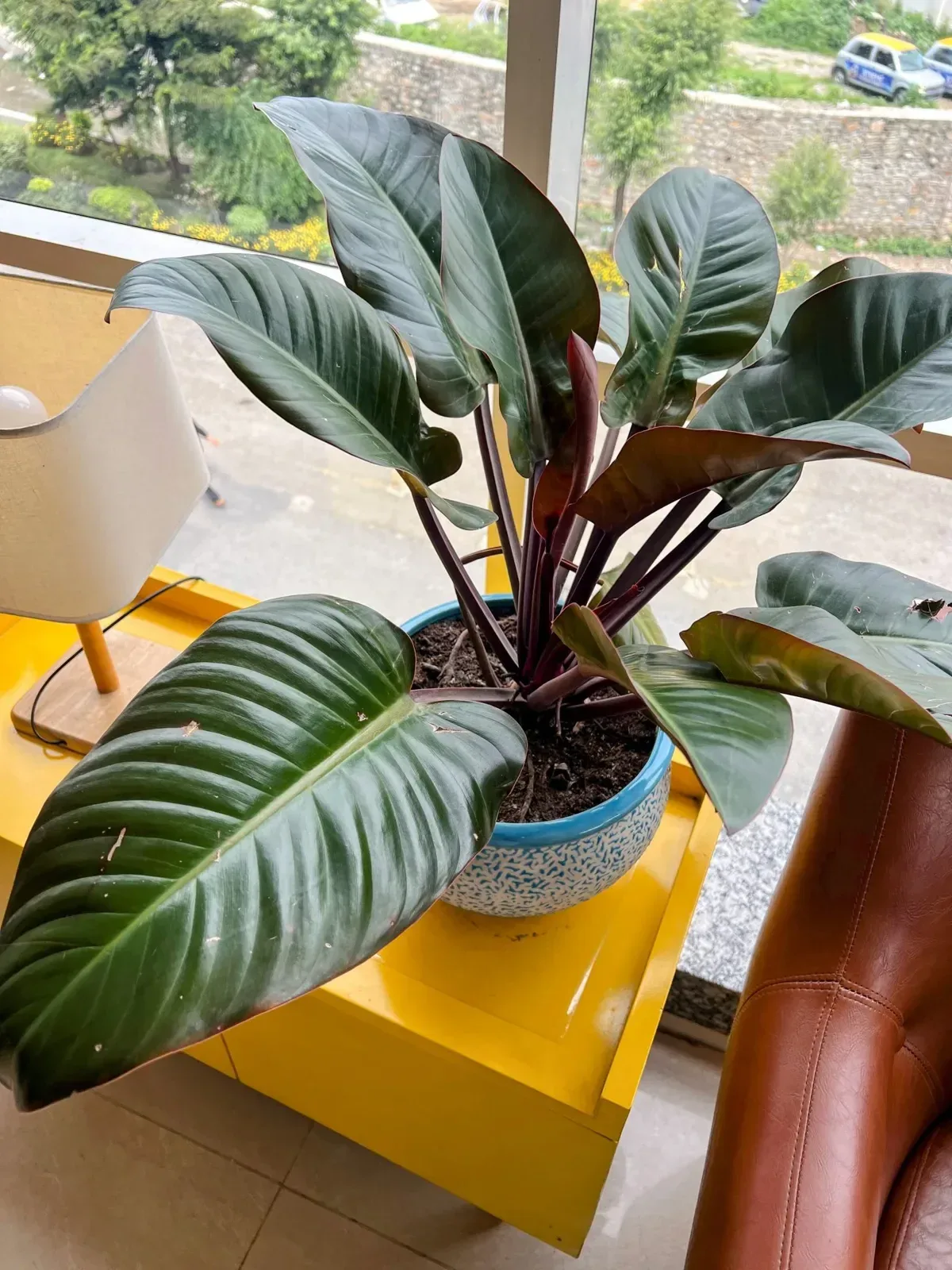
NC State Extension describes 'Pink Princess' as having heart-shaped, dark purplish-green leaves with pink variegation. The base leaf is very dark, which makes the pink stand out. Pink can appear as fine speckles, bold patches or half a leaf, and the amount changes from leaf to leaf.
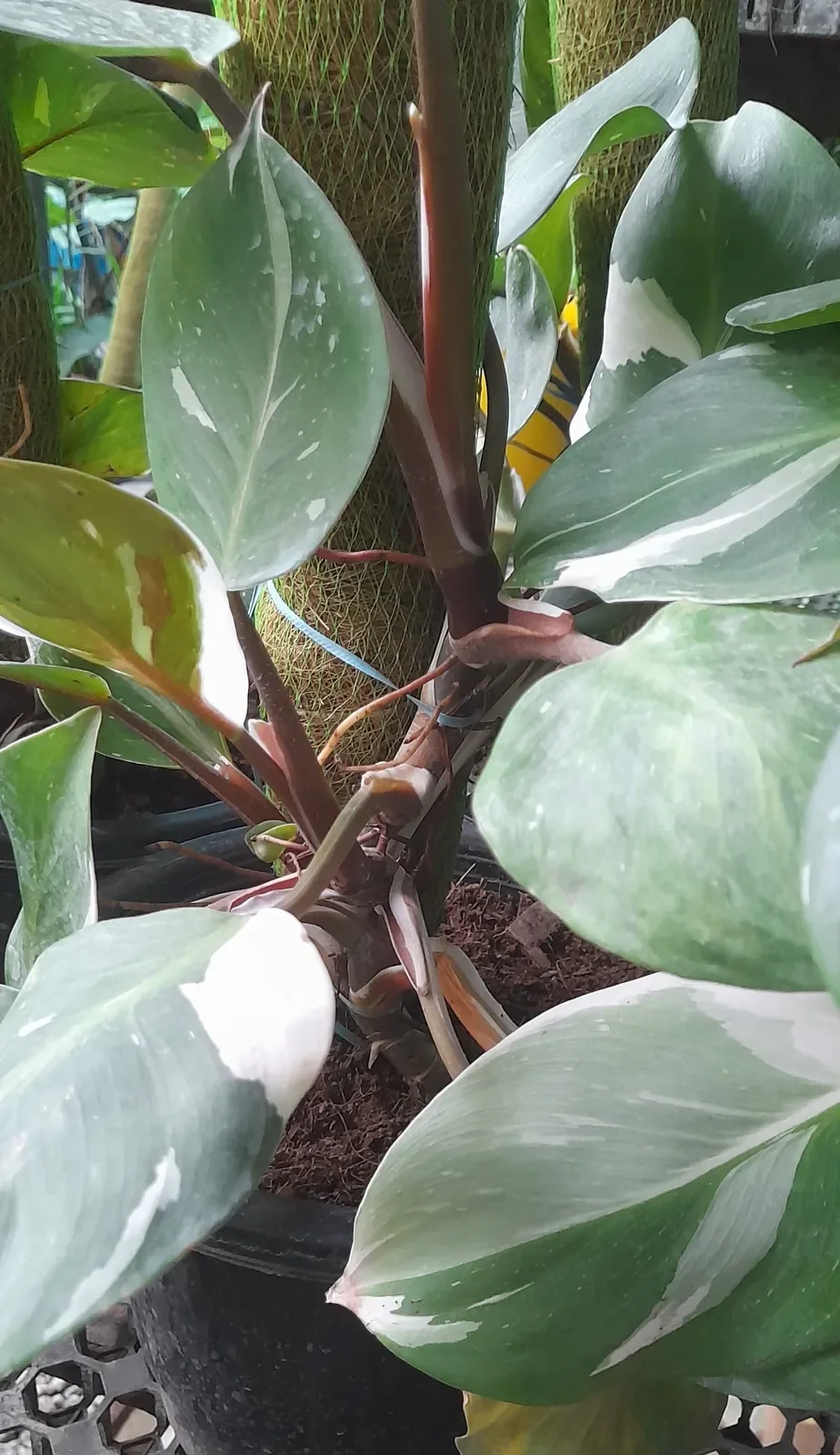
White Princess
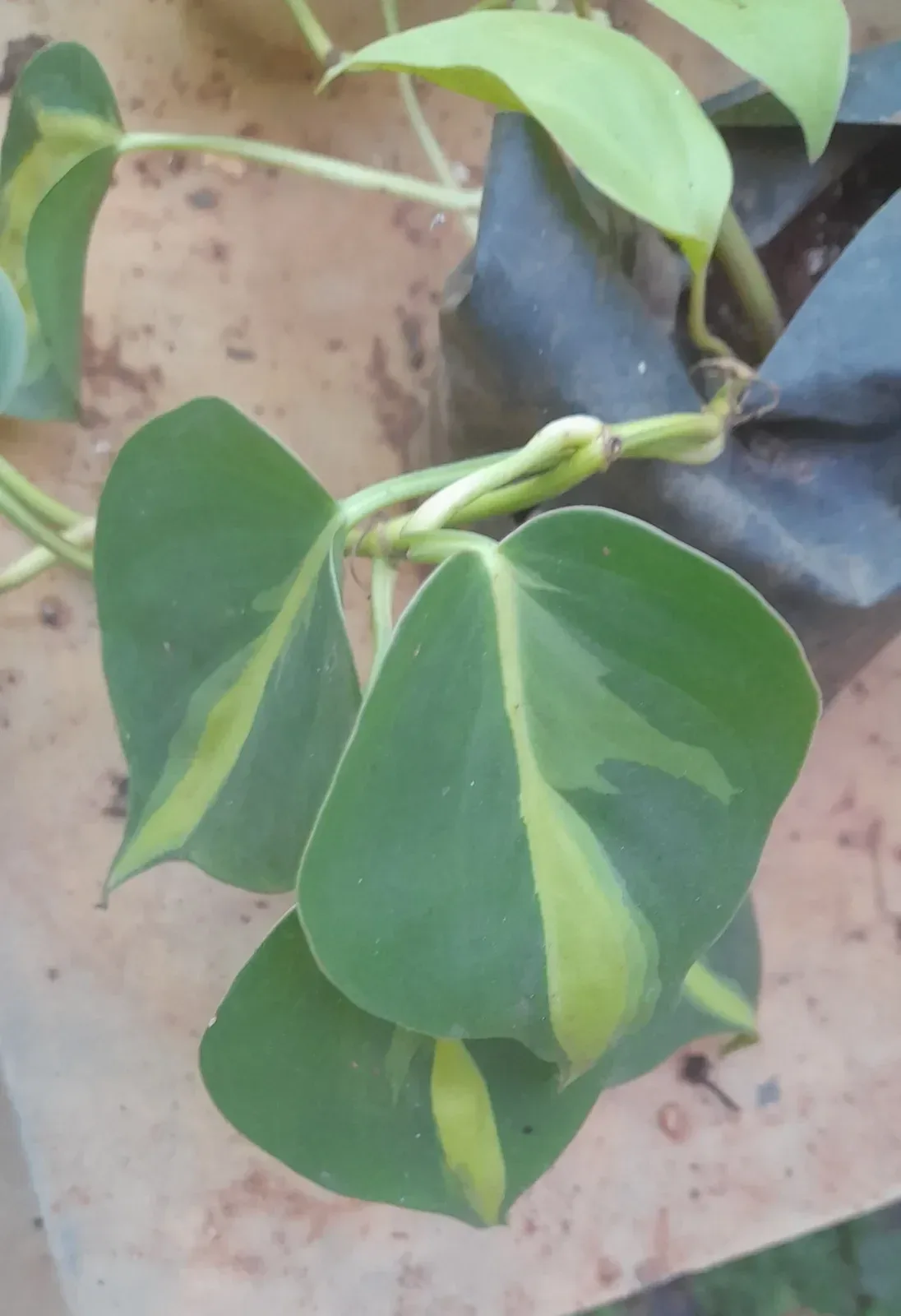
NC State lists 'White Princess' with green leaves splashed with white variegation. The white can come as streaks, flecks or larger sections. We found no official description that says more about its colour than that.
What both have in common
- The variegation is random and never the same on two leaves.
- Pink and white tissue has little or no chlorophyll, so both need more light than a plain green philodendron.
- Leaves that are almost fully pink or white look striking but are weak and usually brown early.
Which names are official?
This is where the two plants really differ, and it matters if you are paying collector prices.
- RHS lists Philodendron 'Pink Princess' (v) with the name status accepted. It does not attach a species.
- RHS lists Philodendron 'White Princess' (v) with the name status unresolved.
- We found no record for either name in the International Aroid Society (IAS) cultivar registry, which is the official registry for aroid cultivar names.
- NC State Extension lists both among the cultivars of Philodendron erubescens.
So both are well-known plants with names that are widely used, but neither has a full registry description to check a plant against. That leaves room for mislabelled plants, which is why the next section matters.
Look-alikes and the Pink Congo problem
White Knight and White Wizard
Two other white-variegated philodendrons, 'White Knight' and 'White Wizard', are often sold beside White Princess and mixed up with it. We could not find a botanical or registry description that reliably separates the three, so we will not give a checklist that could be wrong. Buy from a seller who shows the exact plant, including stems and the newest leaf, and keep the listing.
Pink Congo
'Pink Congo' is a philodendron sold with solid pink leaves. The IAS says plants that need regular chemical treatment to keep their look, such as 'Pink Congo', are not recognised as cultivars. Once the treatment wears off, new leaves come in green. If you see an all-pink philodendron at a bargain price, be careful.
Strawberry Shake
Philodendron Strawberry Shake is another variegated climber often compared with Pink Princess. It has no RHS or IAS record, and the claim that it comes from 'Red Emerald' is not documented. It is a separate trade name, not a type of Princess.
All-green Pink Princess
A Pink Princess that has fully reverted has plain dark leaves. It can look like a different plant, such as a plain Philodendron erubescens. That is one more reason to check the newest leaves before buying.
Care differences
Most care is the same, because both are sold under the same species. NC State Extension describes Philodendron erubescens as preferring warm temperatures (about 18 to 29°C), high humidity, moist but well-drained soil, protection from cold drafts, and no direct sunlight. RHS advice for Pink Princess is bright, filtered or indirect light; water freely in growth and moderately at other times; balanced liquid feed monthly in the growing season.
The small differences come from the colour:
- Light: both need bright, indirect light. A plant with a lot of white or pink has less green to feed it, so give the most variegated plant the brightest spot you have.
- Sun: pale tissue burns first. Keep both back from hot south and west glass from May to August.
- Dry air: pink and white edges crisp first in furnace air. A humidifier helps both.
- Reversion: both can produce plain green stems. Cut those back to the last well-variegated leaf, as RHS advises for reverted shoots.
In a Canadian winter
- Use your brightest window, or a grow light for 12 to 14 hours a day, 30 to 60 cm above the leaves (University of Minnesota Extension).
- Keep leaves off cold glass and away from drafty doors. RHS advises keeping philodendrons above 15°C.
- Water less often. Check the mix with your finger first.
- Stop feeding from October to March.
Our variegated philodendron colour guide covers fading and reversion in more depth.
Which should you buy?
| If you... | Choose | Why |
|---|---|---|
| Want the plant with the more settled name | Pink Princess | RHS lists the name as accepted; White Princess is unresolved. |
| Prefer white variegation to pink | White Princess | Green leaves splashed with white (NC State). |
| Love dark foliage with pink | Pink Princess | Dark purplish-green leaves with pink (NC State). |
| Have a bright east or south window with a humidifier | Either | Both do well in these conditions. |
| Have a dim north room | Neither, unless you add a grow light | Variegated plants struggle and may revert in poor light. |
| Have cats or dogs that chew plants | Neither | Both are toxic; see our pet-safe list. |
Buying tips for both
- Look at the newest leaf and the next one opening. Those tell you what the plant will do next.
- Choose balanced variegation: some colour on most leaves, but plenty of green.
- Avoid plants with several plain green leaves at the top.
- Avoid all-pink or all-white plants unless you accept they may struggle.
- Check roots, and look for pests under leaves.
- From November to March, buy locally or from a seller who ships with heat packs.
Safety for pets and skin
Both plants are toxic. NC State Extension lists Philodendron erubescens as poisonous if eaten, causing mouth and stomach irritation, and says the sap may irritate skin. ASPCA lists philodendrons, including erubescens trade names such as Red Emerald and Red Princess, as toxic to dogs and cats because of insoluble calcium oxalates. Keep both out of reach, wear gloves when pruning, and see our pet-safe plants list for alternatives.
Watch: White Princess, White Wizard, White Knight, Pink Princess and Strawberry Shake
A short side-by-side from a plant shop. It shows how sellers tell these plants apart. Since none of them has a full registry description, treat the differences shown as a grower's guide, not an official standard.
Plant profiles
- Pink Princess philodendron: full care guide
- White Princess philodendron: full care guide
- Philodendron Strawberry Shake
- Philodendron Birkin
- Why is my variegated philodendron losing colour?
- All philodendron types
Sources
- RHS: Philodendron 'Pink Princess' (v). Accessed 10 Nov 2026.
- RHS: Philodendron 'White Princess' (v). Accessed 10 Nov 2026.
- NC State Extension Plant Toolbox: Philodendron erubescens (cultivar list, care, toxicity). Accessed 10 Nov 2026.
- International Aroid Society: cultivar registry (Pink Congo note). Accessed 10 Nov 2026.
- RHS: Reversion. Accessed 10 Nov 2026.
- RHS: How to grow philodendrons. Accessed 10 Nov 2026.
- ASPCA: Split Leaf Philodendron. Accessed 10 Nov 2026.
- University of Minnesota Extension: Lighting for indoor plants. Accessed 10 Nov 2026.


Comments
No comments yet — share what worked in your climate.