
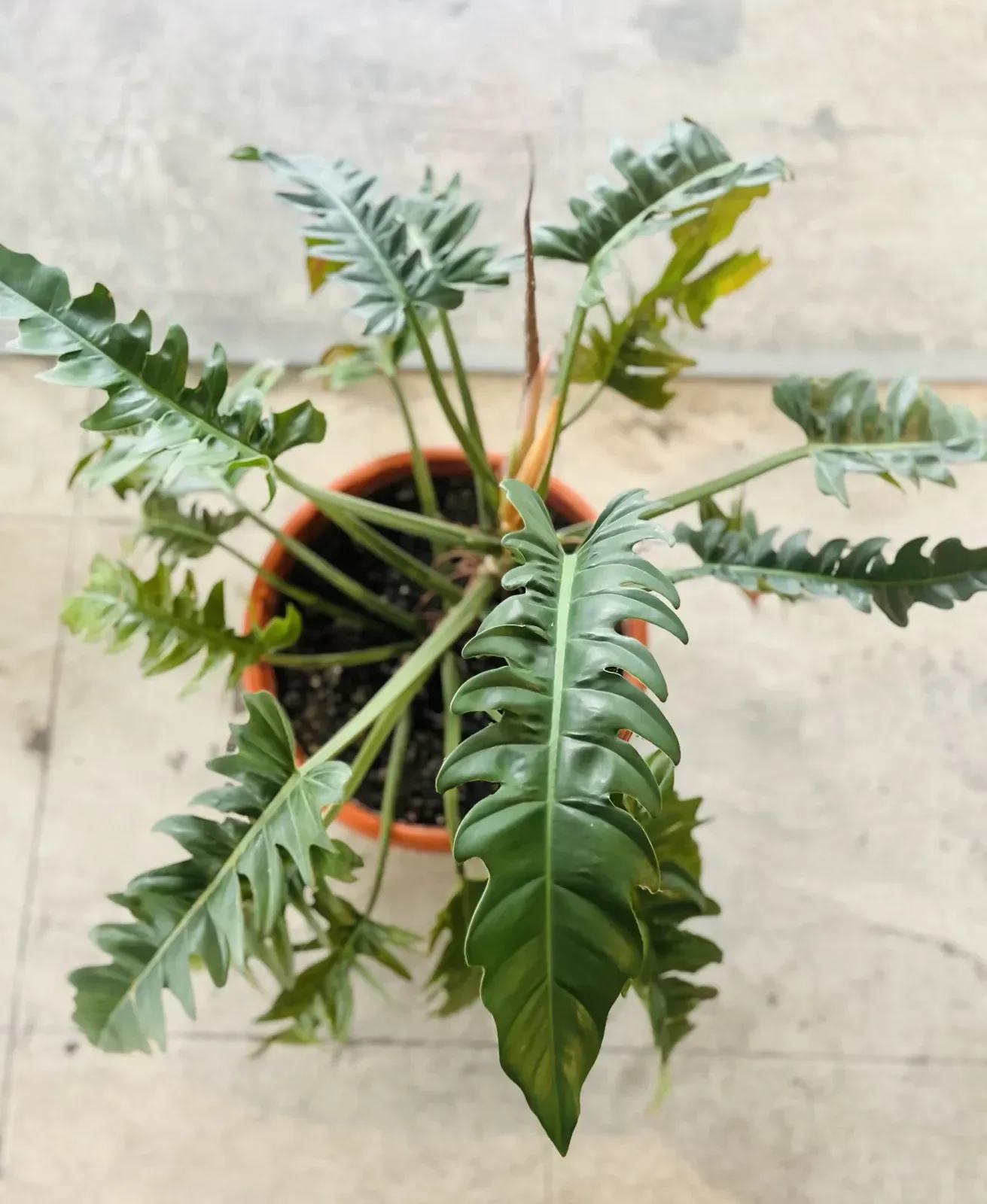
| ☀️ Light | Bright indirect light |
|---|---|
| 💧 Water | Moderate (lightly moist) |
| 🪴 Soil | Rich, well-drained potting mix |
| 🌡️ Temp | 15°C – 24°C |
| 🐾 Safety | Cats: toxic · Dogs: toxic |
| 📏 Mature size | 1.5 m |
Where It Grows & Climate Tolerance
Pet & Companion Animal Toxicity (Philodendron Xanadu)
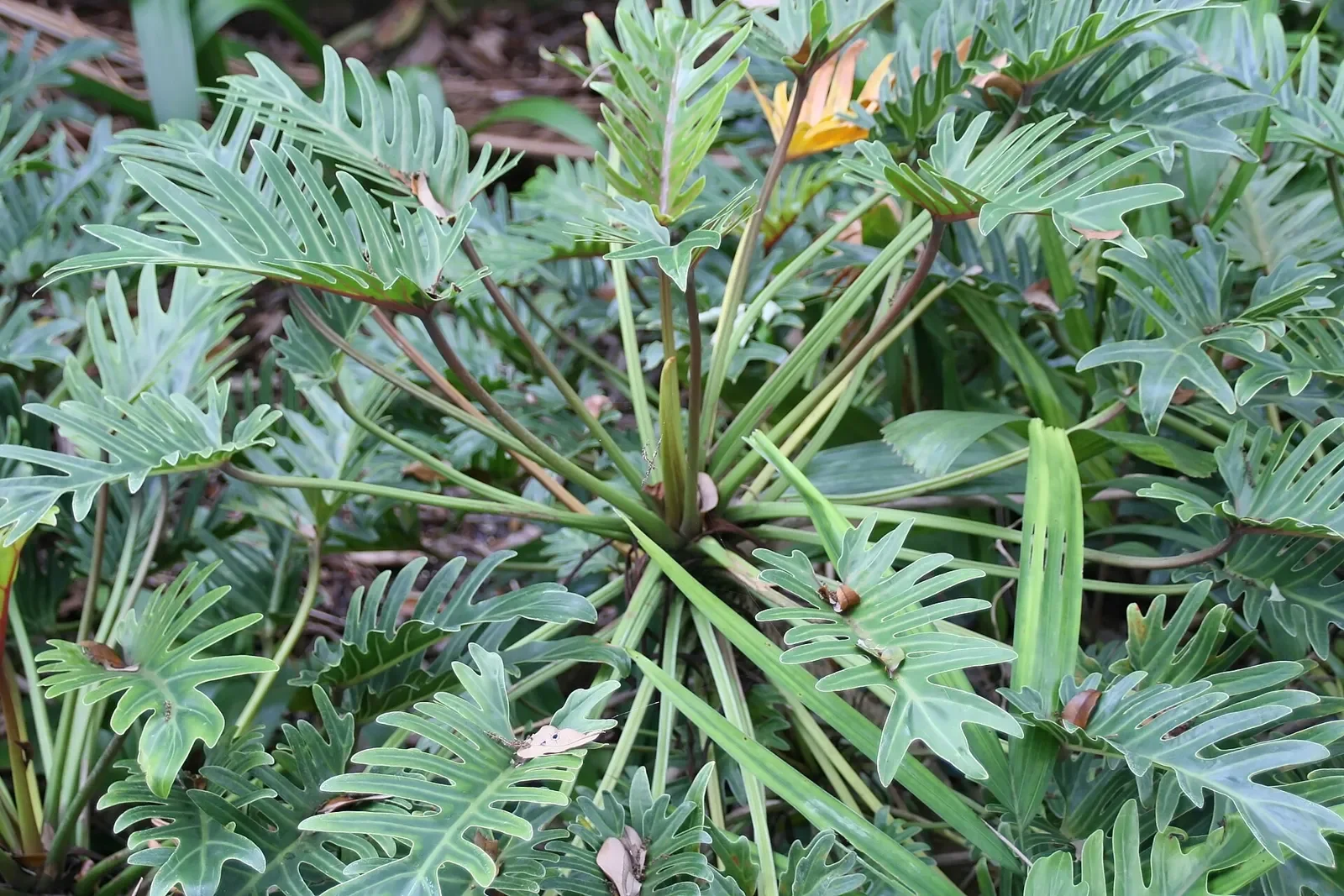
A bushy, non-climbing philodendron with deeply lobed leaves. It needs floor space and bright light, not a moss pole.
Care instructions
Care Guide & Maintenance Routine
Bright indirect light, with a grow light in dark Canadian winters. Water when the top few centimetres are dry. Keep above 15°C. Feed April to September. Needs room to spread. Toxic to pets.
Light & Sunlight
Bright light keeps the clump compact; low light gives long stalks and a floppy plant. Can take some gentle direct sun, but not hot afternoon sun through glass.
Watering Schedule
Water when the top of the mix is dry (RHS genus guide), then drain. Large pots dry slowly in winter. No fixed schedule.
Potting Mix & Drainage
Rich, well-drained potting mix
Temperature & Humidity
NC State gives 18 to 24°C as ideal; RHS genus guide says keep above 15°C. Can go outside in summer only after nights stay mild; bring in before cold nights.
Philodendron xanadu is the philodendron that does not climb. Instead of a vine, it grows into a dense, wide mound of glossy leaves, each one cut into many finger-like lobes. It looks like a smaller, neater version of the big tree philodendron, and it fits a bright floor spot in a living room or by a patio door. In Canada it lives indoors for most of the year, so the real questions are light, space and winter watering. This page explains the name (you may see it as Thaumatophyllum xanadu or 'Winterbourn'), how to tell it apart from look-alikes, and how to care for it month by month in a Canadian home.
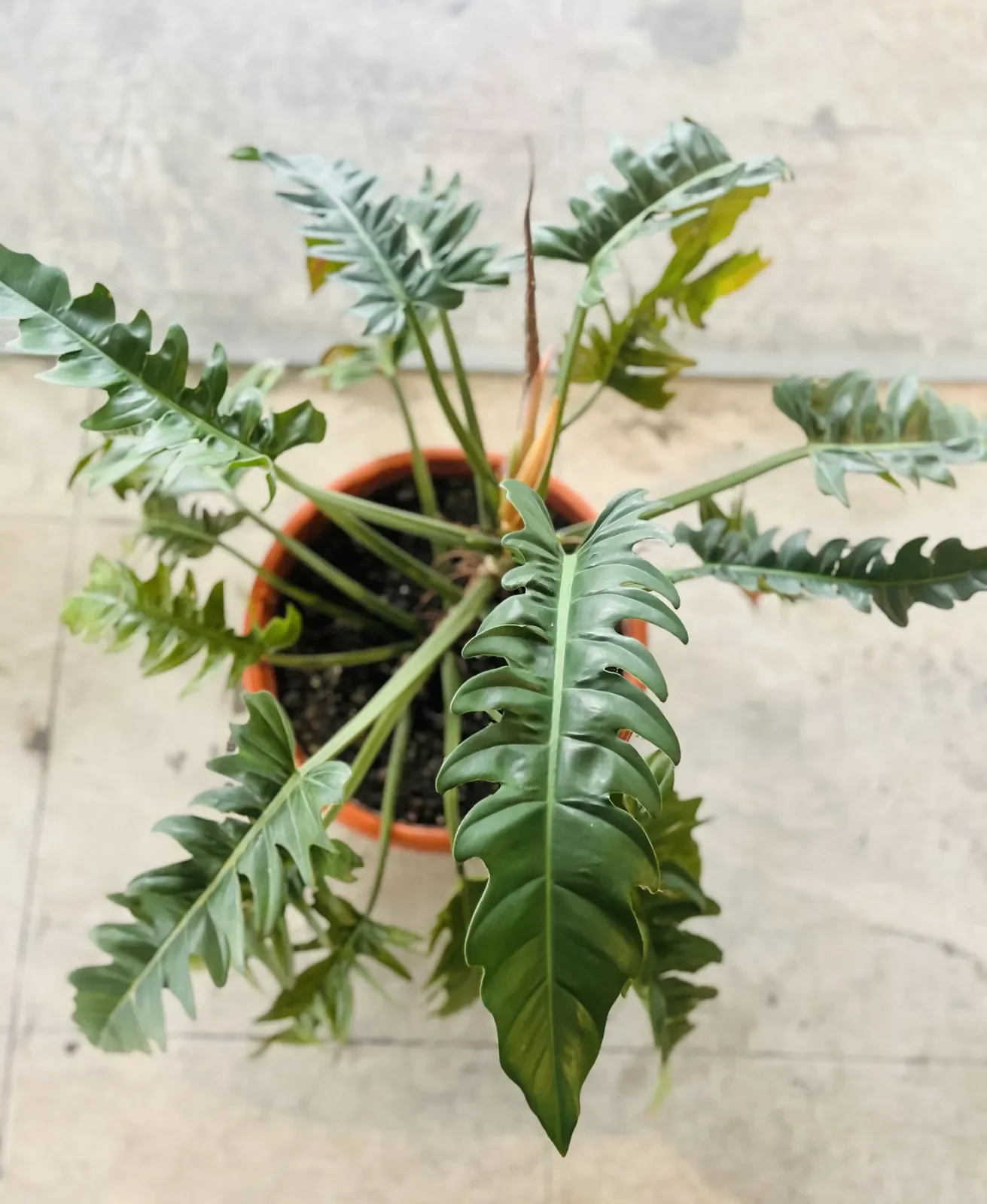
Philodendron xanadu at a glance
| What you need to know | Short answer |
|---|---|
| Name | Philodendron xanadu Croat, Mayo & J.Boos; arum family (Araceae) |
| Also seen as | Thaumatophyllum xanadu, Philodendron 'Winterbourn', xanadu philodendron |
| Origin | Believed native to southern Brazil and Paraguay (NC State) |
| Habit | Self-heading: a dense, spreading mound, not a vine |
| Size | About 0.9 to 1.5 m tall and wide in the ground (NC State); usually smaller in a pot |
| Light | Bright but indirect light indoors |
| Water | When the top few centimetres are dry; much less in winter |
| Warmth | About 18 to 24°C is ideal; keep above 15°C |
| Difficulty | Beginner to intermediate |
| Pets | Not pet safe |
Identification and naming
How to recognise a xanadu
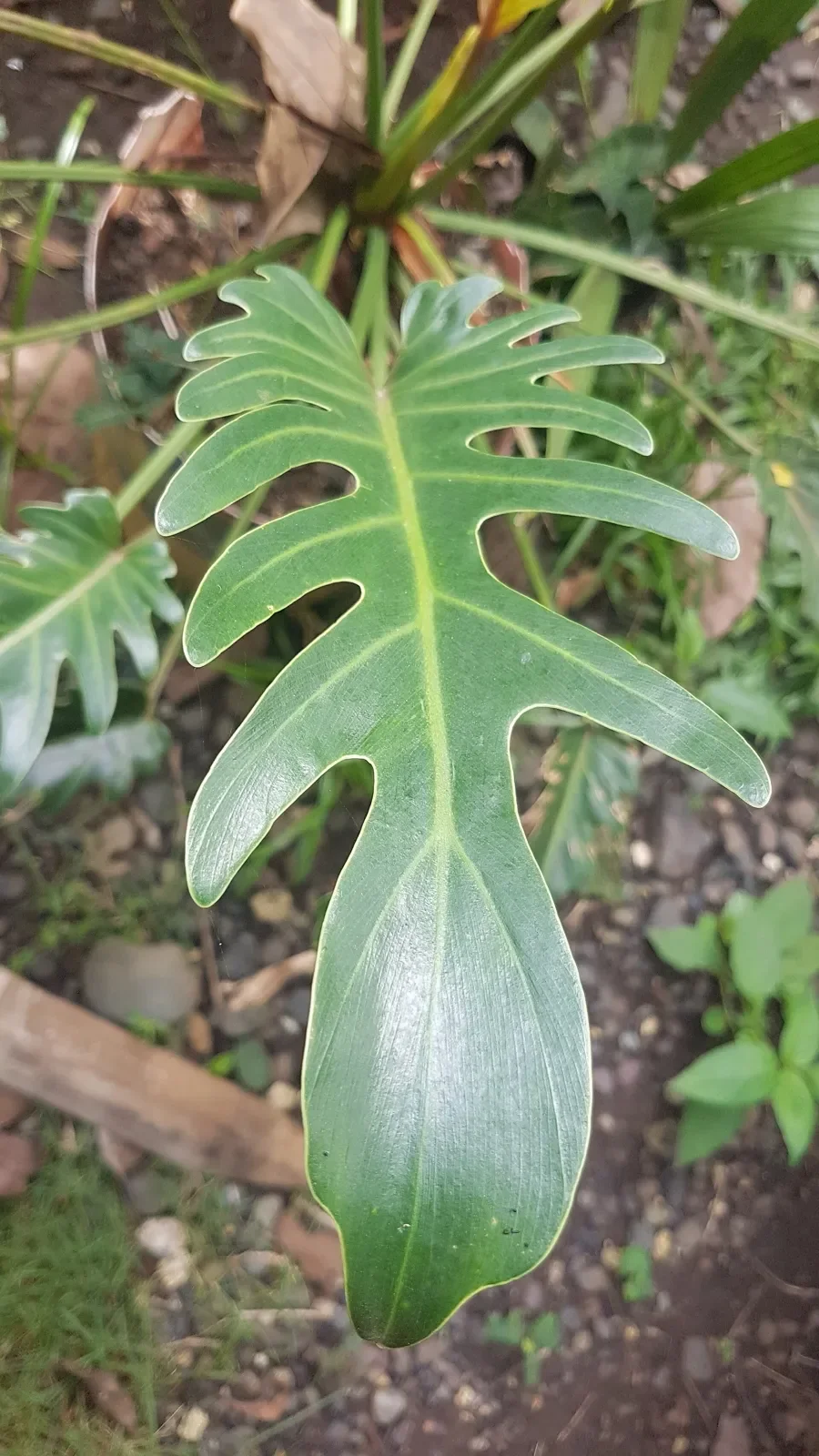
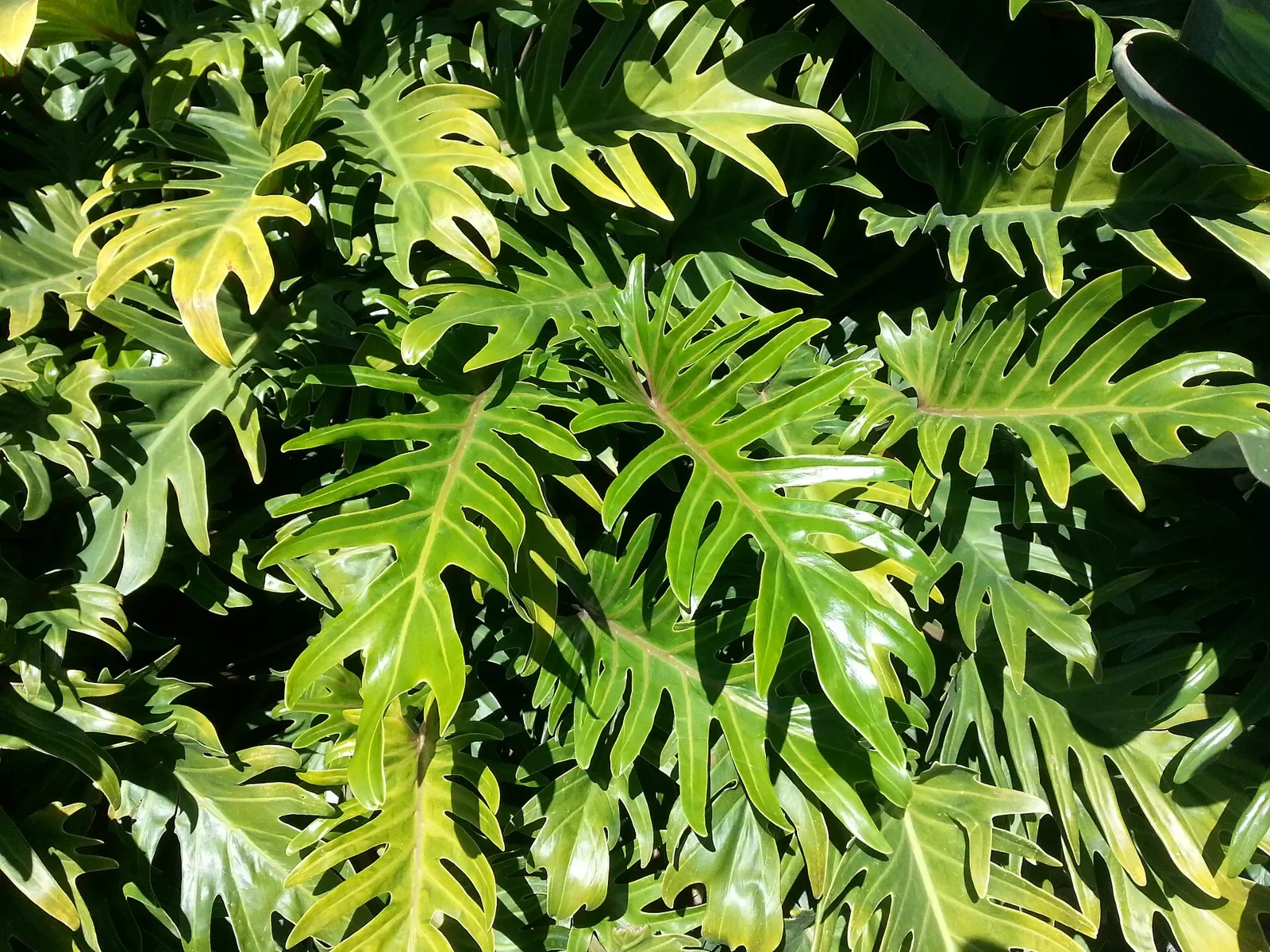
NC State Extension describes xanadu as a dense, mounding, spreading plant with large, glossy, green leaves that are deeply lobed and held on long stalks. Its plant record gives leaves about 30 to 45 cm long, and describes the stems as stout, unbranched and red. Large aerial roots grow from the base on older plants.
In a pot, look for these signs:
- Leaves rise from a central base, not from a trailing vine.
- Each leaf is cut deeply into many narrow lobes along both sides.
- The plant gets wider as it ages, with new leaves coming from the centre.
- Indoor plants rarely flower. NC State notes the bloom outdoors is a dark red spathe around a creamy white spadix.
Xanadu, Winterbourn and Thaumatophyllum: the names explained
Xanadu has had a busy naming history for a houseplant:
- NC State notes it was in the nursery trade long before it got a formal species name.
- It was then described as Philodendron xanadu by Croat, Mayo and Boos.
- In 2018, a study in the journal PhytoKeys moved xanadu and its tree-like relatives into a separate genus, Thaumatophyllum. That is why newer books and labels may say Thaumatophyllum xanadu.
- Kew's Plants of the World Online currently accepts Philodendron xanadu and lists Thaumatophyllum xanadu as a synonym. Kew treats the whole genus Thaumatophyllum as part of Philodendron.
So both names point to the same plant. We use Philodendron xanadu because that is the name Kew accepts today.
You may also see the name 'Winterbourn'. NC State Extension says this cultivar name has not been registered with the International Aroid Society, and that plants sold under it appear to have no features that set them apart from the species. In practice, a xanadu labelled 'Winterbourn' needs the same care.
Xanadu vs tree philodendron
Both are self-heading and both have deeply cut leaves, so they are easy to confuse in a nursery. The main differences:
- Size: NC State gives xanadu as about 0.9 to 1.5 m tall and wide in the ground, and tree philodendron as about 1.2 to 3 m tall and 1.8 to 3 m wide.
- Trunk: tree philodendron builds a thick trunk covered in leaf scars over time. Xanadu stays a low clump.
- Leaves: tree philodendron leaves can reach about 1 m long (RHS). Xanadu leaves are much smaller.
If you have limited floor space, xanadu is the better choice.
Buying a philodendron xanadu in Canada
Xanadu turns up in garden centres and big-box stores, often in large floor pots. Check before you buy:
- A full, even clump with leaves coming from the centre.
- Firm leaf stalks that hold the leaves up. Floppy stalks can mean root problems or very low light in the store.
- No soggy, sour-smelling mix.
- No pests under leaves or around the base. NC State lists aphids, mealybugs, scale, thrips and spider mites.
In cold weather, wrap the plant fully for the trip home. RHS reminds buyers to keep tropical plants warm when bringing them home in cold weather, and big leaves catch wind easily. Keep it away from your other plants for two or three weeks.
Light in a Canadian home
NC State Extension says xanadu prefers bright but indirect light indoors. Outdoors in warm climates it is grown in full sun to part shade, but indoor leaves are not used to strong sun through glass and can scorch.
- South window: the best spot from October to March, a little back from the glass.
- East or west window: good all year; filter strong afternoon sun in summer.
- North window: usually too dim. Leaves become smaller, with longer stalks and fewer lobes.
Turn the pot a quarter turn every week or two so the clump grows evenly, rather than leaning toward the window. University of Minnesota Extension gives the same advice for plants reaching for light.
Grow lights in winter
A floor plant is often far from the window. In winter, a tall LED floor lamp or a fixture above the plant helps. University of Minnesota Extension suggests about 12 to 14 hours of light a day for foliage plants, with lights about 30 to 60 cm above the leaves.
Soil mix, pots and repotting
NC State Extension says xanadu likes moist, rich, well-drained soil. RHS suggests a loose, free-draining mix for philodendrons. A good indoor mix:
- 2 parts indoor potting mix
- 1 part small orchid bark
- 1 part perlite
Use a heavy pot with a drainage hole. Xanadu gets wide and top heavy, and a light plastic pot can tip over. NC State notes container plants may need repotting every one to two years. Repot in spring, April to June, into a pot only a few centimetres wider than the root ball.
Watering by season
NC State Extension says leaves will yellow if xanadu is overwatered. Water when the top few centimetres of mix are dry, then water until it drains and empty the saucer. A big floor pot holds a lot of water, so check deeper than you would for a small vine.
Spring and summer
It grows actively and uses more water. Check once or twice a week in warm weather.
Autumn
Growth slows as days shorten. Once the heat is on, the surface dries quickly but the bottom of a big pot can stay wet. Use a wooden skewer or a moisture meter to check the lower half.
Winter
Water much less. In a cool room, a large pot may only need water every two to four weeks, but check the mix rather than counting days. Use room-temperature water.
Humidity and temperature
NC State Extension says xanadu indoors prefers some humidity and a temperature range of about 18 to 24°C. RHS says philodendrons do best above 15°C and should be kept away from hot radiators and cold draughts.
- Keep it away from heat registers, which dry leaf tips quickly.
- Keep it out of the path of entry doors that open onto -20°C air.
- Do not let leaves touch frosty window glass on cold nights.
- Group it with other plants or run a humidifier if your home is very dry.
RHS notes philodendrons prefer moderately humid air but cope with normal home humidity, so xanadu is less fussy here than velvet-leaf types.
Fertilizer
Feed during the growing season, April to September, as RHS suggests for philodendrons. A balanced liquid houseplant fertilizer at half strength once a month is plenty. Water first, then feed.
Stop in October. Winter feeding builds up salts in a large pot, and brown leaf tips are the usual result.
Pruning and grooming
RHS notes bushy philodendrons don't generally need pruning, training or support. Xanadu is one of those. Grooming is enough:
- Remove old yellow leaves by cutting the stalk near the base.
- Wipe dust off the leaves every few weeks. RHS points out that clean leaves absorb more light.
- Do not cut the growing centre. New leaves come from there.
- Leave the thick aerial roots alone, or guide them back into the pot.
- Wear gloves. NC State notes the sap can cause skin irritation.
Propagation
Because xanadu does not make long vines, you cannot take tip cuttings the way you would with heartleaf. Iowa State University Extension says non-trailing philodendrons can be propagated from offsets or stem sections:
- Division or offsets: in spring, when you repot, look for side shoots with their own roots. Separate them gently with a clean knife and pot them up.
- Stem sections: a piece of stem with at least two nodes can be rooted in water or perlite. Sections with aerial roots root more reliably.
Be patient with divisions. They often sulk for a few weeks before new leaves appear. More detail is in our philodendron propagation guide.
Why are my xanadu leaves yellowing in winter?
A yellow leaf now and then is normal. Older outer leaves die off as new ones grow in the centre. When several leaves turn yellow in winter, check these causes in order:
- Wet mix in a big pot: the most common cause. NC State says overwatering causes yellowing. Let the mix dry further down before you water again.
- Cold: a spot near cold glass or a drafty door. Move it to a warmer place.
- Low light: leaves on the shady side may yellow first. Add a grow light or move closer to the window.
- Root rot: if the plant droops even with wet mix and the base feels soft, remove it from the pot and check the roots.
Problem troubleshooter
| What you see | Likely cause | What to do first |
|---|---|---|
| Several yellow leaves, mix still wet | Overwatering | Let the mix dry; check drainage and roots. |
| Long, floppy stalks, small leaves with few lobes | Low light | Brighter spot or grow light; turn the pot regularly. |
| Plant leaning to one side | Light from one direction | Turn a quarter turn every week or two. |
| Brown, crispy tips | Dry air, heat register or fertilizer salts | Move from heat; flush the pot; stop winter feeding. |
| Brown, papery patches after sun | Leaf scorch through glass | Move back from the glass or filter the light. |
| Brown or black spots with yellow halos | Leaf spot | Remove affected leaves; keep water off leaves; improve air flow. |
| Fine webbing, speckles | Spider mites | Shower the leaves; use a houseplant-labelled insecticidal soap if needed. |
| Silvery streaks, black specks | Thrips | Isolate; rinse; use a labelled product. |
| White fluff at the base of stalks | Mealybugs | Dab with rubbing alcohol on a swab, then a labelled product. |
NC State Extension lists aphids, mealybugs, scale, thrips and spider mites, plus fungal leaf spots. Use products labelled for indoor plants in Canada and follow the label. See also our plant problems page.
Month-by-month care calendar for Canada
| Month | What to do |
|---|---|
| January | Brightest spot or grow light. Water only when the lower mix is dry. No feeding. |
| February | Wipe dust off leaves. Check for spider mites. Keep off cold glass. |
| March | New leaves start. Water a little more often. |
| April | Start half-strength feeding. Repot or divide if roots fill the pot. |
| May | Turn the pot regularly. Pot up any divisions. |
| June | Filter strong afternoon sun. Optional: move outside to shade once nights stay above about 15°C. |
| July | Check water more often in heat waves. |
| August | Last good month for repotting. |
| September | Last feed. Bring outdoor plants in early and check for pests. |
| October | Stop feeding. Move closer to the brightest window. Check the lower mix before watering. |
| November | Water less. Start the grow light. |
| December | Keep away from heat registers and entry doors. |
Can xanadu go outside in a Canadian summer?
Yes, for a few warm months. NC State Extension rates xanadu as hardy only in USDA zones 9b to 11, which means no part of Canada can keep it outdoors over winter. If you want to give it a summer outside, wait until nights stay above about 15°C (the minimum RHS gives for philodendrons), harden it off in full shade for a week, and keep it out of hot afternoon sun. Bring it back in early in September, before nights cool, and check it carefully for pests.
Safety for pets, children and skin
Philodendron xanadu is not pet safe. NC State Extension lists it as a problem for cats, dogs and children. It contains calcium oxalate, and chewing the leaves or stems can cause swelling of the lips, tongue and mouth, mouth pain and drooling. The sap can irritate skin. ASPCA does not have a separate xanadu entry, but it lists its close relative, the tree philodendron, as toxic to cats and dogs for the same reason.
- Large floor plants are easy for dogs and cats to reach, so choose the spot carefully.
- Wear gloves when dividing or grooming it.
- If a pet chews it, call your vet. The ASPCA Animal Poison Control line is (888) 426-4435 (a fee may apply). For a child, call your provincial poison centre.
See our pet-safe plants list for alternatives.
Common mistakes
- Watering a big floor pot by the calendar in winter.
- Putting it in a dark corner because "it's a floor plant".
- Choosing a pot that is too big or too light.
- Cutting into the centre of the clump to make it smaller.
- Putting it beside a patio door that is opened all winter.
- Buying it for a small room without checking how wide it gets.
Watch: Philodendron xanadu care
A short care guide from a houseplant grower. It uses the name Thaumatophyllum xanadu, which is the same plant. In Canada, water less in winter than any general guide suggests, and check the mix first.
Related plants and guides
- Philodendron types and care for Canadian homes
- Tree philodendron, the larger self-heading relative
- Philodendron care in Canadian winters
- How to propagate philodendron
- Bird of paradise, another big floor plant for bright rooms
- Schefflera, a bushy floor plant
Sources
- Kew Plants of the World Online: Philodendron xanadu. Accessed 10 Nov 2026.
- Kew Plants of the World Online: Thaumatophyllum (treated as a synonym of Philodendron). Accessed 10 Nov 2026.
- Sakuragui et al. 2018, PhytoKeys 98 (Thaumatophyllum). Accessed 10 Nov 2026.
- NC State Extension Plant Toolbox: Philodendron xanadu (size, care, 'Winterbourn', pests, toxicity). Accessed 10 Nov 2026.
- RHS: How to grow philodendrons. Accessed 10 Nov 2026.
- Iowa State University Extension: How do I propagate philodendron? Accessed 10 Nov 2026.
- ASPCA: Horsehead Philodendron (lacy tree philodendron, selloum). Accessed 10 Nov 2026.
- University of Minnesota Extension: Lighting for indoor plants. Accessed 10 Nov 2026.
- University of Minnesota Extension: Winter houseplant tips. Accessed 10 Nov 2026.
Seasonal rhythm
Seasonal Calendar
A month-by-month calendar for Philodendron Xanadu in Canada is coming soon. See the light, water and temperature notes above.
Diagnostics
Common Problems & Troubleshooting
Stretched, floppy stalks: low light. Yellow lower leaves: old age or overwatering. Brown tips: dry air or salts.
Pests & seasonal watch: Mealybugs, scale, spider mites and thrips. Check leaf bases. Use products labelled for indoor plants in Canada.
Care encyclopedia · 1 guide
Guides & Articles for Philodendron Xanadu
Q&A
Frequently Asked Questions
Is xanadu a philodendron or a Thaumatophyllum?
Both names are in use, but Kew currently accepts Philodendron xanadu. A 2018 study moved it to the genus Thaumatophyllum, so some labels say Thaumatophyllum xanadu. Kew's Plants of the World Online lists that as a synonym and treats Thaumatophyllum as part of Philodendron. It is the same plant either way.
Does philodendron xanadu climb?
No. Xanadu is self-heading. NC State Extension describes it as a dense, mounding, spreading plant. Leaves rise from a central base rather than from a vine, so it does not need a moss pole. It gets wider with age, not taller like a climber.
Xanadu vs tree philodendron: which is smaller?
Xanadu. NC State gives xanadu about 0.9 to 1.5 m tall and wide, and tree philodendron about 1.2 to 3 m tall and 1.8 to 3 m wide. Tree philodendron also builds a thick trunk over time. For a smaller room, xanadu is the better choice.
Why are my xanadu leaves yellowing in winter?
Overwatering is the usual cause. NC State notes that leaves yellow if xanadu is overwatered, and a big floor pot stays wet at the bottom for a long time in winter. Check the lower mix with a wooden skewer before watering. Cold drafts and low light can also yellow leaves.
Is philodendron xanadu toxic to pets?
Yes. NC State Extension lists it as a problem for cats, dogs and children. It contains calcium oxalate, and chewing causes swelling and pain in the mouth and drooling. The sap can irritate skin. If a pet chews it, call your vet or the ASPCA Animal Poison Control line.
What is Philodendron 'Winterbourn'?
It is a name sometimes given to xanadu. NC State Extension says the cultivar name 'Winterbourn' has not been registered with the International Aroid Society, and that plants sold under it appear to have no features that set them apart from the species. Care is the same.
How much light does philodendron xanadu need?
NC State says bright but indirect light indoors. In Canada, a spot near a south window is best from October to March, and an east or west window works all year. In a dim room, its leaves get smaller with longer stalks. A tall LED lamp helps a floor plant in winter.
How big does xanadu get in a pot?
Smaller than in the ground. NC State gives 0.9 to 1.5 m tall and wide for the plant in general, with leaves about 30 to 45 cm long. In a container indoors, with a shorter growing season, most plants stay toward the lower end, but plan for a wide plant.
How do I propagate philodendron xanadu?
Division is easiest. When you repot in spring, separate side shoots that have their own roots and pot them up. Iowa State Extension says non-trailing philodendrons can also be grown from stem sections with at least two nodes; pieces with aerial roots root more reliably.
Can xanadu live outside in Canada?
Only in summer. NC State rates xanadu hardy in USDA zones 9b to 11, which no part of Canada reaches. You can move it outdoors to shade once nights stay above about 15°C, then bring it back inside early in September and check for pests.
How often should I repot xanadu?
NC State Extension says container plants may need repotting every one to two years. Do it in spring, April to June, into a heavy pot only a few centimetres wider. That is also the best time to divide a crowded plant.
Similar Botanical Matches
Keep exploring
Related plants


Grower field notes
Reader Field Notes in Canada
Share how this plant performs in your local Canada climate.