
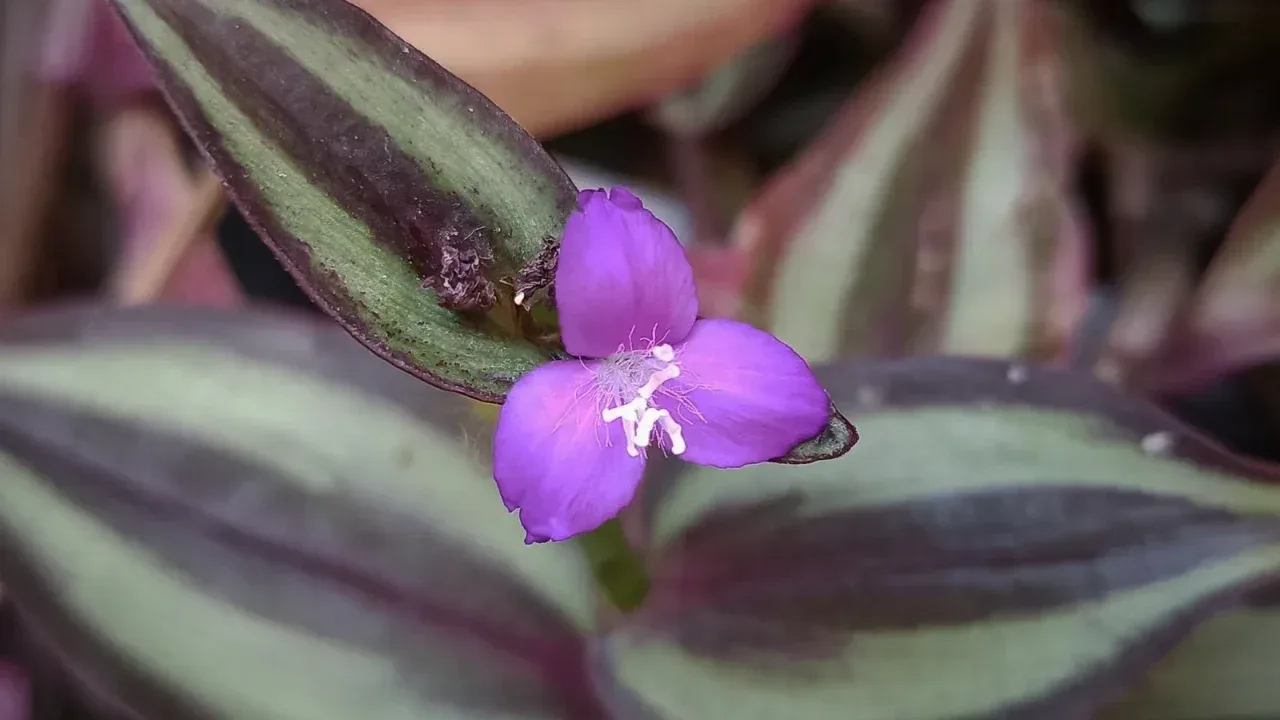
A full tradescantia basket is usually the result of regular small cuts and light reaching the top of the pot. Long purple runners alone do not mean the plant is receiving enough winter light.
Quick answer
Keep striped tradescantia bright enough to produce compact, colourful tips. Renew a thinning basket with healthy node-bearing cuttings rather than preserving every bare old stem. Drain hanging pots after watering and inspect them at eye level. Canadian winter positions above windows can shade the crown more than the trailing leaves suggest.
How do you identify tradescantia zebrina?
Tradescantia zebrina: Tradescantia zebrina has silver bands, green margins and purple undersides. It differs from the pink-and-white plant sold as 'Nanouk'. Use the botanical name because old nursery common names can be confusing.
How do you keep a tradescantia basket full on top?
Light must reach the crown as well as the trailing ends. A high shelf that shades the pot gives bare upper stems. Pinch young tips, then root healthy pieces into gaps. Old vines naturally become less tidy; renewing them from cuttings is often better than preserving every stem. Keep constant water off the crown. Faded stripes need a light check, while bleached crisp patches after a move usually mean sun damage.
What light does it need in a Canadian winter?
Bright indirect keeps stripes vivid. Low light fades colour.
The striped leaves look best when new shoots grow in good light. A window with gentle direct sun can work well after gradual adjustment, while a distant shelf often produces long greenish stretches between leaves. Canadian winter light is especially limiting for a trailing plant hung above the top of a window, where the pot can actually receive less daylight than a sill. Lower the basket or add a lamp if the stems are reaching. Turn the container occasionally so the side facing the room does not become a collection of thin bare strings behind a bright window-facing curtain.
How should you water through the seasons?
Water when the upper mix has dried enough to admit air, checking more carefully than usual after shortening the stems. A newly pruned plant has fewer leaves and often uses water more slowly. Direct the flow to the soil rather than repeatedly wetting the folded leaf bases. These stems break easily, so lift a few strands instead of pushing a watering can through the centre. Empty the hanging saucer after drainage. If the basket has no accessible drainage arrangement, take it down for watering; dripping onto the floor is inconvenient, but leaving roots in stale runoff is worse.
What soil or potting mix is best?
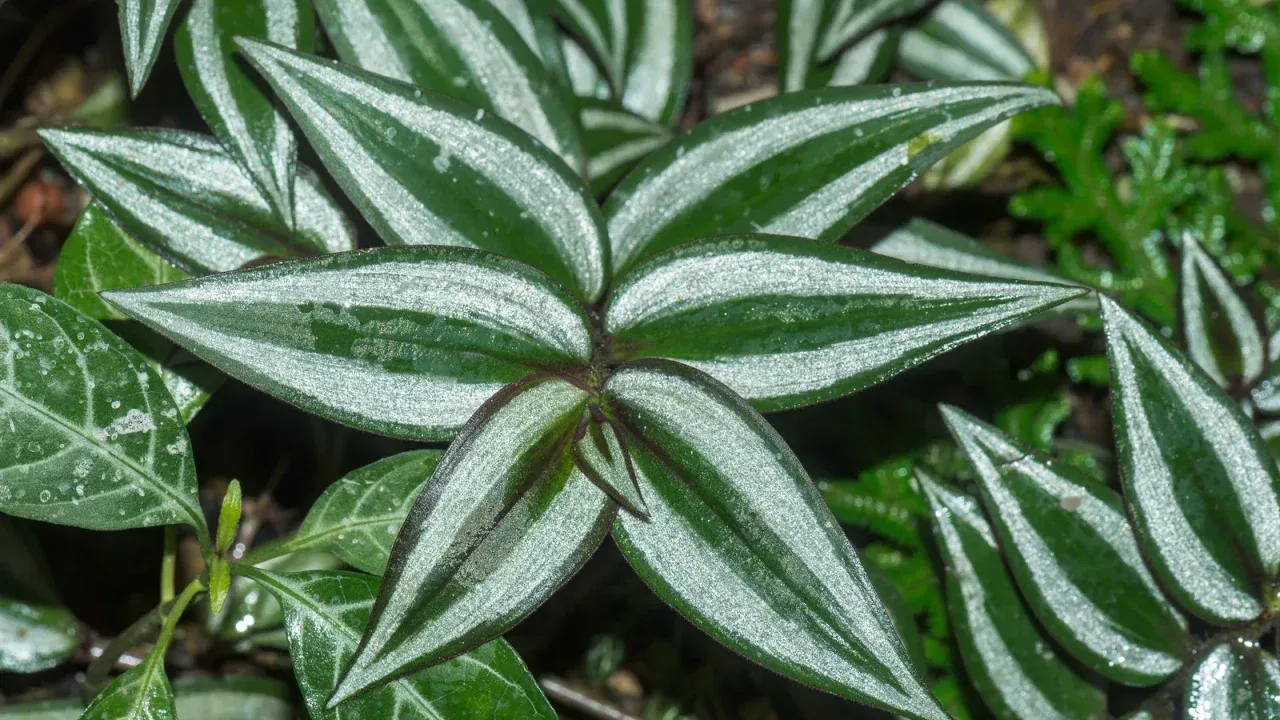
A loose, draining potting mix suits the fine roots. Choose a broad practical container that allows cuttings to be tucked around the edge, rather than an oversized deep pot chosen solely to balance the hanging foliage. Established plants often become sparse near the crown even when their trailing ends remain attractive. This is a cue to renew the planting, not proof that another fertilizer brand is needed. Check the stems where they meet the soil. Sections lying on damp compost can soften, while exposed old lengths may simply have lost their lower leaves with age and shade.
What temperatures and winter protection does it need?
Above 12 C; avoid icy door drafts.
How should you prune it?
Pinch often; cut long runners in spring.
Handle the sap with care when pruning. Sensitive skin may react after contact, and pets should not be allowed to chew the dangling stems. A hanging position is only safe if a cat cannot reach it from nearby furniture. Collect fallen pieces promptly, including short bits left on the floor during tidying. Outdoors in summer, contain the plant and remove broken pieces instead of tossing them into natural areas. Canadian winter cold is not a reason to be careless with living plant waste. If keeping a summer basket, move it indoors before cool nights damage the tender foliage.
What is the best propagation method?
Cut below a node and remove lower leaves. Root in water or airy mix; put several rooted pieces together for a full basket. Prune the parent above a node. Do not discard live cuttings outdoors.
Renewal from short node-bearing cuttings is one of the most useful skills for this plant. Take sound tips before the whole basket becomes tired. Remove leaves that would sit below the mix and place several pieces around a small draining pot. Keep the rooting material lightly moist without turning it into a swamp. Water-rooted stems can also establish, but they should not remain crowded in a stagnant glass indefinitely. The node is the important part; an isolated striped leaf will not rebuild a trailing plant. Pinch established new tips to encourage a fuller outline once the cuttings are growing independently.
Which pests and diseases should you watch for?
Dry heated air can make leaf edges look rough, but a misting routine is not a substitute for checking the root ball. Spotted leaves may reflect water sitting on foliage, physical damage or pests, so inspect before treating. Spider mites can hide beneath the leaves, especially when a basket hangs above eye level. Bring it down to examine it under good light. A vigorous flush of healthy tips can be used to restart a badly damaged display after the pest has been dealt with. Do not distribute cuttings from an infested parent as gifts simply because their newest leaves still look clean.
How do you work out the cause?
Faded stripes (low light); mushy stems (overwater); leggy vines (need pinch).
Is it safe around pets and children?
Tradescantia sap can irritate skin. ASPCA's inch-plant listing concerns a related species, not a specific clearance for T. zebrina. Prevent chewing by children and pets; wear gloves if sensitive.
A seasonal care calendar for Canada
| Season | What to do |
|---|---|
| Spring | Pinch and take cuttings. |
| Summer | Fast growth; water steadily. |
| Autumn | Feed striped tradescantia less as shorter days slow its new tips. |
| Winter | Water less; off cold sills. |
What should you check before buying?
A trailing collection can also feature monstera adansonii, but its leaves and roots call for another moisture balance. Compare philodendron birkin and peperomia if you want compact foliage shapes rather than regularly renewing long striped stems.
Buy a basket with compact, clearly striped growth near the pot rather than choosing the longest trails. Check that the centre has not already become bare beneath the display. Very soft dark stems at the soil line are a warning. Once home, feed modestly during active growth and reduce feeding when the plant slows. A dated photograph is useful for judging how rapidly bare gaps develop in your chosen position. Plan small regular renewals rather than expecting every original stem to remain leafy forever. A compact replacement pot is often more attractive than preserving an increasingly thin old basket at any cost.
Can you keep a backup pot?
Start a small replacement from clean tips while the main basket still looks good. Place it where you can monitor new roots and keep a label with its starting date. That spare pot provides a better option if the original crown becomes bare during a dim winter. When replacing the display, inspect both pots for pests rather than simply placing them side by side. You can renew a few sections at a time instead of cutting every trail in one session. This approach keeps a useful leafy display while the next generation develops a fuller base.
Comments
No comments yet — share what worked in your climate.