
Leaf Spot, Rust and Botrytis (Grey Mould): A Canadian Gardener's Guide
After a wet spring or a rainy July, Canadian gardens often break out in spots, orange powder and fuzzy grey rot. Three groups of fungal diseases are behind most of it: leaf spots, rusts and botrytis, also called grey mould. They look different, spread differently and need slightly different responses, but all three are driven by the same thing: plant surfaces that stay wet for too long.
This guide explains how to tell leaf spot, rust and grey mould apart, which Canadian plants they hit hardest, and what to do about each one. The good news is that the same few habits prevent most of them, and very few home gardeners need to reach for a sprayer.
Quick comparison
| Leaf spot | Rust | Botrytis (grey mould) | |
|---|---|---|---|
| What you see | Brown, tan, black or purple spots on leaves | Orange, yellow or rust-brown powdery pustules, often under leaves | Soft, water-soaked rot covered in fuzzy grey mould |
| Parts affected | Mainly leaves | Leaves, stems, sometimes fruit | Flowers, fruit, buds, stems and leaves |
| Weather | Long wet or humid spells, often cool | Wet leaves; some need two different host plants | Cool, humid, wet weather |
| Common Canadian hosts | Strawberries, trees and shrubs, hawthorn | Hollyhocks, roses, saskatoons, apples, junipers | Strawberries, raspberries, peonies, tomatoes, beans, begonias |
| How serious | Usually cosmetic | Mild to moderate leaf loss | Can destroy flowers and fruit quickly |
Leaf spot
What it is
"Leaf spot" is not one disease. The University of Saskatchewan explains that many different fungi cause leaf spots on most kinds of plants, both edible and ornamental, and that identifying the exact fungus is often not simple. The good news is that most leaf spots are not harmful: they cause small brown spots that barely affect the plant's ability to make food.
How to recognize leaf spot
The University of Saskatchewan describes the typical signs:
- Small spots scattered randomly over the leaf. They can be brown, yellow, tan or black, depending on the fungus, the plant and the time of year.
- Mostly round spots, though some are angular, with straight edges where leaf veins limit them.
- Rings or coloured margins around some spots.
- Shot holes. Sometimes the dead centre of each spot falls out, leaving small holes, a symptom often called "shot hole".
- Early leaf drop if the spots enlarge. Repeated years of leaf loss can weaken plants.
Common examples in Canada
- Strawberry leaf spot. Manitoba Agriculture describes purplish spots that grow to 3 to 6 mm, with grey or white centres and reddish-purple borders. Plants are most susceptible early in the season and in late summer, and some cultivars are more susceptible than others. See our strawberry page.
- Hawthorn leaf blight. The BC Ministry of Agriculture's home garden guide calls this the most serious hawthorn disease in coastal BC, causing small, angular reddish spots and defoliation by midsummer.
- Spots after winter damage. The same BC guide notes that on evergreens such as rhododendrons, fungi often move into tissue already damaged by winter injury or sunscald. These seldom need fungicides; the real problem is the earlier damage.
Life cycle
The University of Saskatchewan notes that most leaf spot infections happen in late spring, when trees and shrubs are putting out new growth, often after a long, cool, rainy period. The spots may not be visible for weeks. Most leaf spot fungi spend the winter on fallen leaves and debris at the base of the plant, and most need one to three days of damp, humid conditions for their spores to germinate.
What to do
Because the fungi overwinter on debris and need wet leaves, control is mostly cultural:
- Rake up and remove fallen leaves in fall. The University of Saskatchewan suggests destroying them or hot composting them.
- Thin crowded plants and prune dense shrubs so air moves through.
- Water the soil in the morning so leaves are dry by evening.
- Avoid working among plants while they are wet, and disinfect pruners between cuts.
Rust
What it is
Rusts are fungi that produce masses of orange, yellow or reddish-brown spores. Rub an infected leaf with a tissue and it often leaves a rusty smear. Many rusts are specific to one group of plants. Some, like the juniper rusts, need two completely different host plants to complete their life cycle.
Hollyhock rust
Hollyhock rust is one of the most familiar rusts in Canadian gardens. The BC Ministry's home garden guide describes orange to red raised pustules on the undersides of leaves, filled with rusty, powdery spores. Stems can be attacked, and badly infected leaves dry up. The University of Wisconsin adds that yellow-orange spots appear on the upper leaf surface, and that common mallow, a widespread weed, can also host the fungus.
To manage it, the BC guide recommends removing and destroying the first leaves that show rust, and cutting plants back to the base in fall and removing all the old growth. The University of Wisconsin also recommends pulling weedy mallow plants.
Rose rust
The Nova Scotia Department of Agriculture's rose fact sheet notes that rose rust is more widespread in Western Canada. It first appears as powdery orange pustules on the undersides of leaves, while the upper surface turns light yellow and leaves may drop. In fall, black overwintering pustules form among the orange ones. The fact sheet notes that rust develops best at 18 to 21 °C and needs leaves to stay wet for four hours to infect. To manage it, remove infected leaves during the season, rake up all leaves in fall, and choose resistant cultivars.
Juniper rusts: saskatoon, apple and hawthorn
The BC guide notes that juniper rusts affecting hawthorn and saskatoon are common in BC's Interior, and the University of Saskatchewan covers them for Prairie gardeners. It explains that cedar-apple rust and saskatoon-juniper rust need two hosts: a juniper or cedar (Cupressaceae family) and a plant in the rose family, such as apple, hawthorn or saskatoon.
The cycle works like this:
- Galls on junipers. Small, hard, brown galls form on juniper stems.
- Spring spores. When the galls get soaked by rain, they swell and push out orange, jelly-like "horns" that release spores into the wind. Spores can travel several kilometres, but most infections happen within a few hundred metres.
- Spots on fruit trees and shrubs. Orange or yellow rust spots appear on the upper surface of apple and hawthorn leaves and on the undersides of saskatoon leaves. Saskatoon berries may develop orange spots with tiny spiny projections.
- Back to the juniper. In July, spores from the leaves and fruit blow back to junipers, and the cycle continues.
The University of Saskatchewan notes that spotted saskatoon berries are unsightly but can still be used for juice or jelly. The BC guide adds that pear trellis rust, a related disease that alternates between junipers and pears, is well established in Greater Vancouver, the Fraser Valley and on Vancouver Island.
What to do: Prune out round brown galls on junipers, ideally in fall or early spring when they are easier to spot, as the University of Saskatchewan advises. If you can, plant saskatoons well away from junipers. For pear trellis rust, the BC guide advises not planting junipers and pears within 30 m of each other.
Botrytis (grey mould)
What it is
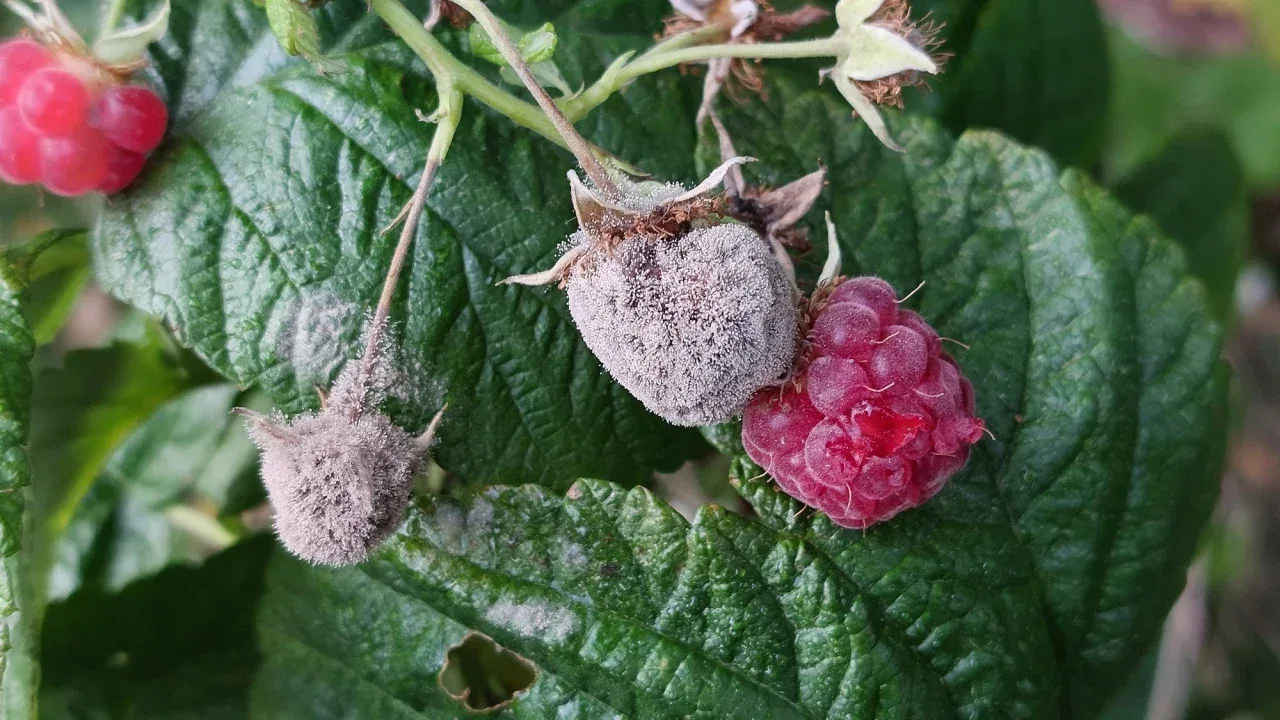
Grey mould is caused mainly by the fungus Botrytis cinerea. The University of Saskatchewan calls it a very common, widespread disease, especially on strawberries, raspberries, beans, tomatoes, members of the cucumber family and begonias. Lilies get a related species, Botrytis elliptica.
The BC Ministry's guide explains that grey mould is common on decaying plant material where humidity is high. It starts on dead or dying tissue, such as fading flowers or fallen petals, and then spreads to healthy tissue when conditions are wet.
How to recognize grey mould
- Water-soaked spots that become soft and watery, often starting on leaves near the base of the plant, according to the University of Saskatchewan.
- Rot that spreads to stems, buds, flowers and fruit. Affected parts may sink or collapse.
- Fuzzy grey or greyish-brown mould on infected tissue in cool, damp weather.
- Petals that land on leaves and become spots of infection, as the BC guide notes.
The University of Saskatchewan warns that the spores need wet conditions but can spread quickly, within a day, and that fruit and vegetables can rot in storage and spread the rot from one to the next.
Botrytis on Canadian favourites
- Strawberries. Manitoba Agriculture calls grey mould very common and often seriously damaging in strawberries. Infection usually starts in the blossom, can lie dormant in the green cap, and then causes a soft, light brown fruit rot covered in fine grey growth. It is favoured by shade, dense foliage, cool weather, high humidity, overhead irrigation and rain, as well as too much nitrogen while fruit is forming. Manitoba notes that black plastic mulch dries faster than straw, which slows mould growth.
- Raspberries. The same grey, fuzzy fruit rot affects raspberries in wet weather.
- Peonies. The BC guide describes young flower buds that turn black and dry up, young stalks that wilt and blacken, and larger buds that turn brown and fail to open, later covered in grey, felty mould. It can be very destructive in damp, rainy seasons. See our peony page.
- Tomatoes and begonias. The University of Saskatchewan lists both as common hosts. Indoors, keep begonias out of cramped, damp corners and remove dead leaves and flowers promptly.
What to do about grey mould
- Remove infected parts at once. The University of Saskatchewan advises cutting badly affected plants down to soil level, removing them, and burning them or sending them to the landfill rather than composting. Disinfect your pruners afterwards.
- Deadhead. The BC guide recommends removing spent flowers and old leaves before grey mould becomes established.
- Pick fruit often and remove any rotten berries from the patch.
- Clean up peonies in fall. The BC guide says to cut old peony stalks below soil level in early fall and destroy the debris, and to avoid heaping soil over the leaf bases.
- Give plants space, sun and air. Thin dense plantings, water the soil rather than the leaves, and don't overwater.
The BC guide notes that there are no effective domestic fungicides labelled for botrytis on peonies, so prevention is the main tool. For strawberries, Manitoba's commercial advice is to apply protective fungicides from bloom until harvest in cool, wet years, which shows how much timing matters: once the fruit is rotting, sprays come too late.
How to prevent all three
- Water at the base, early in the day. All three diseases need wet plant surfaces. Use a soaker hose or watering can, and water in the morning so leaves dry quickly.
- Space and thin plants. Crowded plants stay damp. Follow spacing guidelines, divide perennials, and prune dense shrubs to let air move.
- Choose sunny, airy sites. The BC guide recommends planting peonies and other susceptible plants in full sun with good air circulation, away from sheltered corners.
- Clean up in fall and spring. Rake up fallen leaves and remove dead stems, spent flowers and rotten fruit. Most of these fungi survive the winter on debris.
- Don't compost diseased material in a home bin. Bag it for the garbage or use your municipal yard waste program if it accepts diseased plants.
- Choose resistant varieties. Some strawberry cultivars resist leaf spot better than others, and resistant roses are available. Ask your local garden centre what does well in your region.
- Keep host plants apart. For juniper rusts, plant saskatoons, apples, hawthorns and pears away from junipers, and remove galls when you see them.
Do you need a fungicide?
Usually not. The University of Saskatchewan notes that most leaf spots are harmless, and the BC guide says many leaf spot fungi rarely need fungicides. Fungicides only protect healthy tissue; they do not cure spots, pustules or rot already present.
If a plant you value is badly affected every year, use only products registered by Health Canada's Pest Management Regulatory Agency (PMRA). Check that the label has a PCP number, lists your plant and the disease, and follow it exactly. You can search registered products on the PMRA label search site. Ontario limits cosmetic garden use to products whose active ingredients are on its Allowable List, which includes sulphur and several copper compounds, and other provinces and municipalities have their own rules. Health Canada advises against homemade pesticides, because they are not tested for safety or effectiveness.
Related problems
If your plants have a white, dusty coating instead, see our powdery mildew guide. If plants wilt even though the soil is wet, the problem may be below ground: see root rot in houseplants and garden plants.
Frequently asked questions
How can I tell rust from leaf spot?
Rub the spot with a white tissue. Rust pustules are raised and release orange, yellow or reddish-brown powdery spores that smear. Leaf spots are flat, dead patches of leaf tissue that do not leave powder.
Is grey mould on strawberries safe to eat around?
Discard any berries with mould or soft rot. Manitoba Agriculture notes that infected berries taste off. Healthy berries from the same plants are fine to eat, but pick often so rot doesn't spread from berry to berry.
Will juniper rust kill my saskatoon or apple tree?
Usually not. The University of Saskatchewan notes that the spots on apples are often barely noticeable, and spotted saskatoon berries can still be used for juice or jelly. The BC guide notes that the galls do little damage to the junipers themselves.
Should I remove my junipers to stop rust?
Not necessarily. Pruning out galls in fall or early spring reduces the spores. The BC guide recommends keeping junipers and pears at least 30 m apart to manage pear trellis rust, and removing infected junipers before spring where that is practical.
Can I compost leaves with leaf spot?
Hot composting can work. The University of Saskatchewan suggests destroying or hot composting fallen leaves with leaf spot. For grey mould, burn or landfill infected plants instead, as the University of Saskatchewan advises.
Why does my peony get black buds that never open?
That is a classic sign of botrytis blight. The BC guide describes young buds turning black and drying up in damp, rainy springs. Cut out affected buds and stems, clean up stalks below soil level in fall, and give peonies full sun and good air flow.
Do houseplants get grey mould?
Yes. Begonias are a common host. Indoors, remove dead flowers and leaves promptly, avoid crowding plants, water the soil rather than the leaves, and do not let pots sit in water.
Sources
- University of Saskatchewan, Gardening at USask: Leaf spot, Botrytis and Cedar-apple rust and saskatoon-juniper rust.
- BC Ministry of Agriculture, Home and Garden Pest Management Guide for British Columbia, Chapter 16: Pests of Ornamentals (PDF).
- Manitoba Agriculture, Strawberry diseases and Protecting your strawberries from fruit rot (PDF).
- Nova Scotia Department of Agriculture and Fisheries, Common Diseases of Roses (PDF).
- University of Wisconsin–Madison Division of Extension, Hollyhock Rust.
- Health Canada, The risks of homemade pesticides and Pesticide label search.
- Government of Ontario, Guide to Pesticide Classes (PDF).
Image credits
- Featured image (Raspberry): Josef Schlaghecken / Wikimedia Commons / CC BY 4.0. Source.
- Rose: Parthasarathy Seethapathy / Wikimedia Commons / CC BY 3.0 US. Source.
- Strawberry: Jerzy Opioła / Wikimedia Commons / CC BY-SA 4.0. Source.
- Peach: CoolKoon / Wikimedia Commons / CC BY-SA 4.0. Source.
- Hollyhock: fowels / Wikimedia Commons / CC BY-SA 4.0. Source.
- Juniper: Kathy Fulton / Wikimedia Commons / CC0. Source.
- Rose: Cec-clp / Wikimedia Commons / CC0. Source.
Comments
No comments yet — share what worked in your climate.