
| ☀️ Light | Full sun |
|---|---|
| 💧 Water | Moderate (lightly moist) |
| 🪴 Soil | Well-drained loam or sandy loam; avoid prolonged waterlogging |
| 🌡️ Temp | Min -50°C |
| 🐾 Safety | Cats: toxic · Dogs: toxic (ASPCA Animal Poison Control) |
| 📏 Mature size | 5.0 m |
Where It Grows & Climate Tolerance
Pet & Companion Animal Toxicity (Saskatoon Berry)
A cold-hardy native fruiting shrub for Prairie gardens, with white spring flowers and dark purple summer fruit. Give it sun, drainage and room to sucker.
Care instructions
Care Guide & Maintenance Routine
Full sun; well-drained soil; water during establishment and drought. Allow space for suckers, prune for airflow, and harvest deep-purple fruit in several passes.
Light & Sunlight
Full sun gives the best fruit; part shade is tolerated with lower yield.
Watering Schedule
Keep new shrubs evenly moist, not waterlogged. Established shrubs need supplemental water during drought and fruiting.
Potting Mix & Drainage
Well-drained loam or sandy loam; avoid prolonged waterlogging
Temperature & Humidity
Winter hardy in much of western/northern Canada, but early flowers remain vulnerable to late spring frost. -50°C is a Manitoba-reported tolerance, not a planting-date guide.
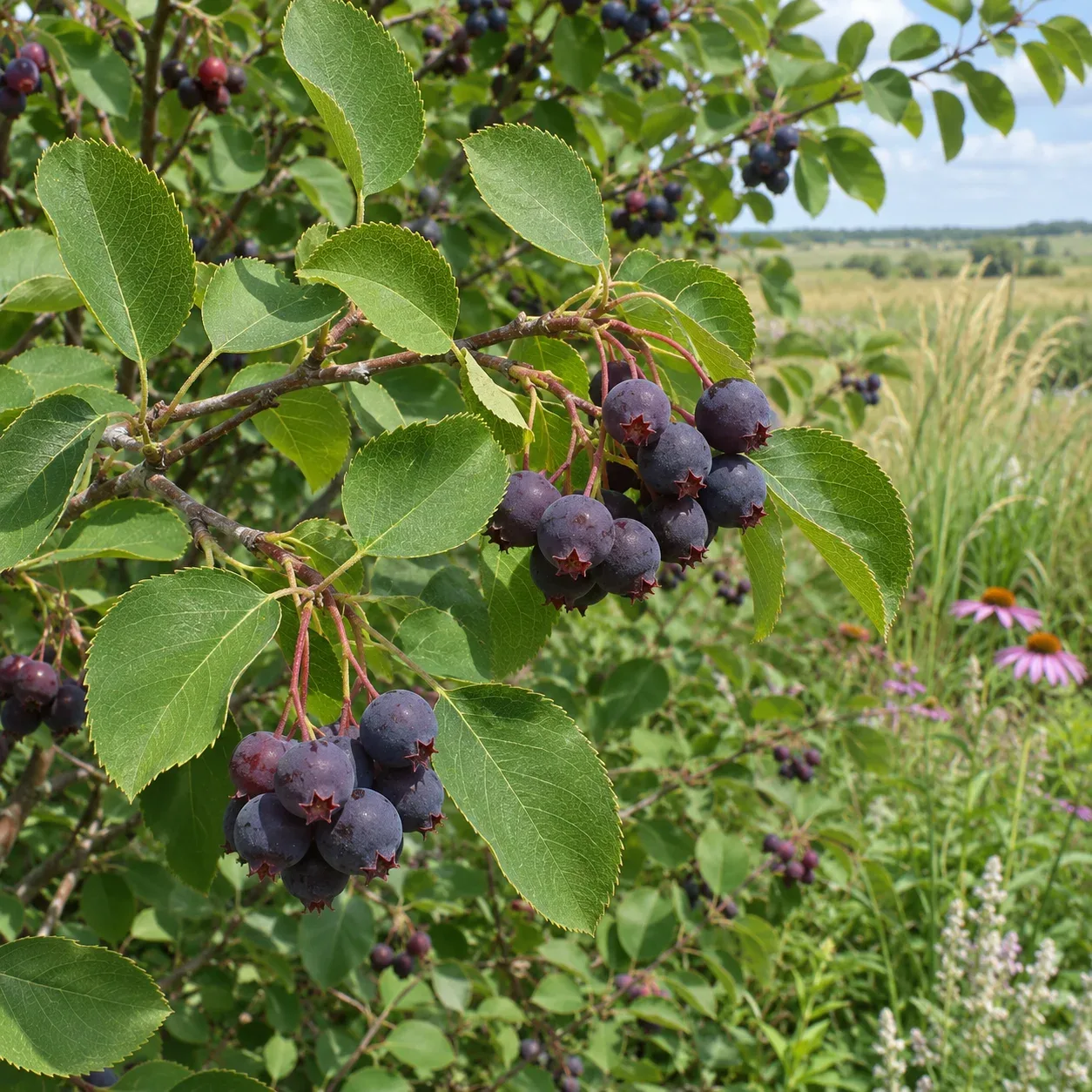
Saskatoon berry (Amelanchier alnifolia) is a deciduous shrub or small tree native to western and northern Canada. It belongs to the rose family. Its small dark-purple fruits resemble blueberries but are botanically pomes, related to apples. White flowers appear in spring and fruit ripens unevenly in summer. University of Saskatchewan gardening guide.
Where it grows
This is a strong choice for the Canadian Prairies and other locations where a locally suitable cultivar is available. The species is very winter hardy, but spring blossoms can still be damaged by late frost. Check your location on Canada's plant hardiness site and avoid low frost pockets.
Sun, soil and planting
Choose full sun for the best fruit crop. Part shade is tolerated but generally reduces fruit. Well-drained loam or sandy loam is ideal; poorly drained ground is a poor choice. Space shrubs about 1 to 1.5 m apart for a hedge, allowing for their mature spread and suckers. Keep grass and weeds away from young plants and mulch without burying the crown.
Water and feeding
Keep new plants evenly moist, not waterlogged, during establishment. Water during prolonged dry spells and fruit development. Established plants usually need less supplemental water. Do not fertilize a newly planted shrub by routine; use a soil test or add a modest layer of mature compost where needed.
Pruning and harvest
Remove dead, diseased or crowded wood and manage suckers. Fruit forms on the previous year's growth, so avoid indiscriminate hard pruning of all young shoots. Pick fruit when deep purple and soft; ripening is uneven, so make several passes. Cool harvested berries promptly.
Problems to watch
Entomosporium leaf and berry spot and saskatoon-juniper rust are documented problems. Identify symptoms before acting, remove affected wood where appropriate, and improve airflow. Birds may take ripe fruit. Use well-secured wildlife-safe netting if needed. See Manitoba Agriculture's Saskatoon guidance for disease and production details.
Seasonal rhythm
Seasonal Calendar
A month-by-month calendar for Saskatoon Berry in Canada is coming soon. See the light, water and temperature notes above.
Diagnostics
Common Problems & Troubleshooting
- Reddish-brown leaf spots and yellowing | Possible Entomosporium spot | Remove affected debris, improve airflow and confirm diagnosis - Orange spots on leaves or fruit | Possible saskatoon-juniper rust | Confirm identification and avoid ineffective blanket treatments - Few berries | Shade or spring frost damage | Move future plantings to sun away from frost pockets
Pests & seasonal watch: Inspect for leaf and berry spot, rust and insect damage. Protect fruit from birds with secured, wildlife-safe netting.
Care encyclopedia · 2 guides
Guides & Articles for Saskatoon Berry
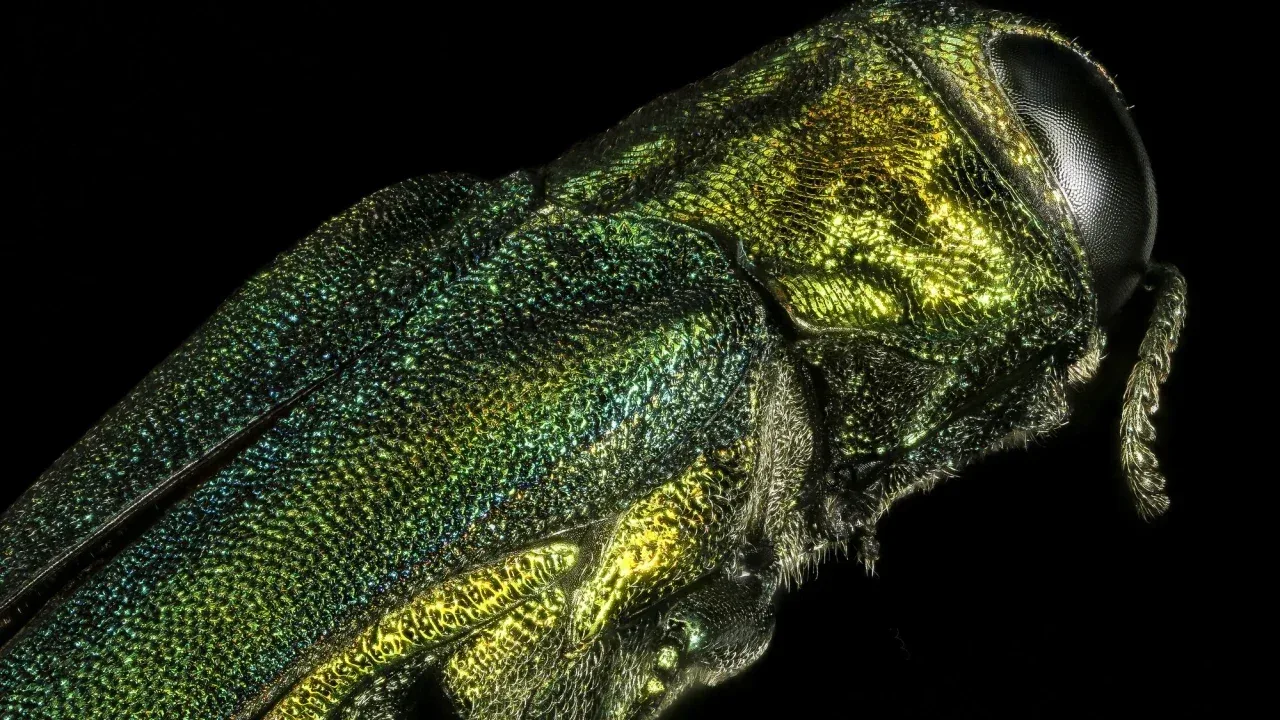
Emerald Ash Borer in Canada: Signs, Spread and What Homeowners Can Do
Emerald ash borer has killed millions of ash trees in Canada and is regulated in six provinces. Learn the signs of an infested tree, where CFIA restricts firewood and ash wood in 2026, and whether to treat, remove or replace your ash.
Read guide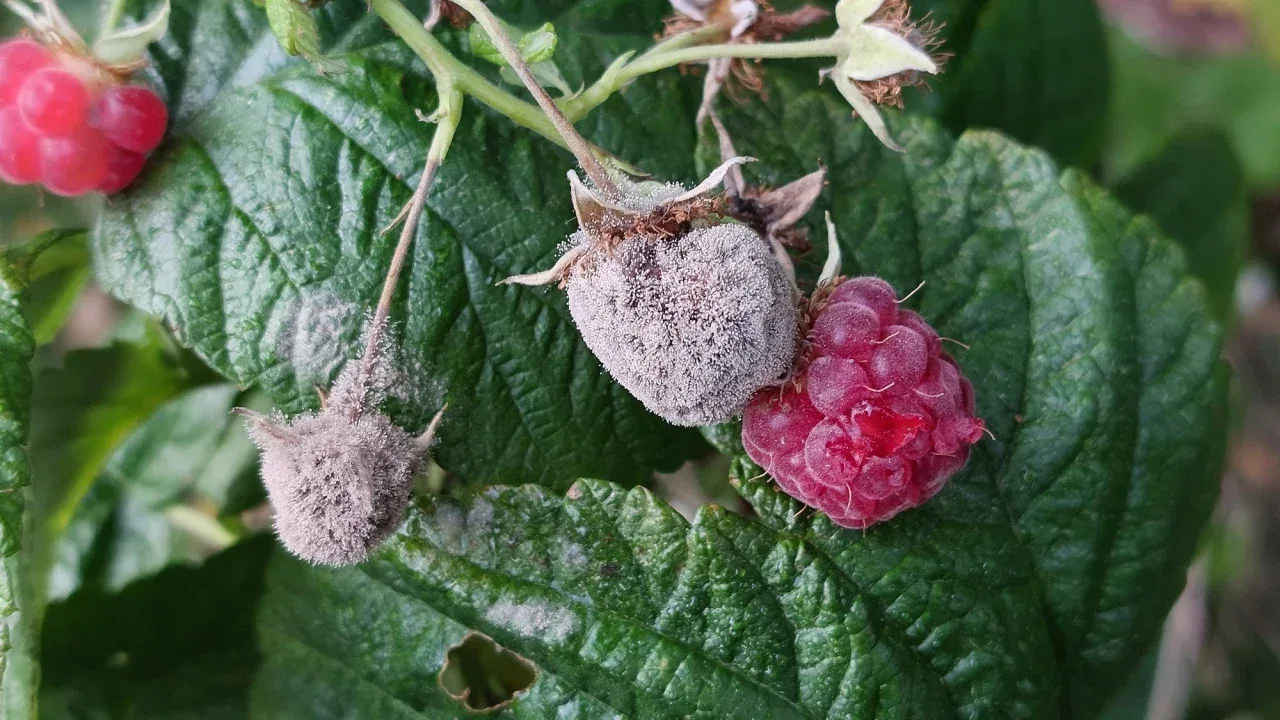
Leaf Spot, Rust and Botrytis (Grey Mould): A Canadian Gardener's Guide
Spots, orange pustules or fuzzy grey rot? Learn how to tell leaf spot, rust and botrytis (grey mould) apart, which Canadian plants they hit, from strawberries and peonies to saskatoons and hollyhocks, and the simple habits that prevent all three.
Read guideQ&A
Frequently Asked Questions
Where should I plant a Saskatoon berry shrub?
Choose a sunny, well-drained site, away from a low frost pocket. Part shade is possible but usually means fewer or lower-quality berries.
When will a Saskatoon shrub produce fruit?
Manitoba Agriculture reports fruit may begin at 3–5 years, with stronger production later; cultivar and care make a difference.
Do Saskatoon berries need another plant for pollination?
One shrub can fruit, but University of Saskatchewan notes that bee cross-pollination can increase yield.
Similar Botanical Matches
Keep exploring
Related plants
Grower field notes
Reader Field Notes in Canada
Share how this plant performs in your local Canada climate.