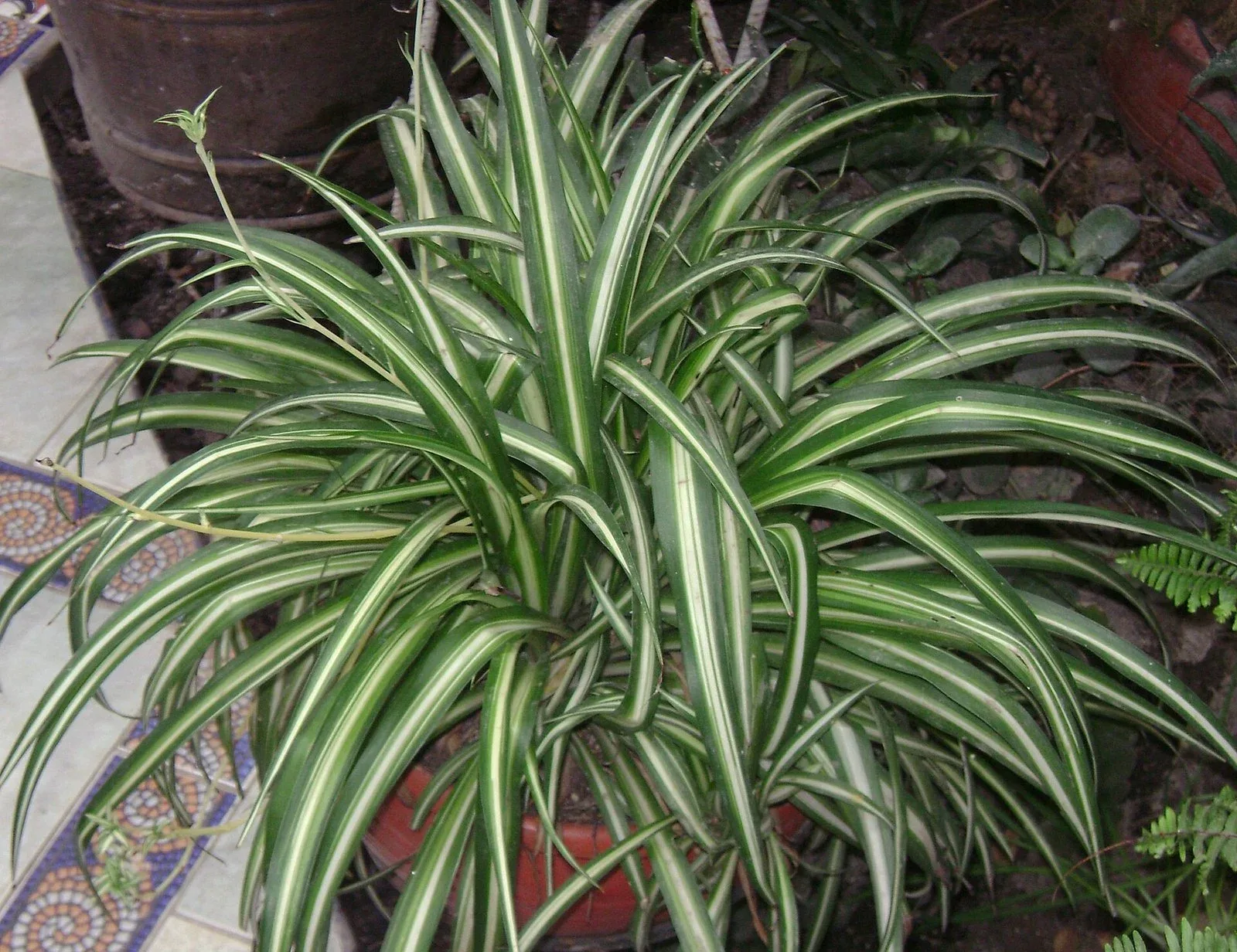
| ☀️ Light | Bright indirect light |
|---|---|
| 💧 Water | Moderate (lightly moist) |
| 🪴 Soil | Well-draining potting mix |
| 🌡️ Temp | 7°C – 27°C |
| 🐾 Safety | Cats: non-toxic · Dogs: non-toxic (ASPCA Animal Poison Control) |
| 📏 Mature size | 45 cm |
Where It Grows & Climate Tolerance
Pet & Companion Animal Toxicity (Spider Plant)
Easy, arching houseplant with striped leaves and baby plantlets. Copes with low light and dry air; use filtered water to prevent brown tips.
Care instructions
Care Guide & Maintenance Routine
Medium to bright indirect light. Water when the top 3-5 cm is dry. Use filtered or settled water to avoid brown tips. Feed monthly at half strength March-October. Keep above 7 C. Non-toxic to cats and dogs.
Light & Sunlight
Medium to bright indirect light; tolerates low light; avoid direct sun
Watering Schedule
Moderate: water when top 3-5 cm of soil is dry (about every 7-14 days); less in winter
Potting Mix & Drainage
Well-draining potting mix
Temperature & Humidity
Verified temperature range: 7°C–27°C (45°F–81°F). Protect from cold drafts and direct airflow from heating or cooling vents.
Spider plant (Chlorophytum comosum) is one of the most forgiving houseplants for Canadian homes. Native to southern Africa, it forms a fountain of narrow green or white-striped leaves and sends out long stems that carry small white flowers and baby plantlets, which is why it looks so good in a hanging basket or on a shelf.
Why it suits Canadian homes
Spider plant is an indoor plant everywhere in Canada. Outdoors it is only hardy in USDA zones 9 to 11, so it will not survive a Canadian winter outside, but it makes a good summer patio plant in part shade if you bring it in before nights get cold. Indoors it tolerates artificial light well, which is why it turns up in so many offices, and it handles the 25-30% humidity of a heated winter home better than most tropical plants.
Light, water and the brown tip problem
Give it medium to bright indirect light. Direct sun scorches the leaves, though it will tolerate deep shade. Water when the top 3-5 cm of soil is dry, roughly every 7-14 days, and water less often in winter. The most common complaint from Canadian growers is brown leaf tips. Chlorine and fluoride in municipal tap water are a frequent cause, so use water that has stood overnight for chlorine, or filtered or rain water to avoid fluoride. Dry furnace air and fertilizer salts can also brown the tips.
Winter care
Keep it above 7 C and away from cold glass, drafts and heating vents. Stop fertilizing from November to February, water less, and add a pebble tray or humidifier nearby. Plantlets form when days are short and nights are long, so a winter window can trigger them naturally.
Feeding and repotting
Feed monthly at half strength from March to October. Over-fertilizing reduces plantlet formation and burns the roots. Its fleshy roots will eventually crowd the pot, so divide and repot when they start to push against the container.
Pets
The ASPCA lists spider plant as non-toxic to cats and dogs, which makes it a popular choice for pet households.
Seasonal rhythm
Seasonal Calendar
A month-by-month calendar for Spider Plant in Canada is coming soon. See the light, water and temperature notes above.
Diagnostics
Common Problems & Troubleshooting
- Brown leaf tips | Cause: Chlorine and fluoride in tap water, dry heated air, or fertilizer salt build-up | Fix: Use settled, filtered or rain water, add humidity, flush the soil, and trim brown tips at an angle - Few or no plantlets | Cause: Too much fertilizer or not enough light and dark contrast | Fix: Feed less; plantlets form when days are short and nights long (under 12 hours of light for 3 weeks) - Leaves going pale or limp | Cause: Overwatering or direct sun | Fix: Let the top 3-5 cm dry between waterings and move out of direct sun
- Yellow leaves — Leaves fade from green to yellow, often starting at the bottom.
- Brown tips — Leaf tips and edges turn dry, brown and papery.
- White crust — A white or yellow crust on the soil surface or pot rim.
- Nutrient shortage — Overall pale growth, or yellowing between veins, on a plant that is otherwise watered well.
- Tired mix — Water races down the inside of the pot and the root ball stays dry, or the mix is a hard brick.
Care encyclopedia · 13 guides
Guides & Articles for Spider Plant
Spider Plant Brown Tips in Winter: Dry Air, Water or Something Else?
Brown tips are the most common spider plant complaint in winter. Work out whether dry air, water, salts, roots or cold is behind it with these checks.
Read guide →Spider Plant Care in Winter: Simple Tips for Canadian Homes
Short days and dry heat from the furnace can be hard on a spider plant. These simple changes will keep yours green until spring.
Read guide →Yellow Leaves on Plants: What's Causing It and How to Fix It
Yellow leaves are a symptom, not a diagnosis. Learn to read the pattern, from lower leaves yellowing after overwatering to new growth yellowing between green veins on the Prairies, and how to fix the most common causes indoors and in Canadian gardens.
Read guide →Top 10 "Air-Purifying" Plants for Canadian Apartments: What They Can and Can't Do
The famous 1989 NASA plant study doesn't translate to real homes: a 2019 review found you'd need 10 to 1,000 plants per square metre to match normal ventilation. Here is what plants can do, what really cleans apartment air, and 10 easy NASA-list plants.
Read guide →Top 10 Pet-Safe Houseplants for Canadian Homes
Snake plant, pothos and lilies are common in Canadian homes but toxic to pets. These 10 houseplants are listed as non-toxic to both cats and dogs by the ASPCA, and they cope with short days and dry winter air.
Read guide →14 Pet-Safe Houseplants for Canadian Homes With Cats and Dogs
A spider plant, a parlor palm or a Christmas cactus is a solid start if you want houseplants in a home with cats or dogs. All fourteen plants below have a Canada profile and an ASPCA non-toxic listing. That is not the same as safe to eat.
Read guide →4 Grow Light Setups for Houseplants in Canada
Compare four ways to light a Canadian home in winter, from a shaded window to a basement shelf. Find the fixture style, placement and timer that fit your plants.
Read guide →Root Rot in Houseplants and Garden Plants: Causes, Signs and How to Rescue Them
A plant that wilts in wet soil often has root rot. Learn what causes it, how to tell rotted roots from healthy ones, a step-by-step rescue for houseplants, and how to prevent root rot in pots and Canadian garden beds.
Read guide →8 Common Houseplant Pests in Canada: How to Spot Each One Early
Spider mites, mealybugs, scale, aphids, fungus gnats, thrips, whiteflies and springtails are the pests you are most likely to find on Canadian houseplants. Here is how to confirm each one, and where to read the treatment guide.
Read guide →Toxic Plants for Pets and Kids in Canada: Houseplants, Garden Plants and Poison Centre Numbers
Which houseplants and garden plants are toxic to cats, dogs and children in Canada, what to do right away if one is eaten, and the poison centre number for every province and territory.
Read guide →Winter Houseplant Care in Canada: Light, Watering, Humidity, Drafts and Pests
Short days, dry furnace air and icy drafts make winter the toughest season for houseplants in Canada. Here's how to manage light, watering, humidity, temperature and pests until spring.
Read guide →Potting Mix for Indoor Plants in Canada: Recipes and Repotting Guide
What goes into a good indoor potting mix, what to buy at Canadian stores, peat versus coir, simple recipes for each plant group, and how to tell when a plant needs repotting.
Read guide →15 Low-Light Houseplants for Dim Canadian Winters
A cast-iron plant, a Chinese evergreen or a parlor palm is a realistic start in a dim Canadian winter room. Here are 15 plants with live Canada profiles, plus an honest note on a few that only pretend to like the dark.
Read guide →Q&A
Frequently Asked Questions
Why are the tips of my spider plant turning brown?
The usual causes are fluoride and chlorine in tap water, dry indoor air in winter, and fertilizer salts. Switch to filtered or overnight-settled water, add humidity and fertilize less.
Is spider plant safe for cats and dogs?
Yes. The ASPCA lists spider plant as non-toxic to dogs and cats.
Can I keep a spider plant outside in Canada?
Only in summer. It is hardy outdoors in USDA zones 9-11, so move it back inside before nights get cold, below about 7 C.
How do I get more baby spider plants?
Avoid over-fertilizing and keep it in a spot with short winter days. Plantlets form on long stems and can be snipped off and rooted in water or soil.
Similar Botanical Matches
Grower field notes
Reader Field Notes in Canada
Share how this plant performs in your local Canada climate.