
Top 10 "Air-Purifying" Plants for Canadian Apartments: What They Can and Can't Do
Search for houseplants for a condo or apartment and you will find dozens of lists of "air-purifying plants," almost all of them based on a NASA study from 1989. The plants on those lists are genuinely good apartment plants. What they cannot do is clean the air in your home in any way you would notice. A 2019 review by engineers at Drexel University concluded that you would need somewhere between 10 and 1,000 potted plants per square metre of floor space to match the air cleaning that normal ventilation already provides.
This guide is honest about that. It explains what the research actually found, what plants can realistically offer an apartment (a little extra humidity and a lot of enjoyment), and what Health Canada says really improves indoor air. Then it ranks the 10 plants from the NASA work that are easiest to grow in a Canadian apartment, with light needs and pet safety for each.
What the NASA study found, and why it doesn't apply to your home
In 1989, B. C. Wolverton and colleagues at NASA's Stennis Space Center published Interior Landscape Plants for Indoor Air Pollution Abatement. They placed common houseplants, including spider plant, golden pothos, heartleaf philodendron, Chinese evergreen, peace lily, snake plant, English ivy and several dracaenas, inside small sealed experimental chambers. They then measured how much benzene, trichloroethylene and formaldehyde disappeared over a 24-hour exposure period. Many plants reduced the chemicals in those chambers.
The problem is scale. A sealed test chamber is tiny and has no fresh air coming in. A real apartment is many times larger, and air is constantly exchanged with the outdoors through windows, doors, cracks and mechanical ventilation.
In 2019, Bryan Cummings and Michael Waring of Drexel University reviewed 12 published chamber studies and converted 196 experimental results into a clean air delivery rate (CADR), the same measure used to rate air purifiers. The median rate for a single plant was just 0.023 cubic metres per hour. To match the air exchange that typical buildings already get from outdoor air (about one air change per hour), you would need 10 to 1,000 plants per square metre of floor space. Their paper's title sums it up: Potted plants do not improve indoor air quality.
The authors did not say the earlier lab data were wrong. Plants do take up small amounts of some chemicals. They concluded that the effect is far too slow to matter in a home, and that research should focus instead on other questions, such as the well-being benefits of plants.
What plants can do for an apartment
- Add a little humidity. Canadian apartments get very dry in winter when the heat is on. Iowa State University Extension notes that water evaporating from potting soil and transpired by leaves raises the humidity in the immediate vicinity of a group of plants. The University of New Hampshire Extension adds that this works best with several plants grouped together in a small room with low airflow. Expect a modest local effect, not a humidifier's worth of moisture.
- Make a space more pleasant. The Drexel authors suggest future research on the well-being benefits of plants. Many people simply enjoy living with greenery, especially through a long Canadian winter.
- Give you something alive to care for. The plants below are forgiving, which matters in apartments with limited light.
What actually improves indoor air in Canada
Health Canada's advice for better indoor air has three parts, in this order:
- Reduce sources. Do not smoke indoors, choose low-emission paints and products, limit candles, incense and air fresheners, and make sure fuel-burning appliances are properly vented.
- Ventilate. Use bathroom fans and a range hood vented outdoors when cooking, keep heating vents clear, and open windows when outdoor air quality is good. Check the Air Quality Health Index (AQHI) for your community first, especially during wildfire smoke events.
- Filter. Portable air cleaners with HEPA filters can reduce particles, but Health Canada notes that most air cleaners do not remove gases, and that air cleaning is rarely effective on its own.
Health Canada also recommends keeping indoor relative humidity between 30% and 50% to prevent mould. A hygrometer, which is inexpensive at most hardware stores, tells you where you stand.
Quick comparison
| Rank | Plant | In the 1989 NASA work? | Light | ASPCA pet listing |
|---|---|---|---|---|
| 1 | Spider plant (Chlorophytum comosum) | Yes | Medium; tolerates deep shade | Non-toxic to cats and dogs |
| 2 | Parlour palm (Chamaedorea elegans) | Relative tested (bamboo palm) | Medium to low | Non-toxic to cats and dogs |
| 3 | Snake plant (Dracaena trifasciata) | Yes | Very low to bright | Toxic to cats and dogs |
| 4 | Golden pothos (Epipremnum aureum) | Yes | Bright indirect; survives low | Toxic to cats and dogs |
| 5 | Heartleaf philodendron (Philodendron hederaceum) | Yes | Medium; survives very low | Toxic to cats and dogs |
| 6 | Chinese evergreen (Aglaonema) | Yes | Diffuse or good indirect | Toxic to cats and dogs |
| 7 | Corn plant (Dracaena fragrans) | Yes | Bright to moderate filtered | Toxic to cats and dogs |
| 8 | Dragon tree (Dracaena marginata) | Yes | Bright indirect | Toxic to cats and dogs |
| 9 | Peace lily (Spathiphyllum) | Yes | Partial to deep shade | Toxic to cats and dogs |
| 10 | English ivy (Hedera helix) | Yes | Bright indirect | Toxic to cats and dogs |
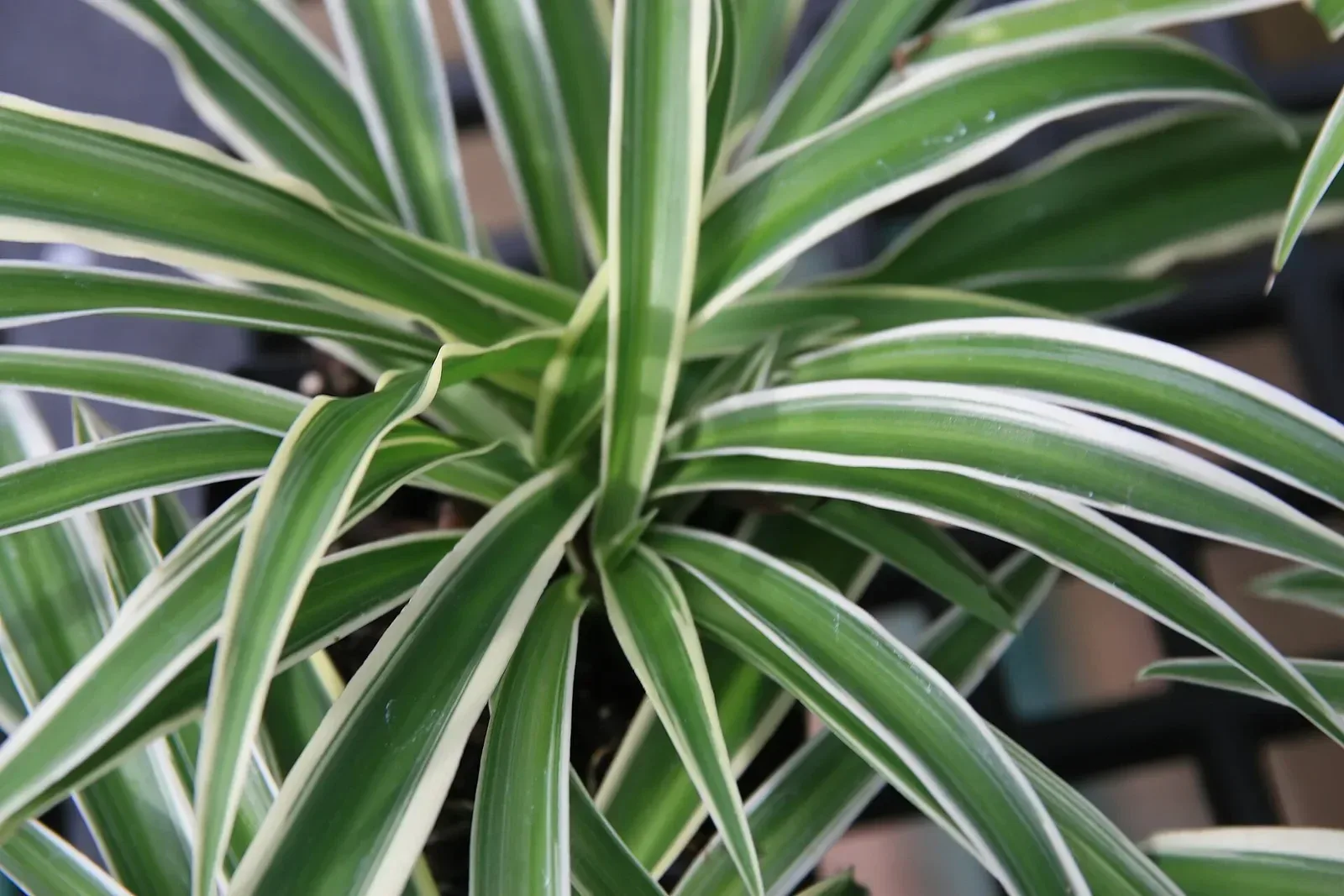
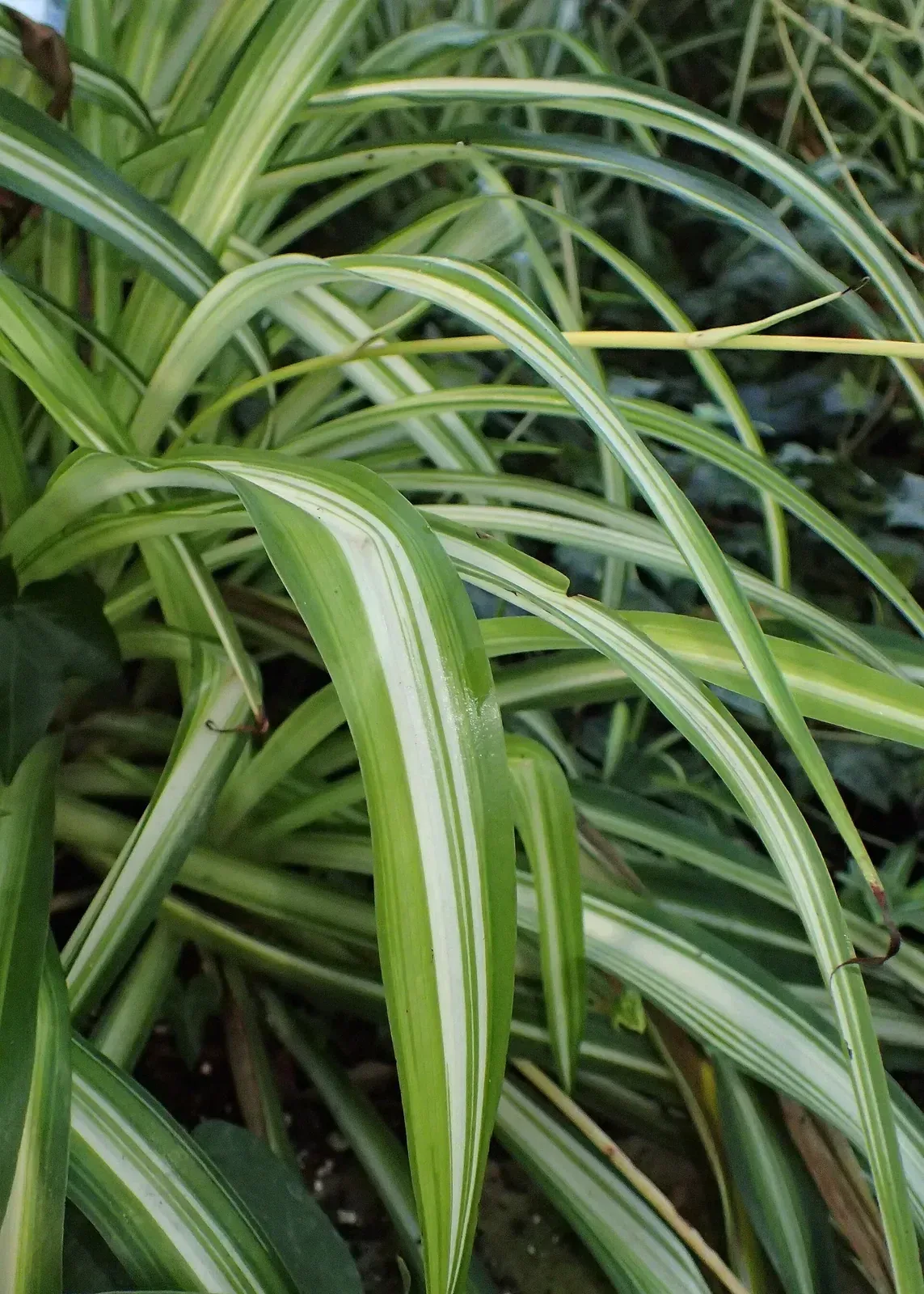
1. Spider plant (Chlorophytum comosum)
Spider plant was included in the NASA work and is the best all-round choice for an apartment. NC State Extension notes that it prefers medium light but tolerates deep shade, and that it is tolerant of drought and dry soil. It is also listed by the ASPCA as non-toxic to cats and dogs, which makes it the top pick for pet owners.
Keep it out of direct sun, water less in winter, and keep it above about 7 °C. NC State Extension notes that chlorine and fluoride in tap water can cause brown leaf tips, so try rainwater or distilled water if tips brown. Plantlets root easily, so one plant soon becomes several.
2. Parlour palm (Chamaedorea elegans)
The NASA researchers tested bamboo palm (Chamaedorea seifrizii), a close relative. In Canadian stores, the smaller parlour palm is far more common and better suited to apartments. The ASPCA lists Chamaedorea elegans as non-toxic to cats and dogs. NC State Extension describes bamboo palm as preferring medium light and surviving low light, with well-drained potting mix, and parlour palm has similar needs. Water when the top few centimetres of mix are dry, and keep it away from cold windows and heat vents.
3. Snake plant (Dracaena trifasciata)
Snake plant, listed in the NASA report as mother-in-law's tongue (Sansevieria laurentii), is the hardest houseplant to kill. NC State Extension notes that it tolerates very low light, low humidity and cool temperatures around 10 °C, and that in winter it may need water only every one to two months. Overwatering is the main way to lose it. The ASPCA lists snake plant as toxic to cats and dogs.
4. Golden pothos (Epipremnum aureum)
Pothos was used in the NASA work and is one of the easiest trailing plants for a bookshelf or hanging basket. NC State Extension notes that it prefers bright, indirect light but survives long periods in low light, and that the potting mix should dry out between waterings. The ASPCA lists pothos (devil's ivy) as toxic to cats and dogs, so hang it out of reach if you have pets.
5. Heartleaf philodendron (Philodendron hederaceum)
Heartleaf philodendron was also part of the NASA comparison. NC State Extension notes that it can survive long periods in extremely low light, prefers medium light, and tolerates dry air, although it prefers medium humidity. Keep the soil slightly moist. It looks similar to pothos but is even more tolerant of dim rooms. The ASPCA lists it as toxic to cats and dogs.
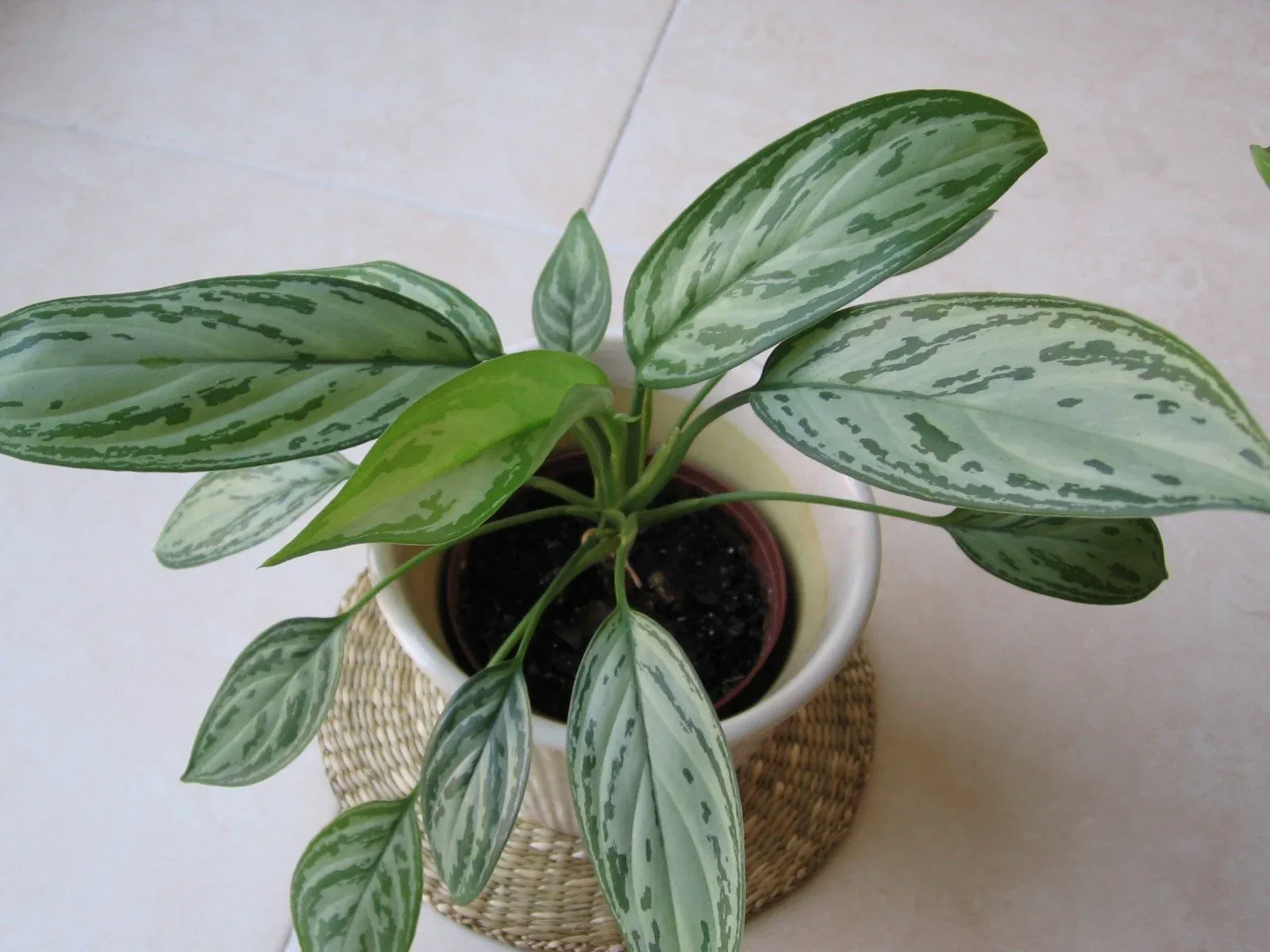
6. Chinese evergreen (Aglaonema)
Chinese evergreen (Aglaonema modestum) was on the NASA list. NC State Extension calls it one of the easiest plants to grow in a home or office, doing well in diffuse sun or good indirect light and tolerating drier air. Reduce watering in winter. Green and silver-leaved types handle dim corners better than pink or red ones. The ASPCA lists Chinese evergreen as toxic to cats and dogs.
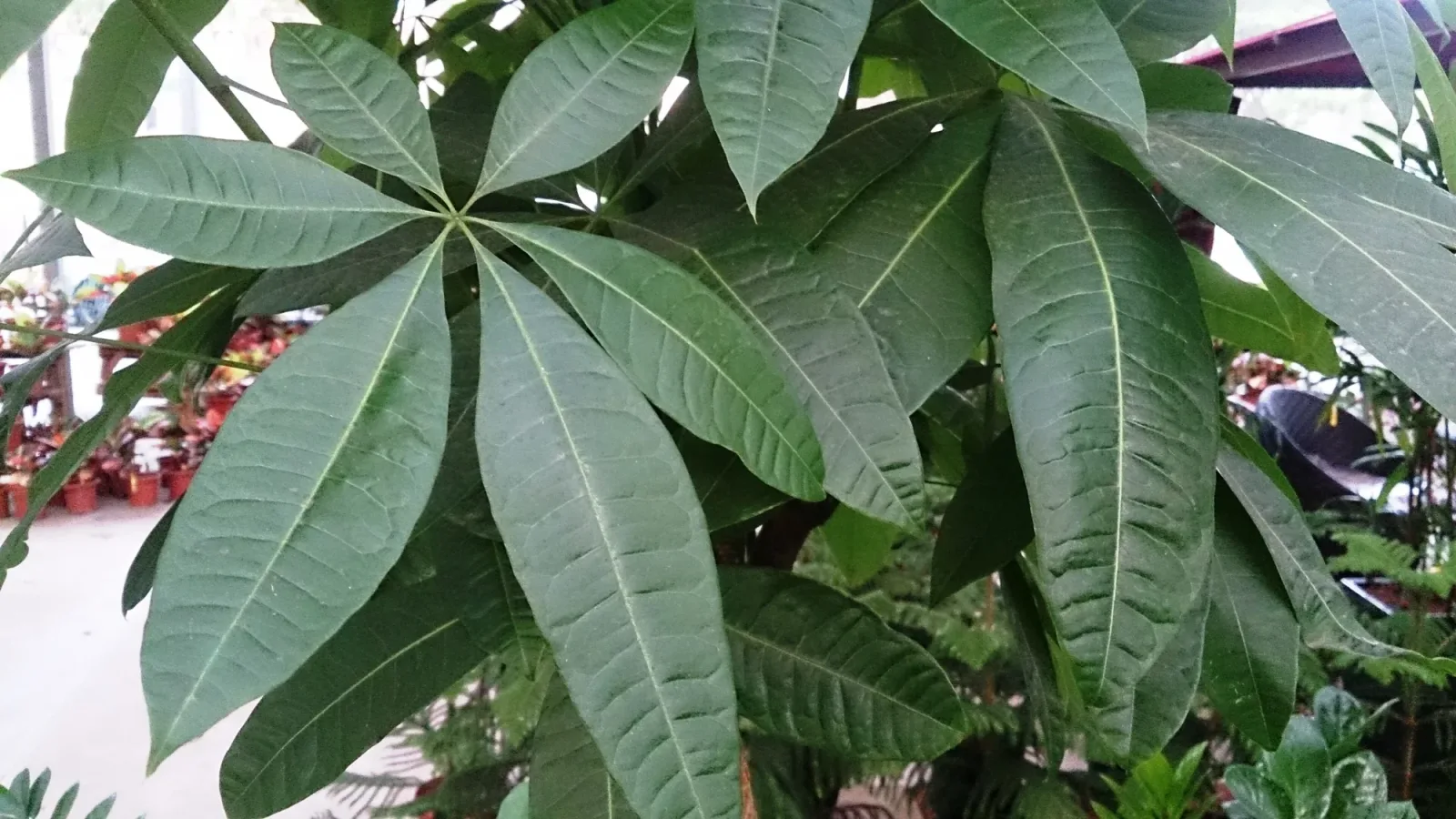
7. Corn plant (Dracaena fragrans)
The NASA researchers tested "mass cane" (Dracaena massangeana) and 'Janet Craig', both forms of Dracaena fragrans. NC State Extension recommends bright to moderate filtered light, notes that direct sun can burn the leaves and very low light makes them narrow, and advises cutting back on water in winter. It grows slowly into a tall, cane-like plant for a bright corner. The ASPCA lists corn plant as toxic to cats and dogs.
8. Dragon tree (Dracaena marginata)
Dragon tree was on the NASA list. NC State Extension recommends bright, indirect light and letting the mix dry between waterings, but not severely. Like most dracaenas it is sensitive to fluoride, which discolours the leaves, so use distilled or non-fluoridated water if you see damage. The ASPCA lists dracaenas as toxic to cats and dogs.
9. Peace lily (Spathiphyllum)
The NASA researchers tested peace lily 'Mauna Loa'. It is one of the few flowering houseplants that does well in dim rooms: NC State Extension notes that peace lilies prefer partial to deep shade and should not be placed in direct sun. Keep the soil moist but not soggy, and keep it away from cold drafts; NC State Extension notes that temperatures between about 4 and 16 °C slow growth considerably. The ASPCA lists peace lily as toxic to cats and dogs.
10. English ivy (Hedera helix)
English ivy was on the NASA list and grows well indoors as a trailing plant in bright, indirect light. Two cautions apply in Canada. The ASPCA lists it as toxic to cats and dogs, and the Invasive Species Council of British Columbia lists English ivy as invasive, spreading through rainforest understories and climbing trees. Keep it indoors, and never dump old plants or cuttings outside.
Honourable mentions
- Weeping fig (Ficus benjamina): on the NASA list, but NC State Extension notes that it may drop leaves when moved and is intolerant of cold drafts. See our weeping fig guide.
- Boston fern (Nephrolepis exaltata): pet-safe and lush, but it needs more humidity than most apartments offer in winter. See our Boston fern guide.
For more plants that cope with dim winter windows, see our guide to low-light indoor plants for Canadian winters. If you share your apartment with a cat or dog, our pet-safe houseplants guide lists 10 plants the ASPCA considers non-toxic.
How to get the most from plants in a Canadian apartment
- Group plants together. Several plants close together create a slightly more humid pocket of air, which helps tropical foliage in winter.
- Keep plants away from heat sources. The University of New Hampshire Extension recommends keeping plants away from heat vents, radiators and outside doors.
- Use a humidifier for real humidity. Iowa State University Extension calls humidifiers one of the most reliable ways to raise humidity for houseplants. Misting raises humidity for only a few minutes.
- Water less in winter. Most of these plants grow slowly in short winter days and are easily overwatered. Our root rot guide explains the warning signs.
- Ventilate and filter for clean air. Use your range hood and bathroom fan, open windows when the AQHI is low, and use a HEPA air cleaner if you need to reduce particles such as wildfire smoke.
Frequently asked questions
Do houseplants really purify the air?
Not in any meaningful way in a real home. A 2019 review by Cummings and Waring found that the median potted plant removes chemicals so slowly that you would need 10 to 1,000 plants per square metre of floor space to match normal ventilation.
Was the NASA study wrong?
No. It accurately measured what happened in small, sealed test chambers over 24 hours. The mistake was assuming those results scale up to a full-sized, ventilated home.
Do plants add humidity to dry winter air?
A little. Water evaporating from potting soil and leaves raises humidity near a group of plants, especially in a small room with little airflow. For a real increase, use a humidifier and aim for Health Canada's recommended 30% to 50% relative humidity.
Which air-purifying plants are safe for cats and dogs?
Of the plants on this list, spider plant and parlour palm are listed by the ASPCA as non-toxic to cats and dogs. Snake plant, pothos, philodendron, Chinese evergreen, dracaenas, peace lily and English ivy are listed as toxic.
What is the best way to improve air quality in my apartment?
Health Canada recommends reducing pollution sources first, then improving ventilation, and then using filtration such as a HEPA air cleaner for particles.
Can plants help with wildfire smoke?
Not in any useful way. Wildfire smoke contains fine particles, and Health Canada notes that portable air cleaners with HEPA filters can reduce particles indoors. Keep windows closed during smoke events and run a HEPA air cleaner instead of relying on plants.
What is the easiest air-purifying plant for a dark apartment?
Snake plant, heartleaf philodendron and spider plant all tolerate low light. If you have pets, choose spider plant or parlour palm.
Sources
- Cummings, B. E. and Waring, M. S. (2020; published online November 2019). Potted plants do not improve indoor air quality: a review and analysis of reported VOC removal efficiencies. Journal of Exposure Science & Environmental Epidemiology 30, 253–261. Also on PubMed.
- Wolverton, B. C., Johnson, A. and Bounds, K. (1989). Interior Landscape Plants for Indoor Air Pollution Abatement. NASA Technical Reports Server.
- Health Canada: Improve indoor air quality in your home, Volatile organic compounds and Mould.
- Iowa State University Extension, How can I raise the relative humidity indoors for my houseplants?
- University of New Hampshire Extension, How can I increase the humidity indoors for my houseplants?
- NC State Extension Plant Toolbox: Chlorophytum comosum, Chamaedorea seifrizii, Dracaena trifasciata, Epipremnum aureum, Philodendron hederaceum, Aglaonema, Dracaena fragrans, Dracaena marginata, Spathiphyllum, Ficus benjamina.
- ASPCA Animal Poison Control: spider plant, bamboo palm (Chamaedorea elegans), snake plant, devil's ivy, heartleaf philodendron, Chinese evergreen, corn plant, dracaena, peace lily, English ivy.
- Invasive Species Council of British Columbia, English ivy.
Image credits
- Featured image (Chinese evergreen): Digigalos / Wikimedia Commons / CC BY-SA 3.0. Source.
- Golden pothos: Slyronit / Wikimedia Commons / CC BY-SA 4.0. Source.
- Snake plant: DenesFeri / Wikimedia Commons / CC BY-SA 4.0. Source.
- Corn plant: Mokkie / Wikimedia Commons / CC BY-SA 3.0. Source.
- Dragon tree: Aldrina A Manashe / Wikimedia Commons / CC0. Source.
- Peace lily: CesarAlbertoHerrera / Wikimedia Commons / CC0. Source.
Comments
No comments yet — share what worked in your climate.