
Top 10 Pet-Safe Houseplants for Canadian Homes
Canadian cats and dogs spend a lot of time indoors, especially from November to March, and a bored pet will test almost anything green. That makes your choice of houseplants a safety decision as well as a decorating one. Several of the most popular plants sold in Canadian garden centres, including snake plant, pothos, aloe and sago palm, are listed as toxic to cats and dogs by the ASPCA Animal Poison Control Center. Lilies are especially dangerous for cats: the ASPCA lists true lilies (Lilium) and daylilies (Hemerocallis) as causing kidney failure in cats.
The good news is that you do not have to give up on plants. The 10 houseplants below all appear as non-toxic to both cats and dogs in the ASPCA's plant database, which is the reference most veterinarians and poison-control lines use in North America. We checked each entry by name and scientific name. They also cope with the things that make Canadian homes difficult for plants: short winter days, dry air from forced-air heating and cold window glass.
One caution before the list. The ASPCA notes that eating any plant material can cause vomiting or stomach upset in dogs and cats. "Non-toxic" means a plant is not expected to cause poisoning, not that it is a safe snack. This article is general information, not veterinary advice.
Quick comparison
| Rank | Plant | ASPCA listing | Light | Winter watering | Difficulty |
|---|---|---|---|---|---|
| 1 | Spider plant (Chlorophytum comosum) | Non-toxic to cats and dogs | Medium to bright indirect; tolerates low | When top 3–5 cm is dry | Beginner |
| 2 | Boston fern (Nephrolepis exaltata 'Bostoniensis') | Non-toxic to cats and dogs | Bright indirect | Keep evenly moist | Intermediate |
| 3 | Parlour palm (Chamaedorea elegans) | Non-toxic to cats and dogs | Medium indirect; tolerates low | When top 2–3 cm is dry | Beginner |
| 4 | Calathea (Calathea/Goeppertia spp.) | Non-toxic to cats and dogs | Medium indirect | Keep lightly moist | Intermediate |
| 5 | African violet (Streptocarpus ionanthus, syn. Saintpaulia) | Non-toxic to cats and dogs | Bright filtered or grow light | Bottom-water when top 1 cm is dry | Intermediate |
| 6 | Cast-iron plant (Aspidistra elatior) | Non-toxic to cats and dogs | Low to medium | When top half is dry | Beginner |
| 7 | Baby rubber plant (Peperomia obtusifolia) | Non-toxic to cats and dogs | Medium to bright indirect | When top half is dry | Beginner |
| 8 | Christmas cactus (Schlumbergera) | Non-toxic to cats and dogs | Bright indirect | When top 3 cm is dry | Beginner |
| 9 | Ponytail palm (Beaucarnea recurvata) | Non-toxic to cats and dogs (listed as bottle palm) | Bright, some direct sun | Soak, then let dry fully | Beginner |
| 10 | Hoya (Hoya carnosa) | Non-toxic to cats and dogs | Bright indirect | Let dry between waterings | Beginner |
How we chose these plants
Every plant on this list had to meet three tests. First, the ASPCA entry for that plant had to say non-toxic to both cats and dogs, and the scientific name had to match the plant sold in Canadian stores. Second, the plant had to be widely available from Canadian garden centres and grocery stores. Third, it had to tolerate typical Canadian indoor conditions, where winter humidity often drops well below the 30 to 50 per cent range Health Canada recommends for homes, and where daylight is short from November to February.
1. Spider plant (Chlorophytum comosum)
Spider plant is the easiest pet-safe houseplant to recommend. The ASPCA lists it as non-toxic to cats and dogs, it grows quickly, and it shrugs off the dry air of a heated Canadian home better than most tropical plants. The arching striped leaves and dangling baby plantlets look good on a shelf or in a hanging basket.
Give it medium to bright indirect light; it will survive lower light but grows slowly there. Water when the top 3 to 5 cm of mix is dry, and less often in winter. Brown leaf tips are the usual complaint. They are often linked to fluoride or chlorine in tap water and to fertilizer salts, so use filtered or settled water and feed only from spring to early fall.
Pet tip: Cats love to bat and chew the long, grassy leaves. Hanging the pot keeps the plant healthier and saves you from cleaning up chewed foliage.
2. Boston fern (Nephrolepis exaltata 'Bostoniensis')
Boston fern is listed by the ASPCA as non-toxic to cats and dogs and gives you a full, soft look that few other pet-safe plants can match. It is not a low-effort plant, though. It wants bright indirect light, evenly moist soil and humid air, which is exactly what a Canadian house lacks in January.
Keep the mix evenly moist but never waterlogged, and do not let it dry out completely. A room humidifier helps more than misting, which only raises humidity for a few minutes. Keep the fern away from heat registers, wood stoves and cold drafts. Shedding brown leaflets in winter usually means the air or the soil is too dry.
3. Parlour palm (Chamaedorea elegans)
Parlour palm is one of the few palms that handles medium to low indoor light, and the ASPCA lists it as non-toxic to cats and dogs (the database also lists it under bamboo palm and good-luck palm). It stays compact for years, which suits apartments and condos.
Water when the top 2 to 3 cm of mix is dry and much less in winter. Never leave the pot sitting in water, because soggy, cold soil is the fastest way to kill it. Brown tips usually point to dry air or irregular watering. Cats sometimes chew the fronds, so a plant stand can help.
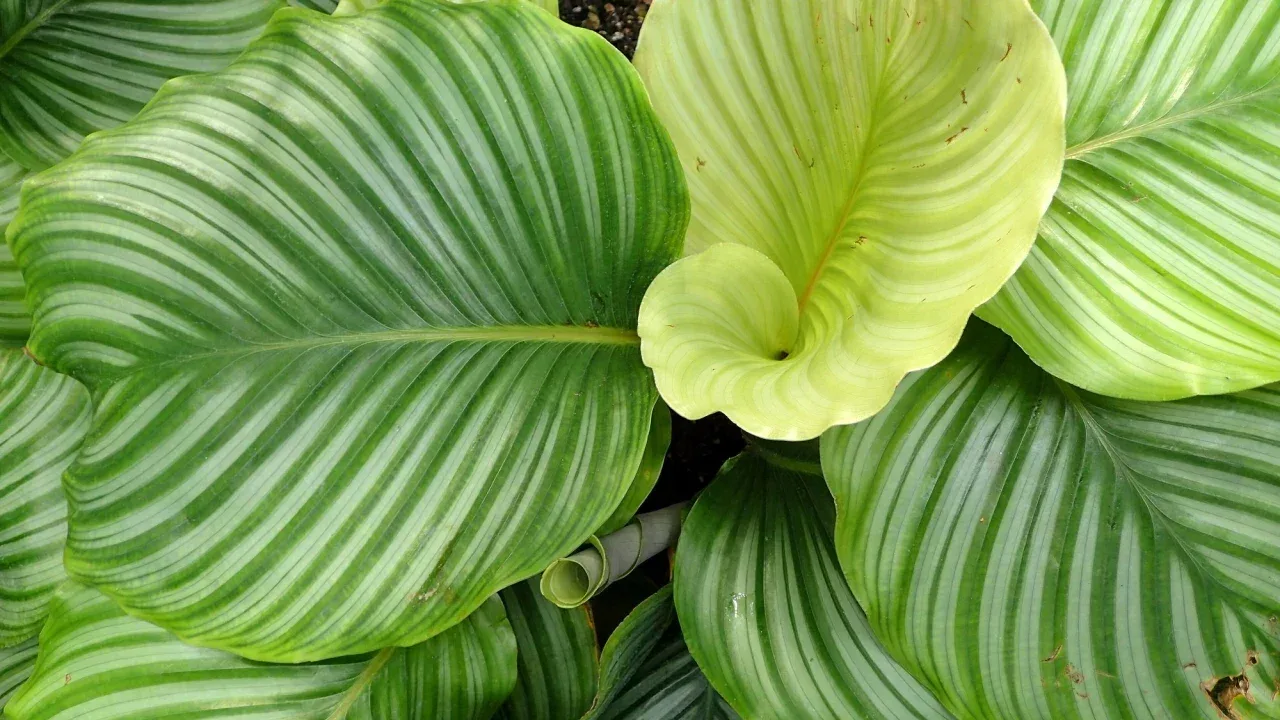
4. Calathea (Calathea and Goeppertia spp.)
Calatheas are grown for their patterned leaves, which fold up at night and open in the morning. The ASPCA lists Calathea species as non-toxic to cats, dogs and horses. Many plants sold as calathea have been moved by botanists to the genus Goeppertia, but you will still find them labelled calathea in stores.
They need medium indirect light, evenly moist soil and higher humidity than a typical Canadian home provides in winter. Use filtered, rain or settled water if your tap water causes brown edges. Curling leaves usually mean the plant is thirsty or the air is too dry. Calatheas are fussier than the plants above, so choose one only if you are willing to run a humidifier.
About prayer plant: The closely related prayer plant (Maranta leuconeura) is widely described as pet-safe, but the ASPCA's "prayer plant" entry is filed under Calathea insignis, so check the label and the ASPCA database if you want to be certain.
5. African violet (Streptocarpus ionanthus, syn. Saintpaulia ionantha)
African violets flower almost year-round with enough light, and the ASPCA lists Saintpaulia species as non-toxic to cats, dogs and horses. Botanists now place them in Streptocarpus, but stores still sell them as Saintpaulia.
Give them bright, filtered light from an east or west window, or 12 to 14 hours under a grow light, which is the simplest way to keep them blooming through a Canadian winter. Water from below with room-temperature water when the top centimetre of mix is dry, because cold water on the fuzzy leaves leaves pale spots. Keep them between about 18 and 27 °C and away from drafty windows.
6. Cast-iron plant (Aspidistra elatior)
Cast-iron plant earned its name by tolerating low light, irregular watering and cool rooms. The ASPCA lists it as non-toxic to cats, dogs and horses. It is the best choice on this list for a dim hallway or a north-facing room, and it is one of the plants we also recommend in our guide to low-light indoor plants for Canadian winters.
Water when the top half of the mix is dry, which may be every two to four weeks in winter. It grows slowly, so do not over-pot or over-feed it. Its tough leaves are less tempting to chew than grassy foliage.
7. Baby rubber plant (Peperomia obtusifolia)
Baby rubber plant has thick, glossy leaves that store water, so it forgives a missed watering. The ASPCA lists Peperomia obtusifolia (under baby rubber plant, American rubber plant and blunt-leaf peperomia) as non-toxic to cats and dogs. Several other peperomias, including Peperomia caperata, also appear on the ASPCA's non-toxic list.
Give it medium to bright indirect light and water when the top half of the mix is dry. Overwatering is the main risk; soft, dropping stems usually mean wet roots rather than thirst. It stays small, so it fits on a desk or windowsill.
Do not confuse it with the true rubber plant (Ficus elastica), which is a different plant. Check the scientific name on the tag.
8. Christmas cactus (Schlumbergera)
Christmas cactus is a holiday favourite in Canada, and the ASPCA lists it as non-toxic to cats, dogs and horses. It is a forest cactus from Brazil, not a desert cactus, so it prefers bright indirect light and regular watering rather than baking sun.
Water when the top 3 cm of mix is dry. To get flowers for December, give it long, uninterrupted nights and cool temperatures of about 13 to 18 °C from October onward; a spare room that is not lit in the evening works well. Dropped buds are often caused by moving the plant, sudden temperature changes or very dry soil.
9. Ponytail palm (Beaucarnea recurvata)
Ponytail palm is not a true palm. It stores water in a swollen trunk base and has long, curly leaves that cascade from the top. The ASPCA lists Beaucarnea recurvata under bottle palm, and it is non-toxic to cats, dogs and horses.
This is the plant for your sunniest window. It wants bright light with a few hours of direct sun, a gritty, fast-draining mix and very little water: soak it, then let the mix dry completely. In winter that may mean watering once a month or less. Too much water in a cool room leads to root rot, which we explain in our root rot rescue guide.
10. Hoya (Hoya carnosa)
Hoya, also called wax plant, has thick leaves on trailing stems and clusters of fragrant, star-shaped flowers. The ASPCA lists Hoya carnosa (under honey plant) and the curly 'Krinkle Kurl' type (under wax plant and Hindu rope plant) as non-toxic to cats and dogs.
Give it bright indirect light and let the mix dry between waterings; every three to four weeks is often enough in winter. Hoyas flower best when slightly pot-bound. Do not cut off the short spurs left after flowering, because new flower clusters form on the same spurs.
Honourable mentions
These are also listed as non-toxic to cats and dogs by the ASPCA, but each has a catch for Canadian homes:
- Moth orchid (Phalaenopsis): non-toxic to cats, dogs and horses, and easy to rebloom in an east window. Water when the bark is dry and the roots look silvery.
- Haworthia (Haworthia spp.): a small succulent that handles bright indirect light. Water only when the mix is completely dry.
- Hens and chickens (Echeveria elegans): non-toxic, but it needs your strongest light or a grow light in winter or it stretches.
- Areca palm (Dypsis lutescens): non-toxic, but large and humidity-hungry.
Common houseplants to keep away from pets
The ASPCA lists these popular plants as toxic to cats and dogs. If you share your home with pets, skip them or keep them completely out of reach:
- Snake plant (Dracaena trifasciata, sold as Sansevieria)
- Pothos or devil's ivy (Epipremnum aureum)
- Heartleaf philodendron and other philodendrons
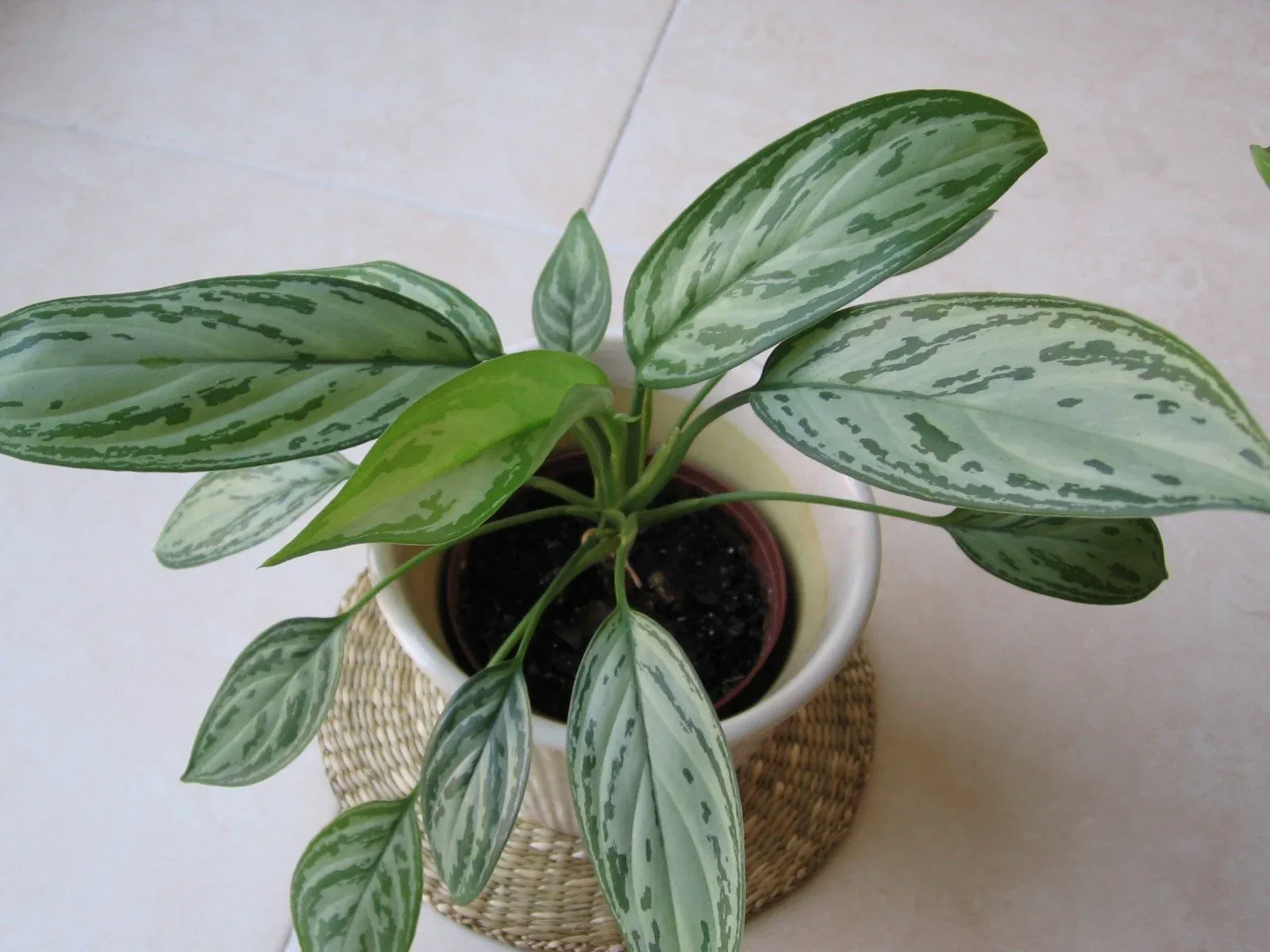
- Chinese evergreen (Aglaonema)
- Corn plant and other dracaenas
- Aloe (Aloe vera)
- Sago palm (Cycas revoluta), which the ASPCA lists among its most-searched toxic plants
- Lilies (Lilium) and daylilies (Hemerocallis), which are toxic to cats; keep cut lily bouquets out of homes with cats
What to do if your pet eats a plant
- Move your pet away from the plant. Check that it is breathing and acting normally.
- Identify the plant. Keep the pot tag or take a photo, and note how much was eaten.
- Call for advice. Call your veterinarian or an emergency veterinary clinic. You can also call Pet Poison Helpline at 1-855-764-7661, a 24-hour animal poison control service that serves Canada, or the ASPCA Animal Poison Control Center at 1-888-426-4435. Both may charge a consultation fee.
- Skip home remedies. Do not give home remedies or try to make your pet vomit unless a veterinarian tells you to.
Tips for keeping plants and pets together
- Use height. Hanging baskets, wall shelves and plant stands keep leaves out of reach.
- Give cats their own greens. Many cat owners grow a pot of cat grass so the cat has something it is allowed to chew.
- Cover the soil. A layer of large pebbles discourages digging and using the pot as a litter box.
- Check fertilizers and pest products. A pet-safe plant can still be treated with products that are harmful. Read labels, store products out of reach, and choose products registered for indoor use by Health Canada's Pest Management Regulatory Agency (PMRA).
- Check every new plant. Plant common names vary, so look up the scientific name on the ASPCA database before you buy.
Frequently asked questions
Which houseplants are safe for cats and dogs in Canada?
Spider plant, Boston fern, parlour palm, calathea, African violet, cast-iron plant, baby rubber plant (Peperomia obtusifolia), Christmas cactus, ponytail palm and Hoya carnosa are all listed as non-toxic to cats and dogs by the ASPCA. All are easy to find in Canadian garden centres.
Is "non-toxic" the same as safe to eat?
No. The ASPCA notes that eating any plant material can cause vomiting and stomach upset in dogs and cats. Non-toxic plants are not expected to cause poisoning, but you should still discourage chewing.
Are lilies dangerous to cats?
Yes. The ASPCA lists true lilies (Lilium) and daylilies (Hemerocallis) as toxic to cats, with kidney failure as a possible result. Keep lily plants and cut lily bouquets out of homes with cats, and call a veterinarian immediately if a cat chews one.
Is snake plant safe for pets?
No. The ASPCA lists snake plant as toxic to cats and dogs, with nausea, vomiting and diarrhea as possible signs. Cast-iron plant is a good pet-safe alternative for low light.
Who do I call in Canada if my pet eats a toxic plant?
Call your veterinarian or a local emergency clinic first. Pet Poison Helpline (1-855-764-7661) is a 24-hour animal poison control service available in Canada, and the ASPCA Animal Poison Control Center is at 1-888-426-4435. Fees may apply.
Which pet-safe plants grow in low light?
Cast-iron plant and parlour palm handle the lowest light on this list. Spider plant and baby rubber plant also tolerate lower light, but grow more slowly. African violets and ponytail palms need bright light or a grow light in a Canadian winter.
Are succulents safe for cats?
Some are and some are not. Haworthia and hens and chickens (Echeveria elegans) are listed as non-toxic by the ASPCA, but aloe is listed as toxic. Always check the exact plant.
Sources
- ASPCA Animal Poison Control, Toxic and Non-Toxic Plants List (note on gastrointestinal upset; poison control number).
- ASPCA plant entries: spider plant, Boston fern, parlor palm, calathea, prayer plant, African violet, cast iron plant, baby rubber plant, blunt leaf peperomia, Christmas cactus, bottle palm, honey plant, wax plant, Phalaenopsis orchid, haworthia, hens and chickens, areca palm.
- ASPCA toxic entries: lily, day lilies, snake plant, devil's ivy, heartleaf philodendron, Chinese evergreen, dracaena, aloe, sago palm.
- Pet Poison Helpline, About us (24-hour service for the U.S., Canada and the Caribbean) and home page (what to do; fee).
- Health Canada, Mould (indoor relative humidity 30–50%).
- NC State Extension Plant Toolbox: Chlorophytum comosum, Nephrolepis exaltata, Chamaedorea elegans, Streptocarpus ionanthus, Aspidistra elatior, Peperomia obtusifolia, Schlumbergera truncata, Beaucarnea recurvata, Hoya carnosa.
- Health Canada, Pesticide Label Search (PMRA product registrations).
Image credits
- Featured image (Calathea): Krzysztof Ziarnek (Kenraiz) / Wikimedia Commons / CC BY-SA 4.0. Source.
- Spider plant: Dtarazona; derivative work by Peter coxhead / Wikimedia Commons / Public domain. Source.
- Boston fern: Krzysztof Ziarnek (Kenraiz) / Wikimedia Commons / CC BY-SA 4.0. Source.
- African violet: Bff / Wikimedia Commons / CC BY-SA 3.0. Source.
- Christmas cactus: Amanda Slater / Wikimedia Commons / CC BY-SA 2.0. Source.
- Hoya: The Cosmonaut / Wikimedia Commons / CC BY-SA 2.5 CA. Source.
- Moth orchid: Calyponte / Wikimedia Commons / CC BY 3.0. Source.
- Ponytail palm: Wcedmisten / Wikimedia Commons / CC BY-SA 4.0. Source.
Comments
No comments yet — share what worked in your climate.