
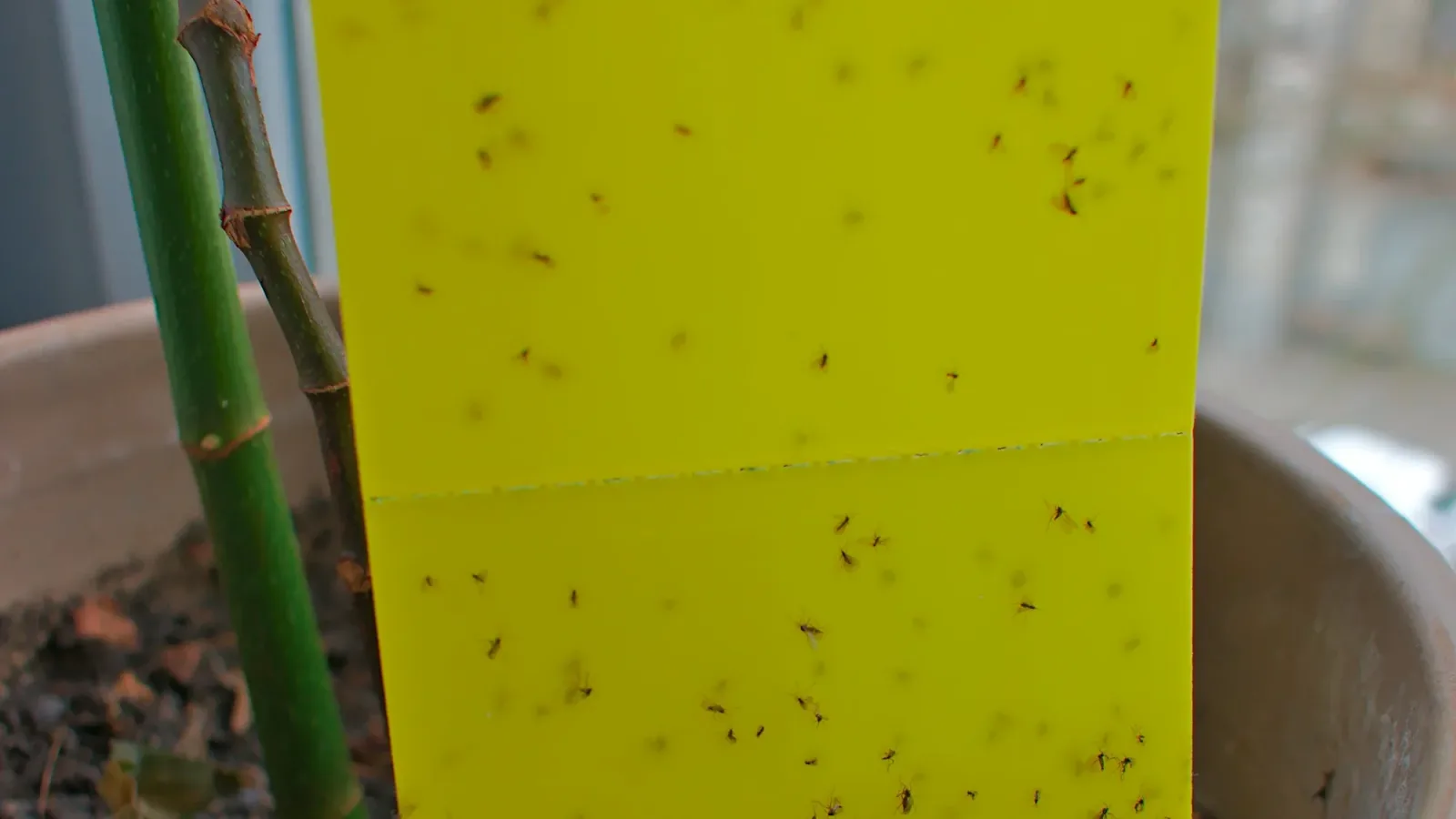
The eight pests you are most likely to find on Canadian houseplants are spider mites, mealybugs, scale, aphids, fungus gnats, thrips, whiteflies and springtails. That list matches the houseplant pests described by Colorado State University's Agricultural Biology program. This page is for identification only: how to confirm what you are looking at, and where to read the treatment guide. It is not a diagnosis from leaf symptoms alone, and it does not give pesticide doses.
In a Canadian winter, two problems show up more than the rest. Dry heat from a furnace favours spider mites. Wet potting mix in low light favours fungus gnats and springtails. New plants, and plants that spent the summer outdoors, are the usual way the others arrive.
Quick picks
- Tiny moving specks and fine webbing: check for spider mites
- White cottony clumps in leaf joints: check for mealybugs
- Hard or waxy bumps that stay put: check for scale
- Small flies rising from the soil when you water: check for fungus gnats, and compare with springtails
- A cloud of tiny white insects when you shake the plant: check for whiteflies
Comparison at a glance
| Pest | What it looks like | Where to look | How to confirm | Often found on | Treatment page | Canadian winter note |
|---|---|---|---|---|---|---|
| Spider mites | Tiny mites; fine silk; pale stippling on leaves | Leaf undersides first | 10× hand lens, or tap a leaf over white paper | Many houseplants in dry rooms | Spider mites in Canada | Worse beside heat vents, in apartments with dry winter air |
| Mealybugs | White, cottony insects, often in clusters | Leaf joints, stem bases, undersides | Look closely; they smear if crushed | Citrus relatives, succulents, many indoor plants | Mealybugs in Canada | Often comes in on a new plant or one that summered outside |
| Scale | Small bumps stuck to stems or leaves; may leave sticky honeydew | Stems, midribs, leaf undersides | A settled adult does not walk away if you nudge it | Ficus, citrus, palms, many woody houseplants | Scale insects in Canada | Easy to miss in short winter days until leaves look dull or sticky |
| Aphids | Soft, pear-shaped insects, often in groups on new growth | Shoot tips, buds, undersides of young leaves | Visible without a lens; look for two tail pipes (cornicles) | New growth, herbs, many soft-leaved plants | Aphids in Canada | Common on plants brought in from a balcony or a summer pot |
| Fungus gnats | Small dark flies on the soil; slender larvae in wet mix | Soil surface and around the pot | Yellow sticky card near the soil; adults run on the mix when you water | Any plant kept too wet | Fungus gnats in houseplant soil | Peak problem in low-light winter rooms where pots stay wet |
| Thrips | Slender insects; silvery scraped patches and tiny black dots | Flowers, new leaves, undersides | Tap over white paper; a lens helps. Do not rely on damage alone | Flowering plants, many foliage plants | Thrips in Canada | Can arrive on a bouquet or a greenhouse plant in winter |
| Whiteflies | Tiny white adults that fly up when the plant is moved | Leaf undersides; air around the plant | Shake the plant gently; yellow sticky cards catch adults | Hibiscus, tomatoes on a windowsill, many greenhouse plants | Whitefly in Canada | More often on plants that came from a greenhouse or a summer patio |
| Springtails | Tiny pale or dark insects in or on wet soil; they jump | Soil surface, saucer, around the pot rim | Touch the soil: they hop. They do not look like winged gnats | Wet potting mix | No dedicated GardenOrbit treatment page yet; see the notes below | Common in overwatered winter pots; usually a moisture sign, not a leaf eater |
Spider mites (Tetranychus urticae and related mites)
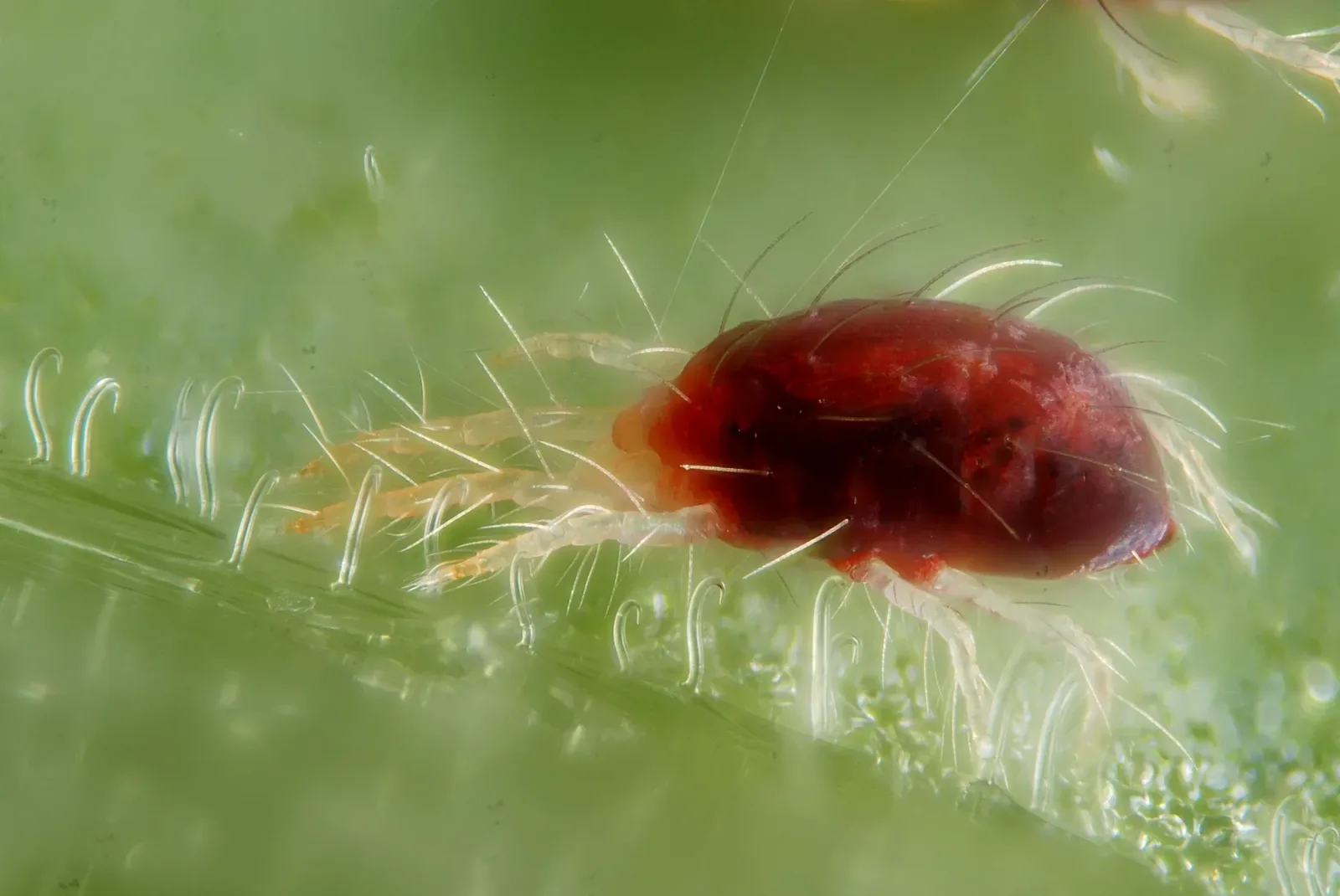
- Size: About 0.5 mm. Colorado State University notes they are easier to see with a 10× hand lens.
- Where to look: Undersides of leaves first, then the whole plant if numbers rise.
- How to confirm: Use a hand lens, or tap a leaf over a sheet of white paper and watch for tiny moving specks. Fine webbing is a later clue, not the first one.
- Lookalikes: Thrips also cause pale stippling. Confirm the pest before you treat.
- Winter note: Dry indoor air from a furnace, especially on the Prairies and in heated apartments in Ontario and Québec, suits them.
Spider mites are not insects. They are tiny relatives of spiders, and the two-spotted spider mite is the one CSU flags as a common household and greenhouse pest. In a dim January room you may notice faded or speckled leaves before you see the mites themselves. That stippling is only a clue. Heat and low humidity let populations build quickly, which is why a plant that looked fine in October can decline beside a living-room vent in December. The honest drawback is that by the time webbing is obvious, the infestation is already well along. Full treatment page →
Mealybugs (including Planococcus citri)
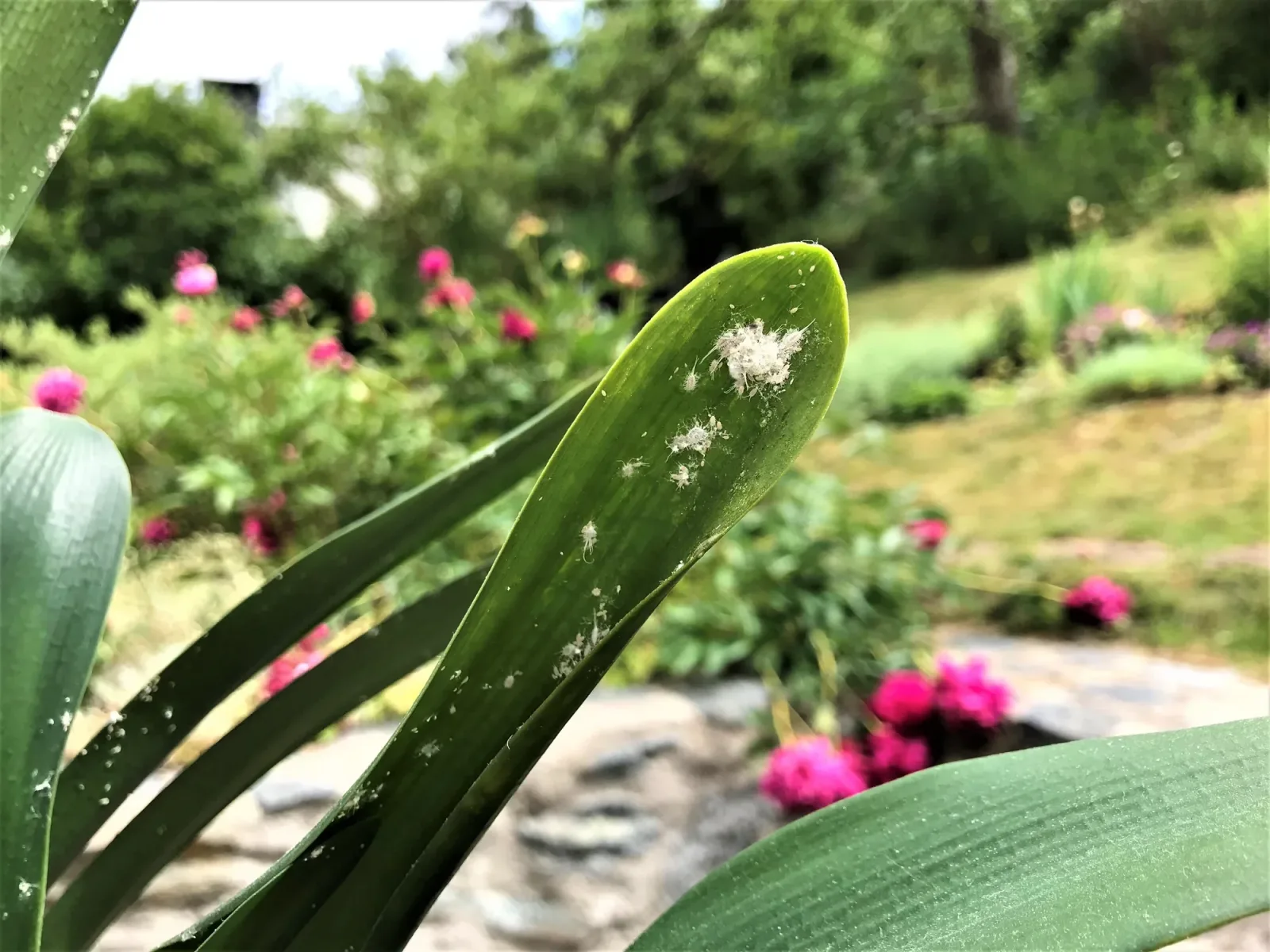
- Size: A few millimetres, often in obvious white clusters.
- Where to look: Leaf axils, where the leaf meets the stem, and hidden undersides.
- How to confirm: The white fluff is the insect, not a fungus. Look closely; a crushed insect smears.
- Lookalikes: Some scale crawlers are also pale. Root mealybugs live in the pot, not on the leaves.
- Winter note: Often arrives on a plant bought in November, or one brought in from the deck before frost.
Mealybugs look like a dusting of cotton in the wrong place. Citrus mealybug is a frequent species on indoor plants, and the white wax is what most people notice first. Check the joints carefully. A light infestation can sit in one axil for weeks before it spreads. Honeydew, a sticky film, and sooty mould can follow, but those are after-effects, not a confirmation on their own. The drawback is that a plant can look almost clean from the front and still be harbouring clusters at the base of the leaves. Full treatment page →
Scale insects (including brown soft scale, Coccus hesperidum)
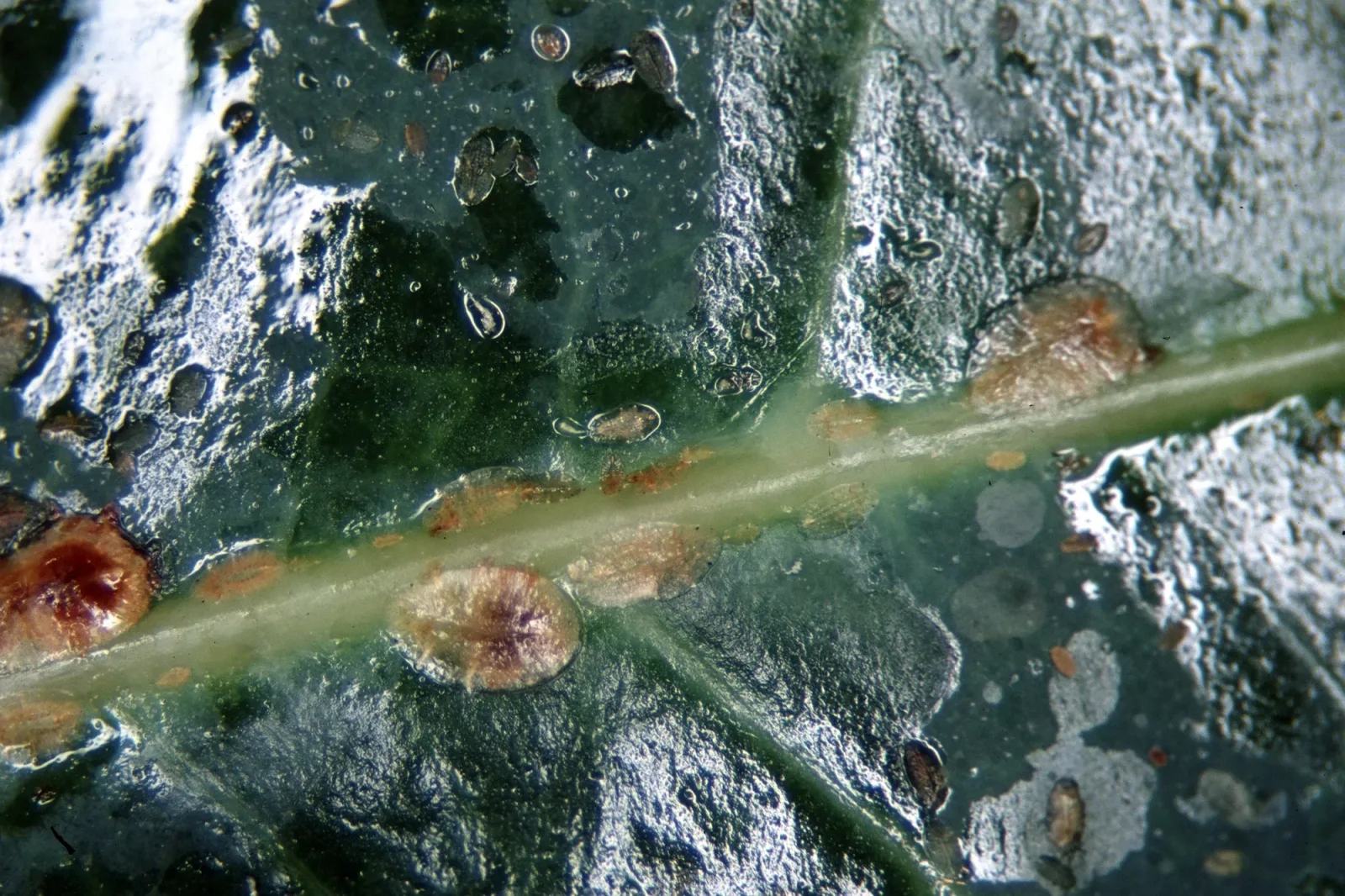
- Size: A few millimetres; they look more like bumps than like typical insects.
- Where to look: Stems, midribs and the underside of older leaves.
- How to confirm: Nudge a bump. A settled scale stays put. Crawlers, the young stage, can still move.
- Lookalikes: Raised corky spots or dried sap are not scale. Mealybugs are cottony, not smooth shields.
- Winter note: Easy to overlook in short days until leaves feel sticky or look dull.
Scale is the pest people walk past because it does not look alive. Brown soft scale is a common indoor species and can leave a sticky honeydew film on the leaf, the pot and the furniture below. That film is a hint, not proof: other honeydew-producing insects do the same. Confirm the bumps themselves. The drawback is patience. You can clean the adults you can see and still miss crawlers, so one check is not enough. Full treatment page →
Aphids (including green peach aphid, Myzus persicae)
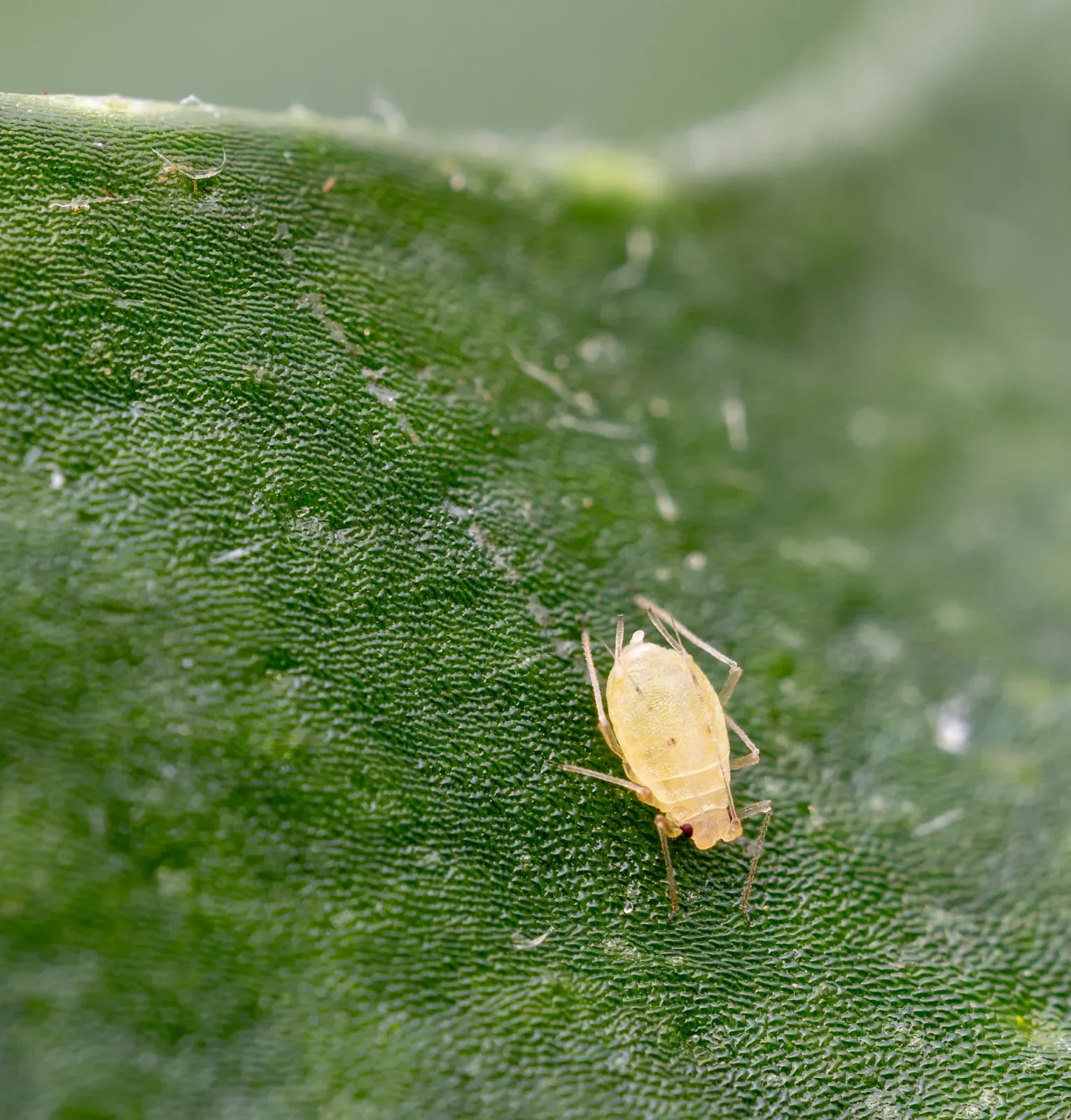
- Size: Usually 1–3 mm, often in groups.
- Where to look: Soft new growth, buds and the undersides of young leaves.
- How to confirm: You can usually see them without a lens. They are pear-shaped, with two small tail pipes (cornicles) at the rear.
- Lookalikes: Young scale crawlers and some psyllids. Aphids on indoor plants are usually on the newest growth.
- Winter note: Common on herbs and balcony plants brought indoors before frost.
Aphids are the most straightforward of this list to confirm, because they cluster in plain sight on tender tips. Colours range from green to yellow, brown or almost black, so colour alone is not a name. The green peach aphid is one frequent species. Sticky honeydew and curled new leaves can appear, but curled leaves have many causes, including cold window drafts in a Canadian winter, so do not treat from the leaf shape alone. The drawback is how fast a small group can grow on a plant that just came in from a warm September balcony. Full treatment page →
Fungus gnats (dark-winged fungus gnats, Sciaridae, including Bradysia)
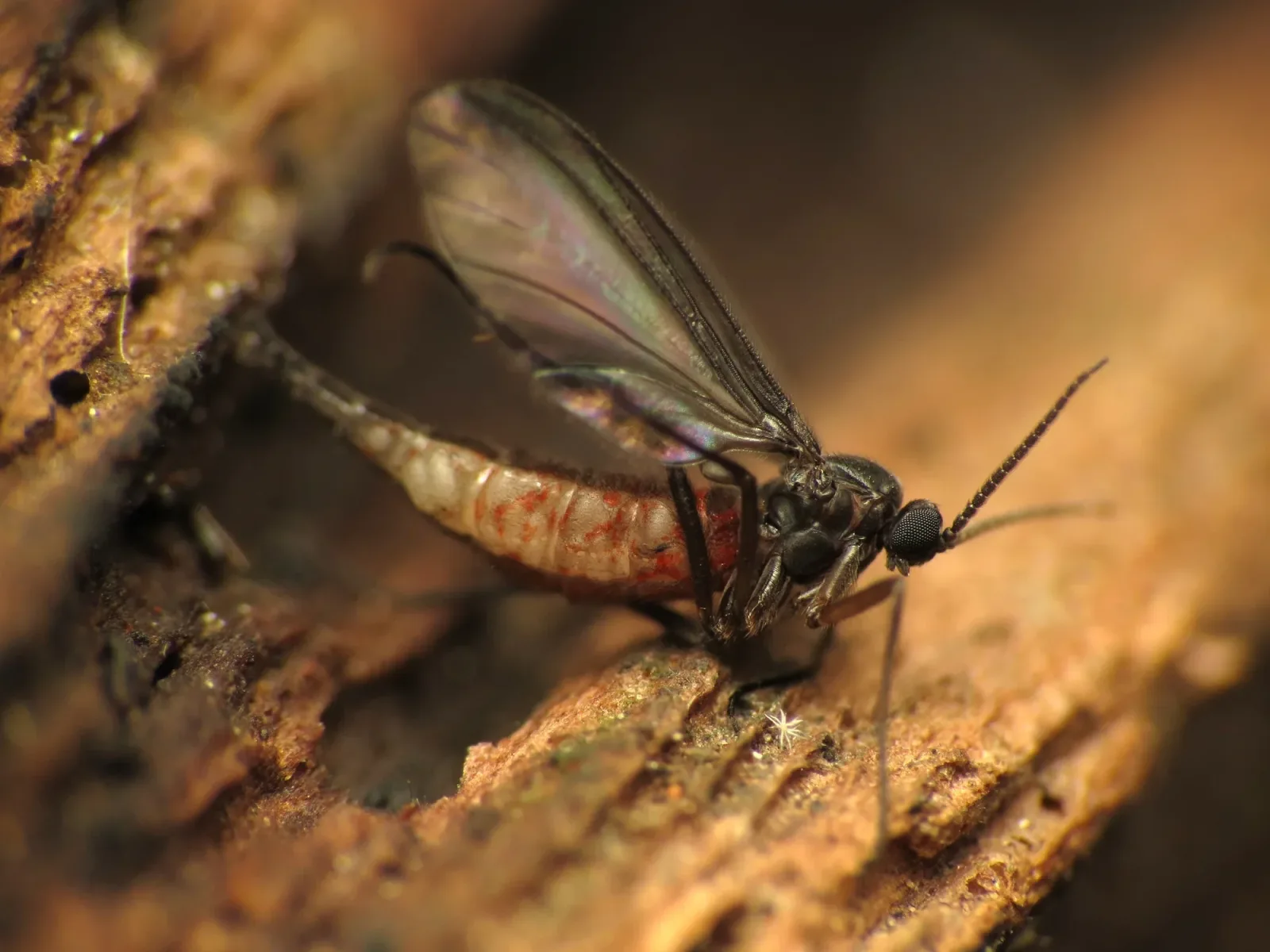
- Size: Adults are small, slender, dark flies, usually only a few millimetres long.
- Where to look: The soil surface, the pot rim, and the air just above the pot after watering.
- How to confirm: Watch the soil when you water. A yellow sticky card placed near the mix will catch flying adults. CSU notes that sticky cards help you monitor, but they will not remove immatures still in the pot.
- Lookalikes: Springtails jump and usually do not fly. Shore flies are stouter and less common in a typical living-room pot.
- Winter note: A classic problem in low-light rooms from November to March, when pots dry slowly.
Fungus gnats are the small dark flies that lift off the soil when you pick up a pot. The adults are a nuisance. The larvae live in moist mix and feed mainly on fungi and decaying matter; in high numbers they can also damage fine roots, which is why a chronically wet winter pot is a poor combination. A north-facing apartment in Toronto or a tightly sealed prairie house in January can keep mix wet for many days. Confirm the flies, then read the treatment guide rather than guessing from soggy soil alone, because overwatering has other effects too. Full treatment guide → There is also a shorter problem page.
Thrips (including greenhouse thrips, Heliothrips haemorrhoidalis)
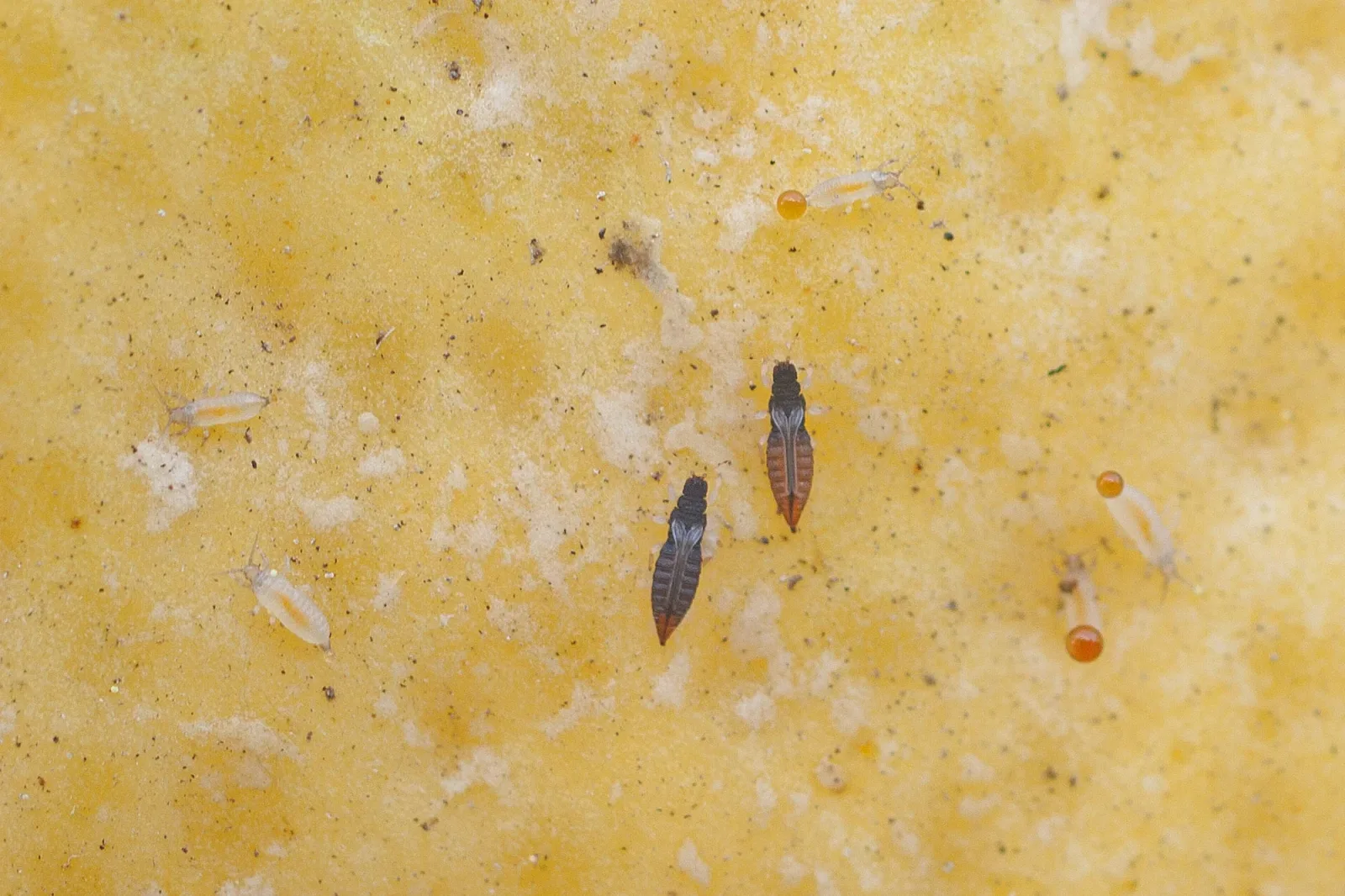
- Size: Very small and slender; CSU notes they are often noticed first by the feeding marks, not the insect.
- Where to look: Flowers, new leaves and undersides.
- How to confirm: Tap a flower or leaf over white paper. Use a hand lens if you can. Silvery scraped patches and tiny black fecal dots are clues, not a complete identification.
- Lookalikes: Spider-mite stippling can look similar. Confirm which animal is present.
- Winter note: Greenhouse plants and cut flowers are a common winter source.
Thrips are easy to miss and easy to misname. The insects are narrow and often hide in buds. The damage, a silvery or bronze scraping, can be mistaken for mite injury or even for dry air. That is why this page will not tell you that silvery leaves mean thrips. Tap the plant, look at what falls on the paper, and then use the treatment page. Greenhouse thrips is one species you may meet on indoor plants; others occur too. The drawback is that a light infestation is hard to see, and a heavy one is hard to unravel from other winter leaf problems. Full treatment page →
Whiteflies (including greenhouse whitefly, Trialeurodes vaporariorum)
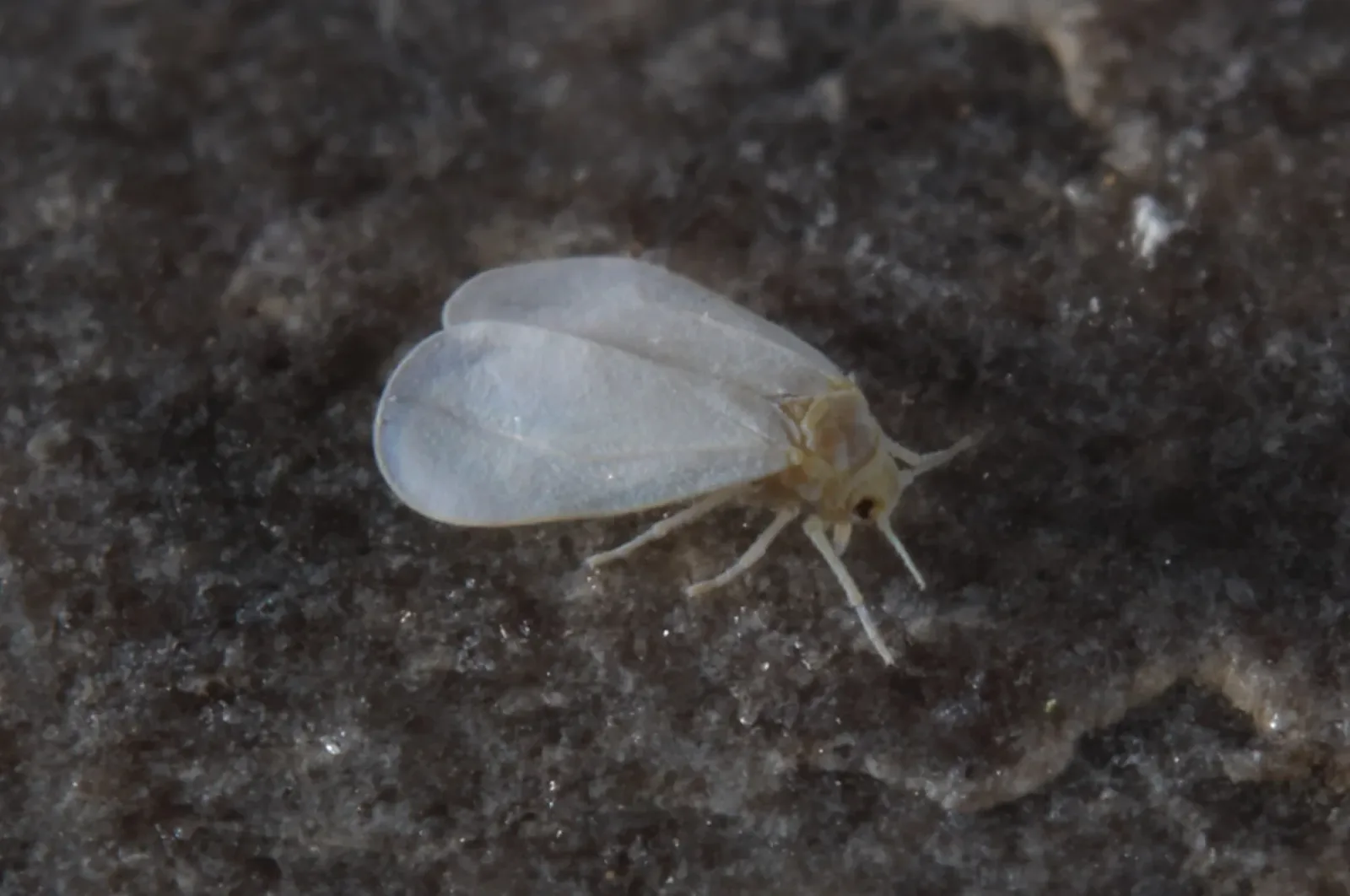
- Size: Adults are tiny, moth-like, and white or pale.
- Where to look: The air around the plant when you move it, and the undersides of leaves for the scale-like nymphs.
- How to confirm: Give the plant a gentle shake. A cloud of small white insects is the usual giveaway. Yellow sticky cards catch flying adults.
- Lookalikes: Fungus gnat adults are dark, not white. Mealybugs do not fly.
- Winter note: Often comes in with a greenhouse plant or a patio hibiscus that spent the summer outside.
Whiteflies announce themselves when you move the pot. Greenhouse whitefly is a frequent species in homes and conservatories. The adults are what you notice; the younger stages stay on the undersides of leaves and look more like pale scales than like flies. Sticky honeydew can appear here too. Confirm the insects, not just a sticky leaf. The drawback is that catching a few adults on a card does not tell you how many nymphs are still on the plant, which is why CSU treats sticky cards as a monitoring tool, not a complete control. Full treatment page →
Springtails (Collembola)
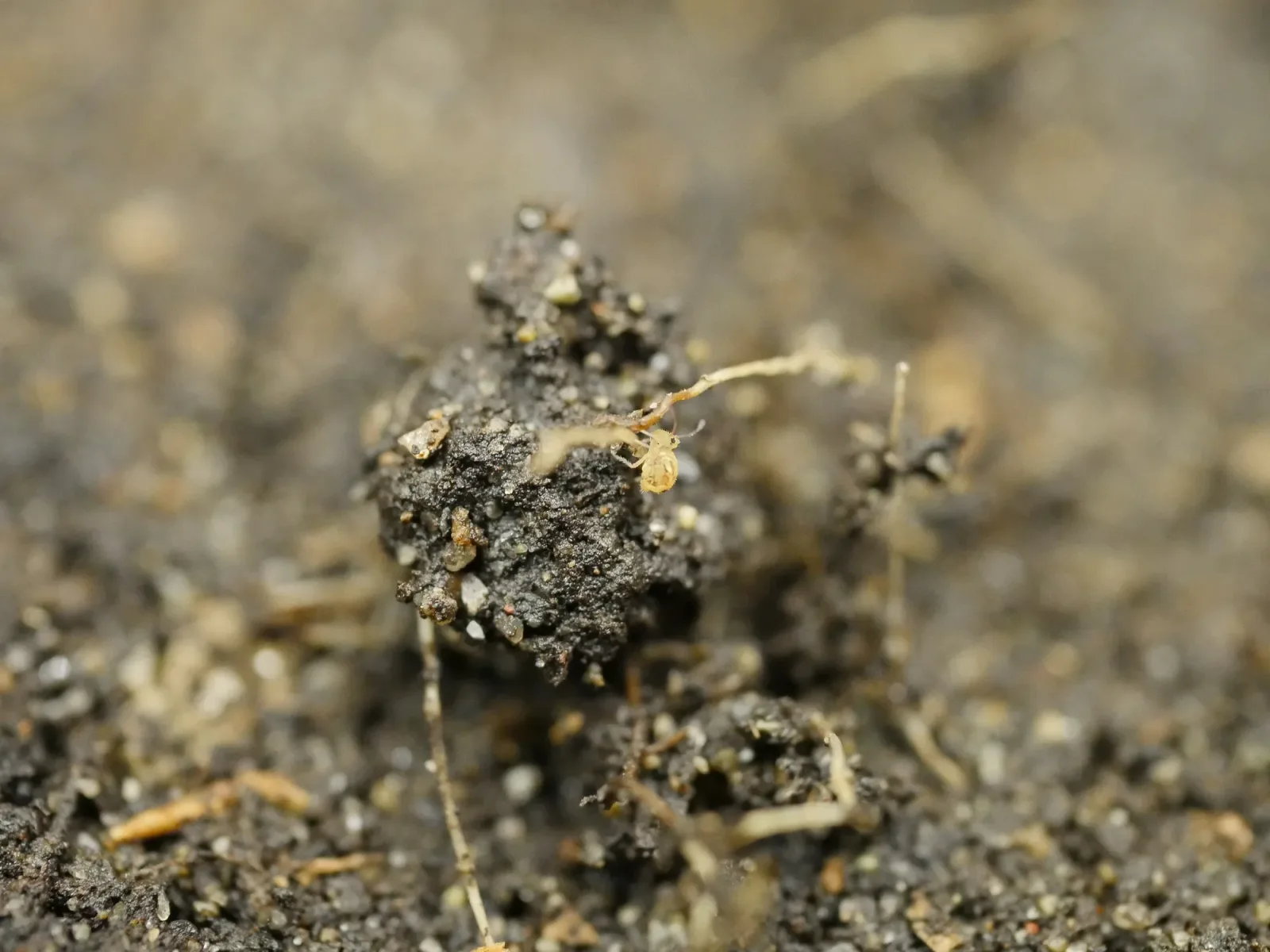
- Size: Usually 1–2 mm, sometimes smaller.
- Where to look: The soil surface, the saucer, and around the pot rim, especially after watering.
- How to confirm: Touch or water the soil. Springtails hop. They do not fly the way fungus gnats do.
- Lookalikes: Fungus gnat adults are winged flies. Confirm before you follow a fungus-gnat treatment page.
- Winter note: Common in pots that stay wet in a cool room or a low-light corner.
Springtails are on CSU's list of common houseplant pests, but they are usually a sign of wet mix rather than a leaf-eating infestation. They live in moist soil and organic matter. When you water, they may scatter across the surface or into the saucer. That can look alarming, and it is easy to lump them in with fungus gnats. The jumping habit is the confirmation. GardenOrbit does not yet have a dedicated springtail treatment page. Do not invent a spray program from this article. If numbers are high, let the surface of the mix dry more between waterings, which is also the main winter advice in our winter watering guide, and ask a local extension office if you need help beyond identification. The drawback is cosmetic: they are harmless to most people, but they are unpleasant to see in a saucer on a kitchen counter.
How to check a plant, without jumping to treatment
CSU's houseplant pest page and Clemson's HGIC fact sheet on common houseplant insects both start with prevention and inspection, not with a product list. Before you bring a new plant into the rest of the house, look at the leaves, the joints, the stem and the soil surface. A cheap 10× lens and a pad of white paper will do more for identification than a guess from a photograph of a yellow leaf.
Yellow sticky cards help you see flying adults of fungus gnats, whiteflies and some thrips. They do not remove the stages that stay on the plant or in the mix, and they are not a treatment plan on their own. If you are unsure, or if a valued plant is declining quickly, contact a provincial or university extension office, or a veterinarian if a pet has chewed a treated plant. This article does not recommend pesticide or fertilizer doses.
For general winter watering and cold-window placement, use our Canada guides on watering houseplants in winter and cold windows. Those pages are about the room, not about killing pests.
How this changes across Canada
On the Prairies, indoor winter air is often very dry. Spider mites are the pest to watch from November through March, especially near heat vents in Winnipeg, Regina, Saskatoon and Calgary. Overwatering in that dry air still happens, because a pot in a dim room can stay wet even when the air feels dry, and that is when fungus gnats and springtails appear.
In Ontario and Québec, the same winter pattern holds in apartments and tightly heated houses. In older homes with cooler rooms, pots dry more slowly, so gnats can persist even when mites are less of a problem. A plant that summered on a Toronto or Montréal balcony should be inspected before it comes back inside.
On the south coast of British Columbia, outdoor winter temperatures are milder, and some plants spend more weeks on a covered patio. That makes scale, mealybugs and whiteflies a little easier to bring in, along with the usual indoor mite and gnat issues once the heat is on. Use the Atlas of Canada plant hardiness map for outdoor zone questions; all of the pests above are indoor problems in every province and territory.
Pests we left out and why
- Shore flies. Sometimes confused with fungus gnats. They are stouter, and they are less often the main issue in a typical living-room pot, so they did not make this set of eight.
- Root mealybugs. They live in the root ball, not on the leaves. They deserve their own notes, not a second mention under foliar mealybugs.
- Cyclamen mites and broad mites. Real pests, but they are harder to confirm without a microscope, and we will not name them from distorted leaves alone.
- Diseases such as powdery mildew or grey mould. These are not insects or mites. They belong on disease pages, not this list.
Sources
- Colorado State University, Agricultural Biology: Houseplant pests
- Clemson Home & Garden Information Center: Common Houseplant Insects & Related Pests (HGIC 2252)
- GardenOrbit Canada treatment and problem pages linked above, including the fungus gnats soil guide
- Natural Resources Canada, Atlas of Canada: Plant hardiness zones of Canada
Updated 15 November 2026 (IST): new guide. No named reviewer is listed, pending confirmation of real reviewers.


Comments
No comments yet — share what worked in your climate.