
In India, the "Christmas tree plant" in a nursery is almost always an Araucaria. It is the easiest living Christmas tree to keep for years in a pot. If you want red colour for the season, poinsettia is the classic choice. For gifting, lucky bamboo, jade plant and peace lily are safer bets because they are not tied to one month.
This list covers eight plants you will see in Indian nurseries and online shops from late November. For each one you get light, water, pet safety and how it does in the North, South, coastal belt and the hills. We also say which ones are worth keeping after the decorations come down, and which ones are really a short-term buy.
Quick picks
- Best living Christmas tree: Araucaria (Christmas tree plant)
- Best for red colour: poinsettia
- Safest with cats and dogs (ASPCA non-toxic): Araucaria (Norfolk Island pine) and Christmas cactus
- Best gift for a small flat: lucky bamboo or jade plant
- Best for a hot, sunny terrace: morpankhi (Thuja)
- Best for the hills or a cool room: English ivy
Comparison at a glance
| Plant | Light | Water | Size in a pot | Pet safety | Keep after Christmas? | India region note |
|---|---|---|---|---|---|---|
| Araucaria (Christmas tree plant) | Bright; some morning sun | When the top 2–3 cm is dry | 60 cm–2 m over the years | Non-toxic (Norfolk Island pine) | Yes, for years | All regions. Shelter from frost in the northern plains and the hills. |
| Morpankhi (Thuja) | Full sun to part sun | When the top few cm are dry | 60 cm–1.5 m in a large pot | Not listed by the ASPCA | Yes | Best in the North and on dry terraces. Sulks in very humid coastal air. |
| Poinsettia (lal patta) | Bright; morning sun | When the top 2–3 cm is dry | 30–60 cm in a pot; a big shrub in the ground | Toxic (mild, irritant sap) | Yes in the South and hills; harder in the North | Colours best where winter nights are cool. |
| Christmas cactus | Bright, filtered | When the mix is nearly dry | 20–40 cm, arching | Non-toxic | Yes | Flowers most easily in the hills and the cooler South. |
| Peace lily | Medium to bright indirect | Keep lightly moist | 40–70 cm | Toxic | Yes | All regions indoors. Slows down in a cold North Indian winter. |
| Lucky bamboo | Medium indirect | Water in the vase; change it weekly | 20–60 cm | Toxic (ASPCA: Dracaena) | Yes | All regions indoors. Keep off cold window glass in the North. |
| Jade plant | Bright; some direct sun | When the mix is dry | 20 cm–1 m, slowly | Toxic | Yes, for decades | All regions. Keep drier in coastal humidity and in winter. |
| English ivy | Bright indirect; no harsh sun | Evenly moist, not soggy | Trails or climbs 1 m+ | Toxic | In the hills, yes; in the plains, often not | Happy in the hills. Struggles in hot plains summers. |
1. Christmas tree plant (Araucaria)
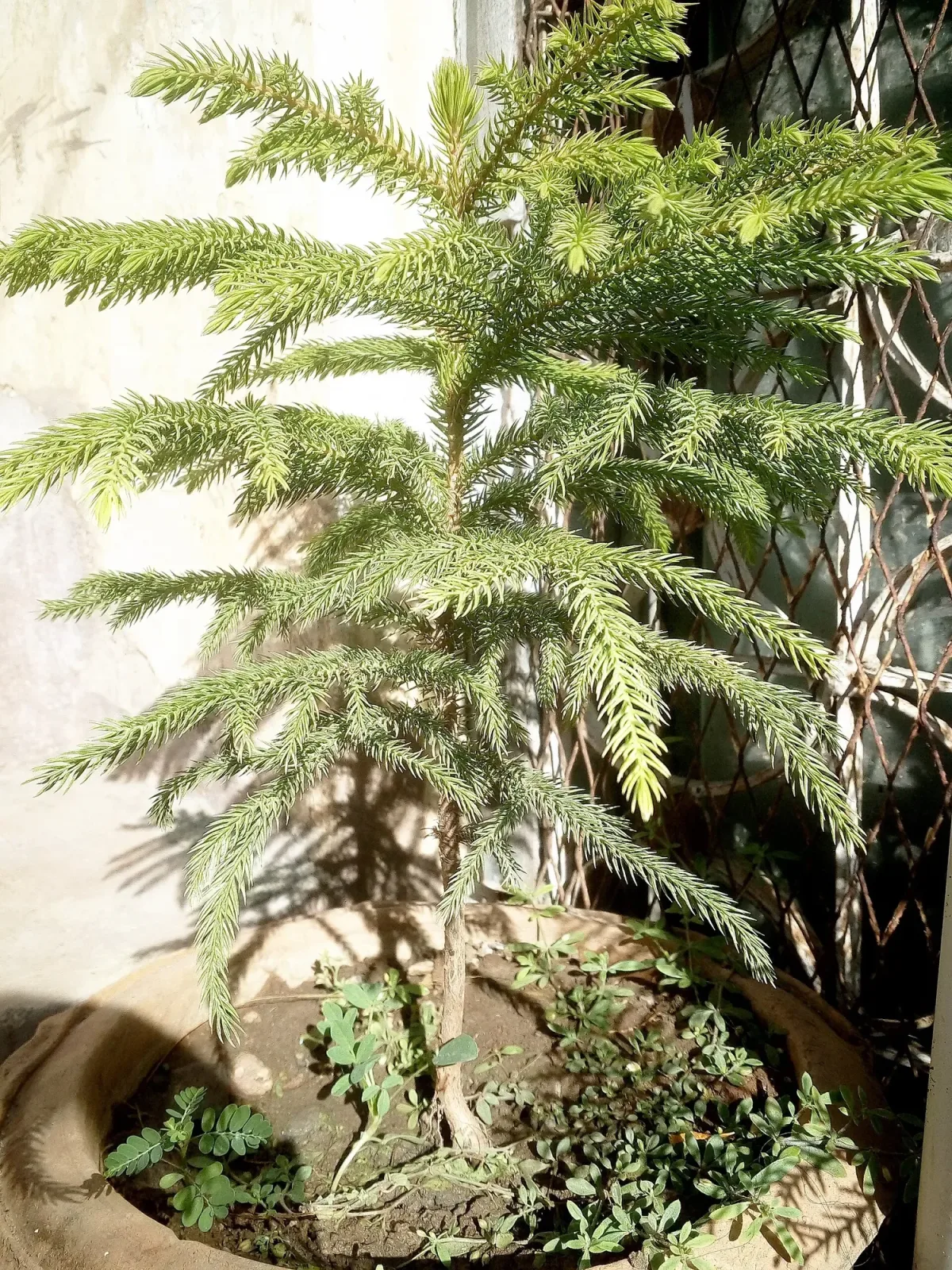
- Other names: Christmas tree plant, Norfolk Island pine (Araucaria heterophylla), Cook pine (Araucaria columnaris)
- Light: Bright light with some gentle morning sun. Turn the pot every week or it leans to the window.
- Water: When the top 2–3 cm of soil is dry. Never leave it standing in a saucer of water.
- Pet safety: The ASPCA lists the Norfolk Island pine as non-toxic to cats and dogs.
- Keep after Christmas: Yes. This is the one plant on the list that can be your tree year after year.
Most "Christmas tree plants" sold in India are one of two close cousins: the Norfolk Island pine or the Cook pine. Both make neat layers of branches that look like a small fir. You will see them everywhere from roadside nurseries to the Tamil Nadu Agricultural University's own floriculture nursery, which lists Araucaria plants in its sale list.
Indoors, it does best in a bright room near a window, not in a dark corner. It can sit inside for the Christmas week with lights and light ornaments, then go back to a bright balcony or verandah. Keep heavy decorations off the young top shoot, because that shoot is how the plant keeps its shape. If the lower branches go brown and drop, the usual reasons are too little light, very dry air near a heater, or soil that stays wet. Our Norfolk Island pine care page covers potting and repotting.
Winter is the risky time in the North. In Punjab, Haryana and parts of Uttar Pradesh, winter nights can bring frost. Keep a young Araucaria close to a wall or under a roof edge on those nights. In the hills it often grows into a tall tree outdoors at lower altitudes, but young potted plants still need shelter from frost.
2. Morpankhi (Thuja)
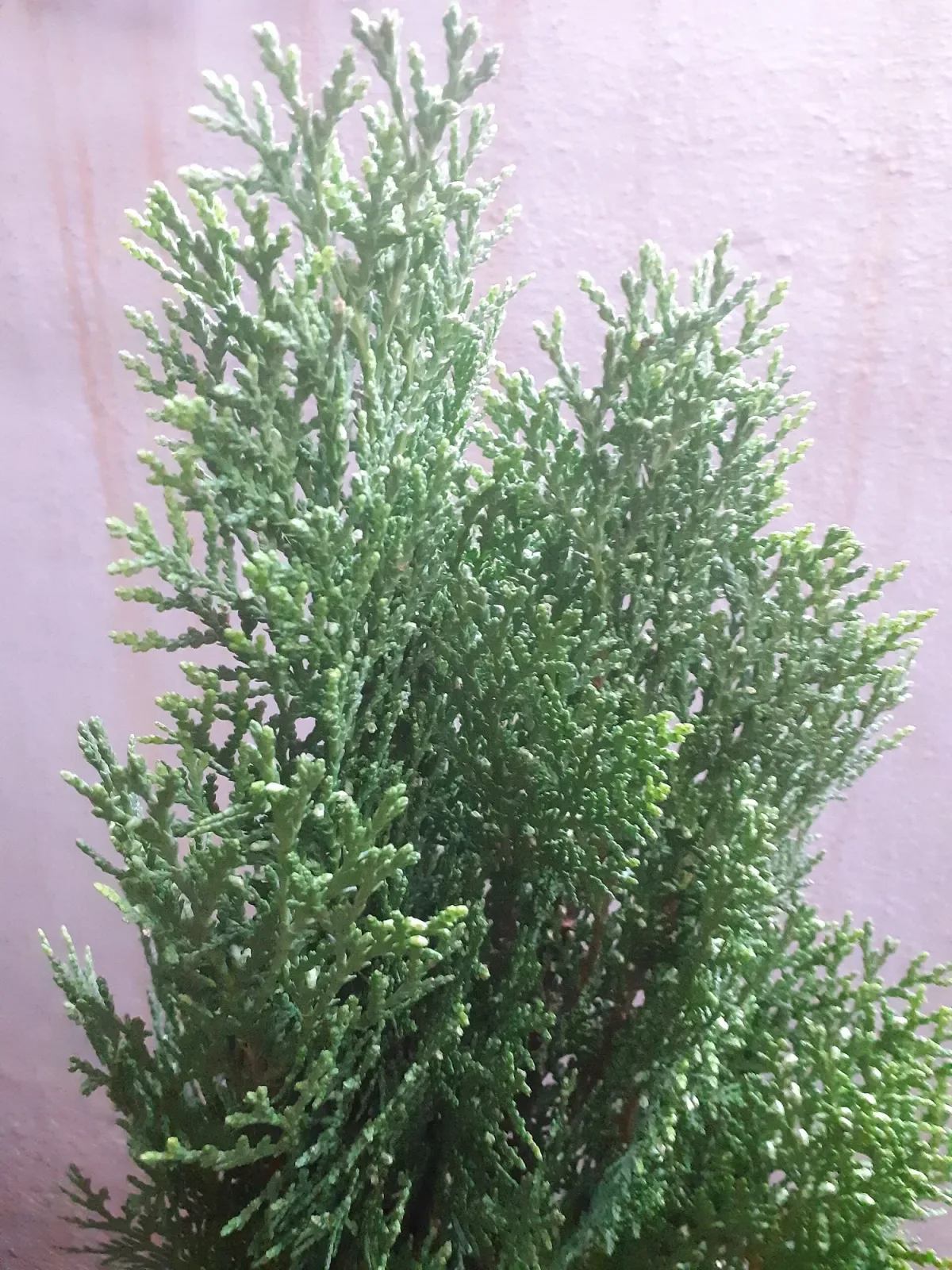
- Other names: morpankhi, Thuja, oriental arborvitae (Platycladus orientalis, often still labelled Thuja orientalis)
- Light: Full sun to part sun. It does not like being kept indoors for long.
- Water: When the top few centimetres of soil are dry. Water deeply, then let it drain.
- Pet safety: Not on the ASPCA list. We do not call it safe or toxic.
- Keep after Christmas: Yes, as an outdoor pot plant.
Morpankhi gets its name from its flat, fan-like sprays that remind people of a peacock's tail feathers. Many Indian families decorate a potted morpankhi as their Christmas tree, and nurseries sell it alongside Araucaria in December. It grows as a neat cone, and can be trimmed to keep that shape.
Think of it as an outdoor plant you bring in only for a few days. It is happiest on a sunny terrace in the North or in the dry Deccan. In very humid coastal cities, inner growth can go brown if the plant is crowded and air does not move, so give it space. There is no GardenOrbit profile for morpankhi yet, so there is no plant link here.
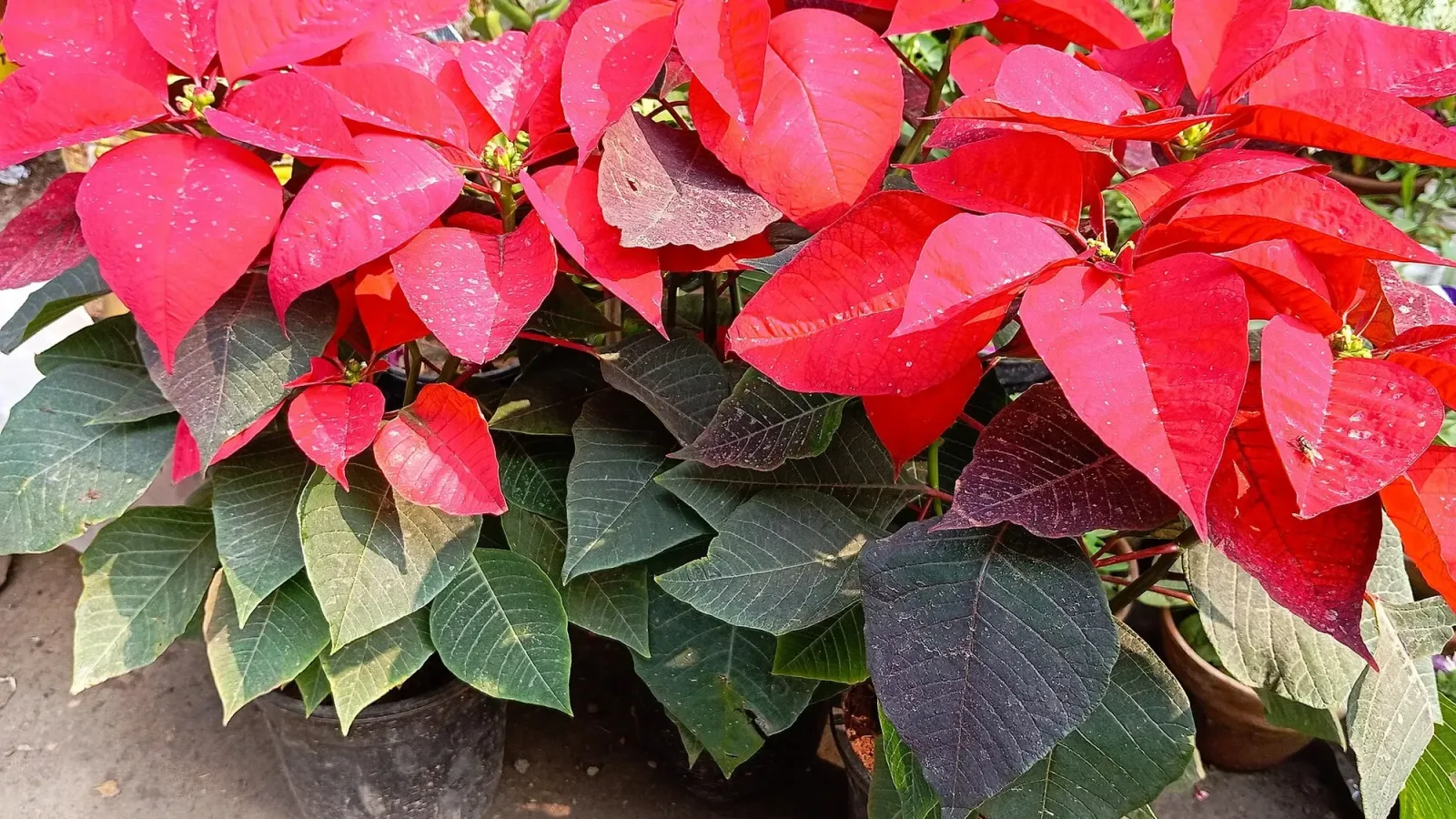
3. Poinsettia (lal patta)
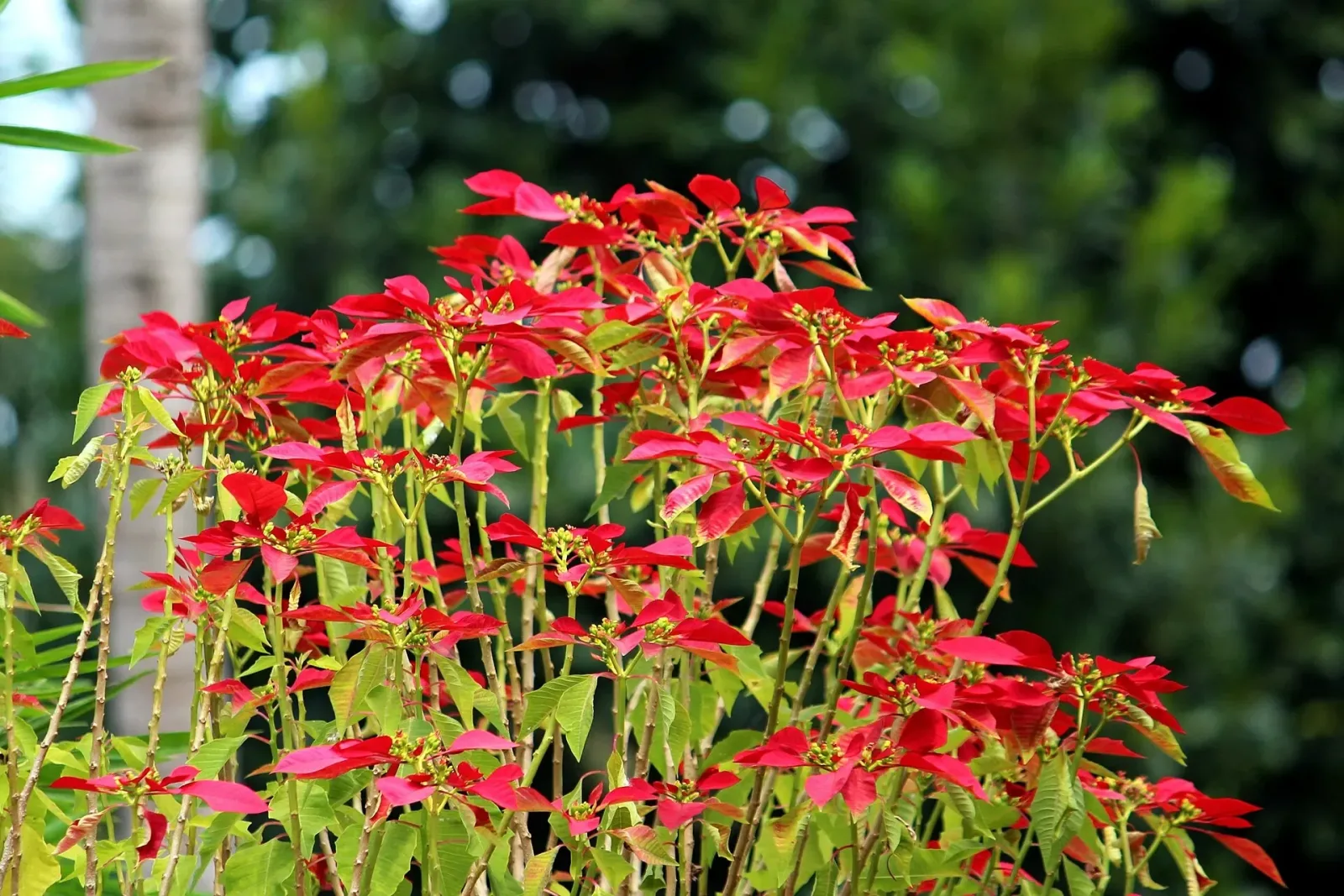
- Other names: lal patta or lalpatti, Christmas flower, Christmas star (Euphorbia pulcherrima)
- Light: Bright light with morning sun. Shade from harsh afternoon sun.
- Water: When the top 2–3 cm is dry. Do not let the pot sit in water.
- Pet safety: The ASPCA lists it as toxic. The milky sap irritates the mouth and skin. Effects are usually mild, but keep it out of reach.
- Keep after Christmas: Yes in many parts of India, as a shrub. In the North it often looks tired by February.
The red "petals" are not petals at all. They are coloured leaves called bracts. The plant makes them as nights get longer in autumn and winter. That is why poinsettia colours up in India around November and December without any special treatment.
How well it does depends on where you live. In Bengaluru, Pune, Kerala and hill towns such as Yercaud, it often grows into a large shrub in the ground. In the northern plains it is happy in a pot until cold nights arrive; frost and cold wind will drop its leaves. In warm coastal cities where nights stay warm, the bracts can be smaller and less bright.
When you buy one, look for a plant with green leaves right down the stem and small, fresh yellow buds in the centre of the bracts. Take off any plastic sleeve when you get home. Indoors it can stay in a bright room for the Christmas week, then go back outside to a spot with morning sun. GardenOrbit does not have an India poinsettia profile yet, so this item links out only to sources.
4. Christmas cactus
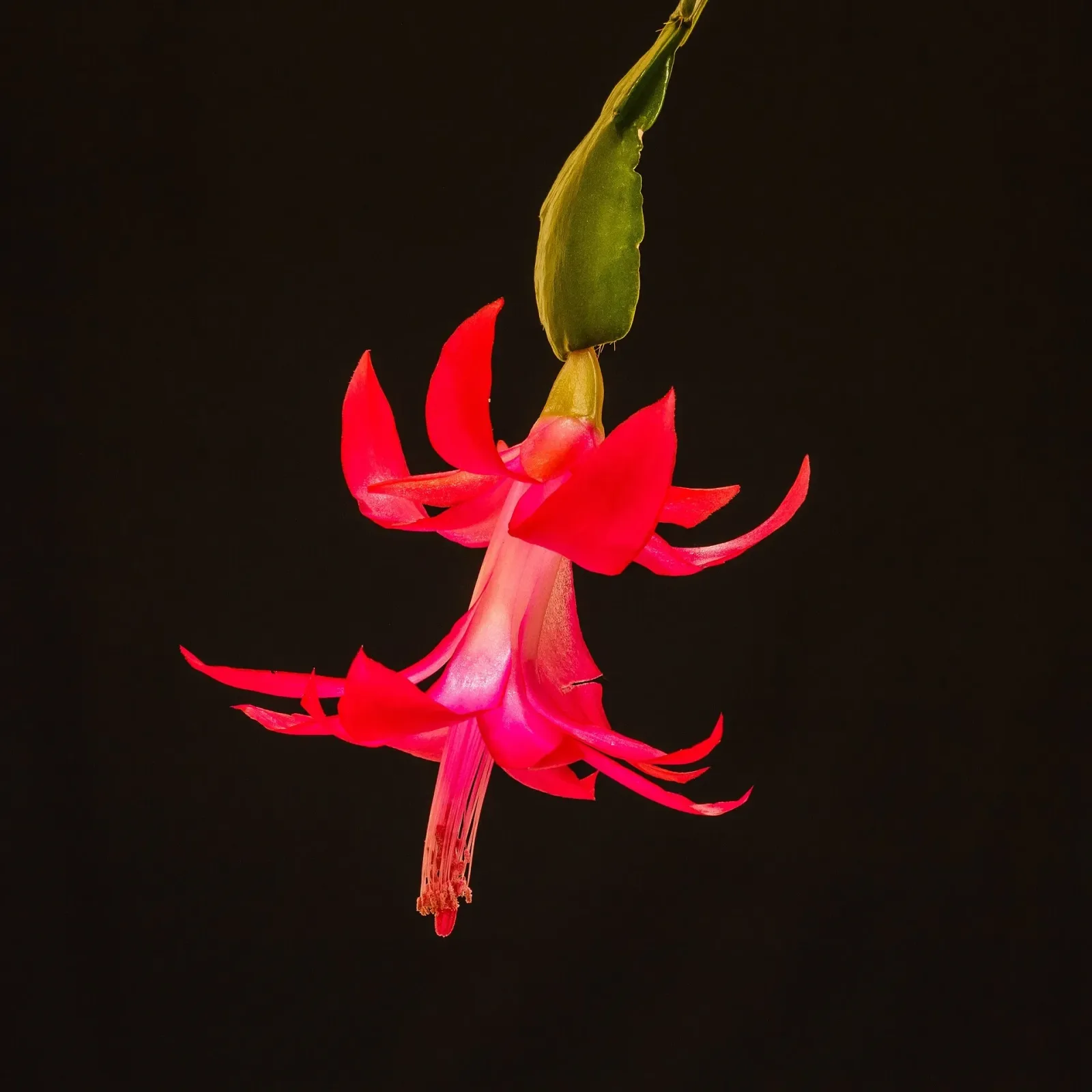
- Other names: Schlumbergera; the Thanksgiving cactus (Schlumbergera truncata) is a close look-alike
- Light: Bright, filtered light. Not harsh afternoon sun.
- Water: When the mix is nearly dry. It is a forest cactus, so it likes a little more water than desert cacti, but not soggy soil.
- Pet safety: The ASPCA lists it as non-toxic to cats and dogs.
- Keep after Christmas: Yes. It can live for decades.
This is not a desert cactus. In the wild it grows on trees in Brazilian forests, which is why it likes shade, an airy mix and regular but light watering. Shops in India often sell the Thanksgiving cactus under the Christmas cactus name. The two are cared for the same way. The Thanksgiving type has pointed "claws" on the stem edges. Our Thanksgiving cactus page covers both.
Buds form when nights are long and cool. That makes the hills and the cooler parts of the South the easiest places to get flowers. In hot plains cities it may flower less or later. Once buds appear, do not keep moving the pot around. Sudden changes in light or a cold draught can make the buds drop.
5. Peace lily
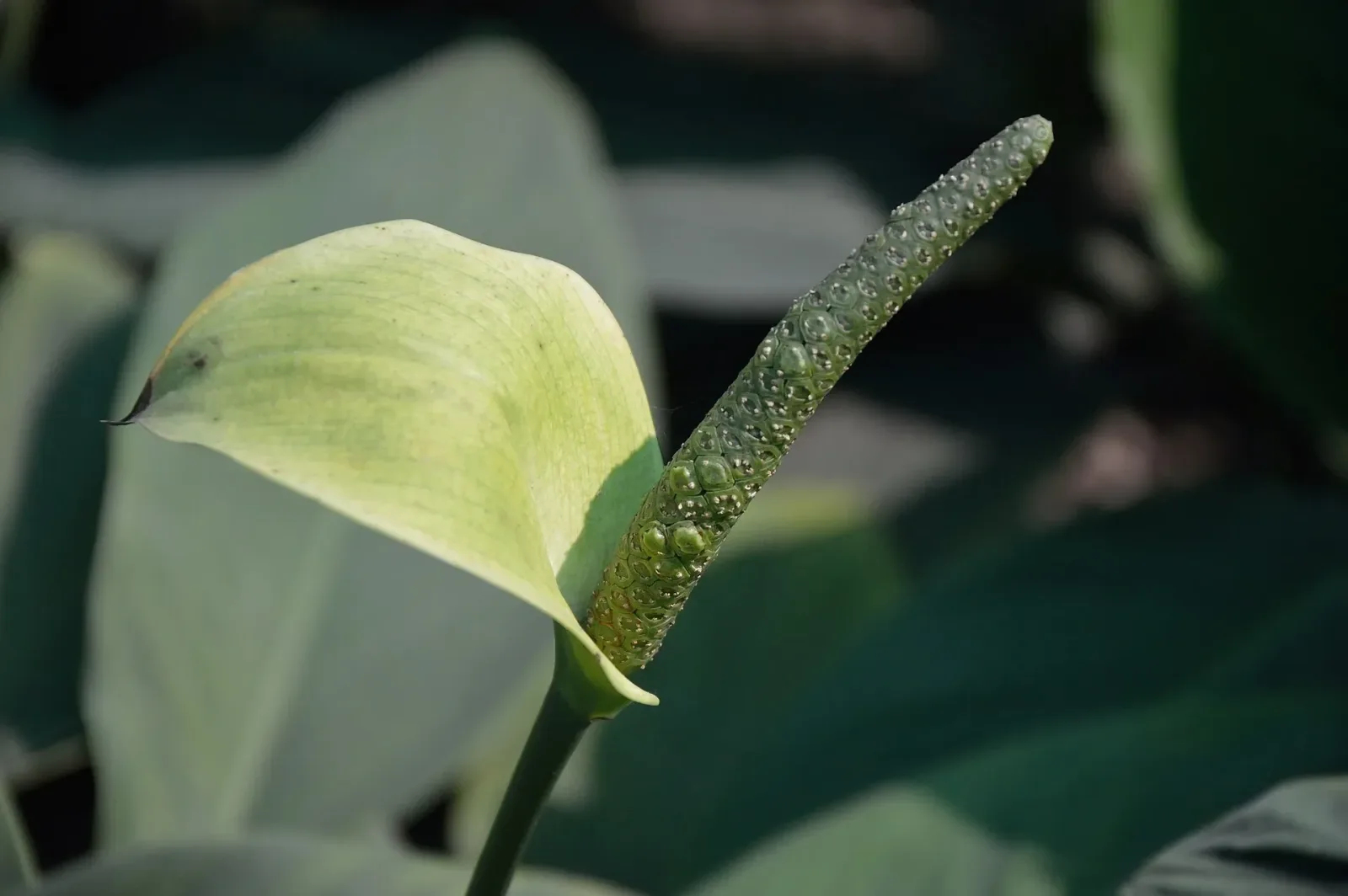
- Light: Medium to bright indirect light. It tolerates a dim room but flowers less.
- Water: Keep the soil lightly moist. It droops when thirsty and lifts again after a drink.
- Pet safety: The ASPCA lists it as toxic to cats and dogs.
- Keep after Christmas: Yes. It is a long-lived indoor plant.
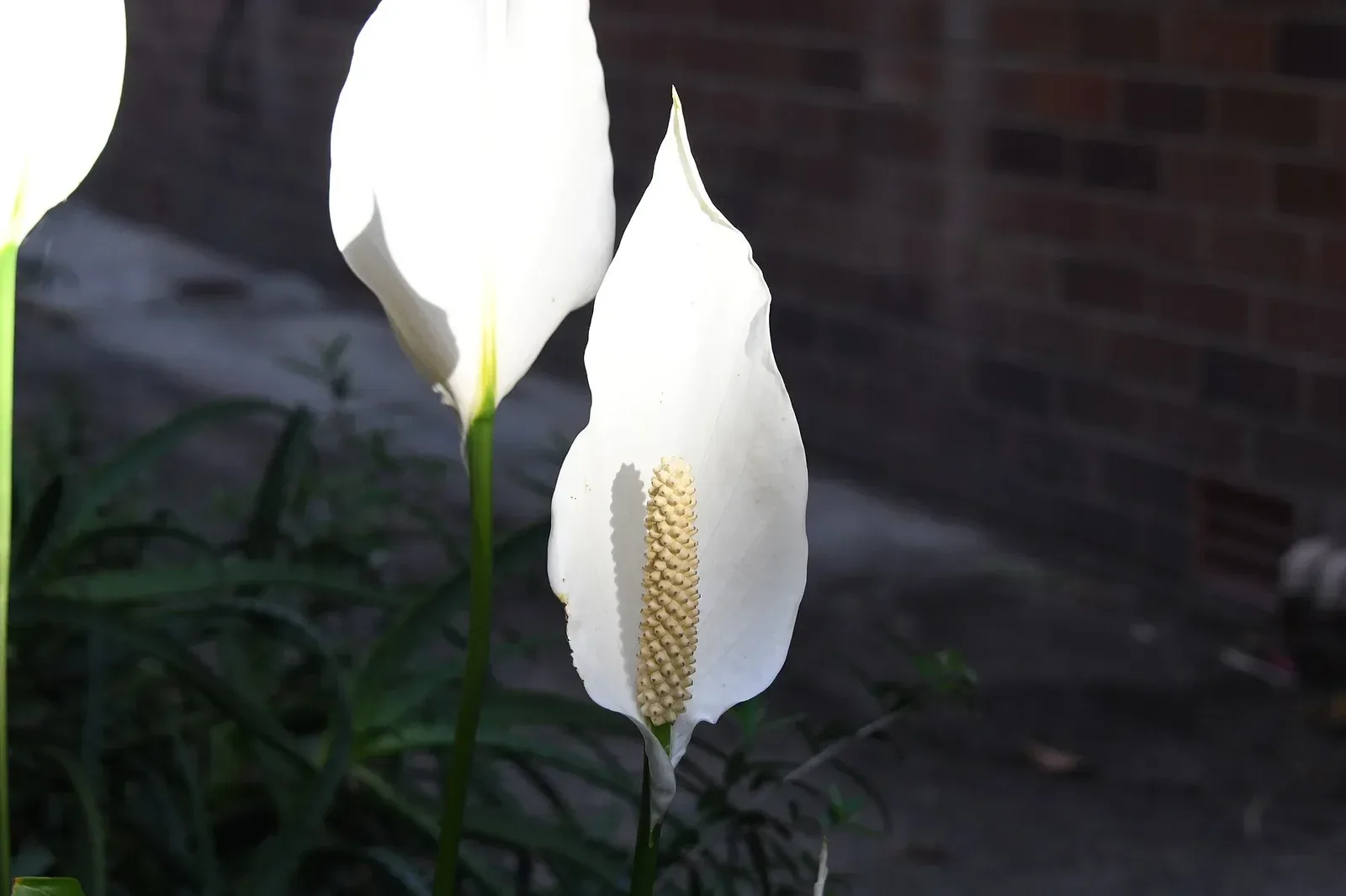
Peace lily is not a traditional Christmas plant, but its white flowers make it one of the most common plant gifts in Indian cities in December. It is also one of the few flowering plants that copes with indoor light.
In a North Indian winter, growth slows and it may stop flowering for a while. That is normal. Water less often in December and January, and keep it away from cold window glass and room heaters. In the South and on the coast it grows through the year. See peace lily care and our guide to getting peace lily to flower.
6. Lucky bamboo
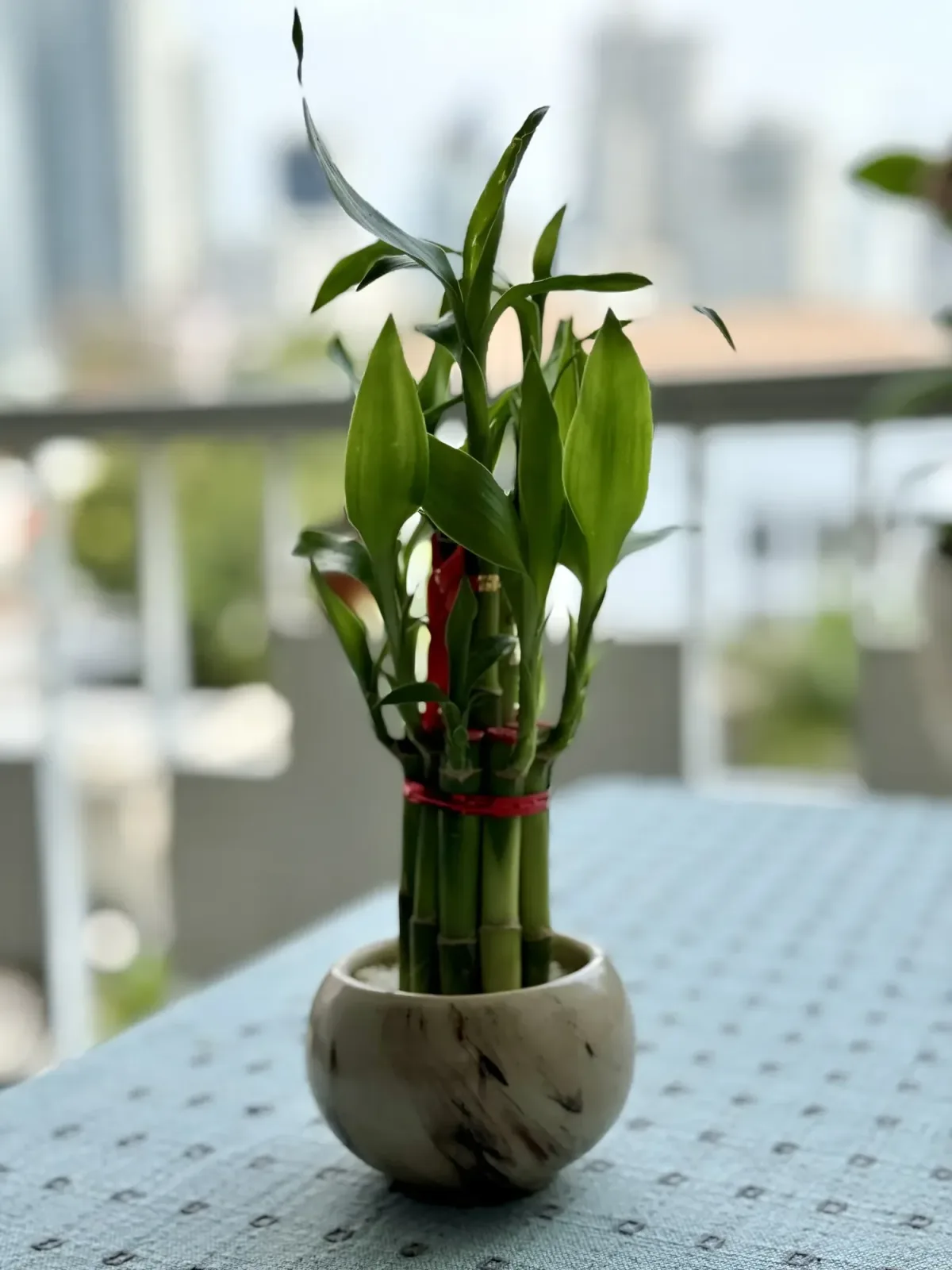
- Light: Medium indirect light. Direct sun yellows the leaves.
- Water: Keep the roots covered with water in a vase, and change the water once a week. In soil, keep it lightly moist.
- Pet safety: The ASPCA lists Dracaena species as toxic to cats and dogs.
- Keep after Christmas: Yes.
Lucky bamboo is a Dracaena, not a real bamboo. It is a popular year-end and New Year gift, often tied with a red ribbon. It fits on a desk or a shelf and needs very little care, which makes it a good gift for someone who has never kept a plant.
The common problems are yellow stems and smelly water. Fresh water every week and a clean vase solve most of it. In hard-water areas, which are common in the North, some growers use filtered or stored rainwater to avoid white crust on the stems. For more, see lucky bamboo plant care and our lucky bamboo care guide.
7. Jade plant
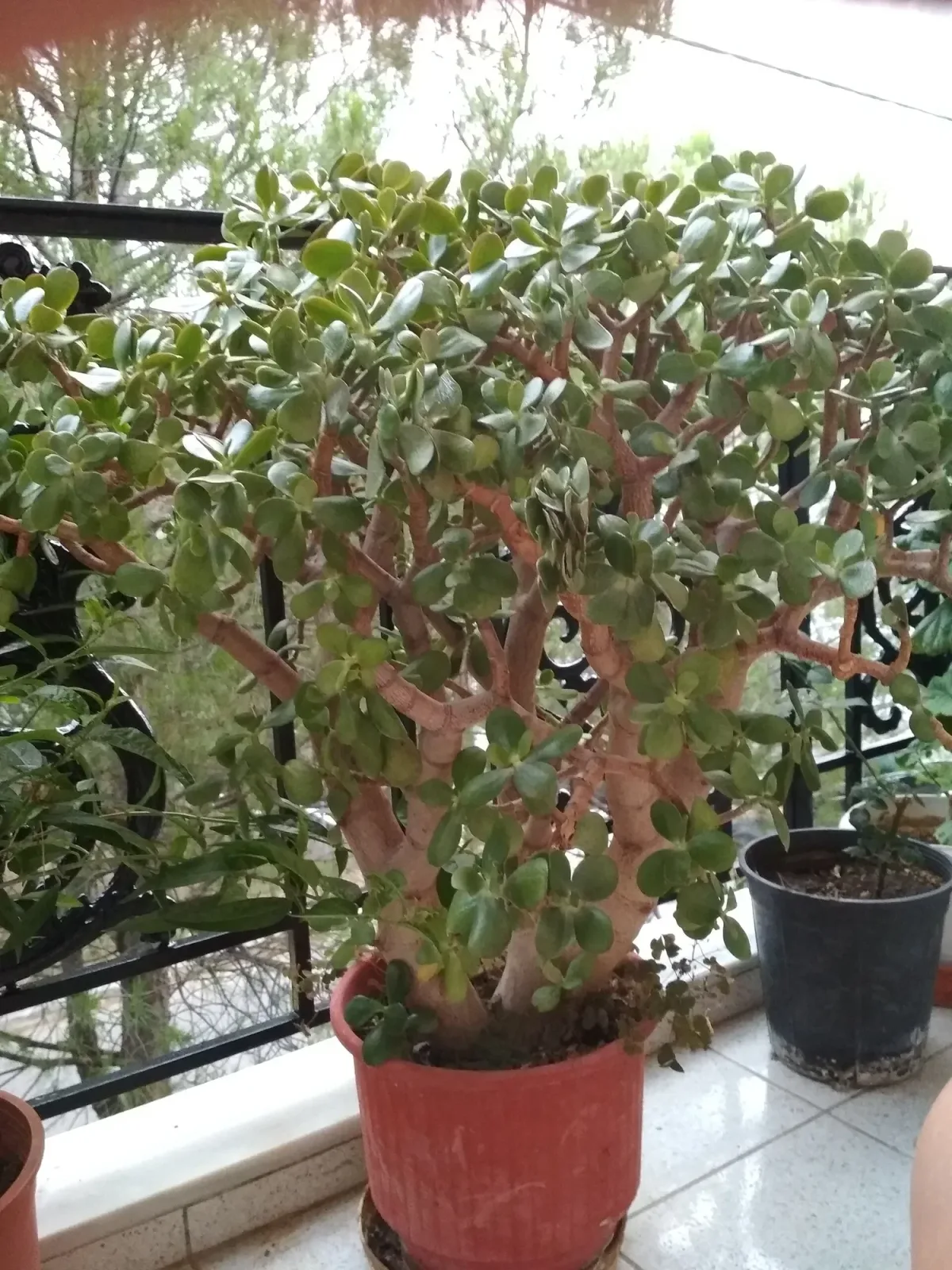
- Light: Bright light with a few hours of direct sun, ideally morning sun.
- Water: Only when the soil is dry. Less in winter.
- Pet safety: The ASPCA lists it as toxic to cats and dogs.
- Keep after Christmas: Yes. Jade plants can live for decades.
Jade is a succulent with thick, round leaves. A small jade in a red pot is a common Christmas and New Year gift in Indian cities, and it can live far longer than any poinsettia. Some people hang tiny ornaments on a large jade to make a "mini tree", which is fine as long as the decorations are light.
The number one way to lose a jade is too much water. In coastal cities and during cool North Indian winters, the soil stays wet longer, so water even less. On a sunny balcony in the South it grows steadily. See jade plant care and our jade plant balcony care guide.
8. English ivy
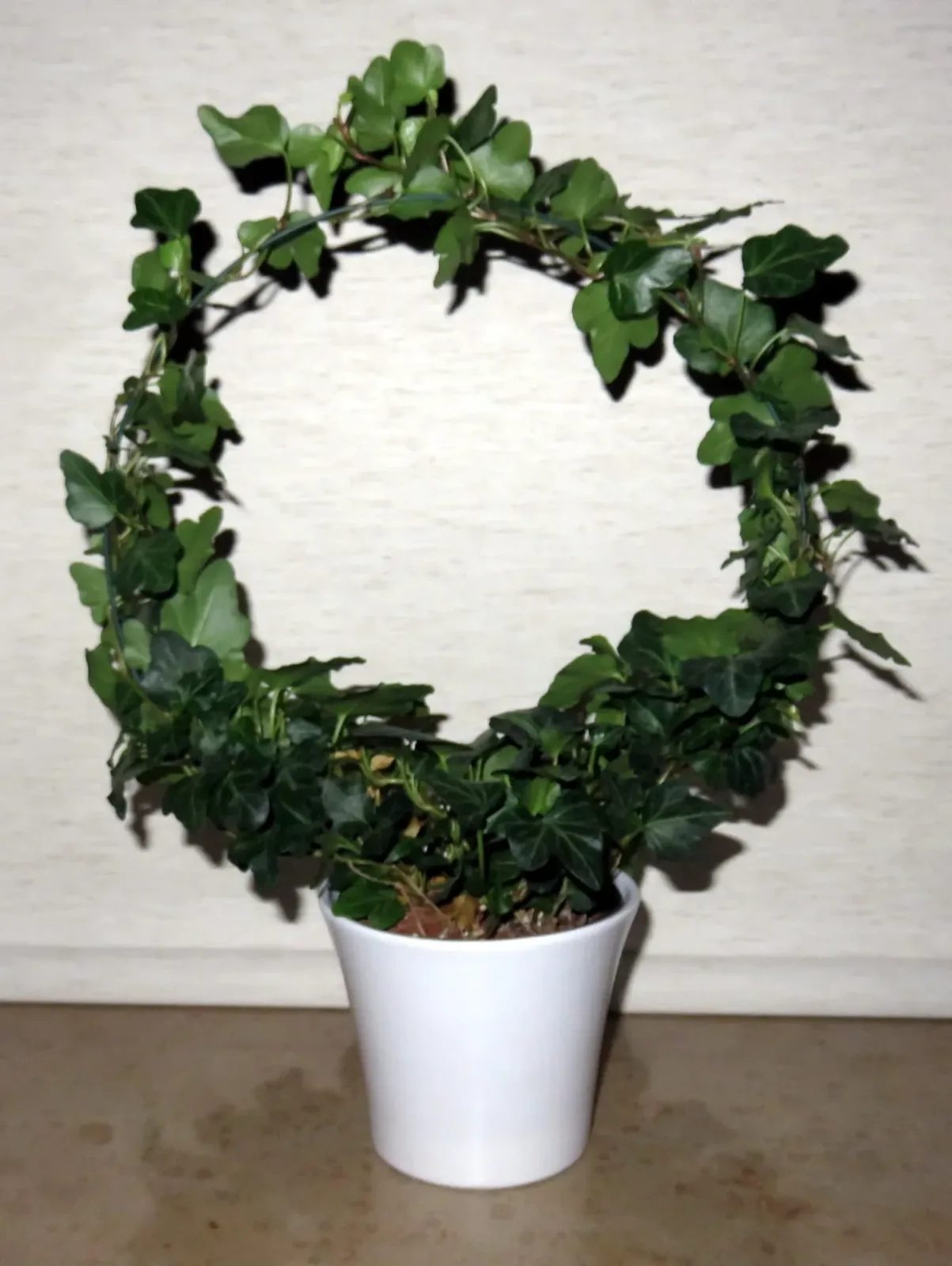
- Light: Bright, indirect light. Harsh sun scorches it.
- Water: Keep evenly moist but never soggy.
- Pet safety: The ASPCA lists it as toxic to cats and dogs.
- Keep after Christmas: In the hills and cool rooms, yes. In hot plains cities, it often does not survive summer.
Holly and ivy are part of old European Christmas traditions, and ivy trained on a ring makes a living wreath that lasts much longer than a cut one. It also trails well from a hanging pot.
Ivy likes cool weather. In Shimla, Darjeeling, Ooty or Shillong it grows easily. In the northern plains it can do well from November to February, then struggle in the heat of May and June. In the South, it does best in a bright, cool room rather than on a hot balcony. Read more on our English ivy care page, and see it in our list of indoor hanging plants for Indian homes.
Care that applies to all of them
- Remove plastic sleeves and foil wraps as soon as you get home. They trap water around the roots.
- Use a pot with a drainage hole and a free-draining mix. Our potting mix guide explains simple home mixes.
- Water less in December and January in the North and the hills. Check the soil with a finger first. Our watering guide has more on this.
- Keep plants away from room heaters, blowers and cold window glass at night.
- Use LED fairy lights, which stay cool, and keep heavy ornaments off thin branches.
- Bring outdoor plants back into their usual light within a week or two of Christmas.
For general winter care, see our guides to plant care in winter in India and winter flowering plants for North India.
How this changes across India
North India (Delhi, Punjab, Haryana, UP, Rajasthan)
Days are bright but nights get cold from mid-December, and frost can hit open ground in the plains of Punjab and Haryana. Araucaria, morpankhi and jade handle the cold best if they are near a wall or under a roof edge at night. Poinsettia and peace lily are the most likely to sulk. Dry air near room heaters is a problem for Araucaria and ivy. Water less, and only in the morning.
South India (Bengaluru, Hyderabad, Chennai inland)
Winters are mild, so most of these plants grow through the season. Bengaluru's cool nights suit poinsettia and Christmas cactus well. Chennai and coastal Tamil Nadu get their main rains from the north-east monsoon in October to December, so check that pots drain well and do not overwater jade or Christmas cactus.
Coastal cities (Mumbai, Goa, Kerala, Mangaluru, Kolkata)
It stays warm and humid. Araucaria, peace lily and lucky bamboo are comfortable. Poinsettia grows, but bract colour is usually best where nights are cooler. Succulents like jade need the brightest spot you have and very little water. Morpankhi needs space and air around it.
The hills (Himachal, Uttarakhand, Darjeeling, the north-east, the Nilgiris)
This is the best region for Christmas cactus, English ivy and poinsettia, as long as plants are kept out of frost. Bring pots inside or under cover on cold nights, especially at higher altitudes. Araucaria grows into a large tree outdoors in many hill gardens; in a pot, keep it sheltered when nights fall close to freezing.
A note on vastu and "lucky" plants
Many people search for the Christmas tree plant, jade or lucky bamboo together with vastu. These are cultural beliefs, and we do not make claims about luck or direction. If you want to follow vastu, our money plant vastu guide explains how we treat the topic. For plant health, the light and water notes above matter far more than direction.
Plants we left out and why
- Cut fir and pine trees. Real cut Christmas trees are rare in India, are costly, and do not last in a warm house. A potted Araucaria or morpankhi makes more sense.
- Amaryllis and cyclamen. Popular in cold countries, but rarely sold for Christmas in India, and GardenOrbit has no India profile for them.
- Kalanchoe. A good winter flowering pot plant, but there is no live India profile to link yet.
- Bougainvillea and crown of thorns. Both have red or pink bracts in winter and grow well in India, but they are garden plants rather than Christmas plants. See bougainvillea and crown of thorns if you want winter colour outdoors.
Sources
- Tamil Nadu Agricultural University, Agritech: TNAU floriculture nursery sale list (Araucaria plants) and Landscaping: terrarium plants (Hedera helix)
- ICAR-Directorate of Floricultural Research, Pune: institute home page
- University of Illinois Extension: Poinsettia (bracts, choosing a healthy plant)
- NC State Extension Plant Toolbox: Euphorbia pulcherrima
- Iowa State University Extension: How do I care for a Norfolk Island pine?
- ASPCA plant pages linked above, and the cat and dog lists
Updated 20 November 2026 (IST): new guide. No named reviewer is listed, pending confirmation of real reviewers.


Comments
No comments yet — share what worked in your climate.