
| ☀️ Light | Full sun |
|---|---|
| 💧 Water | Low (allow soil to dry) |
| 🪴 Soil | Gritty, fast-draining cactus or loam-based mix with extra grit or perlite |
| 🌡️ Temp | 5°C – 38°C |
| 🐾 Safety | Cats: toxic · Dogs: toxic |
| 📏 Mature size | 60 cm |
Where It Grows & Climate Tolerance
Pet & Companion Animal Toxicity (Crown of Thorns)
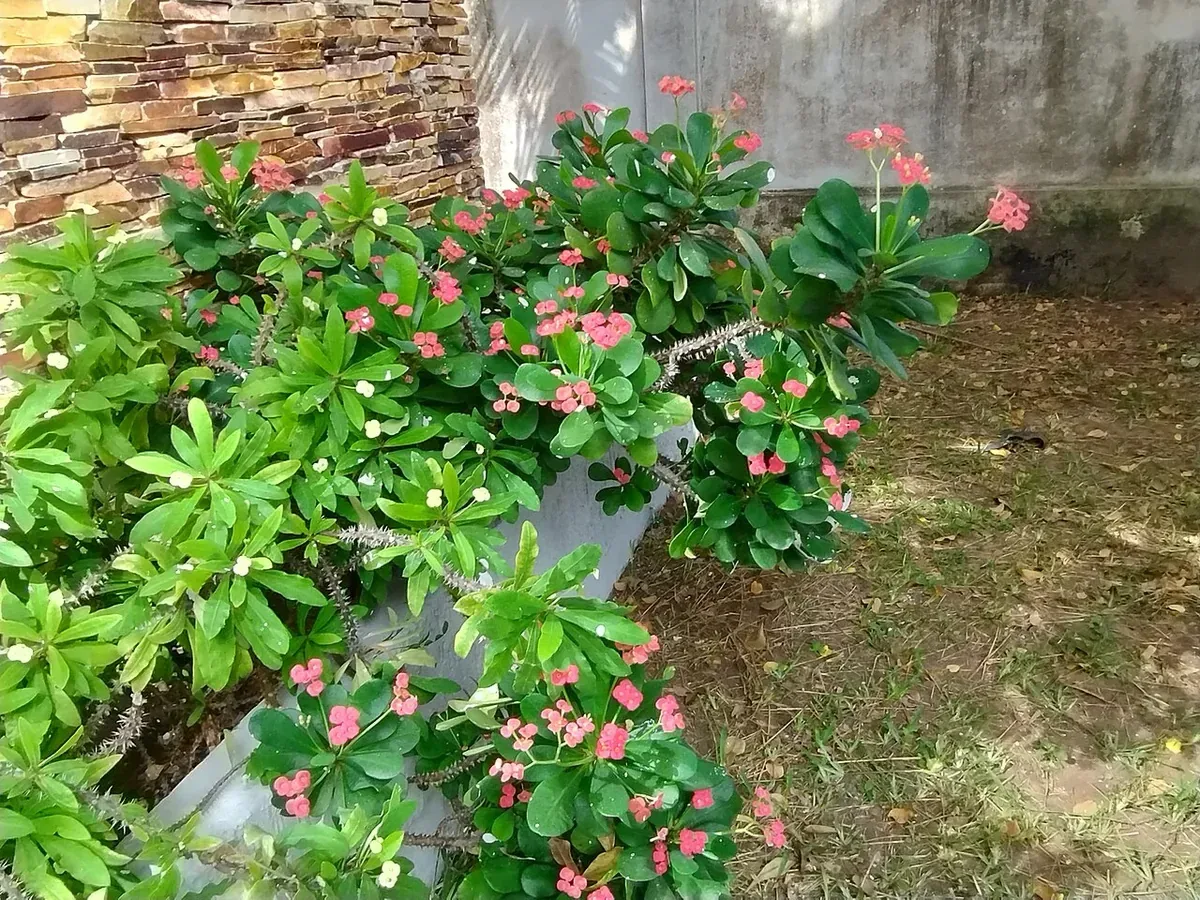
Crown of thorns (Euphorbia milii) is a spiny, shrubby succulent from Madagascar that flowers on and off for much of the year in red, pink, cream or yellow. It needs full sun and a dry spell between deep waterings. Its milky sap is irritating and poisonous, so handle it with gloves.
Care instructions
Care Guide & Maintenance Routine
Give it the sunniest spot you have. Water deeply, then let the mix dry before watering again; water less in the cool season. Use a gritty, fast-draining mix. Keep it above about 2°C and out of cold, wet soil. Wear gloves and eye protection when pruning, and keep it away from children and pets.
Light & Sunlight
NC State Extension and Wisconsin Horticulture both say it does best in full, direct sun. It grows in part shade but flowers less. In very hot summers outdoors, NC State suggests midday shade for better blooming. Acclimatise indoor plants slowly before putting them in full outdoor sun.
Watering Schedule
Wisconsin Horticulture says the species does best when the soil dries between deep waterings. Some large-leaved hybrids prefer more frequent watering. Water sparingly in the cool, resting season.
Potting Mix & Drainage
Gritty, fast-draining cactus or loam-based mix with extra grit or perlite
Temperature & Humidity
NC State and Wisconsin both say it survives down to about 2°C (35°F) but dislikes cold, wet soil. The 5°C minimum is a safety margin. The 38°C maximum is not a lethal limit but a point where midday shade helps flowering, as NC State suggests for hot climates.
About crown of thorns
Crown of thorns, Euphorbia milii, is a woody succulent shrub from Madagascar in the spurge family. Its stems are covered in sharp spines and carry fresh green leaves near the tips. What look like petals are actually bracts, coloured leaves around the tiny true flowers. NC State Extension notes the bracts are long-lasting and come in red, pink or white, and many hybrids add cream, yellow and blends.
In Madagascar it can reach 1.5 to 1.8 m. In pots it usually stays under 60 cm, which makes it a good plant for sunny windowsills, balconies and terraces.
Types and buying tips
Wisconsin Horticulture describes several groups. Compact dwarf types stay small with small red bracts. Larger hybrids, some bred from crosses with Euphorbia lophogona, have bigger, thicker leaves and bigger bract clusters. Thai hybrids, developed in the 1990s, are upright and compact with large leaves and a wide range of colours.
The large-leaved hybrids often need more regular watering than the thin-stemmed species. When buying, check for firm stems with no soft or black patches at the base, and look under leaves for white cottony mealybugs.
Planting and soil mix
Drainage matters most. Wisconsin suggests a cactus mix with extra perlite, pumice, sharp sand or gravel, plus a little composted manure. The RHS uses three parts loam-based compost to one part grit. Use a pot with a large drainage hole. Terracotta helps the mix dry out.
It flowers well even when slightly root-bound, so only repot when it clearly outgrows its pot. Do it in spring or summer, wearing thick gloves, and hold the stems with a folded band of newspaper.
Light
Full sun gives the most flowers. Indoors, a south or west window is best. Outdoors, it can take strong sun, but NC State suggests some midday shade in hot summer climates for better blooming. Plants moved outdoors from indoors should be introduced to full sun over a week or two to avoid sunburn, as Wisconsin advises.
Watering by season
Warm, growing months
Water deeply until it drains, then wait until the mix is dry before watering again. In a hot, sunny spot that could be once a week or so; in a cooler room, less often. Large-leaved hybrids may want water a little sooner.
Wet season
Rain plus heavy humidity can rot the roots and stems. Move pots under cover or raise them so they drain, and clear away dead leaves and spent flowers so fungus does not take hold.
Cool season
Growth slows and some leaves fall. Water sparingly; the RHS advises keeping it dry in winter under glass. Cold plus wet soil is the most dangerous combination.
Feeding
Feed lightly in spring and summer. Wisconsin warns that overfeeding produces soft leafy growth and few flowers and notes that the plant is sensitive to boron, so take care with fertilisers that contain micronutrients. A low-nitrogen liquid feed once a month while in growth, as the RHS suggests, is plenty. Do not feed during the rest period.
Pruning
Prune to shape in spring or summer. Cut stems back to side buds for a bushier plant, or remove whole thin or weak branches at the base to open it up. Use a sharp knife, because the sticky sap gums up shears, and clean it afterwards. Gloves and safety glasses are worth wearing every time.
Propagation
Cuttings are easy. Cut 7 to 15 cm tips, dip the cut ends in cold water or charcoal to slow the sap, and leave them to dry for 2 to 3 days. NC State also stresses letting the sap dry before planting. Root them in barely moist, gritty mix in a warm, bright spot. Wisconsin says roots form in 5 to 8 weeks. Old, leggy plants can be replaced with fresh cuttings.
Flowering
Bloom time depends on conditions. In good light it flowers on and off through the warm months, and in a sunny window it can bloom through winter too. The flower stalks are slightly sticky and sometimes trap small insects, but NC State notes there is no evidence the plant is carnivorous.
Troubleshooting
Leaves falling
Step 1: Note the season. Some leaf drop as days cool is normal, as NC State describes. Step 2: Squeeze the stems near the base. If they are firm, the plant is resting. Step 3: If stems are soft or dark, cut back to healthy tissue, let the mix dry, and repot into dry, gritty mix if roots are rotten. See leaf drop.
Few or no flowers
Count the hours of direct sun. Fewer than about half a day means it needs a brighter spot. If light is good, check if you have been using a high-nitrogen feed, which favours leaves over flowers.
White fluff in leaf joints
Look closely: cottony clusters are mealybugs, the most common pest according to Wisconsin. Pick them off with a cotton bud dipped in rubbing alcohol, and recheck weekly.
Spotted leaves
Check whether leaves have stayed wet for long periods, such as in monsoon rain or from overhead watering. Remove spotted leaves and keep the foliage dry.
Uses
Crown of thorns is a long-flowering pot plant for sunny windows, balconies and terraces. In frost-free gardens NC State lists it as a specimen, low hedge, border plant or rock garden plant. The spines make it a natural barrier, but that also makes it a poor choice where small children play.
Safety and pets
NC State lists the milky latex in all parts as able to cause mild to severe skin irritation, temporary or permanent eye damage, and blistering of the lips and mouth if eaten. Wisconsin adds that enough sap in the eyes can cause temporary blindness. The RHS lists it as harmful if eaten. We found no ASPCA species page, so pet safety here follows NC State's advice to keep it away from pets. The spines are also a hazard.
Common mistakes
- Pruning bare-handed or rubbing your eyes after handling it.
- Keeping it in a shady room and wondering why it will not flower.
- Watering on a schedule in the cool season.
- Leaving pots in open rain during a long wet season.
- Panicking at seasonal leaf drop and overwatering.
India and Canada in brief
Across most of India it is a balcony and terrace plant that flowers for much of the year; the monsoon is the main risk, so keep pots draining and under cover in heavy rain. In Canada it is a sunny-window houseplant that copes well with dry heated air, and it can spend summer on a sunny patio if brought in well before frost.
Seasonal rhythm
Seasonal Calendar
A month-by-month calendar for Crown of Thorns in Global is coming soon. See the light, water and temperature notes above.
Diagnostics
Common Problems & Troubleshooting
Leaf drop in the cool season is normal before rest; yellowing and soft, dark stems from cold, wet soil; few flowers from low light or too much nitrogen; leaf spots after long wet spells.
Pests & seasonal watch: Mealybugs are the most common pest, according to Wisconsin; spider mites, scale and thrips also occur. Most diseases, including stem and root rot, leaf spots and grey mould, come from too much water.
Q&A
Frequently Asked Questions
Is crown of thorns poisonous?
Yes. NC State says the milky sap in all parts can cause skin irritation, can damage the eyes and causes blistering in the mouth if eaten. Keep it away from children and pets.
Why is my crown of thorns dropping leaves?
Some leaf drop before the cool, resting season is normal, according to NC State. Sudden drop with soft stems points to cold, wet soil.
How often should I water crown of thorns?
Water deeply, then wait until the mix is dry before watering again. In cool weather water much less.
Why is my crown of thorns not flowering?
Usually not enough direct sun or too much nitrogen fertiliser. Move it to the sunniest spot and feed lightly.
Can crown of thorns grow indoors?
Yes, in a sunny window. Wisconsin Horticulture notes it handles low humidity and heated homes well.
How cold can crown of thorns tolerate?
NC State and Wisconsin say it survives to about 2°C, but cold, wet soil causes rot. Keep it warmer and dry in winter.
What do I do if sap gets on my skin or in my eyes?
Wash skin with plenty of water. If sap gets in the eyes, rinse well and get medical advice, since NC State warns it can damage the cornea.
How do I prune crown of thorns?
Wear gloves and eye protection, use a knife, cut back to side buds or remove weak branches at the base, in spring or summer.
Similar Botanical Matches
Keep exploring
Related plants
Grower field notes
Reader Field Notes in Global
Share how this plant performs in your local Global climate.