
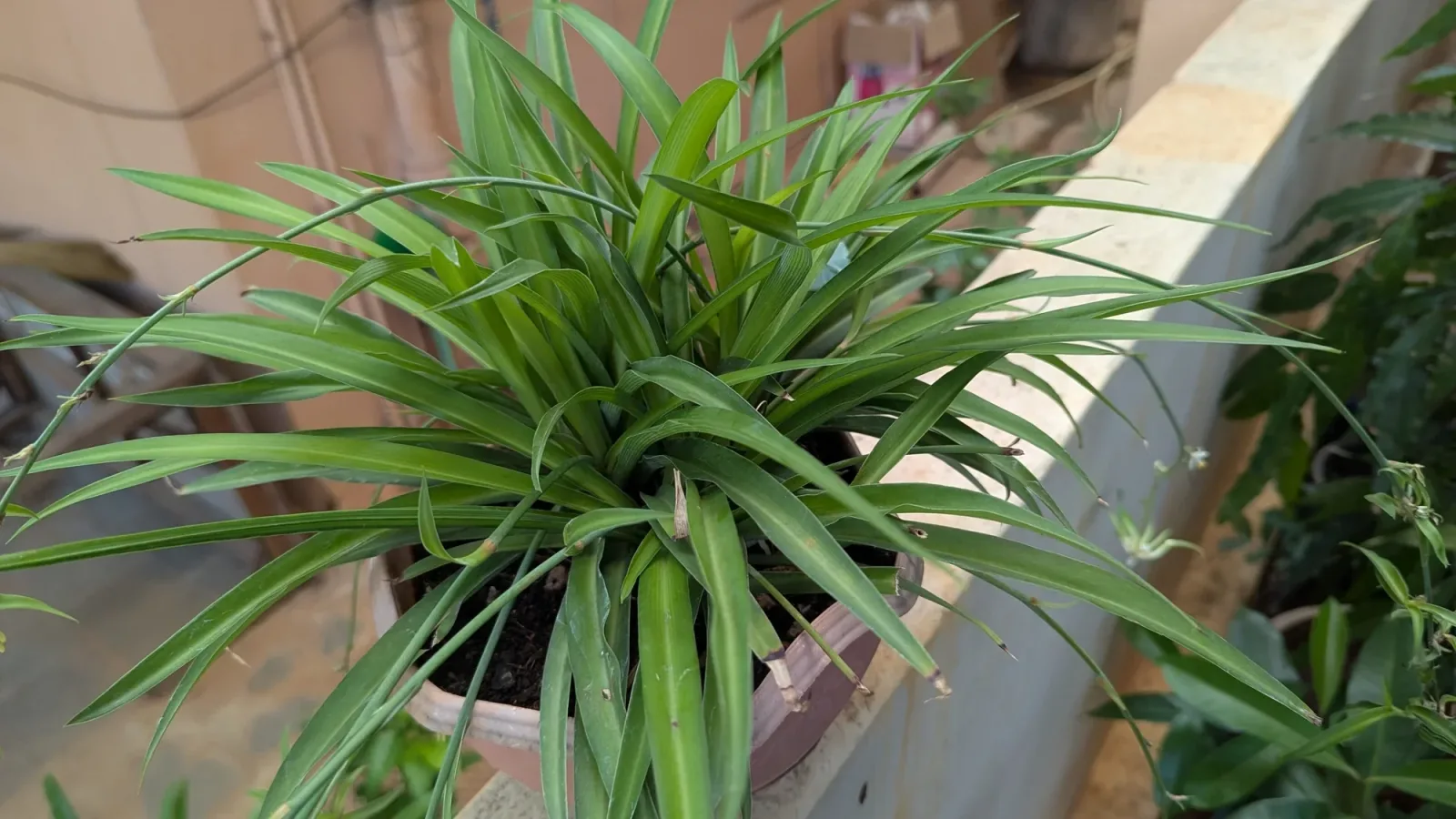
For a first hanging pot in an Indian home, start with money plant, spider plant or inch plant (zebrina). Money plant copes with ordinary indoor light. Spider plant is the pet-safer of the three. Zebrina grows quickly and is named by Tamil Nadu Agricultural University as a vigorous trailer for hanging containers.
The eleven plants below are trailing or arching plants you can grow in a hanging pot, on a high shelf or from a railing indoor-side. Region notes cover the northern plains, the south, the coast and the hills. Pet-safety claims follow the ASPCA list, not guesswork. This page is about choosing the plant. For hooks, brackets, load and watering a basket without soaking the floor, use our hanging balcony plants guide, which is written as a safety how-to, not as a plant list.
Quick picks
- Easiest all-rounder: money plant
- Safest with cats and dogs (ASPCA non-toxic): spider plant, burro's tail and purple velvet plant
- Best silver leaves: silver satin pothos and string of hearts
- Best in a steamy bathroom with a window: maidenhair fern
- Best in the hills or a cool room: English ivy and maidenhair fern
- Best fast colour: inch plant (zebrina)
Comparison at a glance
| Plant | Light | Water | Size in a pot | Pet safety | Difficulty | Best for | India region note |
|---|---|---|---|---|---|---|---|
| Money plant | Bright, filtered; tolerates medium light | When the top 2–3 cm is dry | Vines 1–3 m if allowed | Toxic | Easy | A first hanging pot | All regions. Shade it from harsh summer afternoon sun on a north-Indian balcony. |
| Silver satin pothos | Bright, filtered | When the top 2–3 cm is dry | Trailing stems 50–150 cm | Toxic (ASPCA: satin pothos, Scindapsus pictus) | Easy | Silver leaves in a bright room | All regions. Colour fades in a dark corner. |
| String of hearts | Bright, filtered | When the mix has dried a little | Long, thin trailing stems | Not listed by the ASPCA; we do not call it safe or toxic | Moderate | A light, narrow hanging pot | Hills and bright indoor rooms. Rot is a risk in a wet coastal monsoon if the pot stays soggy. |
| Syngonium | Bright, filtered; tolerates medium light | When the top 2–3 cm is dry | 50–150 cm trailing or climbing | Toxic | Easy | A hanging pot you let trail, or a climber if you prefer | All regions. Good in ordinary apartment light. |
| English ivy | Bright, indirect; no harsh sun | Evenly moist, not soggy | Trailing or climbing, easily 1 m plus | Toxic | Fussy in the plains | A cool room or a hill station | Hills and mild southern winters. Dislikes hot, closed north-Indian rooms. |
| Burro's tail | Bright light; accustom slowly to stronger sun | When the mix is dry | Hanging tails 30–80 cm | Non-toxic | Easy if not overwatered | A high, bright shelf out of the way | Hills and dry indoor rooms. Keep drier in the monsoon, especially on the coast. |
| Asparagus fern | Bright, filtered; morning sun in winter | When the surface starts to dry | Feathery sprays 40–100 cm | ASPCA lists the related Asparagus densiflorus as toxic; treat A. setaceus with the same caution | Easy to moderate | A full, feathery basket | All regions with shade from hard afternoon sun. Enjoys humidity. |
| Maidenhair fern | Indirect light; no hot sun | Evenly moist | Fronds 20–40 cm, arching | Not listed by the ASPCA; we do not call it safe or toxic | Fussy if the air is dry | A bathroom or kitchen with a window | Coast, south, and hills. Hard work in a dry north-Indian summer room. |
| Spider plant | Bright, filtered | When the top 2–3 cm is dry | Arching leaves 30–50 cm, plus hanging plantlets | Non-toxic | Easy | A first hanging pot in a house with pets | All regions. TNAU lists Chlorophytum among good hanging-basket plants. GardenOrbit has no India profile yet. |
| Inch plant / zebrina | Bright, filtered | When the top of the mix is dry | Fast trailing stems, easily 1 m | ASPCA lists inch plant (Tradescantia fluminensis) as toxic (dermatitis). There is no separate page for T. zebrina; treat it cautiously | Easy | Quick cover in a basket | All regions. TNAU names Tradescantia zebrina as a vigorous trailer. No India profile yet. |
| Purple velvet plant | Bright, filtered | When the top 2–3 cm is dry | 30–60 cm, trailing with age | Non-toxic | Easy to moderate | Purple leaves, and a pet-safer choice | All regions in good indoor light. The purple hairs fade in a dark room. |
Money plant (Epipremnum aureum), Hindi: मनी प्लांट / pothos
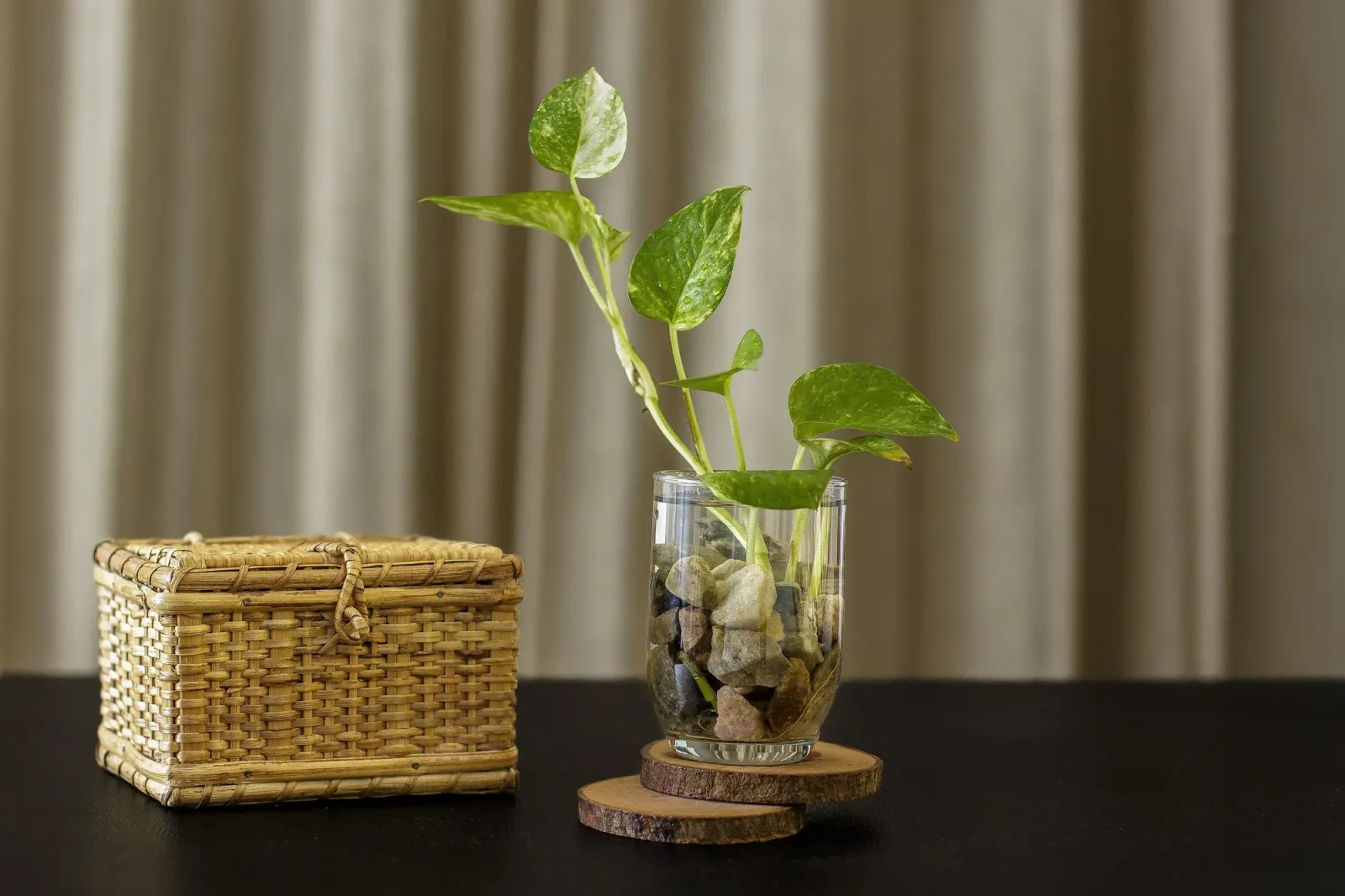
- Light: Bright, filtered light. It holds up in medium light, but variegation fades in a dark corner.
- Water: When the top 2–3 cm of mix is dry. Cuttings also root in a jar of water.
- Mature size in a pot: Stems can trail or climb several metres if you let them.
- Pet safety: ASPCA: toxic (golden pothos, devil's ivy). Hang it out of reach of cats and dogs.
- Difficulty: Easy.
- Region note: Grown across India. On a north-Indian summer balcony, afternoon sun can scorch the leaves. In the monsoon, let the mix drain; do not leave the pot standing in a saucer of rainwater.
This is the hanging plant most Indian households already know. Older Indian books often call it Scindapsus; TNAU still lists Scindapsus among hanging-basket plants. The current botanical name for the common money plant is Epipremnum aureum. Let the stems hang, or pinch them if you want a fuller pot instead of one long vine.
The honest drawback is pet safety, and the way people overwater a pretty hanging pot because they cannot see the mix. The plant is tough, but a basket that stays wet through a Mumbai or Kochi monsoon will still rot. Full care guide →
Silver satin pothos (Scindapsus pictus), Hindi: सिल्वर सैटिन पोथोस
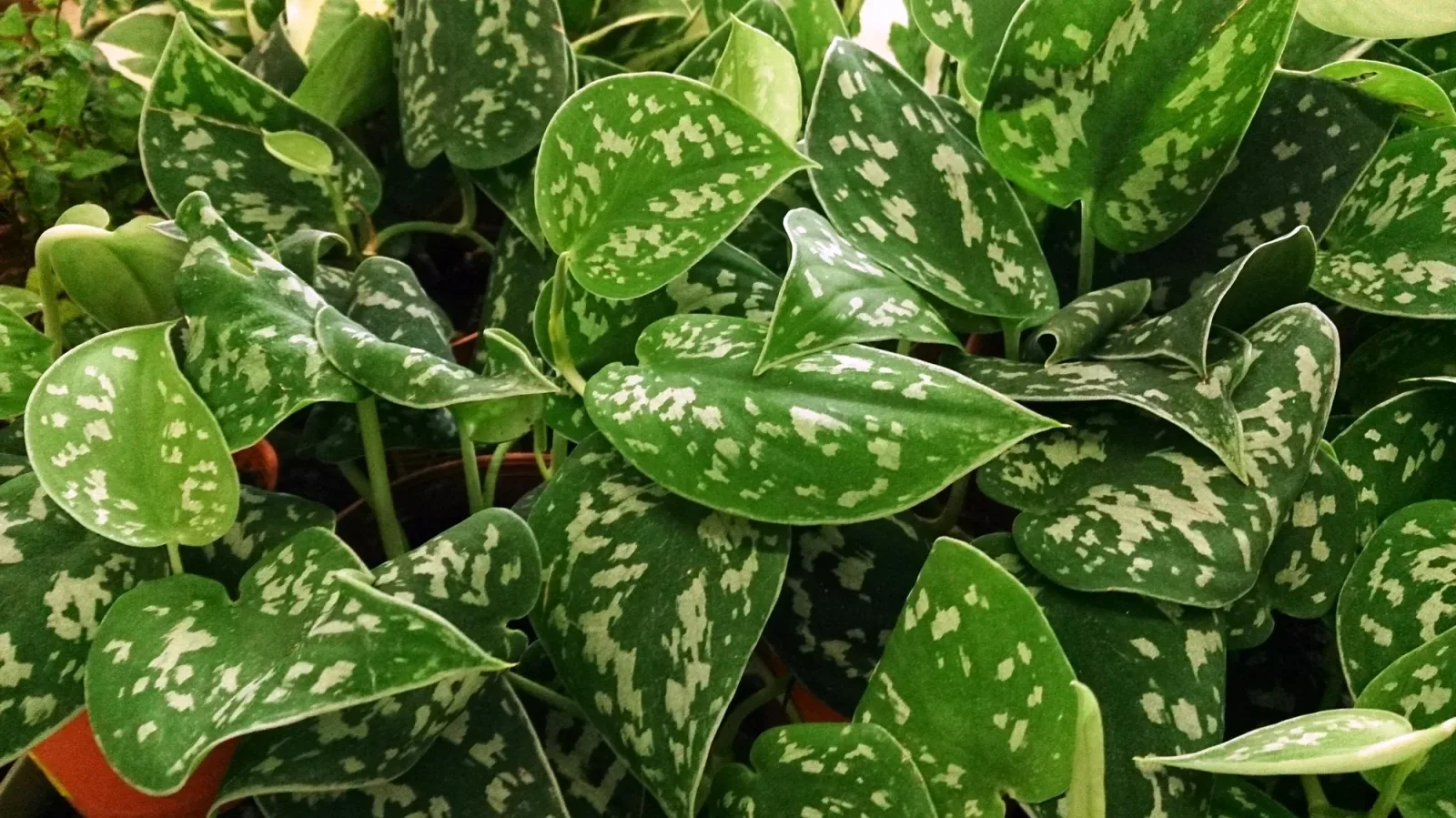
- Light: Bright, filtered light, so the silver markings stay clear.
- Water: When the top 2–3 cm is dry. It is a little less forgiving of a wet mix than money plant.
- Mature size in a pot: Trailing stems often 50–150 cm in a home.
- Pet safety: The ASPCA lists satin pothos, Scindapsus pictus, as toxic to cats and dogs.
- Difficulty: Easy, in better light than a dark corridor.
- Region note: Fine in most Indian apartments if it sits near a window. In the northern plains, keep it out of the 2 p.m. summer sun.
This is the money plant's quieter cousin, with heart-shaped leaves dusted in silver. It trails well from a hanging pot or the edge of a shelf. TNAU's hanging-container list includes Scindapsus, the group this plant belongs to.
The honest drawback is light. In a dim room the silver fades and the stems go long and thin, and people then water more, which does not fix the light. Put it closer to the window before you change the watering. Full care guide →
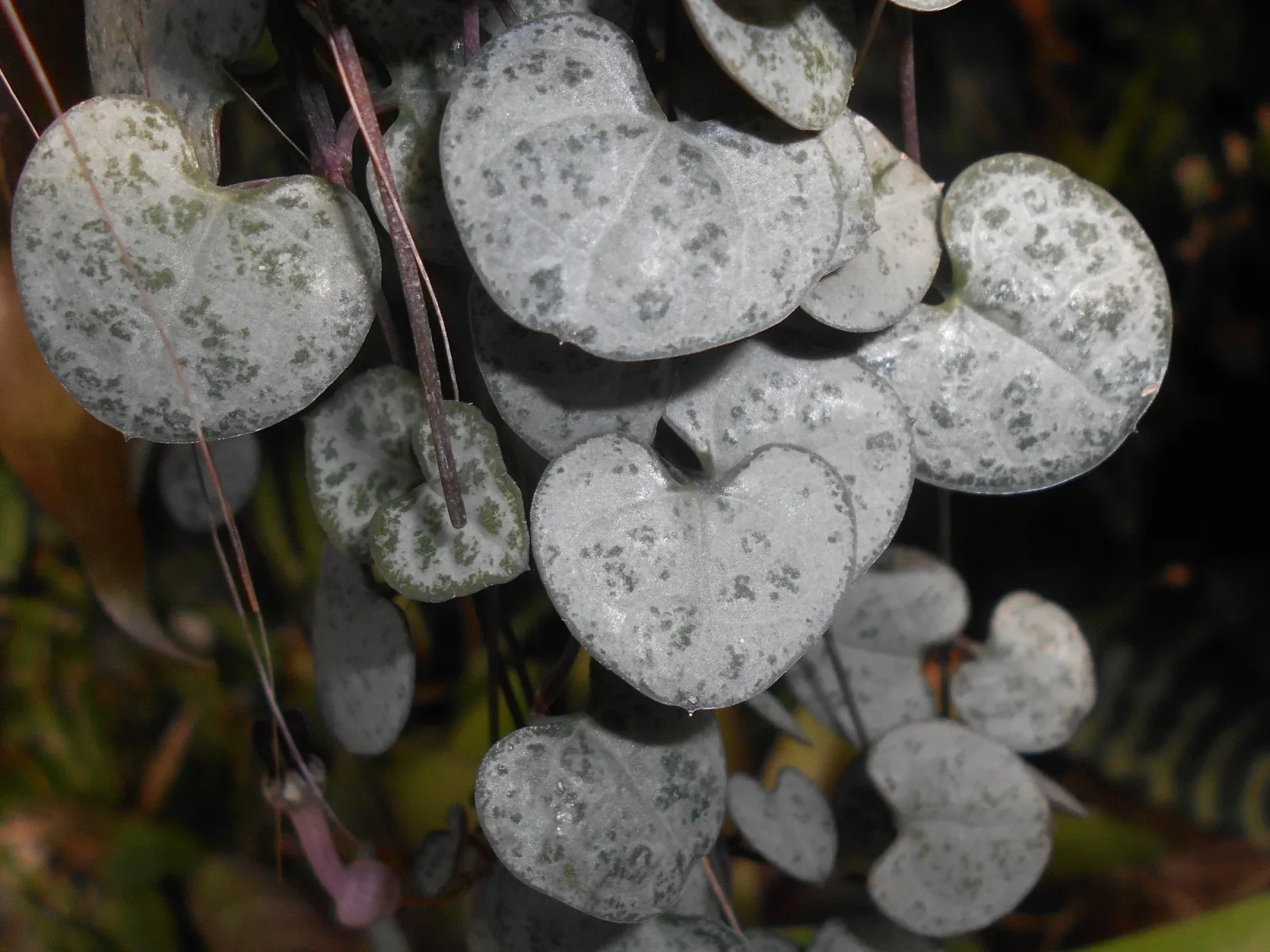
String of hearts (Ceropegia woodii), Hindi: स्ट्रिंग ऑफ हार्ट्स
- Light: Bright, filtered light.
- Water: Let the mix dry a little between waterings. The tubers and thin stems rot in a constantly wet pot.
- Mature size in a pot: Long, thread-like stems with small leaves, well suited to a narrow hanging pot.
- Pet safety: The ASPCA has no page for Ceropegia woodii, so we do not call it safe or toxic.
- Difficulty: Moderate, mainly because of watering.
- Region note: Happiest in the hills or in a bright indoor room. On the humid coast, give it a very free-draining mix and a drier spell in the monsoon.
The tiny silver-green hearts on purple threads look lighter than a leafy money plant, so this is a good choice where you want a hanging pot that does not feel heavy. It wants more light than people expect from a “delicate” plant.
The honest drawback is monsoon rot, and the lack of an ASPCA listing if you have pets and want a firm answer. If pet safety is the main test, choose spider plant or burro's tail instead. Full care guide →
Syngonium (Syngonium podophyllum), Hindi: सिंगोनियम / arrowhead vine
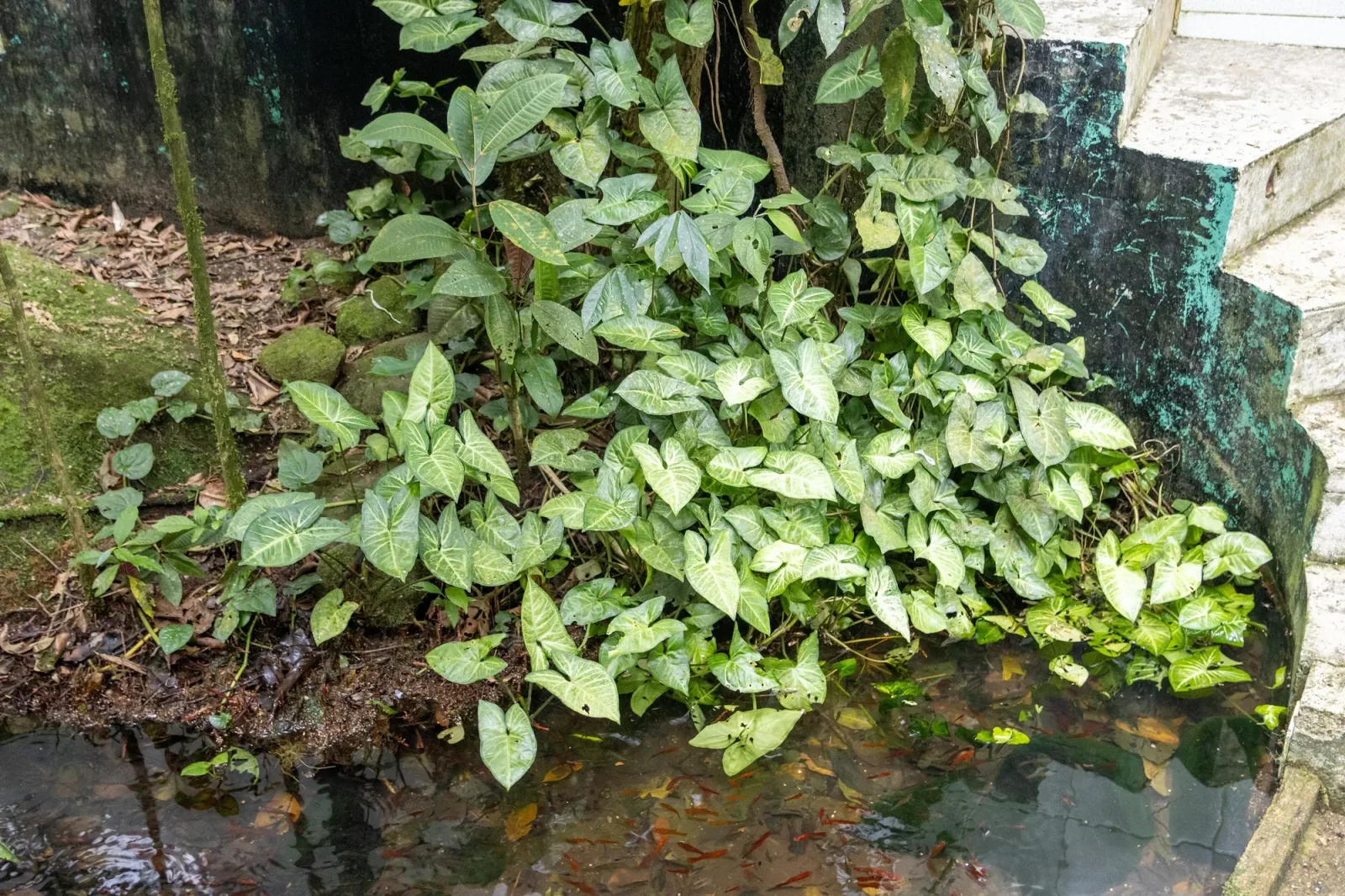
- Light: Bright, filtered light; it also copes with medium indoor light.
- Water: When the top 2–3 cm is dry.
- Mature size in a pot: Young plants stay compact; older stems climb or trail 50–150 cm or more.
- Pet safety: ASPCA: toxic (arrowhead vine; calcium oxalates). Can irritate the mouth and cause drooling and vomiting.
- Difficulty: Easy.
- Region note: A reliable apartment plant in all four regions. In the south and on the coast it grows very quickly in the monsoon; trim it so the basket does not turn into a tangle.
People often grow syngonium as an upright pot plant, but if you do not give it a stick, the stems hang, and that is when it earns a place on this list. The young leaves are arrow-shaped; older leaves may divide. It is a good middle path between money plant and something more delicate.
The honest drawback is the same as money plant: it is not pet-safe, and a hanging pot at jump height is still in reach of many cats. Full care guide →
English ivy (Hedera helix), Hindi: इंग्लिश आइवी
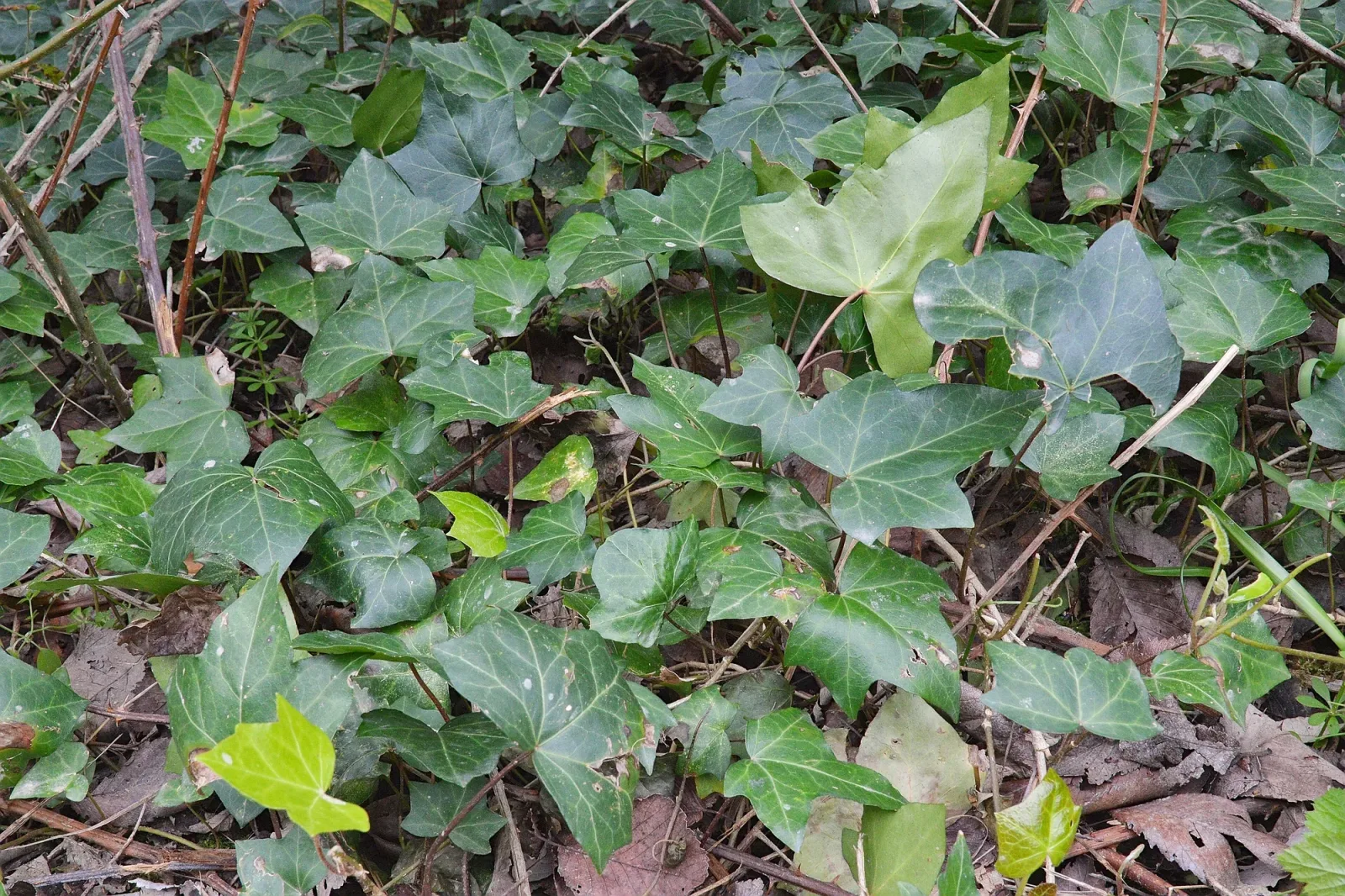
- Light: Bright, indirect light. Direct summer sun burns it.
- Water: Keep the mix evenly moist, not soggy.
- Mature size in a pot: Trails or climbs easily past 1 m.
- Pet safety: The ASPCA lists English ivy as toxic to cats and dogs.
- Difficulty: Fussy in hot, dry rooms.
- Region note: Much happier in the hills, or in a cool, airy room in winter in the plains, than in a closed, air-conditioned Delhi or Lucknow room in May. TNAU lists Hedera (written “Hedra” on the hanging-container page) among hanging-basket plants.
Ivy is a classic trailing basket plant in cool climates, and it can look excellent in Shimla, Ooty, or a carefully chosen winter window further south. In a hot plains apartment it often gets spider mites and thin, dull growth, which is a care problem, not a reason to invent a disease name from the symptoms alone. If the plant looks poor, check heat, dry air and light first, and ask a local nursery or KVK if you need a closer look.
The honest drawback is climate. If you live in the northern plains and cannot give it a cool room, choose money plant or zebrina instead. Full care guide →
Burro's tail (Sedum morganianum), Hindi: डॉकी टेल / गधे की पूंछ
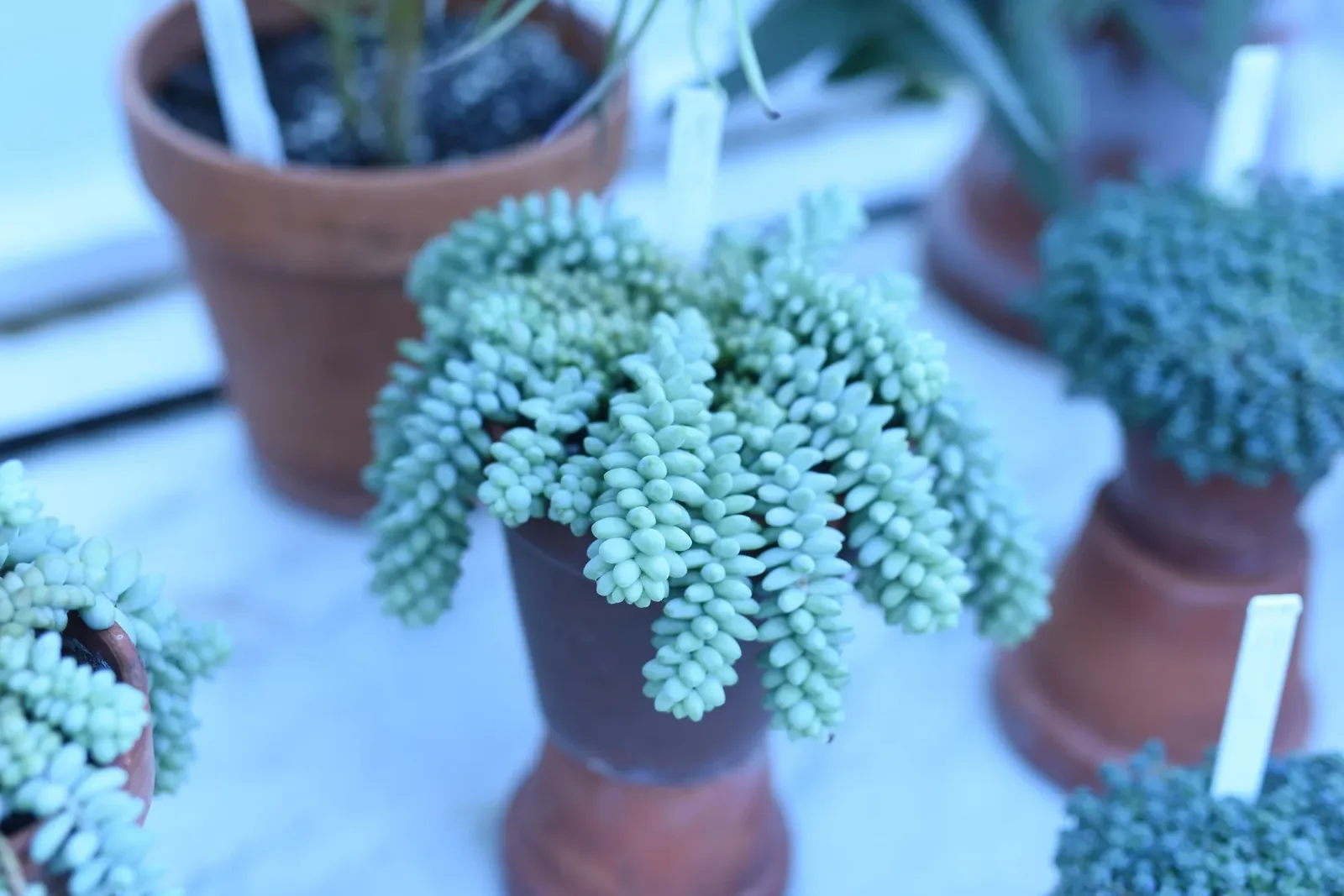
- Light: Bright light. Move it into stronger sun slowly, or the tails scorch.
- Water: When the mix is dry. This is a succulent, not a fern.
- Mature size in a pot: Hanging tails often 30–80 cm on a well-grown plant.
- Pet safety: The ASPCA lists burro's tail (donkey's tail, lamb's tail) as non-toxic to cats, dogs and horses.
- Difficulty: Easy if you under-water slightly, and if nobody bumps the pot.
- Region note: Good in the hills and in a bright, dry indoor room. On the humid coast, and anywhere in a heavy monsoon, use a very free-draining mix and a pot that cannot sit in water.
The blue-green, bead-like leaves form the tails that make this a hanging plant. It is one of the few trailing plants on this list that the ASPCA marks as non-toxic, which matters in a house with pets. Hang it where people will not brush past, because the leaves drop off at a touch and do not hook back on.
The honest drawback is exactly that: it is brittle, and a monsoon soaking will rot it. It is a poor choice for a busy doorway or a rain-soaked outdoor balcony. Full care guide →
Asparagus fern (Asparagus setaceus), Hindi: एस्पैरेगस फ़र्न
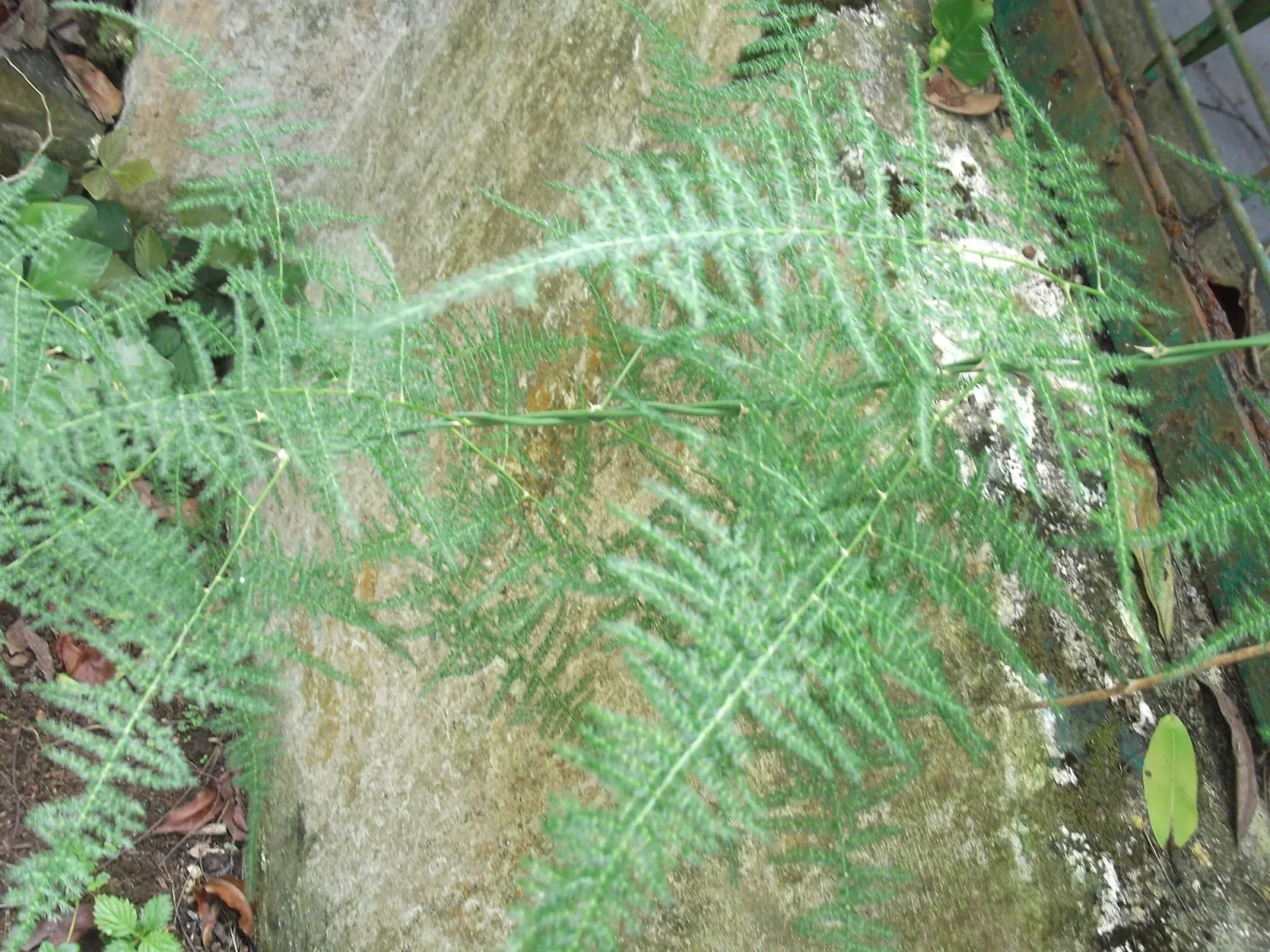
- Light: Bright, filtered light; soft morning sun in winter is usually fine.
- Water: When the surface starts to dry. It likes humidity but not a sour, waterlogged mix.
- Mature size in a pot: Feathery sprays 40–100 cm, climbing or trailing.
- Pet safety: The ASPCA lists Asparagus densiflorus (sprengeri, emerald fern) as toxic. GardenOrbit's India plant is A. setaceus, a related species sold as asparagus fern. There is no separate ASPCA page for A. setaceus, so treat it with the same caution and keep it away from pets.
- Difficulty: Easy to moderate.
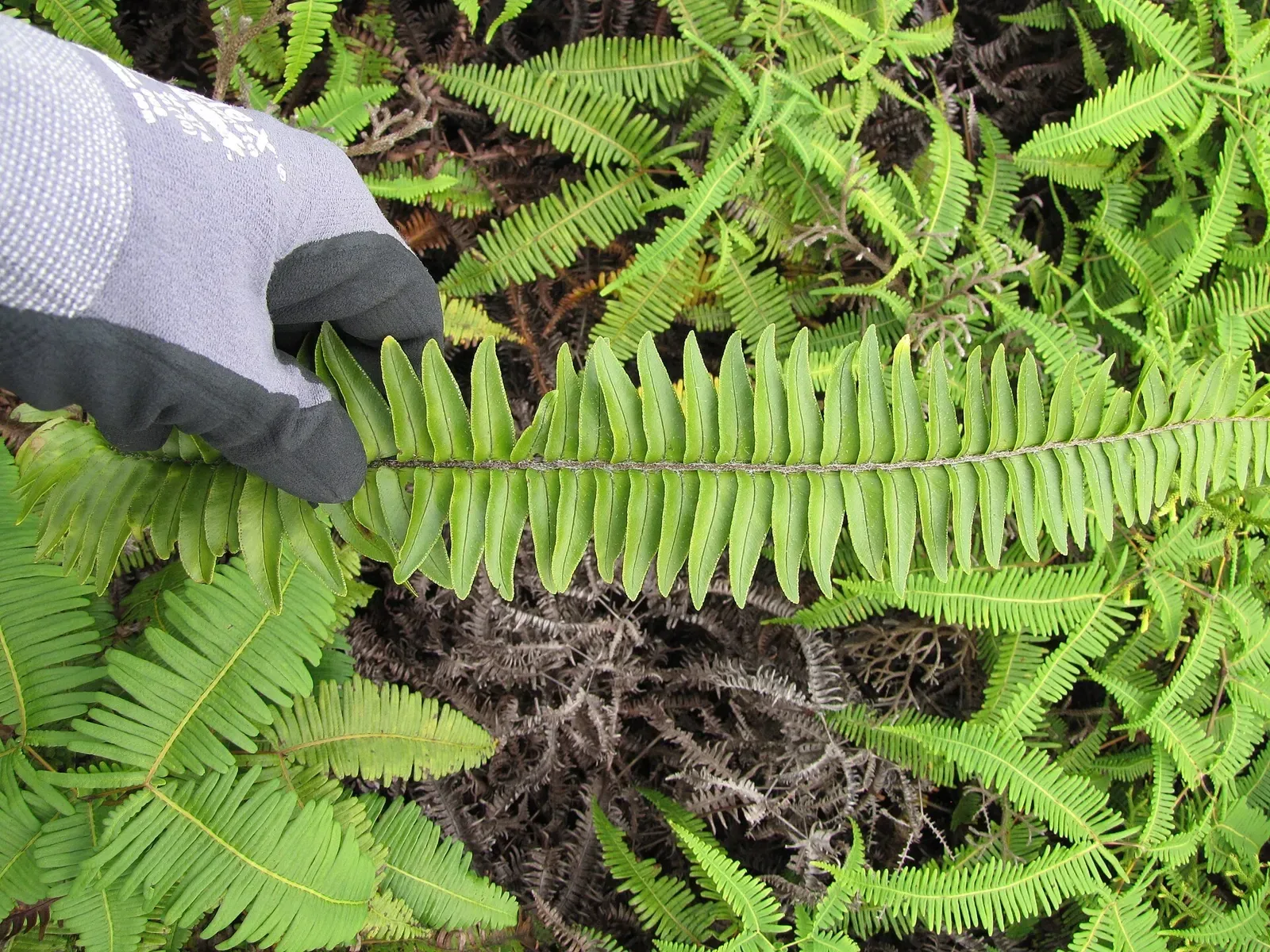
- Region note: Grows well in Indian shade, including southern and coastal gardens. The Yercaud photograph below was taken in the Tamil Nadu hills. In the northern plains, keep it out of the May afternoon sun.
It looks like a fern, but it is an asparagus relative, with fine, horizontal sprays that fill a hanging basket. TNAU lists Asparagus among hanging-container plants. The stems can climb if they find a support, or hang if they do not.
The honest drawback is the mess of fallen needles, and the pet-safety caution above. It also has small spines on older stems, so handle it carefully when you hang or trim the basket. Full care guide →
Maidenhair fern (Adiantum raddianum), Hindi: मेडनहेयर फ़र्न / हंसराज
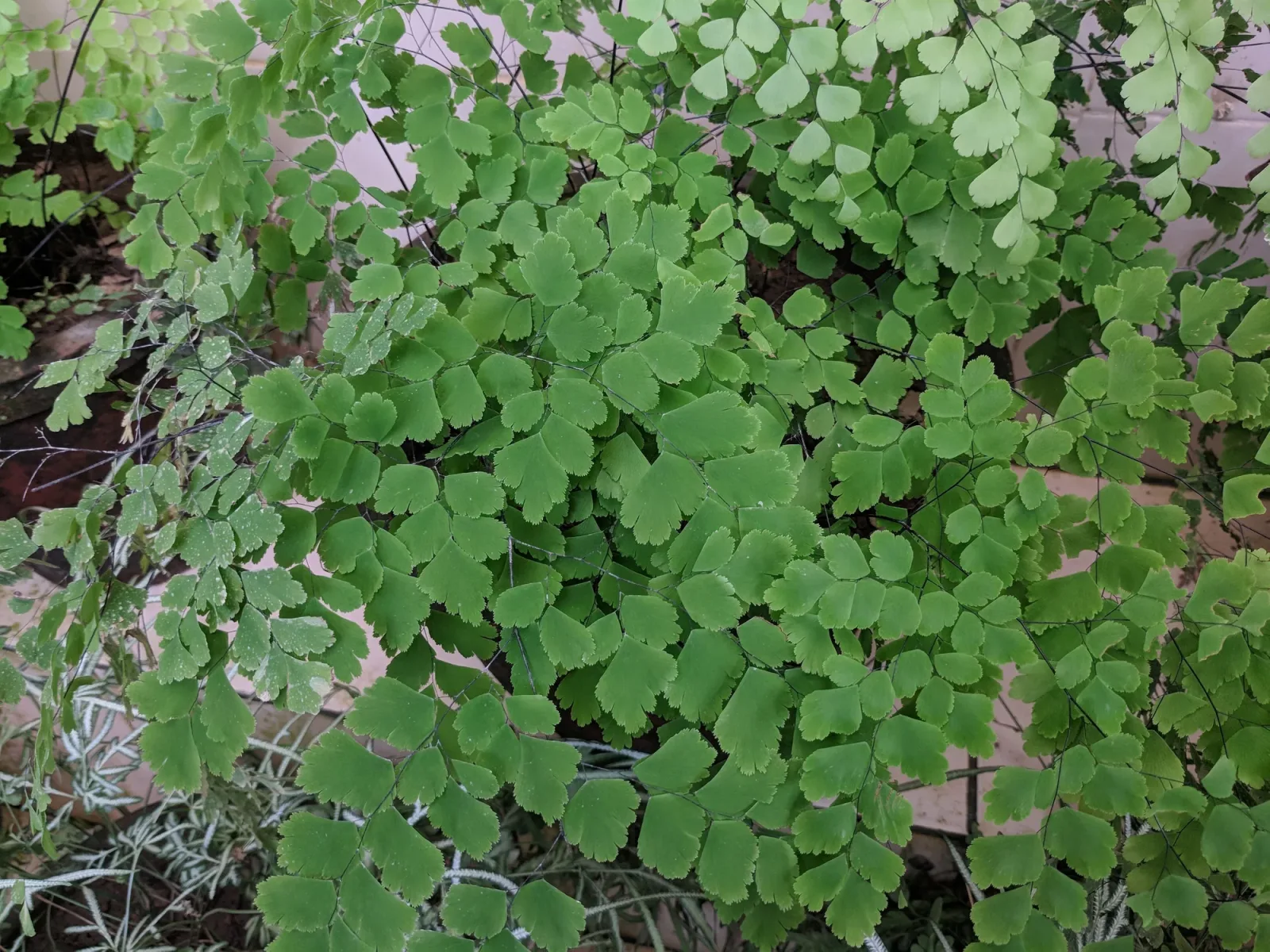
- Light: Indirect light. Hot sun cooks the fronds.
- Water: Evenly moist. A full dry-out often means a pot of brown stems.
- Mature size in a pot: Arching fronds usually 20–40 cm.
- Pet safety: The ASPCA has no page for Adiantum, so we do not call it safe or toxic.
- Difficulty: Fussy where the air is dry.
- Region note: A better plant for the coast, the south, the hills, and a bathroom with a window, than for a dry north-Indian sitting room with the cooler on.
The black, wiry stems and fan-shaped leaflets are why people love this fern, and why they lose it. It wants steady moisture and some humidity. That is easier in Kochi, Goa or a hill town than in Jaipur in June. A hanging pot in a bright bathroom, watered often enough that the mix never goes bone dry, is a more realistic home than an open, windy balcony.
The honest drawback is unforgiving dryness. If you travel often or forget baskets, choose spider plant or money plant instead. Full care guide →
Spider plant (Chlorophytum comosum), Hindi: स्पाइडर प्लांट / रिबन प्लांट
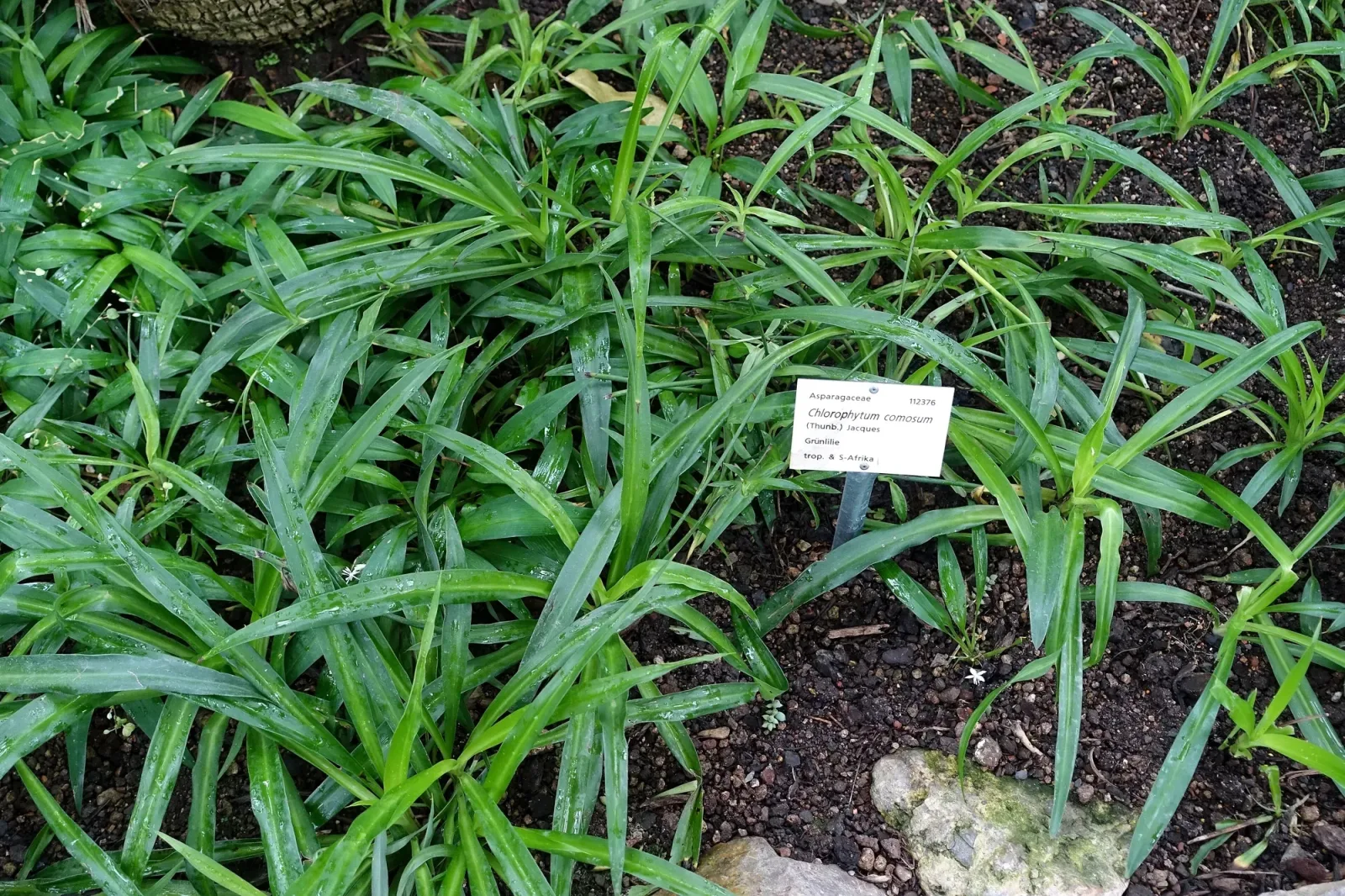
- Light: Bright, filtered light. Strong afternoon sun browns the leaf tips.
- Water: When the top 2–3 cm is dry. It is more forgiving than a maidenhair fern, less so than a very dry succulent.
- Mature size in a pot: A rosette of arching leaves 30–50 cm, plus hanging stems with plantlets.
- Pet safety: ASPCA: non-toxic to cats, dogs and horses.
- Difficulty: Easy.
- Region note: Suitable in all four regions. TNAU lists Chlorophytum among good hanging-basket plants. GardenOrbit does not yet have a live India plant profile, so this entry has no plant-page link.
The hanging plantlets are the whole design: one pot becomes several if you pot them on. It is the first plant I would hang in a house with a cat, because the ASPCA listing is clear and the plant itself is not demanding. Brown leaf tips are common in dry rooms and with hard water; that is a condition to check, not a diagnosis of a named disease from the tip alone.
The honest drawback is only that we cannot yet send you to an India care profile on this site. The plant itself is widely sold, and the TNAU hanging-container list already includes it.
Inch plant, zebrina (Tradescantia zebrina), Hindi: इंच प्लांट / ज़ेब्रिना
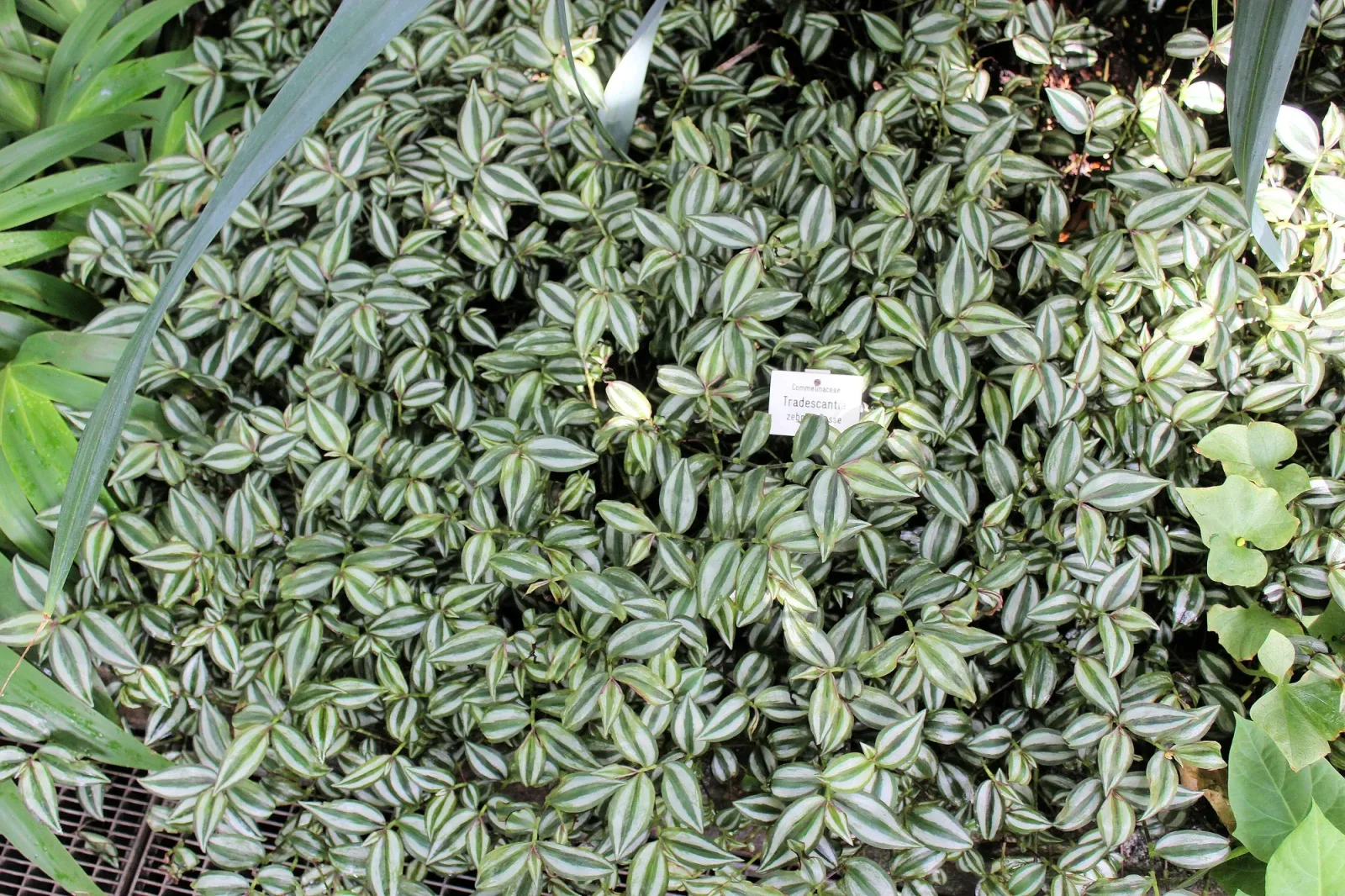
- Light: Bright, filtered light. The purple and silver stripes fade in poor light.
- Water: When the top of the mix is dry. It grows fast if it is not left parched or soggy.
- Mature size in a pot: Trailing stems can pass 1 m in a season.
- Pet safety: The ASPCA lists inch plant, Tradescantia fluminensis (the page spells it “flumeninsis”), as toxic, with dermatitis as the main sign. There is no separate page for T. zebrina. Treat it cautiously and keep it off the floor in a house with pets.
- Difficulty: Easy.
- Region note: TNAU names Tradescantia zebrina as a popular trailer that can also be moved outdoors in summer. It grows in all four Indian regions. There is no live India profile on GardenOrbit yet.
The striped purple leaves fill a hanging pot faster than almost anything else on this list, which is why nurseries and TNAU both lean on it. Pinch the tips if you want a thick mound rather than a few long bare stems with tufts at the end.
The honest drawback is the pet-safety gap, and the way a neglected pot becomes leggy. It is also invasive in some outdoor climates, so keep it in a pot and do not dump trimmings into a drain or a wet valley.
Purple velvet plant (Gynura aurantiaca), Hindi: पर्पल वेलवेट प्लांट
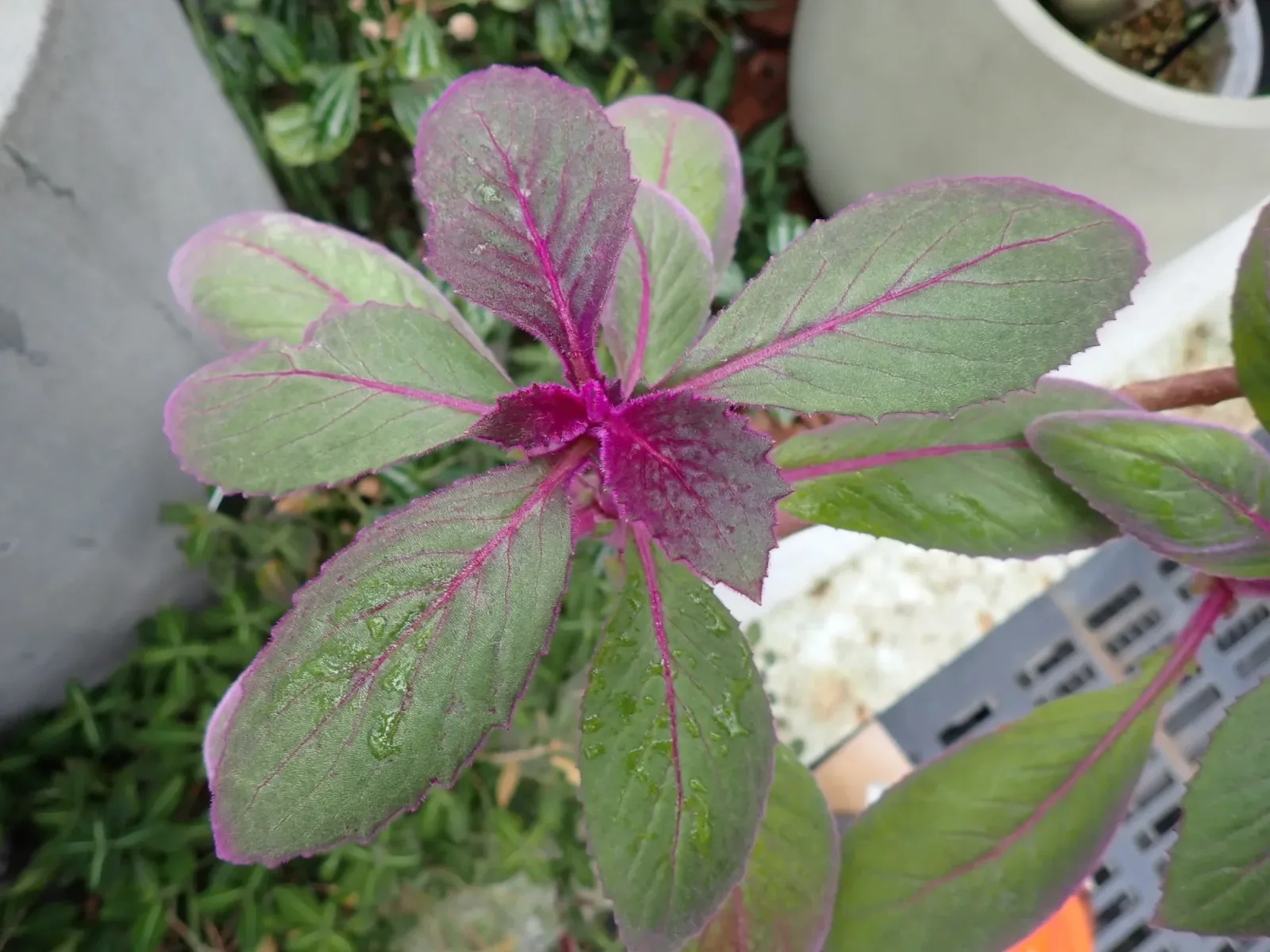
- Light: Bright, filtered light, which keeps the purple hairs visible.
- Water: When the top 2–3 cm is dry.
- Mature size in a pot: 30–60 cm; older stems trail and can be hung.
- Pet safety: ASPCA: non-toxic (purple passion vine, purple velvet plant).
- Difficulty: Easy to moderate.
- Region note: Grows as an indoor plant in all four regions if the light is good. In a dark north-facing room the leaves go green and the “velvet” effect is lost.
The leaves are covered in purple hairs, which is the reason to grow it. Young plants look upright; as they lengthen they trail, and that is when they earn a hanging pot. Among the pet-safer plants on this list, this one is grown for colour rather than for a long, thin vine.
The honest drawback is the flowers. Older plants may produce orange, slightly messy flower heads with a smell many people dislike. Pinch them off if you grow the plant for the leaves. Full care guide →
Care that applies to hanging pots
TNAU's hanging-container page is worth reading before you put a hook in a ceiling. Indoors, a wire basket lined only with moss will drip. TNAU suggests a waterproof outer container, or a plastic hanging pot with a built-in drip tray, and a lighter, peat-based mix rather than a heavy soil mix, because weight is a real problem when you hang something over a head or a floor. Fix the hook into a sound point, and put the display at a height you can water, or use a pulley.
Water when that plant's mix needs it, not on a single calendar for every basket. In a dry north-Indian summer a hanging pot dries faster than a floor pot; in the monsoon it may hardly dry at all. Empty saucers. If you feed, use a product labelled for indoor plants and follow the label. This article does not give fertilizer or pesticide doses. For mix and watering detail, see potting mix for indoor plants, how often to water indoor plants and indoor plant care in the monsoon.
North, south, coast and hills
Northern plains. Summer heat and dry air are the main limits. Hang money plant, syngonium, spider plant and zebrina in bright, filtered light, and shade any balcony basket from the afternoon sun. English ivy and maidenhair fern are a struggle unless you have a genuinely cool room. In winter, light is lower and nights are cool; move baskets closer to the brightest window and do not overwater.
South. Growth is more even through the year. Money plant, syngonium, asparagus fern and zebrina grow quickly. Watch the monsoon: even a “tough” vine will rot if the pot cannot drain. Burro's tail and string of hearts need a drier, brighter spot than a fern.
Coastal gardens and flats. Humidity helps maidenhair and asparagus fern, and works against succulents. Use hanging pots with drip trays indoors, as TNAU advises, and shelter outdoor-side baskets from driving rain. Salt wind on an open sea-facing balcony is a separate problem; many of these plants are happier just inside a window than on the outer rail.
Hills. This is where English ivy, maidenhair fern and burro's tail make the most sense. Summers are milder, so hanging pots dry less violently than in the plains, but winter nights can be cold; move tender baskets indoors if a hill station gets a genuine chill. The Yercaud asparagus fern photograph is a reminder that these plants are already grown in Indian hill gardens.
Plants we left out and why
- Sweetheart hoya (Hoya kerrii). GardenOrbit has an India profile, and the ASPCA lists it as non-toxic, but the plant is usually sold as a single thick leaf in a tiny pot. It can eventually become a vine, often after years. It is not, at the point of sale, a hanging plant, so it stayed off the eleven.
- Tillandsia ionantha. Also on the site, and it can be hung on a wire, but it is an air plant, not a trailing basket plant. Mixing it into this list would blur the choice people are trying to make.
- String of pearls. A popular hanging succulent, but there is no live India profile, it is fussy in a humid monsoon, and the ASPCA lists the related plant as toxic. It can be written later, once a profile exists.
- Outdoor-only basket flowers such as petunia or trailing geranium. Those belong on a seasonal balcony list, not on an indoor hanging-plant page. Our best plants for balcony guide is the better starting point for that job.
Sources
- Tamil Nadu Agricultural University, Agritech: Hanging containers
- ASPCA plant pages and the cat and dog lists, including the individual links above
- GardenOrbit India plant profiles linked from each entry, plus hanging balcony plants (safety how-to), potting mix, watering and monsoon care
Updated 15 November 2026 (IST): new guide. No named reviewer is listed, pending confirmation of real reviewers.


Comments
No comments yet — share what worked in your climate.