
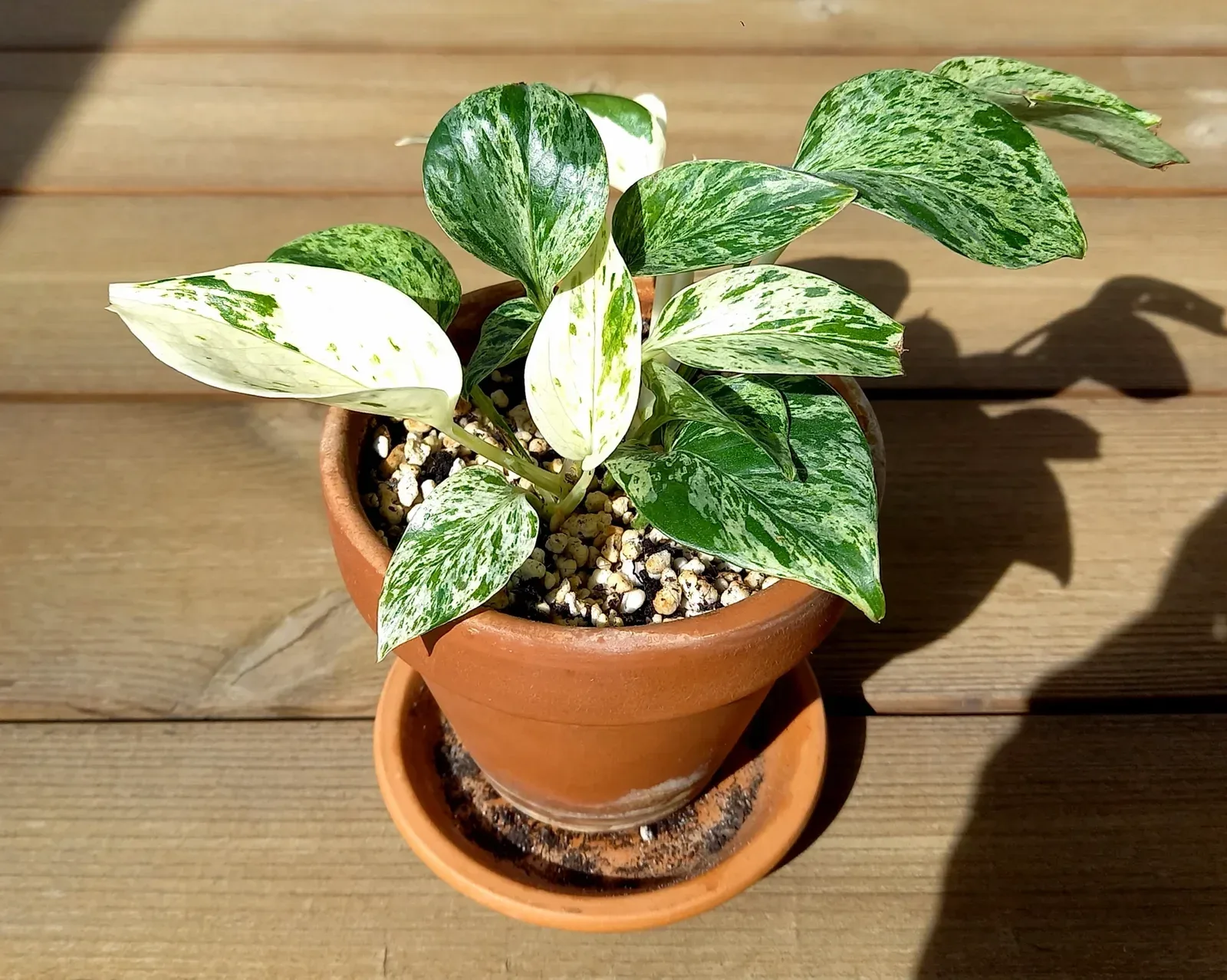
The best balcony plant is the one that suits the exact place where its pot will stand. A plant thriving across the road may struggle in your flat because the balcony above blocks the sun. Before choosing, watch your space through a clear day and note direct sunlight at leaf height.
This selection is deliberately short. It gives you plants with different uses instead of a long list with the same care advice for all of them. Use it alongside the balcony and terrace gardening guide, which covers safe loads, drainage and layout. No plant choice makes a weak railing or an overloaded balcony safe.
If your balcony faces north, use this plant guide for north-facing Indian balconies to choose for an open railing, a covered shelf or a spot sheltered from wind.
First divide the balcony into growing positions
Useful direct sun
A position with several hours of direct light, especially morning sun, can suit herbs and some succulents after gradual adjustment. Flowering and fruiting crops generally need more light than foliage plants. Count the actual hours rather than relying on the label east-facing or south-facing; another building may block most of that exposure.
Bright shade
This means useful daylight without prolonged strong direct sun. You should not confuse it with a dark service balcony enclosed by walls. Foliage plants may grow well in bright shade but stretch and thin out in deeper darkness. If the location is gloomy throughout the day, fewer pots will not solve the lack of light.
Harsh afternoon exposure
A west-facing wall and tiled floor can make heat more severe than the air temperature suggests. Young plants in small black pots are especially vulnerable. Even a sun-tolerant plant needs gradual adjustment after leaving a shaded nursery. Provide a safer position first, rather than testing its toughness during an inland heatwave.
Tulsi for a sunny, accessible herb pot
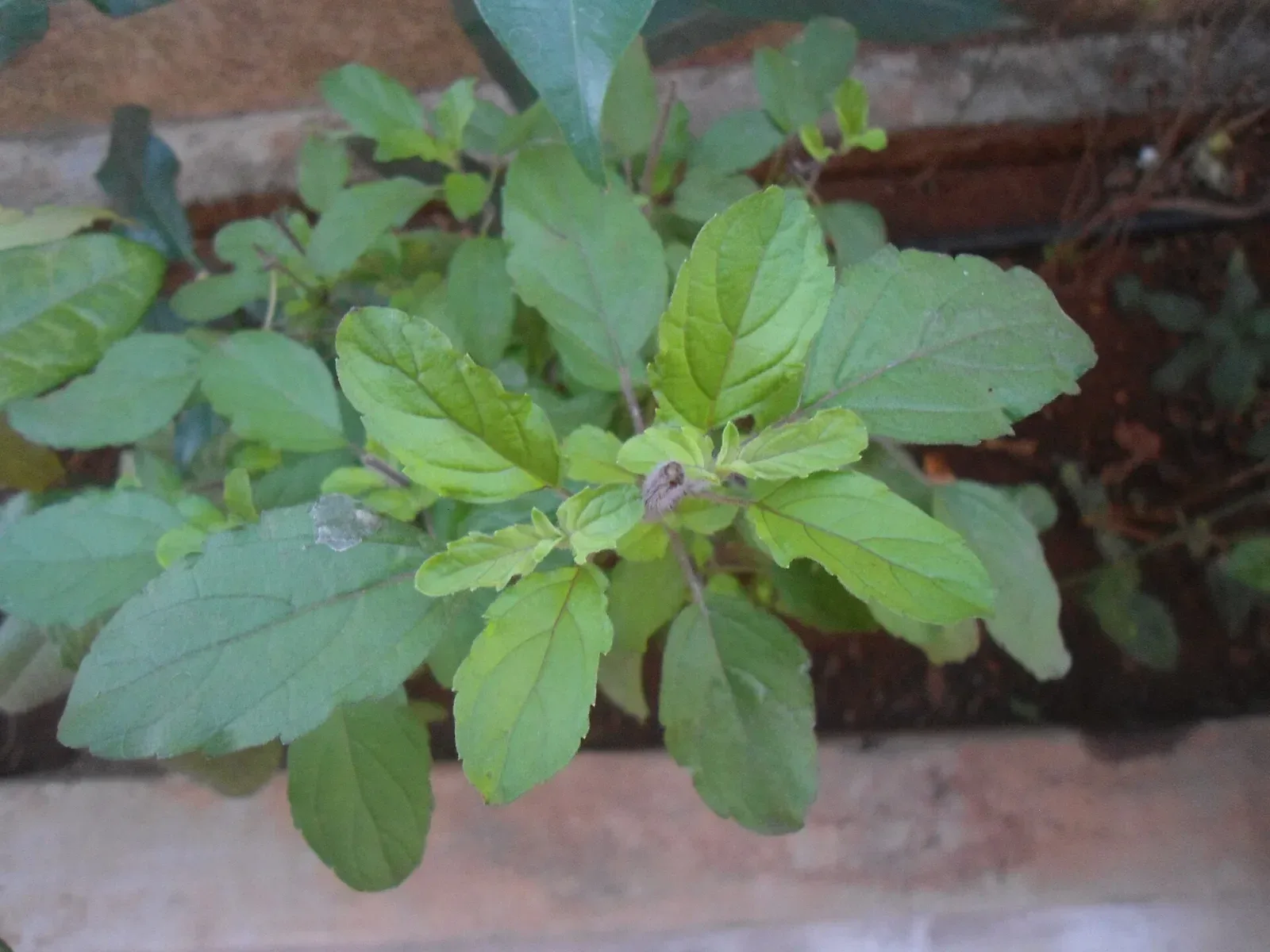
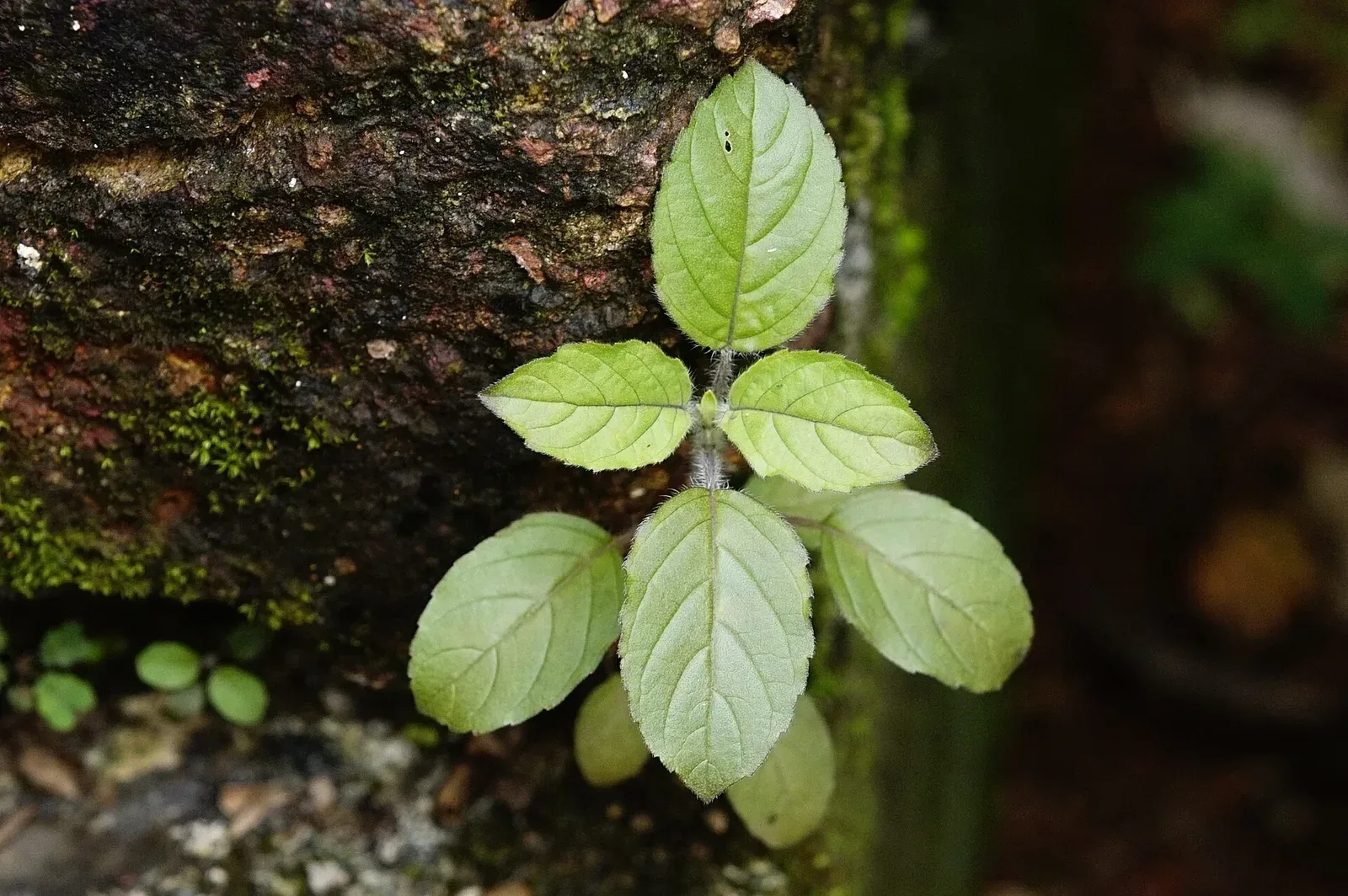
Tulsi, Ocimum tenuiflorum, is a useful first plant when there is good light and someone can inspect the pot regularly. Give it room for leafy growth and keep the root zone moist enough for active growth without leaving it saturated. A cramped, shaded pot is more likely to become thin and leggy.
Pinch growing tips once the plant is established if you want a bushier shape. Harvest modestly from a small plant rather than stripping whole stems. Check young shoots for aphids. The tulsi sun, water and harvest guide explains the routine in more detail, and the tulsi profile helps confirm the plant's identity.
In north India's coldest weather growth may slow. In very hot dry conditions, a small pot can lose moisture quickly. Do not interpret either situation as a reason to pour fertilizer on the plant. Keep a tulsi pot within reach; an overhead basket is inconvenient when you want to inspect or harvest tender shoots.
Aloe vera for bright conditions with controlled rain
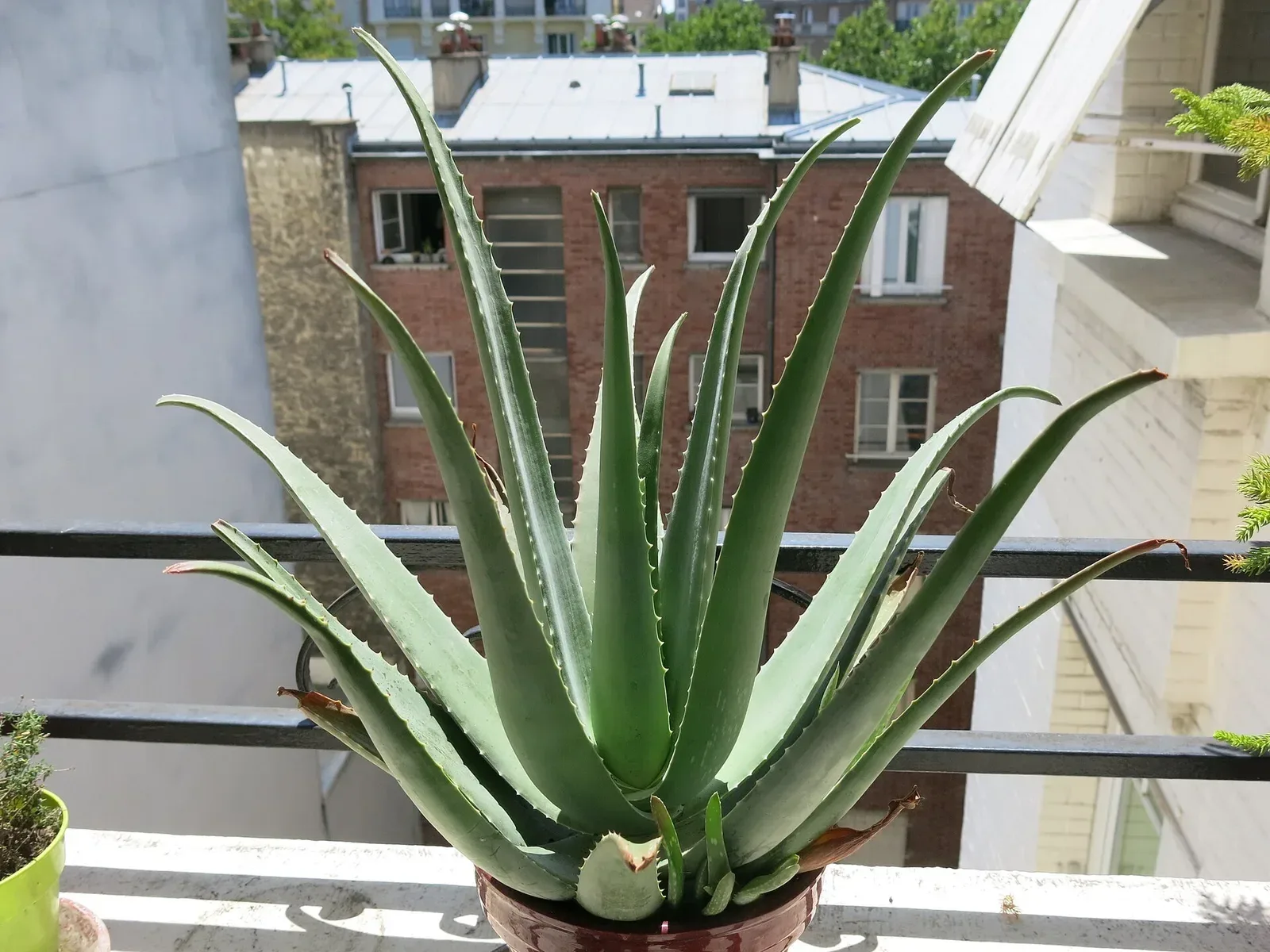
Aloe is a succulent, so its stored water changes how you should care for it. Use an open mix and a pot with drainage. Allow the medium to dry sufficiently between waterings instead of giving small daily splashes. Check the root zone rather than only the dry crust on top.
Morning sun can suit an established plant, but a shaded aloe can scorch if moved abruptly into a hot afternoon position. During prolonged monsoon rain, bright cover is often more useful than an exposed spot. Follow the aloe pot care guide for species-specific care. Keep the plant away from pets that chew leaves, and do not treat home-grown aloe as a general remedy for medical problems.
A mature aloe can lean as offsets crowd the pot. Check stability and separate offsets only when they are ready and growing conditions are suitable. Do not keep increasing container size simply to avoid dealing with crowding; a much larger wet pot can create a new root problem.
Jade for a bright, sheltered corner
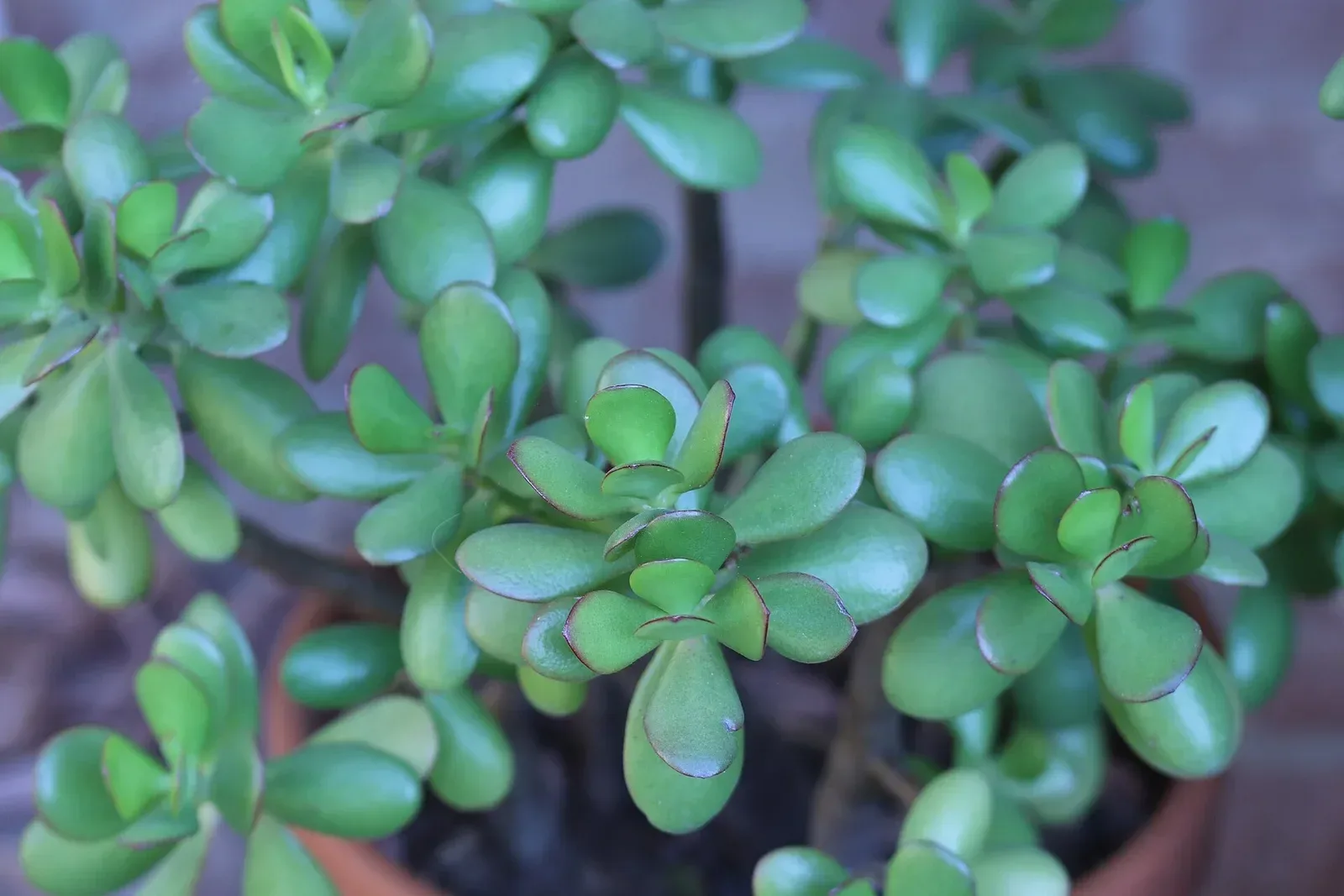
Jade, Crassula ovata, suits a grower who can resist watering a plant simply because it is nearby. Its thick leaves hold moisture. Use a freely draining mix and let it dry appropriately before watering again. Continuous dampness is more dangerous than a brief delay in watering a healthy established plant.
Give jade gradually increased light rather than moving it straight into severe heat. If the stems become long and weak, review light before adding feed. Heavy rain exposure is a poor match for a dense mix. The jade balcony guide covers placement, while the monsoon rot guide helps with a plant that remains wet and begins to soften.
Keep jade separate from herb pots so your watering round reflects its needs. A tall specimen can become top-heavy; do not place it on a narrow ledge or a lightweight wobbly stand. Jade is also unsuitable where pets regularly nibble foliage. Put plant safety and stable placement ahead of the decorative effect.
Money plant for bright shade and trailing growth
The money plant discussed here is Epipremnum aureum, also called pothos. It can trail from a pot or be trained on a suitable support. Bright indirect light is a good starting position. Strong afternoon sun can scorch leaves, while very poor light can produce sparse, stretched vines.
Water when the growing medium has dried sufficiently, then let excess leave the pot. Do not leave a nursery pot standing in a cover full of water. For training and pruning, read the money plant care guide. Pruning a long bare vine back to a healthy node is usually more useful than coiling every stem tightly around the pot.
Money plant contains calcium oxalate crystals that can irritate the mouth if chewed. Long vines must stay away from pets and small children. A high basket is not protection once stems grow within reach. Do not release cuttings into drains or outdoor natural areas; keep this vigorous climber contained in the garden.
Spider plant for a softer shaded display
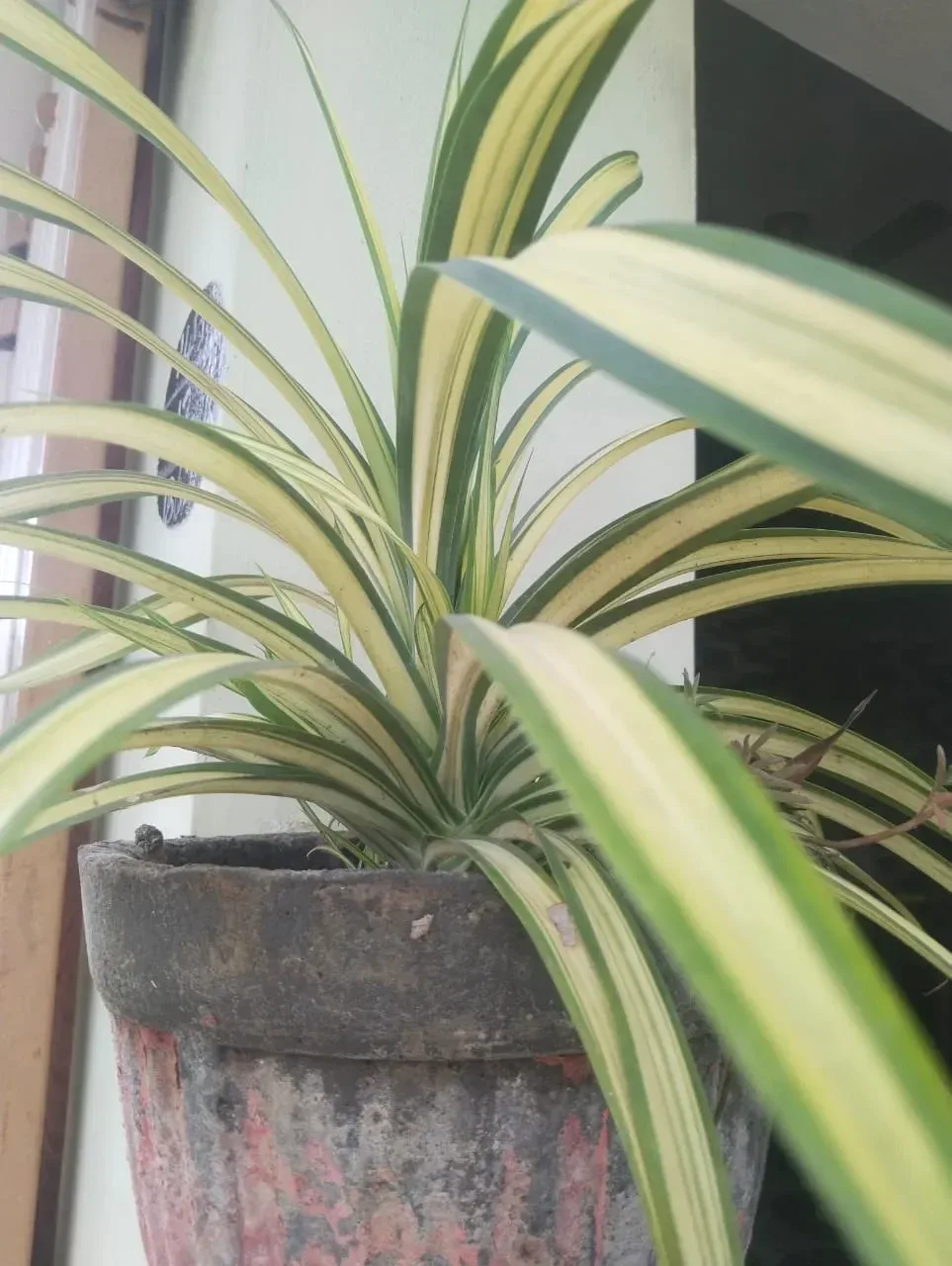
Spider plant, Chlorophytum comosum, has arching strap-like leaves and can produce small plantlets on long stems. It works in a stable pot or a properly installed hanging basket. Bright shade is more forgiving than an exposed west-facing position, especially for a plant that has been grown indoors.
Its fleshy roots tolerate some drying, but a small windy basket can still dry quickly. Check the medium and basket weight before watering. Brown tips can be linked to water quality, salts, dry conditions or root stress, so do not assume every brown end means thirst. Avoid heavy feeding, which can add to salt build-up in the pot.
Spider plant is listed as non-toxic to cats and dogs by the NC State Extension plant profile, but keep animals from chewing large amounts of any ornamental plant. Keep pesticides and fertilizers inaccessible regardless of the plant choice. Propagate only healthy plantlets; adding many babies to a crowded basket makes later watering and inspection harder.
Compare the first few choices
| Plant | Useful position | Main caution |
|---|---|---|
| Tulsi | Good direct light, easy to reach | Small pots dry quickly in heat |
| Aloe vera | Bright, gradually adjusted light | Persistent wetness and leaf chewing |
| Jade | Bright, sheltered and stable | Wet roots during prolonged rain |
| Money plant | Bright shade | Mouth irritation if chewed |
| Spider plant | Bright shade, protected from harsh sun | Basket drying and salt-related tip damage |
These positions are starting points. The pot, root condition and local exposure can change the result. Keep the first arrangement small enough to move safely when weather changes, without repeatedly shifting plants between extremes of light.
Adjust the selection to your Indian climate
In Mumbai, an uncovered balcony can become much wetter during the southwest monsoon. Put jade and aloe where they still get light but not days of repeated soaking. Money plant may enjoy humid air but still needs air around its roots. A shaded overhang can keep another pot dry even during heavy rain.
In Delhi or Jaipur, consider hot wind as well as sunlight. Check small pots frequently in summer and shelter new arrivals. In winter, reduce watering if growth and drying slow. In Bengaluru, moderate temperatures do not remove the risk of waterlogging. For Chennai, make rain preparations around the local wet period, including northeast monsoon exposure.
Buy fewer varieties and watch them properly
Select healthy plants and inspect the leaf undersides before bringing them home. Keep new pots apart initially so a hidden infestation does not spread at once. Do not repot everything and fertilize heavily on arrival. Give the plants time to adjust, then change only what clearly needs changing.
If the floor is narrow, use the small-space layout guide before adding stands. For trailing displays, check the hanging balcony plant guide for basket access and fixing safety. Keep a note of which plant dries fastest and which produces healthy new leaves. Those observations are the best basis for choosing the next plant, not an attractive label claiming that it grows anywhere.
Watch a related garden demonstration
This video offers a visual example. Use the plant-specific advice above for care, and obtain qualified advice for building loads and fixings. Any prices or product suggestions in the video are not current local quotes.
Watch the video on YouTube if the embedded player does not load.


Comments
No comments yet — share what worked in your climate.