
A small garden should not make your balcony difficult to use. You still need to open the door, dry clothes and reach the drain. Before adding shelves, remove empty pots and decide which parts of the floor must stay clear. That often creates more growing space than buying another stand.
Use this guide to plan a compact container garden, not to squeeze in the maximum number of plants. The balcony and terrace gardening guide covers building checks and local weather. Here the aim is an arrangement that works for daily life and still gives plants the light and root space they need.
Measure the space that is truly available
Measure the floor, door swing and the route you use most. Include a chair only if you really sit there. Mark the drying rack, outdoor air-conditioning equipment and any access needed for servicing. Plants should not obstruct airflow around equipment or force maintenance staff to move a heavy collection first.
Draw the usable area on paper. Then mark the mature width of each plant, not just the pot rim. A small palm or a compact nursery shrub can spread considerably. Leave enough working space to turn with your watering can and put down a removed pot. A layout that works only when everything stays tiny will soon become inconvenient.
Map light before choosing the display
Record direct sun at different times and check the positions behind solid railings. A high shelf can be brighter than the floor, but a shelf tucked below an overhang may be darker. The direction the balcony faces is useful information, not a complete growing plan.
Choose sun-loving plants only where there is useful direct light. In bright shade, a foliage display may be more reliable than tomatoes or a row of flowering annuals. Compare the species in the sun and shade balcony plant guide. One suitable plant with healthy growth can make a narrow space feel greener than six struggling plants crowded together.
Layout idea 1: One trailing pot beside a clear window
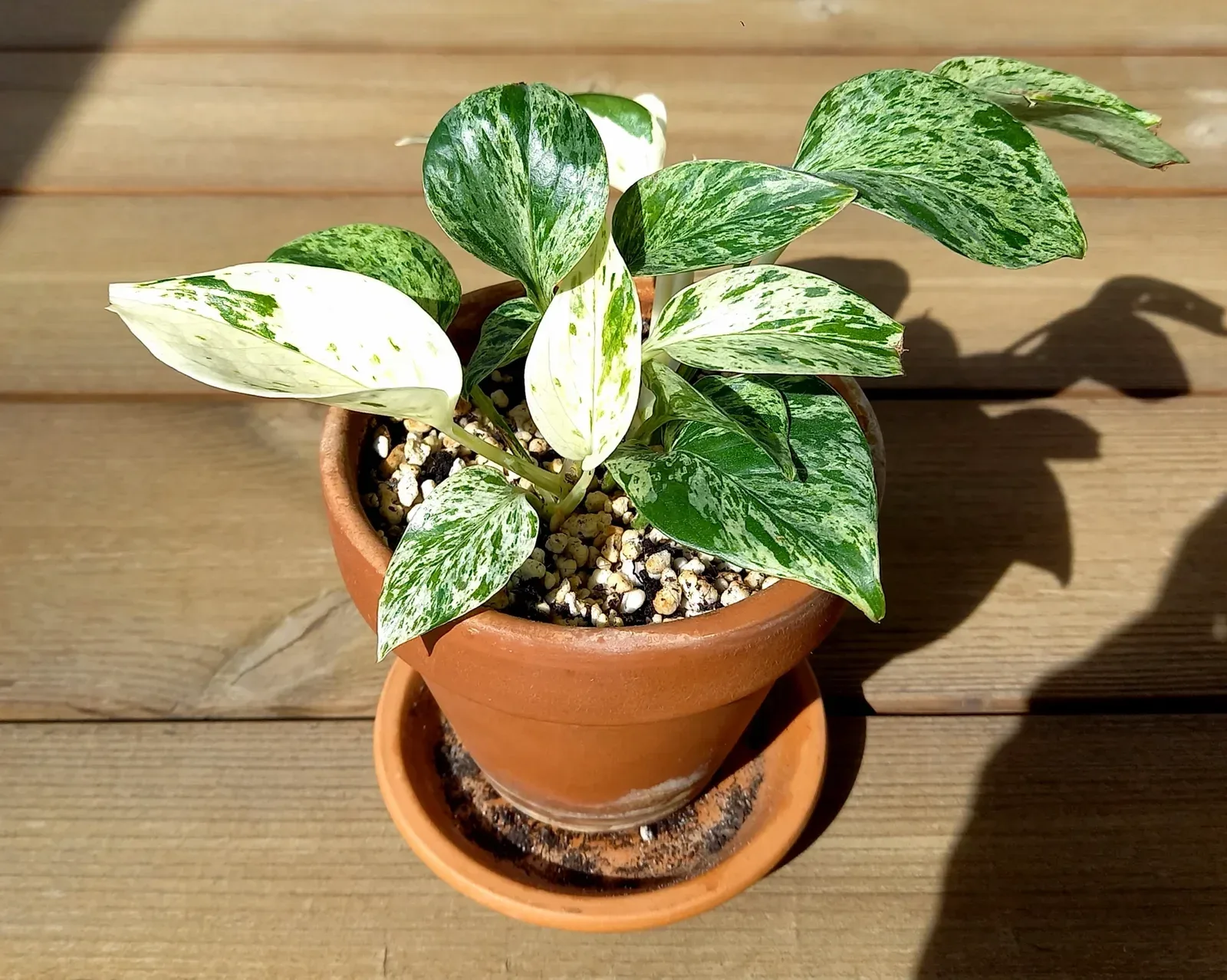
A well-placed money plant can provide greenery without taking over the floor. Put it on a stable surface within reach and train the stems away from the door. Keep leaves near useful daylight rather than sending every vine into a dim corner for decoration.
Check the India money plant profile for its care needs. Choose Epipremnum aureum knowingly; the common name money plant is used loosely. It can irritate the mouth if chewed, so keep long vines away from pets and children. Use the money plant training guide to keep the plant compact. Prune thin bare sections rather than extending a long tangled vine across the whole balcony.
Layout idea 2: A bright corner with separate succulent pots
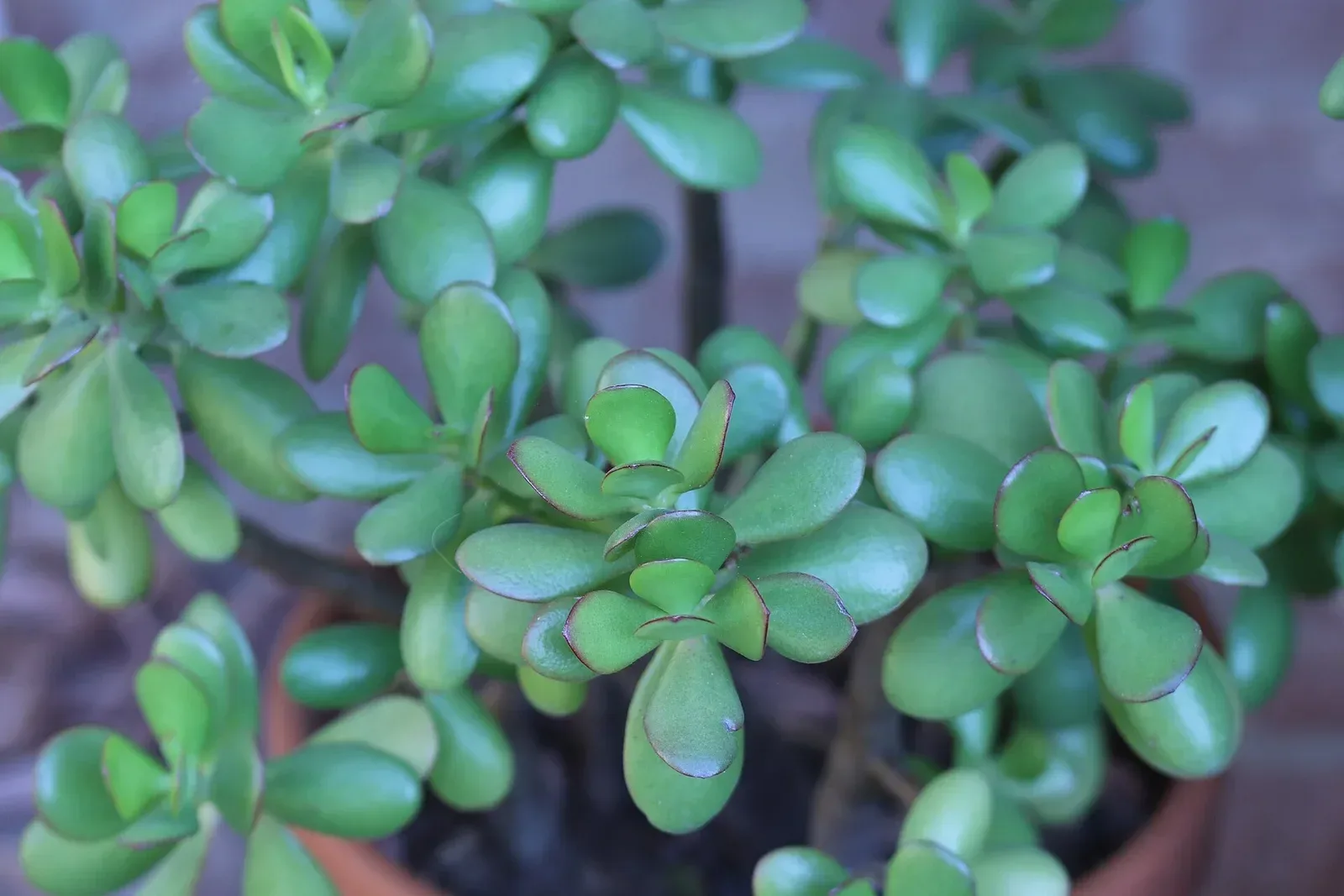
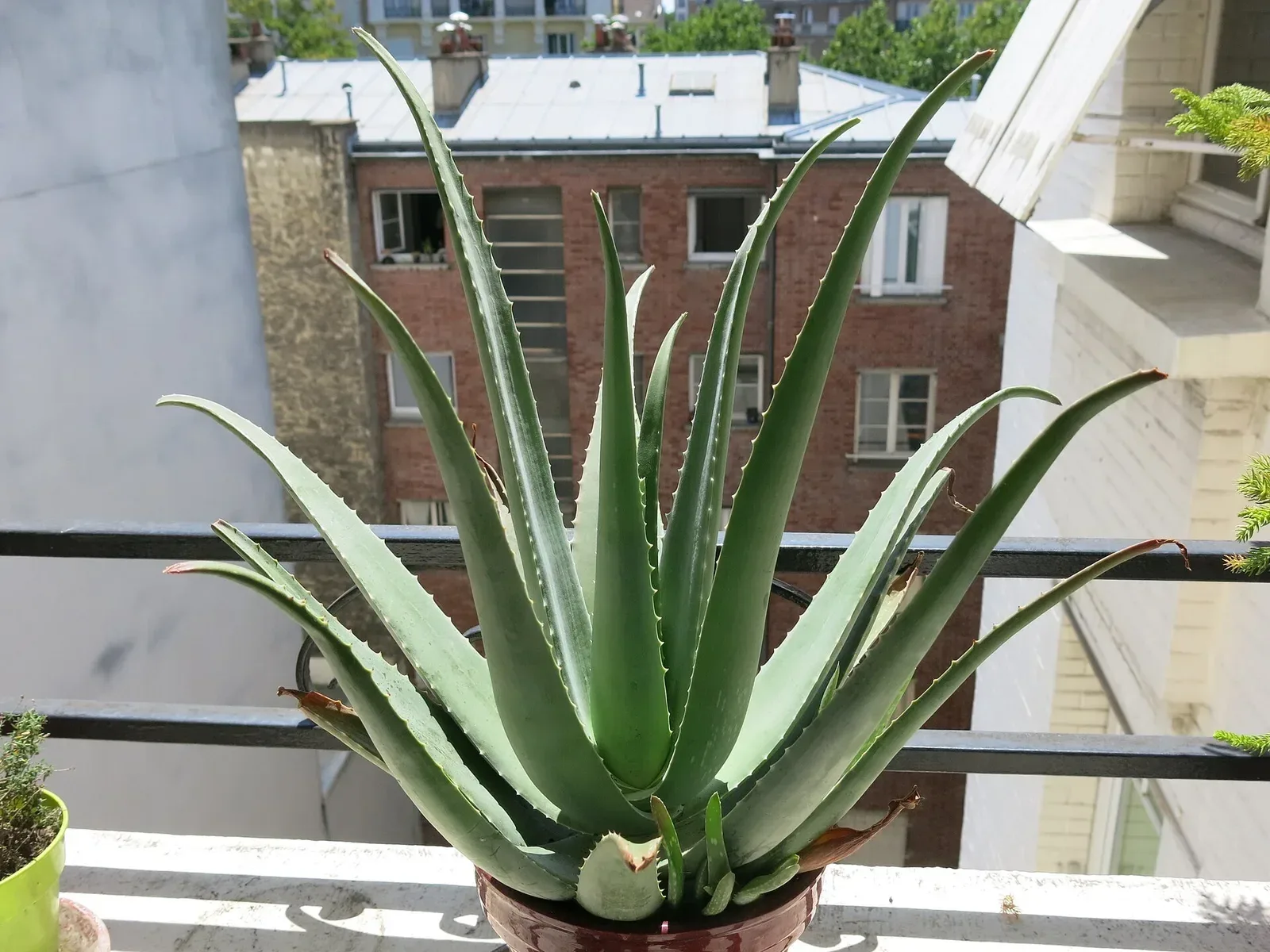
Aloe or jade can work where the light is suitable and repeated rain can be controlled. Separate pots let you inspect and water each plant properly. A mixed shallow bowl may look tidy initially, but the plants can outgrow it at different rates and hide one another's root problems.
Give a shade-grown aloe time to adjust before placing it in strong direct light. Check its stability and allow appropriate drying between waterings. The aloe pot care guide explains this routine. Do not place a spiky rosette at ankle height beside a narrow passage, especially where children or pets may brush against it.
A stable low stand can make floor cleaning easier, but its feet must suit the surface and load. Wheels need a reliable brake or another means of preventing movement. Do not solve wind problems by adding heavy stones without considering the balcony's capacity. Structural limits apply to a small attractive garden as much as to a large one.
Layout idea 3: A modest shelf rather than a plant wall
A narrow freestanding shelf may be easier to maintain than a wall full of small pockets. Put it against a suitable position without blocking doors or vents. Check stability with the actual loaded pots and arrange anchoring according to the manufacturer's instructions and the wall's suitability, with owner permission where required.
Leave space for hands as well as leaves
Keep heavier pots low, but do not assume that alone prevents tipping. Small children can climb shelves, and pets can knock pots from edges. Leave enough space above each plant for growth and hand access. A tightly packed shelf encourages you to water from the front while missing the pots behind it.
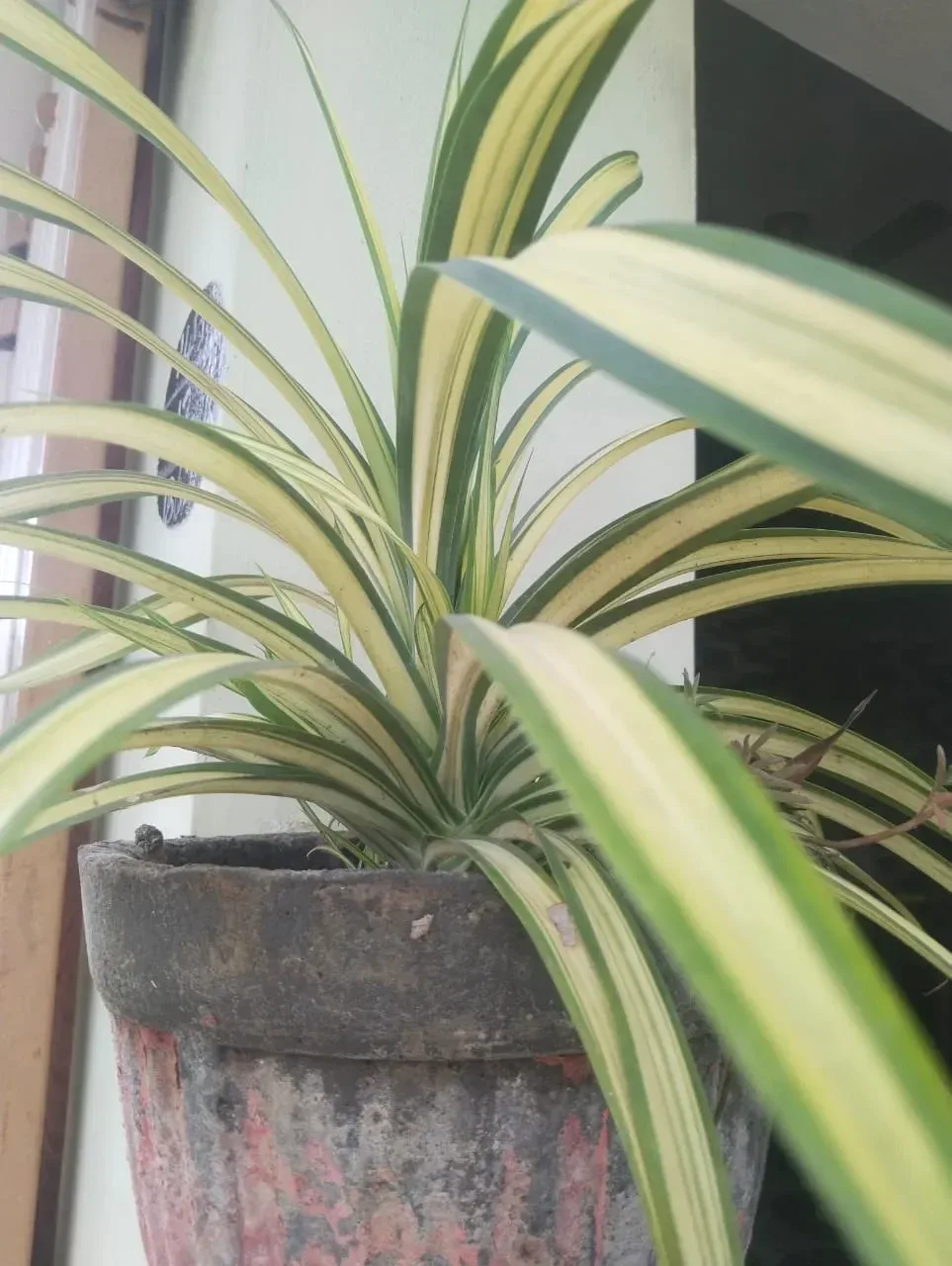
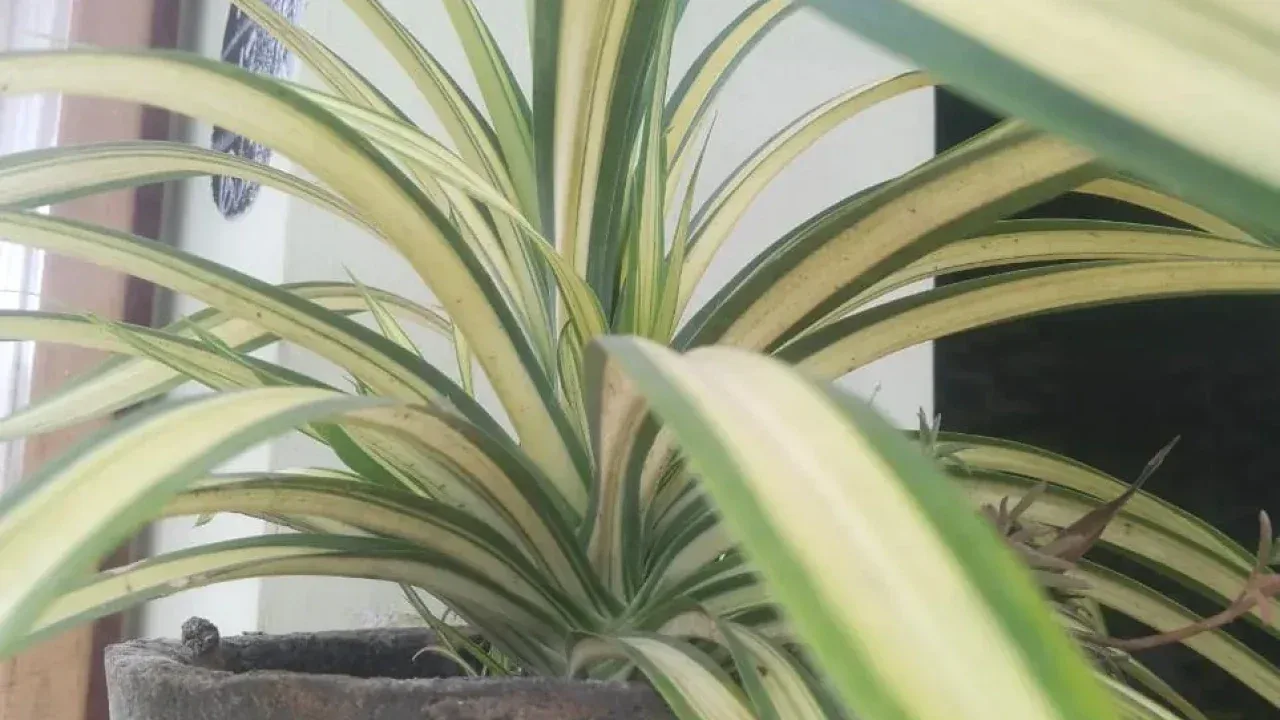
Choose fewer plants with different leaf shapes rather than a different species for every shelf. Spider plant offers arching leaves, but it still needs adequate light and room to spread. Do not put it behind a large pot where only the leaf tips see daylight. Turn a pot occasionally only if it can be done safely without crowding neighbouring plants.
Layout idea 4: A reachable herb station
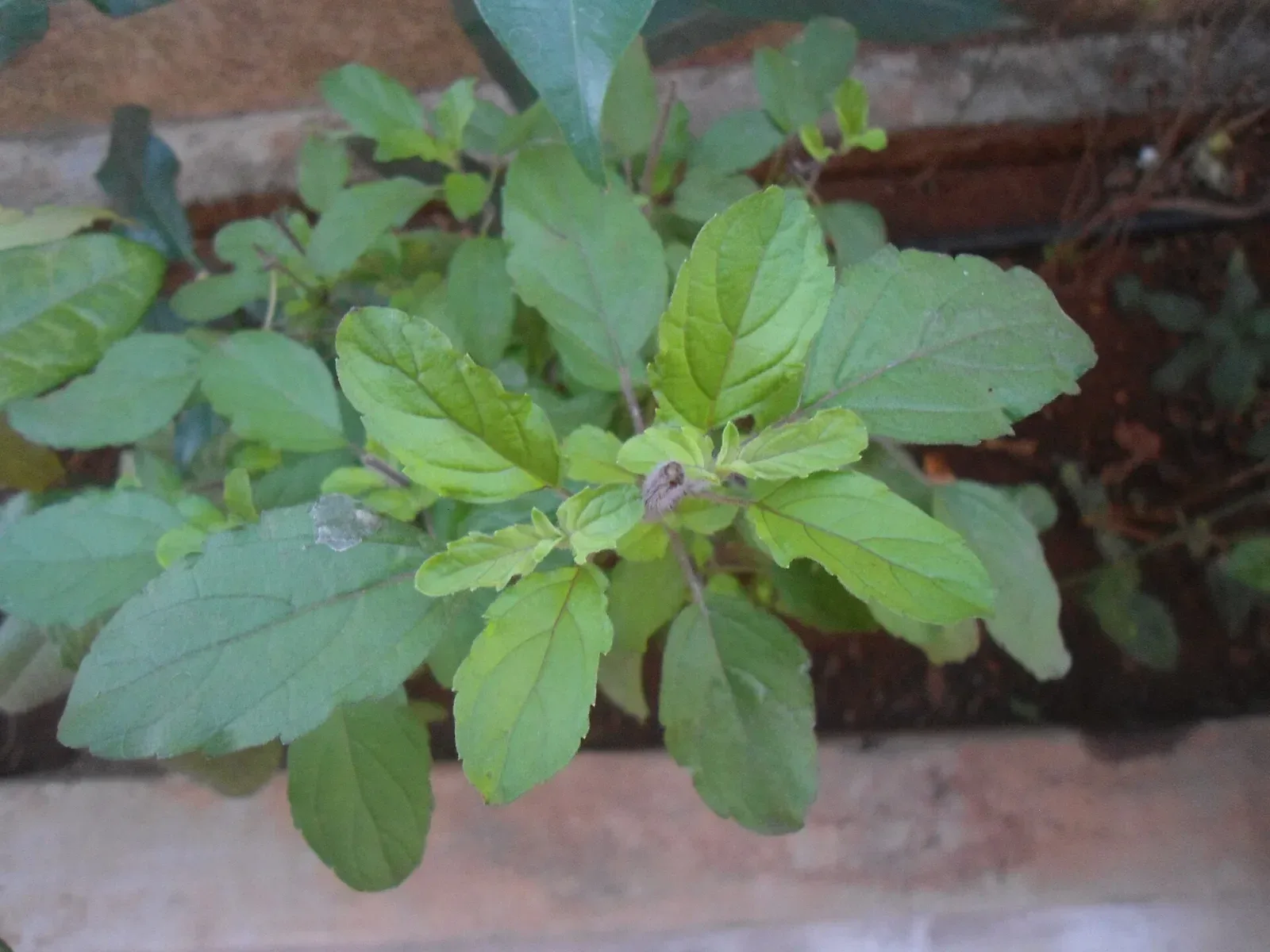
If the balcony has useful sun, keep a few herbs near the door so harvesting and inspection are convenient. Tulsi is one option for a separate pot. Give each herb the root space it needs and avoid planting vigorous spreaders with slower plants merely to save one container.
Use the tulsi harvesting guide for the individual plant. Take small amounts from an established plant and leave enough healthy foliage for recovery. A freshly bought seedling should not be stripped for an immediate harvest. Check shoots regularly for aphids before moving the pot near other herbs.
Keep growing herbs away from obvious sources of contamination such as dripping equipment or dirty runoff. Identify every edible plant accurately. Do not eat an ornamental plant because its leaves smell familiar, and check any treatment label before using a product on edible crops. Limited space is a reason to be selective, not to mix unknown plants together.
Use vertical space without shifting risk overhead
A vertical layout can be useful, but it adds watering and fixing problems. Hanging pots must stay inside the balcony and attach to a sound support using suitable rated components. A basket's weight rises after watering. Do not hang it from pipes, makeshift wire or a railing whose capacity has not been checked.
Read the hanging basket guide before installing one. It should be possible to inspect the pot and take it down without leaning outside or climbing on furniture. If a hanging position is too difficult to water, a reachable shelf is the better use of space.
Keep a watering route through the layout
Carry your usual watering can through the proposed arrangement before filling every pot. Check if you can reach the root zone without spilling on another plant. Group plants with broadly similar moisture needs, but still check individual pots. Shade and pot size can make neighbouring plants dry at very different rates.
The watering frequency guide shows why a fixed timetable can be misleading. Water containers when needed and allow drainage without leaving stagnant trays. Keep runoff away from electrical equipment and neighbouring balconies. A garden becomes harder to maintain when every watering round requires moving half the pots.
Choose movable ideas carefully in a rented home
Ask the owner about pots, wall fixings and balcony use before installation. Reversible does not mean harmless; a heavy planter can stain or damage a floor even without drilling. Use supports suitable for the finish and leave the area inspectable. Never cover a damp patch with a stand and call the problem solved.
Freestanding pots can be easier to move when you leave, but filled containers may be too heavy for one person. Think about the route through the flat and the lift before choosing oversized planters. Avoid elaborate structures that cannot be removed without damaging waterproofing or walls. Keep a record of permissions with photographs of the original condition.
Make seasonal changes without rebuilding everything
In Delhi's hot months, the narrow strip beside a west wall may become harsh even for an established plant. Move vulnerable pots to a suitable sheltered position gradually. During cooler weather, watch for slower drying. Do not water more simply because a plant is growing less quickly.
In Mumbai or other wet coastal cities, keep drains accessible and check covered pots separately from exposed ones. Rain does not reliably reach every part of a small balcony. Chennai's northeast monsoon may require preparation at a different time from the southwest monsoon routine. Bengaluru's moderate temperatures still allow sudden wind and heavy rain, so leave room to reposition pots safely.
Reduce clutter with a monthly plant review
Remove empty damaged pots and store spare material securely rather than stacking it against the railing. Check whether plants are shading one another or pressing against glass. Prune where appropriate and move a plant only when the new position suits it. Repeated rearrangement for photographs can interrupt its adjustment to light.
If the collection is becoming difficult, stop buying and identify the problem. Too little daylight, awkward access and a poor watering routine will not be fixed by another decorative pot. The garden budget guide helps plan additions without ignoring delivery and maintenance. Keep the layout small enough to care for during a busy week. A clear path, a usable chair and a few healthy plants are enough for a garden that belongs to everyday life.
Watch a related garden demonstration
This video offers a visual example. Use the plant-specific advice above for care, and obtain qualified advice for building loads and fixings. Any prices or product suggestions in the video are not current local quotes.
Watch the video on YouTube if the embedded player does not load.


Comments
No comments yet — share what worked in your climate.