
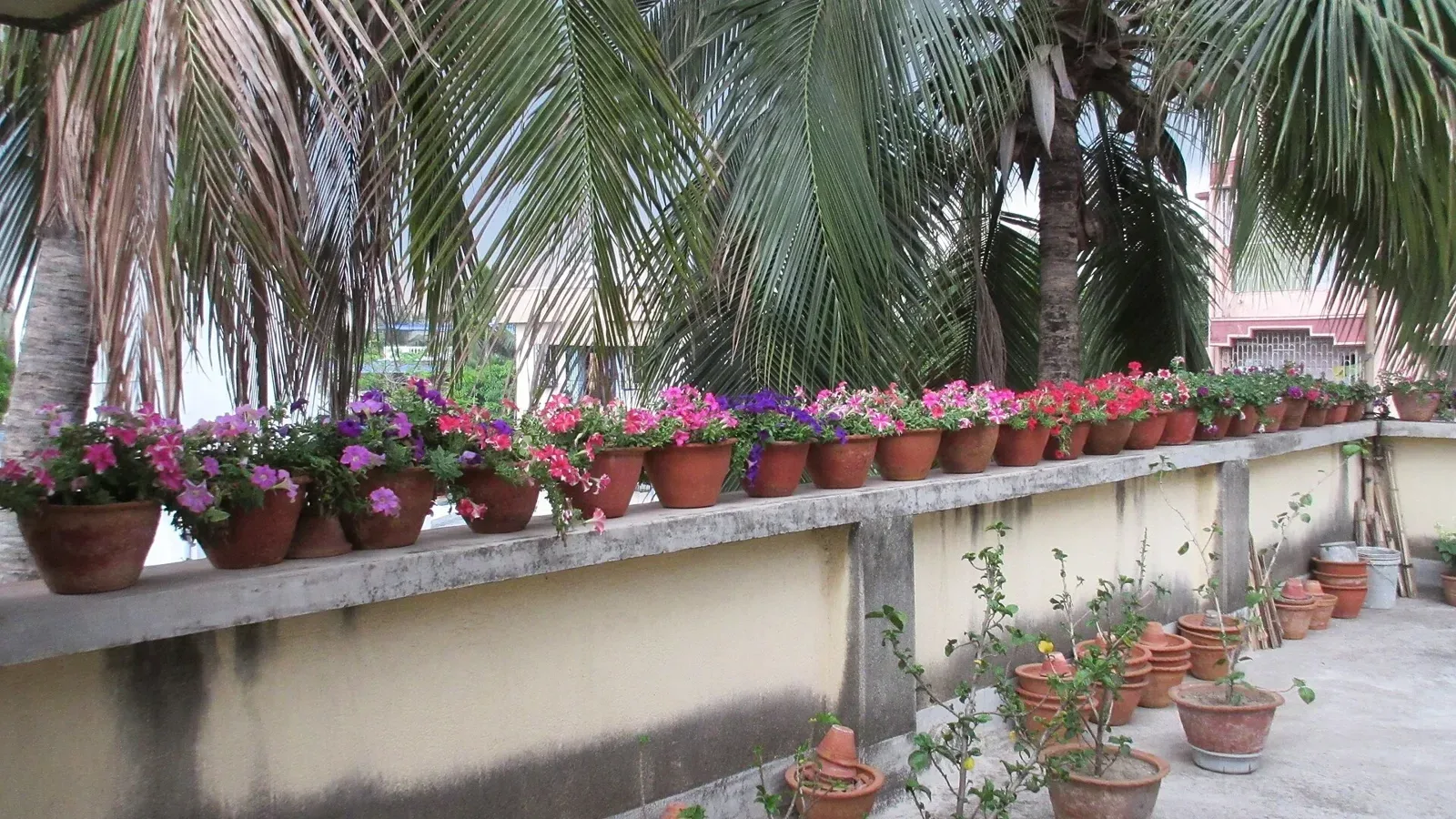
Most terrace gardens that fail in India do not fail because of the plants. They fail because water from the pots finds a crack in the roof and shows up as a damp patch on the ceiling below. Once that happens, the family wants the garden gone. So before you buy a single grow bag, spend a little time on the roof itself.
This guide is part of our balcony and terrace gardening in India series. It covers how to check your terrace, what good waterproofing for a garden looks like, the test that tells you it works, and when to schedule the job in your part of the country.
Why a garden is hard on a roof
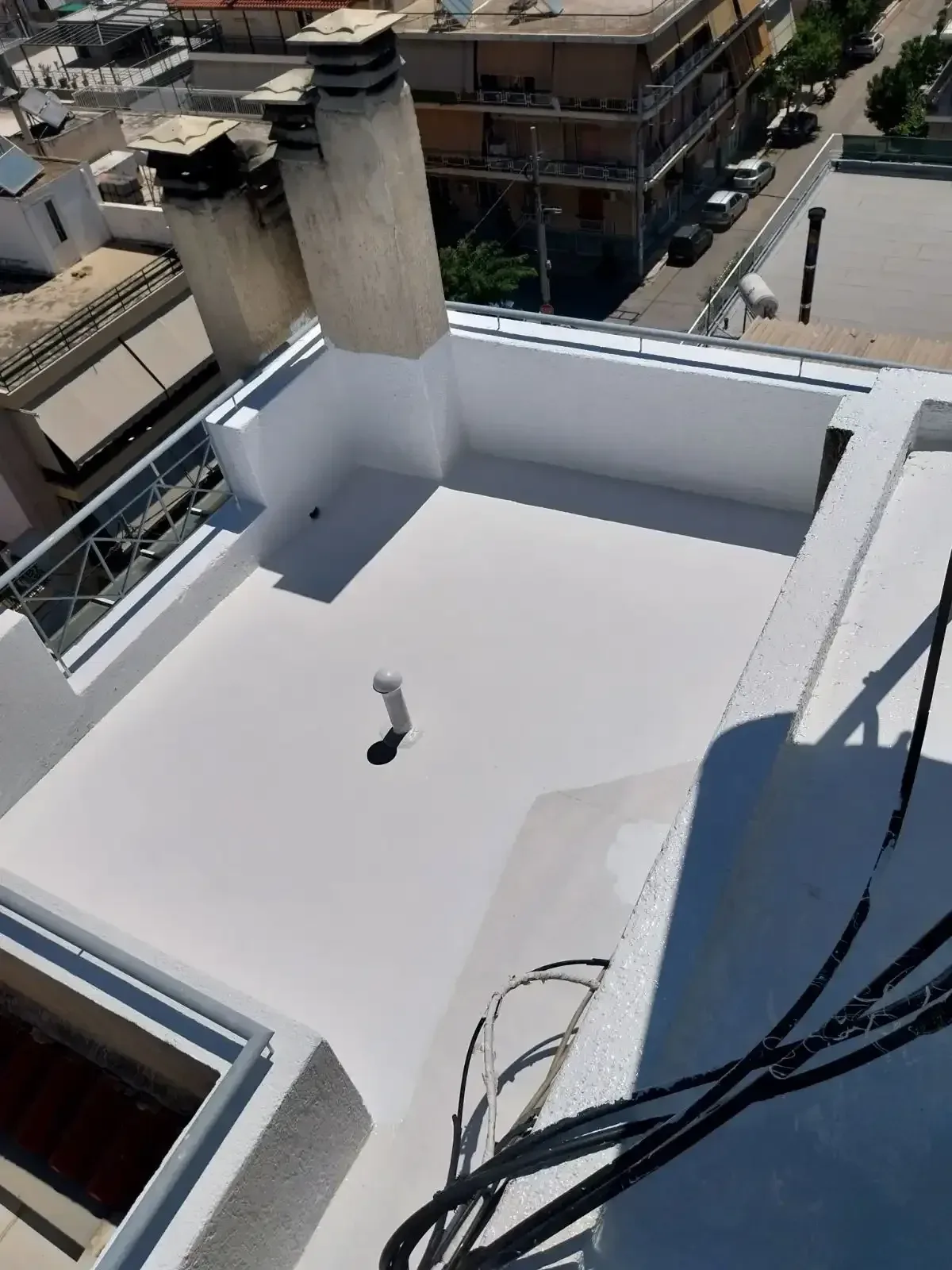
A bare terrace gets wet when it rains and then dries in the sun. A garden terrace stays damp almost every day. Water drips out of pot holes, sits under trays, and soaks into the floor around beds. Roots look for the same tiny cracks that water does. Fallen leaves and soil wash towards the drain outlets and block them, so water stands on the roof after a heavy shower.
None of this means you cannot garden on a terrace. It means the roof needs to be sound first, and the garden needs to be laid out so it does not damage the waterproofing later.
Check the terrace before you plan the garden
Look at the ceiling below
Go to the top floor room under the terrace. Look for damp patches, peeling or bubbling paint, white powdery salt on the plaster, or brown rings on the ceiling. Check the corners where the ceiling meets the outer walls. Signs here mean water is already getting through, and a garden will only make it worse.
Walk the terrace after rain
Go up an hour after a good shower, or pour a few buckets of water and watch where it goes. Water should run to the outlets. If it stands in puddles in the middle or along a wall, the slope is wrong. Note every spot.
Check the weak points
Leaks rarely start in the open middle of a slab. They start at joints and edges. Check these places closely:
- The joint where the floor meets the parapet wall
- The area around each rainwater outlet
- Pipe holes, the water tank base, and solar panel or dish antenna stands
- Old cracks, broken tiles, and hollow sounding patches when you tap the floor
- Small peepal or banyan seedlings growing out of the parapet. Their roots widen cracks, so pull them out early with the root.
Ask an engineer about load
Wet soil, water and large planters are heavy. How much a roof can safely carry depends on how it was designed and built, and only a structural engineer who sees your building can tell you. Do this check before you plan raised beds, a lawn or large planters. In an apartment, the society may also need to approve any work on a common terrace.
Slope and drains matter as much as the coating
Waterproofing works best when water leaves the roof quickly. A good coating on a badly sloped roof will still have water sitting on it for days in the monsoon.
Many older Indian houses have brick bat coba, a layer of broken brick in lime or cement mortar laid to slope towards the outlets. If yours is cracked or sinking in places, a contractor may need to repair it or lay a fresh screed with a proper fall before any coating goes on. This is building work, so get it done by someone who does roofs regularly.

Every outlet should have a cover or mesh that stops leaves and soil from going in, and the waterproofing must be carried neatly into the mouth of the outlet. Keep a clear path to each drain once the garden is in place. Never put a pot on top of an outlet.
Waterproofing types for a garden terrace
You will hear many brand names. Most products fall into a few groups. Your contractor should explain which one suits your roof, and you should ask to see the official technical data sheet for the exact product.
Cement based coatings
Polymer modified cement coatings are brushed on in coats. They bond well to concrete and are common under tiles and screeds. They are less stretchy than other types, so they suit roofs that do not crack much.
Acrylic and elastomeric roof coats
These liquid coats are made for exposed terraces and are often white or light grey to reflect heat. Some are meant to stay exposed to sun and foot traffic, not to sit under wet soil and planters. Read the areas of use on the data sheet before you choose one for a garden.
Bitumen membranes
Bitumen sheets are laid in rolls, either torched on or self adhesive, with overlapping joints. Some grades contain a root repelling additive meant for planted roofs. They need a protection layer or screed on top before anything is placed over them.
Polyurethane liquid membranes
PU membranes are rolled or sprayed on and cure into a seamless, rubbery film with no joints. Several manufacturers sell grades meant for roof gardens. For example, the data sheet for Dr. Fixit Flexi PU 270(I) lists root resistance for landscape areas among its features.
Look for root resistance on paper
For a garden, ask whether the product has been tested for root resistance and under which standard. The common ones are EN 13948 and the German FLL test. Both are two year tests where the membrane is planted with firethorn, and the FLL test adds couch grass to check for rhizomes. A sales line that says "strong" or "long lasting" is not the same thing as a root resistance test report.
The order of work
Every system has its own steps, so follow the manufacturer's method. A sound job on a garden terrace usually goes in this order:
- Remove loose tiles, old peeling coats, moss and dirt. Repair cracks as the product instructions say.
- Fix the slope and the outlets.
- Treat the weak points first: floor to parapet joints, outlets, pipe holes and the tank base, often with a reinforcing fabric or tape.
- Apply the main coating or membrane in the number of coats the data sheet asks for, and carry it up the parapet wall, not just across the floor.
- Let it cure for the time given on the data sheet.
- Do the water test.
- Lay the protective screed or tiles on top, if the system needs one.
The water test: do not skip it
A ponding test is the simplest way to know the roof is sealed before it gets covered. The outlets are blocked and the terrace is flooded with a shallow layer of water. Construction specifications in India commonly call for about 50 mm of water held for 48 hours, with the ceiling below checked for damp spots during and after. Mark the water level at the start so you can see if it drops.
If any damp shows, the contractor finds and fixes the spot and tests again. Only after a clean test should the protective layer or tiles go on. Take photos of the test and keep them with the bills and warranty card.
When to do the work in your region
Waterproofing needs a dry slab and mild weather. Most liquid products list a working temperature range and warn against damp surfaces and very high humidity. One PU membrane data sheet we checked lists 5 to 35°C air temperature, so a roof in peak afternoon heat or near freezing is outside its range. Plan around your monsoon.
North India
In Delhi, Punjab, Haryana, Uttar Pradesh and Rajasthan, the southwest monsoon usually reaches by late June or early July and starts pulling back from the northwest from mid September. October to November and February to April are good windows. Avoid the hottest weeks of May and June when the slab gets very hot, and on foggy winter mornings wait until the surface is dry before work starts.
South India
Kerala and coastal Karnataka get the monsoon from early June, so finish by April or early May. Tamil Nadu and coastal Andhra get much of their rain from the northeast monsoon in October to December, so January to March is often the best time there. Bengaluru and Hyderabad get rain in both seasons, so the dry months of January to April are safest.
Coastal cities
Mumbai, Goa, Konkan, Mangaluru, Kolkata and coastal Odisha get heavy, steady monsoon rain and occasional cyclones. Book contractors early, because everyone wants the work done in April and May. Allow time for curing and the water test before the first pre monsoon showers.
Hills and the northeast
In Himachal, Uttarakhand and Kashmir, cold winters can take the roof below the working range of many products, and freezing nights stress cracks. Late spring and autumn are usually better. In the northeast, rain often starts in April with pre monsoon storms, so plan for the drier months before that.
These windows shift every year. Check the forecast for a dry spell of several days before work starts.
Set up the garden so it protects the roof
- Do not plant directly on the slab or pile soil against the parapet. Damp soil against a wall is a common cause of seepage.
- Raise pots and grow bags on bricks, pot stands or a metal frame so water drains and the floor dries. Our guide on grow bags vs pots explains which containers suit a terrace.
- Do not drill or nail into a waterproofed floor to fix trellises or shade net poles. Use weighted bases or fix to the parapet only after asking your contractor.
- Keep trees with strong roots, like ficus and bamboo, in sturdy containers, not in built beds, unless an engineer has designed the bed with a root barrier and drainage layer.
- Keep plants such as tulsi and curry leaf in pots with open drainage holes, and empty saucers so water does not stand on the floor.
- Check drip pipes and tap joints for slow leaks.
For the full step by step plan, see our terrace garden setup guide. If you are working out a budget, add waterproofing and repairs as a separate line in your terrace garden setup cost plan, using local quotes.
A yearly roof check before the monsoon
- Clear soil and leaves from every outlet and its mesh.
- Move pots and look at the floor underneath for cracks or damaged coating.
- Check the floor to parapet joint and the tank base.
- Look at the ceiling below for any new damp patch.
- Pull out any tree seedlings in cracks.
- Note the warranty period and call the contractor early if something looks wrong.
Watch: waterproofing a terrace for a garden
This video from a waterproofing firm in Tamil Nadu shows a terrace being treated before a garden goes on it. Use it to understand the order of work. The right product for your roof is a decision for you and your contractor, based on the data sheet.


Comments
No comments yet — share what worked in your climate.