
| ☀️ Light | Bright indirect light |
|---|---|
| 💧 Water | High (consistently moist) |
| 🪴 Soil | Moisture-retentive, slightly acidic houseplant mix with good drainage |
| 🌡️ Temp | 10°C – 24°C |
| 🐾 Safety | Cats: not verified · Dogs: not verified |
| 📏 Mature size | 60 cm |
Where It Grows & Climate Tolerance
Pet & Companion Animal Toxicity (Maidenhair Fern)
Not yet verified: Toxicity status for cats, dogs, and horses has not yet been confirmed against veterinary poison-control records. Keep out of reach of pets or consult your veterinarian.
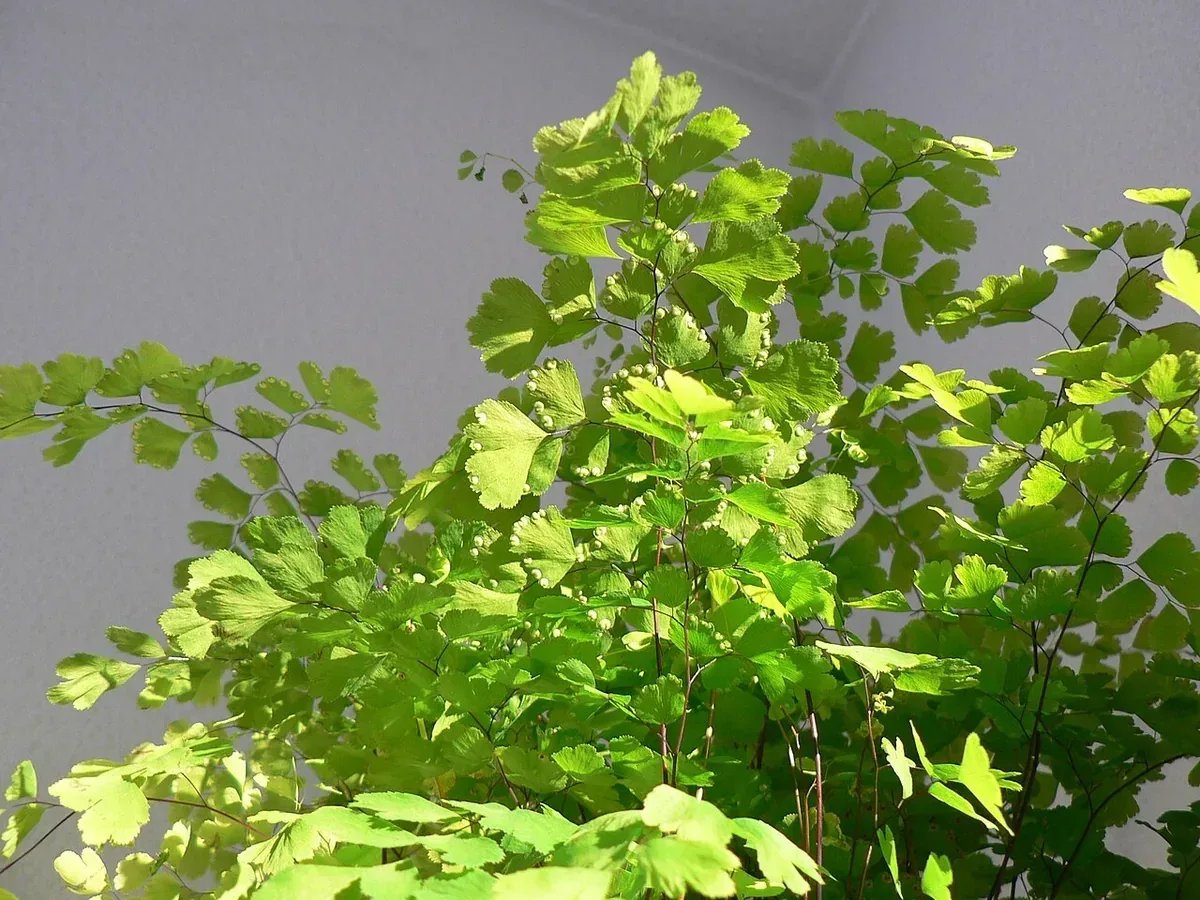
Delta maidenhair fern (Adiantum raddianum) has fine, fan-shaped leaflets on thin black stems. It is one of the fussier houseplants: it needs high humidity, soil that never dries out, bright indirect light and protection from drafts.
Care instructions
Care Guide & Maintenance Routine
Bright indirect light, constantly moist but not waterlogged mix, and humidity above 60 percent if you can manage it. Keep it between 16 and 21°C and never below 10°C. A bathroom with a window, a terrarium or a pebble tray gives the best results. Cut off dried fronds and it usually regrows from the rhizome.
Light & Sunlight
The RHS recommends bright, indirect light. NC State lists partial shade to shade and notes it loses vigour in too much shade or full sun. NYBG suggests a north window or a short distance from an east or west window.
Watering Schedule
NC State says the roots should not be allowed to dry out. NYBG warns that letting the root ball dry and then soaking it is a common cause of failure; water moderately so the mix stays evenly moist, letting only the top 2 to 3 cm dry. Water less in winter.
Potting Mix & Drainage
Moisture-retentive, slightly acidic houseplant mix with good drainage
Temperature & Humidity
NYBG says typical home temperatures of 16 to 21°C (60 to 70°F) are fine and not to let it fall below 10°C (50°F). Above about 24°C (75°F), NYBG suggests adding a pebble tray and misting. NC State lists USDA zones 9b to 10b outdoors.
About maidenhair fern
The maidenhair fern most often sold as a houseplant is Adiantum raddianum, the delta maidenhair. It comes from tropical America and the West Indies and belongs to the family Pteridaceae. The fronds have many small, fan-shaped leaflets on wiry black stems, and the whole plant forms a soft, rounded mound 30 to 60 cm across, according to NC State Extension. It spreads slowly by creeping rhizomes under the soil.
The name Adiantum comes from a Greek word meaning unwetted, because water beads off the leaflets. It is a beautiful plant, but it is honest to call it demanding. Most failures come from dry air or a pot that dried out once.
Types and buying tips
Several cultivars of A. raddianum are sold, some with larger leaflets and some very fine and crowded. Other Adiantum species are grown outdoors in cooler gardens, but they are not the same as the tropical houseplant.
Pick a plant with many new fronds coiled near the base and few brown leaflets. Check that the soil is moist when you buy; a fern that has dried out in the shop may already be stressed. Bring it home in a bag or box to protect it from wind and cold.
Planting and soil
NYBG says moisture retention, slight acidity and good drainage are all essential. A coir or peat-free houseplant mix with a little fine bark or perlite suits it. Use a pot with drainage holes, only slightly larger than the root ball. Repot in early spring, and only when dark roots appear at the surface.
Light
Bright, indirect light is the RHS recommendation. A north window, or a spot a short distance from an east or west window, works well, as NYBG suggests. NC State notes that both deep shade and full sun reduce vigour. Direct sun quickly bleaches the thin leaflets.
Watering through the seasons
The key rule: never let the root ball dry out completely, and never leave it sitting in water. NYBG points out that drying out and then soaking is a common cause of failure.
Warm and dry months
Check the pot daily. Small pots can need water every one to two days in hot weather.
Humid or rainy months
The plant uses less water and the air does some of the work. Water a little less, empty the saucer, and keep air moving.
Cool months
The RHS advises watering sparingly in winter. Sparingly does not mean letting it dry out, so keep the mix lightly moist.
Humidity and temperature
NYBG recommends humidity above 60 percent, which is hard in many homes, particularly in winter or in dry northern Indian summers. Extra watering does not fix dry air. Better options are a large terrarium, a glass cloche, a tray of wet pebbles under the pot, grouping plants or a small humidifier. A bright bathroom is often the easiest spot.
Normal room temperatures of 16 to 21°C are fine. Do not let it drop below 10°C. Keep it away from AC vents, heaters and open windows, which dry and chill the fronds very quickly.
Feeding
The RHS suggests a half-strength general liquid feed once a month from mid-spring to late summer. No feeding in autumn and winter. Overfeeding damages the fine roots.
Pruning and propagation
Snip off brown fronds at the base to keep the plant tidy and let light reach new growth. If it collapses after drying out, cut every frond back to just above soil level, keep the mix moist and humidity high, and wait. A healthy rhizome usually sends up new fronds.
Divide large plants in spring. Ease the clump out, pull or cut the rhizome into two or three sections with fronds and roots on each, and pot them up. Spores need at least 21°C, according to the RHS, and take a long time.
Troubleshooting
Fronds turning crisp and brown
Step 1: Feel the mix 2 cm down. If it is dry, the roots dried out, so water thoroughly and check more often. Step 2: If the mix is moist, measure humidity or look at the setting: a heater, AC vent or sunny window means the air is too dry. Step 3: If only a few old fronds brown, that is normal turnover. See brown leaf tips.
Pale, washed-out fronds
Check how much direct sun reaches the plant. Bleaching on the side facing the window is sun damage. Move it back into bright shade.
Yellow fronds and a wet, sour pot
Lift the plant out. If the roots are dark and mushy, the mix has stayed waterlogged, often in a cool room or an oversized pot. Trim damaged roots and repot in fresh mix in a smaller pot.
Whole plant wilted suddenly
Ask what changed: a missed watering, a cold draft, a move near a heater, or a hot afternoon. Water if dry, move it to a stable spot, and cut back fronds that do not recover.
Uses
Maidenhair fern suits terrariums, bottle gardens, bathrooms with a window and shaded, humid conservatories. It also looks good with other humidity lovers such as fittonia. In frost-free gardens it can grow on damp, shaded walls and rock gardens.
Safety and pets
We found no ASPCA listing for Adiantum, and NC State lists no poison information for A. raddianum. Pet safety is marked as not verified. Keep it out of reach of pets that chew plants, and call your vet if a pet eats a large amount.
Common mistakes
- Letting the pot dry out "just once".
- Trying to fix dry air by watering more.
- Putting it in direct sun or near a heater.
- Throwing the plant away when the fronds crisp; the rhizome often survives.
- Using leaf shine or oily sprays on the fronds.
India compared with Canada
In humid parts of India, such as Kerala, the west coast, Bengal and the Northeast, the monsoon months are the easiest time to grow it. Dry heat in North India from April to June is the hardest. In Canada the challenge reverses: summer humidity is often fine, but winter heating dries the air badly, so a humidifier or terrarium from November to March makes the difference.
Seasonal rhythm
Seasonal Calendar
A month-by-month calendar for Maidenhair Fern in Global is coming soon. See the light, water and temperature notes above.
Diagnostics
Common Problems & Troubleshooting
Crispy brown fronds from dry air or a dry root ball; pale, bleached fronds in direct sun; yellowing and rot in soggy, cold mix; sudden collapse near heaters, AC or open windows.
Pests & seasonal watch: NC State lists no significant pests or diseases. Indoors, occasional mealybugs and scale may appear. Do not use oil-based sprays or leaf shine on the delicate fronds.
Care encyclopedia · 2 guides
Guides & Articles for Maidenhair Fern

12 Plants for a North-Facing Balcony in India, From Bright Shade to Deep Cover
Look up from the pot. A railing with open sky, a shelf under a chajja and a windy corner suit different plants. Here is what to grow in each spot.
Read guide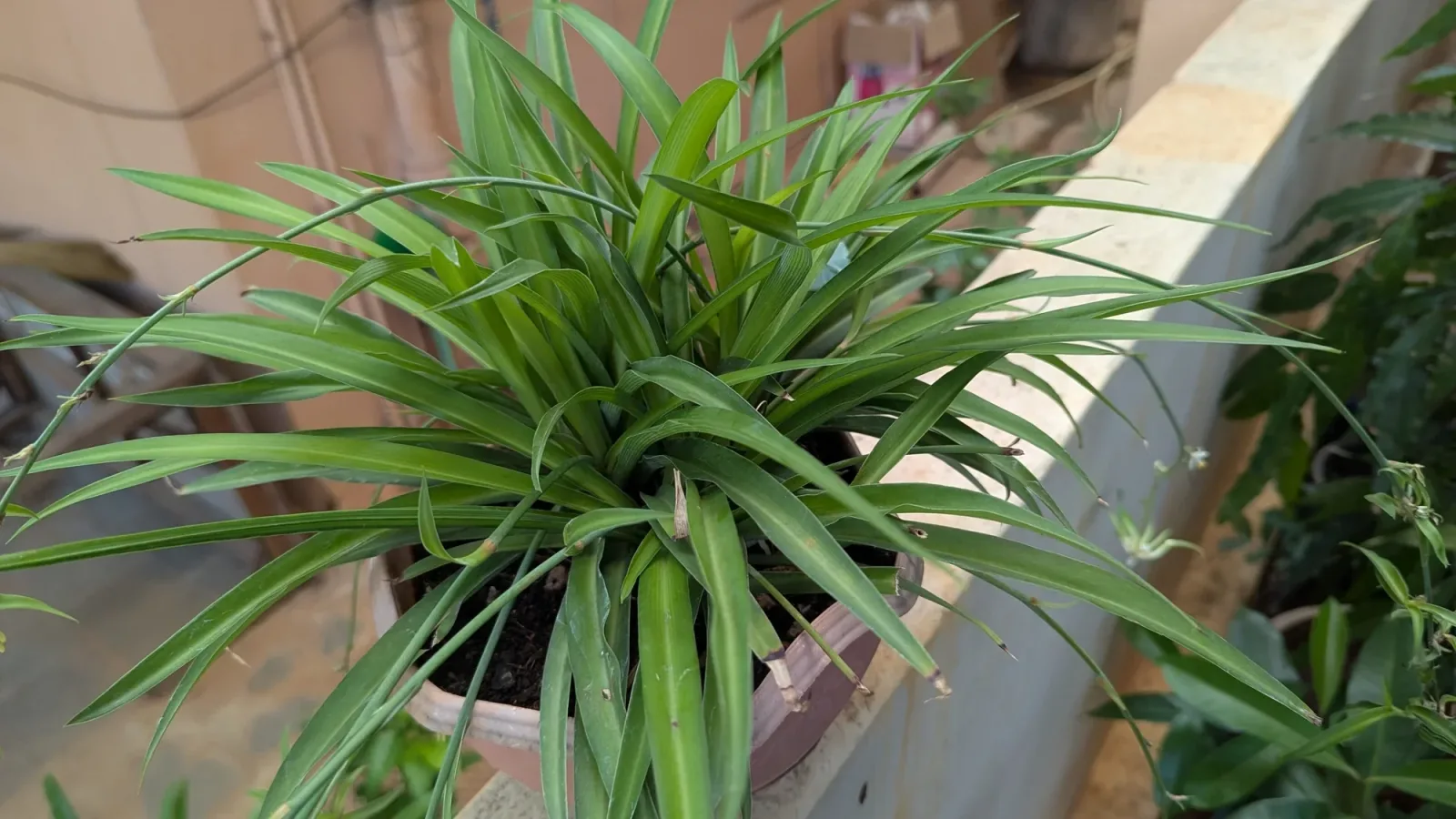
11 Best Indoor Hanging Plants for Indian Homes (and Where Each One Grows Best)
For a first hanging pot, money plant, spider plant and inch plant (zebrina) are the easiest in Indian homes. Here are 11 trailing plants, with light, watering, pet-safety and region notes.
Read guideQ&A
Frequently Asked Questions
Why is my maidenhair fern drying up?
The two usual causes are dry air and a root ball that dried out between waterings. NYBG says low humidity is the most common cause of failure.
Can a crispy maidenhair fern come back?
Often yes. Cut off the dead fronds, keep the mix evenly moist and raise humidity. If the rhizome is firm, new fronds usually appear within weeks.
How much humidity does a maidenhair fern need?
NYBG recommends more than 60 percent. A hygrometer helps you check. Terrariums, glass cloches, pebble trays and humidifiers all help.
How often should I water a maidenhair fern?
Keep the mix evenly moist. Let only the top 2 to 3 cm dry before watering again, and never let the whole pot dry out.
Is maidenhair fern safe for cats?
ASPCA has no listing for Adiantum and NC State lists no poison information, so we mark it as not verified. Keep it away from pets that chew plants.
Can maidenhair fern take direct sun?
No. Direct sun bleaches and crisps the fronds. Bright, indirect light from a north or east window suits it.
Is maidenhair fern the same as Hansraj?
Hansraj is the traditional Indian name for Adiantum ferns, mainly native species. The houseplant sold in nurseries is usually Adiantum raddianum, a tropical American species.
Should I mist my maidenhair fern?
Misting raises humidity only for minutes. A pebble tray, humidifier or terrarium works better. NYBG suggests daily misting only when temperatures go above about 24°C, alongside a pebble tray.
When should I repot it?
In early spring, and only when dark roots appear at the soil surface. NYBG suggests this is roughly every two years.
Similar Botanical Matches
Keep exploring
Related plants
Grower field notes
Reader Field Notes in Global
Share how this plant performs in your local Global climate.