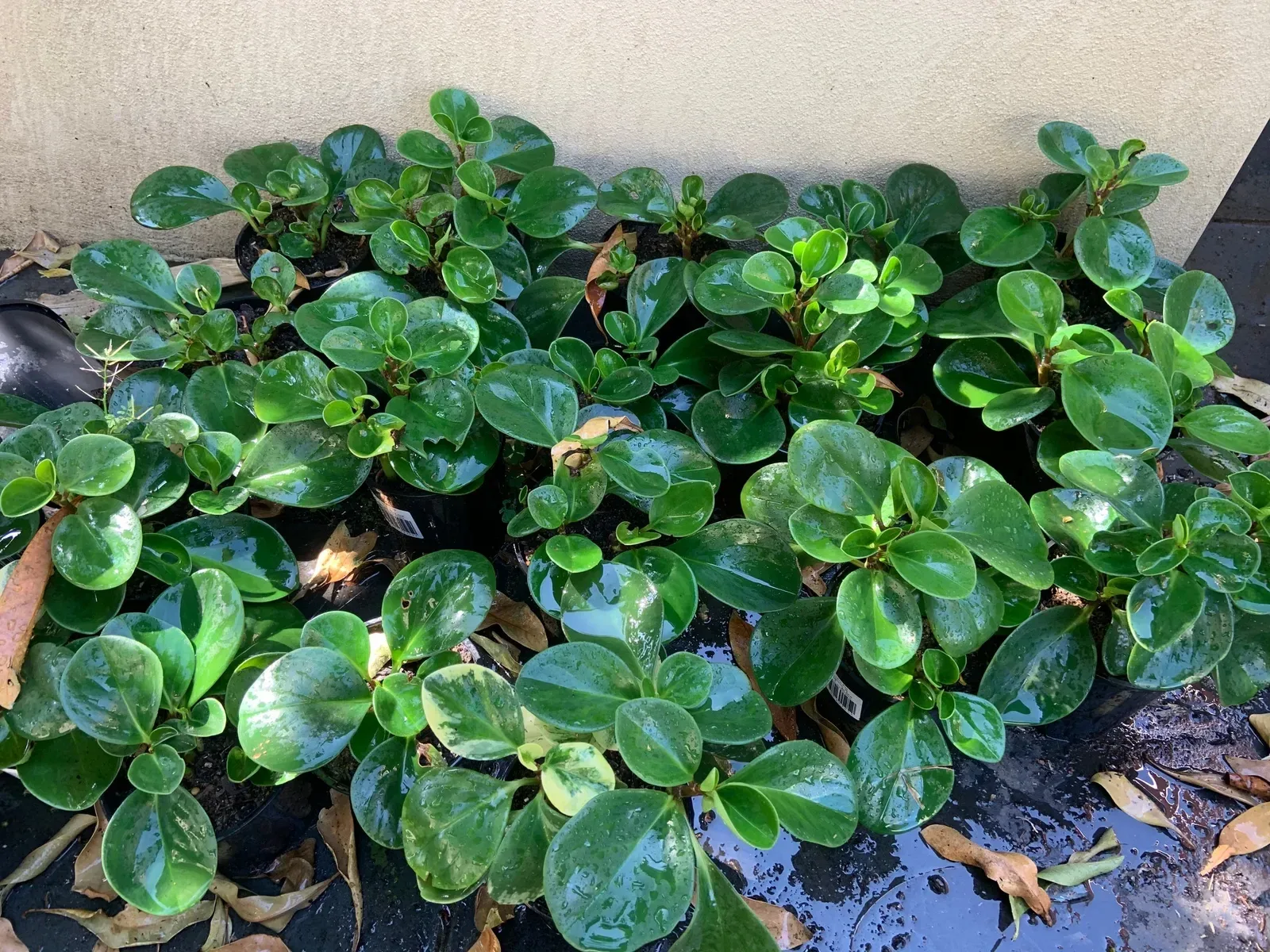
| ☀️ Light | Bright indirect light |
|---|---|
| 💧 Water | Low (allow soil to dry) |
| 🪴 Soil | Light indoor mix with perlite |
| 🌡️ Temp | 18°C – 26°C |
| 🐾 Safety | Cats: non-toxic · Dogs: non-toxic (ASPCA Animal Poison Control) |
| 📏 Mature size | 30 cm |
Where It Grows & Climate Tolerance
Pet & Companion Animal Toxicity (Peperomia)
Compact, pet-safe houseplant with thick leaves; easy for desks and shelves in Canadian homes.
Care instructions
Care Guide & Maintenance Routine
Medium to bright indirect light, water when half dry, pet-safe, easy cuttings.
Light & Sunlight
Medium to bright indirect. Variegated types need more light. Avoid hot direct sun.
Watering Schedule
Water when top half of mix is dry. Less in winter. Thick leaves store water.
Potting Mix & Drainage
Light indoor mix with perlite
Temperature & Humidity
Keep above 15 C. Avoid cold glass in winter.
Peperomia obtusifolia, often sold as baby rubber plant, is a small, sturdy houseplant that fits shelves, desks and bright bathrooms. It stores water in thick leaves, so it forgives missed waterings better than ferns or calatheas. The ASPCA lists common peperomias as non-toxic to cats and dogs.
Give medium to bright indirect light. Variegated forms need a bit more light to keep their cream edges. Water when the top half of the mix feels dry — thick leaves mean it is easier to overwater than underwater. In Canadian winters, stretch the time between waterings. Always use a pot with drainage.
A light indoor mix with perlite suits it. Feed lightly every month in spring and summer. Average home humidity is fine. Keep temperatures between 18 and 26 C and off cold windowsills. Pinch tips to keep the plant bushy.
Propagate easily from leaf or stem cuttings in water or damp mix. Watch for mealybugs in leaf joints. Soft, collapsing leaves usually mean too much water; wrinkled leaves can mean the plant went too dry. With bright shade and a light watering hand, peperomia is one of the simplest plants for Canadian apartments.
Peperomia obtusifolia stays small enough for Canadian classroom shelves and rental suites where floor space is tight. Variegated jade types need the brighter end of indirect light or they revert toward solid green. If you propagate cuttings in water, pot them up once roots are a few centimetres long so they do not weaken. Summer AC can dry rooms as much as winter heat — still water by feel, not by calendar. Soft, limp leaves after a cold draft near an entry door are common; move the plant and trim damage.
Seasonal rhythm
Seasonal Calendar
A month-by-month calendar for Peperomia in Canada is coming soon. See the light, water and temperature notes above.
Diagnostics
Common Problems & Troubleshooting
Mushy stems (overwater); wrinkled leaves (too dry); dull variegation (low light).
Pests & seasonal watch: Mealybugs in leaf joints. Wipe with alcohol swabs.
- Yellow leaves — Leaves fade from green to yellow, often starting at the bottom.
- Drooping — Stems and leaves hang limp even though the plant was recently fine.
- Root rot — Roots turn brown and mushy in soil that stays wet.
- Fungus gnats — Tiny dark flies hover around wet potting mix.
- Aphids — Clusters of small soft insects on new tips, often sticky.
- Overwatering — Soil stays wet, leaves yellow or droop, and the pot feels heavy.
- Curling — Leaves cup, roll or twist instead of lying flat.
- Edema — Corky or blistered spots on leaf undersides after the plant takes up more water than it can lose.
- Tired mix — Water races down the inside of the pot and the root ball stays dry, or the mix is a hard brick.
- Stem rot — The stem goes soft, dark or black at soil level and the top collapses.
Care encyclopedia · 4 guides
Guides & Articles for Peperomia
Peperomia Care Guide for Canada
A practical Canadian guide to peperomia, with seasonal care, common problems, propagation and buying checks.
Read guide →Top 10 Pet-Safe Houseplants for Canadian Homes
Snake plant, pothos and lilies are common in Canadian homes but toxic to pets. These 10 houseplants are listed as non-toxic to both cats and dogs by the ASPCA, and they cope with short days and dry winter air.
Read guide →14 Pet-Safe Houseplants for Canadian Homes With Cats and Dogs
A spider plant, a parlor palm or a Christmas cactus is a solid start if you want houseplants in a home with cats or dogs. All fourteen plants below have a Canada profile and an ASPCA non-toxic listing. That is not the same as safe to eat.
Read guide →15 Low-Light Houseplants for Dim Canadian Winters
A cast-iron plant, a Chinese evergreen or a parlor palm is a realistic start in a dim Canadian winter room. Here are 15 plants with live Canada profiles, plus an honest note on a few that only pretend to like the dark.
Read guide →Q&A
Frequently Asked Questions
Is peperomia safe for cats and dogs?
Yes. Common peperomias are listed as non-toxic by the ASPCA.
How often should I water peperomia?
When the top half of the mix is dry. Thick leaves store water, so less is safer than more.
Why are the stems mushy?
Usually overwatering or a pot without drainage. Trim soft parts and let the mix dry.
Can I grow it in a north window?
Green types often cope; variegated types prefer brighter indirect light.
Similar Botanical Matches
Grower field notes
Reader Field Notes in Canada
Share how this plant performs in your local Canada climate.