
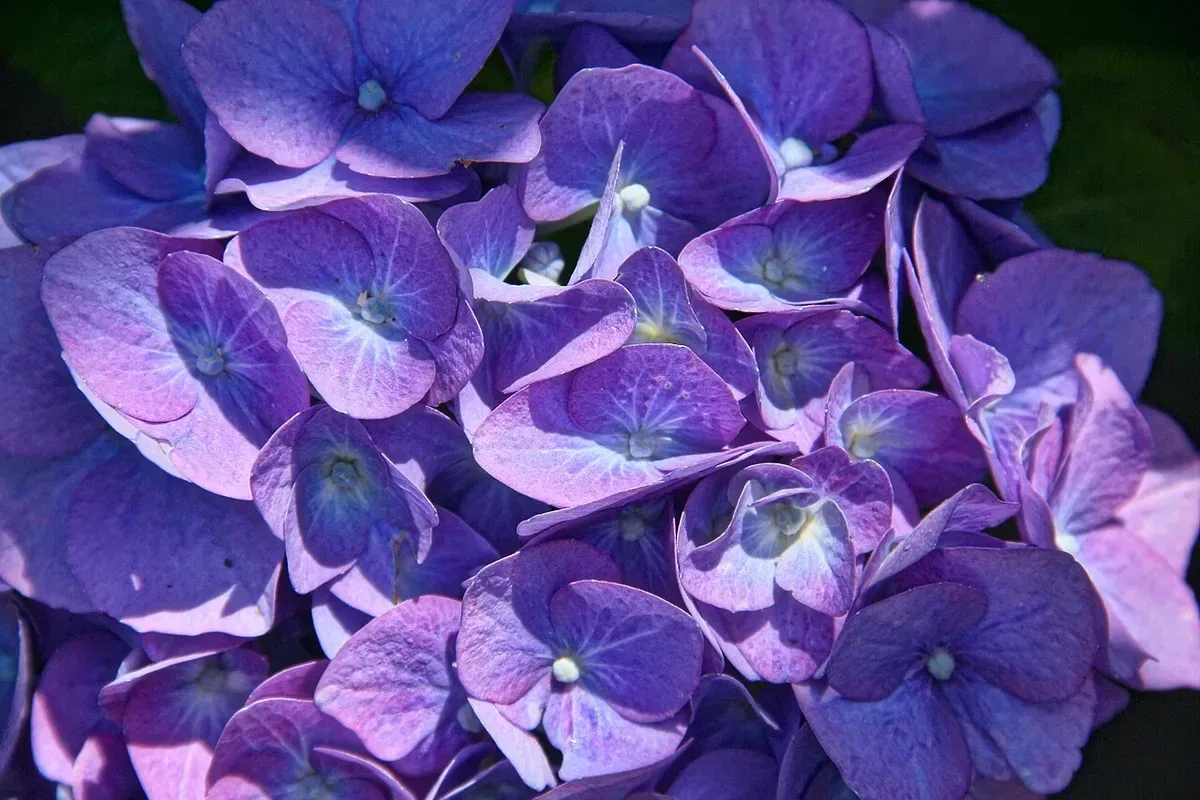
| ☀️ Light | Bright indirect light |
|---|---|
| 💧 Water | High (consistently moist) |
| 🪴 Soil | Moist, humus-rich, well-drained soil; acid soil for blue flowers |
| 🌡️ Temp | -18°C – 32°C |
| 🐾 Safety | Cats: toxic · Dogs: toxic |
| 📏 Mature size | 1.8 m |
Where It Grows & Climate Tolerance
Pet & Companion Animal Toxicity (How to Grow Bigleaf Hydrangea in Canada)
Bigleaf hydrangea flowers freely on the BC coast and in sheltered parts of southern Ontario and the Maritimes. In colder areas, winter often kills the stems that carry next year's flowers, so reblooming varieties and winter protection make the difference.
Care instructions
Care Guide & Maintenance Routine
Plant in spring in a sheltered spot with morning sun and afternoon shade. Mulch deeply in late fall and leave the old flower heads on. Prune only in spring, once you can see which buds survived. Choose rebloomers in zone 5 and 6 gardens.
Light & Sunlight
NC State says it performs best in dappled sunlight or partial shade and should be protected from afternoon sun. The RHS says light shade is best, but sun is fine if the soil is not too dry.
Watering Schedule
Needs steady moisture; the leaves wilt quickly in hot, dry weather. Water deeply rather than often, and mulch. The RHS suggests rainwater for blue-flowered plants to help keep the colour, but tap water is better than letting the shrub go dry.
Potting Mix & Drainage
Moist, humus-rich, well-drained soil; acid soil for blue flowers
Temperature & Humidity
Shrub roots and lower stems are fairly hardy, but flower buds on old stems are often killed in zone 5 and 6 winters or by late frost. Last frost averages run from 26 March in Vancouver to 8 May in Halifax (ECCC normals). Wilts in July heat waves without afternoon shade.
Bigleaf hydrangea in Canadian gardens
Bigleaf hydrangea is the classic blue or pink mophead of coastal gardens. In Canada it flowers most reliably where winters are mild, and needs more care the colder it gets.
Hardiness zones
NC State lists USDA zones 6 to 11. Canadian NRCan zones are worked out differently, so use them only as a rough guide. On that basis:
- Coastal BC (zones 8 and 9, Vancouver, Victoria, Nanaimo): grows and flowers freely, like in its native coastal Japan.
- Southern Ontario (zones 6 and 7, Niagara, Toronto, Windsor): survives, but cold snaps often kill the flower buds on older stems. Rebloomers flower more reliably.
- Nova Scotia and southern New Brunswick (zones 5b to 6b): grown in sheltered gardens near the sea, especially where snow cover is reliable.
- Montréal, Ottawa and the Prairies (zone 5 and colder): plants may survive with heavy mulch but often flower poorly. Panicle hydrangea is the easier choice there.
Protecting flower buds
The buds for next summer sit at the tips of this year's stems. After the ground freezes in November, mound 20 to 30 cm of shredded leaves or straw around the base, and leave the dead flower heads on, as the RHS advises. Some gardeners wrap a cage of chicken wire filled with leaves around small shrubs. Remove the cover gradually in April.
Late frost
New shoots can be hurt by a late frost after warm spells. Average last frost dates (ECCC 1991-2020 normals via GrowersGuide.ca) are about 26 March in Vancouver, 4 May in Toronto, 8 May in Halifax and 29 April in Montréal. Keep a sheet handy for cold nights after early growth.
Pruning in Canada
Wait until new leaves appear in May, then cut dead tips back to the first live, fat pair of buds. In cold regions, do not prune in the fall at all.
Blue or pink
Soils in much of southern Ontario and the Prairies are alkaline, which turns blue types pink. Coastal BC and Nova Scotia soils are often acid enough for blue. For blue on alkaline ground, grow in a large pot of acid compost and use rainwater from a barrel.
Pots
Containers freeze right through on a Canadian deck. Move potted plants into an unheated garage or shed for winter and water lightly once a month.
Reblooming series
Garden centres across Ontario and the Maritimes sell rebloomer series such as Endless Summer, which flower on both old and new stems. Even if January cold kills the old buds, these usually still bloom by August.
Snow as insulation
Snow is a good blanket. In Halifax, Moncton or Charlottetown, shovel clean snow from the path onto the base of the shrub after storms. Avoid snow mixed with road salt.
Questions from Canadian readers
- Is it deer-proof? No. NC State notes deer damage.
- Pets? Toxic to dogs and cats (ASPCA).
Seasonal rhythm
Seasonal Calendar
| Month | Care Tasks | Seasonal Focus |
|---|---|---|
| Jan | Protect from frost/heat | Keep the winter mulch on. Do not prune. |
| Feb | Protect from frost/heat | Check that snow or mulch still covers the base. |
| Mar | Protect from frost/heat | Coast: buds swelling; prune to strong buds late in the month. |
| Apr | Prune, Protect from frost/heat | Coast: finish pruning. Elsewhere: remove mulch slowly; watch for late frost. |
| May | Prune, Fertilize | Ontario and Maritimes: prune dead tips to live buds once leaves show. Light feed and mulch. |
| Jun | Plant out | Plant new shrubs; water weekly if dry. |
| Jul | Harvest, Protect from frost/heat | Flowering. Water deeply in heat waves; afternoon shade. |
| Aug | Harvest | Rebloomers flower on new growth. Cut stems for drying. |
| Sep | Protect from frost/heat | Stop feeding. Leave flower heads on. |
| Oct | Protect from frost/heat | Move pots into an unheated garage. |
| Nov | Protect from frost/heat | After the ground freezes, mound leaves or straw around the base. |
| Dec | Protect from frost/heat | Check winter cover after storms. |
Diagnostics
Common Problems & Troubleshooting
No flowers after a cold winter or hard pruning; wilting in afternoon sun; yellow leaves with green veins in very alkaline soil; brown leaf edges from drought or wind; flowers turning pink when blue was wanted.
Pests & seasonal watch: Leaf spot and powdery mildew in humid Ontario and Quebec summers. Aphids on new shoots. Deer browse buds and shoots in rural gardens.
- Yellow leaves — Leaves fade from green to yellow, often starting at the bottom.
- Brown tips — Leaf tips and edges turn dry, brown and papery.
- Drooping — Stems and leaves hang limp even though the plant was recently fine.
- Spider mites — Fine webbing and pale speckled leaves, worse in dry heated rooms.
- Aphids — Clusters of small soft insects on new tips, often sticky.
- White powder — A white powdery film on leaves, usually in still, humid air with dry soil at the roots.
- Leaf spot — Brown or tan spots with a yellow halo, sometimes with tiny dots in the centre.
- Underwatering — Soil is bone dry and leaves are crispy, curled or dull.
- Sun scorch — Bleached or crispy patches on the side that faces strong sun.
- No flowers — A flowering houseplant stays leafy and will not bloom.
Q&A
Frequently Asked Questions
How do I make my hydrangea flowers blue?
Blue flowers need acid soil, where aluminium is available to the plant. The RHS suggests rainwater for watering, ericaceous compost in pots, or a hydrangea blueing product containing aluminium sulphate, used as the label says. It will not work on very alkaline or chalky soil, and white varieties do not change colour.
Why did my hydrangea not flower this year?
Most often the flower buds on last year's stems were cut off by pruning or killed by a cold winter or late frost. Too much shade or too much nitrogen can also cut flowering.
When should I prune bigleaf hydrangea?
The RHS advises mid-spring, cutting back to the first or second strong pair of buds below the old flower. NC State says to finish any pruning before 1 August.
Should I cut off dead hydrangea flowers in autumn?
No. The RHS says the dead heads help protect new growth below from frost. Remove them in spring.
Is hydrangea poisonous to dogs and cats?
Yes. ASPCA lists hydrangea as toxic to dogs, cats and horses, with signs such as vomiting, diarrhoea and depression.
Why are my hydrangea leaves wilting in the afternoon?
Heat and strong sun. If leaves recover by evening, add mulch and give afternoon shade. If the soil is dry, water deeply.
Mophead or lacecap: what is the difference?
Mopheads have round heads full of large showy florets. Lacecaps have a flat centre of tiny fertile flowers ringed by larger showy ones.
Is bigleaf hydrangea the same as panicle hydrangea?
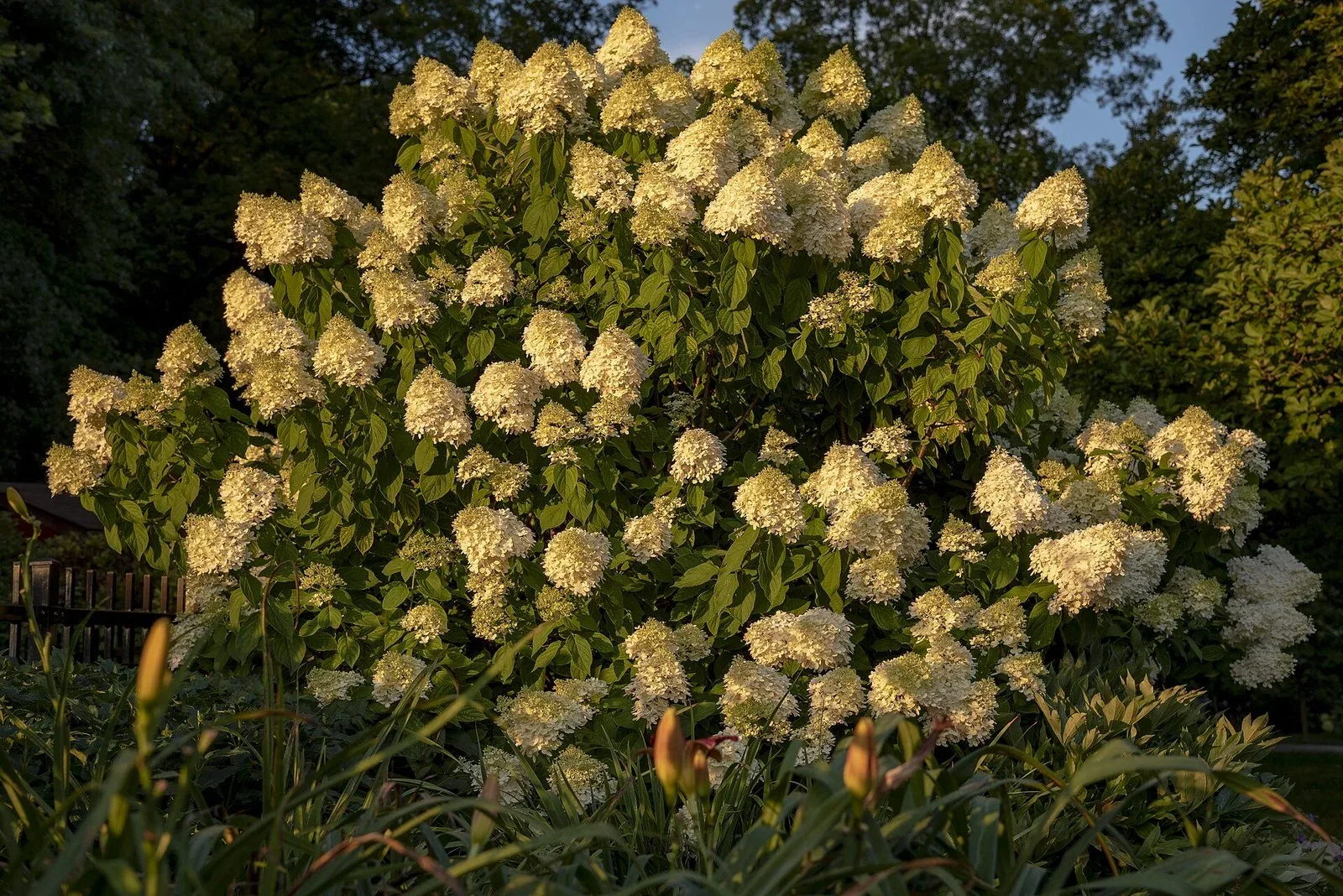
No. Panicle hydrangea (Hydrangea paniculata) is a different species with cone-shaped flowers that open on new growth and is much hardier in cold winters.
Can I grow hydrangea in a pot?
Yes. Use a pot at least 40 cm wide with good drainage, water often in summer and move it to shelter in cold winters.
Similar Botanical Matches
Keep exploring
Related plants
Grower field notes
Reader Field Notes in Canada
Share how this plant performs in your local Canada climate.