
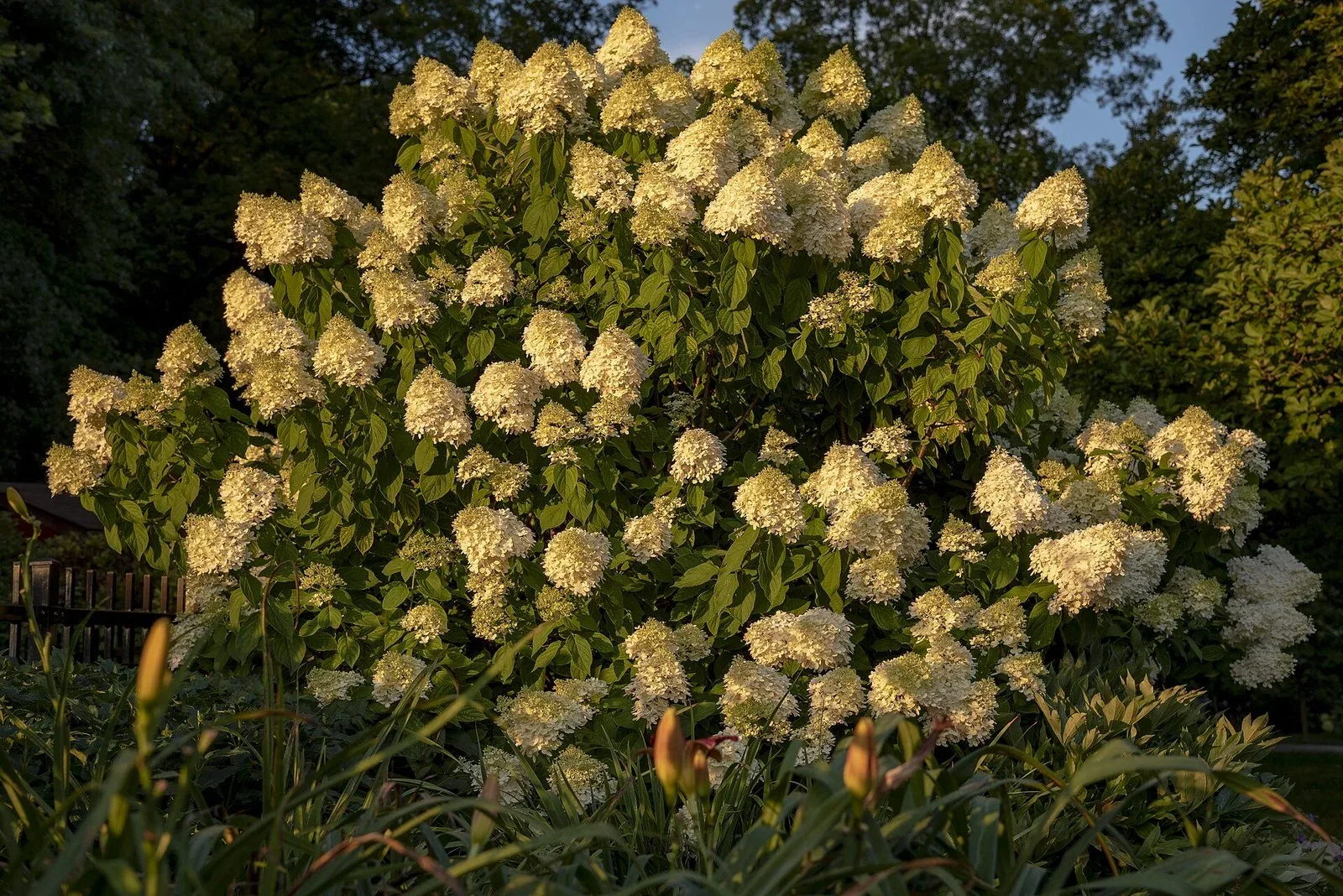
| ☀️ Light | Full sun |
|---|---|
| 💧 Water | High (consistently moist) |
| 🪴 Soil | Rich, moisture-retentive, well-drained soil with plenty of organic matter; pH does not change flower colour |
| 🌡️ Temp | Min -40°C |
| 🐾 Safety | Cats: toxic · Dogs: toxic (ASPCA Animal Poison Control) |
| 📏 Mature size | 2.5 m |
Where It Grows & Climate Tolerance
Pet & Companion Animal Toxicity (Panicle Hydrangea)
The hydrangea that works in cold climates: hardy to zone 3, blooms on new wood, with cone-shaped flowers from July to frost. Needs steady water.
Care instructions
Care Guide & Maintenance Routine
Full sun to part shade, rich moist soil, deep watering 1-2 times a week with 8 cm mulch. Prune in early spring by one-third to one-half. Hardy to zone 3. Toxic to dogs and cats.
Light & Sunlight
Full sun to part shade; afternoon shade in hot, dry regions
Watering Schedule
High: not drought tolerant; water deeply once or twice a week in summer and mulch about 8 cm deep
Potting Mix & Drainage
Rich, moisture-retentive, well-drained soil with plenty of organic matter; pH does not change flower colour
Temperature & Humidity
Zone 3 (Mossfield, Alberta); 'Limelight' and 'Fire Light' reliable across settled Alberta; blooms on new wood
Panicle hydrangea (Hydrangea paniculata) is the hydrangea that actually works in cold Canadian gardens, and the reason comes down to one point: it blooms on new wood. The blue mophead hydrangeas (Hydrangea macrophylla) bloom on old wood: buds form the previous summer and must survive winter on standing stems, which in a zone 3 winter they do not. Panicle hydrangea grows fresh shoots every spring and sets buds on them, so winter damage costs it nothing.
Size and flowers
It is an upright shrub 1.5-2.5 m tall depending on cultivar, with long conical flower heads 15-30 cm long from mid-July into September. Flowers open cream or lime green, mature to white and age through pink to dusty rose in cool autumn nights. The dried heads stand through winter. 'Limelight' and 'Fire Light' are reliable across settled Alberta, and compact selections such as 'Bobo' and 'Little Lime' suit small gardens. It is also sold as a small tree form.
Hardiness
It is hardy to zone 3. Even if the top half dies back in a hard, open winter, cut it off in spring and you still get a full flowering season.
Light and water
It is the most sun-tolerant hydrangea. Full sun gives the best flowering in cooler northern gardens; in hot, dry regions, morning sun with afternoon shade prevents leaf scorch and bleached flower heads. It is not drought tolerant: water deeply once or twice a week through summer, more in a heat wave, and mulch about 8 cm deep.
Soil and colour
Plant in rich, moisture-retentive, well-drained soil with plenty of organic matter. Soil pH has no effect on flower colour in this species, so do not buy acidifiers to turn it blue.
Pruning
Prune in early spring, before growth starts, cutting last year's growth back by a third to a half for stronger stems and bigger heads. Never prune in summer or autumn.
Pets
The ASPCA lists hydrangea as toxic to dogs, cats and horses (vomiting, depression, diarrhea). Serious poisoning is uncommon, but keep prunings off the lawn where a dog can find them.
Seasonal rhythm
Seasonal Calendar
A month-by-month calendar for Panicle Hydrangea in Canada is coming soon. See the light, water and temperature notes above.
Diagnostics
Common Problems & Troubleshooting
- Wilted, brown flower heads in summer | Cause: Not enough water | Fix: Water deeply once or twice a week, mulch about 8 cm deep and consider a drip line - No flowers on a mophead hydrangea | Cause: Hydrangea macrophylla blooms on old wood that winter kills | Fix: Plant panicle hydrangea, which blooms on new wood - Scorched leaf edges | Cause: Hot afternoon sun in dry regions | Fix: Provide afternoon shade and extra water - Poor growth | Cause: Thin, dry, sandy soil | Fix: Work in plenty of organic matter and mulch
Q&A
Frequently Asked Questions
Why does panicle hydrangea survive Canadian winters?
It blooms on new wood, so winter dieback does not affect flowering. It is hardy to zone 3.
Can I turn panicle hydrangea blue?
No. Soil acidifiers change flower colour only in Hydrangea macrophylla, not in this species.
When should I prune it?
In early spring, before growth starts, cutting back last year's growth by a third to a half.
Is hydrangea toxic to pets?
Yes. The ASPCA lists hydrangea as toxic to dogs, cats and horses.
Similar Botanical Matches
Keep exploring
Related plants

Grower field notes
Reader Field Notes in Canada
Share how this plant performs in your local Canada climate.