| ☀️ Light | Bright indirect light |
|---|---|
| 💧 Water | Moderate (lightly moist) |
| 🪴 Soil | African violet mix or light peat-based blend with perlite or vermiculite; must drain well |
| 🌡️ Temp | 15°C – 27°C |
| 🐾 Safety | Cats: non-toxic · Dogs: non-toxic (ASPCA Animal Poison Control) |
| 🏔️ Hardiness | Indoors only in Canada. Outdoors suited to USDA zones 11-12 only (NC State Extension) |
| 📏 Mature size | 23 cm |
Where It Grows & Climate Tolerance
Pet & Companion Animal Toxicity (African Violet)
Compact, fuzzy-leaved houseplant that flowers year-round in good light. Water from below, avoid cold water, and it is safe for cats and dogs.
Care instructions
Care Guide & Maintenance Routine
Bright filtered light or a grow light 12-14 hours. Water from below with room-temperature water every 7-10 days. 18-27 C, no drafts. Feed at quarter strength every 2-4 weeks. Non-toxic to cats and dogs.
Light & Sunlight
Bright indirect light (east or west window) or grow light 12-14 hours a day
Watering Schedule
Moderate: bottom-water with room-temperature water when top 1 cm is dry (about every 7-10 days); never wet the leaves
Potting Mix & Drainage
African violet mix or light peat-based blend with perlite or vermiculite; must drain well
Temperature & Humidity
Verified temperature range: 15°C–27°C (59°F–81°F). Protect from cold drafts and direct airflow from heating or cooling vents.
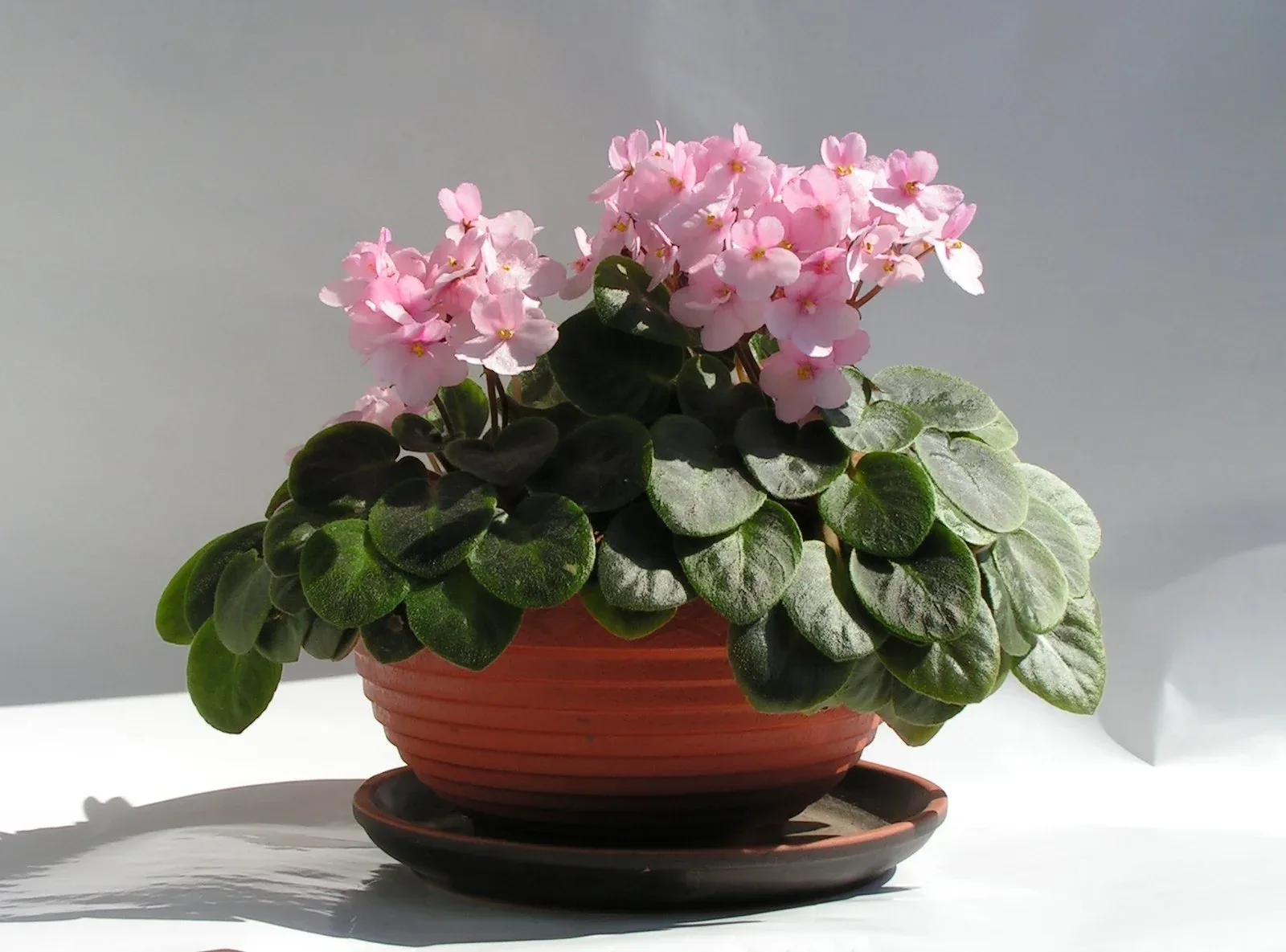
African violet (Streptocarpus ionanthus, long known as Saintpaulia ionantha) is a small evergreen tropical houseplant from eastern and south-western Tanzania. Compact rosettes of fuzzy leaves carry flowers in purple, blue, pink, red or white, and with the right light it can bloom nearly all year, which is welcome during a long Canadian winter.
Light is the key
African violets prefer bright, filtered light. A bright east or west window works, and a plain grow light on a 12-14 hour timer is a reliable fix for short Canadian winter days. Too little light is the number one reason for no flowers. Other causes include too much nitrogen fertilizer, a pot that is too big, and temperatures below about 15 C.
Watering from below
The fine hairs on the leaves trap water, and cold water on the leaves causes permanent spots. Water from the bottom instead: stand the pot in 2-3 cm of room-temperature water for 20-30 minutes, then lift it out, let it drain and empty the saucer. Repeat when the top centimetre of soil is dry, typically every 7-10 days. Never leave the pot sitting in water, and use water that has stood overnight rather than cold tap water.
Soil, humidity and temperature
Use an African violet mix or a light, peaty blend with perlite or vermiculite and good drainage. It likes 40-60% humidity, so use a pebble tray or humidifier during the heating season. Aim for about 18-27 C, keep it away from cold drafts, and avoid nights below 15 C, because cool nights can stunt growth.
Feeding
Use an African violet fertilizer (higher in the middle number) or a balanced 20-20-20 at quarter strength every 2-4 weeks while growing, and stop if the plant is resting. High-nitrogen fertilizers give leaves but no flowers.
Pets
The ASPCA lists African violet as non-toxic to dogs, cats and horses.
Hardiness
It is only suited outdoors in USDA zones 11-12, so in Canada it is strictly an indoor plant.
Seasonal rhythm
Seasonal Calendar
A month-by-month calendar for African Violet in Canada is coming soon. See the light, water and temperature notes above.
Diagnostics
Common Problems & Troubleshooting
- No flowers | Cause: Too little light, too much nitrogen, pot too large, or temperature below 15 C | Fix: Add light, use a bloom-type fertilizer at quarter strength and use a small pot - White spots or rings on leaves | Cause: Cold water splashed on the leaves | Fix: Bottom-water with room-temperature water; blot any drops and keep out of direct light until dry - Crown rot | Cause: Water sitting in the centre of the plant | Fix: Water from below and keep the crown dry
- Fungus gnats — Tiny dark flies hover around wet potting mix.
- Thrips — Silvery streaks and twisted new leaves, sometimes with black specks of frass.
- White powder — A white powdery film on leaves, usually in still, humid air with dry soil at the roots.
- Grey mould — Fuzzy grey mould on faded flowers, damaged leaves or soft stems.
- Brown spots — Scattered brown blotches on the leaf blade, not only the tip.
- No flowers — A flowering houseplant stays leafy and will not bloom.
Care encyclopedia · 4 guides
Guides & Articles for African Violet
Fungus Gnats in Houseplant Soil: Identification and Control
Fungus gnats breed in damp potting mix. Here is how to confirm them, dry out their breeding ground, trap adults and choose controls that are legal in Canada.
Read guide →Toxic Plants for Pets and Kids in Canada: Houseplants, Garden Plants and Poison Centre Numbers
Which houseplants and garden plants are toxic to cats, dogs and children in Canada, what to do right away if one is eaten, and the poison centre number for every province and territory.
Read guide →Top 10 Pet-Safe Houseplants for Canadian Homes
Snake plant, pothos and lilies are common in Canadian homes but toxic to pets. These 10 houseplants are listed as non-toxic to both cats and dogs by the ASPCA, and they cope with short days and dry winter air.
Read guide →14 Pet-Safe Houseplants for Canadian Homes With Cats and Dogs
A spider plant, a parlor palm or a Christmas cactus is a solid start if you want houseplants in a home with cats or dogs. All fourteen plants below have a Canada profile and an ASPCA non-toxic listing. That is not the same as safe to eat.
Read guide →Q&A
Frequently Asked Questions
Are African violets safe for cats and dogs?
Yes. The ASPCA lists African violet as non-toxic to dogs, cats and horses.
Why won't my African violet bloom in winter?
Usually not enough light. Use a grow light on a 12-14 hour timer, keep the room above 15 C, and avoid high-nitrogen fertilizer.
How should I water it?
From below with room-temperature water for 20-30 minutes, then drain. Avoid wetting the leaves.
What temperature does it need?
About 18-27 C. NC State Extension notes nights below 15 C (60 F) can stunt it.
Similar Botanical Matches
Grower field notes
Reader Field Notes in Canada
Share how this plant performs in your local Canada climate.