
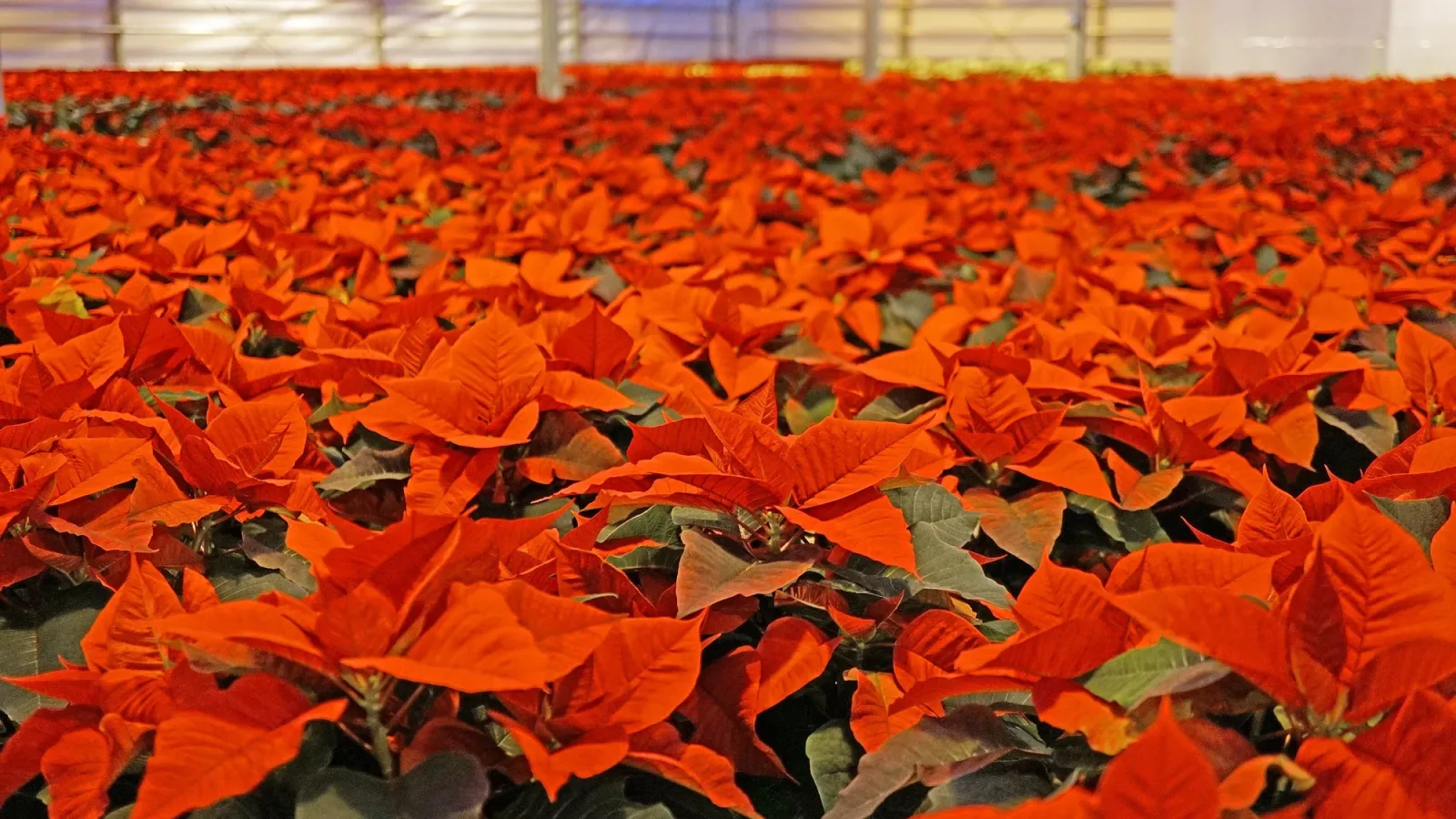
If you want a Christmas plant that still looks good in February, start with a Christmas cactus, a moth orchid or a Norfolk Island pine. The ASPCA lists all three as non-toxic to cats and dogs, and they settle into a Canadian winter window better than a poinsettia that has already had a hard week in a shop or a cold car.
The eight plants below are the ones you will actually find in Canadian grocery stores, florists and garden centres in November and December. Care notes follow UMass Extension holiday plant guidance and the ASPCA plant list, with winter advice by region. Deeper care for several of them already lives in our Canada guides, linked from each entry.
Quick picks
- Safest with cats and dogs: Christmas cactus, Norfolk Island pine, moth orchid and rosemary
- Best for beginners: Christmas cactus and kalanchoe
- Best in a cool room: cyclamen
- A living table-top tree: Norfolk Island pine
- A scented kitchen plant: rosemary
- Classic red holiday colour: poinsettia and amaryllis
Comparison at a glance
| Plant | Light | Water | Size in a pot | Pet safety | Difficulty | Best for | Canadian winter note |
|---|---|---|---|---|---|---|---|
| Poinsettia | Bright | When the top of the mix is dry | 20–40 cm | Toxic (irritant sap; often over-rated) | Easy for a few weeks; harder to keep well | Short holiday colour | Indoor everywhere. Keep off cold glass and away from the door. |
| Christmas cactus | Bright | When dry to the touch | 20–40 cm, trailing | Non-toxic | Easy | A plant you can keep for years | Indoor. Summer outdoors in light shade after frost, then back in before the first fall frost. |
| Amaryllis | Sunny to force, then medium indirect | Thoroughly once, then when dry | 40–70 cm in bloom | Toxic | Easy to bloom once; moderate to keep | A tall gift flower | Indoor. After bloom, keep the leaves growing in a bright window until spring. |
| Cyclamen | Bright, indirect; a north window can work | Evenly moist, not soggy | 15–25 cm | Toxic (tubers more so) | Moderate | A cool porch or spare room | Indoor. Lasts much longer at about 10–16 °C at night than beside a heat vent. |
| Norfolk Island pine | Bright | Even moisture; likes humidity | 40–120 cm as a house plant | Non-toxic (listed as Australian pine / Norfolk pine) | Moderate | A living table-top tree | Indoor only. Not hardy in any Canadian hardiness zone. |
| Kalanchoe | Bright, sunny | When dry to the touch | 15–30 cm | Toxic | Easy | A compact, bright windowsill plant | Indoor. Dry heating air is less of a problem than overwatering. |
| Moth orchid | Bright, indirect | When the bark mix is dry | 20–40 cm, plus arching stems | Non-toxic | Easy if you do not overwater | A long-lasting gift | Indoor. Keep off icy glass and away from heat vents. |
| Rosemary | A sunny window | When dry to the touch; must drain | 20–40 cm, often sheared | Non-toxic | Fussy indoors | A scented mini tree, if you can give it light | Indoor in most of Canada. Outdoor winter only in favoured spots on the mild south coast of B.C. |
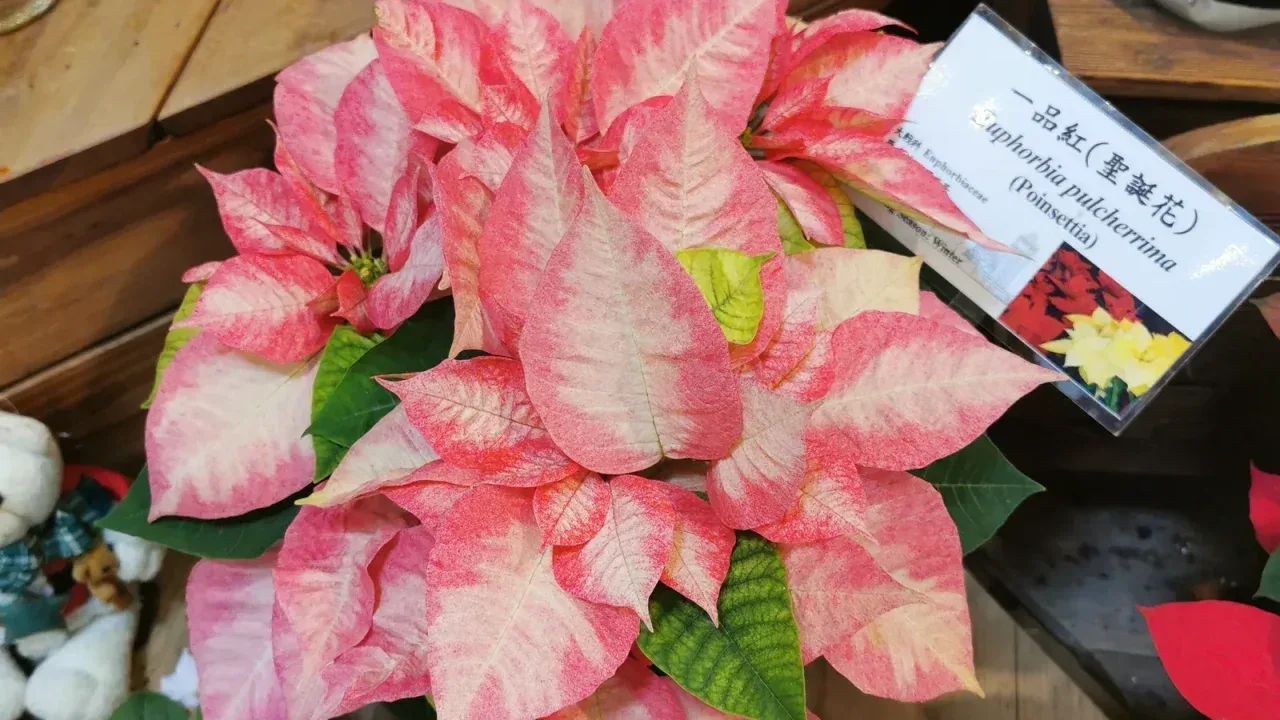
Poinsettia (Euphorbia pulcherrima)
- Light: Bright, including a sunny window.
- Water: When the top of the mix is dry to the touch; do not let it dry out hard, and do not leave it sitting in water.
- Mature size in a pot: Usually 20–40 cm in the holiday trade.
- Pet safety: ASPCA: toxic to dogs, cats and horses. The sap irritates the mouth and stomach and can cause vomiting, but the risk is generally over-rated. It can also irritate skin.
- Difficulty: Easy for a few weeks; harder to keep in good colour until spring.
- Region note: Indoor plant in every Canadian region. The bracts colour up in short days; they are not hardy outdoors even on the B.C. coast.
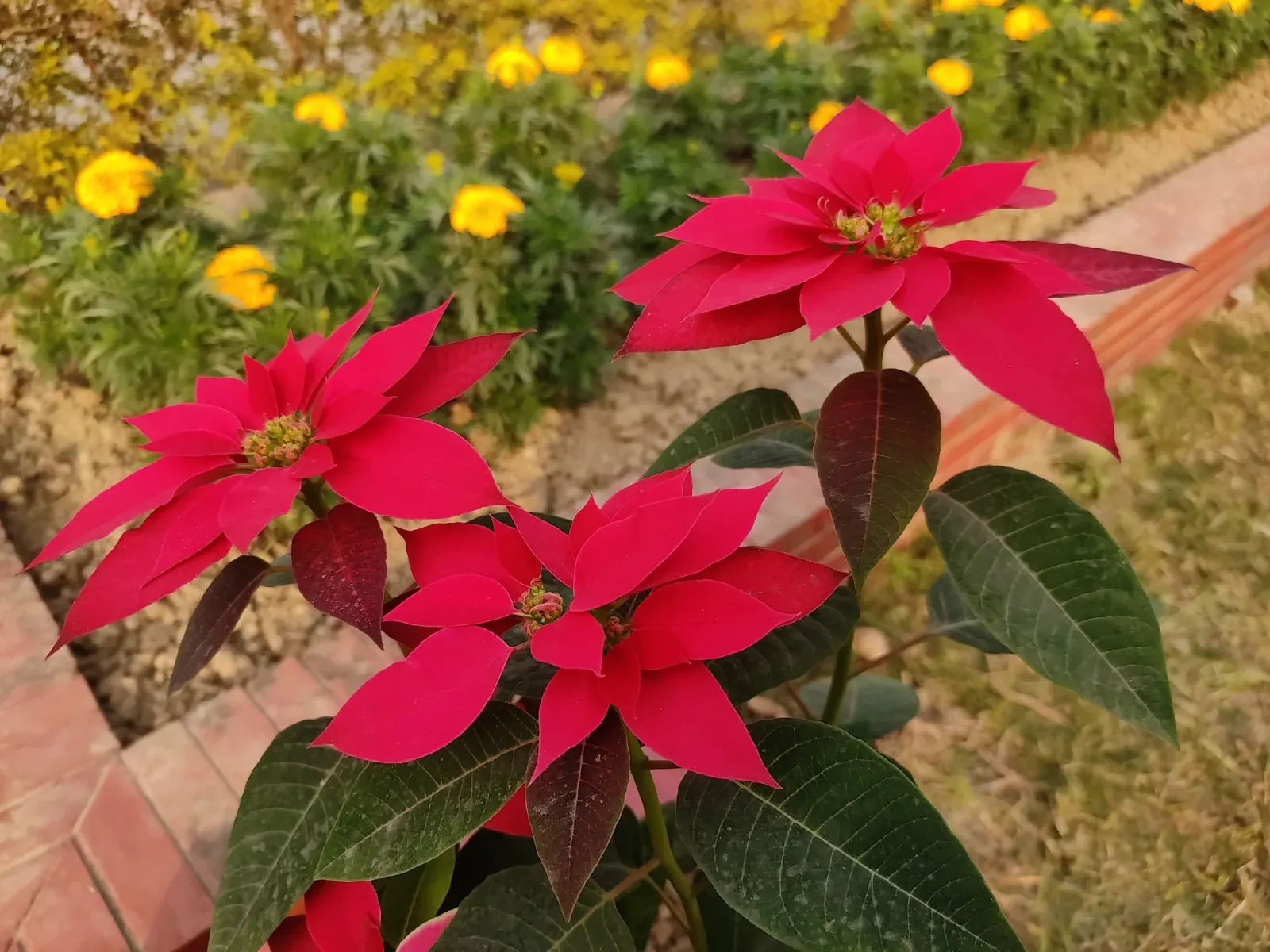
This is the plant most people mean by a Christmas plant, and it is also the one most often in trouble by New Year. The coloured parts are bracts, not petals. UMass Extension puts it in bright light at 16–21 °C and warns you to avoid drafts. The usual Canadian failure is a ride home in a freezing car, then a pot left in waterproof foil on a heat vent. Open or remove the foil, and give it a bright room away from the door.
The honest drawback is that many shop plants are already stressed, and getting a poinsettia to colour up again next December takes a strict short-day routine that most homes will not keep up. If you only want red for the holidays, enjoy it and do not feel you have failed when it fades. For the full seasonal cycle, see our poinsettia care guide for Canada.
Christmas cactus (Schlumbergera)
- Light: Bright, including sun.
- Water: When dry to the touch.
- Mature size in a pot: 20–40 cm, with stems that arch and hang.
- Pet safety: ASPCA: non-toxic to cats, dogs and horses.
- Difficulty: Easy, and it can live for many years.
- Region note: Indoor in winter everywhere in Canada. It can spend summer outdoors in light shade after the last frost, then come back in before the first fall frost.
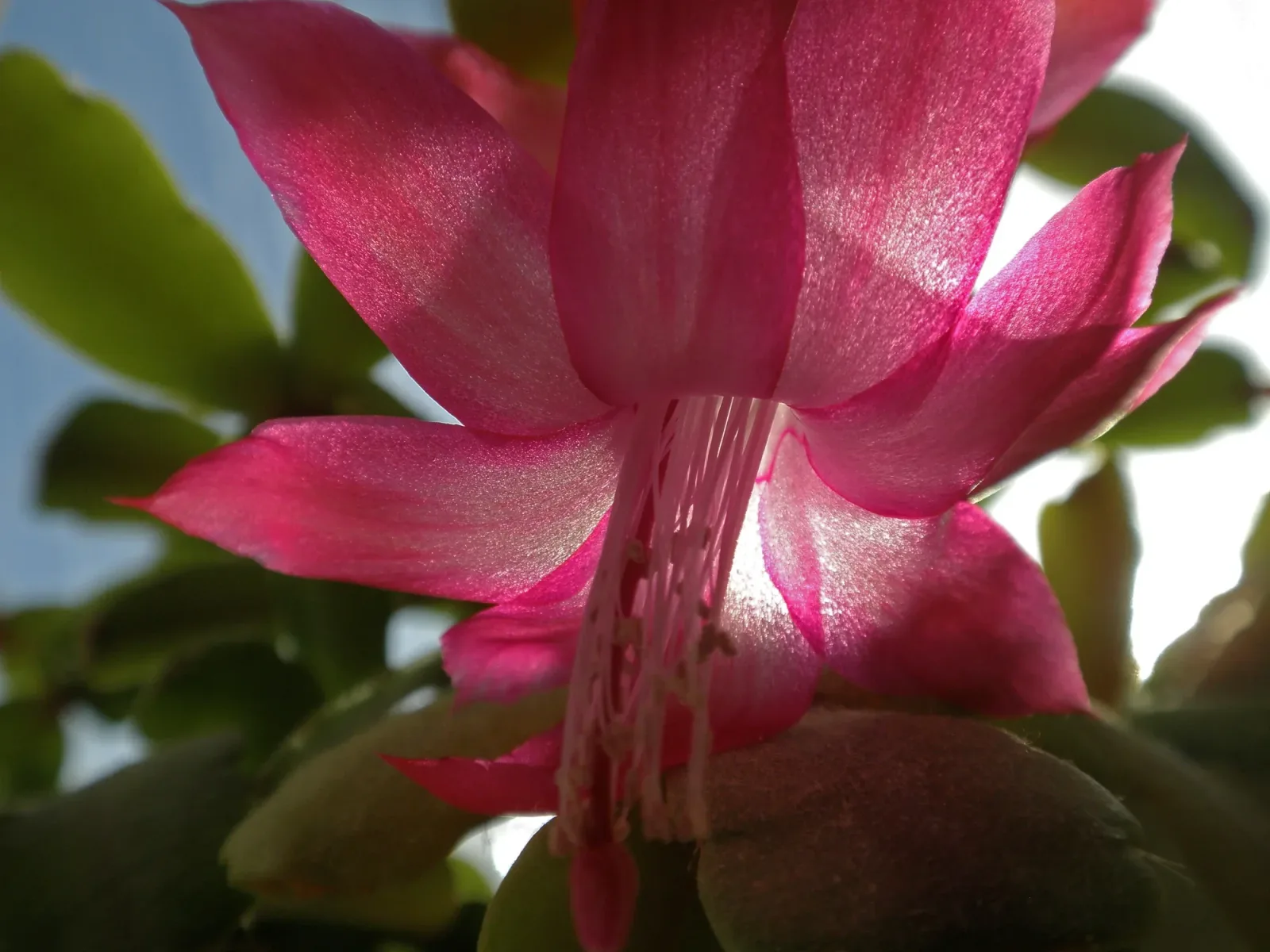
If you want one plant from this list to still be with you in five years, this is it. UMass Extension notes that Christmas and Thanksgiving cacti live for years and may bloom again in spring. The stems are flattened and jointed, not spiny. Once buds are set, try not to spin the pot or move it from a cool room to a hot one, or the buds may drop.
The honest drawback is timing. What shops call a Christmas cactus may actually be a Thanksgiving cactus (more claw-shaped segments) and may already be in bloom in November. That is not a fault, but it means the show may be winding down by Christmas Day if the plant was forced early. It still makes a good hanging plant on a bright winter window.
Amaryllis (Hippeastrum)
- Light: A sunny spot to start; then medium, indirect light once it is in bloom.
- Water: Water thoroughly once after potting, then when the mix is dry to the touch. Failure to bloom is often from overwatering.
- Mature size in a pot: The stalk often reaches 40–70 cm.
- Pet safety: ASPCA: toxic to dogs, cats and horses (lycorine and other compounds). The florist plant is Hippeastrum; the ASPCA also lists Hippeastrum separately under Ridderstjerne.
- Difficulty: Easy to flower from a prepared bulb; moderate if you want it back next year.
- Region note: Indoor plant. After the flowers fade, the leaves need a bright window through late winter and spring so the bulb can recharge.
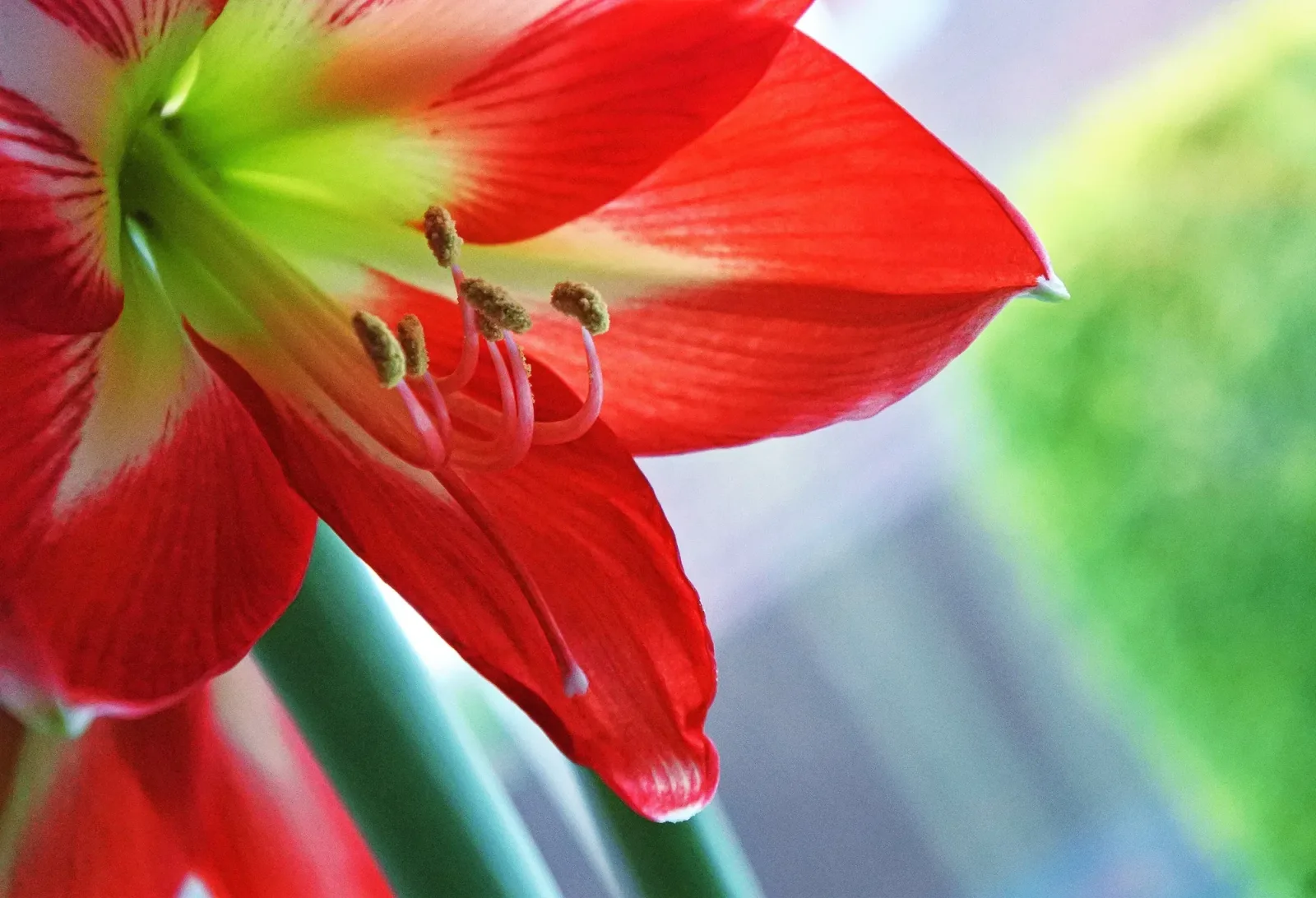
The big trumpet flowers on a bare stalk are why this bulb is sold as a Christmas gift. UMass Extension says a potted bulb usually blooms six to eight weeks after potting, and that you should cut off faded flowers and stems. The shop name “amaryllis” is the one you will see on the box; botanically, the common Christmas bulb is Hippeastrum, not the South African Amaryllis belladonna.
The honest drawback is the afterlife. A bulb that is thrown in a dim corner after the flowers drop will be weak next year. You have to keep watering the leaves, then give the plant a rest later in the year. If you only wanted the December show, that is fine, but do not expect a second miracle without the leaf work. See our amaryllis care guide for Canada.
Cyclamen (Cyclamen persicum)
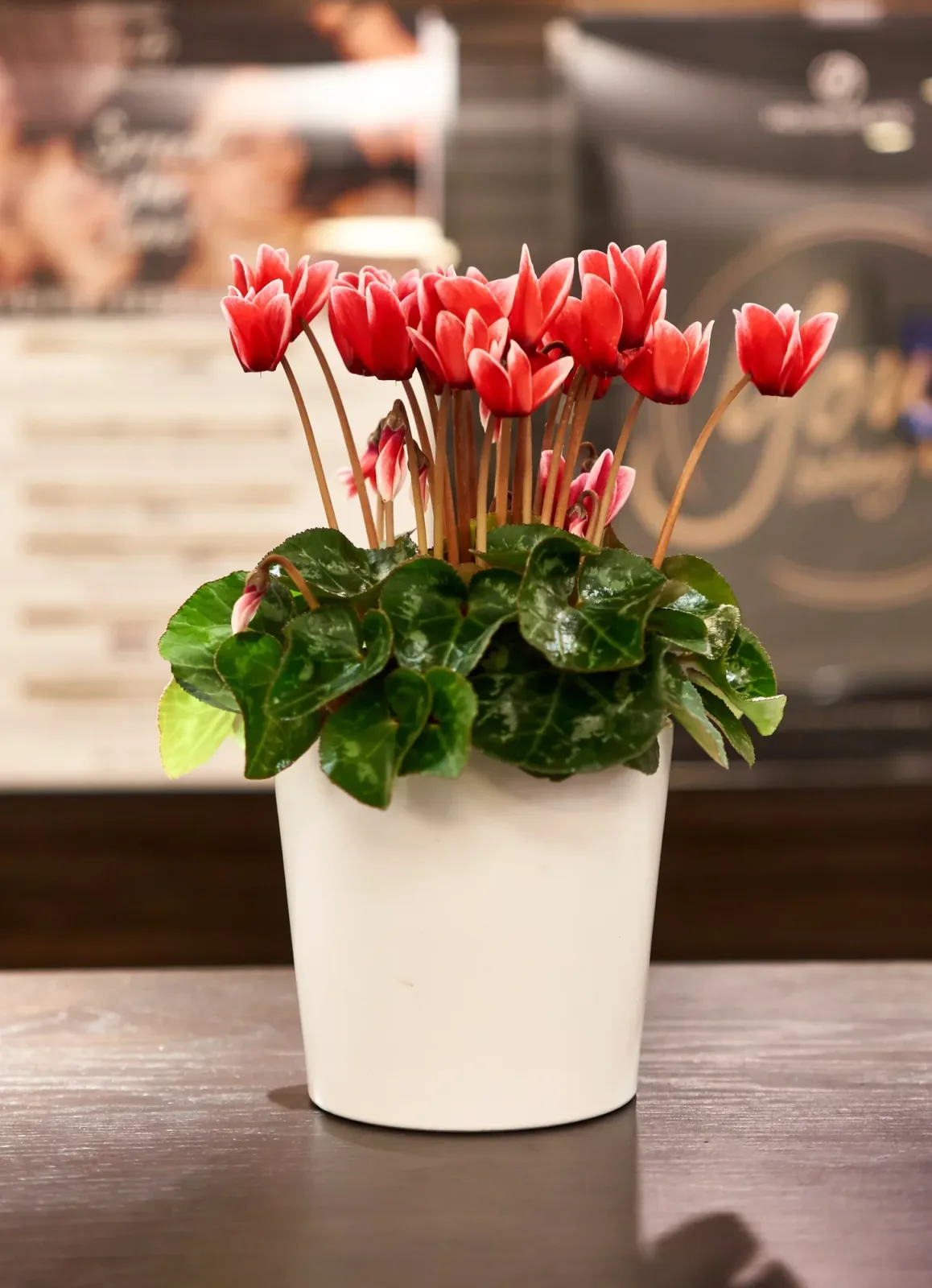
- Light: Bright, indirect. UMass Extension suggests trying a north window.
- Water: Keep evenly moist, not soggy. Water the soil, not the crown.
- Mature size in a pot: Usually 15–25 cm.
- Pet safety: ASPCA: toxic to dogs, cats and horses. Large amounts of the tubers can cause serious heart and seizure problems.
- Difficulty: Moderate, because most Canadian living rooms are too warm and dry for it.
- Region note: Indoor. It lasts weeks longer in a cool porch, spare bedroom or bright stairwell than in a 22 °C sitting room.
Florist cyclamen has swept-back flowers and leaves with silver markings. UMass Extension says blooms may last several months if the plant is kept cool, around 10–16 °C at night, and that it flowers dependably for one season. In a Prairie or Ontario house with the furnace running, that cool night temperature is the whole trick.
The honest drawback is heat. Next to a radiator or a gas fireplace, the stems go soft and the flowers collapse, and it is easy to blame yourself or a disease when the room was simply too warm. Keep it away from pets, especially the tuber. More detail is in our cyclamen care guide for Canada.
Norfolk Island pine (Araucaria heterophylla)
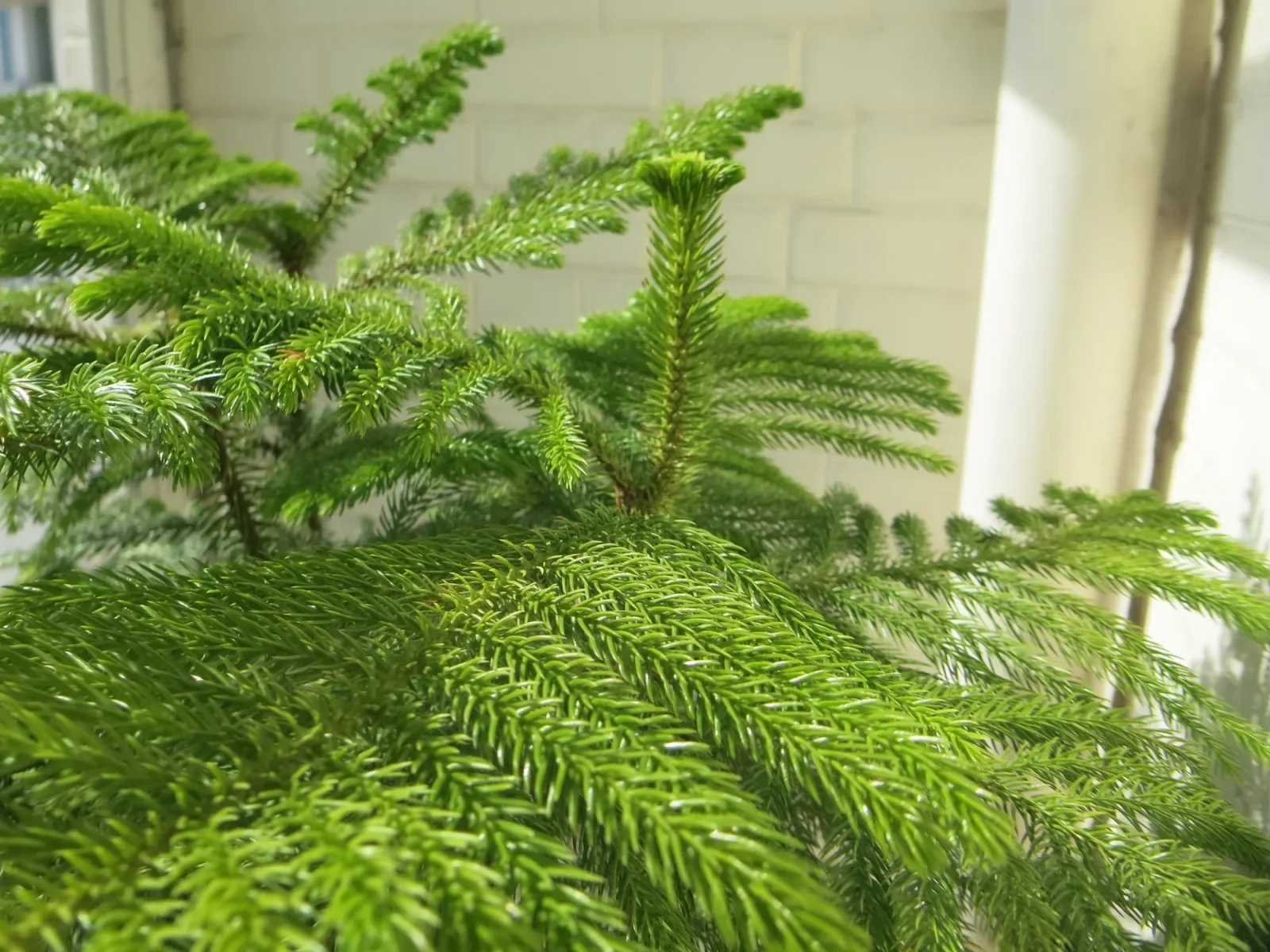
- Light: Bright, all around the plant if you can, so it does not lean.
- Water: Even moisture. UMass Extension notes that it needs high humidity.
- Mature size in a pot: Table-top plants are often 40–80 cm; older indoor plants can pass 1 m.
- Pet safety: The ASPCA lists it as non-toxic to cats and dogs, under the names Australian pine, Norfolk pine and Norfolk Island pine.
- Difficulty: Moderate. Dry air and a cold window are the usual problems.
- Region note: Indoor only, in every province and territory. It is a subtropical tree and is not hardy in any zone on the Atlas of Canada plant hardiness map.
This is the living tree in the Christmas-plant aisle. It is not a pine in the usual Canadian sense, and it will not go out on the lawn after the holidays. The soft, layered branches look festive with a few light ornaments, but keep those decorations sparse so the tips are not bent or broken.
The honest drawback is winter dryness. On the Prairies and in most of Ontario and Québec, furnace air browns the branch tips, and a pot pressed against a January window can be chilled on one side and dry on the other. Turn the plant now and then, keep it off the glass, and group it with other plants or use a tray of pebbles and water if the room is very dry. Our cold-window winter guide is useful here.
Kalanchoe (Kalanchoe blossfeldiana)
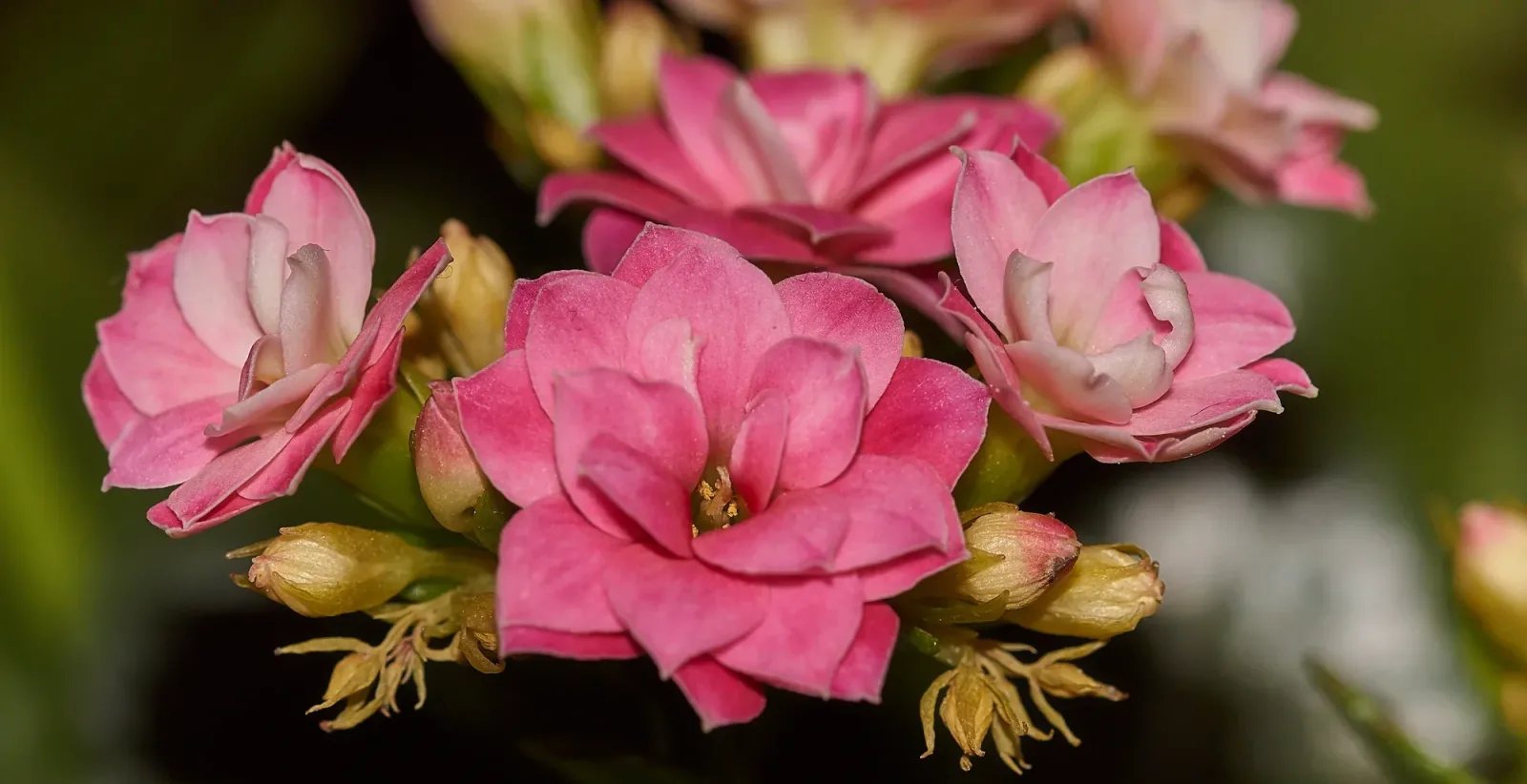
- Light: Bright, sunny.
- Water: When dry to the touch.
- Mature size in a pot: 15–30 cm.
- Pet safety: ASPCA: toxic to dogs, cats and horses.
- Difficulty: Easy, as long as you do not water it like a fern.
- Region note: Indoor winter plant everywhere in Canada. A south or west window in January suits it better than a dim north room.
Florist kalanchoe is the compact pot of small, bright flowers you see beside the poinsettias. The leaves are thick, which is your clue to let the mix dry a little. UMass Extension lists it with Christmas cactus for “when dry to the touch” watering, at 16–24 °C, and says it flowers dependably for one season.
The honest drawback is pet safety. It is easy to treat this as a harmless succulent, but the ASPCA lists Kalanchoe as toxic. Put it up high in a house with cats. Getting a second bloom later in the year takes short days, which most people will not arrange, so think of the first flush as the main show. See our kalanchoe care guide for Canada.
Moth orchid (Phalaenopsis)
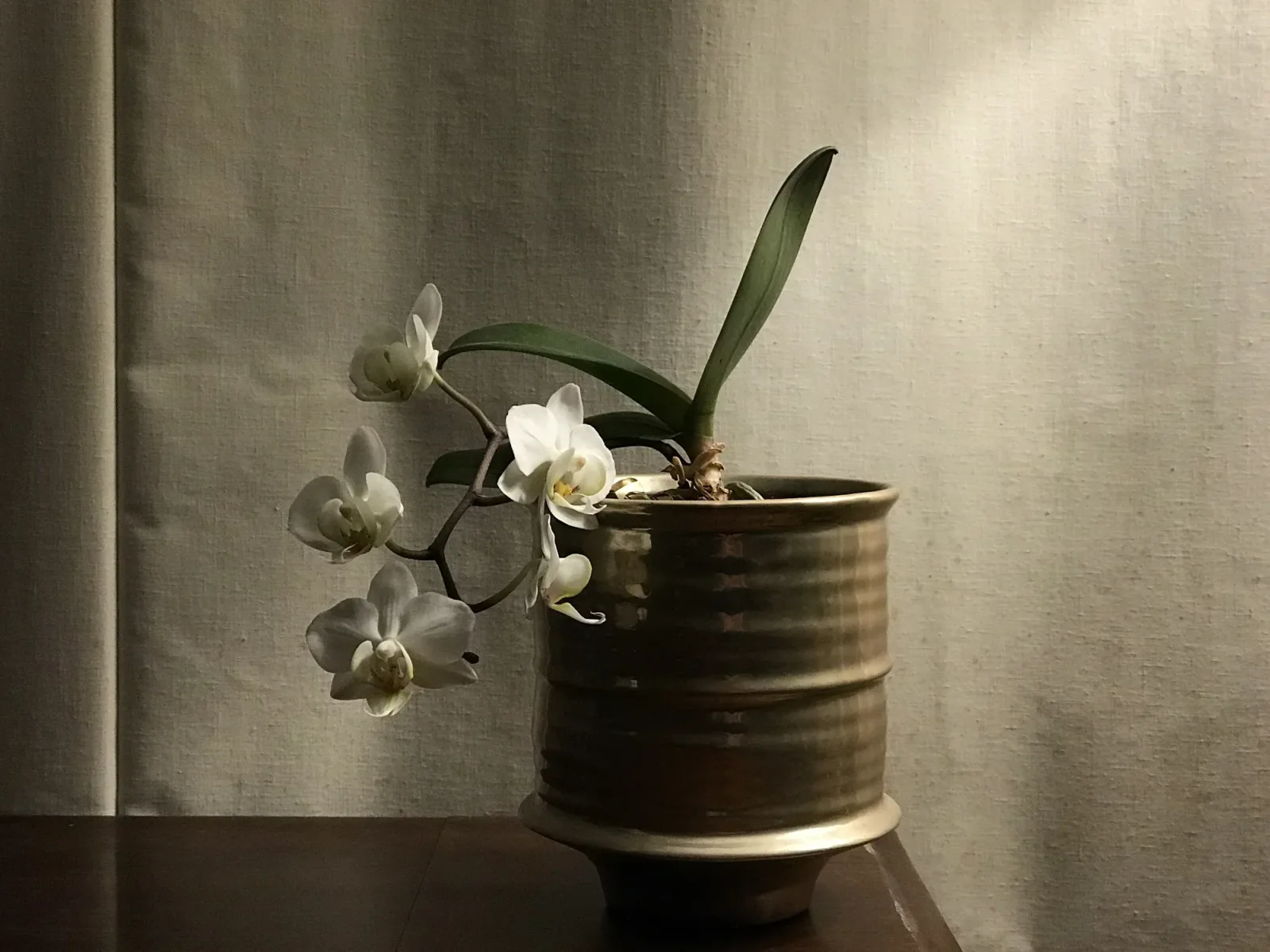
- Light: Bright, indirect light. A sheer curtain over an east window is a typical winter spot.
- Water: When the bark or moss mix is dry. Water thoroughly and let it drain. Do not leave ice cubes as your only method if the mix stays cold and wet.
- Mature size in a pot: The plant itself is often 20–40 cm; flower stems arch wider.
- Pet safety: The ASPCA lists Phalaenopsis (moth orchid, moon orchid) as non-toxic to cats and dogs.
- Difficulty: Easier than its reputation, if you do not overwater.
- Region note: Indoor. In a Prairie or Ontario January, keep it off the glass and away from a direct blast of heat.
This is the orchid in the supermarket floral case, and it is one of the better Christmas gifts if the household has pets. The flowers can last many weeks in a stable, bright room. After the last bloom drops, the plant can send a new spike later if it still has healthy roots and leaves.
The honest drawback is watering. The clear plastic pot is useful because you can see whether the roots are silvery-dry or green and wet. A pot hidden inside a cachepot that never drains is how many moth orchids fail in January. For a full walk-through, see our phalaenopsis orchid care guide for Canada and our notes on watering houseplants in a Canadian winter.
Rosemary (Salvia rosmarinus, syn. Rosmarinus officinalis)
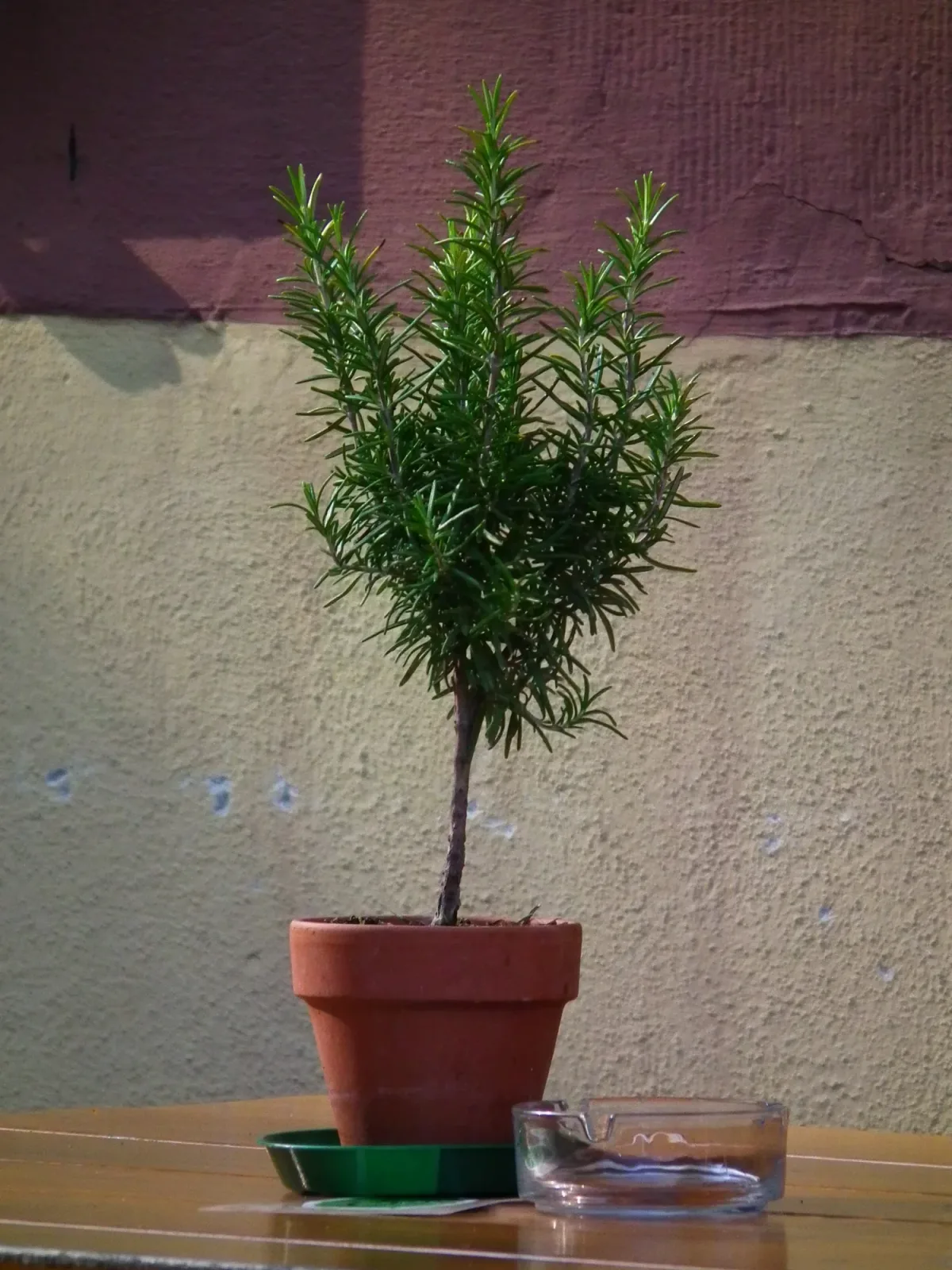
- Light: A sunny window. This is not a low-light plant.
- Water: When dry to the touch, in a mix that drains freely. UMass Extension is clear on both points.
- Mature size in a pot: Holiday trees are usually 20–40 cm.
- Pet safety: The ASPCA lists rosemary as non-toxic to cats, dogs and horses.
- Difficulty: Fussy as an indoor winter plant.
- Region note: Indoor for the Prairies, Ontario, Québec, the North and the Atlantic provinces. Outdoor winter is only a reasonable try in favoured spots on the south coast of British Columbia, in the mildest parts of zones 8 and 9.
Shops shear rosemary into a tiny Christmas tree because it is green, scented and looks the part. It is also the plant on this list most likely to be dead by mid-January if it sits in a dim dining room or in a decorative pot with no drainage. It wants sun, air and a mix that dries between waterings.
The honest drawback is that a clipped tree in a Canadian living room is a long way from a Mediterranean hillside. If you can give it a south window, and you let it grow more naturally after the holidays, it can become a useful kitchen plant and spend summer outdoors. If you cannot, choose a Christmas cactus instead. See our rosemary care guide for Canada.
Care that applies to all of them
Get the plant home without a long stop in a cold car. A box or bag helps on a December night in Winnipeg, Saskatoon, Montréal or Halifax as much as it does in Toronto. Once it is indoors, take off or open the foil so water can drain, as UMass Extension advises. Water until some runs out of the hole, then empty the saucer. In a cool house, many of these plants need water only about once a week; check with your finger rather than following a calendar.
Keep plants off icy glass and out of the direct path of a heat vent. Our guides on cold windows and winter watering go into those two problems in more detail. If you feed at all, do it only while the plant is in active growth, and follow the product label. This article does not give fertilizer or pesticide doses. For potting mix when you eventually move a plant on, see potting mix for indoor plants in Canada.
How this changes across Canada
Prairies (Alberta, Saskatchewan, Manitoba, and similar cold-interior climates, often zones 2–4). Every plant on this list is an indoor winter plant. The air in a heated house is very dry, and the window pane can be bitterly cold. Christmas cactus, moth orchid and kalanchoe usually cope better than cyclamen or rosemary. A Norfolk Island pine will need more attention to humidity and even watering.
Ontario and Québec. The same indoor rules apply. Southern Ontario (roughly zones 6–7 in the warmest pockets) has a slightly easier indoor climate than Abitibi, the Gaspé or northern Ontario, but a January night against a window is still too cold for poinsettia and orchid buds. Montréal and Québec City homes are often dry and warm; cyclamen will last longer in a cooler room.
British Columbia coast (roughly zones 7–9 in favoured spots, cooler in the interior and the north). Indoor care is still the default. Rosemary is the one plant that might overwinter outdoors in a very sheltered south-coast or southern Vancouver Island garden, and even then a hard, unusual freeze can take it. Norfolk Island pine stays indoors. You can often move Christmas cactus and kalanchoe to a bright, rain-sheltered outdoor spot earlier in spring than Prairie gardeners can.
Atlantic Canada and the North. Treat all eight as indoor plants. Wind, salt air and long cold spells make outdoor wintering unrealistic. The main indoor issues are the same: dry heat, short days and cold glass.
For official zone numbers at your location, use the Atlas of Canada plant hardiness map, not a U.S. USDA zone chart alone.
Plants we left out and why
- Paperwhite (Narcissus). A classic forced bulb, but there is no live Canada plant profile on GardenOrbit to link to, and the ASPCA lists Narcissus (including paperwhite) as toxic. UMass Extension also says to discard the bulbs after bloom, so it is a short show rather than a plant you keep past January.
- Holly and mistletoe. These are cut greenery more often than potted plants, and they are well-known toxicity risks. They do not belong on a “keep past January” house-plant list.
- Christmas rose (Helleborus niger). An outdoor winter perennial, not a grocery-store pot plant, and the ASPCA lists it as toxic. The name causes confusion with Christmas house plants.
- Jerusalem cherry. Sometimes sold at Christmas; we left it off because it is not a long-term house plant and is a known toxicity concern. We have no Canada profile for it.
Sources
- UMass Extension: Holiday Plant Care — Fall and Winter
- ASPCA toxic and non-toxic plant lists for cats and dogs, and the individual pages linked above
- Natural Resources Canada, Atlas of Canada: Plant hardiness zones of Canada
- GardenOrbit Canada care guides: poinsettia, amaryllis, cyclamen, kalanchoe, moth orchid, rosemary, winter watering, cold windows, potting mix
Updated 15 November 2026 (IST): new guide. No named reviewer is listed, pending confirmation of real reviewers.


Comments
No comments yet — share what worked in your climate.