
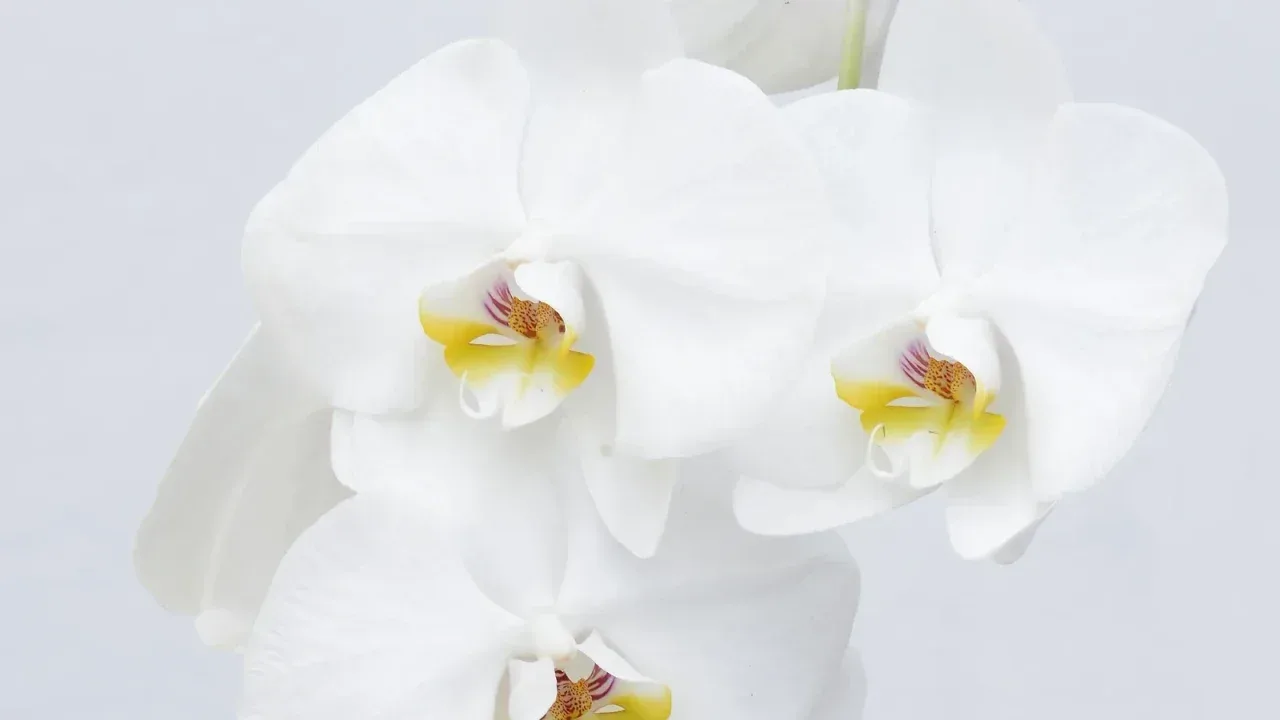
A moth orchid is easiest to understand when you watch its roots rather than count days between waterings. Those roots explain why a Canadian windowsill orchid needs different care from an ordinary pot of houseplant compost.
Quick answer
A moth orchid needs gentle bright light and roots that can breathe between waterings. Check whether the pot contains bark, moss or a hidden nursery plug. In winter, protect the leaf crown from cold glass and trapped water. After flowering, preserve healthy leaves and roots to support a later spike.
How do you identify phalaenopsis orchid?
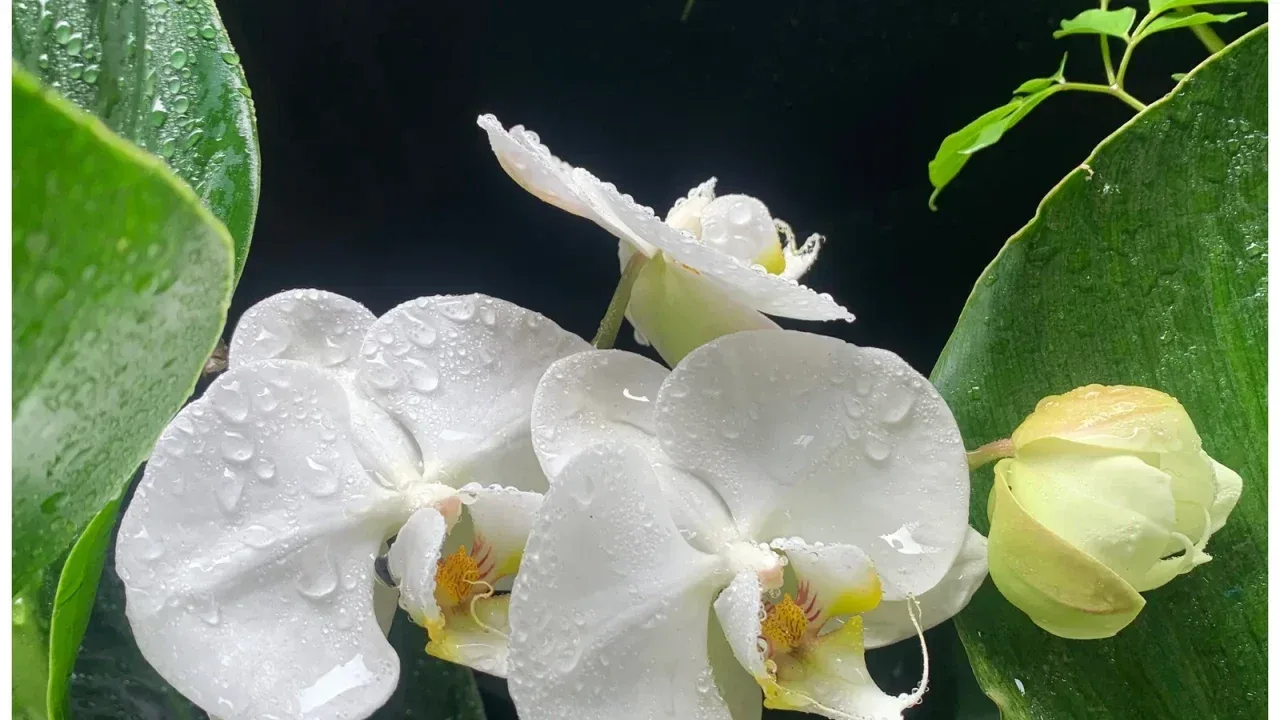
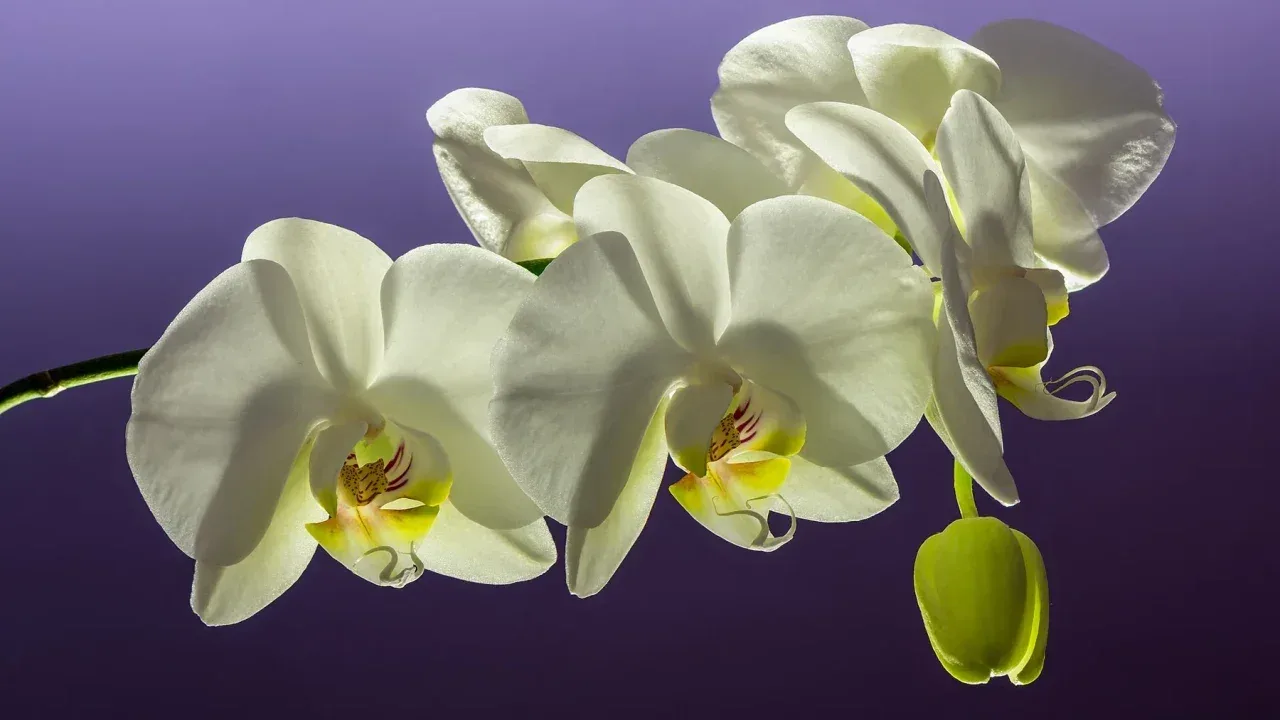
Phalaenopsis orchid: Moth orchids have thick leaves, aerial roots and arching flower spikes. Most shop plants are hybrids. Blue-dyed blooms will not necessarily return blue. Mini orchids need root aeration just as larger plants do.
How do you get a moth orchid to flower again?
Keep the leaves healthy after flowering. Bright filtered light and modestly cooler autumn nights can encourage a spike. A root has a rounded tip, while a spike tip looks flatter. Do not chill the plant against freezing glass. Cut brown spikes near the base; removing a green spike is also sensible on a weak plant. Wrinkled leaves can mean root loss, not simply thirst. Inspect the pot before adding more water. Fertilizer cannot replace working roots and useful light.
What light does it need in a Canadian winter?
East window preferred. Protect from hot midday sun.
An east window makes a sensible starting point for moth orchids because the leaves receive light before afternoon heat builds. In winter, assess the window again: a building across the street may block most of the low sun. A small white grow light can support a plant on an interior shelf, but position it to illuminate the leaves, not just the flowers. Leaf colour alone is an imperfect light meter. Watch the firmness and spacing of successive leaves as well. Move an orchid gradually into stronger conditions, since a blade grown in shade cannot immediately tolerate the exposure of a greenhouse-grown plant.
How should you water through the seasons?
Treat bark and sphagnum as different watering environments. Open bark often dries unevenly; a moss plug can remain damp in its centre after the edges feel crisp. Check inside the pot rather than deciding from the topmost material. Silver roots are a useful clue in a clear container, but the roots touching its bright wall may differ from those buried inside. After soaking, tip out trapped water and inspect the leaf crown. Water caught between leaves is especially unwelcome beside a cool Canadian window. A wrinkled blade above black, hollow roots needs root recovery, not a permanent water bath.
What soil or potting mix is best?
Bark eventually decomposes and loses the air spaces that orchid roots require. When it becomes soft, sour or persistently wet, repotting is more useful than applying another fertilizer. Soak firm roots briefly to make handling easier, remove decayed material and choose a vessel that accommodates the surviving root mass. Green aerial roots do not all need to be forced into the pot. Cutting them simply to achieve a tidy outline removes functioning tissue. Keep the base of the leaves above the medium. A clear nursery container can sit within an attractive outer pot, provided the inner one is taken out for watering and drainage.
When should you fertilize?
Weak orchid fertilizer every other watering in growth; lighter in winter.
Orchid food is best supplied as a weak, measured solution while roots and leaves are developing. Product directions matter more than the colour of the bottle. Avoid leaving concentrated fertilizer residue around root tips. Occasional watering without feed helps rinse soluble salts from an open bark mix. Freshly damaged roots should not be pushed with a strong dose. A flowering plant can have different demands from a resting one, so inspect growth rather than following a blanket rule to feed every orchid weekly. Keep notes on the product used; changing feeds repeatedly makes leaf or root injury harder to trace.
Does dry air or humidity matter?
A Canadian windowsill can provide a useful autumn day-night difference without deliberately chilling the plant. Move it away from glass before severe frost, and never leave foliage trapped behind a closed curtain overnight. A slight cooling can help a mature plant initiate its next spike, but flowering also depends on adequate leaf growth. If a spike dries brown, remove it near its base. Keeping an exhausted plant branching repeatedly from an old green spike is not always the best choice. Allowing a season of strong roots and leaves may give a better later display than chasing the quickest extra flower.
What temperatures and winter protection does it need?
Day 20 to 27 C; cooler nights (16 to 18 C) in fall help spike formation.
How should you prune it?
After bloom, cut spike above a healthy node or to the base if brown.
What is the best propagation method?
Separate a keiki only once it has several leaves and well-developed roots, then pot it in fine orchid bark. Seed needs specialist conditions. Most home growers buy a second plant instead.
Keikis require their own root system before separation. Several short root nubs are less useful than multiple established roots able to hold moisture around the young plant. Pot a separated plantlet in appropriately fine bark and support it gently so new roots are not rubbed loose. A large adult orchid pot is unnecessary. Seed propagation is a different project involving specialist conditions, not simply scattering dust-like seed onto household compost. Clean tools before cutting a spike carrying a plantlet. If the parent has scale or mealybugs, deal with those first rather than moving them into a new collection of small pots.
Which pests and diseases should you watch for?
Watch for mealybugs and scale in leaf joints. Remove visible insects carefully and avoid untested alcohol or oil treatments on tender tissues.
How do you work out the cause?
Crown rot (water in center); wrinkled leaves (underwater or root loss); no rebloom (too little light or no cool nights).
Is it safe around pets and children?
Moth orchids in the Phalaenopsis group are treated as non-toxic to cats and dogs by ASPCA. Stakes, clips, bark and fertilizers are separate hazards. Do not let children or pets chew ornamental blooms.
A seasonal care calendar for Canada
| Season | What to do |
|---|---|
| Spring | Often in bloom. Keep watering steady; start light feed. |
| Summer | Bright shade; watch for heat stress near glass. |
| Autumn | Cooler nights help new spikes form. |
| Winter | Peak bloom season for many plants. Avoid cold drafts. |
What should you check before buying?
For other indoor flowers, assess anthurium and cyclamen against your available temperatures. The foliage of peperomia provides a separate option when a long-lasting leaf display matters more than repeated orchid spikes.
Before buying, look beneath the flowers. Check the leaf bases, both sides of the clear pot and the growing root tips. A missing lower leaf is not automatically a disaster, whereas a wet black crown is a serious warning. Coloured roots from staining or algae should be distinguished from genuinely soft roots. Ask for a protective sleeve during winter transport, and keep the orchid upright so decorative stakes cannot gouge the leaves. At home, inspect for pests separately from other orchids. Flowers that drop after a cold journey may reflect bud damage in transit rather than a failure of your first watering.
Watch: a related growing task

Comments
No comments yet — share what worked in your climate.