
The most damaging part of buying a poinsettia in Canada can be the walk from the shop to the car. Protect it from cold first, then keep its roots drained and its leaves in good light after it comes home.
Quick answer
Bring a poinsettia home under protective wrapping, then give it useful daylight away from hot vents. Remove the foil for watering and drain the nursery pot fully. Keep healthy leaves after the holiday display. Producing coloured bracts again requires a sustained autumn routine of bright days and uninterrupted dark nights.
How do you identify poinsettia?
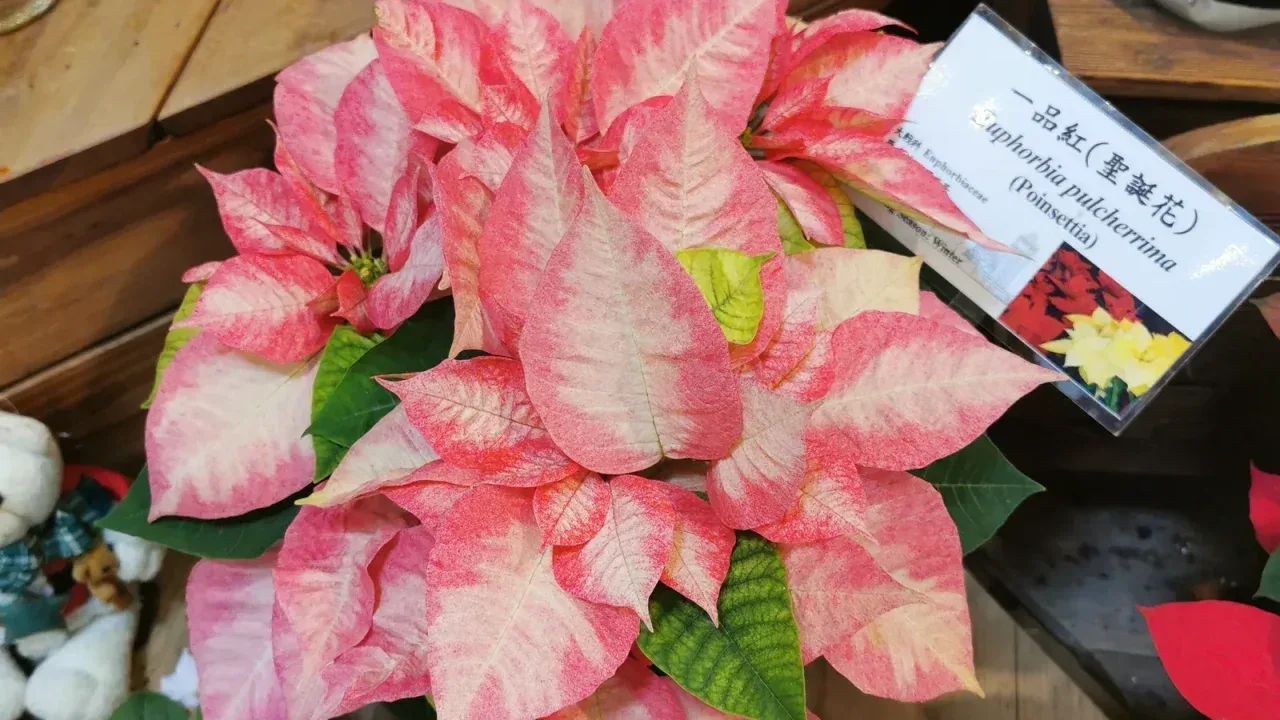
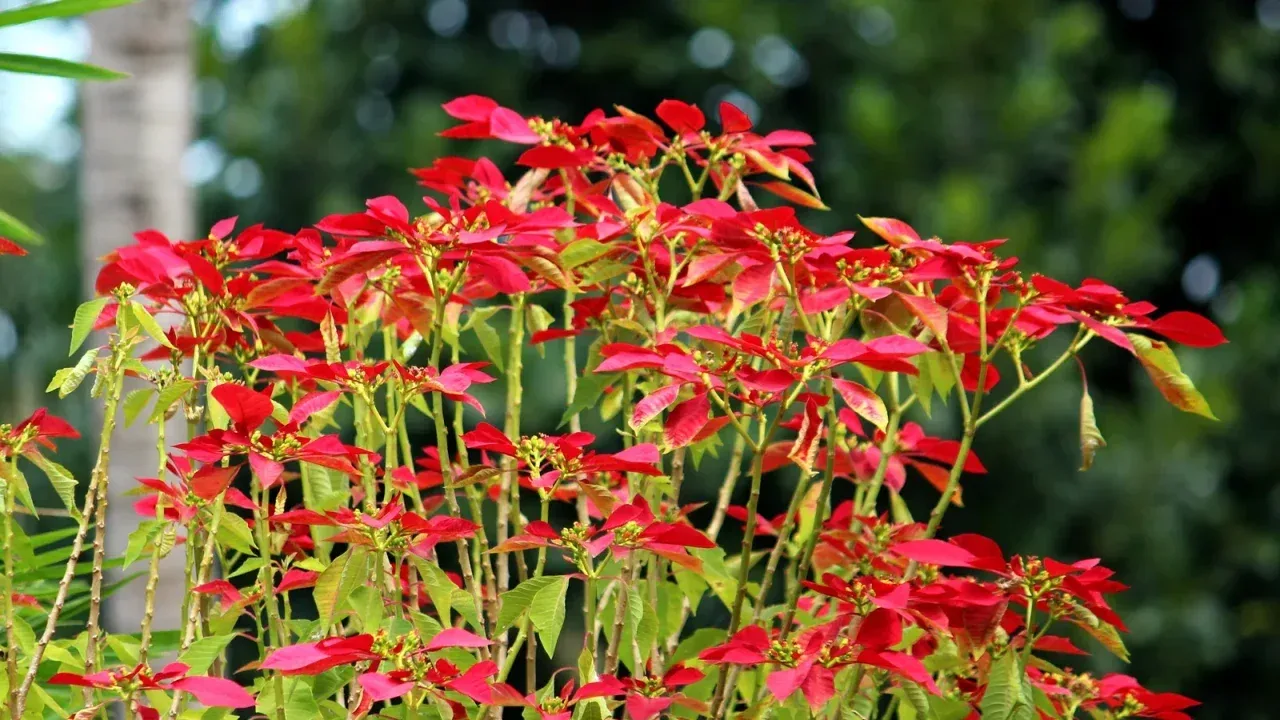
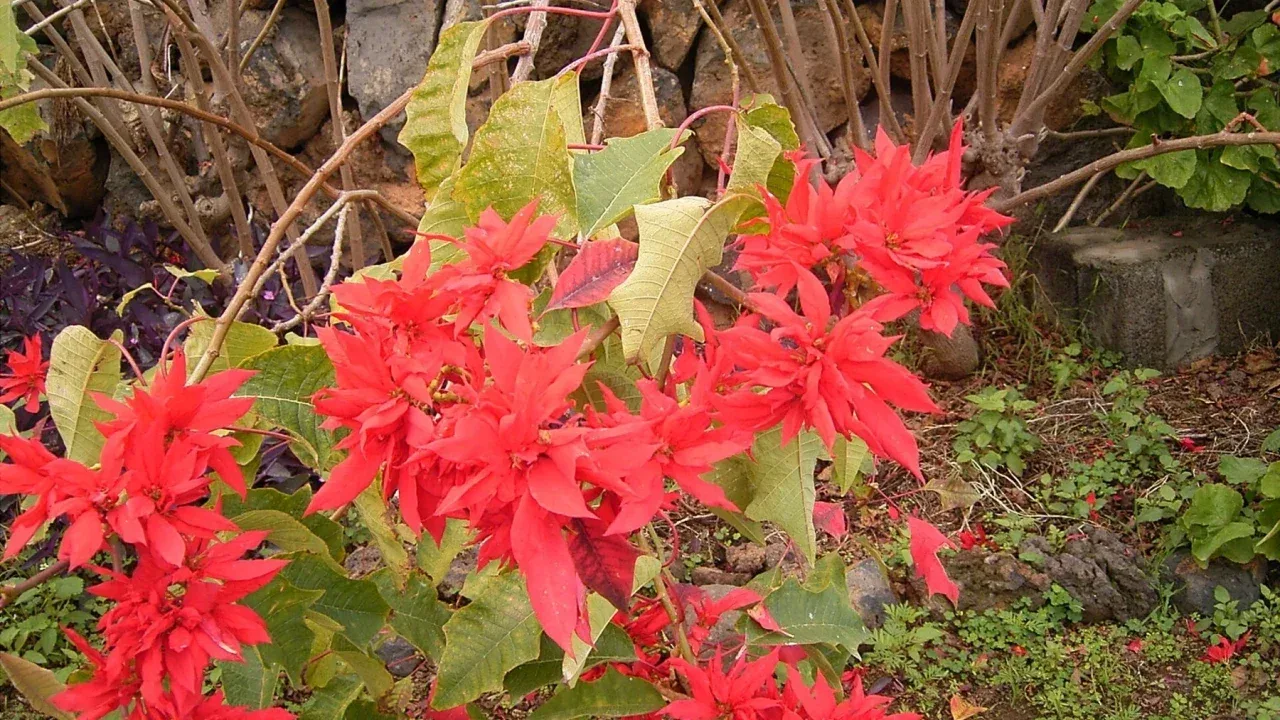
Poinsettia: Red, cream or pink bracts surround the small true flowers in the centre. Euphorbia pulcherrima is a tropical shrub, not a hardy Christmas plant. Speckled and compact selections still need cold protection.
Can you keep a poinsettia for next Christmas?
Keeping the plant is easier than colouring its bracts again. Give good light after the holidays and shape it in spring. Autumn colour requires long uninterrupted dark nights for several weeks alongside bright days. Room lamps can interrupt the response. Unwrap the poinsettia after transport so daylight reaches its leaves and moisture does not remain trapped inside the sleeve. Buying a new holiday plant is a reasonable choice if that routine does not suit your home. Cold damage on the journey home may appear days later.
What light does it need in a Canadian winter?
Bright room light. South or west window without cold draft.
Let useful daylight reach the green leaves as well as the coloured top. A dining table several metres from a window may suit a holiday meal but is a poor permanent growing position. Move the pot into better light between displays without repeatedly exposing it to a cold doorway. Do not press bracts against the windowpane. Their coloured appearance does not mean they have the hardiness of a Canadian outdoor winter decoration. If you add a lamp, keep it a suitable distance above the canopy and leave a normal night. Sustained heat from a fixture can shorten the display and dry the pot unexpectedly.
How should you water through the seasons?
Foil is a common source of trouble. Take the nursery pot out of its sleeve for watering, allow excess to escape and only then return it to the decoration. A few holes in a wrapper are not helpful if runoff collects in a sealed tray beneath it. Test the surface and container weight regularly, since a large leafy poinsettia can dry faster than a small winter cactus on the same shelf. Wilted leaves above dry mix may recover after careful rewetting. Wilt above a heavy wet root ball calls for another diagnosis; repeatedly flooding it can make root damage worse.
What soil or potting mix is best?
For a poinsettia kept beyond its first display, choose a moisture-retentive indoor potting mix with coarse material to maintain drainage. Avoid dense outdoor garden soil in a small indoor container. Keep the stem base at its previous level and give the new pot real drainage holes.
When should you fertilize?
None while in holiday bloom; light feed monthly after spring cut-back.
Keeping the plant into spring changes the aim from maintaining a display to rebuilding a shrub. Once the coloured bracts age, provide good light and remove dead material. Shape vigorous stems when growth resumes, using gloves to avoid latex contact. Do not feed a struggling, recently chilled specimen heavily. A modest fertilizer programme becomes useful when fresh shoots are growing and the plant is using water reliably. If the original mix remains sound, there is no need to repot on the first day after Christmas. A slightly larger draining container can be chosen later when root growth justifies it.
Does dry air or humidity matter?
Dry room air may contribute to leaf stress, but sitting the poinsettia in water is not a humidity treatment. Keep its canopy outside the direct path of a heating vent. Leaves touching a cold wall can suffer even when the rest of the room feels warm. A crowded arrangement of gift plants also makes pest inspection difficult. Leave room to see the lower stems and check for fallen debris. When cleaning up, keep broken branches away from curious pets. The familiar warning that poinsettias are extremely lethal is exaggerated, but irritating latex still has no place on a child's hands or in an animal's mouth.
What temperatures and winter protection does it need?
Protect from cold on the trip home from the store.
Autumn reblooming is a light-management task rather than a matter of buying stronger flower food. The plant needs bright days followed by sufficiently long, unbroken dark nights over a sustained period. An evening ceiling lamp can interrupt that signal. A cupboard used for darkness must not become a hot, stagnant chamber, and the plant must return to daylight. Choose a routine you can actually maintain. If you cannot provide dependable dark nights, keep the shrub for foliage instead of promising coloured bracts by a particular December date. Commercially timed nursery plants have more controlled conditions than an ordinary household can offer.
How should you prune it?
In spring cut stems back to 15 to 20 cm to shape. Wear gloves for the sap.
What is the best propagation method?
Root soft stem tips during active late-spring growth. Wear gloves for the latex and use clean warm propagation mix. Keep humidity steady with ventilation, not stagnant dripping air. Check cultivar restrictions before selling propagated plants.
Which pests and diseases should you watch for?
Whitefly and fungus gnats if soil stays wet. Check leaf undersides.
Whitefly may be noticed when the foliage is disturbed, while fungus gnats point toward investigating persistently damp potting material. Check the underside of a few lower leaves before moving the plant beside an established collection. If treatment is required, use a product intended for indoor ornamentals and test tender bracts carefully. A softwood cutting needs sound living stem tissue and a controlled rooting environment, not a vase containing a broken holiday branch for weeks. Propagation can wait until warm active growth. Maintaining one healthy parent through winter is a more useful first goal than producing numerous weak cuttings.
How do you work out the cause?
Leaf drop (cold or overwater); wilt (dry then flood); pale bracts (low light).
Is it safe around pets and children?
ASPCA describes poinsettia as irritating to cats and dogs, usually with mild mouth or stomach upset. It is not the highly lethal plant of old holiday warnings. Keep sap away from skin, children and chewing pets.
A seasonal care calendar for Canada
| Season | What to do |
|---|---|
| Spring | Cut back and repot if keeping. Start light feeding. |
| Summer | Move poinsettia into sheltered outdoor summer light only after cold nights pass, then bring it back before autumn chilling. |
| Autumn | For rebloom: 14 hours of darkness nightly for ~8 weeks. |
| Winter | Display season. Bright light, steady water, no drafts. |
What should you check before buying?
A festive plant collection might also include amaryllis, whose bulb needs a rebuilding season, or cyclamen, which asks for cooler conditions. Compare kalanchoe for a compact flowering succulent rather than a woody holiday shrub.
Choose a poinsettia away from the shop entrance, where it has not spent days receiving repeated cold drafts. Look for a firm canopy, healthy lower leaves and fresh small flowers in the centre of the coloured bracts. A plant with many fallen leaves inside its sleeve deserves a closer look. Ask for wrapping immediately before leaving, not an hour before browsing elsewhere. In freezing Canadian weather, carry it directly to a warmed vehicle. Even a short errand in an unheated car can damage this tropical shrub. Remove the sleeve gently at home so the brittle branches are not snapped outward.
Watch: a related growing task
Comments
No comments yet — share what worked in your climate.