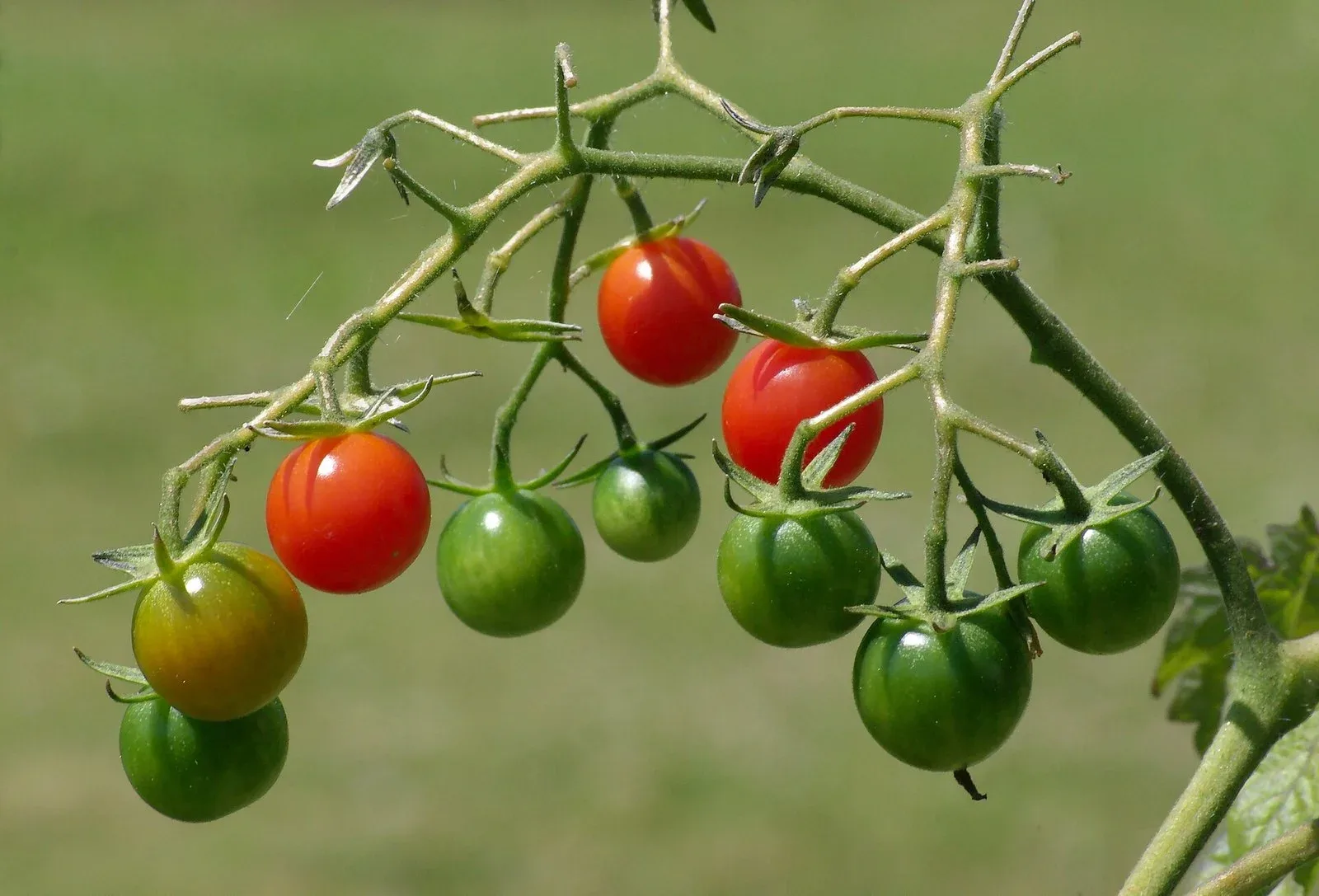
| ☀️ Light | Full sun |
|---|---|
| 💧 Water | Moderate (lightly moist) |
| 🪴 Soil | Rich, deep, well-drained loam with high organic matter; pH 6.0-7.0 |
| 🌡️ Temp | 10°C – 40°C |
| 🐾 Safety | Cats: toxic · Dogs: toxic (ASPCA Animal Poison Control) |
| 📏 Mature size | 1.5 m |
Where It Grows & Climate Tolerance
Pet & Companion Animal Toxicity (Tomato)
Canada's favourite garden vegetable, grown as a summer annual. Short-season varieties, correct transplant timing and steady watering are the keys.
Care instructions
Care Guide & Maintenance Routine
Full sun (8+ hours), rich well-drained soil, deep watering 1-2 times a week, mulch. Plant out after last frost when nights stay above 10 C. Pick short-season varieties. Leaves and green fruit are toxic to pets.
Light & Sunlight
Full sun; at least 8 hours of direct sun for full production
Watering Schedule
Moderate to high: deep watering once or twice a week; mulch after the soil warms
Potting Mix & Drainage
Rich, deep, well-drained loam with high organic matter; pH 6.0-7.0
Temperature & Humidity
Frost-tender summer annual in all Canadian zones; not hardy. Transplant 1-2 weeks after last frost once nights are above 10 C
Tomatoes (Solanum lycopersicum) are one of the most popular crops in Canadian gardens, and our short, intense summers make variety choice the biggest decision. Native to the Andes in Peru and Ecuador and domesticated in Mesoamerica, the tomato is a frost-tender plant that Canadians grow as a summer annual. Botanically it belongs to the same family as potatoes, peppers and eggplant.
Choose short-season varieties
A good prairie rule of thumb is that a tomato needing more than about 70 days to maturity probably will not fully ripen in an average season. Early varieties recommended for the prairies include Manitoba (bred on the prairies), Early Girl, Scotia, Starfire, Oregon Spring and Bella Rosa. Other short-season favourites are Sub-Arctic Plenty and Stupice, plus cherry types such as Sungold, Sweet Million and Tumbler.
Timing
Start seed indoors about 6-8 weeks before transplanting, and plant out after the last frost, once nights stay above about 10 C. The University of Saskatchewan advises transplanting two weeks after the last average frost. GrowersGuide.ca suggests roughly: Vancouver/Victoria late April, Toronto/Windsor May 1-10, Ottawa/Montreal May 20-25, Halifax about May 25 and Calgary, Edmonton and Winnipeg June 1-5. Harden off for 7-10 days first, and plant deeply, with soil just below the lowest leaves, because the buried stem grows roots.
Light, soil and water
Tomatoes need full sun, at least 8 hours for full production, in rich, deep, well-drained loam with compost or aged manure at planting and a slightly acidic to neutral pH of 6.0-7.0. Water deeply once or twice a week and mulch after the soil warms. Erratic watering is the leading cause of blossom-end rot.
Common problems
Blossom-end rot, a sunken brown patch at the bottom of the fruit, comes from uneven watering. Flowers drop without setting fruit when pollination fails, usually from big swings between hot and cold, or from extreme heat over about 40 C. Fruit ripens best at 21-24 C, and temperatures below 10 C cause chilling injury.
Pruning and support
Indeterminate varieties benefit from removing suckers and from staking or caging; determinate (bush) types need no pruning.
Pets and people
The ASPCA lists the tomato plant as toxic to dogs, cats and horses. The leaves, stems and unripe green fruit contain solanine and tomatine, while ripe fruit is non-toxic.
Seasonal rhythm
Seasonal Calendar
A month-by-month calendar for Tomato in Canada is coming soon. See the light, water and temperature notes above.
Diagnostics
Common Problems & Troubleshooting
- Blossom-end rot | Cause: Uneven watering, which stops calcium moving into the fruit | Fix: Water deeply and regularly and mulch the soil - Flowers drop without setting fruit | Cause: Big swings between hot and cold, extreme heat above about 40 C, or very dry or humid air | Fix: Keep watering steady and choose varieties suited to your climate - Fruit not ripening before frost | Cause: Variety needs too many days to maturity for your season | Fix: Choose short-season varieties; in late August top the plants; pick fruit when nights fall below 10 C - Chilling injury | Cause: Temperatures below 10 C | Fix: Cover plants on cold nights and harvest before a cold snap
Care encyclopedia · 10 guides
Guides & Articles for Tomato
Short-Season Tomatoes for Saskatchewan: Varieties That Ripen
Saskatchewan has roughly 100 to 120 frost-free days. Choose tomatoes that ripen in about 70 days from transplant, and help them along with heat.
Read guide →When to Start Tomato Seeds Indoors in Saskatchewan
In Saskatoon, early April is a good start for tomato seeds. Here is how to count back from your own frost date and grow sturdy, short transplants.
Read guide →Last Frost Dates in Canada: When to Plant Tomatoes and Peppers
An average last frost date still leaves about a one-in-two chance of a later frost. Here is how to read Canadian frost data and time tomatoes and peppers.
Read guide →Late Blight on Tomatoes and Potatoes in Canada: Identify, Prevent and Act Fast
Late blight can wipe out tomatoes and potatoes within days in cool, wet weather. Learn how to identify it, how it differs from early blight, how Canadian provinces and CFIA recommend preventing it, and what to do the day you find it.
Read guide →When to Plant in Canada: Frost Dates and a Planting Calendar by Province
Find the average last spring frost, first fall frost and frost-free days for main cities in all 10 provinces and the territories, from Environment Canada's 1991–2020 climate normals, then turn them into your own planting calendar.
Read guide →When to Start Pepper Seeds Indoors in Saskatoon
Peppers are slow. In Saskatoon, sow them around mid-March, keep them warm, and choose early varieties that can ripen in a short Prairie summer.
Read guide →Plant Problem Diagnosis Guide: From Symptom to Cause to Fix
A step-by-step way to diagnose plant problems in Canada, with symptom tables that point from yellow leaves, spots, holes, wilting and winter browning to the likely cause and the GardenOrbit guide that fixes it.
Read guide →Common Garden Pests in Canada: Slugs, Cutworms, Colorado Potato Beetle and Lily Leaf Beetle
Slugs, cutworms, Colorado potato beetle and lily leaf beetle cause more damage in Canadian gardens than almost anything else. Learn how to identify each one and control it with methods recommended by BC, Saskatchewan and Manitoba experts.
Read guide →Toxic Plants for Pets and Kids in Canada: Houseplants, Garden Plants and Poison Centre Numbers
Which houseplants and garden plants are toxic to cats, dogs and children in Canada, what to do right away if one is eaten, and the poison centre number for every province and territory.
Read guide →Natural vs Chemical Pest Control in Canada: What's Legal and What Actually Works
Is that garden spray legal where you live? Learn how Health Canada and each province regulate pesticides in 2026, from Ontario's and Quebec's cosmetic bans to BC's certificate rules, and which natural and low-risk methods actually work.
Read guide →Q&A
Frequently Asked Questions
When should I plant tomatoes outside in Canada?
One to two weeks after your last frost date, once nights stay above about 10 C. University of Saskatchewan advises two weeks after the last average frost. GrowersGuide.ca guideline dates run from late April on the BC coast to early June in Calgary, Edmonton and Winnipeg.
Which tomato varieties ripen in a short season?
Manitoba, Early Girl, Scotia, Starfire, Oregon Spring, Bella Rosa, Sub-Arctic Plenty, Stupice, and cherry types such as Sungold, Sweet Million and Tumbler.
What causes blossom-end rot?
Uneven watering that stops calcium moving into the fruit. Water deeply and regularly and mulch.
Are tomato plants poisonous to pets?
The leaves, stems and unripe green fruit contain solanine and are toxic to dogs, cats and horses; ripe fruit is non-toxic.
Similar Botanical Matches
Grower field notes
Reader Field Notes in Canada
Share how this plant performs in your local Canada climate.