
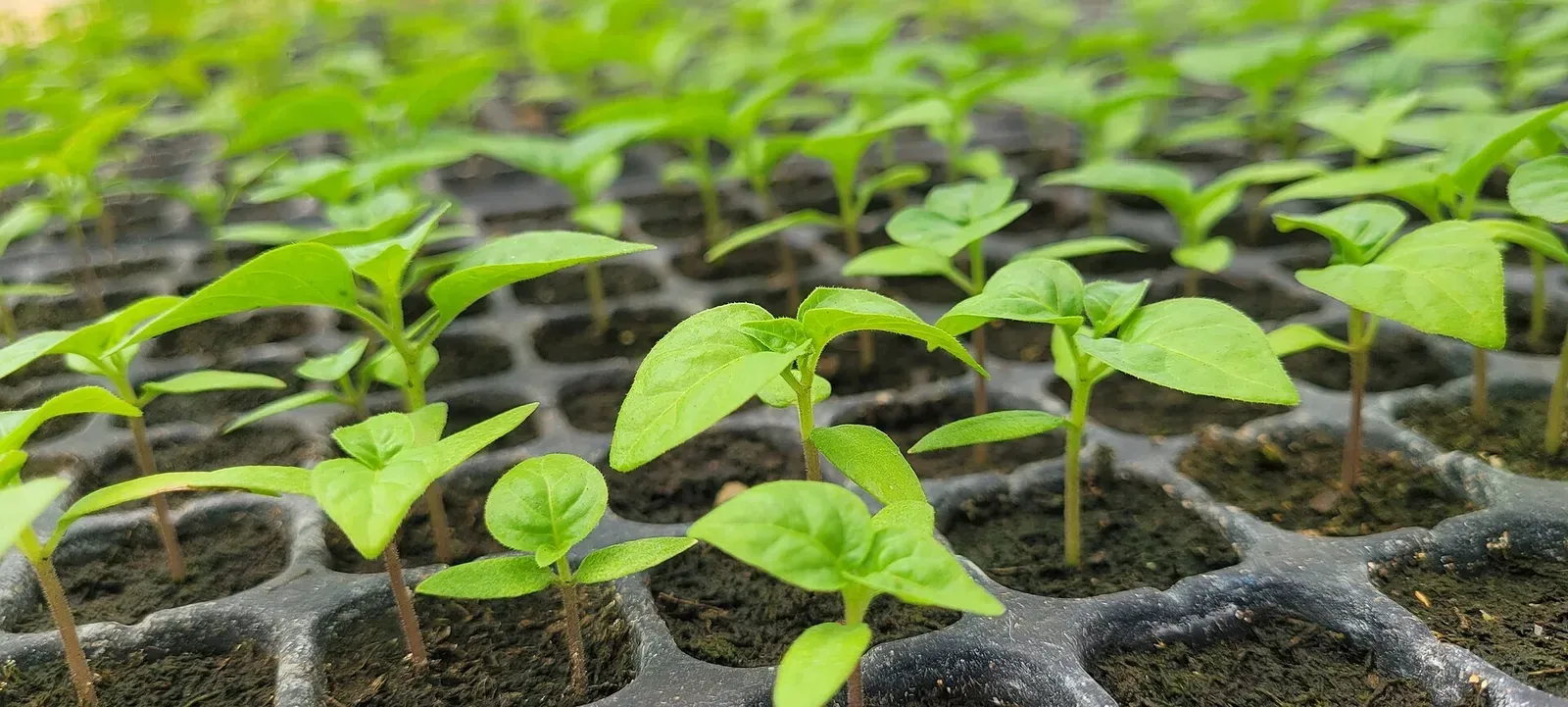
In Saskatoon, start pepper seeds indoors around mid-March, when there is often still snow on the ground. The University of Saskatchewan (USask) recommends sowing at least eight weeks before planting out, and gives around March 18 for Saskatoon. Peppers germinate slowly, grow slowly in cool weather, and need a long time to ripen, so they need a head start of a couple of weeks more than tomatoes.
Peppers go outside only once nights are reliably warm, usually in early June. Count back from that date, not from the last frost alone.
How to work out your sowing date
- Pick your planting-out date. Peppers dislike cold more than tomatoes. USask's article on growing transplants notes that the first week of June is a more prudent planting date for tender crops on the Prairies than the May long weekend.
- Count back at least eight weeks. Some gardeners go ten weeks for hot peppers, which tend to be slower.
- Adjust for your yard. Environment and Climate Change Canada's 1981 to 2010 normals put the average last spring frost at the Saskatoon airport at May 21, but there is roughly a one-in-ten chance of frost on or after June 7. Low spots and rural yards can be colder than the city.
| Planned planting-out date | Sow (8 weeks before) | Sow (10 weeks before) |
|---|---|---|
| Late May, with protection | Late March | Mid-March |
| First week of June | Early April | Late March |
| Mid-June (cold sites) | Mid-April | Early April |
Sowing in January or February rarely helps. Plants get big and root-bound under lights, and still cannot go out before the weather warms.
Germinating pepper seeds
Warmth is the key. USask says pepper seeds germinate best at 25 to 29 °C and take 10 to 21 days. In a cool Saskatoon house in March, seeds on a windowsill can take much longer or rot.
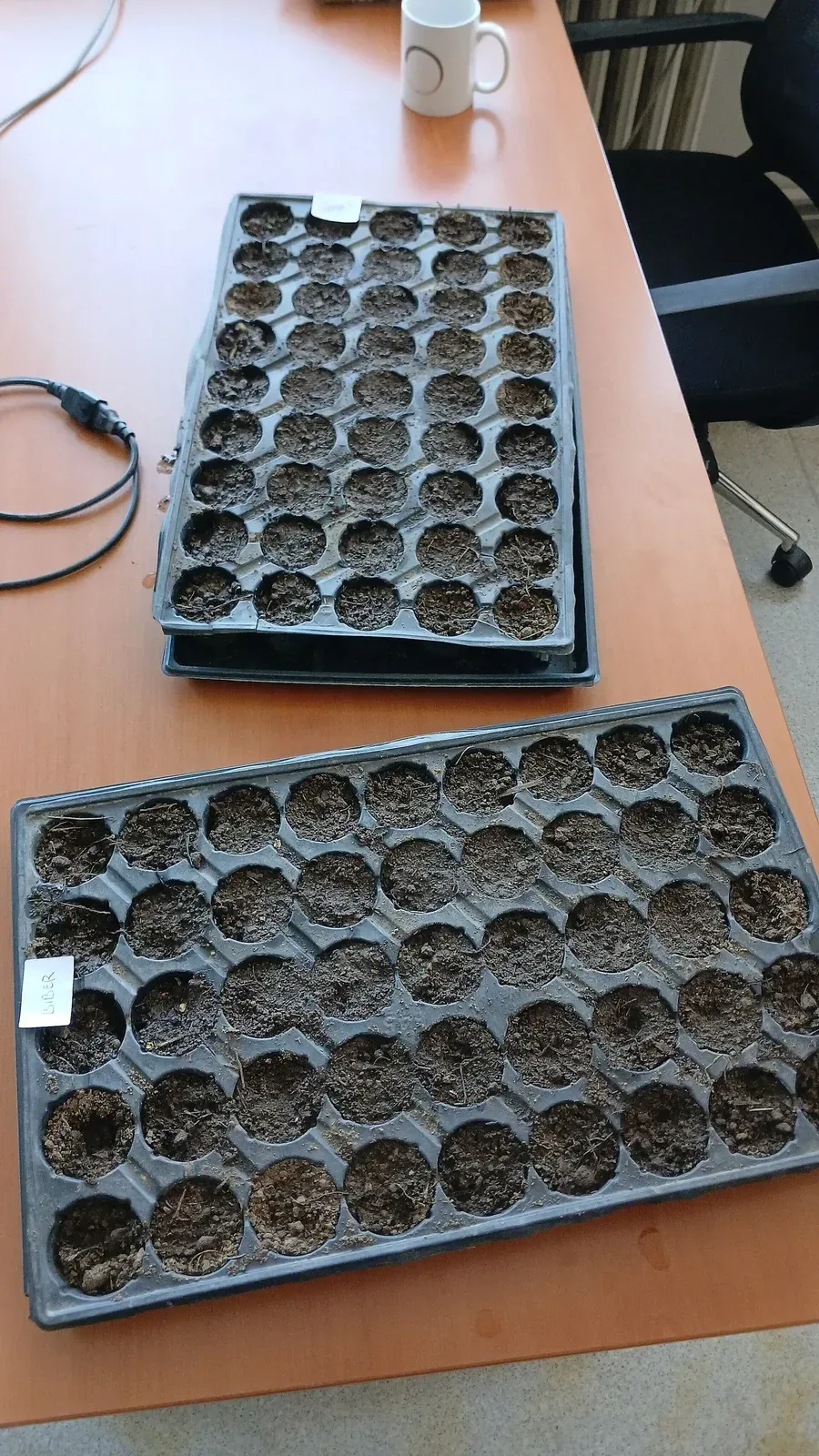
- Use fresh seed-starting mix, moistened before you fill your trays.
- Sow two or three seeds per cell, about 0.5 cm deep, and label each variety.
- Put the tray on a seedling heat mat, or in the warmest spot in the house, and cover it to hold moisture.
- Check daily. Remove the cover as soon as seedlings appear, and move them under lights.
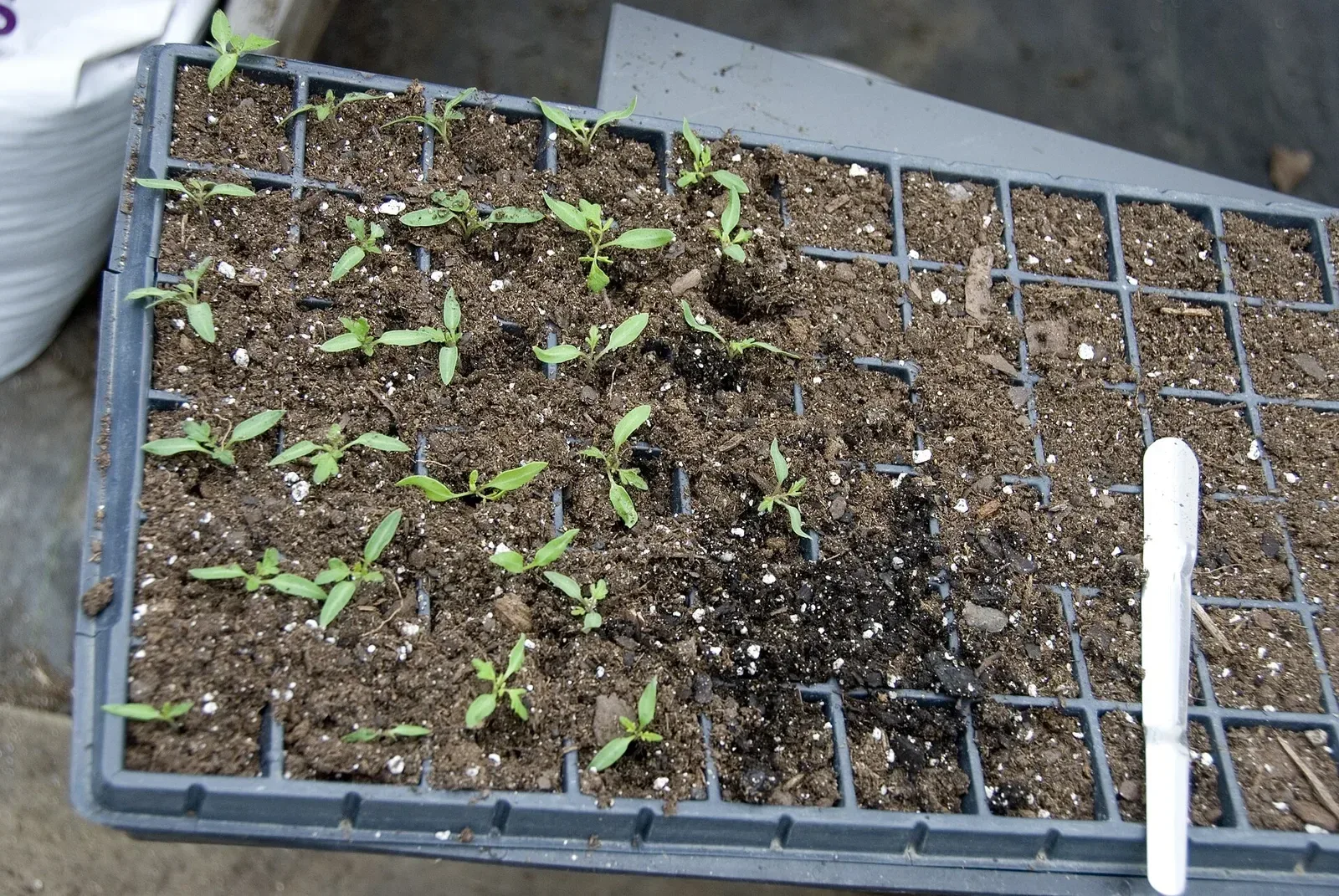
- Thin to one seedling per cell once true leaves form, snipping the extras rather than pulling them.
Light, warmth and feeding
- Light: USask's pepper guide suggests lights about 30 cm above the plants for 14 to 16 hours a day. Raise the lights as plants grow. Follow your light's own guidance, because LED fixtures differ a lot in strength.
- Temperature: keep seedlings warm. Peppers sulk when roots are cold. A cool basement often slows them down badly.
- Water: let the surface of the mix dry slightly between waterings. Bottom watering keeps the stems dry.
- Feeding: once true leaves appear, use a weak, balanced water-soluble fertilizer. Follow the label.
- Potting up: move plants into larger pots when roots fill their cells. Unlike tomatoes, peppers should be replanted at the same depth.
- Airflow: a small fan or a daily brush with your hand helps stems firm up.
USask describes the ideal pepper transplant as about 15 cm tall and not yet flowering or setting fruit. If your plants flower early indoors, pinch off the first flowers so they put their energy into roots and leaves.
Hardening off and planting out
- Start hardening off on warm days, a week or more before planting out. Begin with an hour or two in shade, and build up sun and time.
- Bring plants in on cold nights. Peppers can be checked by temperatures well above freezing.
- Plant in the warmest, most sheltered part of the garden, or in large containers on a sunny patio. USask suggests containers of about 4 litres or more for peppers.
- Protect early plantings. USask notes that water-filled cloches such as Wall O' Water can protect plants to about −11 °C.
Choose varieties that can ripen here
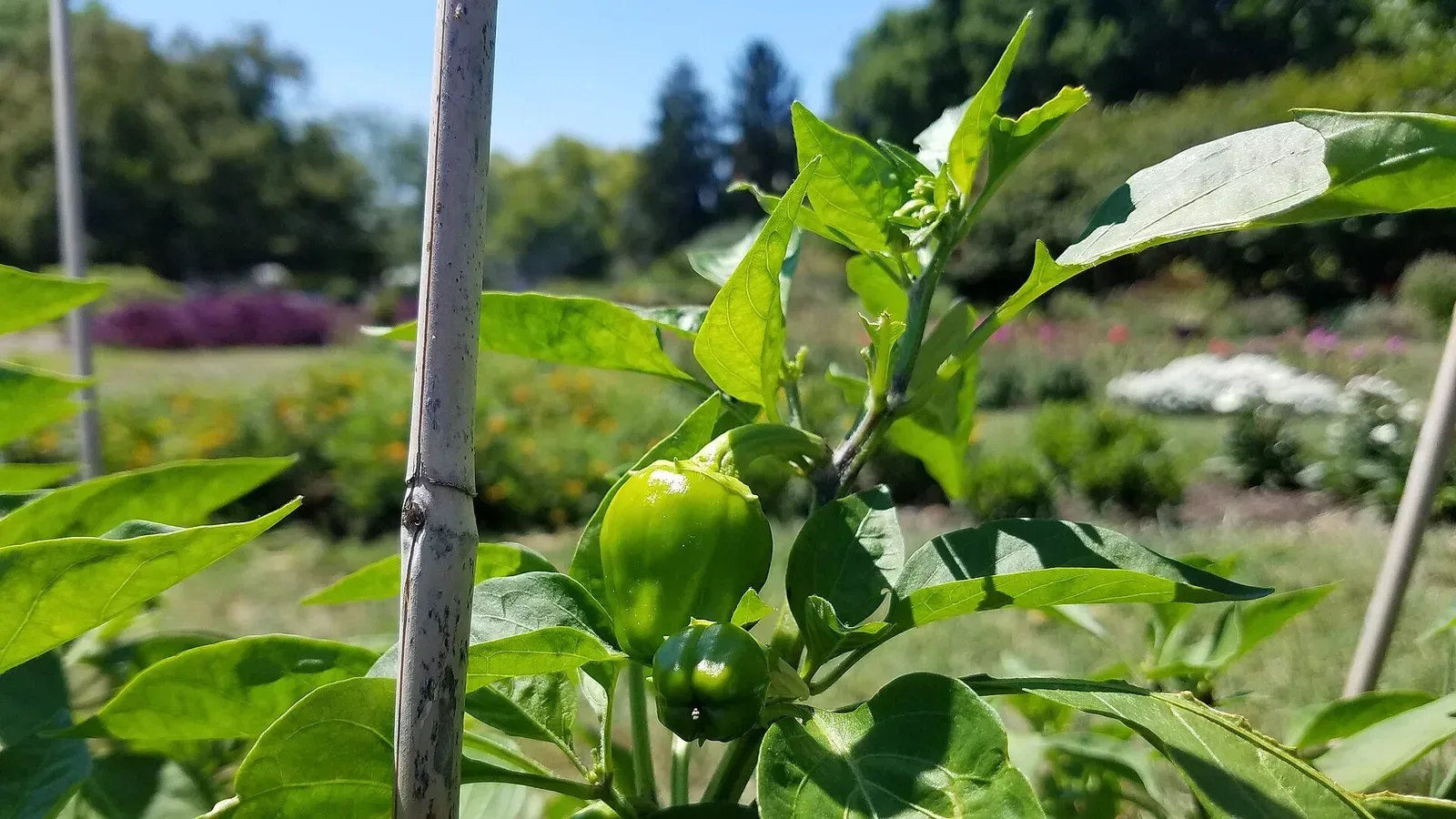
USask notes that peppers needing more than about 75 days to mature are unlikely to ripen in Saskatchewan. Green peppers are simply unripe peppers, so even if the season ends early you can still eat the crop. Getting red, yellow or orange fruit takes longer.
Varieties USask has trialled include Bastille, Classic, Double Up, Early Summer, King Arthur, Redstart and Thickset Improved. USask notes that Redstart ripens to red. Small-fruited and early hot peppers are often easier than big bell peppers. Check days to maturity in Canadian seed catalogues, and remember those numbers are counted from transplanting.
Common problems
- Seeds not germinating: the mix is too cool or the seed is old. Use a heat mat, and wait up to three weeks.
- Stretched seedlings: not enough light. Move lights closer.
- Yellowing lower leaves on seedlings: often cold, wet roots or hunger. Let the mix dry slightly and feed lightly.
- Plants stall after planting: cold soil or wind. Use cloches or row cover, and wait for warmer nights next year.
- Flowers drop: often cold nights or very hot, dry days. It usually resolves when weather settles.
Related: when to start tomato seeds indoors, last-frost dates for tomatoes and peppers, the planting calendar and our tomato profile.
Watch: a video walk-through
Midwest Gardener explains when to start pepper seeds indoors and why peppers need an earlier start than most vegetables. Adjust the timing to the Saskatoon dates above.
Sources
Sources last checked 10 November 2026. Advice varies with your home, region and plant; use these as a starting point.
Comments
No comments yet — share what worked in your climate.