
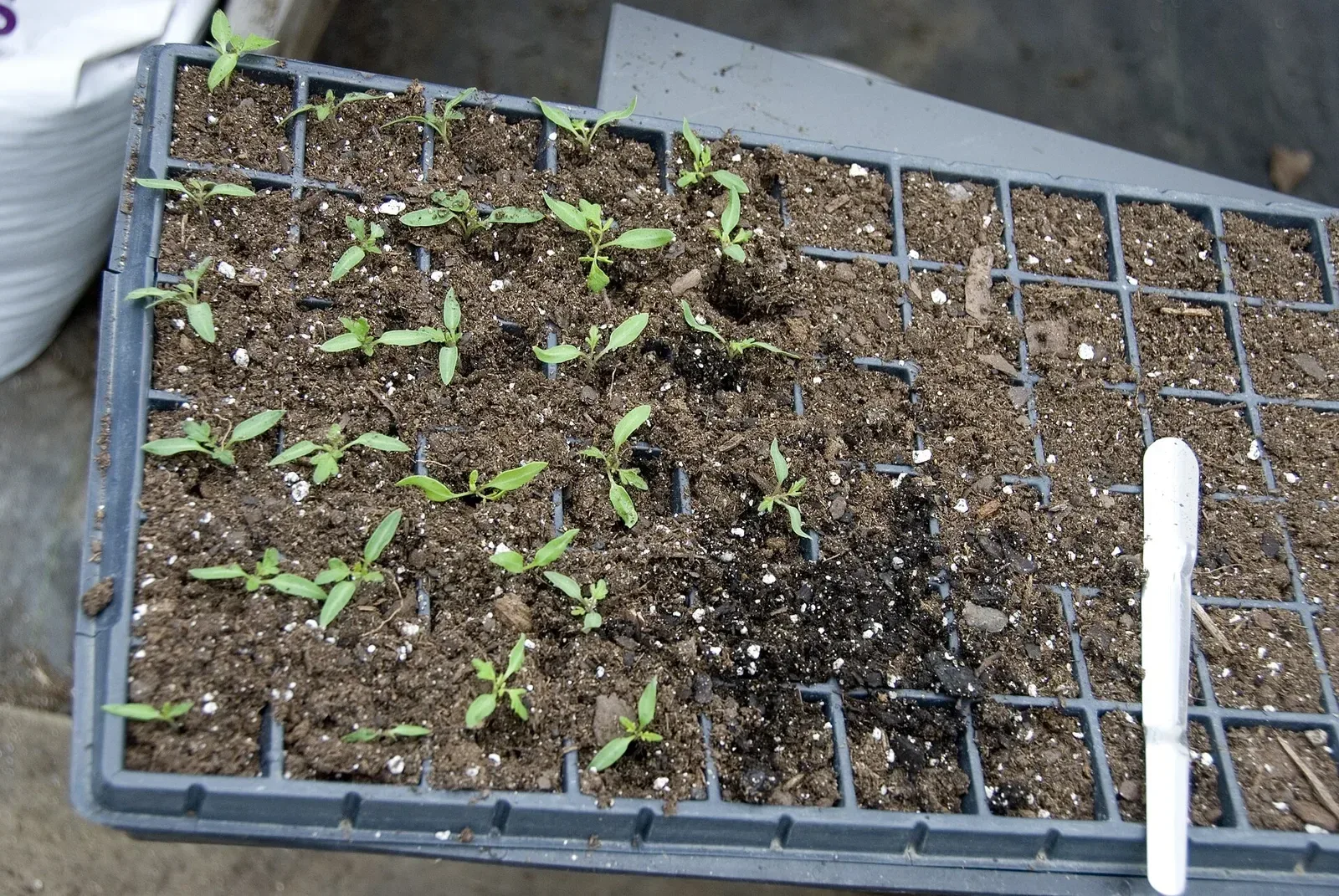
If you are wondering when to start tomato seeds indoors in Saskatchewan, late March to early April suits most of the south and centre of the province. The University of Saskatchewan (USask) recommends sowing about six weeks before you plan to plant outside, which for Saskatoon is around April 1. Tomatoes go outside a week or two after the last spring frost, so the real starting point is your own frost date, not the calendar.
Starting much earlier rarely helps. Tomatoes that sit indoors too long get tall, pale and root-bound, and often take longer to settle outside than younger plants.
How to work out your sowing date
- Find your average last spring frost. For Saskatoon, USask's tomato page uses May 13. Environment and Climate Change Canada's 1981 to 2010 climate normals put the average last spring frost at the Saskatoon airport at May 21, Regina at May 20 and Prince Albert at May 27. Different sources use different data and periods, so treat any single date as a guide. Our guide to last-frost dates for tomatoes and peppers explains the differences.
- Add one to two weeks. USask recommends transplanting tomatoes one to two weeks after the frost-free date, once the soil has warmed. USask's article on growing transplants notes that the Victoria Day long weekend is traditional on the Prairies, but the first week of June is more prudent for tender crops.
- Count back six to eight weeks. USask's tomato page uses six weeks; its gardening timeline suggests sowing tomatoes about eight weeks before the last frost. Six weeks gives compact plants; eight weeks suits gardeners with good lights and space.
Examples, rounded:
| Planned planting-out date | Sow (6 weeks before) | Sow (8 weeks before) |
|---|---|---|
| Late May | Mid-April | Early April |
| First week of June | Late April | Early to mid-April |
| Mid-May with protection (e.g. Wall O' Water) | Early April | Late March |
In colder spots, such as the northern grain belt or low-lying yards that collect cold air, push everything a week or so later. Our planting calendar can help you plan.
What you need
- Seed-starting mix: fine, sterile and free-draining. Avoid garden soil.
- Containers with drainage: cell trays, small pots or reused containers with holes.
- Warmth: USask says tomato seeds germinate best at 24 to 32 °C, usually in about a week. A heat mat helps in a cool house.
- Light: a sunny window alone is usually not enough in a Saskatchewan April. Simple LED shop lights or fluorescent tubes work well.
- A small fan, or a willingness to brush your seedlings every day.
Sowing tomato seeds step by step
- Moisten the mix before filling containers, so it is damp but not dripping.
- Sow seeds about 0.5 cm deep, as USask recommends. Two seeds per cell is plenty; thin to the strongest later.
- Label each variety and the sowing date.
- Cover the tray loosely to hold moisture and keep it warm until seedlings appear.
- Remove the cover as soon as seedlings emerge, and move them straight under bright light.
Light: the step that makes or breaks seedlings
Leggy, floppy tomato seedlings are almost always short of light. USask suggests a simple test: hold an object 10 to 15 cm above a sheet of paper where your seedlings will be. If the shadow is fuzzy, there is not enough light. A sharp, defined shadow is what you want.
Under lights, USask suggests fluorescent tubes 30 to 45 cm above the seedlings for 10 to 12 hours a day. Many growers using LEDs run them 14 to 16 hours, close to the plants, and raise them as the seedlings grow. Follow your light's guidance on distance, because LED strength varies a lot.
Growing on: water, feeding and air
- Water when the surface of the mix feels dry, and water from below where you can. Do not keep the mix soggy.
- Once true leaves appear, feed lightly. USask suggests a 20-20-20 water-soluble fertilizer used weakly, twice a week. Follow the product label for strength.
- Move air. USask recommends a fan or brushing your hand over the seedlings about 20 times a day, which makes stems thicker and stronger.
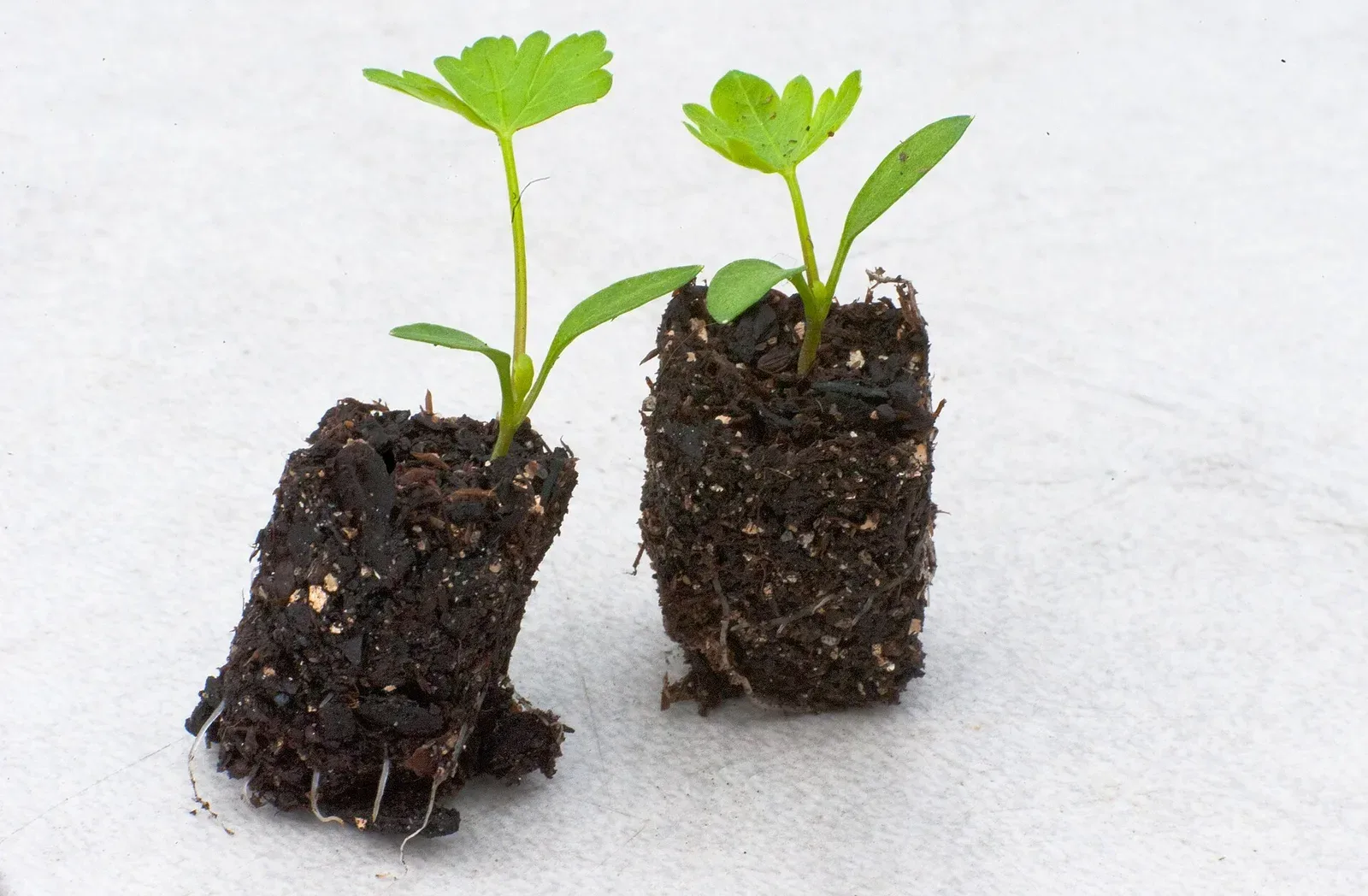
- Pot up into larger containers when the seedlings have a couple of sets of true leaves, or if roots fill the cell. Tomatoes can be planted deeper each time, because they root along buried stems.
- Keep nights a little cooler than days if you can. Very warm, dim conditions make stretched plants.
Hardening off before planting out
Seedlings grown indoors need time to get used to sun, wind and cool nights. USask suggests at least a week of hardening off, starting when daytime temperatures reach about 15 °C, and leaving plants out for at least three nights before transplanting.
- Start with an hour or two in a sheltered, shaded spot.
- Increase time and sun each day.
- Bring them in if frost or strong cold wind is forecast.
- Water well before and after planting out, ideally on a calm, cloudy day.
Protection helps on the Prairies. USask mentions water-filled cloches such as Wall O' Water, which store daytime heat and let you plant a little earlier.
Common seed-starting problems
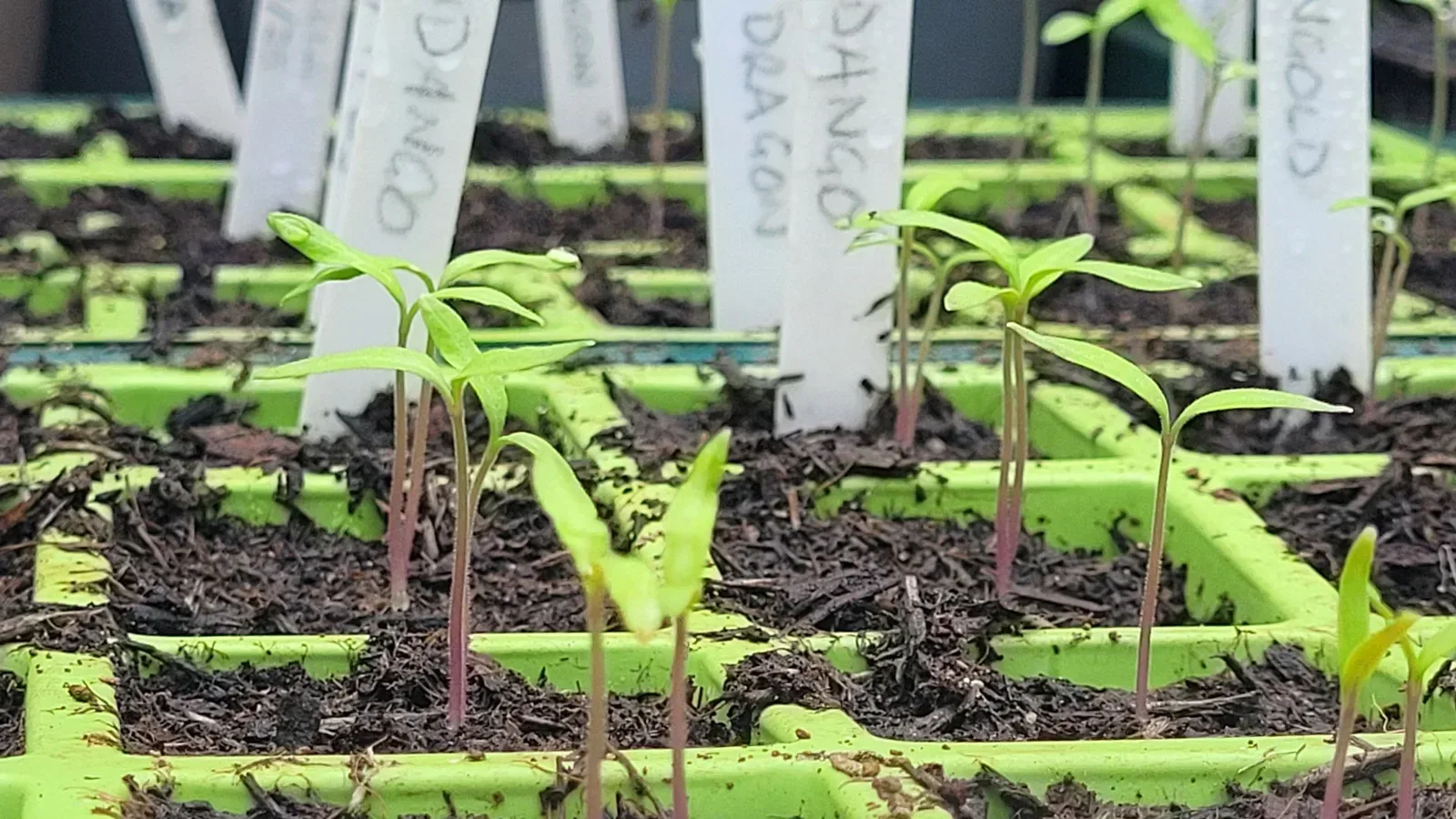
- Tall, thin, pale seedlings: not enough light, too warm, or started too early. Increase light and lower the temperature a little. Bury the long stem when potting up.
- Seedlings collapsing at the soil line: damping-off. Use clean containers and fresh mix, avoid overwatering, and keep air moving.
- Purple undersides on leaves: often cool roots or low phosphorus uptake. It usually fades once plants warm up and are fed.
- Slow germination: the mix is too cool. Use a heat mat or move trays somewhere warmer.
- Small flies around trays: likely fungus gnats from wet mix. See our fungus gnats guide.
Choosing varieties
Seed starting only pays off if the variety can ripen in a short season. USask recommends cultivars that mature in about 70 days or less from transplant. Our guide to short-season tomatoes for Saskatchewan covers varieties in detail, and the tomato plant profile covers care through the summer.
Pets and tomato plants
The ASPCA lists the tomato plant as toxic to dogs, cats and horses, because of solanine in the green parts. Keep seedling trays where pets cannot chew them. Ripe tomatoes are a different matter, but if a pet eats leaves or stems, call your veterinarian.
Watch: a video walk-through
Next Level Gardening walks through starting tomato seeds indoors for strong transplants. Use the timing above for Saskatchewan rather than a warmer-region calendar.
Sources
Sources last checked 10 November 2026. Advice varies with your home, region and plant; use these as a starting point.
- Gardening at USask: Tomatoes
- Grow with USask: Tomatoes (PDF, 2025)
- Gardening at USask: Gardening timeline
- Gardening at USask: Growing your own transplants
- ECCC Climate Normals 1981-2010: Saskatoon Diefenbaker Int'l A
- ECCC Climate Normals 1981-2010: Regina station 4016560
- ECCC Climate Normals 1981-2010: Prince Albert station 4056240
- ASPCA Animal Poison Control: Tomato plant
Comments
No comments yet — share what worked in your climate.