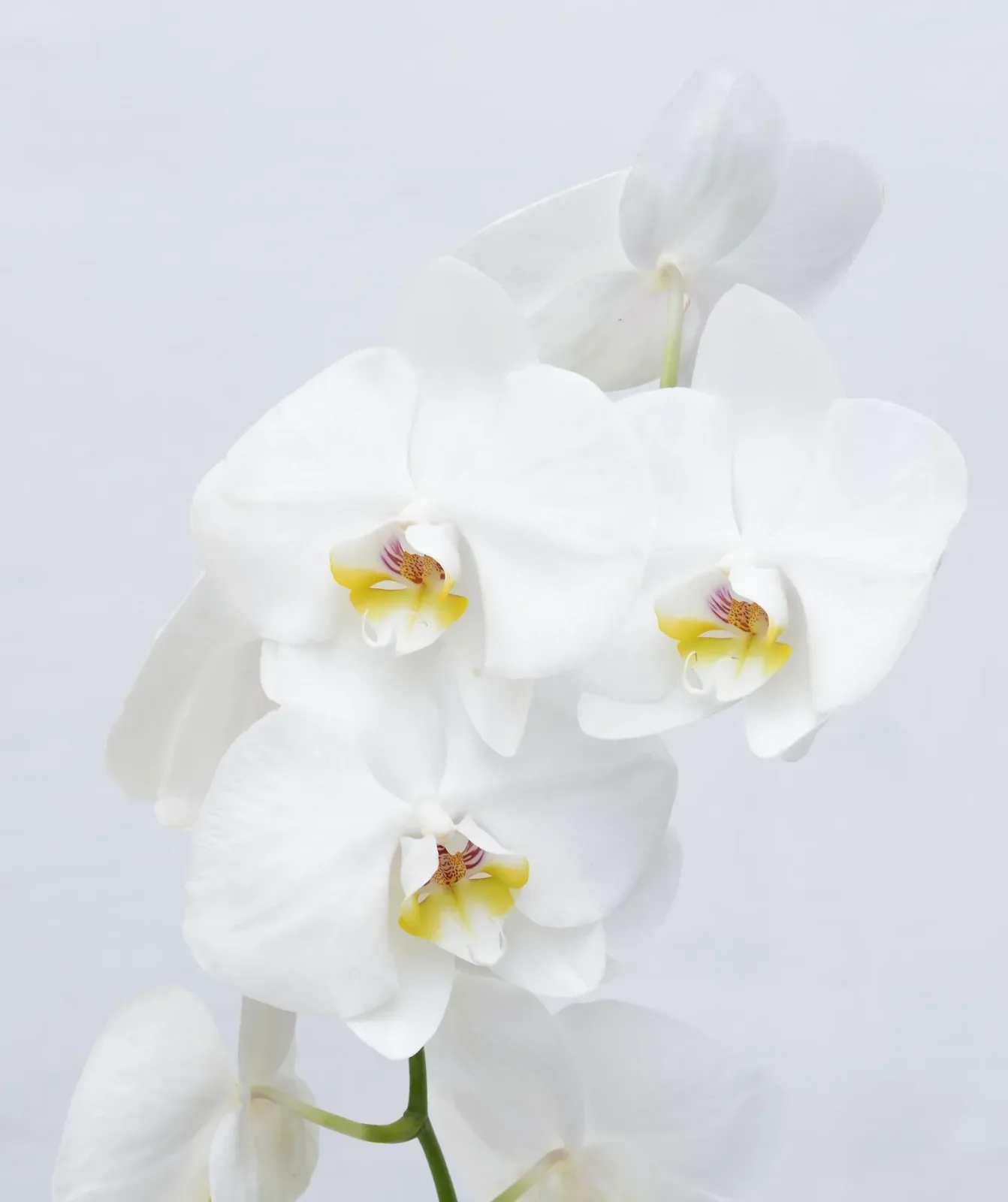
| ☀️ Light | Bright indirect light |
|---|---|
| 💧 Water | Moderate (lightly moist) |
| 🪴 Soil | Orchid bark mix |
| 🌡️ Temp | 16°C – 28°C |
| 🐾 Safety | Cats: non-toxic · Dogs: non-toxic (ASPCA Animal Poison Control) |
| 📏 Mature size | 60 cm |
Where It Grows & Climate Tolerance
Pet & Companion Animal Toxicity (Phalaenopsis Orchid)
Moth orchid — Canada's top grocery-store bloomer; easy if you water the bark mix and give bright shade.
Care instructions
Care Guide & Maintenance Routine
Bright shade, soak bark when roots turn silvery, drain well, cool nights help rebloom.
Light & Sunlight
East window preferred. Protect from hot midday sun.
Watering Schedule
Soak when bark is dry / roots silvery. Drain completely. Weekly is typical.
Potting Mix & Drainage
Orchid bark mix
Temperature & Humidity
Day 20–27 C; cooler nights (16–18 C) in fall help spike formation.
Phalaenopsis orchids are among the most produced potted flowering plants in Canada. You see them in grocery stores from coast to coast because they bloom for weeks and handle indoor life better than most orchids when their roots get air and light.
Give bright, indirect light — an east window is ideal. Leaves should be medium green; dark green means too little light, yellow-green with red edges can mean too much. Water when the clear pot shows silvery roots or the bark feels dry, usually every 7 to 10 days. Soak the pot for a few minutes, then drain fully. Never leave the plant sitting in water.
Use orchid bark, not regular potting soil. Feed with a dilute orchid fertilizer every other watering in spring and summer. After blooms fade, cut the spike above a node; a side branch may flower again. Night temperatures around 16 to 18 C can help set new spikes in fall.
Canadian winter apartments are often dry. Mist lightly or raise room humidity, but do not soak the crown of the plant — that causes rot. Phalaenopsis are generally considered non-toxic to pets, though chewing any plant is still a bad idea. With bark, bright shade and a soak-and-drain habit, moth orchids rebloom reliably indoors.
Grocery-store orchids in Canada often arrive in decorative pots with no drainage. Move them into a clear orchid pot with bark within a few weeks for longer life. Ice-cube watering is a myth that can chill roots — room-temperature soak is better. If roots turn brown and mushy, trim to firm green or white tissue and remount in fresh bark. A south window in Saskatchewan winter can be strong; sheer curtains prevent leaf burn while still feeding the plant enough light to rebloom.
Seasonal rhythm
Seasonal Calendar
A month-by-month calendar for Phalaenopsis Orchid in Canada is coming soon. See the light, water and temperature notes above.
Diagnostics
Common Problems & Troubleshooting
Crown rot (water in center); wrinkled leaves (underwater or root loss); no rebloom (too little light or no cool nights).
Pests & seasonal watch: Mealybugs and scale in leaf joints. Wipe with alcohol on a cotton swab.
Care encyclopedia · 6 guides
Guides & Articles for Phalaenopsis Orchid
Phalaenopsis Orchid Care Guide for Canada
A practical Canadian guide to phalaenopsis orchid, with seasonal care, common problems, propagation and buying checks.
Read guide →Winter Houseplant Care in Canada: Light, Watering, Humidity, Drafts and Pests
Short days, dry furnace air and icy drafts make winter the toughest season for houseplants in Canada. Here's how to manage light, watering, humidity, temperature and pests until spring.
Read guide →14 Pet-Safe Houseplants for Canadian Homes With Cats and Dogs
A spider plant, a parlor palm or a Christmas cactus is a solid start if you want houseplants in a home with cats or dogs. All fourteen plants below have a Canada profile and an ASPCA non-toxic listing. That is not the same as safe to eat.
Read guide →8 Christmas Plants for Canadian Homes and How to Keep Them Past January
Christmas cactus, a moth orchid and a Norfolk Island pine are the three most likely to still look good in February. Here are eight plants Canadian shops sell at Christmas, and how to keep each one past January.
Read guide →Common Indoor Plant Pests: How to Identify and Treat Spider Mites, Fungus Gnats, Mealybugs, Scale and Aphids
Sticky leaves, tiny flies or cottony fluff on your houseplants? Learn how to identify and treat the five most common indoor plant pests, spider mites, fungus gnats, mealybugs, scale and aphids, with safe methods and PMRA-registered products.
Read guide →Root Rot in Houseplants and Garden Plants: Causes, Signs and How to Rescue Them
A plant that wilts in wet soil often has root rot. Learn what causes it, how to tell rotted roots from healthy ones, a step-by-step rescue for houseplants, and how to prevent root rot in pots and Canadian garden beds.
Read guide →Q&A
Frequently Asked Questions
How often should I water a phalaenopsis orchid?
When the bark is dry and roots look silvery — often every 7–10 days. Soak, then drain fully.
How do I get my orchid to bloom again?
Bright indirect light and a few weeks of cooler nights around 16–18 C in fall help set spikes.
Can I plant it in regular potting soil?
No. Use orchid bark so roots get air. Soil holds too much water and causes rot.
Is phalaenopsis toxic to cats?
Generally considered non-toxic, but keep pets from chewing the plant.
Similar Botanical Matches
Grower field notes
Reader Field Notes in Canada
Share how this plant performs in your local Canada climate.