| ☀️ Light | Bright indirect light |
|---|---|
| 💧 Water | High (consistently moist) |
| 🪴 Soil | Rich, peaty, moisture-retentive mix that still drains well |
| 🌡️ Temp | 10°C – 24°C |
| 🐾 Safety | Cats: non-toxic · Dogs: non-toxic (ASPCA Animal Poison Control) |
| 🏔️ Hardiness | Indoors only in Canada. Outdoors hardy in USDA zones 10 and above (NC State Extension) |
| 📏 Mature size | 90 cm |
Where It Grows & Climate Tolerance
Pet & Companion Animal Toxicity (Boston Fern)
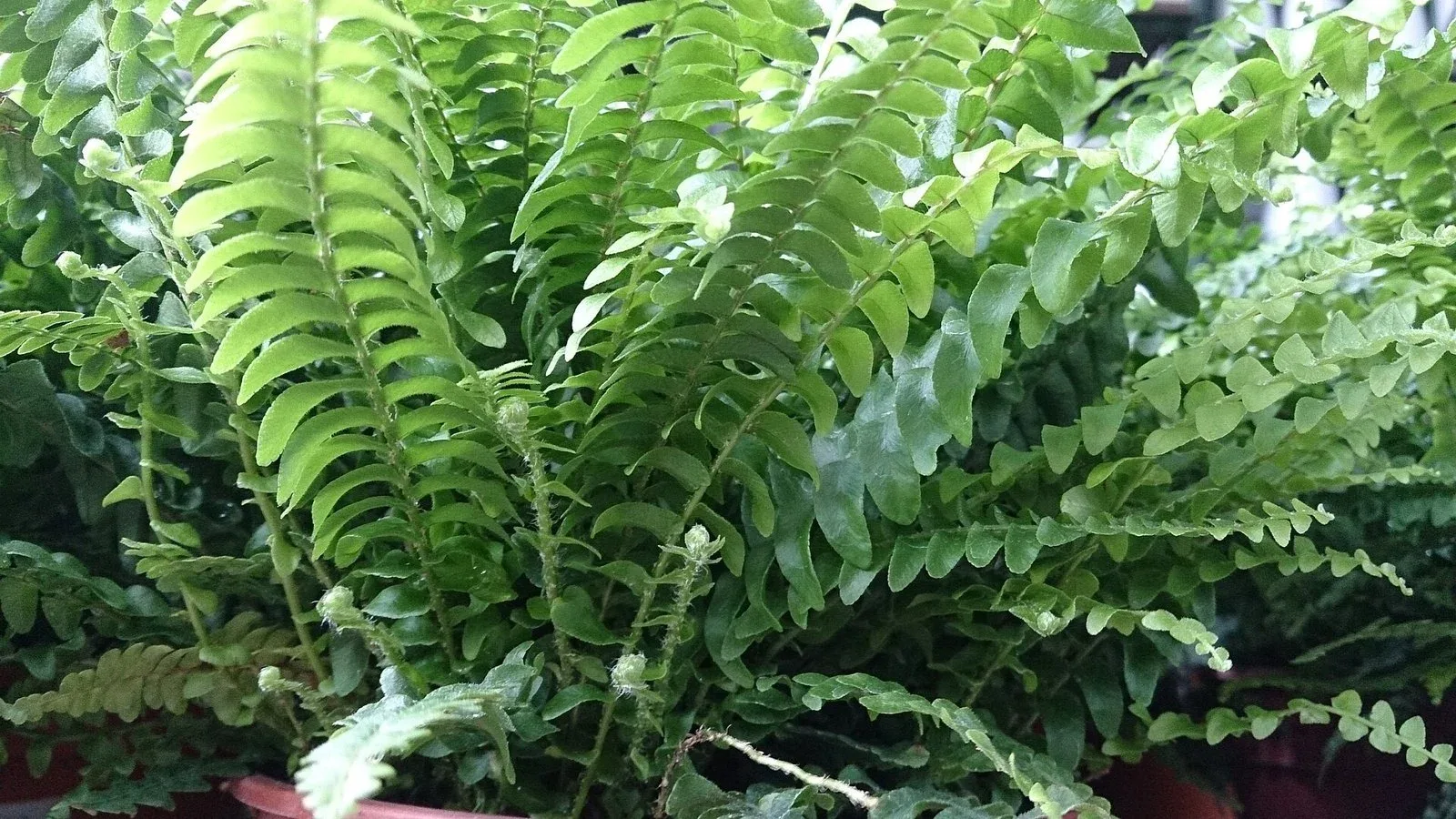
Lush, arching pet-safe fern for hanging baskets. Needs evenly moist soil and high humidity, so dry Canadian winters are its biggest challenge.
Care instructions
Care Guide & Maintenance Routine
Bright indirect light, evenly moist soil, 50%+ humidity (humidifier in winter), 18-24 C, minimum 10 C. No feeding October-February. Non-toxic to cats and dogs.
Light & Sunlight
Bright indirect light; no direct sun
Watering Schedule
High: keep soil evenly moist and never let it dry out completely; slightly less in winter
Potting Mix & Drainage
Rich, peaty, moisture-retentive mix that still drains well
Temperature & Humidity
Verified temperature range: 10°C–24°C (50°F–75°F). Protect from cold drafts and direct airflow from heating or cooling vents.
Boston fern (Nephrolepis exaltata 'Bostoniensis') is a classic arching fern that looks best in a hanging basket or on a plant stand. It is native to tropical and subtropical regions of the Americas and is a tropical plant, hardy outdoors only in warm USDA zones (10 and above), so across Canada it is grown indoors, with a summer holiday on a shady patio.
The humidity challenge
Boston ferns want 50% humidity or more, while a heated Canadian home can fall to roughly 25-30% in deep winter. Dry air makes the fern shed small dry leaflets, which is the most common complaint. A cool-mist humidifier is the most effective fix. A wide pebble tray, grouping plants together, or a bright bathroom or kitchen can also help. Keep it away from heating vents and cold drafts.
Light and water
Give it bright indirect light and avoid direct sun, which scorches the fronds. Keep the soil evenly moist and never let it dry out completely. In winter growth slows, so check by touch and water a little less often, but do not let the root ball go dry. A peaty, moisture-retentive mix that still drains is ideal.
Feeding
Stop feeding from October to February and resume a diluted feed in spring when new fronds appear.
Good to know
- The dark brown dots in rows under the fronds are spores, not pests.
- Typical size is 60-90 cm tall and wide, and growth is fast in good conditions.
- If fronds are badly damaged by dry air, cut them back to the soil, keep it moist and expect new growth in spring.
Pets
The ASPCA lists Boston fern as non-toxic to dogs and cats, making it one of the safer ferns for pet homes.
Seasonal rhythm
Seasonal Calendar
A month-by-month calendar for Boston Fern in Canada is coming soon. See the light, water and temperature notes above.
Diagnostics
Common Problems & Troubleshooting
- Shedding dry leaflets and brown frond edges | Cause: Dry heated air, the most common cause in Canadian winters | Fix: Raise humidity toward 50% with a humidifier, move away from vents, keep soil evenly moist - Scorched, pale fronds | Cause: Direct sun | Fix: Move to bright indirect light - Yellowing and limp fronds with soggy soil | Cause: Overwatering or poor drainage | Fix: Use a pot with drainage holes, empty saucers, keep moist but not wet
- Brown tips — Leaf tips and edges turn dry, brown and papery.
- Underwatering — Soil is bone dry and leaves are crispy, curled or dull.
- White crust — A white or yellow crust on the soil surface or pot rim.
Care encyclopedia · 5 guides
Guides & Articles for Boston Fern
Toxic Plants for Pets and Kids in Canada: Houseplants, Garden Plants and Poison Centre Numbers
Which houseplants and garden plants are toxic to cats, dogs and children in Canada, what to do right away if one is eaten, and the poison centre number for every province and territory.
Read guide →Winter Houseplant Care in Canada: Light, Watering, Humidity, Drafts and Pests
Short days, dry furnace air and icy drafts make winter the toughest season for houseplants in Canada. Here's how to manage light, watering, humidity, temperature and pests until spring.
Read guide →Top 10 "Air-Purifying" Plants for Canadian Apartments: What They Can and Can't Do
The famous 1989 NASA plant study doesn't translate to real homes: a 2019 review found you'd need 10 to 1,000 plants per square metre to match normal ventilation. Here is what plants can do, what really cleans apartment air, and 10 easy NASA-list plants.
Read guide →Top 10 Pet-Safe Houseplants for Canadian Homes
Snake plant, pothos and lilies are common in Canadian homes but toxic to pets. These 10 houseplants are listed as non-toxic to both cats and dogs by the ASPCA, and they cope with short days and dry winter air.
Read guide →14 Pet-Safe Houseplants for Canadian Homes With Cats and Dogs
A spider plant, a parlor palm or a Christmas cactus is a solid start if you want houseplants in a home with cats or dogs. All fourteen plants below have a Canada profile and an ASPCA non-toxic listing. That is not the same as safe to eat.
Read guide →Q&A
Frequently Asked Questions
Why is my Boston fern dropping leaflets?
Usually dry air from forced-air heating. Boston ferns want about 50% humidity or more, so run a humidifier, group plants and keep it away from vents.
Is Boston fern safe for pets?
Yes. The ASPCA lists Boston fern as non-toxic to dogs and cats.
Can Boston fern live outside in Canada?
Only in summer on a shaded patio. It is hardy outdoors in USDA zones 10 and above, so bring it in before nights turn cool.
What are the brown dots under the fronds?
They are spores, which is normal for ferns, not insects or disease.
Similar Botanical Matches
Grower field notes
Reader Field Notes in Canada
Share how this plant performs in your local Canada climate.