
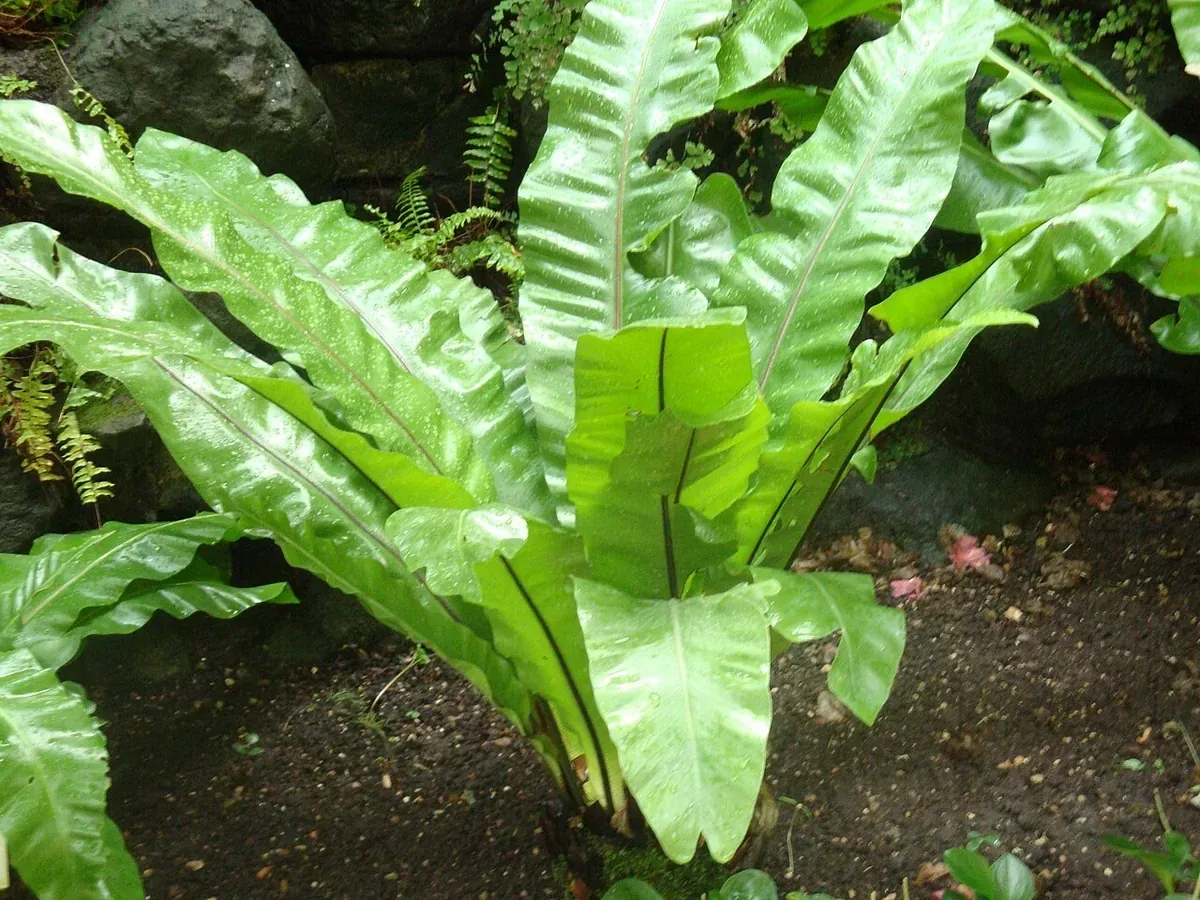
| ☀️ Light | Bright indirect light |
|---|---|
| 💧 Water | Moderate (lightly moist) |
| 🪴 Soil | Rich, porous, slightly acidic fern or houseplant mix with bark or grit for drainage |
| 🌡️ Temp | 16°C – 27°C |
| 🐾 Safety | Cats: not verified · Dogs: not verified |
| 📏 Mature size | 90 cm |
Where It Grows & Climate Tolerance
Pet & Companion Animal Toxicity (Bird's Nest Fern Care in Canada)
Not yet verified: Toxicity status for cats, dogs, and horses has not yet been confirmed against veterinary poison-control records. Keep out of reach of pets or consult your veterinarian.
Bird's nest fern is one of the easier ferns for Canadian homes because it handles normal room temperatures. The furnace season is the real test: dry air, cold window glass and short days.
Care instructions
Care Guide & Maintenance Routine
Bright, indirect light all year; an east window or a spot back from a south window. Humidifier or pebble tray from Thanksgiving to April. Water at the edge of the pot, never into the rosette. Optional shaded porch summer in coastal BC or southern Ontario once nights stay warm.
Light & Sunlight
NC State Extension says bright light or light shade suits it, such as a north-facing window, and too much sun can turn the fronds yellow or stop growth. The RHS also recommends bright indirect light.
Watering Schedule
Keep the compost moist but not soggy, as the RHS advises. Water around the edge of the pot so water does not sit in the central rosette, where new fronds unfurl. Water less in cool months.
Potting Mix & Drainage
Rich, porous, slightly acidic fern or houseplant mix with bark or grit for drainage
Temperature & Humidity
Strictly frost-tender. NC State says it will not survive below about 4°C and does best at 16 to 21°C. No Canadian hardiness zone comes close; even Zone 9a Victoria is far too cold in winter. Keep it away from cold windows, drafty entries and heat registers.
Bird's nest fern in a Canadian home
Many ferns sulk in Canadian houses, but bird's nest fern is more forgiving because its thick fronds lose water slowly. It still needs help through the furnace months, when indoor air can be as dry as a desert while frost builds up on the windows.
Buying and getting it home
Garden centres, IKEA, grocery chains and independent plant shops sell it all year, usually in 4 or 6 inch pots. Between November and March, ask for a paper sleeve or carry it in a closed box, warm the car first and drive straight home. Fronds that turn dark and translucent a day later were chilled. Online sellers may hold shipments in deep cold or add a heat pack; check their policy before ordering in January.
Furnace air and humidity
Forced-air heating dries rooms fast. Run a humidifier nearby, group it with other plants, or set the pot on a tray of wet pebbles. A bathroom with a window is a good winter home. Keep the pot away from floor registers, baseboard heaters and wood stoves. Misting does little in dry air and leaves water in the cup.
Light through the dark months
From November to February, move it closer to an east or south window, keeping fronds off the cold glass. In a basement suite or north-facing condo, an LED grow light on a timer keeps new fronds from coming in thin and pale.
Summer on the porch, by region
It does not need to go outside, but a shaded porch is possible once nights stay warm, roughly after your average last frost plus a few weeks:
- BC coast: last frost averages about 26 March in Vancouver and 14 April in Victoria, but nights stay cool into May. A covered porch works in June.
- Ontario and Quebec: about 4 May in Toronto, 7 May in Ottawa, 29 April in Montréal. Wait for warm June nights.
- Prairies: about 22 May in Edmonton, 24 May in Winnipeg, 26 May in Calgary, with fall frost by about 10 September in Calgary. Many keep it indoors.
- Atlantic: about 8 May in Halifax and 1 June in St. John's. Keep it out of the wind.
Bring it in well before frost, and check for pests first.
Zones
NRCan's 1991-2020 map ranges from Zone 3a in Regina to 9a in Vancouver and Victoria. None of them are warm enough for this tropical fern outdoors in winter.
Spotting pests
- Scale: oval, shell-like specks that multiply over a long Canadian winter; scrape one with a thumbnail and it pops off. Tidy parallel stripes underneath are spores, not insects.
- Mealybugs: fluffy wax tucked where young fronds unroll.
- Fungus gnats: small black flies over damp mix in winter; see our fungus gnats guide.
Questions from Canadian readers
- Crispy tan margins by February? Furnace-dried air; run a humidifier.
- Can it live in a condo with floor-to-ceiling windows? Yes, a couple of metres back from the glass, where July sun cannot reach it.
- Cat nibbling it? ASPCA has no listing, so our page leaves pet safety unverified.
More winter tips: watering houseplants in winter.
Seasonal rhythm
Seasonal Calendar
| Month | Care Tasks | Seasonal Focus |
|---|---|---|
| Jan | Protect from frost/heat | Deep-freeze weeks: humidifier on, fronds well off icy glass, water poured at the rim. |
| Feb | Protect from frost/heat | Indoor air bottoms out in many houses. Water lightly, never letting the mix go bone dry. |
| Mar | Repot | Daylight saving returns. Pot up only if roots circle the pot. |
| Apr | Fertilize | Half-strength fertilizer once a month from now. |
| May | Fertilize, Protect from frost/heat | Spring sun gets strong through south glass; pull the pot back a little. Indoors from coast to coast. |
| Jun | Fertilize | Vancouver, Victoria, Toronto, Windsor: a shady, covered porch is possible once nights stay mild. |
| Jul | Fertilize | Canada Day heat: water more often and keep it out of hot afternoon window sun. |
| Aug | Fertilize | Last feed. Calgary and Edmonton nights chill fast in late August; bring porch ferns in early. |
| Sep | Protect from frost/heat | Labour Day: every fern back inside. Look for scale before the furnace starts. |
| Oct | Protect from frost/heat | Thanksgiving: humidifier back on or pebble tray refilled. |
| Nov | Protect from frost/heat | Clocks fall back. Wipe dust from fronds with a damp cloth to catch the weak light. |
| Dec | Protect from frost/heat | Holiday drafts from the front door and space heaters: water at the rim, not the centre. |
Diagnostics
Common Problems & Troubleshooting
Brown, crispy frond edges from dry air or drafts; yellowing fronds from too much sun or overwatering; rotting centre from water sitting in the rosette; brown patches spreading between veins from leaf nematodes or bacterial disease; scale along the midrib.
Pests & seasonal watch: Scale and mealybugs build up indoors over winter. Fungus gnats appear when the mix stays wet under low winter light. NC State warns the fern is sensitive to chemical insecticides, so pick pests off by hand.
- Yellow leaves — Leaves fade from green to yellow, often starting at the bottom.
- Brown tips — Leaf tips and edges turn dry, brown and papery.
- Root rot — Roots turn brown and mushy in soil that stays wet.
- Mealybugs — White cottony clumps in leaf joints, often with sticky honeydew.
- Scale — Hard or soft brown bumps stuck to stems and leaf ribs, often with sticky honeydew.
- Leaf spot — Brown or tan spots with a yellow halo, sometimes with tiny dots in the centre.
- Overwatering — Soil stays wet, leaves yellow or droop, and the pot feels heavy.
- Underwatering — Soil is bone dry and leaves are crispy, curled or dull.
- Sun scorch — Bleached or crispy patches on the side that faces strong sun.
- Cold damage — Dark, water-soaked or blackened patches after a cold night or an AC blast.
- Stem rot — The stem goes soft, dark or black at soil level and the top collapses.
Care encyclopedia · 1 guide
Guides & Articles for Bird's Nest Fern Care in Canada
Similar Botanical Matches
Keep exploring
Related plants
Grower field notes
Reader Field Notes in Canada
Share how this plant performs in your local Canada climate.