
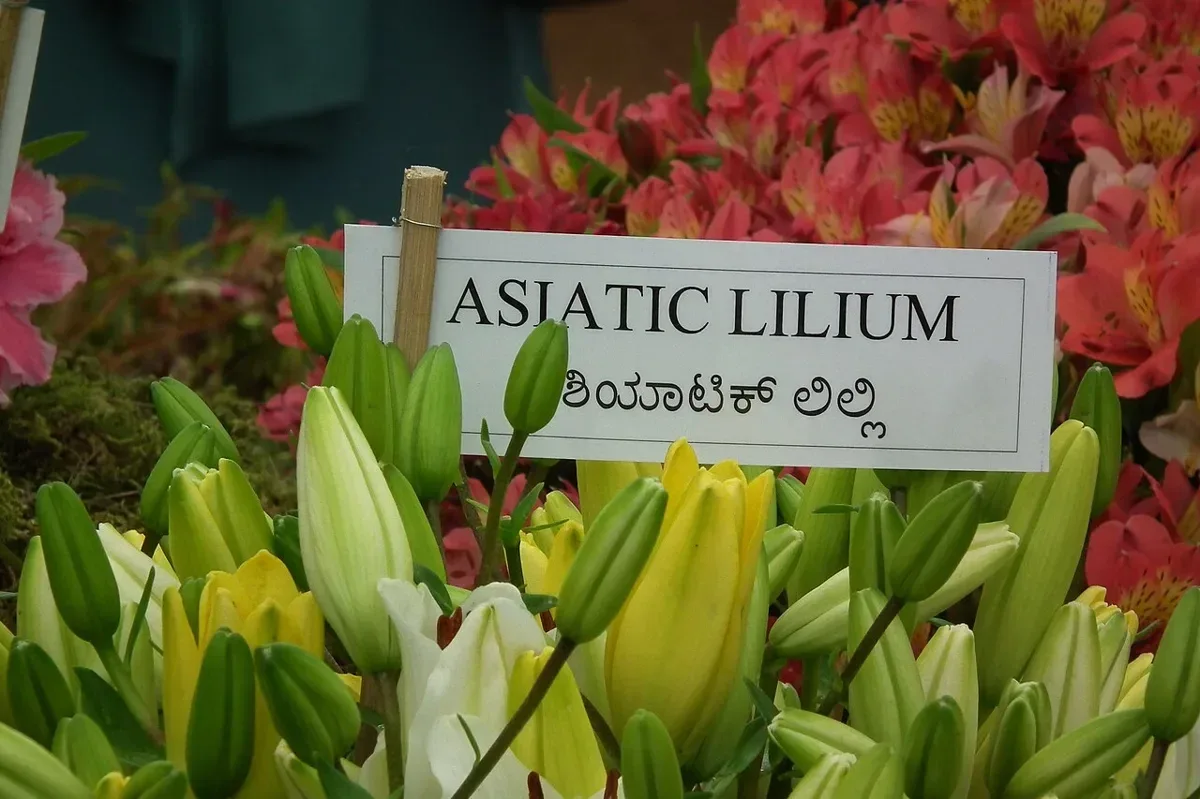
| ☀️ Light | Full sun |
|---|---|
| 💧 Water | Moderate (lightly moist) |
| 🪴 Soil | Deep, fertile, well-drained loam; pH about 6.0 to 7.0 |
| 🌡️ Temp | -30°C – 30°C |
| 🐾 Safety | Cats: toxic · Dogs: toxic |
| 📏 Mature size | 90 cm |
Where It Grows & Climate Tolerance
Pet & Companion Animal Toxicity (How to Grow Asiatic Lily in Canada)
Asiatic lilies are among the hardiest bulbs for Canadian gardens. NC State rates them to zone 4, and many cultivars grown on the Prairies were bred for even colder sites. Bulbs stay in the ground year after year, flowering from late June into July.
Care instructions
Care Guide & Maintenance Routine
Plant bulbs in mid to late September in a sunny, well-drained bed, or in spring as soon as the soil can be worked. Set them two to three times their height deep, mulch for the first winter, and stake tall stems. Check plants from May onwards for red lily beetles and their larvae.
Light & Sunlight
NC State lists full sun to light shade for Asiatic hybrids and advises sun on the leaves with shade over the roots. SKUAST-Jammu notes lilies are very sensitive to light: too little gives weak stems and bud drop, while strong summer sun keeps plants short and warms the soil, which encourages root rots.
Watering Schedule
NC State warns that overly moist soil rots bulbs but the soil should not dry out completely. Water deeply when the top few centimetres feel dry, especially while buds form, and reduce watering once the foliage starts to yellow after flowering.
Potting Mix & Drainage
Deep, fertile, well-drained loam; pH about 6.0 to 7.0
Temperature & Humidity
Bulbs are winter hardy across most of southern Canada; NC State gives zone 4a, and prairie-bred cultivars go colder. A late May frost can damage emerging shoot tips. Mulch new plantings for their first winter.
Asiatic lilies in Canadian gardens
Asiatic lilies are a Prairie favourite. Margaret Driver, past president of the Canadian Prairie Lily Society, writes that most lilies in prairie gardens are hybrids of Asiatic species whose ancestors came from a climate much like the Prairies. They range from about 25 cm to 1.2 m tall and flower from June to late August. They need no lifting and slowly build into clumps. Saskatchewan's provincial flower is a native lily, the western red lily (Lilium philadelphicum).
Hardiness
NC State rates Asiatic hybrids hardy to USDA zone 4a. Canadian lily breeders, many on the Prairies, have produced cultivars that cope with zone 3 winters; the University of Saskatchewan notes Saskatoon is zone 3b. Good drainage is the key to survival, because bulbs rot in wet, frozen soil.
Planting
The Prince Albert Daily Herald's prairie lily guide recommends planting in mid to late September, in groups of three or five, 20 to 25 cm apart, with at least six hours of sun. It suggests a depth of about three times the bulb's diameter in light soil and twice in heavy soil, and amending heavy clay with coarse peat moss, sharp sand or washed gravel. Water well and mulch the first winter. Spring-bought bulbs can go in as soon as the ground thaws in April or May.
The red lily beetle
The University of Saskatchewan reports that the red lily beetle was first found in North America in Montréal in 1943 and has spread west across Canada. Adults are bright red and about 1 cm long; larvae hide under their own black droppings on the underside of leaves. The University notes Asiatic lilies are its preferred food, while some Orientals, such as 'Uchida', show resistance. Start checking as soon as shoots appear in May. Adults startle easily and drop to the ground upside down, black side up, so hold a hand or a tray under the leaf before you grab. Squash the red egg lines on leaf undersides too. The beetle does not feed on daylilies, but it does attack the native western red lily. There is one generation a year, and the University notes adults can live several years.
Region notes
- Saskatoon, Regina, Winnipeg, Edmonton: the classic lily zone; mulch the first winter and choose prairie-tested cultivars.
- Toronto, Ottawa, Montréal: lily beetle pressure is high; inspect every few days in early summer.
- Vancouver and Victoria: mild, wet winters; plant on raised beds to prevent rot.
- Atlantic provinces: use the sunniest, best-drained spot; late frosts can nip shoots.
A typical Ontario season
Shoots break through in early May. By Victoria Day they are knee high and the first beetles appear. Buds swell in June, flowers open around Canada Day, and by the August long weekend the stems start yellowing. Cut them down in October once brown.
Questions from Canadian readers
- Do I need to dig lilies up for winter? No. Asiatic lilies overwinter in the ground; NC State notes lilies do not need to be lifted.
Seasonal rhythm
Seasonal Calendar
| Month | Care Tasks | Seasonal Focus |
|---|---|---|
| Jan | Protect from frost/heat | Deep winter: bulbs safe under snow and mulch. |
| Feb | Protect from frost/heat | Family Day: check stored or potted bulbs for rot. |
| Mar | Protect from frost/heat | March break: order bulbs from a lily society list. |
| Apr | Plant out | Ground thaws: plant spring bulbs; shoots break through. |
| May | Fertilize, Protect from frost/heat | Victoria Day: first lily beetles; hand-pick daily. |
| Jun | Protect from frost/heat | Stake tall stems; keep checking leaf undersides. |
| Jul | Harvest | Canada Day blooms; deadhead and cut for the vase. |
| Aug | Prune | August long weekend: let stems yellow naturally. |
| Sep | Plant out | Labour Day to late September: plant or divide clumps. |
| Oct | Prune, Protect from frost/heat | Thanksgiving: cut brown stems; mulch new beds. |
| Nov | Protect from frost/heat | Remembrance Day: top up mulch after the first freeze. |
| Dec | Protect from frost/heat | Snow cover protects bulbs; keep salt off lily beds. |
Diagnostics
Common Problems & Troubleshooting
Bulb rot in wet soil; grey mould (Botrytis) spots in long rainy spells; aphids on buds; lily beetle grubs stripping leaves in Canada; weak stems and bud drop in low light; short plants in hot soil; pollen staining clothes.
Pests & seasonal watch: The red lily beetle is the main pest from May to August, especially in Ontario, Quebec and the Prairies. Botrytis spots appear in wet summers. Aphids and lily viruses are common in older clumps; replace streaked, stunted plants.
- Yellow leaves — Leaves fade from green to yellow, often starting at the bottom.
- Drooping — Stems and leaves hang limp even though the plant was recently fine.
- Root rot — Roots turn brown and mushy in soil that stays wet.
- Aphids — Clusters of small soft insects on new tips, often sticky.
- Leaf spot — Brown or tan spots with a yellow halo, sometimes with tiny dots in the centre.
- Grey mould — Fuzzy grey mould on faded flowers, damaged leaves or soft stems.
- Overwatering — Soil stays wet, leaves yellow or droop, and the pot feels heavy.
- No flowers — A flowering houseplant stays leafy and will not bloom.
Similar Botanical Matches
Keep exploring
Related plants
Grower field notes
Reader Field Notes in Canada
Share how this plant performs in your local Canada climate.