
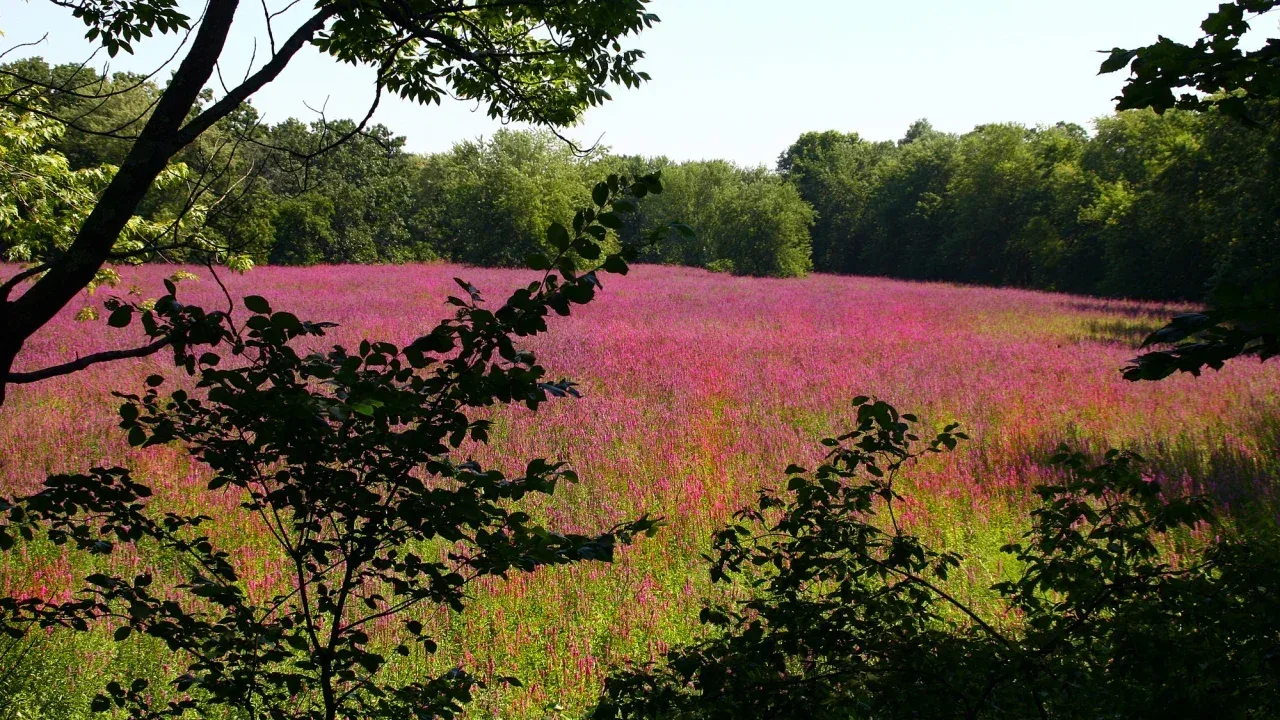
Invasive Plants You Shouldn't Grow in Canada (and Native Alternatives)
Some of the most damaging invasive plants in Canada didn't arrive by accident. Gardeners planted them. Invasives Canada (formerly the Canadian Council on Invasive Species) says over 60% of invasive plants were introduced intentionally over the last 150 years. Many are still sold at garden centres, swapped at plant sales or passed over the fence.
This guide covers the plants Canada's invasive species councils most want gardeners to avoid, which ones are restricted by law in Ontario and Alberta, and native plants to grow instead.
What makes a garden plant invasive?
Most introduced plants behave themselves. Invasive plants are the small number that escape gardens and take over natural areas, harming the environment, the economy or human health. The New Brunswick and Nova Scotia invasive species councils explain that once established in gardens, these plants can escape and out-compete native plants, reducing habitat and food for wildlife.
They tend to share a few traits:
- Huge seed production. One purple loosestrife plant can produce up to 2.5 million seeds that survive in the soil for up to 20 years. A single butterfly bush flower cluster can make over 40,000.
- Aggressive roots. Goutweed can spread up to 70 cm a year by rhizomes. Japanese knotweed is known to push through asphalt and concrete.
- Spread by birds and water. Burning bush, buckthorn and barberry have bird-dispersed seeds. Purple loosestrife seeds travel on wind, water, mud and animals.
"Invasive" also depends on place. The NB and NS councils point out that some invasives are native to other parts of Canada or North America. Manitoba maple, a North American tree, appears in Ontario's invasive plant reference guide. Buy plants native to your region, not just to Canada.
Why it matters
Invasive plants cause more damage than a messy garden:
- Wildlife. Invasives Canada explains that dog-strangling vine threatens the monarch butterfly. Monarchs lay eggs on it, but the caterpillars can't complete their life cycle.
- Health. Giant hogweed sap can cause severe burns. Dense Japanese barberry has been linked with more black-legged ticks and higher Lyme disease risk.
- Farms and forests. Common barberry hosts black stem rust of grain crops. Baby's breath lowers hay quality. Orange hawkweed affects forestry.
- Communities. Invasives Canada notes that invasive plants threaten native plants that Indigenous communities rely on for food, medicine and cultural practices. For example, the Grand Council Treaty #3 is mapping the spread of purple loosestrife, flowering rush and phragmites in its territory.
Once these plants are established they're very hard to remove, so not planting them is the cheapest control there is.
Canada's unwanted invasive plants
Invasives Canada's national list was built by cross-referencing provincial invasive species council lists and regulated species lists. It asks Canadians not to grow, plant, trade or buy these plants. Garden and landscape plants on the list include:
| Plant | Why it's a problem (Invasives Canada) |
|---|---|
| Norway maple (Acer platanoides) | Dense canopy shades out native shrubs and groundcovers |
| Tree-of-heaven (Ailanthus altissima) | Forms clonal thickets and hosts spotted lanternfly |
| Common barberry (Berberis vulgaris) | Alternate host of black stem rust of grain |
| Scotch broom (Cytisus scoparius) | Invades rangeland and competes with conifer seedlings |
| Spurge laurel (Daphne laureola) | All parts toxic; shades out native plants |
| Cypress spurge and myrtle spurge | Milky latex irritates skin; invades pastures and rangeland |
| Japanese, giant and Himalayan knotweed | Strong roots break through asphalt and concrete |
| Common baby's-breath (Gypsophila paniculata) | Reduces the forage value of hay |
| Giant hogweed | Sap causes severe burns when skin is then exposed to sunlight |
| Orange hawkweed | Spreads along roads and unforested areas |
| Yellow flag iris (Iris pseudacorus) | Takes over fish and bird habitat in wetlands |
| Oxeye daisy | One plant makes 26,000 seeds, and grazers avoid it |
| Yellow and Dalmatian toadflax | Spread along roadsides, fields and gardens |
| Morrow's honeysuckle | Bird-spread seeds form dense understorey thickets |
| Purple loosestrife | Rapidly degrades wetlands |
| Ribbon grass (Phalaris arundinacea ssp. picta) | Can hybridize with native reed canary grass |
| Salt cedar / tamarisk | Lowers water tables and salts the soil |
Its "high risk" list adds more familiar plants:
- Goutweed (bishop's weed)
- Bachelor's button (cornflower)
- Queen Anne's lace
- Common teasel
- Russian olive
- English ivy
- Himalayan balsam
- Himalayan blackberry
The list also covers aquatic plants sold for water gardens, including water hyacinth, parrot feather, yellow floating heart, water soldier and flowering rush. Never dump pond or aquarium plants outdoors.
Invasives Canada notes that cultivars aren't specifically listed, but even "sterile" cultivars may still reproduce and spread.
What's illegal to grow?
Rules vary by province. Here are two examples where the law directly affects home gardeners.
Ontario. Under the Invasive Species Act, 2015 (O. Reg. 354/16), it's illegal to bring restricted invasive plants into Ontario, propagate them, or buy, sell, lease or trade them. Restricted plants include:
- Dog-strangling vine and black dog-strangling vine
- Japanese, giant, Himalayan and Bohemian knotweed
- Invasive phragmites
- Tree-of-heaven
- Flowering-rush
- Eurasian water-milfoil
- European frog-bit
- Yellow floating heart
- Water fern (Azolla)
Ontario's Invading Species Hotline is 1-800-563-7711, and illegal sales can be reported to the MNR TIPS line at 1-877-847-7667.
Alberta. Under the Weed Control Act, prohibited noxious weeds must be destroyed and noxious weeds must be controlled. The regulated list was updated on January 28, 2026.
Prohibited noxious weeds that gardeners sometimes grow include:
- Common buckthorn
- Common barberry
- Himalayan balsam
- Japanese, giant and hybrid knotweed
- Pale yellow iris
- Purple loosestrife
- Queen Anne's lace
- Sulphur cinquefoil
- Common St. John's-wort
- Salt cedar
- Garlic mustard
- Giant hogweed
Noxious weeds on the list include:
- Common baby's-breath
- Dame's rocket
- Ox-eye daisy
- Yellow clematis (Clematis tangutica)
- Common tansy
- Orange hawkweed
- Field scabious
- Toadflaxes
Other provinces have their own weed control laws and invasive species council lists. Check yours before you plant, and buy from nurseries that follow the national Plant Wise voluntary code of conduct.
Regional problem plants
Ontario. Ontario's Invasive Terrestrial Plant Species quick reference guide, prepared with input from the Ontario Invasive Plant Council and the Ministry of Natural Resources, lists these garden plants as invasive:
- Goutweed
- Periwinkle (Vinca minor)
- Lily-of-the-valley (also poisonous; see our toxic plants guide)
- Miscanthus
- Japanese barberry
- European and glossy buckthorn
- Norway maple
- Himalayan balsam
- Oriental bittersweet
Atlantic Canada. The NB and NS Grow Me Instead guide calls glossy buckthorn possibly the most invasive plant in the Maritimes. It also warns that Japanese barberry thickets create ideal conditions for black-legged ticks and have been linked with increased Lyme disease risk. Rugosa rose threatens coastal ecosystems there.
British Columbia. The BC Invasive Species Council's Plant Wise brochure lists these "do not use" plants:
- Yellow archangel
- Purple deadnettle
- Leafy, myrtle and cypress spurge
- Toadflax
- Purple loosestrife
- Yellow flag iris
- Russian olive
- Tree-of-heaven
- European and fragrant water lilies
Prairies. Alberta's list above is a good guide for the region. Baby's breath, dame's rocket, ox-eye daisy and yellow clematis are all regulated there.
Grow this instead: native alternatives
These swaps come from the New Brunswick and Nova Scotia Grow Me Instead guide, developed with help from the Canadian Council on Invasive Species. Its plants are native to the Wabanaki forest region, so check your own provincial guide for local equivalents.
| Instead of | Grow | Why |
|---|---|---|
| Norway maple | Sugar maple, silver maple | Native shade trees with brilliant fall colour |
| Burning bush (Euonymus alatus) | Highbush blueberry, black chokeberry | Glowing red fall colour, plus fruit |
| Glossy buckthorn | Wild raisin (Viburnum cassinoides), American witch-hazel | Hedges and screens; berries for birds |
| Japanese barberry | Northern bush-honeysuckle (Diervilla lonicera), sweet-fern | Low hedges; bumble bees visit the flowers |
| Butterfly bush | Eastern buttonbush, butterfly milkweed | Pollinator magnets without the seed problem |
| Japanese knotweed | Common elderberry, red-osier dogwood | Fast screens; red winter stems or edible fruit |
| Goutweed | Canada anemone, large-leaved aster | Groundcovers for difficult, shady spots |
| Periwinkle (Vinca minor) | Bunchberry, three-toothed cinquefoil | Evergreen or flowering groundcovers |
| English ivy | Eastern teaberry, Canada wild ginger | Shade-loving native groundcovers |
| Purple loosestrife | Cardinal flower, wild bergamot | Tall summer colour; cardinal flower draws hummingbirds |
| Dame's rocket | Spotted geranium, water avens | Spring and early summer bloom |
For more native plant ideas, see our native pollinator plants and hardy perennials for zones 3 and 4 guides.
How to remove and dispose of invasive plants
- Identify it correctly. Use your provincial invasive species council's guide. Some invasives have native look-alikes. Invasives Canada notes that giant hogweed is often mistaken for native cow parsnip.
- Protect yourself. Giant hogweed sap can cause severe burns when skin is then exposed to sunlight. Wear protective clothing, or call a professional or your municipality. Spurge latex can also blister skin.
- Remove it before it seeds. The NB and NS guide suggests methods suited to the species and site, such as hand-pulling, digging or tarping. Get as much root as you can, because goutweed and knotweed regrow from small fragments.
- Bag it and send it to landfill. Ontario's guide says to put invasive plants in the garbage, not the compost or natural areas. Invasives Canada warns that composting clippings or putting them in green-bin waste can spread them further. Check your municipality's rules.
- Don't dump yard waste or pond plants in natural areas, ravines or waterways.
- Follow herbicide rules. Many provinces restrict cosmetic pesticide use. See our natural vs chemical pest control guide for what's allowed where you live.
- Replant with natives so the bare soil isn't recolonized.
- Report sightings in the wild. Contact your provincial invasive species council, use iNaturalist, or in Ontario call 1-800-563-7711 or report on EDDMapS Ontario.
The NB and NS guide also suggests a few habits:
- Inspect new plants and soil for hitchhikers.
- Buy properly labelled, locally sourced plants.
- Be wary of wildflower seed mixes, which often contain invasive species.
Our fall garden cleanup checklist covers other yard waste.
Frequently asked questions
What are the worst invasive garden plants in Canada?
Invasives Canada's national list highlights Japanese knotweed, purple loosestrife, Norway maple, giant hogweed, yellow flag iris, Scotch broom and baby's breath. Its high-risk list adds goutweed, English ivy, Himalayan balsam and Russian olive. Which ones matter most depends on your region.
Is it illegal to grow Japanese knotweed in Canada?
In some provinces, effectively yes. In Ontario it's a restricted invasive species, so propagating, buying, selling or trading it is prohibited. In Alberta, Japanese knotweed is a prohibited noxious weed that must be destroyed. Check your provincial rules.
Is periwinkle (Vinca minor) invasive?
Yes, in parts of Canada. Ontario's invasive plant reference guide and the NB and NS invasive species councils both list it. It forms dense mats in forests and spreads by seeds, roots and stems. Bunchberry and three-toothed cinquefoil are native groundcover alternatives.
Can I put invasive plants in my compost or green bin?
Generally no. Ontario's invasive plant guide says to put them in the garbage. Invasives Canada warns that composting or green-bin disposal can spread them, and the NB and NS guide recommends bagging and landfilling. Some municipalities have special instructions for species like knotweed or hogweed.
Are sterile cultivars of invasive plants safe?
Not necessarily. Invasives Canada notes that cultivars aren't specifically listed, but "sterile" plants may still reproduce or spread, although hopefully less aggressively. A native alternative is the safest choice.
Is Manitoba maple invasive?
It depends where you are. Manitoba maple is a North American tree, but it appears in Ontario's invasive plant reference guide. Invasive species councils recommend choosing plants native to your own region.
Where do I report an invasive plant?
Contact your provincial or territorial invasive species council, or submit a photo and location through iNaturalist. In Ontario, call the Invading Species Hotline at 1-800-563-7711 or report on EDDMapS Ontario. Report illegal sales of restricted plants in Ontario to 1-877-TIPS-MNR.
Sources
- Invasives Canada (Canadian Council on Invasive Species), Canada's Unwanted Invasive Plants (PDF, republished April 2022) and Plant Wise.
- New Brunswick Invasive Species Council and Nova Scotia Invasive Species Council, Grow Me Instead: New Brunswick and Nova Scotia Edition (PDF, 2023).
- Invasive Species Council of British Columbia, PlantWise / Grow Me Instead brochure (PDF).
- Government of Ontario, O. Reg. 354/16 under the Invasive Species Act, 2015.
- Ontario Federation of Anglers and Hunters, Ontario Invasive Plant Council et al., Invasive Terrestrial Plant Species: A Quick Reference Guide (PDF).
- Government of Alberta, Provincially regulated weeds.
Image credits
- Featured image (Purple loosestrife): liz west / Wikimedia Commons / CC BY 2.0. Source.
- Goutweed: Krzysztof Ziarnek, Kenraiz / Wikimedia Commons / CC BY-SA 4.0. Source.
- Burning bush: Krzysztof Ziarnek, Kenraiz / Wikimedia Commons / CC BY-SA 4.0. Source.
- Giant hogweed: anastasiiamerkulova / Wikimedia Commons / CC BY 4.0. Source.
- Cardinal flower: Fritzflohrreynolds / Wikimedia Commons / CC BY-SA 3.0. Source.
- Bunchberry: Agnieszka Kwiecień, Nova / Wikimedia Commons / CC BY-SA 4.0. Source.
Comments
No comments yet — share what worked in your climate.