
Fall Garden Cleanup Checklist for Canadian Gardens
Fall cleanup used to mean cutting everything to the ground and bagging every leaf. Canadian gardening advice has shifted. Today's checklist is about removing what spreads disease, protecting what needs protecting, and leaving the rest for birds, bees and the soil.
This checklist pulls together advice from the Canadian Wildlife Federation, the University of Saskatchewan, Toronto Master Gardeners and the Guelph Turfgrass Institute. It covers perennials, vegetables, lawns, tools and wildlife.
The short version
- Remove: diseased foliage, frost-mushed leaves, vegetable debris and weeds.
- Leave: healthy seed heads, sturdy stems, and leaf litter in beds and under shrubs.
- Protect: roses, tender perennials, young trees and evergreens.
- Store: tender bulbs, clay pots, hoses and tools.
- Lawn: mulch-mow or rake leaves off the grass, and give it a final cut.
Fall cleanup, step by step
- Harvest and clear the vegetable garden. Pick the last crops before hard frost. Toronto Master Gardeners suggest wrapping green tomatoes in newspaper to ripen indoors. Then pull spent plants, especially tomatoes and potatoes. Our late blight guide explains why you shouldn't leave potato tubers or cull piles over winter.
- Remove diseased plant material. The Canadian Wildlife Federation (CWF) and Toronto Master Gardeners both say to destroy diseased foliage and stems and keep them out of the compost. This includes rose leaves with black spot, plants with powdery mildew, and peony stalks prone to botrytis.
- Cut back selectively. Remove frost-blackened leaves on hostas and daylilies. Leave healthy seed heads and stems standing (details below).
- Weed one last time. USask includes a final weeding in its fall checklist, with healthy weeds going into the compost bin.
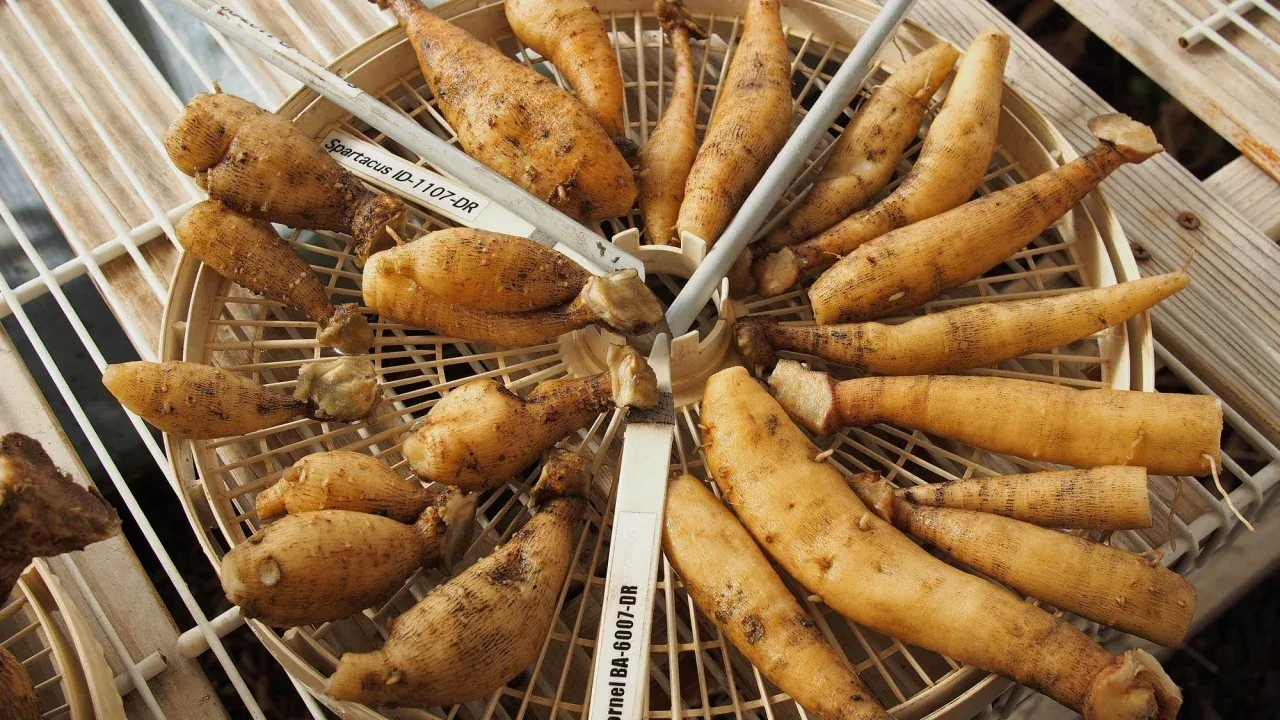
- Lift tender bulbs. Dig dahlias, gladiolus and cannas after the first frost and store them cool and dry. See our overwintering guide for curing and storage temperatures.
- Plant spring bulbs and divide perennials. Plant tulips, daffodils and alliums from September until the ground freezes. USask suggests dividing iris, lilies, bleeding heart and peony in late August or early September.
- Deal with leaves. Mulch-mow or rake them off the lawn. Then move them onto beds, under shrubs, or into the compost.
- Water deeply before freeze-up. CWF and USask both stress deep watering of trees and shrubs, especially evergreens, before the ground freezes. USask suggests about two weeks before freeze-up.
- Mulch and protect after the ground freezes. Add 15–20 cm of mulch around vulnerable plants once the soil has frozen (CWF), hill up roses, and wrap shrubs where needed.
- Put away water and tools. Drain and store hoses, empty rain barrels, turn off outdoor taps, and clean, sharpen and oil your tools.
Perennials: what to cut back and what to leave
The old "scorched earth" cleanup removes food and shelter that wildlife depends on. Toronto Master Gardeners suggest aiming for something between bare soil and leaving every plant skeleton.
Cut back or remove in fall
- Diseased plants. This is the main reason to prune in fall. It reduces places where pests and diseases overwinter.
- Frost-mushed foliage. Soft leaves like hosta and daylily collapse into slimy mats after frost. Toronto Master Gardeners suggest removing them.
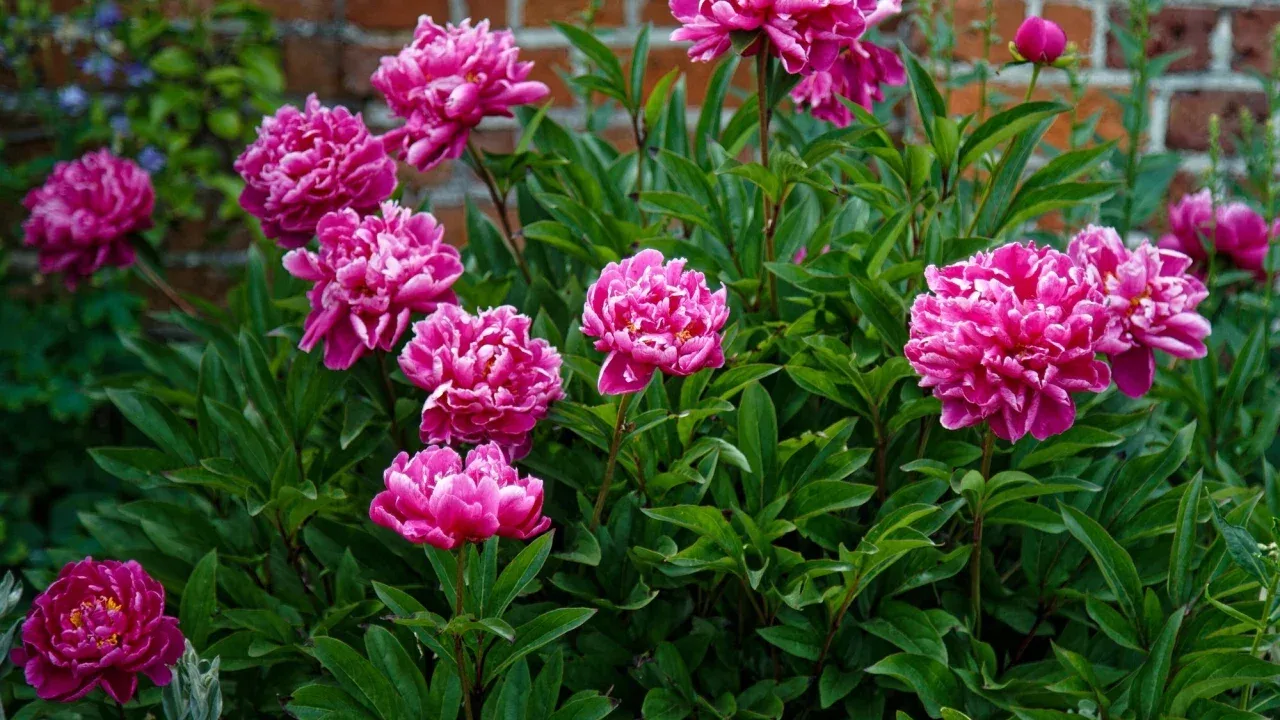
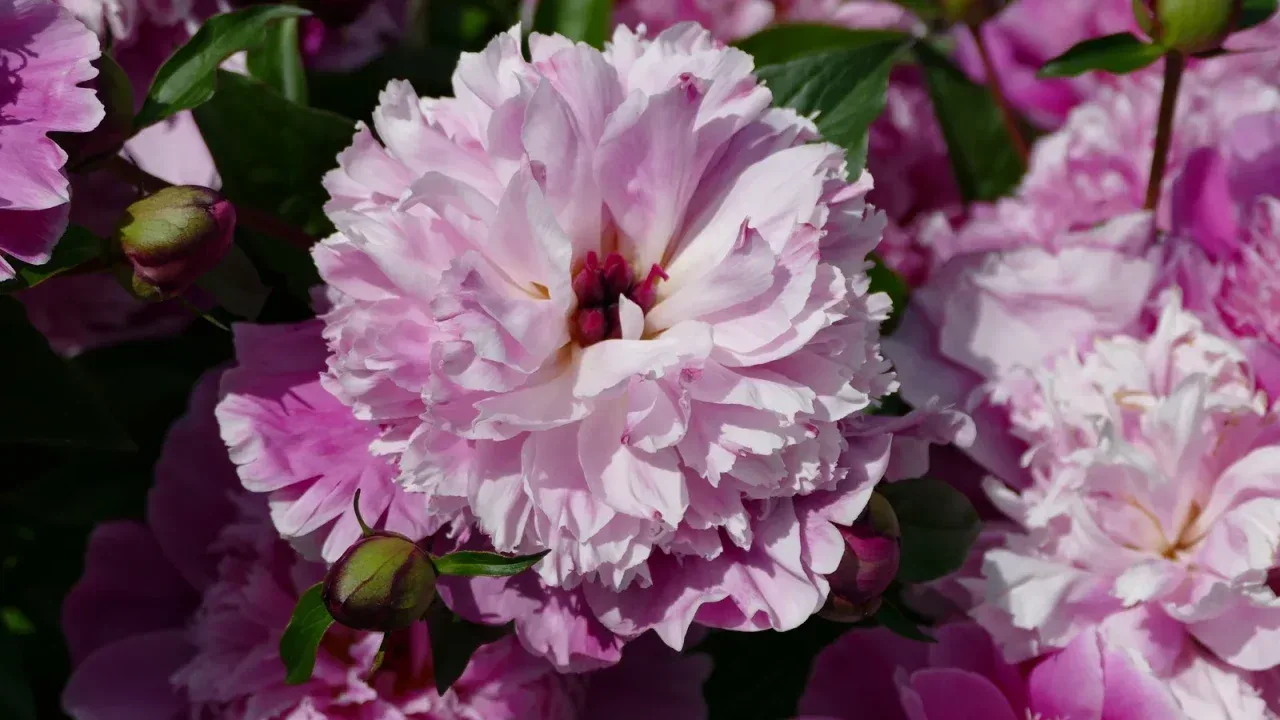
- Peonies. The BC Ministry of Agriculture's pest guide suggests cutting old peony stalks below soil level in early fall and destroying the debris, to reduce botrytis. See our botrytis and leaf spot guide.
- Plants with pest problems. Clearing plant debris helps reduce some vegetable pests. Our garden pests guide covers cutworms, whose moths lay eggs on plant litter in late summer.
- Annuals killed by frost. Compost them if they're healthy. Toronto Master Gardeners note that some "annuals", like dusty miller, pansies and snapdragons, are tender perennials that may survive a mild winter.
Leave standing until spring
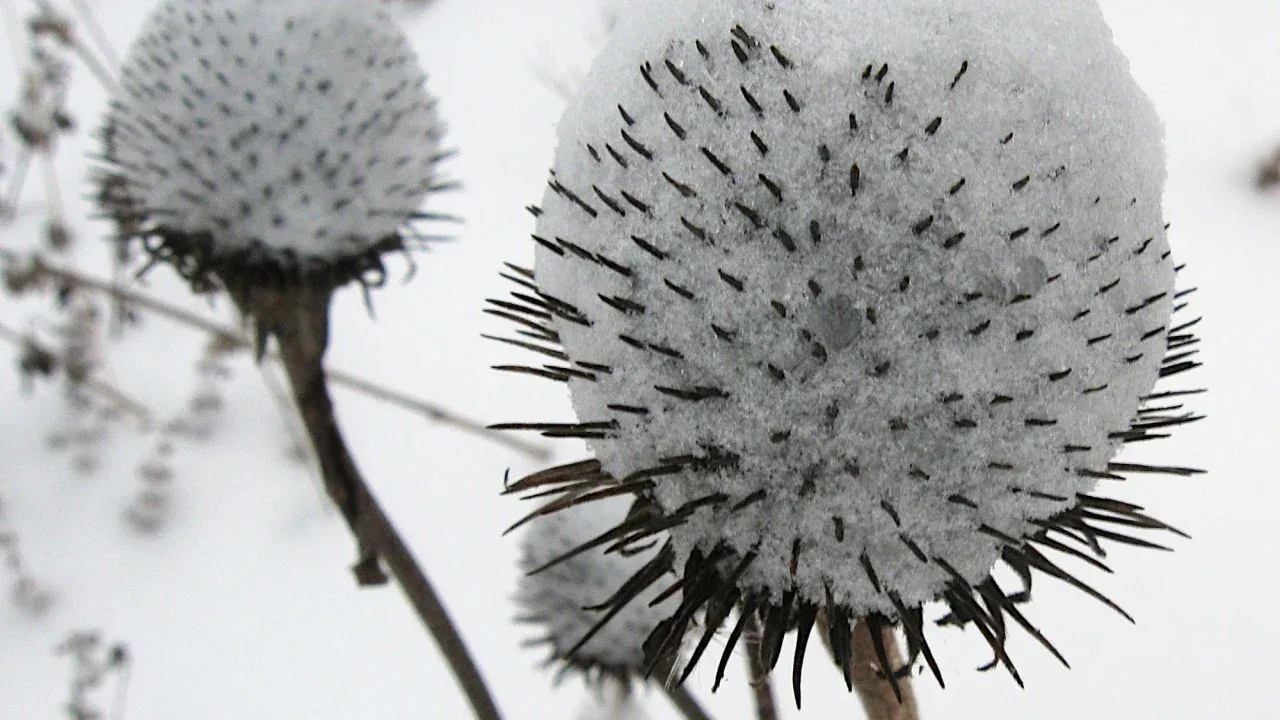
- Seed heads for birds. Toronto Master Gardeners suggest leaving astilbe, ornamental grasses, sedum, black-eyed Susan and purple coneflower. CWF adds sunflowers, asters and goldenrod.
- Healthy perennials in general. CWF's advice is that if your plants are healthy, delay perennial cleanup until spring. Standing stems give birds shelter and possibly seeds.
Leaving stems for pollinators
Many native bees don't live in hives. Some solitary bees, such as small carpenter bees (Ceratina) and some leafcutter bees, nest inside dead plant stems. Females dig into the soft pith or use hollow stems, lay eggs in a row of cells, and the young develop inside.
A North Carolina State University Extension study gives practical guidance. Researchers checked nearly 3,000 garden stems through the year:
- They found no nests in first-winter stems. Stems that grew and died that year are still sealed, so bees can't get in.
- Most nests were in older stems in spring and summer, after stems had been cut or broken open.
- Their advice: trim dead stems in their first winter, between the first fall frost and the last spring frost, and leave a stubble 30–60 cm (12–24 inches) tall. Then leave that stubble alone through the next year, because bees nest in it.
The study was done in North Carolina, but the same bees live here. The Royal Saskatchewan Museum's Bees of Canada project records the small carpenter bee Ceratina calcarata in provinces including Ontario, Quebec, Manitoba, Saskatchewan and Nova Scotia. Brock University research in Ontario's Niagara Region found it nesting commonly in dead raspberry and sumac stems. NC State's list of stems used by nesting bees includes purple coneflower, bee balm, goldenrod, asters, blazing star, sunflowers, roses and raspberries. Our native pollinator plants guide has more ideas.
The Guelph Turfgrass Institute's Dr. Sara Stricker suggests a simple compromise for tidy gardeners. Make a "biodiversity refuge" in a low-traffic corner with logs, hollow flower stems, leaves and stones, and leave it undisturbed all year.
Leaves: lawn, beds and compost
Don't leave a thick layer on the lawn
According to the Guelph Turfgrass Institute, leaves left where they land can smother grass. Stricker warns that more than three weeks of leaf cover will damage or kill turf, depending on depth, especially if you can't see grass blades poking through. Toronto Master Gardeners add that leaves left on the lawn all winter encourage snow mould.
Mulch-mowing is the easy fix. Run the mower over the leaves until the pieces are smaller than a dime and you can still see grass blades through them. Properly mulched leaves act as a natural fertilizer. When raking, Stricker suggests a rake over a leaf blower, because raking also pulls out thatch and lets air in.
Use leaves in beds
CWF suggests spreading leaves as a carpet under trees and shrubs, wetting them a little to hold them in place, and leaving some piles for hibernating frogs and salamanders. Toronto Master Gardeners suggest a leaf mulch 15–20 cm deep on beds, anchored with conifer branches. Oak leaves stay dry and break down slowly. Extra leaves can go into a compost bin or a temporary wire enclosure. Toronto Master Gardeners suggest poking holes in bags of leaves and adding a shovelful of soil or compost to get them started.
Lawn care checklist for fall
- Seed early. Toronto Master Gardeners say re-seeding is best done in early September. After that, the lawn needs to slow down and harden off. If you missed the window, wait for spring.
- Top-dress and feed. In Toronto, Toronto Master Gardeners say the best time to fertilize is the first week of November, with a high-phosphorus product, after top-dressing with compost or triple mix. Check your municipality's rules on lawn products.
- Keep mowing until growth stops. Advice on the final height varies by region. Toronto Master Gardeners suggest dropping the last cut to about 4 cm (1½ inches) from the usual 6 cm. USask suggests cutting to about 7.5 cm (3 inches) on the Prairies to reduce mould issues.
- Clear leaves before snow. Mulch-mow or rake, as above.
- Skip fall grub sprays. If skunks or raccoons tear up sod looking for grubs, Toronto Master Gardeners suggest pressing the pieces back for now and repairing in spring. Spraying for grubs in late fall doesn't work. See our natural vs chemical pest control guide for what's legal in your province.
Trees, shrubs and roses
- Wrap young trunks. Toronto Master Gardeners suggest wrapping young and fruit tree trunks to prevent sunscald and rodent damage. Remove the wrap in spring.
- Collar against mice and voles. USask suggests plastic collars, using a spiral design or removing them each spring.
- Burlap for salt, snow and deer. CWF suggests burlap to protect plants from road salt and dripping ice and to keep deer off. USask suggests wrapping upright junipers and cedars so snow doesn't bend them.
- Cut back tall canes. CWF suggests cutting very tall raspberry and rose canes to about 1.5 m so winter winds don't whip them.
- Hill grafted roses after freeze-up. Hardy shrub roses may need only some evergreen boughs to catch snow.
- Save major pruning for spring. CWF notes that most pruning in Canada is best done in spring. Remove storm damage or dead branches any time, and don't use pruning paint.
Tools, water and storage
- Clean, sharpen and oil tools. USask suggests rubbing vegetable oil on cut edges to prevent rust. Toronto Master Gardeners suggest leaving mower and hedge trimmer blades to a professional who can get the angle right. Painting handles a bright colour makes tools easy to find.
- Drain everything. Empty hoses, rain barrels, birdbaths, water features and buckets. Turn them upside down so ice doesn't crack them, and shut off outdoor taps.
- Bring clay and ceramic pots inside. Freeze-thaw cycles crack them.
- Update your garden journal. USask's checklist ends here. Note what worked, what struggled and where you planted bulbs.
Frequently asked questions
Should I cut back perennials in fall or spring?
Both, depending on the plant. Cut back diseased plants, peonies and frost-mushed foliage like hostas in fall. Leave healthy seed heads and sturdy stems such as coneflowers, black-eyed Susans, sedums and grasses for birds and winter interest, then trim them in late winter or spring.
How tall should I leave stems for bees?
North Carolina State University Extension found that trimming dead stems in their first winter to a stubble 30–60 cm tall creates the most nesting habitat for stem-nesting bees. Leave that stubble standing through the following year, because bees nest in it after it has been cut.
Is it bad to leave leaves on the lawn?
A thick layer is. The Guelph Turfgrass Institute warns that more than about three weeks of leaf cover can damage or kill grass, and Toronto Master Gardeners say leaves left all winter encourage snow mould. Mulch-mow them into dime-sized pieces or rake them onto beds.
Can I compost diseased plants?
Generally no. Both the Canadian Wildlife Federation and Toronto Master Gardeners say to keep diseased foliage and stems out of the home composter. USask allows hot composting for some leaf spot debris, but most gardeners are safer sending diseased material out with municipal yard waste or garbage, following local rules.
When should I do the last lawn mow in Canada?
Toronto Master Gardeners say to keep mowing until frost. They suggest a last cut of about 4 cm, while USask suggests cutting to about 7.5 cm on the Prairies to reduce mould. Follow the advice closest to your region.
When should I mulch in fall?
After the ground has frozen. The Canadian Wildlife Federation suggests 15–20 cm of mulch around vulnerable plants at that point. The goal is to keep the soil frozen and prevent heaving during thaws, not to keep plants warm.
What tools do I need for fall cleanup?
A leaf rake, a mower that can mulch leaves, sharp pruners, loppers, a digging fork for bulbs, burlap and twine, and bags or a bin for leaves. Clean, sharpen and oil your tools before storing them for winter.
Sources
- Canadian Wildlife Federation, Mid to Late Fall gardening calendar.
- University of Saskatchewan, Gardening at USask, Preparing your garden for winter.
- Toronto Master Gardeners, Putting the garden to bed.
- University of Guelph, Leave the leaves? Balancing pollinator and lawn health during fall (Guelph Turfgrass Institute).
- North Carolina State University Extension, Garden cleanup for pollinators: trim perennial stems in their first winter.
- BC Ministry of Agriculture, Home and Garden Pest Management Guide, Chapter 16: Pests of Ornamentals (PDF) and Chapter 15: Pests of Vegetables (PDF).
- Royal Saskatchewan Museum, Bees of Canada, Ceratina calcarata.
- Vickruck, J. L. (2010), Brock University MSc thesis, The nesting biology of Ceratina in the Niagara Region.
- University of Saskatchewan, Gardening at USask, Leaf spot and Late blight.
Image credits
- Featured image (Coneflower seed heads in snow): Cbaile19 / Wikimedia Commons / CC0. Source.
- Leaf rake: David Goehring / Wikimedia Commons / CC BY 2.0. Source.
- Mulch-mowed leaves: Famartin / Wikimedia Commons / CC BY-SA 4.0. Source.
- Small carpenter bee nest: Gideon Pisanty (Gidip) / Wikimedia Commons / CC BY 3.0. Source.
- Compost bins: Tomwsulcer / Wikimedia Commons / CC0. Source.
Comments
No comments yet — share what worked in your climate.