
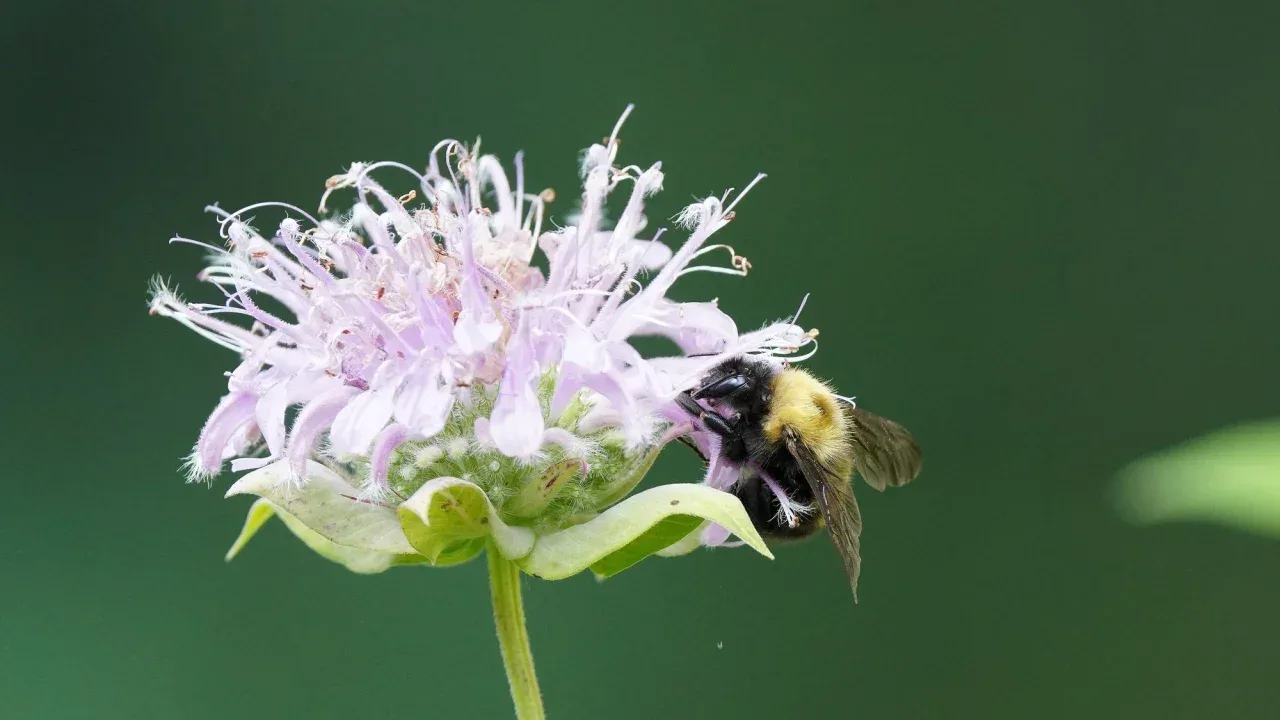
Top 7 Native Pollinator Plants for Canadian Gardens
Bumble bees, mining bees, butterflies, hoverflies and hummingbirds all depend on flowers, and many of them do best with the plants they evolved with. In December 2023 the Government of Canada listed the monarch butterfly as endangered under the federal Species at Risk Act. Habitat loss, including the loss of milkweed and nectar plants, is one of the threats the government lists. A home garden will not save a species on its own, but thousands of gardens planted with native flowers add up to real habitat.
The seven plants below are native to large parts of Canada, easy to grow in a home garden and well known for the pollinators they feed. For each one we checked where it is native using VASCAN, the Database of Vascular Plants of Canada, so you can see whether it belongs in your province. Several already have care guides on GardenOrbit.
Why native plants matter for pollinators
Native plants and native insects share a long history. Some native bees are specialists that collect pollen from only a few related plants; NC State Extension, for example, notes specialized bees that depend on Monarda (bee balm). Monarch caterpillars are the best-known example: the Government of Canada notes that milkweed is generally the only plant monarchs lay their eggs on and the only plant their caterpillars eat.
Native plants are also adapted to local winters and rainfall, so once established they usually need less water and care than exotic bedding plants. "Native to Canada" is a big category, though. A plant native to Manitoba may not be native to Nova Scotia or coastal B.C. Pollinator Partnership Canada publishes free ecoregional planting guides and a postal-code tool that lists native plants for your area, which is the best next step after this list.
Quick comparison
| Rank | Plant | Native in (VASCAN) | Bloom | Light | Main visitors |
|---|---|---|---|---|---|
| 1 | Wild bergamot (Monarda fistulosa) | BC, AB, SK, MB, ON, QC | July–August | Full sun | Bumble bees, butterflies, hummingbirds |
| 2 | Swamp milkweed and other milkweeds (Asclepias) | Varies by species; see below | Summer | Full sun to part shade | Monarchs (larval host), bees, butterflies |
| 3 | New England aster (Symphyotrichum novae-angliae) | MB, ON, QC, NB, NS | Late summer–fall | Full sun | Late-season bees and butterflies |
| 4 | Anise hyssop (Agastache foeniculum) | AB, SK, MB, ON, NT | Summer–fall | Full sun to part shade | Bees, butterflies, hummingbirds |
| 5 | Canada goldenrod (Solidago canadensis) | Most provinces from SK to the Maritimes | Late summer–fall | Full sun | Bees, butterflies, beetles |
| 6 | Wild columbine (Aquilegia canadensis) | SK, MB, ON, QC | Spring | Part shade to sun | Hummingbirds, early bumble bees |
| 7 | Black-eyed Susan (Rudbeckia hirta) | SK, MB, ON (introduced elsewhere) | Summer | Full sun | Bees, butterflies |
Province codes: BC British Columbia, AB Alberta, SK Saskatchewan, MB Manitoba, ON Ontario, QC Quebec, NB New Brunswick, NS Nova Scotia, PE Prince Edward Island, NT Northwest Territories.
1. Wild bergamot (Monarda fistulosa)
Wild bergamot, also called bee balm, is one of the best all-round pollinator plants for Canadian gardens. Its shaggy lavender-pink flower heads open in midsummer and attract bumble bees, butterflies and hummingbirds. VASCAN lists one variety (var. menthifolia) as native from British Columbia to Ontario and another (var. fistulosa) as native in Ontario and Quebec.
It grows about 60 to 120 cm tall and prefers full sun and moderately moist, well-drained soil, though it tolerates drought once established. NC State Extension lists it as deer resistant. Powdery mildew is the main problem with all bee balms, especially in crowded beds and when plants are water-stressed, but NC State Extension notes that this species shows some resistance. Space plants for air flow; our powdery mildew guide covers the rest.
2. Milkweeds (Asclepias species)
No list of Canadian pollinator plants is complete without milkweed, because monarch caterpillars cannot develop without it. Milkweed flowers also feed many bees and butterflies. The right species depends on where you live:
- Swamp milkweed (Asclepias incarnata): native in Manitoba, Ontario, Quebec and New Brunswick (subsp. incarnata). Despite its name it grows well in ordinary garden soil that does not dry out, and it stays in a clump. It has pink to rose-purple flowers and is the easiest milkweed for most garden beds.
- Common milkweed (Asclepias syriaca): native in Saskatchewan, Manitoba, Ontario, Quebec, New Brunswick and Nova Scotia. It spreads by roots and can take over a small bed, so give it space in a meadow-style planting.
- Showy milkweed (Asclepias speciosa): native in British Columbia, Alberta, Saskatchewan and Manitoba, and the natural choice for western gardens.
Plant milkweed in full sun to part shade. Expect chewed leaves; that means it is working. The Government of Canada recommends planting milkweed that is native to your region, because non-native milkweeds could harm local ecosystems, and checking whether any municipal or provincial rules apply. Avoid pesticides on and near milkweed.
3. New England aster (Symphyotrichum novae-angliae)
When most of the garden is finished in September, New England aster is covered in purple daisies with yellow centres. That late bloom makes it a valuable fuel stop for bees preparing for winter and for butterflies late in the season. VASCAN lists it as native in Manitoba, Ontario, Quebec, New Brunswick and Nova Scotia.
It grows 90 to 180 cm tall in full sun and moist, fertile, well-drained soil, including clay loam. To keep it shorter and bushier, pinch the stems back in late spring; this delays flowering slightly. Lower leaves may brown by late summer and plants can get powdery mildew, so give them room and plant shorter perennials in front.
4. Anise hyssop (Agastache foeniculum)
Anise hyssop is a prairie native with spikes of small blue-purple flowers from midsummer into fall, and it is constantly busy with bees. VASCAN lists it as native in Alberta, Saskatchewan, Manitoba, Ontario and the Northwest Territories. It is a mint-family plant whose leaves smell of licorice and can be used in teas.
It grows about 90 to 150 cm tall in full sun to part shade and well-drained soil. NC State Extension notes that it attracts bees, butterflies, hummingbirds and songbirds, and that deer and rabbits tend to avoid it. The main risk is crown and root rot in wet, heavy soil, so plant it where water drains quickly. It self-seeds; leave a few seedlings to replace older plants.
5. Canada goldenrod (Solidago canadensis)
Goldenrod has an unfair reputation. It blooms at the same time as ragweed, but its heavy, sticky pollen is carried by insects, not the wind. NC State and University of Illinois Extension both note that goldenrod is not the cause of fall hay fever; ragweed is. Its plumes of yellow flowers in late summer and fall are one of the most important late food sources for bees, and NC State lists monarchs among its visitors.
VASCAN lists the typical variety as native from Saskatchewan to the Maritimes, and the species is found across much of Canada. Canada goldenrod spreads by rhizomes and seed and can be aggressive in a small garden, so it suits a meadow, a naturalized corner or a large pollinator bed. A local native plant nursery can suggest a better-behaved goldenrod for a tidy border.
6. Wild columbine (Aquilegia canadensis)
Wild columbine's nodding red and yellow flowers appear in spring, when few other flowers are open. Their long nectar spurs suit hummingbirds, and the flowers are also visited by butterflies and bumble bees. VASCAN lists it as native in Saskatchewan, Manitoba, Ontario and Quebec.
It grows 30 to 90 cm tall and prefers part shade and rich, moist but well-drained soil, though it tolerates more sun with enough moisture. It self-seeds freely, and new plants bloom in their second year, so a planting renews itself. It mixes well with ferns and hostas at the edge of a woodland garden.
7. Black-eyed Susan (Rudbeckia hirta)
Black-eyed Susan is a cheerful, fast-growing biennial or short-lived perennial. Its golden daisies with dark centres feed bees and butterflies through summer. VASCAN lists the variety pulcherrima as native in Saskatchewan, Manitoba and Ontario, and as introduced in other provinces.
It grows in full sun to part shade and almost any well-drained soil. Avoid rich, heavily fertilized beds, which produce weak growth. Individual plants may last only a couple of years, but they self-seed readily. Like many daisies, it can get powdery mildew in crowded beds.
Regional alternatives worth growing
These are also native to parts of Canada according to VASCAN:
- Blanket flower (Gaillardia aristata): native in BC, AB, SK and MB. A drought-tolerant choice for the Prairies and the B.C. Interior.
- Golden Alexanders (Zizia aurea): native in MB, ON, QC, NB and NS. Early yellow flowers for spring pollinators.
- Meadow blazing star (Liatris ligulistylis): native in AB, SK and MB, and well known as a butterfly magnet.
- Narrow-leaved purple coneflower (Echinacea angustifolia): native in SK and MB. The familiar purple coneflower (Echinacea purpurea) is a good pollinator plant but is listed as introduced, not native, in Canada.
How to plant a pollinator garden in Canada
- Pick a sunny spot. Most pollinator plants, and most bees, prefer at least six hours of sun.
- Plant in groups. Clumps of the same plant are easier for pollinators to find than single plants dotted around.
- Plan for spring-to-fall bloom. The Government of Canada recommends plants that flower at different times so nectar is available all season. Columbine and golden Alexanders in spring, bergamot and milkweed in summer, and asters and goldenrod in fall make a simple sequence.
- Buy nursery-grown native plants or seed. Local garden centres and native plant societies sell milkweed and native wildflowers. Do not dig plants from the wild.
- Skip pesticides. The Government of Canada notes that herbicides can harm milkweed and other flowers, and that other pesticides can harm monarchs and other non-pest insects.
- Leave some mess. Standing stems, bare soil and fallen leaves give native bees and other insects places to nest and overwinter. Cut back in late spring instead of fall.
Frequently asked questions
What is the best native plant for pollinators in Canada?
There is no single best plant, but wild bergamot and native milkweeds are excellent choices across much of the country. Wild bergamot feeds bumble bees, butterflies and hummingbirds, and milkweed is the only plant monarch caterpillars eat.
Which milkweed should I plant in my province?
Swamp milkweed and common milkweed suit much of central and eastern Canada. Showy milkweed is native in B.C., Alberta, Saskatchewan and Manitoba. Choose a milkweed native to your region, as the Government of Canada recommends.
Is the monarch butterfly endangered in Canada?
Yes. The Government of Canada listed the monarch as endangered under the Species at Risk Act in December 2023. The listing protects monarchs on federal lands.
Does goldenrod cause hay fever?
No. Goldenrod pollen is heavy and carried by insects. Ragweed, which blooms at the same time, releases light, wind-borne pollen and is the usual cause of late-summer allergies.
Is purple coneflower native to Canada?
Echinacea purpurea is not native to Canada; VASCAN lists it as introduced. Narrow-leaved purple coneflower (Echinacea angustifolia) is native in Saskatchewan and Manitoba.
When should I cut back a pollinator garden?
Wait until late spring if you can. Hollow stems and leaf litter shelter overwintering insects, and seed heads feed birds through winter.
Can I grow native pollinator plants in containers?
Yes, for compact plants such as wild columbine, anise hyssop and black-eyed Susan. Use a large pot with drainage holes. Containers freeze harder than garden soil, so move pots against a sheltered wall or into an unheated garage for winter.
Sources
- Government of Canada, Monarch Butterfly: profile of a species at risk (SARA listing, range, milkweed, pesticides, planting advice).
- Canada Gazette, Order Amending Schedule 1 to the Species at Risk Act (SOR/2023-263).
- Pollinator Partnership Canada, Ecoregional Planting Guides and Native Plant Finder.
- VASCAN, Database of Vascular Plants of Canada: Monarda fistulosa var. menthifolia, Monarda fistulosa var. fistulosa, Asclepias incarnata subsp. incarnata, Asclepias syriaca, Asclepias speciosa, Symphyotrichum novae-angliae, Agastache foeniculum, Solidago canadensis var. canadensis, Aquilegia canadensis, Rudbeckia hirta var. pulcherrima, Gaillardia aristata, Zizia aurea, Liatris ligulistylis, Echinacea angustifolia, Echinacea purpurea.
- NC State Extension Plant Toolbox: Monarda fistulosa, Asclepias incarnata, Asclepias syriaca, Symphyotrichum novae-angliae, Agastache foeniculum, Solidago canadensis, Aquilegia canadensis, Rudbeckia hirta.
- University of Illinois Extension, Autumn allergies: don't blame goldenrod.
- University of Saskatchewan, Native perennials list.
Image credits
- Featured image (Wild bergamot): U.S. Fish and Wildlife Service Midwest Region / Wikimedia Commons / Public domain. Source.
- Swamp milkweed: R. A. Nonenmacher / Wikimedia Commons / CC BY-SA 4.0. Source.
- New England aster: Lusilier / Wikimedia Commons / CC BY-SA 4.0. Source.
- Anise hyssop: U.S. Fish and Wildlife Service Midwest Region / Wikimedia Commons / Public domain. Source.
- Canada goldenrod: U.S. Fish and Wildlife Service Midwest Region / Wikimedia Commons / Public domain. Source.
- Wild columbine: James St. John / Wikimedia Commons / CC BY 2.0. Source.
- Black-eyed Susan: TeKappa / Wikimedia Commons / CC BY 4.0. Source.
Comments
No comments yet — share what worked in your climate.