
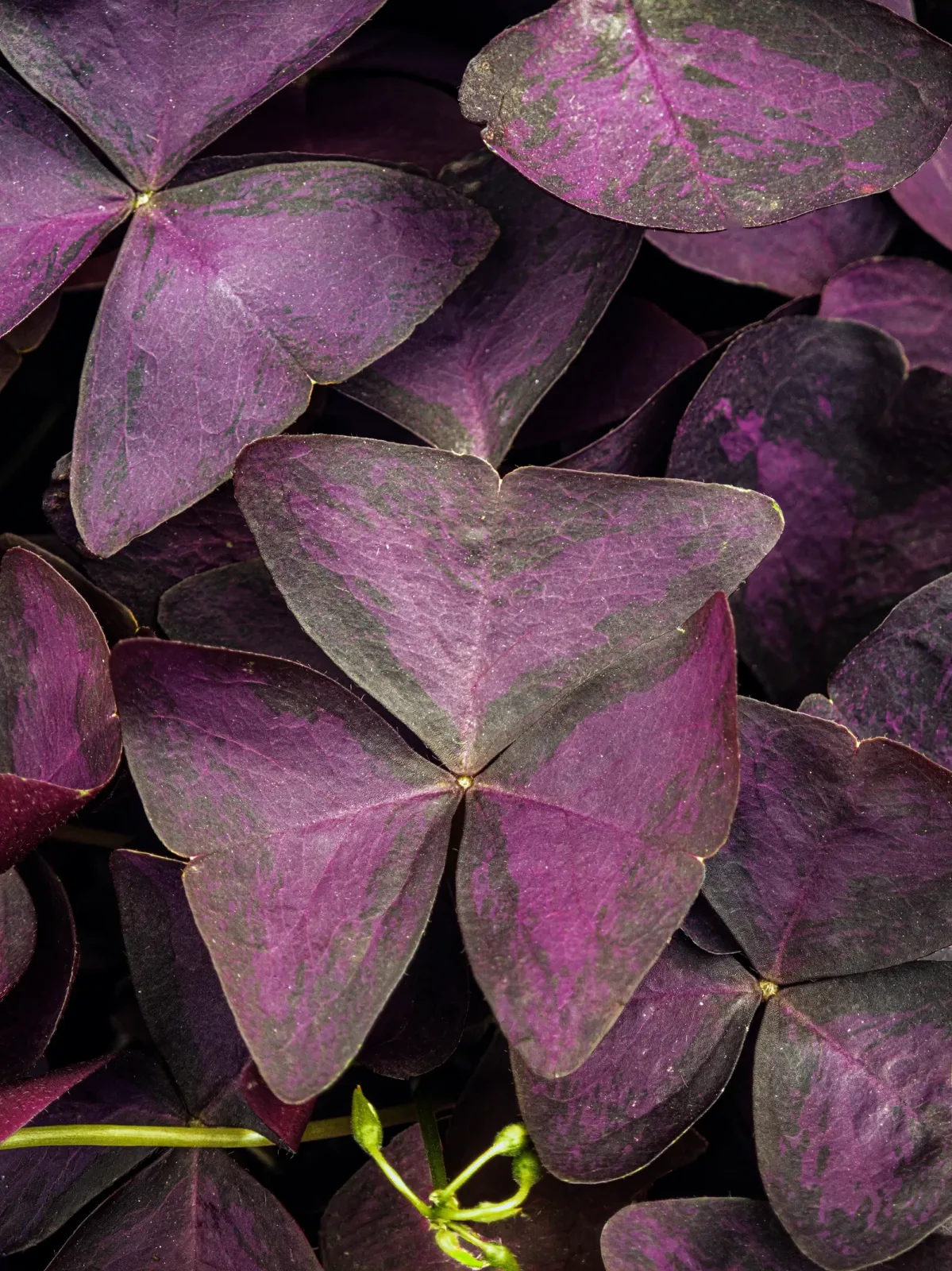
Purple shamrock may look finished when its leaves disappear, while healthy rhizomes are still resting below the soil. Learn that cycle before discarding a pot or repeatedly watering a leafless plant.
Quick answer
Purple shamrock needs useful light during growth and a draining pot watered according to its changing canopy. Leaf folding can be normal, while a firm leafless storage structure may be dormant. Canadian frost requires bringing tender pots inside. Mark resting plants clearly and keep oxalate-containing foliage away from habitual pet chewing.
How do you identify purple oxalis?
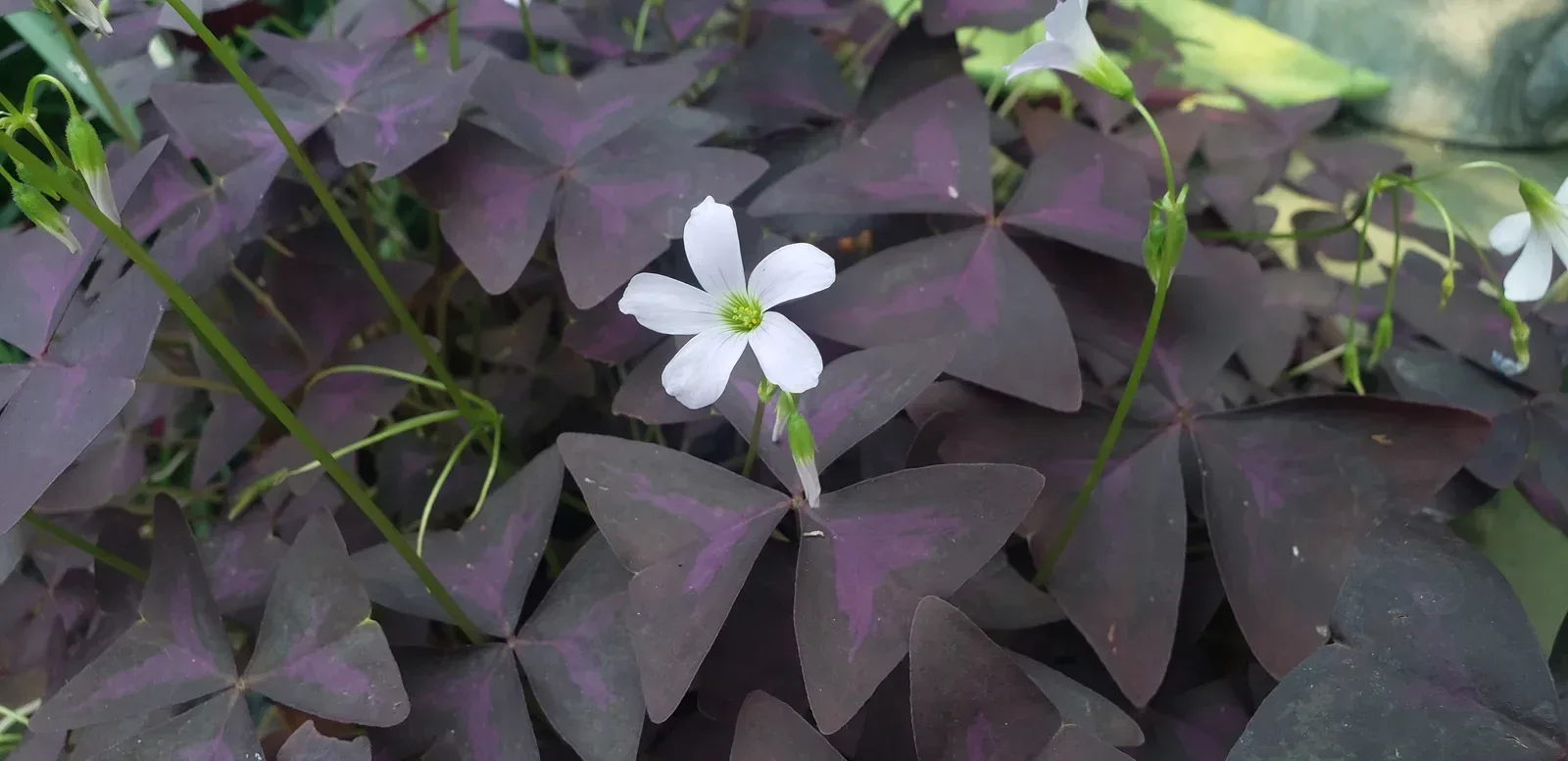
Oxalis: Purple shamrock is Oxalis triangularis, with three triangular leaflets and pale flowers. Green forms also exist. It is not edible lawn clover. Firm underground rhizomes can survive after all leaves fade.
Should you throw out oxalis when it dies back?
Not necessarily. A rest can follow stress or a long growing period. Check that rhizomes are firm, not rotten. Stop feeding and reduce water when leafless; repeated soaking can kill a viable resting plant. Return to gradual watering as shoots appear. Night-time folding is normal, while long weak stalks often need more light. Label the resting pot so it is not emptied during a windowsill clear-out. Do not force growth with heavy fertilizer.
What light does it need in a Canadian winter?
Bright indirect; some morning sun.
Purple shamrock is usually grown for its triangular Oxalis triangularis leaves, which fold as light changes. That daily movement is not itself wilting. Flowers and foliage can arise in waves from the underground storage structures. Give the plant bright light with protection from sudden scorching sun. A Canadian winter position may need a grow light if the stems become long and weak. Turn the pot periodically for a balanced outline. Do not keep it permanently in a dark seasonal decoration after St. Patrick's Day and expect the same dense canopy it produced in a nursery.
How should you water through the seasons?
During active leaf growth, allow the upper mix to dry slightly, then water thoroughly and drain. The slender leaf stalks can collapse when dry, but check the pot before assuming that every folded leaf needs water. A wet leafless pot is particularly risky when the plant is resting. Remove runoff from the decorative outer container. If the original mix has dried into a hard block, rewet it gradually rather than flooding the crown repeatedly. The amount needed changes as the canopy expands or declines. A newly emerging pot uses less than a full mature clump in a sunny spring window.
What soil or potting mix is best?
Choose a light draining mix and a pot large enough for the underground structures without an unnecessary depth of wet compost. Repotting offers a chance to separate crowded material and discard obviously rotten pieces. Keep sound storage structures at an appropriate shallow planting depth, following their orientation rather than burying them randomly in a deep tub. Label dormant pots clearly so they are not mistaken for empty soil. A small marker also prevents someone from repeatedly watering a resting plant in an attempt to revive invisible leaves. The plant's seasonal phase matters more than the presence of a green canopy on a particular date.
When should you fertilize?
Feed lightly once a healthy canopy is actively growing. Strong fertilizer cannot make a dormant storage organ produce leaves on demand. Remove spent flowers and declined stalks carefully so debris does not collect at the surface. Cutting all healthy foliage is unnecessary unless you have a deliberate renewal reason and a sound plant. If the display becomes thin, check light and root conditions first. Dry furnace air is generally less central than those factors, though hot direct airflow can still damage delicate leaves. Misting offers little lasting benefit and can leave flowers and debris damp against the crown.
What temperatures and winter protection does it need?
Cool rooms OK.
If most leaves decline together after a sustained growing period, inspect the underground parts before discarding the plant. Firm healthy structures can rest and later resume growth. Reduce water during dormancy and keep the pot in suitable conditions, checking occasionally. Soft decay with an unpleasant smell is not healthy dormancy. When new shoots appear, restore light and watering gradually. A rested plant can rebuild quickly, but do not promise an exact restart date. Light, temperature and the previous growing season all affect its rhythm. Do not force continuous foliage by keeping a naturally resting pot constantly saturated.
How should you prune it?
Remove old leaves.
What is the best propagation method?
Divide firm rhizomes at repotting and plant shallowly in draining mix. Keep the first watering modest until shoots appear. Discard soft mouldy pieces. Leaves alone are not the normal route to a new plant.
Division is the straightforward way to preserve a named purple form. Separate healthy underground pieces during a suitable resting or repotting period, retaining viable growing material in each section. Pot small divisions into modest containers and avoid treating them like fully leafed plants. Seeds may not reproduce a cultivar faithfully. Keep discarded fragments contained rather than scattering them outside. Some other oxalis species are persistent garden weeds, so correct identification matters before moving any shamrock into a bed. A pot grown outdoors for summer should come in before Canadian frost, with an inspection for pests around the base.
Which pests and diseases should you watch for?
Spider mites.
How do you work out the cause?
Sudden die-back (dormancy, not death); leggy (low light); mites.
Is it safe around pets and children?
ASPCA lists Oxalis species as toxic to cats and dogs because of soluble oxalates, different from the insoluble crystals in aroids. Keep rhizomes and leaves away from children and animals.
A seasonal care calendar for Canada
| Season | What to do |
|---|---|
| Spring | Regrowth from corms. |
| Summer | Water the growing shamrock canopy, adjusting if leaves begin to rest. |
| Autumn | May rest. |
| Winter | May rest; restart in spring. |
What should you check before buying?
For another seasonal flowering pot, compare cyclamen. The leaf shapes of pilea and peperomia offer alternatives if you prefer a more continuous foliage display to a shamrock that may disappear during a rest period.
Oxalates make this a plant to keep away from habitual chewing, particularly where pets can reach a low windowsill. A decorative shamrock is not a child's salad ingredient. Collect fallen leaves and label divisions given to others. At purchase, look for firm stalks and a clean surface rather than demanding an enormous canopy. Aphids can gather around flowers and young stems, while mites may produce fine stippling. Inspect before combining it with other indoor plants. Protect the purchase from winter cold, and remember that a healthy later dormancy does not mean you failed to care for the original gift.
How can you plan around a resting pot?
Give a dormant shamrock a labelled place where you will remember to inspect it. Do not hide it behind a radiator or store it with outdoor bulbs in a shed that freezes. A note showing the last leaves' decline helps distinguish a planned rest from an abandoned pot. When shoots return, move it into growing light before they become long and pale. Resume watering in proportion to the small new canopy, then adjust as the leaves expand. If several pots rest at different times, manage them separately rather than restarting all of them because one has produced its first shoot.
Comments
No comments yet — share what worked in your climate.