
| ☀️ Light | Bright indirect light |
|---|---|
| 💧 Water | Moderate (lightly moist) |
| 🪴 Soil | Free-draining peat or coir-based potting mix with perlite or coarse sand |
| 🐾 Safety | Cats: non-toxic · Dogs: non-toxic |
Where It Grows & Climate Tolerance
Pet & Companion Animal Toxicity (Money Tree)
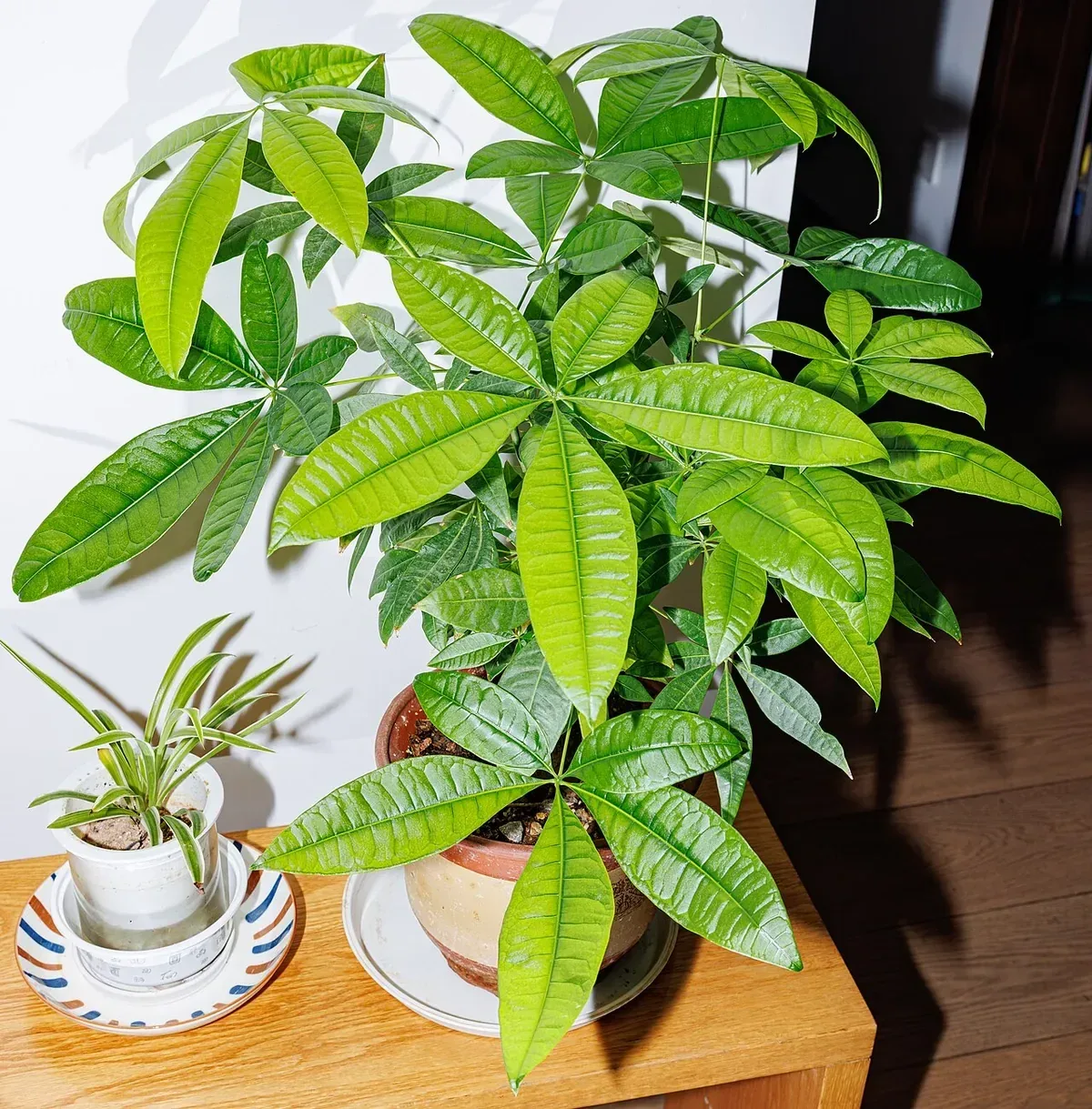
Money tree (Pachira aquatica) is a swamp tree from Central and South America that is sold as a braided indoor tree. It wants bright indirect light, a free-draining mix and steady watering, and ASPCA lists it as non-toxic to cats and dogs.
Care instructions
Care Guide & Maintenance Routine
Bright indirect light, no harsh afternoon sun. Water when the top few centimetres of mix are dry and never leave the pot standing in water. Keep it between 18 and 24°C and move it away from cold glass or AC vents. Feed lightly in the growing months, repot every two to three years and trim in spring to keep it compact.
Light & Sunlight
An east window or a spot a little back from a south or west window suits it. NC State Extension notes that direct sun can scorch the leaves. In weak light the stems stretch and the plant drops lower leaves.
Watering Schedule
Water thoroughly, let the excess drain out, then wait until the top few centimetres are dry before watering again. Standing water leads to root rot. Water less in cool months when growth slows.
Potting Mix & Drainage
Free-draining peat or coir-based potting mix with perlite or coarse sand
Temperature & Humidity
NC State gives 18 to 24°C as the comfortable range and advises bringing plants indoors before it drops to about 7°C. The 10°C minimum here is a safety margin, not a survival limit. Keep it away from cold drafts and hot air vents.
What a money tree is
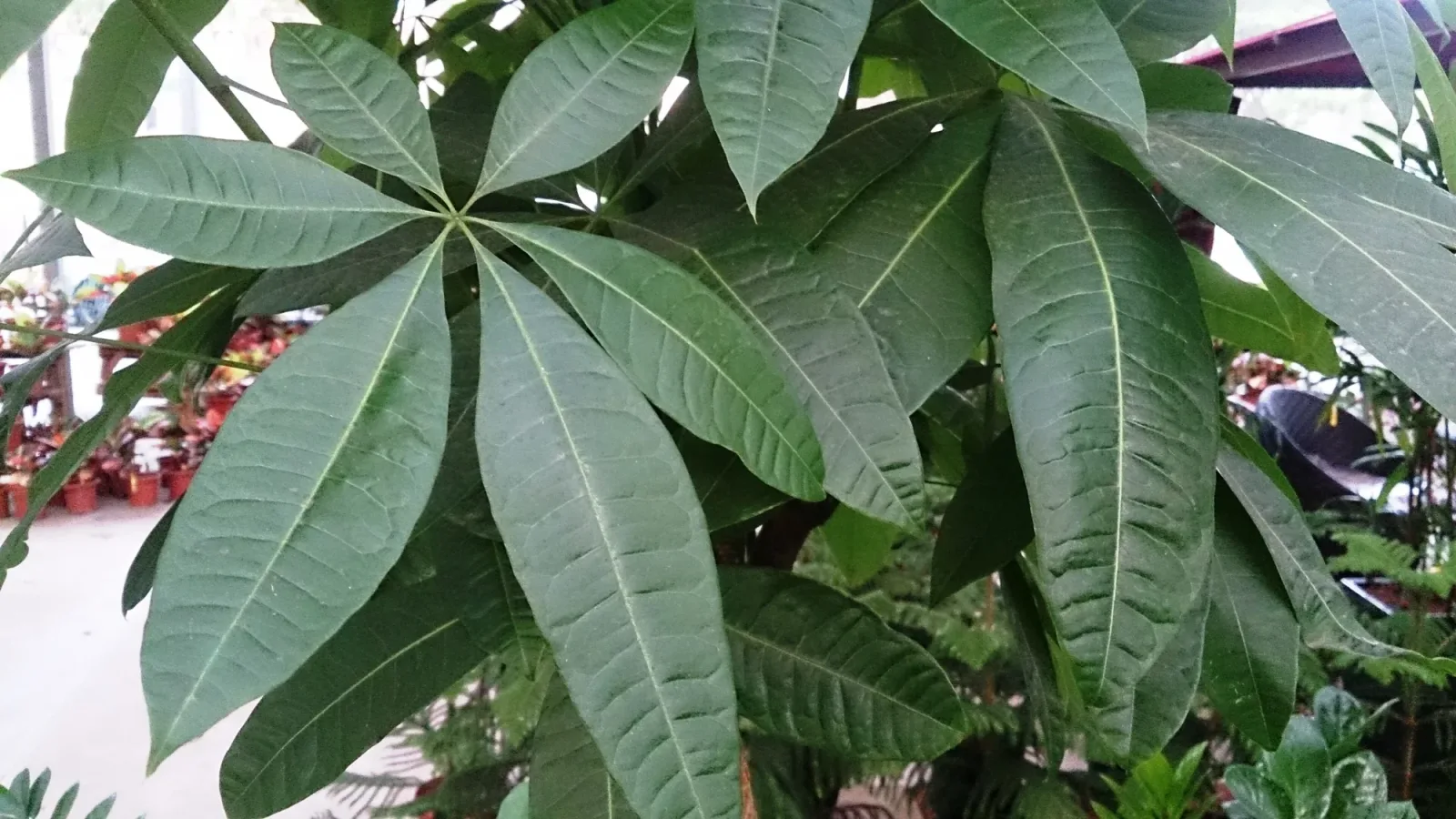
Money tree is the trade name for Pachira aquatica, a tree from freshwater swamps and riverbanks between southern Mexico and northern Brazil. In the wild it can pass 18 m. In a pot it usually stays between 1.8 and 2.4 m, and it is most often sold with three to five thin trunks braided together. The leaves are glossy and split into five to nine leaflets that spread like fingers.
The braided form and the name both come from Taiwan in the 1980s, where the plant became linked with good luck and prosperity. That story is why it is a common gift for new homes and offices.
Money tree, money plant and jade are three different plants
This is the most common mix-up, especially in India.
- Money tree (Pachira aquatica): an upright woody tree with hand-shaped leaves and a thick trunk base. Pet-safe according to ASPCA.
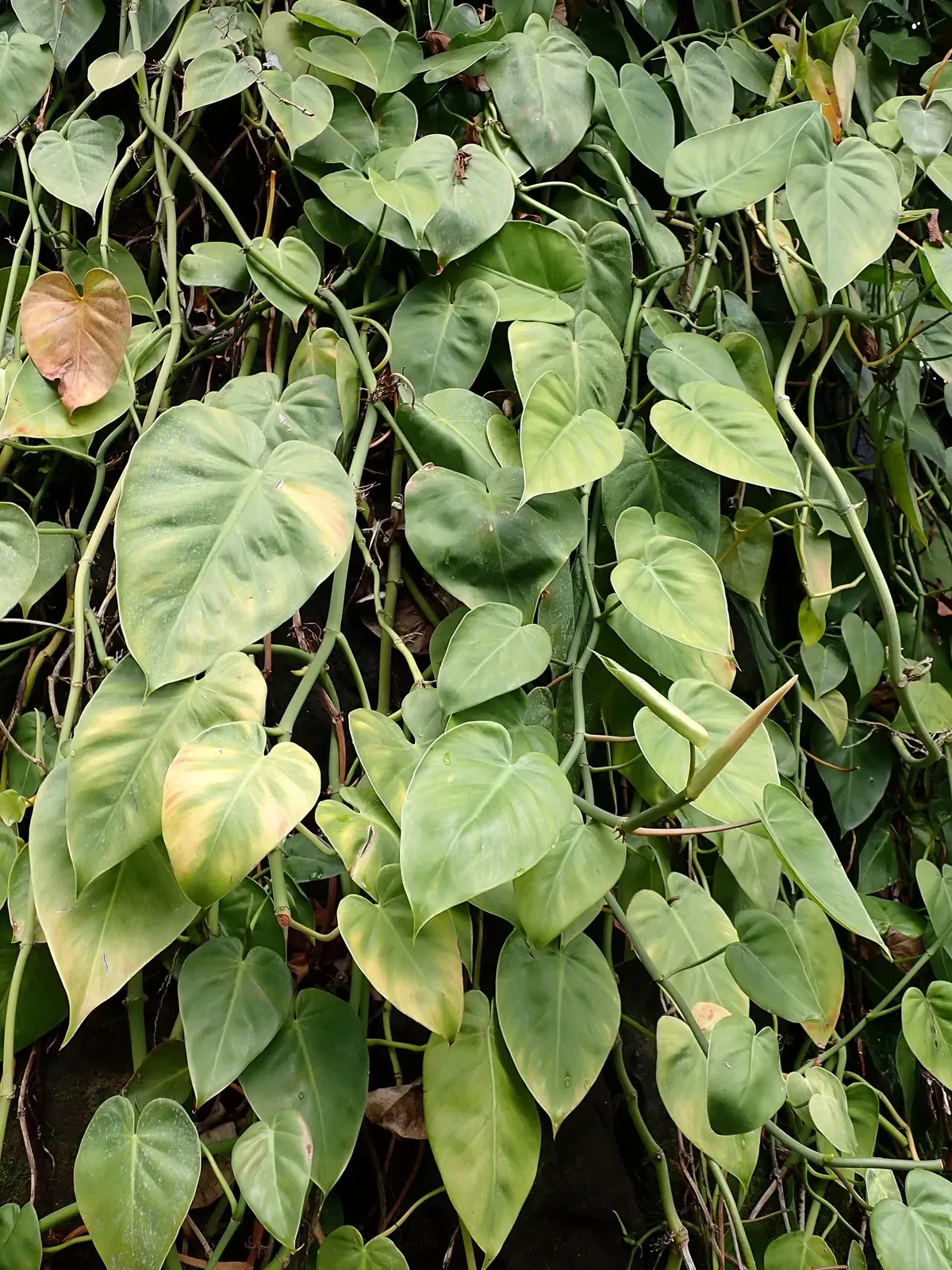
- Money plant (Epipremnum aureum, also called pothos): a trailing or climbing vine with heart-shaped leaves, grown in water bottles and on moss sticks across India. See our money plant guide.
- Jade plant (Crassula ovata): a succulent with thick, rounded leaves that stores water. It needs far less watering. See the jade plant guide.
If a nursery label just says "money plant", look at the leaves before you buy. Care for the three is very different.
Buying a healthy plant
Look for firm trunks with no soft or wrinkled patches near the soil. Press gently at the base of each stem. A trunk that gives under your thumb is rotting. Leaves should be evenly green with no sticky residue or cottony spots in the leaf joints, which are signs of mealybugs or scale. Many braided plants arrive with plastic ties or wire around the top of the braid. Note where they are so you can loosen them later.
Single-stem plants are cheaper and grow faster than braided ones because the trunks are not competing. A braid is mostly about looks.
Potting and soil mix
Use a pot with a drainage hole and a mix that holds some moisture but drains quickly. A simple blend is three parts peat or coir-based potting mix to one part perlite or coarse sand. NC State Extension describes a moist, well-drained mix of peat moss, perlite, loam or sand, and the RHS also recommends an open, free-draining compost. If you need help choosing ingredients, our potting mix guide covers the options.
Repot in spring every two to three years, going up only one pot size. A pot that is too large stays wet for days and invites rot.
Light
Bright, indirect light is the target. An east-facing window works well. Near a south or west window, keep it a metre or so back or behind a sheer curtain, because direct afternoon sun burns the leaves into pale, papery patches. Turn the pot a quarter turn each week so the tree does not lean.
Watering through the year
Most money trees that die indoors are overwatered. Push a finger into the mix. When the top few centimetres are dry, water slowly until it runs out of the drainage hole, then empty the saucer after 15 minutes.
Hot season
In a warm, bright room you may need to water every five to seven days. Check rather than following a fixed day.
Humid or rainy season
Soil dries slowly when the air is damp. Stretch the gap between waterings and watch for fungus gnats, which breed in wet mix.
Cool season
Growth slows and the plant uses less water. Every two to three weeks is often enough indoors. A heated room in a Canadian winter dries pots faster than you might expect, so keep checking.
Feeding
A balanced liquid houseplant fertiliser used at the strength on the label, about once a month from spring to late summer, is enough. Skip feeding in winter and in the first month after repotting. More fertiliser does not fix yellow leaves caused by wet roots.
Temperature and humidity
NC State gives 18 to 24°C as the comfortable range and suggests bringing outdoor plants in before nights drop to about 7°C. Keep the tree away from cold glass in winter, front doors, AC vents and heaters. Sudden temperature swings are a common cause of leaf drop. Normal room humidity is fine. In very dry air, grouping plants together helps more than misting.
Pruning and shaping
Prune in spring. Cut just above a leaf node and two new shoots usually form below the cut, which makes the canopy fuller. Remove shoots that sprout from low on the trunk or below the braid. If you want a smaller tree, take off up to a third of the growth at once.
Propagation
Take a softwood cutting 15 to 20 cm long with a few leaves in spring or early summer. Remove the lowest leaves, then root it in moist mix or a jar of water in bright, indirect light. Roots usually appear in a few weeks in warm weather. Air layering works for taller stems if you want a larger new plant. Seed is rarely sold, and indoor trees almost never flower or set seed.
Flowers
Outdoor trees in frost-free regions can flower after four or five years. The blooms have long cream petals and hundreds of red-tipped stamens, and each one lasts a single night. NC State notes that indoor and braided trees do not flower, so treat the money tree as a foliage plant.
Troubleshooting: find the cause before you treat
Yellow leaves
Step 1: Feel the soil 5 cm down. Wet and sour-smelling means overwatering. Step 2: Lift the pot. If it is heavy days after watering, the drainage may be blocked. Step 3: Ease the plant out and look at the roots. Brown, mushy roots mean root rot, so trim them and repot in fresh, dry mix. If the roots are firm and the soil is dry, the cause is more likely thirst or a recent move. Our guide to why indoor plant leaves turn yellow goes through more causes.
Leaves falling suddenly
Ask what changed in the last two weeks: a new spot, a cold draft, a hot vent, or a big watering gap. Money trees often shed some leaves after a move and recover once conditions settle. Put it back in steady light and avoid moving it again.
Brown, crispy edges
Check whether the edges are dry and papery (dry air or underwatering) or dark and soft (cold damage). Dry edges with dry soil mean water more evenly. Pale bleached patches on the side facing the window are sun scorch.
Sticky leaves or white fluff
Turn leaves over and look in the joints with a torch. Cottony tufts are mealybugs, brown bumps that scrape off are scale, and fine webbing with speckled leaves points to spider mites. Isolate the plant and wipe pests off with a cloth dampened with soapy water, repeating weekly.
Small flies around the pot
These are usually fungus gnats, which breed in constantly wet mix. Let the top layer dry fully between waterings. Our Canada guide on fungus gnats in houseplant soil explains the cycle.
Uses
Indoors it works as a medium-sized floor plant or a desk plant when young. It is also trained as bonsai. In tropical gardens the tree is grown for shade and its seeds, though indoor plants will not produce them.
Safety and pets
ASPCA lists Pachira aquatica as non-toxic to dogs, cats and horses. NC State gives a low poison severity and points only to the seeds, which contain cyclopropenoid fatty acids. Indoor plants do not produce seed, so the risk at home is small. As with any houseplant, discourage pets from chewing the leaves.
Common mistakes
- Watering on a fixed schedule instead of checking the soil.
- Leaving the pot in a decorative cover or saucer full of water.
- Putting it in a hot, sunny window or right next to an AC vent.
- Leaving tight wire around the braid for years.
- Moving it around the house every time a leaf yellows.
Growing it in India and Canada
In most of India the money tree grows well indoors all year and can live outdoors in shade on the coast and in the south. In the northern plains, protect it from winter cold nights and the dry, hot pre-monsoon months. In Canada it is an indoor plant. The main challenges are short, dim winter days and dry air from heating, so place it near your brightest window from October to March and water less often.
Seasonal rhythm
Seasonal Calendar
A month-by-month calendar for Money Tree in Global is coming soon. See the light, water and temperature notes above.
Diagnostics
Common Problems & Troubleshooting
Yellow lower leaves and soft trunk base from overwatering; leaf drop after a move or a cold draft; brown crispy edges from dry air or underwatering; scorched patches from direct sun; leggy growth in low light.
Pests & seasonal watch: Check leaf undersides and stem joints for mealybugs, scale, aphids and spider mites. Fungus gnats show up when the mix stays wet. Wipe off small infestations with a damp cloth and isolate the plant.
Care encyclopedia · 1 guide
Guides & Articles for Money Tree
Q&A
Frequently Asked Questions
Is a money tree the same as a money plant?
No. In India, money plant usually means pothos (Epipremnum aureum), a trailing vine. Money tree is Pachira aquatica, an upright tree with hand-shaped leaves. Jade (Crassula ovata) is a succulent that is also sometimes called a money plant.
Is a money tree safe for cats and dogs?
ASPCA lists Pachira aquatica as non-toxic to dogs, cats and horses. NC State notes the seeds may be harmful, but plants grown indoors do not produce seed.
Why are my money tree leaves turning yellow?
Check the soil first. Wet, sour-smelling mix points to overwatering or a blocked drainage hole. If the soil is fine, look at light, a recent move, or a cold draft.
How often should I water a money tree?
Water when the top few centimetres of mix feel dry. In a warm room that may be weekly; in winter it can be every two to three weeks. Never let it sit in a full saucer.
Can I keep a money tree in low light?
It survives for a while, but growth gets thin and leaves drop. Bright light without direct afternoon sun gives the best results.
Should I untie the braid?
Keep the braid, but loosen or remove any wire or tape once the trunks hold their shape so it does not cut into the bark.
Will my money tree flower indoors?
Very unlikely. NC State says indoor and braided plants do not flower. Outdoor trees in frost-free tropics can bloom after four to five years.
How big does a money tree get indoors?
Usually 1.8 to 2.4 m over several years, according to NC State. Pruning in spring keeps it smaller.
Can I grow a money tree outdoors in Canada?
Only as a summer patio plant in a sheltered, shaded spot. Bring it inside well before nights drop to about 7°C.
Similar Botanical Matches
Keep exploring
Related plants
Grower field notes
Reader Field Notes in Global
Share how this plant performs in your local Global climate.