
| ☀️ Light | Full sun |
|---|---|
| 💧 Water | Moderate (lightly moist) |
| 🪴 Soil | Loose, fertile, well-drained loam; pH about 6.0 to 7.0 |
| 🌡️ Temp | -3°C – 28°C |
| 🐾 Safety | Cats: non-toxic · Dogs: non-toxic |
| 📏 Mature size | 35 cm |
Where It Grows & Climate Tolerance
Pet & Companion Animal Toxicity (Beetroot)
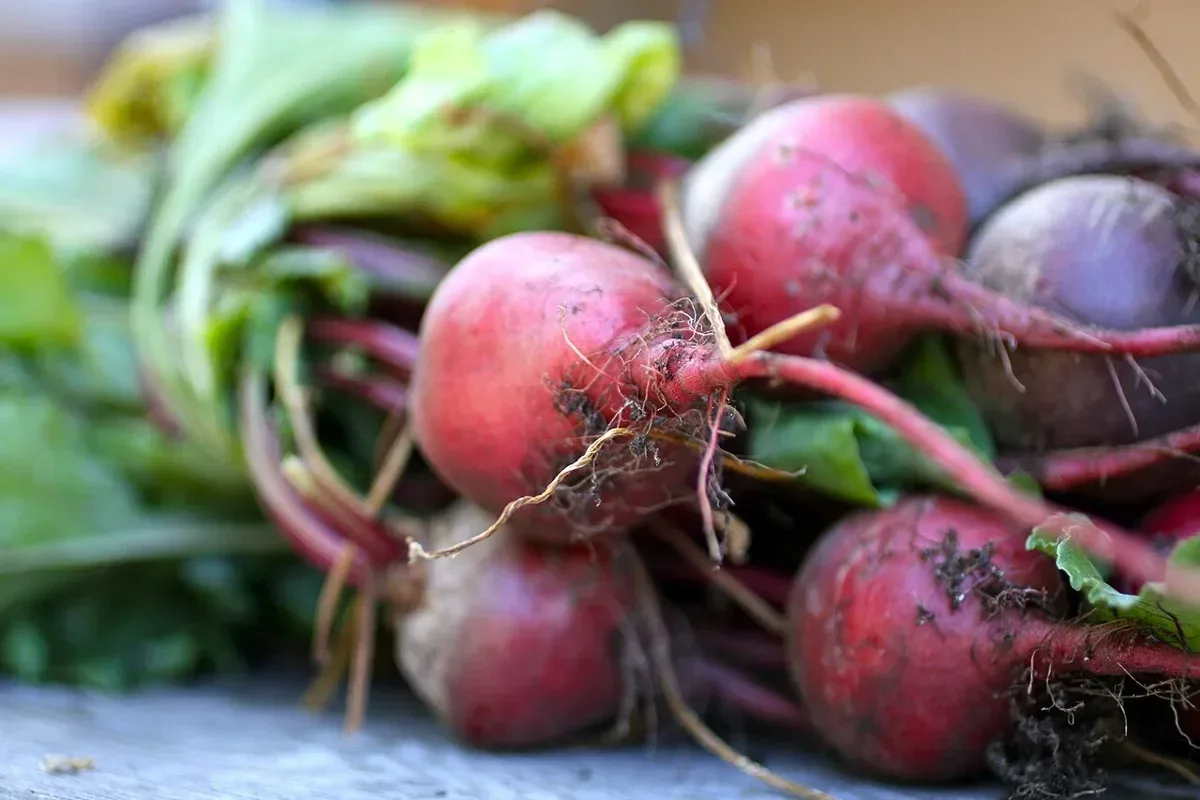
Beetroot (Beta vulgaris) is a cool-season root crop grown for its sweet, round or long roots and its edible leaves. Each wrinkled 'seed' is a cluster that gives several seedlings. Roots are ready in eight to twelve weeks, and it grows well in a deep pot or a short row.
Care instructions
Care Guide & Maintenance Routine
Sow in loose, stone-free soil in sun when the weather is cool. Thin seedlings to 8 to 10 cm apart. Keep the soil evenly moist so roots stay tender. Pull roots when they are 5 to 7 cm across. Young leaves can be eaten like spinach.
Light & Sunlight
Full sun gives the best roots. Beetroot tolerates a few hours of shade, which grows more leaf and smaller roots.
Watering Schedule
Even moisture is the key to smooth, tender roots. Dry spells make roots woody and can trigger bolting; heavy watering after drought splits them. Water deeply once or twice a week and mulch.
Potting Mix & Drainage
Loose, fertile, well-drained loam; pH about 6.0 to 7.0
Temperature & Humidity
TNAU calls beetroot a cool weather crop. The University of Saskatchewan says seed can be sown when the soil reaches 10°C, with 20°C ideal for germination in 5 to 8 days. Young plants tolerate light frost; -3°C is an approximate limit. Long cold spells on young plants, or heat and drought, can cause bolting.
About beetroot
Beetroot is a form of Beta vulgaris grown for its swollen root. The same species includes Swiss chard, grown for leaves, and sugar beet, grown for sugar. Garden beetroot is a biennial grown as a quick annual: it makes a root in the first season and would flower in the second.
The rich red colour comes from pigments called betalains, which also stain hands and chopping boards. Leaves are green with red veins, or fully purple in some varieties, and are edible.
Types
- Round red: the classic globe, quick and easy, best for pots.
- Cylindrical: long roots that slice into even rounds.
- Golden: yellow flesh that does not bleed.
- Striped: Chioggia types with pink and white rings.
- Monogerm: seed bred to give one seedling per seed, saving thinning work.
Some varieties are sold as bolt resistant, which helps with early sowings.
Buying seed
Fresh seed germinates evenly. Packets list whether seed is multigerm or monogerm and how many days the variety needs. Quick varieties suit containers and short seasons. For storing, choose varieties described as good keepers.
Where to grow
An open, sunny bed is best. Beetroot tolerates light shade from taller crops for part of the day but forms smaller roots. Because it is quick, it fits between slower crops or in a gap left after an early harvest.
Soil
Loose, fertile, well-drained soil gives smooth roots. TNAU notes the crop comes up well in all friable soils and prefers pH 6.0 to 7.0. Break up clods, remove stones, and work in well-rotted compost a few weeks before sowing. Fresh manure causes forked, hairy roots.
Sowing
Sow directly where plants will grow. The RHS suggests sowing the corky seed clusters 10 cm apart, or in groups of two or three every 15 cm for small baby beets. Cover with about 1 cm of soil and water the row. The University of Saskatchewan notes seed germinates in 5 to 8 days at an ideal soil temperature of 20°C and can be sown once the soil reaches 10°C. Sow a short row every two or three weeks for a steady supply.
Thinning
This is the step most often skipped. Each cluster sends up two to four seedlings. When they have two true leaves, snip extras at soil level so the strongest one is left every 8 to 10 cm. The thinnings make good microgreens.
Watering through the crop
Germination
Keep the surface damp. A crust on dry soil holds seedlings back; a light layer of fine compost over the row helps.
Root growth
Water deeply once or twice a week. Even moisture keeps roots tender. Long dry spells make them woody, and a heavy soaking after drought splits them.
Near harvest
Keep watering normally. Unlike onions, beetroot does not need a drying-off period.
Growing in containers
A pot 20 to 25 cm deep and 30 cm or more across grows a useful batch of round roots. Fill it with a free-draining mix that holds moisture, such as potting mix with a third of compost. Sow clusters 5 cm apart and thin to 8 to 10 cm. Pots dry out faster than beds, so check them every day or two in warm, windy weather. A deep window box works for baby beets and leaves.
Beetroot, chard and leaf beet
Swiss chard and leaf beet belong to the same species but were bred for leaves rather than roots. They are grown the same way, from the same kind of seed clusters, and cooked the same way. Because they can cross-pollinate, gardeners saving seed keep flowering beetroot and chard well apart.
Feeding
Compost before sowing covers most needs. A light balanced feed a month after sowing can help in pots. Too much nitrogen gives lush tops and small roots.
Harvesting and storing
Pull roots once they reach 5 to 7 cm across, as the University of Saskatchewan suggests, or earlier for baby beets. Large, old roots turn woody. Twist off the leaves 2 to 3 cm above the root; cutting into the root makes it bleed. Store roots unwashed in a cold, humid place. Use the leaves within a few days.
Troubleshooting
Lots of leaf, no root
Crowding, shade or too much nitrogen. Thin early and move the next sowing to a sunnier bed.
Spots on leaves
Leaf spot is common in wet weather. Remove spotted leaves and avoid overhead watering. Several problems look similar, so ask a local extension office if it spreads.
Tunnels or blisters in leaves
Leaf miners are a frequent cause. Pick off affected leaves.
Dark, sunken patches inside the root
This can point to a nutrient problem such as boron shortage, but other causes exist. A soil test is the reliable way to check.
Uses
Roots are boiled, roasted, pickled, grated raw into salads or juiced. Leaves are cooked like spinach or chard. Thinnings go into salads.
Safety and pets
ASPCA lists beets as non-toxic to dogs, cats and horses. It notes that large mature leaves contain oxalic acid. Red urine or stools after eating beetroot are harmless and come from the pigment.
Common mistakes
- Not thinning the seedlings.
- Letting the bed go dry for days at a time.
- Leaving roots in the ground until they are large and woody.
- Cutting the leaves off flush with the root.
- Sowing into cloddy, stony soil.
Beetroot shares a bed with carrots, radish and turnip. For more leafy greens, see spinach and lettuce.
India and Canada in brief
The root needs cool weather in both markets. One grows it in the cold half of the year, the other from the moment the ground can be worked until the cold returns. The sections below give local varieties and dates.
Seasonal rhythm
Seasonal Calendar
A month-by-month calendar for Beetroot in Global is coming soon. See the light, water and temperature notes above.
Diagnostics
Common Problems & Troubleshooting
Crowded, tiny roots when seedlings are not thinned; woody or split roots after uneven watering; bolting in heat or after cold on young plants; white rings inside roots after stress; leaf spots in wet weather.
Pests & seasonal watch: TNAU lists leaf miner and flea beetle, plus Cercospora leaf spot and Rhizoctonia root rot. Aphids and birds pecking seedlings are common in gardens.
Q&A
Frequently Asked Questions
Why do so many seedlings come up from one seed?
Most beetroot 'seeds' are corky clusters holding several true seeds, as the RHS notes. Thin to one seedling every 8 to 10 cm; snip extras with scissors rather than pulling them.
When is beetroot ready to harvest?
The University of Saskatchewan suggests pulling roots at 5 to 7 cm across for the most tender beets. That is usually eight to twelve weeks after sowing.
Can I eat beetroot leaves?
Yes. Young leaves go into salads and older leaves are cooked like spinach. ASPCA notes large mature leaves contain oxalic acid, so eat them in normal amounts.
Why are my beetroots small?
The usual causes are crowding, shade, dry soil, too much nitrogen or compacted soil. Thinning makes the biggest difference.
What causes white rings inside beetroot?
Pale rings often form when growth stops and starts with heat or uneven watering. Some varieties, such as Chioggia, have rings naturally.
Can I grow beetroot in a pot?
Yes. Use a pot at least 20 to 25 cm deep and choose a round variety. Keep the mix evenly moist.
Why did my beetroot flower?
Bolting can follow cold spells on young plants or heat and drought. Those roots turn woody; pull them and resow.
Is beetroot safe for pets?
ASPCA lists beets as non-toxic to dogs, cats and horses, and notes that large mature leaves contain oxalic acid.
How do I store beetroot?
Twist off the leaves, leaving 2 to 3 cm of stalk, and do not trim the root tip. Store unwashed roots in a cold, humid place, such as the fridge crisper or a box of damp sand in a cold room.
Similar Botanical Matches
Keep exploring
Related plants
Grower field notes
Reader Field Notes in Global
Share how this plant performs in your local Global climate.