
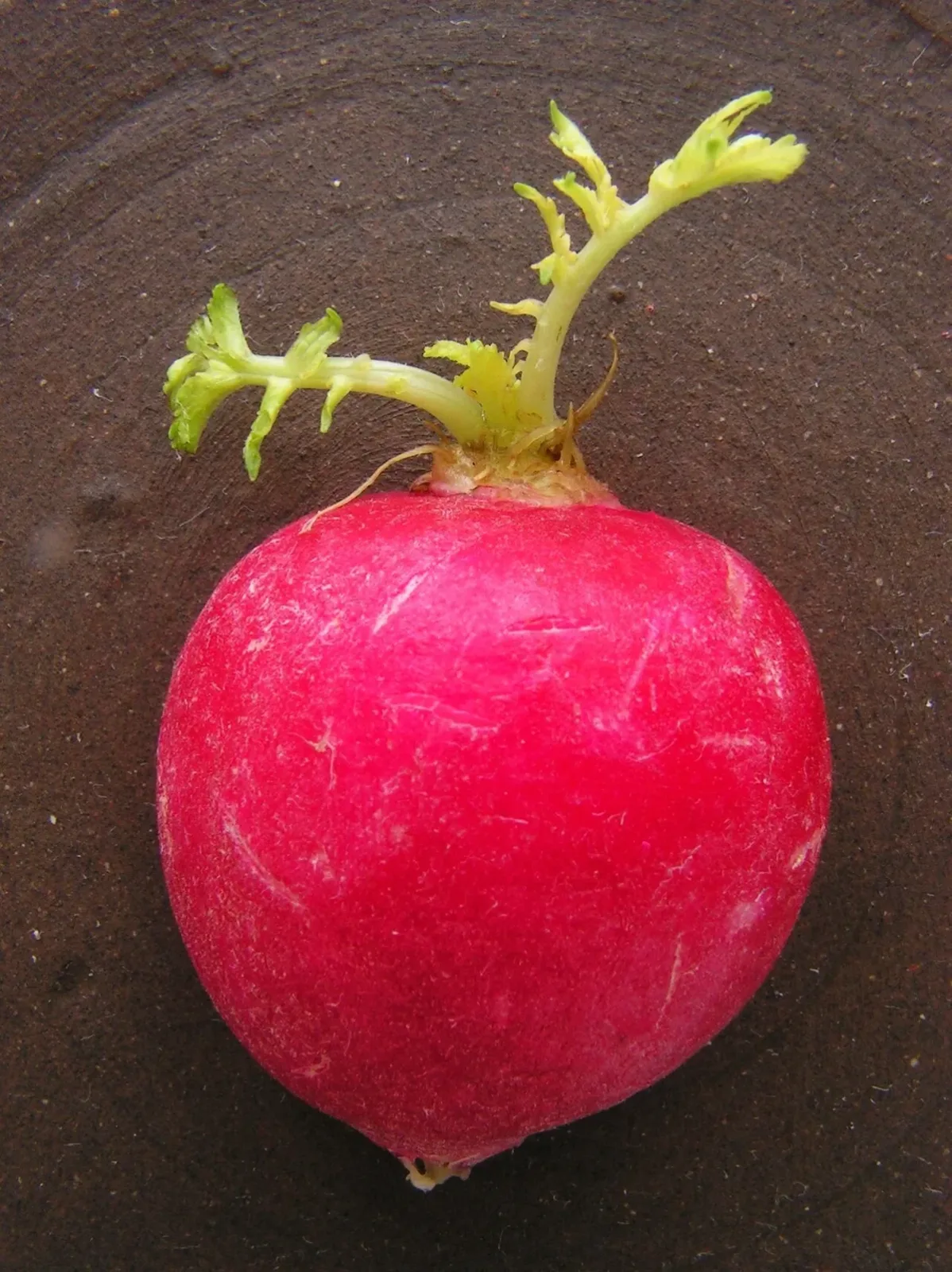
| ☀️ Light | Full sun |
|---|---|
| 💧 Water | Moderate (lightly moist) |
| 🪴 Soil | Light, friable, stone-free sandy loam rich in humus; pH about 6 to 7 |
| 🌡️ Temp | 5°C – 25°C |
| 🐾 Safety | Cats: not verified · Dogs: not verified |
| 📏 Mature size | 30 cm |
Where It Grows & Climate Tolerance
Pet & Companion Animal Toxicity (Radish (Mooli))
Not yet verified: Toxicity status for cats, dogs, and horses has not yet been confirmed against veterinary poison-control records. Keep out of reach of pets or consult your veterinarian.
Radish (Raphanus sativus) is a quick cool-season root crop in the cabbage family. Small salad radishes can be ready in three to six weeks, while long white Asian mooli takes about 40 to 60 days. Heat and long days make it bolt and turn the roots pithy and hot.
Care instructions
Care Guide & Maintenance Routine
Sow directly where it will grow, in loose, stone-free soil in full sun. Keep the soil evenly moist and thin seedlings early. Grow it in the cool part of the year, ideally 10 to 15°C, and sow small batches every two to three weeks. Pull roots as soon as they reach a usable size.
Light & Sunlight
The RHS recommends full sun. NC State lists full sun to partial shade. In warm weather, light afternoon shade helps keep plants from bolting.
Watering Schedule
NC State says consistent moisture is needed for good flavour. Uneven watering, with dry spells followed by heavy watering, causes split or woody roots. Water lightly and often on light soils.
Potting Mix & Drainage
Light, friable, stone-free sandy loam rich in humus; pH about 6 to 7
Temperature & Humidity
NHB says radish develops the best flavour, texture and size at 10 to 15°C, and that long days with high temperatures cause bolting and hard, pithy, pungent roots. The 5 and 25°C values mark the practical cool-season window, not survival limits.
About radish
Radish, Raphanus sativus, is a root vegetable in the cabbage family. It has been grown for thousands of years and comes in many forms, from small round red salad radishes to long white Asian mooli. NHB gives its centre of origin as the Mediterranean region. It is a cool-season crop: NHB says it develops the best flavour, texture and size at 10 to 15°C.
Types
- Salad or spring radishes: small, round or short roots, ready in as little as three to six weeks (NC State).
- Asian, daikon or mooli radishes: long white tapering roots. TNAU lists 'Pusa Chetki', 'Pusa Rashmi', 'Pusa Desi', 'Japanese White', 'Arka Nishant' and 'Co 1' for the plains. NHB gives 40 to 60 days to harvest for Asiatic types.
- Winter radishes: large, hardy roots that the RHS says stay crisp even when big.
- Pod radishes: grown for edible seed pods rather than roots.
For cool hill climates, TNAU lists 'White Icicle', 'Scarlet Globe' and 'Rapid Red White Tipped'.
Sowing
Sow directly where the crop will grow. USask notes radishes do not need transplants. Small types go about 1 cm deep, larger ones up to 2.5 cm (NC State). Sow thinly, then thin salad radishes to about 5 cm apart and large types to 10 to 15 cm. Sow small batches every two to three weeks rather than one big row, so you always have roots at the right stage.
Radish seedlings appear within days, which is why USask suggests mixing a few seeds into rows of slow crops like carrots to mark the row.
Soil and containers
NHB recommends light, friable sandy loam rich in humus with a pH of 6.0 to 7.0, and warns that heavy soils give rough, misshapen roots with many side roots. Dig deeply, remove stones and add well-rotted compost.
In containers, NC State says small varieties need at least 2 litres and 10 to 15 cm of depth. Long mooli needs much deeper soil. Our guide to growing radish in pots in India covers pot depth, mix and thinning step by step.
Light and temperature
Grow radish in full sun in cool weather. NHB explains that long days and high temperatures make the plant bolt before the root develops, and the roots become hard, pithy and pungent. USask advises against sowing in the hottest part of summer and suggests a late-summer sowing for a fall crop instead.
Watering through the season
After sowing
Keep the surface moist until seedlings appear. A fine rose stops seeds washing out.
As roots swell
NC State says consistent moisture gives the best flavour, and light soils need water more often. Avoid long dry spells followed by heavy soaking, which splits roots.
In rainy weather
Raised beds or pots help water drain. Waterlogged soil leads to rot.
Feeding
Quick salad radishes grow on the nutrients in a compost-enriched bed and rarely need more. Too much nitrogen gives lush leaves and small roots. Long-season mooli in poor soil can benefit from a light side-dressing of compost. The TNAU and NHB field schedules give per-hectare rates for commercial crops, which do not translate well to home beds and pots.
Earthing up and care
NHB notes that growing radish roots tend to push out of the soil, so earthing up and weeding early in the season help root quality. Keep weeds out, since they compete strongly with this fast crop.
Harvesting
NHB gives 25 to 30 days from sowing for temperate types and longer for tropical ones, up to about 60 days. NC State says a radish is ready when the top starts to show above the soil. Pull small ones by hand and use a fork for long mooli. Harvest early in the day and store in a cool place, as USask suggests. The roots should not be pithy at harvest, so do not leave them in the ground too long.
Leaves are edible too; USask notes the inner leaves are the most tender.
Troubleshooting
Leafy tops, no root
Step 1: Check spacing. Roots touching each other cannot swell, so thin them. Step 2: Check light; radish in shade makes leaves. Step 3: Think about temperature and feed. Warm weather and rich, high-nitrogen soil both favour leaves.
Hot, pithy or woody roots
Cut one open. A spongy or hollow centre means the root is overmature or grew in heat. Harvest earlier and move sowing to the cooler part of the year.
Split roots
Look back at the weather. A dry spell followed by rain or heavy watering is the usual cause. Water evenly.
Forked or twisted roots
Dig around a few plants. Stones, clods or a hard layer underneath push roots sideways. Loosen the soil more deeply next time and avoid fresh manure.
Tiny holes in leaves
Look closely at the leaves in sunny weather. Small black beetles that jump when disturbed are flea beetles. USask and the RHS both recommend row covers fitted soon after sowing.
Tunnels in roots
Cut damaged roots open. Brown tunnels with small white larvae are root maggots or cabbage root fly. Rotate the crop and cover new sowings with fine mesh.
Uses
Salad radishes are eaten raw, sliced into salads or pickled. In India, mooli is used in parathas, sambar, salads and pickles, and the leaves are cooked as greens. NC State notes the flowers and young pods are edible too. It pairs well in beds with carrots, which sprout more slowly.
Safety and pets
We found no ASPCA listing for radish, so pet safety is marked as not verified. NC State gives a low severity for people: handling leaves and roots can mildly irritate sensitive skin.
Common mistakes
- Sowing too thickly and not thinning.
- Sowing in the hottest months.
- Leaving roots in the ground until they turn pithy.
- Growing long mooli in shallow pots.
- Watering unevenly.
India and Canada compared
In India, radish is a cool-season crop: TNAU recommends September in the plains and June to July in the hills, and North Indian gardeners sow through winter. In Canada, it is the first and last vegetable of the year, sown in early spring and again in late August for fall, skipping the hot weeks of July and early August.
Seasonal rhythm
Seasonal Calendar
A month-by-month calendar for Radish (Mooli) in Global is coming soon. See the light, water and temperature notes above.
Diagnostics
Common Problems & Troubleshooting
Roots not swelling (crowding, shade or too much nitrogen); split roots from uneven watering; pithy, woody, very hot roots from heat, age or bolting; forked roots in stony or compact soil; shot-hole leaves from flea beetles.
Pests & seasonal watch: Flea beetles chew small holes in leaves (RHS, USask). Root maggots and cabbage root fly tunnel into roots (NC State, RHS). Aphids and caterpillars attack leaves. Slugs and snails eat seedlings in damp weather.
Q&A
Frequently Asked Questions
How long does radish take to grow?
NC State says salad radishes can be ready in 3 to 6 weeks. NHB gives 25 to 30 days for temperate types and 40 to 60 days for Asian (mooli) types.
Why are my radishes all leaves and no root?
Usually crowding, too little sun, warm weather or too much nitrogen. Thin seedlings early to about 5 cm apart and grow in full sun in cool weather.
Why are my radishes hot and woody?
Heat, age and bolting. NHB says high temperatures and long days make roots hard, pithy and pungent. Pull them on time and sow in cooler weather.
Why do my radishes crack?
Uneven watering. A dry spell followed by heavy watering or rain makes roots split. Keep the soil evenly moist.
Can I grow mooli in a pot?
Yes, in a deep grow bag or container. Our guide on growing radish in pots covers depth and mix in detail.
What are the small holes in radish leaves?
Neat shot-holes usually mean flea beetles. A fine row cover put on right after sowing keeps them off.
Can I eat radish leaves and flowers?
Yes. NC State notes the leaves and flowers are edible, and some varieties grow edible seed pods.
When should I sow radish in India?
TNAU recommends September in the plains and June to July in the hills. In the northern plains, sowing continues through the cool months.
How do I store radishes?
Remove the leaves and refrigerate. NC State says small roots keep 1 to 2 weeks; large ones like daikon can last up to two months.
Similar Botanical Matches
Keep exploring
Related plants
Grower field notes
Reader Field Notes in Global
Share how this plant performs in your local Global climate.