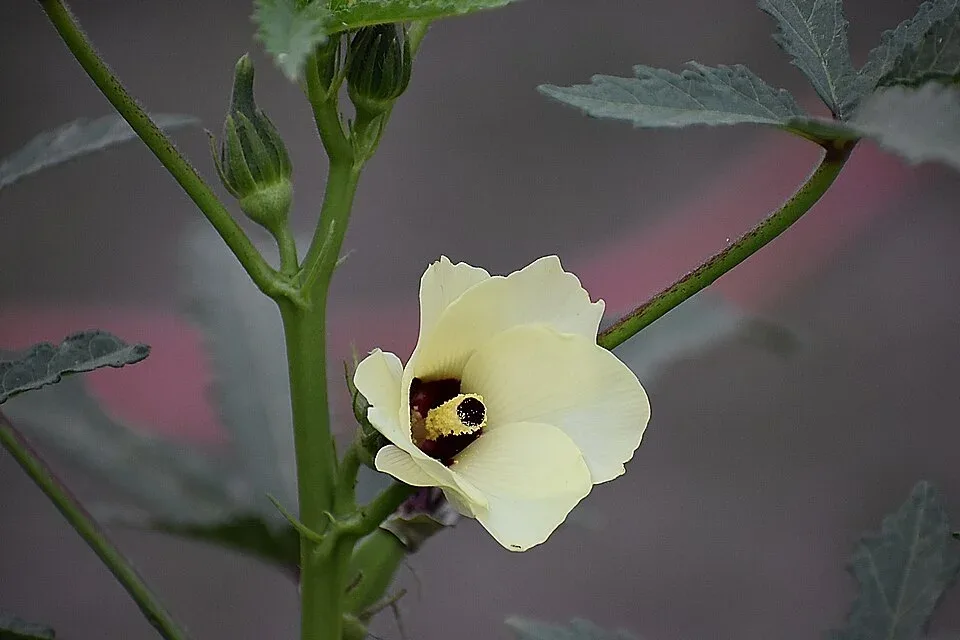
| ☀️ Light | Full sun |
|---|---|
| 💧 Water | Moderate (lightly moist) |
| 🪴 Soil | Moist, organic-rich, well-drained soil |
| 🐾 Safety | Cats: not verified · Dogs: not verified |
| 📏 Mature size | 1.2 m |
Where It Grows & Climate Tolerance
Pet & Companion Animal Toxicity (Okra (Bhindi))
Warm-season okra grown for its tender edible pods and showy mallow flowers.
Care instructions
Care Guide & Maintenance Routine
Full sun; moist, well-drained organic soil; harvest pods young.
Light & Sunlight
At least 6 hours of direct sun daily.
Watering Schedule
Keep soil evenly moist without waterlogging.
Potting Mix & Drainage
Moist, organic-rich, well-drained soil
Temperature & Humidity
Protect from cold drafts and direct airflow from heating or cooling vents. A verified temperature range has not been recorded for this profile.
Okra (Abelmoschus esculentus) is a warm-season vegetable in the mallow family, Malvaceae. It produces large pale flowers and edible pods.
Grow it in full sun in moist, organic-rich soil that drains well. Sow or transplant after frost risk has passed. Pick pods while young and tender; gloves can help when handling hairy pods. Avoid waterlogged soil, which can contribute to root rot.
Horticultural reference: NC State Extension Plant Toolbox.
Seasonal rhythm
Seasonal Calendar
A month-by-month calendar for Okra (Bhindi) in India is coming soon. See the light, water and temperature notes above.
Diagnostics
Common Problems & Troubleshooting
Pests & seasonal watch: Watch for aphids, whiteflies, spider mites, slugs and powdery mildew.
Care encyclopedia · 4 guides
Guides & Articles for Okra (Bhindi)
Okra (Bhindi) Flowers Falling Off: Normal Drop or a Problem?
An okra flower that drops its petals while a green pod keeps growing is doing exactly what it should. Buds or baby pods falling off is different. Here is how to tell, and the common Indian causes.
Read guide →Bhindi Yellow Vein Mosaic: How to Recognise It and Protect Your Okra
A yellow network of veins on bhindi leaves is the classic sign of yellow vein mosaic, a whitefly-spread virus. There is no cure, but you can limit spread and choose varieties that resist it.
Read guide →Vegetable Sowing Calendar for India: What to Sow Each Month by Region
A month-by-month vegetable sowing calendar for Indian kitchen gardens, with separate tables for the North Indian plains, South India, the west coast and the hills, based on state agricultural university recommendations, plus how kharif, rabi and zaid fit in and how pots and varieties change the dates.
Read guide →Vegetables to Grow in Monsoon in India: A Region-wise Terrace and Kitchen Garden Guide
The monsoon is the main sowing window for warm-season vegetables across most of India. Gourds, bhindi, beans and leafy greens do well if you plan for drainage and pests.
Read guide →Q&A
Frequently Asked Questions
How much sunlight does okra need?
Okra grows best in full sun, with at least six hours of direct light each day.
Similar Botanical Matches
Grower field notes
Reader Field Notes in India
Share how this plant performs in your local India climate.