
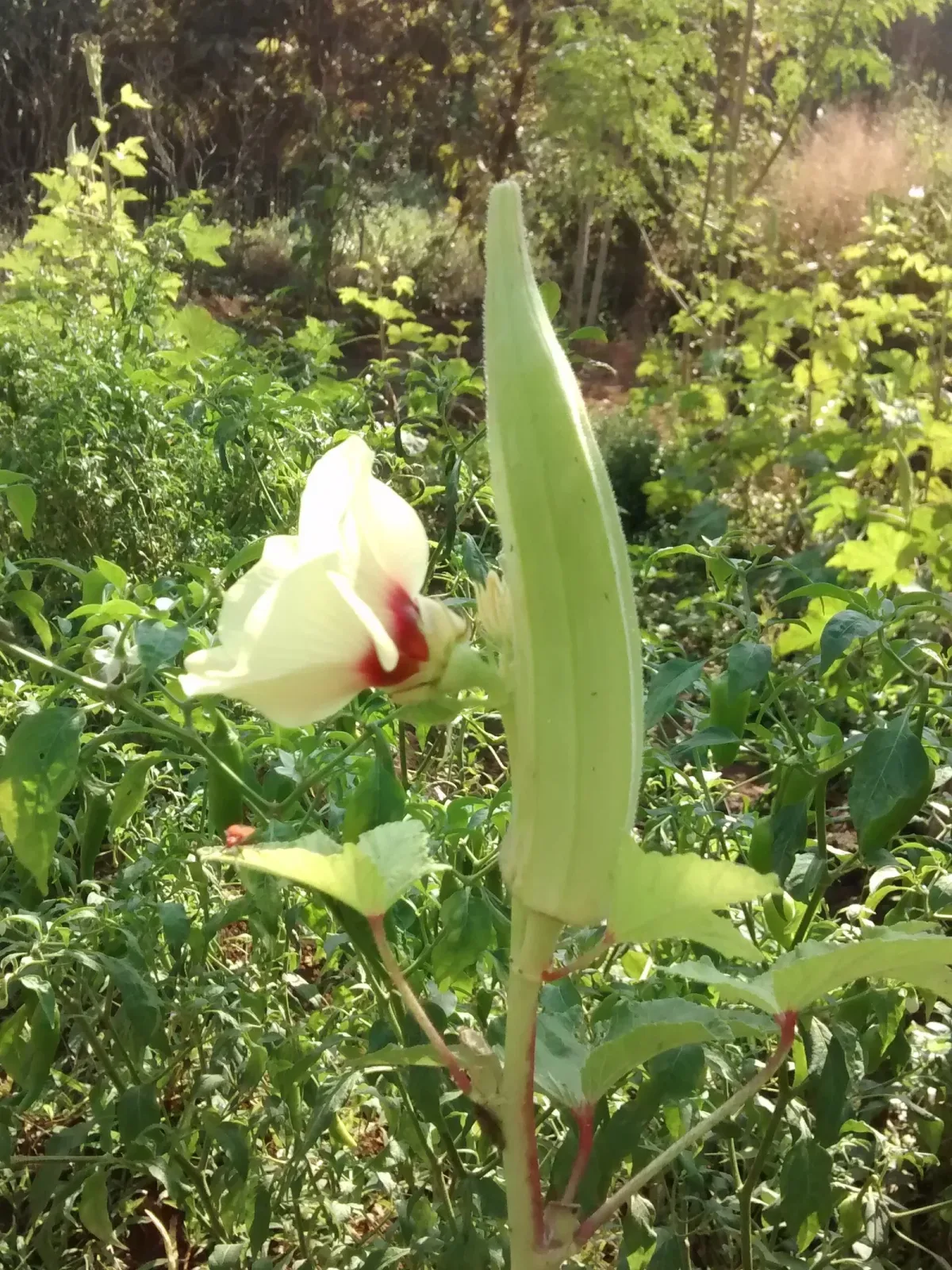
Okra flowers falling off is often normal. Each bhindi flower opens in the morning, self-pollinates, and then its petals wither and drop as one piece while the small green pod at the base keeps growing. That is how okra fruits form. It is a problem only when buds fall before opening, or when the whole flower and its baby pod fall together. The common causes in India are heat above about 40 to 42°C, cold nights, very heavy rain, shade, water stress, too much nitrogen and the shoot and fruit borer.
Normal drop or a problem?
| What falls | What it means |
|---|---|
| Only the yellow petals (often in a twisted tube with the stamens), the green pod stays | Normal. The flower has done its job. |
| Buds turn yellow and drop before opening | Stress (heat, cold, drought, waterlogging) or borer damage |
| Whole flower with its pod, or baby pods a few days old | Pollination failure from heat or rain, or stress |
| Buds and flowers drop, shoot tips wilt and droop, holes in pods | Shoot and fruit borer likely |
Bhindi belongs to the hibiscus family. Its calyx, petals and stamen column are fused and fall together after flowering; eAgri's okra course notes give this as the reason okra was moved to its own genus, Abelmoschus.
How okra flowers set pods
A study at CSK Himachal Pradesh Krishi Vishvavidyalaya, Palampur, found that okra flowers in the mid hills opened, shed pollen and were most receptive between 9 and 10 am, and that pod and seed set were the same with or without insect help. In other words, okra is essentially self-fertilising. Pollinators are a bonus, not a necessity, so hand pollination rarely fixes flower drop in okra. Weather and plant stress matter far more.
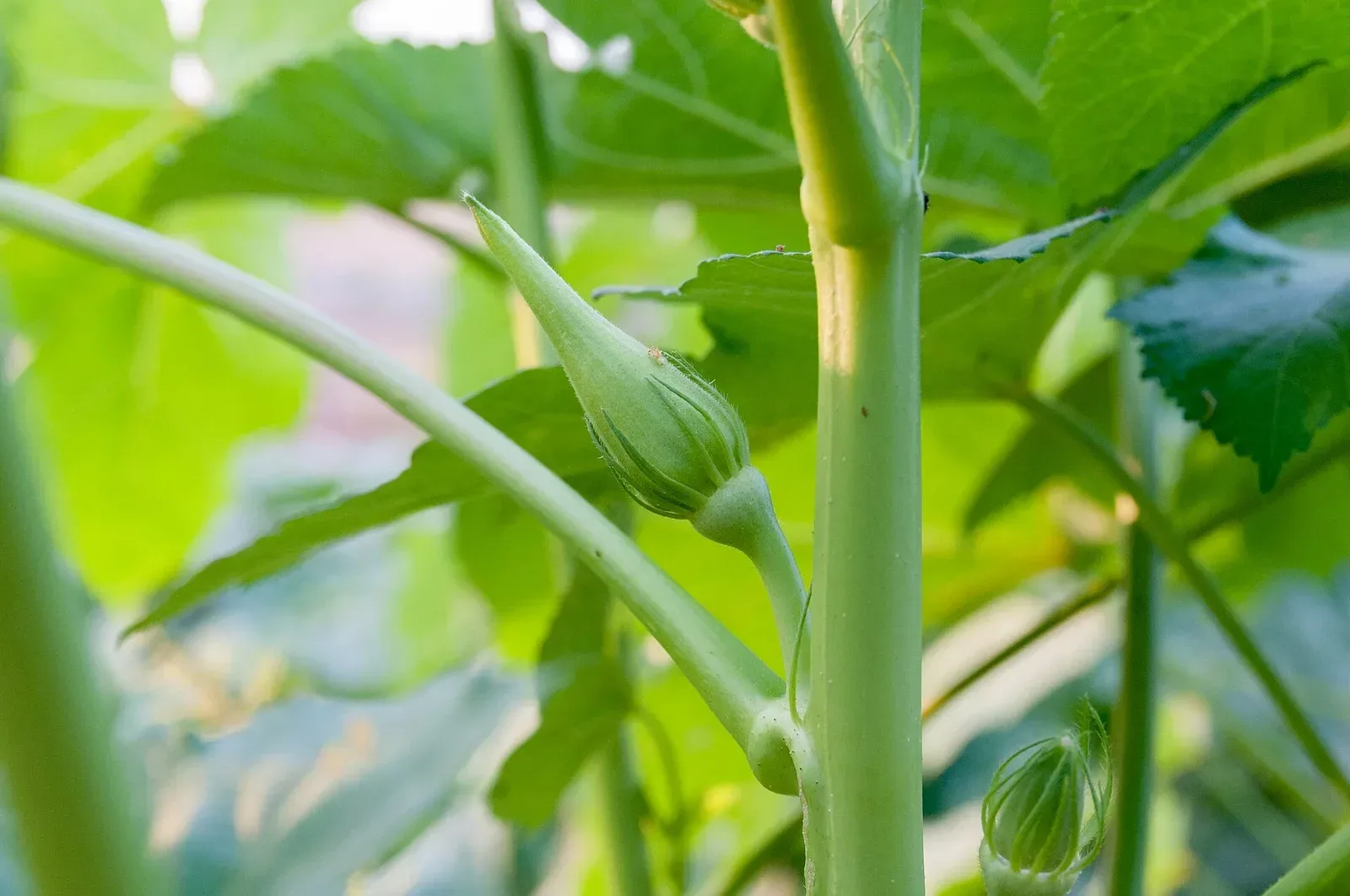
Common causes of bud and flower drop
Extreme heat
TNAU's okra climate guidance says flowers drop when temperatures go beyond 40 to 42°C, and that okra prefers 24 to 28°C. A 2026 review in Frontiers in Agronomy adds that heat above 40°C with low humidity causes flowers to abort and reduces fruit set. In North India, this is why a February-sown crop can stall in late May and June.
What helps: water deeply in the early morning, mulch the soil, and in pots give some afternoon shade during heatwaves. Flowering usually resumes once temperatures drop.
Cold nights
Okra cannot stand frost, and eAgri notes that low night temperatures reduce performance. The Frontiers review gives temperatures below about 17°C as inhibiting flowering. Sowing too early in spring, or too late in autumn, gives weak flowering.
Heavy rain and waterlogging
eAgri notes that fertilisation and seed set are affected during high rainfall, even though plants grow well. Waterlogged roots also stress the plant and can cause root rot. In the monsoon, grow bhindi in raised beds or free-draining pots.
Water stress and shade
Drought and shade both reduce okra performance (eAgri). A pot that dries out every afternoon in summer will shed buds. Okra needs full sun for most of the day.
Too much nitrogen
The University of Arkansas extension service notes that too much nitrogen fertiliser can limit pollination in okra. A plant with lush leaves and few pods is a sign. Cut back on urea or high-nitrogen feeds once flowering starts.
Shoot and fruit borer
TNAU lists shedding of buds and flowers among the signs of the shoot and fruit borer (Earias species). Look for:
- Shoot tips that wither and droop
- Small holes in buds and pods, often with droppings
- Deformed pods
- Small spotted caterpillars inside when you split a bud or pod
Look-alike: heat-dropped buds are clean inside, with no holes or caterpillars. If borers are present, pick off and destroy damaged shoots, buds and pods regularly. NCIPM recommends pheromone and other traps for monitoring in field plots. Ask your KVK for currently approved control options; we do not give pesticide doses.
Season by region
Most flower drop problems come from growing okra outside its comfortable temperature range. TNAU's organic farming page gives these windows:
| Region | Main crops |
|---|---|
| North India plains | Summer crop sown February to March; rainy-season crop sown June to July with the rains |
| East and West India | Up to three crops: summer, kharif and late kharif |
| South India | Almost year-round in moderate climates |
| Hills | One summer crop |
GB Pant University gives May to June for okra sowing in Uttarakhand. Check your local KVK for exact dates.
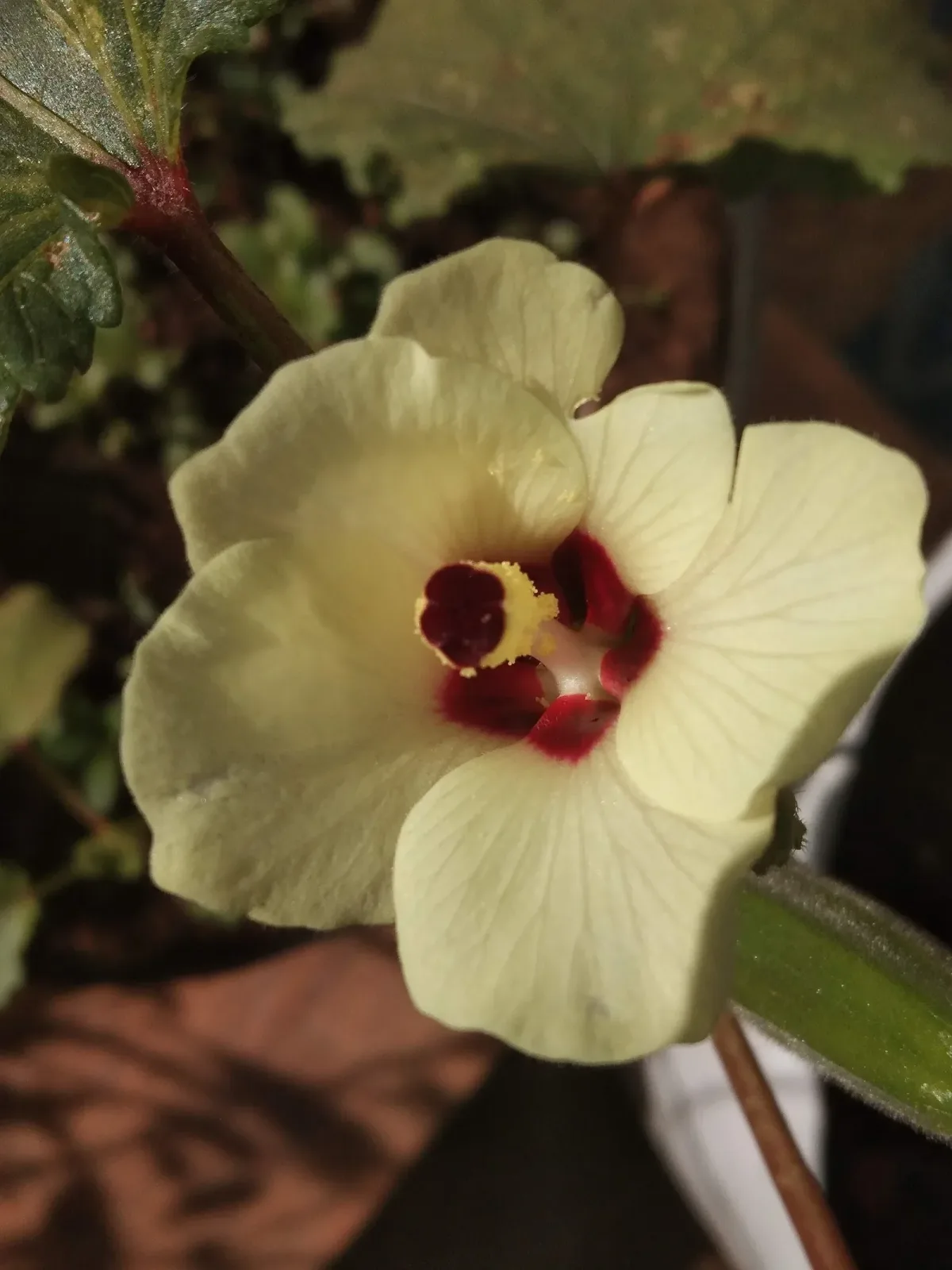
Quick fixes
- Do not worry about falling petals if pods are growing.
- Water deeply and regularly in hot weather; mulch.
- Give full sun, but light afternoon shade during 40°C-plus heatwaves.
- Ease off nitrogen once the plant flowers.
- Split a fallen bud: holes or a caterpillar point to borer.
- Pick pods young and often; this keeps the plant flowering.
If leaves show a yellow vein net, read our bhindi yellow vein mosaic guide.
Watch: why okra buds and flowers drop
A Hindi terrace-gardening video on bhindi bud and flower drop.
Related pages
- Okra (bhindi)
- Overwatering and root rot
- Cowpea and brinjal
Sources
- TNAU Agritech (organic farming): Bhendi climate and varieties (24 to 28°C preferred; flower drop beyond 40 to 42°C; frost sensitive; seasons by region). Accessed 10 Nov 2026.
- TNAU Agritech Crop Protection: Bhendi pests and diseases (shoot and fruit borer symptoms including bud and flower shedding). Read on 9 Nov 2026; the site returned errors on the 10 Nov 2026 recheck.
- Himachal Journal of Agricultural Research (CSK HPKV Palampur): Floral biology and pollination systems in okra (anthesis and receptivity 9 to 10 am; self-fertilised crop). Accessed 10 Nov 2026.
- Frontiers in Agronomy (2026): Agronomic practices for climate-resilient okra production in agroecological systems, a review (heat above 40°C with low humidity causes flower abortion; below 17°C inhibits flowering). Accessed 10 Nov 2026.
- eAgri (TNAU/ANGRAU course material): Bhendi package of practices (fused calyx, corolla and staminal column fall at anthesis; drought, low night temperature and shade; high rainfall affects fertilisation. Note: server returned an error at the final recheck on 10 Nov 2026; content was read earlier the same day). Read on 9 Nov 2026; the site returned errors on the 10 Nov 2026 recheck.
- University of Arkansas Cooperative Extension: Okra (garden Q&A) (too much nitrogen can limit pollination). Accessed 10 Nov 2026.
- ICAR-NCIPM: Strategies for IPM in okra and brinjal (traps for monitoring borers). Accessed 10 Nov 2026.
- GB Pant University of Agriculture and Technology: Kharif season advisory 2020 (okra May to June). Accessed 10 Nov 2026.


Comments
No comments yet — share what worked in your climate.