
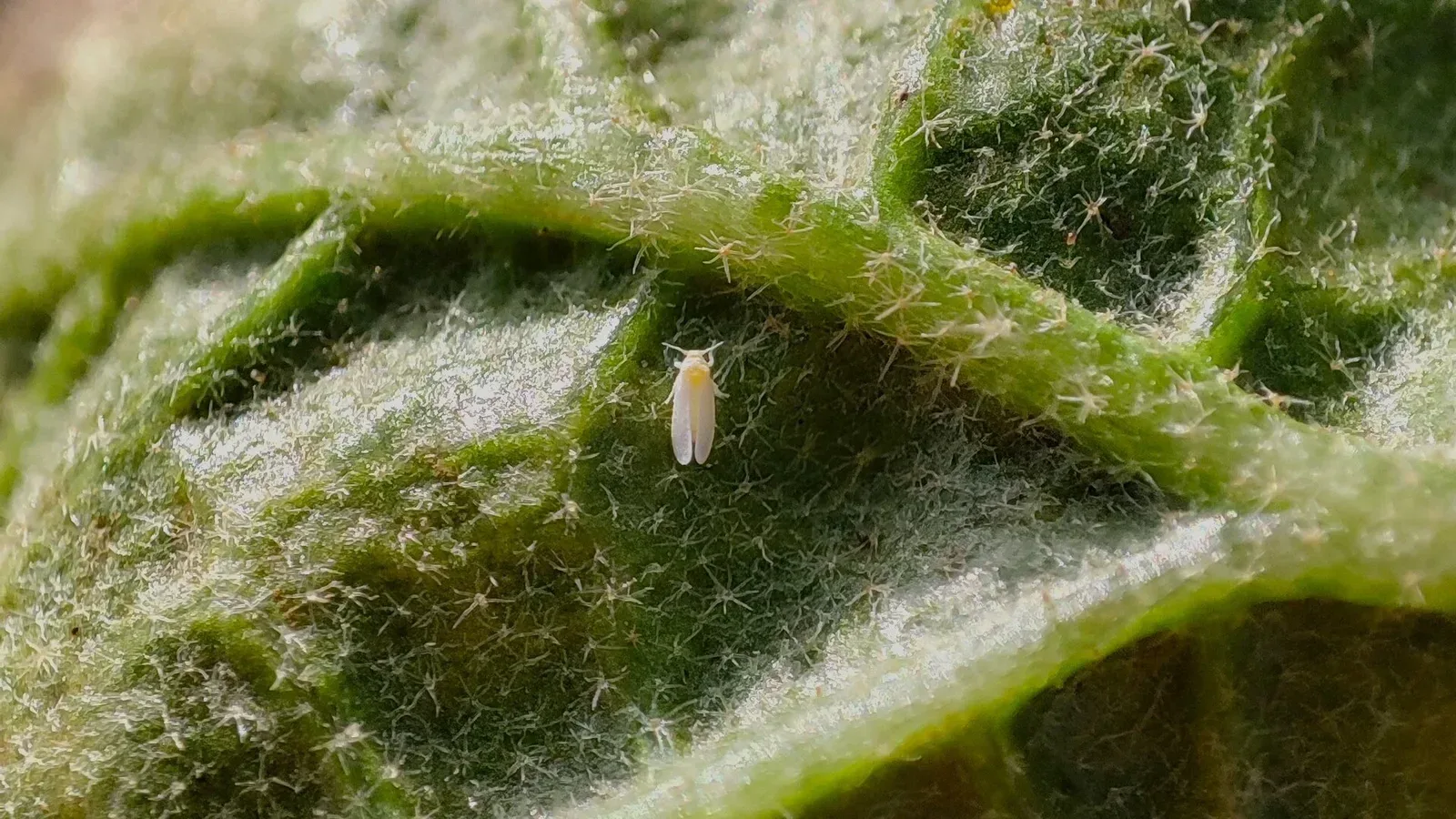
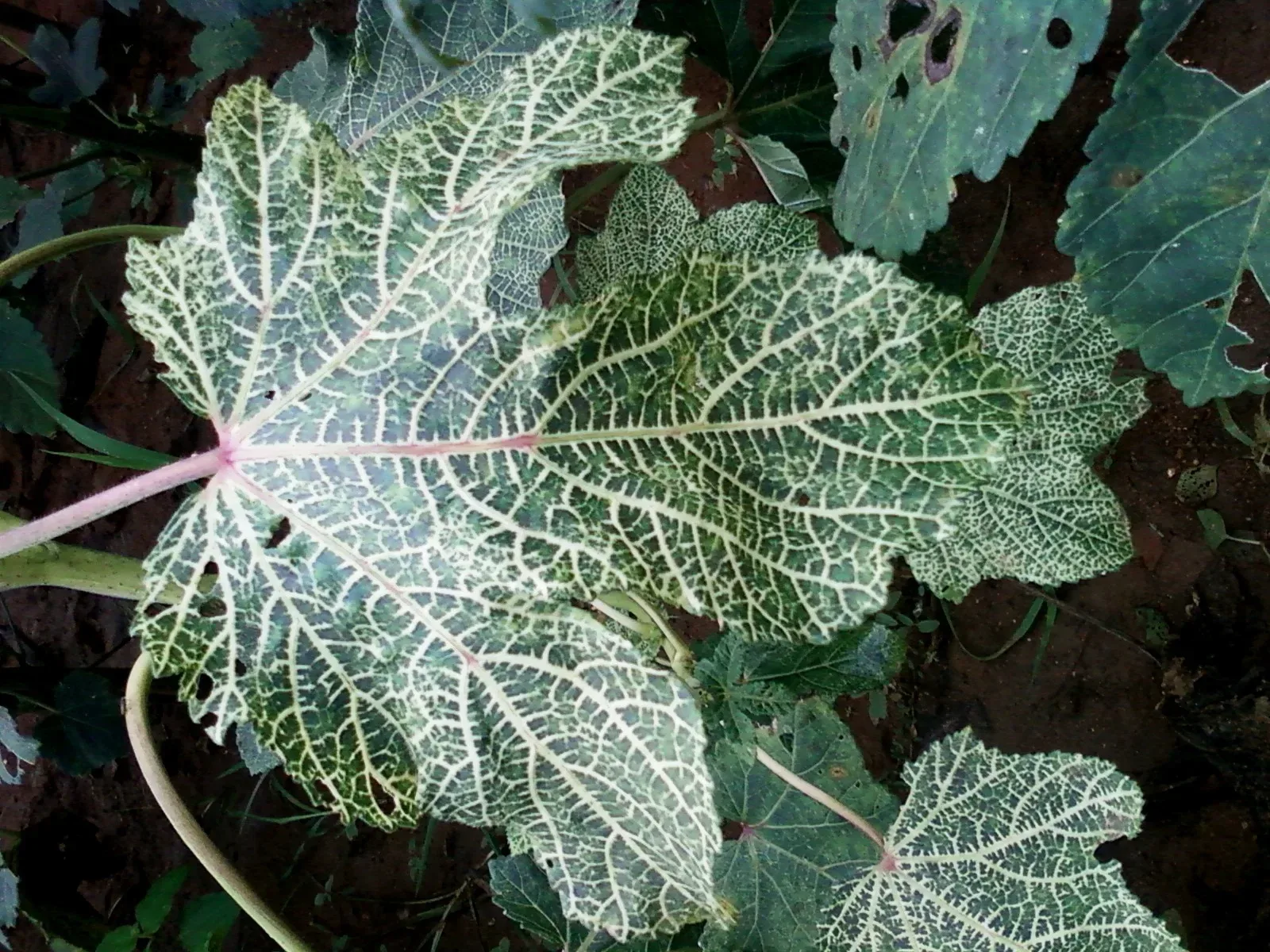
If the veins on your bhindi leaves are turning yellow in a net-like pattern while the patches between them stay green, the most likely cause is yellow vein mosaic virus (YVMV). It is spread by whitefly. There is no spray that cures an infected plant. Pull out and destroy affected plants early, keep whitefly and weeds down, and next season grow a variety bred to resist the virus. Before you pull plants, rule out look-alikes such as nutrient deficiency and jassid damage.
What yellow vein mosaic looks like
TNAU and the national IPM schedule describe the disease this way:
- Veins and veinlets turn yellow, forming a network, while the tissue between them stays green at first.
- The yellow veins look thickened.
- In severe cases, young leaves become wholly yellow or golden, smaller, and the plant is stunted.
- New leaves keep coming out with symptoms.
- Fruits from infected plants are small, misshapen, hard and pale yellowish green or cream.
Plants infected young suffer most. TNAU's organic farming page reports that infection within 35 days of germination can cut yield by about 94 percent, against 84 percent at 50 days and 49 percent at 65 days. The disease is not seed-borne; whiteflies bring the virus from infected wild and cultivated hosts.
Look-alikes to rule out
| Problem | How it differs |
|---|---|
| Yellow vein mosaic | Veins yellow, tissue between them green at first; new leaves affected; pale, hard fruits |
| Iron, magnesium or other nutrient shortage | Usually the reverse: tissue between the veins yellows while the veins stay green. Magnesium shortage shows on older leaves first. |
| Whitefly feeding on its own | Scattered pale spots that merge into irregular yellow patches, sticky honeydew, black sooty mould (TNAU) |
| Jassid (leafhopper) damage | Leaf edges yellow, curl downwards and turn red-bronze ("hopper burn"); edges crumble when crushed (TNAU) |
| Enation leaf curl virus | Leaves curl and twist, with small outgrowths on the veins underneath; also spread by whitefly |
| Normal ageing | Only the oldest, lowest leaves yellow evenly and drop |
If you are unsure, take a few leaves to your nearest KVK or agriculture office. A clear yellow vein net on several young leaves, with whiteflies present, is a strong pointer, but only a lab test confirms a virus.
For general yellowing, see our yellow leaves page. For nutrient causes, see nutrient deficiency.
How it spreads
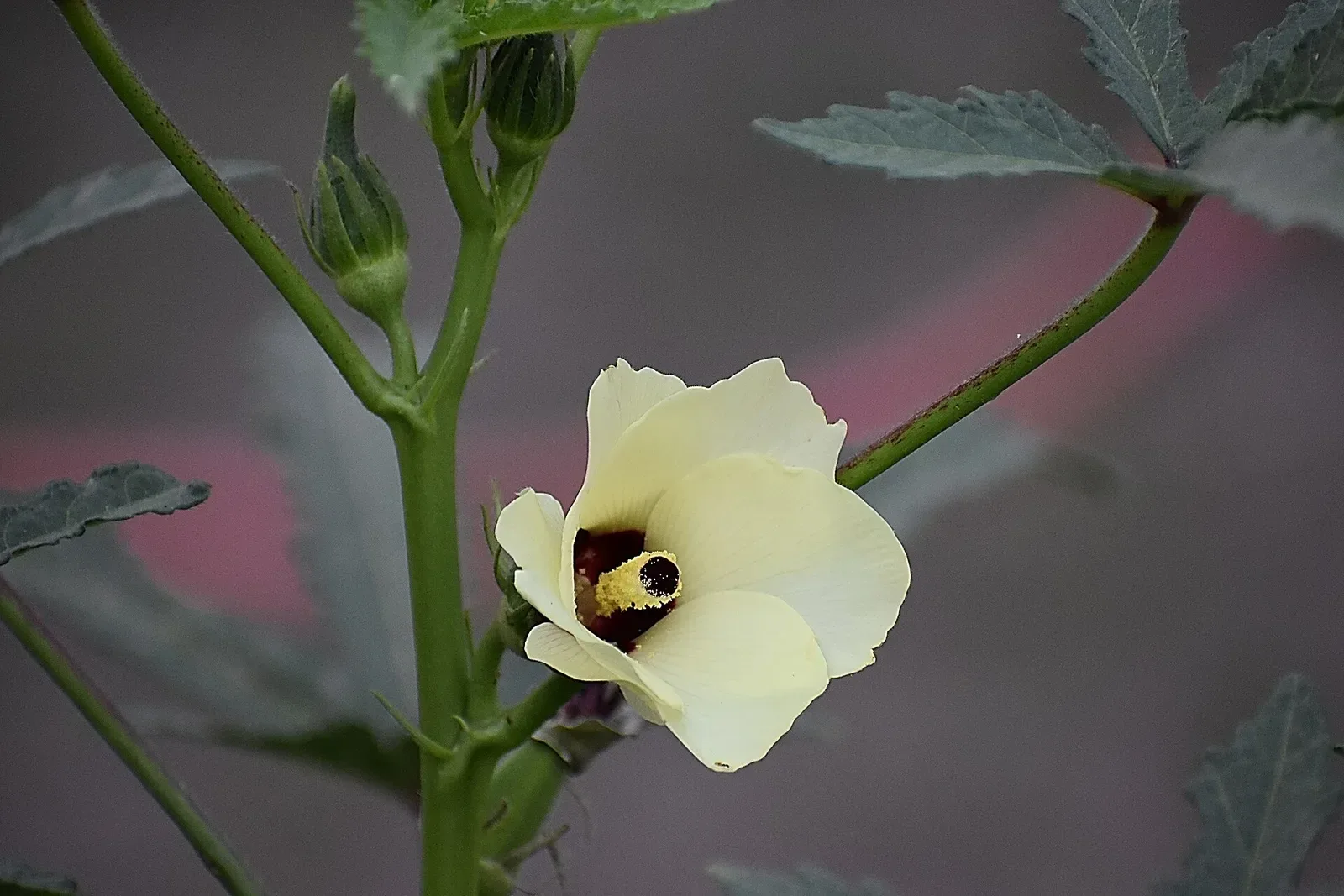
TNAU names the whitefly Bemisia tabaci as the main vector, and its organic farming page also mentions the okra leafhopper. Whiteflies pick up the virus from infected plants and weeds and carry it to healthy bhindi. TNAU lists wild hosts including Croton sparsiflorus and goat weed (Ageratum). TNAU notes the disease is common wherever okra is grown, especially in the rainy season.
What to do if your plants have it
Remove infected plants early
NCIPM's okra and brinjal IPM folder and TNAU both advise rogueing: pull out plants with symptoms as soon as you see them, and bury or destroy them away from the garden. A sick plant left standing feeds whiteflies that carry the virus to healthy plants. In a small home bed, this matters even more.
Keep whitefly numbers down
- Check the undersides of leaves every few days. Adults are tiny, white and fly up when disturbed; nymphs are flat, oval and greenish yellow.
- NCIPM recommends yellow sticky traps to monitor and catch whiteflies.
- TNAU's organic page suggests neem seed kernel extract or a ginger, garlic and chilli extract against the vector. We do not give doses; follow a current recommendation from your KVK or the product label.
- Our whitefly page covers identification and non-chemical control in detail.
Insecticides only reduce spread; they do not cure plants already infected. If you consider a chemical product, ask your KVK which ones are currently approved for okra in your state and follow the label.
Clear weeds
Remove weeds around the bed, especially known hosts like Ageratum, so whiteflies have fewer infected plants to feed on.
Use a barrier crop on bigger plots
For field plots, NCIPM suggests a border of maize or sorghum as a barrier. On a terrace, a fine insect net over young plants can serve a similar purpose; this is our practical suggestion.
Prevention next season: resistant varieties
The single most useful step is a variety bred for resistance or tolerance. Examples from Indian institutes:
- IIHR Bengaluru: Arka Anamika and Arka Abhay
- ICAR-IIVR Varanasi: several Kashi varieties listed as resistant to YVMV and leaf curl, for example Kashi Parakram (recommended for Delhi, Haryana, Gujarat and Rajasthan)
- Parbhani Kranti (MAU Parbhani) and Pusa A-4 (IARI), listed as resistant or tolerant by TNAU and others
- TNAU: hybrid COBhH 1, described as resistant
TNAU's organic farming page notes that no variety is completely resistant; some older resistant varieties, such as Pusa Sawani, later became susceptible. Choose a recent variety recommended for your state, and still watch for whitefly.
Sowing time also matters. The national IPM schedule recommends early sowing of the kharif crop, in the last week of June to the first week of July, to reduce infection. Ask your KVK for the best window in your area.
When you sow affects how much whitefly pressure your plants face. TNAU says the disease is common in the rainy season. Typical sowing windows by region:
| Region | Bhindi sowing windows | Source |
|---|---|---|
| Northern plains | Summer crop February to March; rainy-season crop June to July | TNAU organic farming page |
| Tamil Nadu | June to August, and February | Tamil Nadu Department of Agriculture |
| Kerala and the West Coast | February to March, June to July and October to November | KAU |
| Hills | One summer crop; May to June in Uttarakhand | TNAU; GB Pant University |
If your rainy-season bhindi gets the virus every year, a summer sowing with a resistant variety may do better.
Is the okra safe to eat?
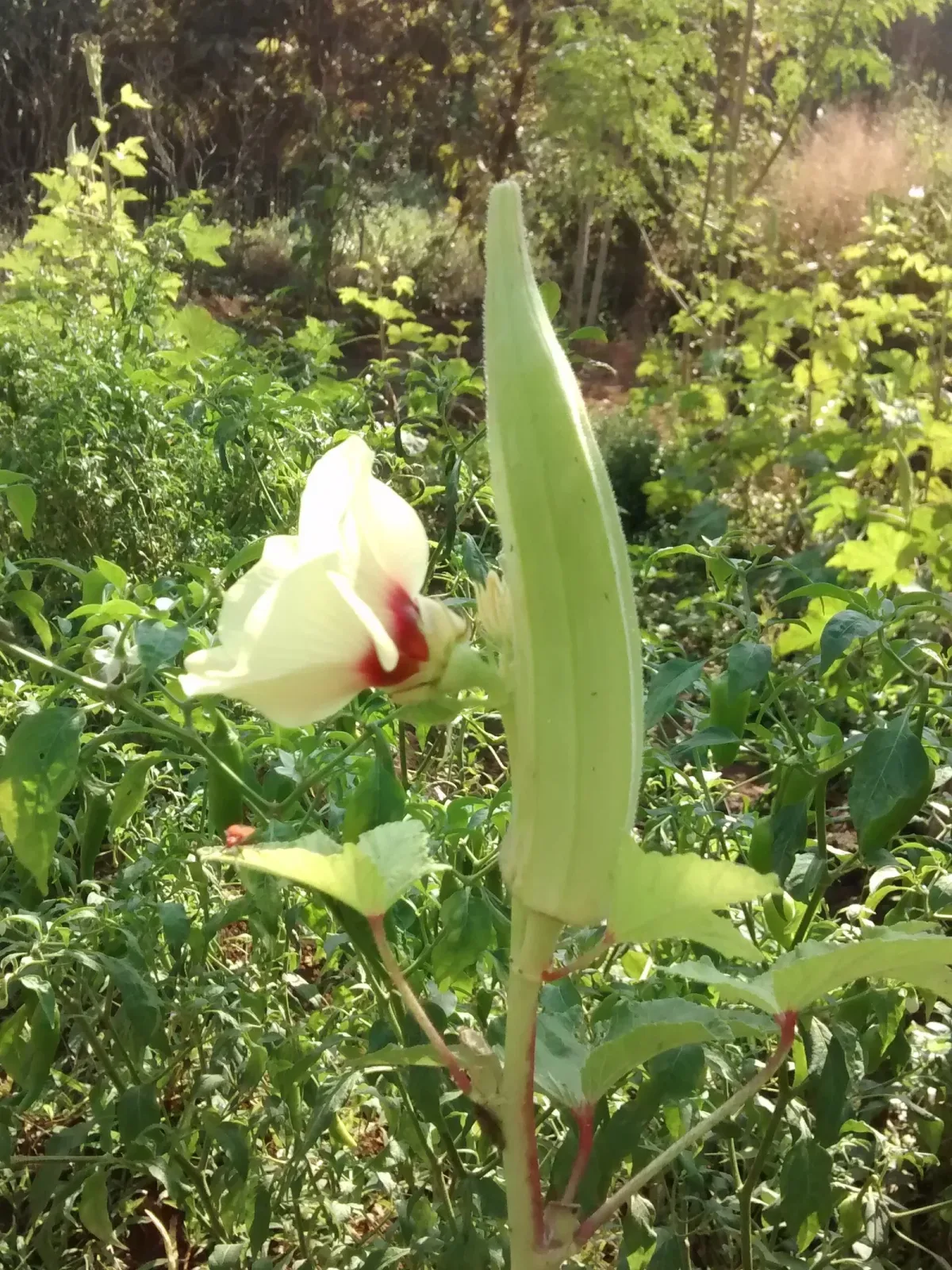
Plant viruses such as YVMV are not known to infect people. The real problem is quality: pods from infected plants are often small, hard and fibrous. Most gardeners discard them with the plant. We did not find an Indian institutional source that addresses eating them, so treat this as general guidance.
Watch: yellow vein mosaic of bhindi
A short explainer on yellow vein mosaic symptoms and how the virus spreads.
Related pages
Sources
- Tamil Nadu Department of Agriculture: Cropping season for major horticulture crops (Tamil Nadu planting seasons for banana, papaya, pomegranate, tomato, brinjal, okra, gourds and drumstick). Accessed 10 Nov 2026.
- Kerala Agricultural University: Package of Practices, vegetables (Kerala sowing seasons for okra, bitter gourd, bottle gourd, ridge gourd, Basella and drumstick). Read on 9 Nov 2026; the site returned errors on the 10 Nov 2026 recheck.
- TNAU Agritech (organic farming): Bhendi climate and season (sowing seasons for North India, hills and South India). Accessed 10 Nov 2026.
- GB Pant University of Agriculture and Technology: Kharif season advisory 2020 (okra May to June in Uttarakhand). Accessed 10 Nov 2026.
- TNAU Agritech (organic farming): Bhendi diseases (symptoms; yield loss by age at infection; whitefly and leafhopper vectors; wild hosts; not seed-borne; tolerant varieties; no complete resistance). Accessed 10 Nov 2026.
- TNAU Agritech Crop Protection: Bhendi pests and diseases (whitefly and jassid damage symptoms). Read on 9 Nov 2026; the site returned errors on the 10 Nov 2026 recheck.
- NCIPM / TNAU: Integrated Pest Management schedule for vegetables (YVMV symptoms; resistant varieties; early kharif sowing; rogueing). Accessed 10 Nov 2026.
- ICAR-NCIPM: Strategies for IPM in okra and brinjal (extension folder) (interwoven yellow vein network; rogue out affected plants; maize or sorghum borders; yellow sticky traps). Accessed 10 Nov 2026.
- ICAR-IIVR: Okra varieties (Kashi varieties resistant to YVMV and leaf curl). Accessed 10 Nov 2026.
- ICAR-IIHR: Okra Arka Anamika (YVMV resistant variety). Accessed 10 Nov 2026.
- eAgri (TNAU/ANGRAU course material): Bhendi package of practices (variety resistance list including COBhH 1 and Pusa Sawani breakdown. Note: server returned an error at the final recheck on 10 Nov 2026; content was read earlier the same day). Read on 9 Nov 2026; the site returned errors on the 10 Nov 2026 recheck.


Comments
No comments yet — share what worked in your climate.